Showing posts with label Egypt. Show all posts

19 July 2017

News Report: Reaper vs. Rainbow? China’s New Drone Deemed Ready for Mass Production

CH-5 Rainbow; China's Predator knock-off (File Photo)
The CH-5 ‘Rainbow’ drone made by China’s Aerospace Science and Technology Corporation is finally ready to enter mass production, the Diplomat reported on Tuesday.

"The CH-5’s design has been finalized and we are ready to mass-produce it," the unmanned aerial vehicle’s project manager told China Daily.

The Rainbow is reportedly intended to compete with the MQ-9 Reaper drone, which became the only drone used by US forces as of July 1 of this year when the Predator was retired

The company declined to specify who would be in the market to buy China’s new drones. The United Arab Emirates, Egypt and Saudi Arabia have previously bought Chinese drones after being spurned by American drone makers, the Wall Street Journal reported on Monday. 

22 April 2017

News Story: DPRK delegation visits Arab countries amid sanctions

PYONGYANG, April 21 (Xinhua) -- The Democratic People's Republic of Korea (DPRK) Friday sent a delegation of diplomats to visit some Arab countries amid mounting international sanctions clamped on it due to its missile and nuclear tests.

The Korean Central News Agency (KCNA) said DPRK Vice Foreign Minister Sin Hong Chol and his delegation left here to visit some Arab countries, without specifying the countries.

Earlier, Kim Jong Un, the supreme DPRK leader, exchanged messages with Syrian President Bashar al-Assad on the anniversaries of each others' important national events, said KCNA.

Read the full story at Xinhua

28 March 2017

Think Tank: Sea, air, land and space updates (28-Mar-2017)

Zoe Glasson, Sophie Qin, Madeleine Nyst and Patrick Kennedy

Sea State

The Japanese Maritime Self-Defense Force’s second helicopter carrier, the Kaga, entered service last week. The warship is expected to embark Mitsubishi-Sikorsky SH-60K Seahawk anti-submarine warfare helicopters and AgustaWestland/Kawasaki MCH-101 aircraft for mine-countermeasures. That commission takes Japan’s deployment capability another step forward (see last week’s Sea State). There’s little doubt where the ship’s resources will be directed—Japan’s Vice Minister of Defence said at Kaga’s ceremony that China is ‘raising security concerns,’ and by exerting pressure ‘is altering the status quo’ in the South China Sea. And Japan isn’t the only one setting sail. Last week, the Philippine Navy sent the BRP Ramon Alcaraz to patrol Benham Rise, an underwater plateau in the Philippine’s extended continental shelf, after Chinese survey vessels performed oceanographic research in the area.

There was an interesting read in Foreign Affairs last week on ‘Why Europe is Floating Egypt’s Navy’. Egypt is being increasingly sought out as a military partner against security threats in the Mediterranean, including sea-faring terrorists and migrants.

The US Office of Naval Research posted a video last week, showing a test fire of BAE’s electromagnetic cannon. The Navy’s railgun project has been in the works since 2005, and is reportedly still expected to be in service by 2025. This article from The Drive talks pros and cons of the experimental weapon. (ASPI’s James Mugg has some views too.)

14 March 2017

News Story: White House plan to gut foreign military financing would cost defense jobs, senators warn

US President Donald Trump
By: Joe Gould

WASHINGTON — The Trump administration is mulling plans to kill U.S. subsidies for foreign allies to buy American-made weapons outright and replace them with a loans program.  

The proposal is a bullet point in White House budget director Mick Mulvaney’s controversial plans to slash funding for diplomacy and development, first reported by the Washington Post and confirmed to Defense News by multiple sources. The idea is to replace all FMF grants with loans, save for the security aid committed to Israel— which makes up more than half of the $5.7 billion program. 

While it has uncertain prospects in Congress, it has frustrated key U.S. lawmakers, who say such a move would trash both a critical national security tool and a buttress for the domestic defense industry — just as President Trump says U.S. jobs are his top priority.  

Sen. Lindsey Graham, chairman of the Senate Appropriations Subcommittee on State and Foreign Operations, earlier this month said deep State Department cuts are “dead on arrival” in Congress. On Thursday, he defended FMF.

“Sometimes we have to subsidize the allies’ purchases, but they buy American equipment and they do pay,” Graham, R-S.C., said of the FMF program. “You have to show me where a loan is better for our national security … This part of the [federal] budget is a percent of a percent. 

A key argument for FMF is that if America ends arms subsidies, it lets strategic allies get weaker and cedes business and influence to Russia and China, its largest rivals strategically and for global defense markets.

“The last thing I want allies to do is go to the Russians and the Chinese because we are penny-wise and pound foolish,” Graham said. 

Read the full story at DefenseNews

10 March 2017

USA: Iran Poses Threat to Centcom’s Area of Responsibility, Votel Says

By Lisa Ferdinando 
DoD News, Defense Media Activity

WASHINGTON, March 9, 2017 — Iran poses the most significant threat to U.S. Central Command's complex area of responsibility, Centcom commander Army Gen. Joseph L. Votel told the Senate Armed Services Committee today.

Centcom has dealt with a number of significant challenges over the past 12 months, including in Iraq and Syria, Pakistan, Yemen, Egypt and the Sinai, the Bab-el-Mandeb strait, he said.

"We are also dealing with a range of malign activities perpetrated by Iran and its proxies operating in the region," the general said at the hearing on the posture of U.S. Central Command and U.S. Africa Command.

"It is my view that Iran poses the greatest long-term threat to stability for this part of the world," Votel said.

Iranian activities of concern, according to Votel, include "malign influence across Iraq and Syria," and efforts to prop up the Syrian regime and exploit Shia population centers.

04 March 2017

News Report: China Enters New Era of Weaponry With Massive Increase in Arms Exports

A Chinese Self-Propelled Artillery Gun at an Arms Show
Recent estimates about a staggering increase in China's military exports may be exaggerated, but Beijing's increasing clout means that these exports will soon enough become more of a political than economic tool, military export Vasiliy Kashin told Sputnik.

Last week the Stockholm International Peace Research Institute (SIPRI) reported on developments in international arms transfers over the past five years.

The data shows that the volume of major weapons transfers during 2012–16 increased by 8.4 percent compared to 2007–11, and was the highest volume of arms transfers during any five-year period since 1990.

The biggest importers were in Asia and Oceania and the Middle East, which accounted for 43 percent and 29 percent of all arms imports, respectively.

According to the SIPRI figures, in 2012-16 the US was the world's biggest exporter (33 percent), followed by Russia (23 percent). China was the third biggest exporter, its exports increasing by a massive 74 percent in comparison with the five years previously.

21 February 2017

Nerws Story: Russia's Rostec to co-develop 5th-gen fighter with UAE

By: Jill Aitoro

Russia defense heavyweight Rostec will partner with the UAE Ministry of Defence to co-develop a fifth-generation light combat fighter, company CEO Sergey Chemezov said at IDEX in Abu Dhabi Monday. 

Development, which is based upon its MiG-29 twin-engine fighter aircraft, will kick off in 2018, and will take an estimated seven to eight years, Chemezov said during a media briefing with journalists. He elaborated in an exclusive one-on-one interview with Defense News. 

“That’s not fast, because it takes quite a long period of time to develop,” he said speaking through a translator. “We anticipate local production here in the Arab Emirates, for the needs of Emirates. And of course [we expect development to support the needs of] the neighboring countries." 

Details about how the partnership would be structured have not been finalized, though Chemezov said it could potentially function as a joint venture between the company and UAE or UAE's domestic suppliers. 

The announcement comes soon after confirmation by the company that it would support development of India’s fifth-generation advanced medium combat aircraft. Though Chemezov wouldn’t comment on deals still under negotiations, the company is expected to sign a contract for Su-35 aircraft for Indonesia any day. Egypt is another country that reportedly is in talks with Rostec for fighters – MiG-29 aircraft specifically. The two companies signed a $3.5 billion arms package in 2014 covering aircraft, missiles, and coastal defenses.

Read the full story at DefenseNews

20 February 2017

News Story: Despite Trump rhetoric, US pledge to the Gulf stable

By: Christopher P. Cavas and Jen Judson

WASHINGTON – Despite the churn in the U.S. capital as the new administration takes over, despite the attempted Muslim ban and despite President Trump’s “America first” proclamations, there is a sense among veteran U.S.-based Middle East observers that relations with the Gulf states are stable and might even benefit from the power changes. 

The U.S., said veteran U.S. ambassador Ryan Crocker, has spent years negotiating transit and basing rights and establishing a stable military presence in the Gulf area. 

“I do not expect to see those change under a Trump administration,” said Crocker. “They are low-cost to us and they have proven their value to us over and over. They are not objects of domestic criticism in this country or the host country. It’s a pretty good architecture.” 

Owen Daniels, assistant director for the Middle East Peace and Security Initiative in the Brent Scowcroft Center on International Security, agreed. 

“I would not expect to see as much flux. I think the countries that are in the Gulf are kind of taking a wait and see approach to the Trump Administration,” Daniels said. “From a perspective of opportunity, they see it as an opportunity to get closer to the U.S.” 

Jim Phillips, a senior research fellow for Middle Eastern affairs at the conservative Heritage Foundation, is confident relations could improve. 

“I think Gulf Cooperation Council members will be much happier with the Trump Administration’s policies on security issues than they were with the Obama Administration,” Phillips predicted. “The new administration has staked out a harder-line policy on Iran and on fighting terrorism than its predecessor.  It is likely to quickly approve arms sales to Saudi Arabia and Bahrain that were held up by the Obama Administration and is likely to respond more strongly to Iran’s missile tests, arming of Houthi rebels in Yemen and naval harassment in the Persian Gulf.” 

Read the full story at DefenseNews

News Story: Russia's Middle East power play

By: Matthew Bodner

Moscow — A week after concluding its combat mission in Syria, Russia’s flagship Admiral Kuznetsov aircraft carrier had one final mission in the Mediterranean. It was, perhaps, a mission for which the ship was most capable: impressing Third-World strongmen.  

On Jan. 11, Russian news agencies reported that East Libyan general Khalifa Haftar was flown aboard the Kuznetsov for a personal tour from the ship’s captain and a video conference with Russian Defense Minister Sergey Shoigu. The publicized comments were vague and predictable.  

“They discussed pressing issues in the fight against international terrorist groups in the Middle East,” the Defense Ministry was quoted by the RIA Novosti news agency as saying. It was the latest evidence that Moscow is courting Haftar as part of a broader effort across the region.  

In November, Haftar visited Moscow to meet with Foreign Minister Sergey Lavrov. Details of that meeting, too,  were scant. But Haftar reportedly asked the Kremlin to assist him in fighting Islamic terrorists in Libya.   

Read the full story at DefenseNews

09 January 2017

News Report: Genuinely Domestic Design - Introducing China’s HJ-8 Anti-Tank Missile

Pakistan's Baktar-Shikan ATGM, a licence-manufactured
variant of HJ-8 (Image: Wiki Commons)
China’s HJ-8 anti-tank missile is an original Chinese military design that has been exported to a number of countries over the recent years. Sputnik takes a deeper look at China's ultimate battle weapon.

Back in the 1960’s China produced its first domestically produced antitank missile – the HJ-73, which was more or less a copy of the Russian AT-3 Sagger, according to online military publication The National Interest.

However, due to the deteriorating relations between China and the Soviet Union in the 1960’s Beijing decided to create its own domestic design and that’s how the anti-tank guided missile Hongjian (Red Arrow) 8 finally entered service in the mid-1980s.

In functionally it had a resemblance to the long-range American TOW antitank guided missile, joined with the discarding launch tube of the French Milan missile system.

News Report: Ex-Pakistan Army Chief to Lead Saudi-led Anti-terrorism Coalition

Pakistan’s former army chief Raheel Sharif
Ayaz Gul

ISLAMABAD — Pakistan’s former army chief Raheel Sharif is said to have been appointed first commander-in-chief of a new counterterrorism coalition of 39 Islamic countries led by Saudi Arabia.

Saudi authorities announced the proposed Military Alliance to Fight Terrorism, the IMAFT, in December 2015 to fight Islamic State and other terrorist groups. It will have its headquarters in the Saudi capital Riyadh.

Pakistani Defense Minister Khawaja Asif on Friday confirmed Sharif’s appointment to lead IMAFT. But Sharif and Saudi officials both have since neither confirmed nor denied it.

"I do not know the details. This was finalized only two or three days ago, so I will not comment much on this,” Asif told the private GEO TV.

"Definitely our government's consent must have been part of this," he replied when asked if the decision was made in Riyadh or Islamabad.

Countries such as Egypt, Qatar, the United Arab Emirates, Turkey, Malaysia, Pakistan and several African nations are part of the proposed military coalition.

But Shi’ite Muslim Iran and its allies Syria and Iraq, are not included nor have they supported the alliance.

Islamabad maintains close ties with both Riyadh and Tehran and has long struggled to strike a balance in relations with the two countries.

Iran shares a long border with Pakistan, while Saudi Arabia hosts hundreds of thousands of Pakistani expatriate workers and has often provided oil to Islamabad at deferred payments and extended financial assistance to help the country overcome economic challenges.

Sharif retired in November when his three-year term as the chief of Pakistan’s powerful military ended. Under his leadership, the army launched counterterrorism operations against the Pakistani Taliban and their foreign allies two years ago, leading to a significant reduction in militant violence in the country.

Sharif became highly popular for launching the offenses, prompting public demands for the government to extend his tenure.But his reported decision to join a foreign military coalition has led to severe criticism in Pakistan.

While hardline Shi’ite groups have opposed Sharif’s decision, Sunni hardliners have welcomed it as an honor for Pakistan.

Many former army officers, journalists, analysts and politicians on social media have also heavily criticized the general for the decision, with some calling it “unfortunate” while other termed it against national security of Pakistan.

This story first appeared on Voice of America & is reposted here with permission.

22 December 2016

USA: Boeing Co. awarded a $207,534,768 contract for the procurement of 51 full rate production Lot 90 Harpoon weapon systems, components, and spares

The Boeing Co., St. Louis, Missouri, is being awarded a $207,534,768 not-to-exceed, firm-fixed-price contract for the procurement of 51 full rate production Lot 90 Harpoon weapon systems, components, and spares for the governments of Egypt (20); Korea (19); and Brazil (12). 

In addition, this contract provides for components and spares for the Navy; and the governments of Japan, Australia, Thailand, India, United Arab Emirates, Oman, Kuwait, and Taiwan. 

Work will be performed in St. Charles, Missouri (71 percent); McKinney, Texas (9 percent); Burnley, United Kingdom (6 percent); Toledo, Ohio (2 percent); Middletown, Connecticut (2 percent); Elkton, Maryland (2 percent); Grove, Oklahoma (1 percent); Lititz, Pennsylvania (1 percent); Kirkwood, Missouri (1 percent); Galena, Kansas (1 percent); Huntsville, Alabama (1 percent); and various locations throughout the U.S. (3 percent), and is expected to be completed in March 2021. 

Fiscal 2017 weapons procurement (Navy); and foreign military sales funds in the amount of $99,616,492 are being obligated at time of award, none of which will expire at the end of the current fiscal year. 

This contract combines purchases for the Navy ($393,083; 0.19 percent); and the governments of Egypt ($93,102,086; 44.86 percent); Korea ($81,767,119; 39.40 percent); Brazil ($26,523,402; 12.78 percent); Japan ($2,683,621; 1.28 percent); Australia ($1,484,396; 0.72 percent); Thailand ($846,769; 0.41 percent); India ($590,172; 0.28 percent); United Arab Emirates ($73,851; 0.04 percent); Oman ($44,311; 0.02 percent); Kuwait ($14,770; 0.01 percent); and Taiwan ($11,188; 0.01 percent) under the Foreign Military Sales program.

This contract was not competitively procured pursuant to 10 U.S. Code 2304(c)(1). The Naval Air Systems Command, Patuxent River, Maryland, is the contracting activity (N00019-17-C-0006).

29 November 2016

News Story: Mixed Signs for Foreign Military Sales Under Trump

By: Aaron Mehta and Pierre Tran

WASHINGTON AND PARIS — Foreign military sales (FMS) are a critical foreign policy tool, one used to bind partners to America while bolstering interoperability on US systems — and providing a boost to domestic industry.   

The administration of US President Barack Obama has made good use of FMS, setting records for foreign weapons sales in 2015 and coming close in 2016. But as President-elect Donald Trump’s administration spins up, the future of US sales abroad is unclear.

As with everything related to the Trump administration at this point, there is little hard evidence to go by. But analysts are watching closely for signs of what might come. In particular, there is concern that two areas of strong sales — the Gulf region and Europe — could be impacted by either the policies of the next administration or the statements of the next president. 

Analyst Byron Callan, of Capital Alpha Partners, wrote to investors the day after the election, noting some of Trump’s campaign positions could impact foreign weapon sales. 

“We would expect if countries increase spending, it would be to the benefit of their own industries and not necessarily favor US defense firms,” Callan wrote to investors, adding: “If a Trump administration takes a harder line on Muslims, that may also bear on US defense exports to some Middle Eastern and Asian countries.” 

Doug Berenson, managing director with Avascent, agrees there are potential roadblocks from Trump policies but stresses that a lot is still in the air.   

“I think there is a chance that many European countries could get nervous about what this means, about the reliability of the US as a supplier,” Berenson said. “But I think it’s too early to assume that would be the outcome.”

Read the full story at DefenseNews

04 November 2016

News Story: French Pilot Training Suffers at Expense of Rafale Sales Support

By: Pierre Tran

PARIS — The French Air Force plays a key role in the export drive for the Dassault Aviation Rafale, but its sales support places a burden on the time it takes to train pilots on the fighter jet, the air chief of Staff told the French Senate Foreign Affairs, Defense and Armed Forces Committee. 

“The more hunger there is for support for export, the more that reduces training for our crews,” André Lanata said, according to a Senate parliamentary record from Oct. 12 only recently made public. There is also a high operational combat rate, which puts pressure on time for training pilots and personnel on the full spectrum of skills. 

“All the challenge is there,” he said. 

Combat missions over Syria and Iraq have boosted fighter pilots’ flying hours to 168 hours this year, higher than 159 hours in the military budget law, he said. Pilots are expected to fly 164 hours next year. 

On top of that higher-than-expected operational rate, there are “significant requests for support for our export markets for the Rafale,” he said. “We have to congratulate this export success: this is good news for our industry, the air force, the military budget law and for France.” 

“The service we bring mainly consists of training,” he said. The service has “unique and sought after operational expertise,” which is the clients’ main interest, he said. “This is one of the reasons for the export success,” he added. Other factors include pilots flying the twin-engined fighter to air shows and in military exercises, loan of equipment, assigning kit, and personnel to help develop the plane to standards requested by the clients.   

All that is not neutral and comes on top of a demanding situation, he said. The Air Force delivering support helped the defense industry and strengthened long-term strategic partnerships between the air force, France and the acquiring nation. There's a need to pay close attention to staff levels, he added; the service essentially received payment for its support. 

Read the full story at DefenseNews

30 September 2016

News Story: New Zealand extends commitment to UN peacekeeping in Golan Heights

WELLINGTON, Sept. 29 (Xinhua) -- The New Zealand military contribution to the United Nations peacekeeping mission in the Golan Heights has been extended until September 2018, Defence Minister Gerry Brownlee said Thursday.

"The United Nations Truce Supervision Organisation is the United Nations' oldest peacekeeping operation, and is an important and visible mission to help preserve peace between Israel and its neighbors," Brownlee said in a statement.

"The New Zealand Defence Force has been a longstanding and respected contributor since 1954 through the monitoring role played by our military observers."

The renewed commitment would see eight personnel continue to support the mission, which was New Zealand's largest current contribution to a UN-led peacekeeping operation.

Read the full story at Xinhua

27 September 2016

Think Tank: Sea, air, land and space updates (27-Sep-2016)

Christopher Cowan, Thulasi Wigneswaran, Elisabeth Buchan and Alexander Vipond

Sea State

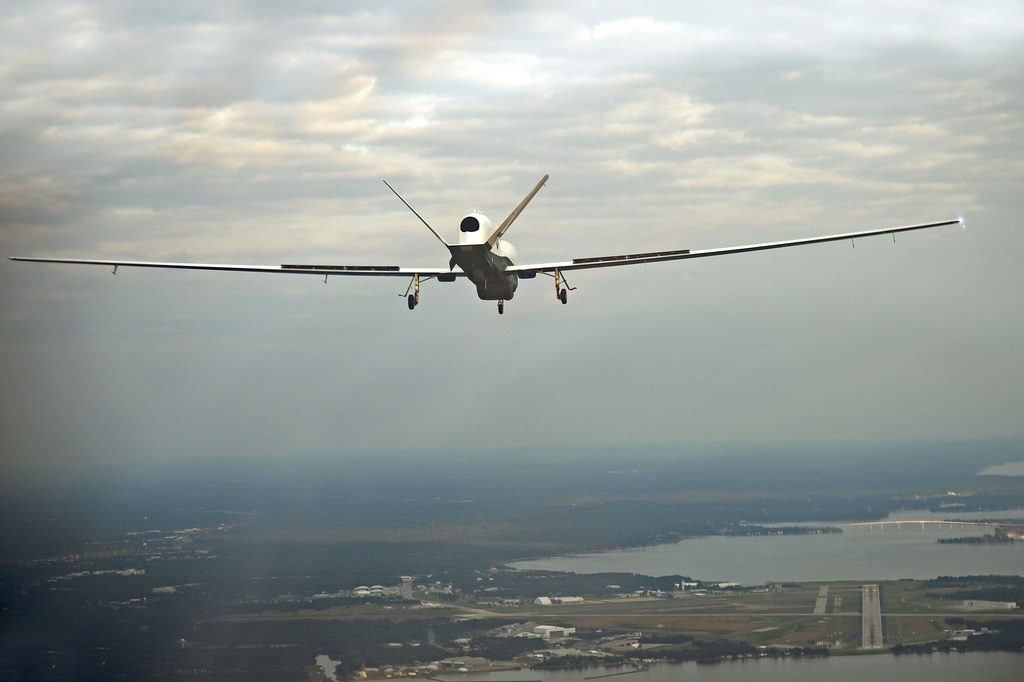
The US Navy will soon have eyes in the sky for much longer than before, having last week approved the commencement of low-rate initial production for the MQ-4C Triton unmanned aerial vehicle (UAV). The Triton, an intelligence, surveillance, and reconnaissance UAV, has a range of 8,200 nautical miles and can fly for up to 24 hours. This is good news for the RAAF, as it plans to fly seven Tritons alongside its future fleet of P-8 Poseidon maritime patrol aircraft to increase its broad area maritime surveillance capabilities.

The two-year saga of the two French Mistral class amphibious assault ships once destined for Russia has finally come to an end. The Egyptian Navy last week took possession of the second Mistral class vessel—named the Anwar el-Sadat after the (in)famous former Egyptian president—after receiving the first in June. While Russia may not be getting the ships it wanted, it’s trying to make the best of the situation by selling the Ka-52K attack helicopters once intended for the vessels to Egypt. The aircraft are expected to be delivered in 2017.

07 September 2016

News Report: North Korea Sends Expensive Message With Missile Tests

Brian Padden

SEOUL — North Korea has spent close to $100 million on more than 30 missile tests since Kim Jong Un assumed power in 2011, nearly double the number of missiles launched in the previous 18 years when his father Kim Jong Il ruled the country.

The South Korean newspaper the Chosun Ilbo estimated the cost of North Korea’s missiles based in part on what it said were the prices Middle Eastern countries had paid for these weapons.

Over the past two decades North Korea has reportedly sold hundreds of missiles, materials, and technology to Egypt, Iran, Libya, Pakistan, Syria, the United Arab Emirates, and Yemen.

03 September 2016

News Story: India, Egypt agree to bolster defense, security ties

NEW DELHI, Sept. 2 (Xinhua) -- India and Egypt agreed on Friday to bolster their defense and security ties to deal with the growing threats of terrorism and radicalization.

"We are of one view that growing radicalization, increasing violence and spread of terror are real threats not just to our two countries, but also to nations and communities across the region," Indian Prime Minister Narendra Modi told joint press conference with visiting Egyptian President Abdel Fattah al-Sisi.

"In this context, we agree to further our defense and security engagements. We have decided to expand defense trade, training, combat capacity building, and greater information exchange to combat terrorism," he said.

A joint statement issued after the talks added: "The two leaders strongly condemned terrorism in all its forms and manifestations. They reaffirmed their resolve to strengthen cooperation in combating terrorism at all levels."

Read the full story at Xinhua

16 August 2016

News Story: Trump Unveils Plan to Fight ISIS

Image: Flickr User - KAZ Vorpal
Joe Gould

WASHINGTON — Donald Trump laid out his strategy aimed at defeating radical Islamic terrorism, likening it to an ideological struggle akin to the Cold War.

In a speech the Republican presidential nominee delivered on Monday on Ohio, Trump pledged to build a bipartisan and international consensus, re-classifying US allies as any nation that will stand with Washington against "radical Islamic extremism."

“Our approach, which must be shared by both parties in America, by our allies overseas and by our friends in the Middle East, must be to halt the spread of radical Islam,” Trump said. “All actions should be oriented around this goal, and any country which shares this goal will be our ally. We cannot always choose our friends, but we can never fail to recognize our enemies.”

In this, Trump said he plans to work with Jordan, Egypt, NATO and Russia, which has a “big, big problem with ISIS.”

Read the full story at DefenseNews

11 August 2016

News Story: New Zealand military training U.S. troops for Middle East peacekeeping

Image: Wiki Commons
WELLINGTON, Aug. 10 (Xinhua) -- The New Zealand military has been training the United States troops for peacekeeping duties in the Sinai Peninsula, the New Zealand Defence Force (NZDF) revealed on Wednesday.

Four NZDF instructors had just completed a 10-day course for more than 200 U.S. troops at Fort Bliss in Texas, said a statement from the NZDF.

The course gave the U.S. soldiers an overview of the Multinational Force and Observers (MFO), an independent international organization with peacekeeping responsibilities in Sinai.

Read the full story at Xinhua