Showing posts with label F-22 Raptor. Show all posts

28 September 2017

News Report: China Tests New Terahertz Radiation Radar That Could Detect Stealth Jets

An F-35A Lightning Stealth Fighter
The China North Industries Group Corporation has tested a radar in recent weeks that generates terahertz radiation in order to better track the presence of stealth aircraft, the South China Morning Post reports.

The device has the potential to be a “game changer” for the People’s Liberation Army, scientists told the Hong-Kong based news outlet, since the radar might be able to spot the US’ F-22 Raptors and beleaguered F-35 Joint Strike Fighters.

Terahertz radiation can theoretically see through the “composite materials” that help hide stealthy jets, SCMP reports. The F-22 fleet’s new $40 million paint job might be for naught after all. 

04 September 2017

News Story: U.S. considering rotational deployment of U.S. stealth jets to Korea - sources

US Air Force F-35 Lightning Fighter
SEOUL, Sept. 3 (Yonhap) -- The United States is considering a rotational deployment of its stealth jets to South Korea in response to North Korea's evolving nuclear and missile threats, government sources said Sunday.

South Korea and the U.S. are discussing the dispatch of F-22 and F-35B fighter jets on a rotational basis as part of efforts to boost extended deterrence against the North's threats, they said.

The allies are known to be discussing the deployment of U.S. strategic assets on a quarterly basis at U.S. air base in Osan, south of Seoul or Kunsan Air Base in the southwest of the divided peninsula, they added.

The U.S. has periodically sent strategic assets to South Korea, including B-1B bombers, as a show of force when North Korea's provocative acts are escalated.

Read the full story at YonhapNews

25 August 2017

News Story: Use Allied Investments To Help Rebuild US Military

RAAF Wedgetail AEW/C Aircraft (File Photo)
By ROBBIN LAIRD

The shift from slo mo — counterinsurgency operations — to high intensity combat is a major challenge for the US military and its allies. It is a culture shift, a procurement shift and an investment shift. But mobilization is even more important than modernization.

To get ready for this shift, our weapons inventory needs to become more robust. In visiting US bases, a common theme we hear is the challenge of basic inventory shortfalls.

The Trump Administration came to power promising to correct much of this. But there simply is not enough time and money to do readiness and training plus ups, mobilization and rapid modernization.

As a businessman, Donald Trump might take a look at how the Pentagon actually functions as an effective business in equipping the force. Having highlighted the question of allied spending, he might be pleased to learn of significant allied investments in new combat systems which his own forces can use, saving American taxpayers money and enhancing our military effectiveness at the same time.

One way to augment US forces would be to do something which might seem to be at odds with the Make America Great notion. As one of my Danish friends put it well: “I have no problem with the idea of making America great again. For me, the question is how?”

One way would be to leverage existing allied capabilities which, if adopted by the US forces, would save money but, even more importantly, would ramp up the operational capability of the US forces and their ability to work with allies in the shortest time possible. It would also allow the US to target investments where possible in break through programs which allies are NOT investing in.

Read the full story at Breaking Defense

24 June 2017

News Story: (US) Congress considering restart of F-22 program

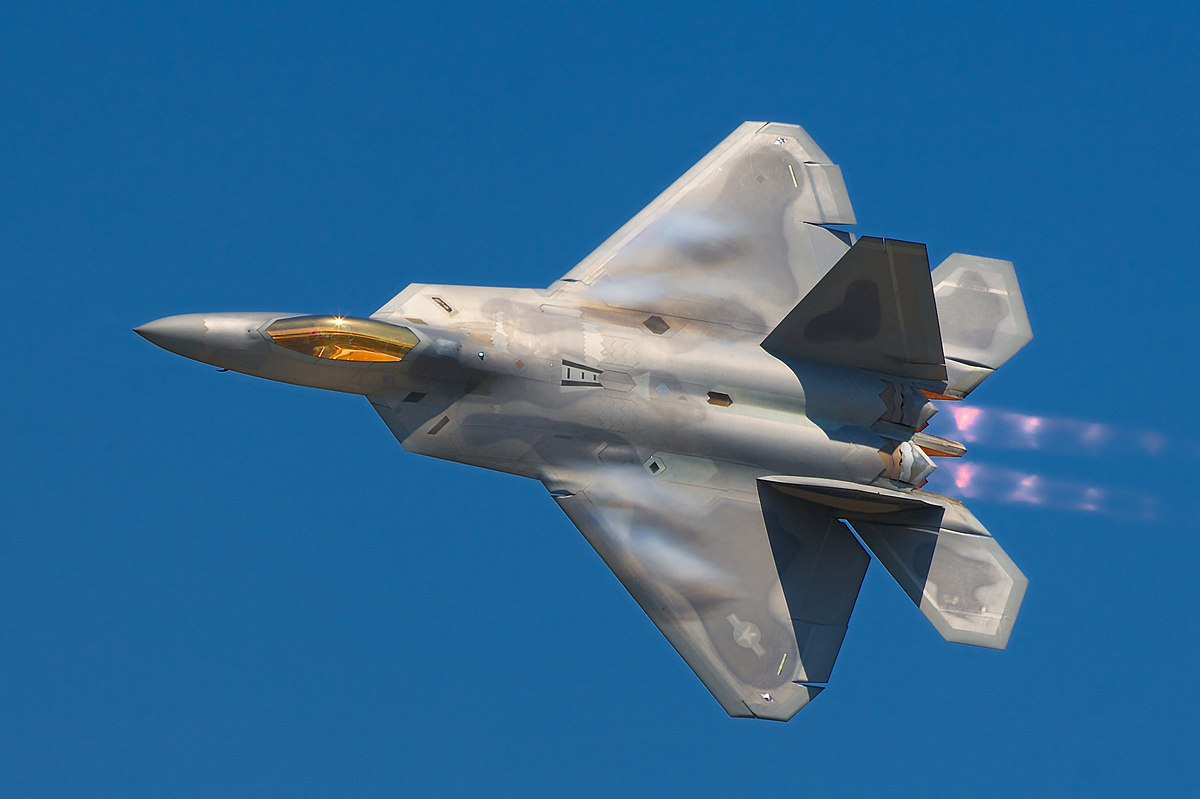
Lockheed Martin F-22A Raptor (Image: Wiki Commons)
by Stephen Carlson

The House Armed Services Committee is currently reviewing a classified report it ordered last year on restarting production of the F-22 Raptor, according to a spokesperson for the committee.

"I can confirm that we received the report and are reviewing it," HASC spokesman Barron Youngsmith told UPI, declining to comment further due to the classified nature of the review.

Last April, the committee asked the Department of Defense what it would take to restart F-22 production and build 194 new fighters, which would bring the total fleet size to the Air Force's original requirement of 381 Raptors.

HASC chairman Mac Thornberry and others in Congress argued that Secretary of Defense Bob Gates reasons for canceling the program in 2009 -- that they were inappropriate for the wars the United States was engaged in -- no longer applied.

Read the full story at SpaceDaily

05 June 2017

USA: U.S. Asia-Pacific Presence ‘Healthy, Robust, Valuable,’ Dunford Says

By Jim Garamone
DoD News, Defense Media Activity

SYDNEY, June 4, 2017 — The U.S. military presence in the Asia-Pacific region is "healthy, robust and valuable," the chairman of the Joint Chiefs of Staff said today after attending the Shangri-La Dialogue in Singapore.

Marine Corps Gen. Joe Dunford told reporters traveling here with him for a U.S.-Australian ministerial conference that Asian nations' fears of a U.S. retreat from the region are unfounded.

Today, 60 percent of all U.S. Navy ships, 55 percent of U.S. Army forces and about two-thirds of Fleet Marine Forces are assigned to the U.S. Pacific Command area of operations. Soon, 60 percent of U.S. tactical aviation assets will be based in the Asia-Pacific region.

What’s more, the United States is sending its newest and most capable platforms to the region. F-22 Raptors – a fifth generation aircraft – are based in Alaska and Hawaii and have deployed to Japan. F-35 Lightning II joint strike fighters are due to deploy to the area. The P-8 Poseidon aircraft is based in Singapore. Littoral combat ships operate in Pacific waters, and the list goes on.

21 March 2017

Sea, air, land and space updates (21-Mar-2017)

Zoe Glasson, Sophie Qin, Madeleine Nyst and Patrick Kennedy
Sea State
In its biggest show of naval force in the Asia–Pacific since WWII, Japan has unveiled plans to send its largest warship—the Izumo helicopter carrier—on a three-month tour of the South China Sea, kicking off in May. Stopping off in Singapore, Indonesia, the Philippines and Sri Lanka, its destination is the Indian Ocean, where it will join India and the US in the Malabar naval exercise. Japan’s drills last week with South Korea and the US in the Sea of Japan further demonstrated that its ‘naval forces [are] playing a bigger part in the region.’Unimpressed, China has promised to ‘take firm responsive measures’ should Japan ‘persist in taking the wrong actions’.
After last Monday’s hijacking of the tanker Aris 13 by Somali pirates off Somalia’s coast (the first since 2012), a new spate of attacks is feared, with one pirate warning: ‘In the coming days we are going to seize even more foreign ships.’ Somali officials have now called upon NATO—which ended its counter-piracy mission in November—to do more to stop illegal fishing in the area, which some believe provoked the attack.
Everyone’s favourite submersible, Boaty McBoatface, left Chile on Friday on board the RRS James Clark Ross. It’s headed to the Antarctic to explore ‘some of the deepest and coldest abyssal waters on Earth’… Better you than me, Boaty!

14 March 2017

Think Tank: Sea, air, land and space updates (14-Mar-2017)

China's J-20 Stealth Fighter
Zoe Glasson, Sophie Qin, Madeleine Nyst and Patrick Kennedy

Sea State

For an (alarming) maritime security synopsis, check out this Navy Times article which examines today’s five most dangerous at-sea deployments. In reverse order, they are: South China Sea, Black Sea, Persian Gulf, Sea of Japan and Bab-el-Mandeb Strait. Rankings are based on real-time threats faced by sailors and the conflict escalation potential of the area.

Israeli sailors are protecting drilling rigs in international waters. Sa’ar 6-class defensive vessels are on order from Germany for the purpose, but they’re not expected to arrive for another 2.5 years. Until then, 11 missile corvettes are tasked with protecting the economic asset from possible missile attacks in a mission of vital strategic importance. The Israeli Navy acknowledges the mixed mode of operations: ‘a military force is protecting a private asset’ in a display of ‘army-society-economics relations.’

On the home front, HMAS Hobart—RAN’s first air warfare destroyer—successfully completed its final five weeks of sea acceptance trials. The ship will be in the hands of the ADF this June.

11 March 2017

News Report: Chinese Stealth J-20 Jet Enters Service With PLA

Chengdu J-20 stealth fighter
China has put its new Chengdu J20 stealth fighter jet in service, in efforts to develop a marine corps and a “first class” Navy, while simultaneously narrowing the military gap with US. Beijing’s military is undergoing major upgrades, complete with advanced submarines and anti-satellite missiles, all under the supervision of President Xi Jinping.

Chinese planespotters first saw the J20 in 2010, and the public got its first glimpse of the craft at the Zhuhai airshow in November 2016. The military channel on China’s state television confirmed that the plane had entered service on Thursday. 

What remains to be seen is whether the J20 can evade radar with the same aptitude as Lockheed Martin’s F-35 strike jet, or Lockheed’s air-to-air combat jet F-22 Raptor. The development of the new Chinese aircraft began in the late 1990s and had its first flight in 2011.

In November 2016, aviation journalist Andreas Rupprecht wrote in the Aviationist, "The J-20 is a giant leap for the PLAAF both capability-wise and technology-wise. Did anyone of us expect a Chinese stealth fighter to be operational before 2020 when asked in, let’s say, 2010?"

07 March 2017

News Story: US ramps up South China Sea patrols, irritating China

By Hrvoje Hranjski 

The USS Carl Vinson, which is steaming through the South China Sea, is just one of several high-profile displays of U.S. naval power as President Donald Trump's administration weighs options of how to reassure allies and respond to an assertive China.

The current makeup of the aircraft carrier strike group, which began routine operations Feb. 18, suggests it may not carry out an anticipated freedom of navigation operation (FONOP) just yet. The U.S. has challenged Beijing four times since 2015 by sailing close to Chinese-held islands in the disputed waters, but critics say the pace of such operations under the Obama administration failed to deter China from constructing the seven outposts that are now being fitted with radar and weapons systems.

The new U.S. administration has signaled a tougher approach.

"We have operated here in the past, we're going to operate here in the future, we're going to continue to reassure our allies," Rear Adm. James Kilby, commander of the San Diego-based Carrier Strike group 1, told journalists who toured the ship Friday as it was sailing between China's southernmost island of Hainan and Scarborough Shoal, which China seized from the Philippines in 2012.

Read the full story at PhilStar

03 March 2017

News Story: What will S. Korea, U.S. demonstrate in joint drills?

SEOUL, March 2 (Xinhua) -- South Korea and the United States started their annual joint springtime war games on Wednesday amid heightened tension on the Korean Peninsula.

"Foal Eagle," field training exercises involving ground, air and naval forces, will run through the end of April. Separately the allies plan to conduct "Key Resolve," a computer-simulated command post exercise, starting March 13, Yonhap quoted the South Korean Defense Ministry as saying.

Citing the ballistic missile launch of the Democratic People's Republic of Korea (DPRK) on Feb. 12, South Korea and the United States plan to stage the largest-ever joint drills this year, with the largest number of U.S. troops and strategic assets to be mobilized for this year's joint drills.

In last year's drill, about 17,000 U.S. soldiers and the nuclear-powered John C. Stennis aircraft carrier were involved.

Read the full story at Xinhua

17 February 2017

AUS: F-22 Raptors and F/A-18A/B Hornets commence combined training

Image: © Commonwealth of Australia
This week the United States Air Force F-22 Raptors commenced training with the Royal Australian Air Force’s (RAAF) F/A 18 Hornets for the first enhanced air cooperation activity in Australia.

Enhanced air cooperation is part of the United States Force posture initiatives and builds on a range of air exercises and training activities already undertaken by the United States and Australia.

Wing Commander Andrew Tatnell, Commanding Officer 17 Squadron, said the F-22 Raptors from the 90th Fighter Squadron, 3rd Wing were visiting RAAF Base Tindal to conduct integrated training opportunities with the RAAF’s 75 Squadron F/A-18A/B Hornets along with ground assets and personnel.

“The F-22 is one of the world’s most advanced fifth generation fighter aircraft,” Wing Commander Tatnell said

“Combined training activity will vastly enhance the Royal Australian Air Force’s ability to integrate with the United States Air Force’s fifth generation aircraft while introducing fifth generation operations to RAAF Base Tindal.

14 February 2017

Think Tank: Sea, air, land and space updates (14-Feb-2017)

Zoe Glasson, Sophie Qin, Madeleine Nyst and Patrick Kennedy

Sea State

More plans are surfacing in response to Sen. John McCain’s defence budget white paper and the US Navy’s Force Structure Assessment. The Centre for Strategic & Budgetary Assessments (CSBA) and MITRE have both produced reports that share some common goals: grow the fleet, cancel the LCS and increase the number of attack submarines. But MITRE’s plan is ‘more radical’ than CSBA’s, not least because it recommends the USN expand to a whopping 14 aircraft carriers (up from 11). CSBA’s call for a larger small carrier fleet has created some buzz too; see here and here.

Best steer clear of the Indian Ocean this week, lest you be mistaken for a pirate or a Chinese submarine. India and Pakistan are both carrying out large-scale naval exercises in the region. The Indian Navy’s 30-day long TROPEX 2017 is the ‘largest-ever naval theatre-level’ exercise to take place off its western coast. Exercises will focus on anti-(Chinese)-submarine warfare scenarios. The Pakistan Navy’s AMAN 2017 (involving 36 countries including Australia), focuses on multilateral counterterrorism and counterpiracy operations. It’s worth noting that this is the first time the Pakistani exercise has brought Turkey and Russia into the fold.

And finally, after last week’s heatwave, now might be a good time to take a look at this National Geographic piece about what the US military is doing to fight climate change.

AUS: Air Force wraps up Exercise Red Flag 17-1 in Nevada

After three weeks of high-intensity missions, Exercise Red Flag 17-1 has concluded.

A 200-strong contingent of the Royal Australian Air Force (RAAF) personnel deployed to Nellis Air Force Base in Nevada with colleagues from the United States and United Kingdom. This year, Exercise Red Flag 17-1, also witnessed the United States Air Force (USAF) debut its F-35A Lightning II in the exercise.

The training operates within the 31,000-square-kilometre Nevada Test and Training Range, which is turned into a simulation of a high-end threat battlespace.

RAAF deployed a range of capabilities during Exercise Red Flag 17-1, from a combat control team that parachuted in freezing conditions to a dry lake bed for an airfield survey; to air battlespace managers who controlled movements and datalinks for more than 70 friendly and ‘enemy’ aircraft.

Commander of the Australian contingent, Group Captain Stuart Bellingham, said RAAF C-130J Hercules transport and E-7A Wedgetail aircraft flew on missions in Exercise Red Flag 17-1.

News Report: US Plans to Deploy Strategic Weapons in South Korea for Joint Drills

The South Korean Defense Ministry announced plans of participation of the US strategic weapons in joint military exercises, local media reported Tuesday.

TOKYO (Sputnik) — Washington and Seoul have agreed to deploy US strategic assets to South Korea to partake in the Key Resolve and Foal Eagle military exercises, the South Korean Yonhap news agency reported citing the report of the ministry.

The news outlet added that the United States could send to South Korea F-22 stealth aircraft and a nuclear-powered aircraft carrier for participation in the drills.

On Sunday, Pyongyang confirmed that it had carried out a successful test of an intermediate-range nuclear-capable ballistic missile. Launched from an airbase in the western province of North Pyongan, the missile was reported to have traveled about 480 km before plunging into the Sea of Japan.

North Korea's neighbors warned Pyongyang that they saw the latest missile launch as a provocation, and a violation of a UN Security Council resolution prohibiting it from carrying out ballistic missile tests.

The UN Security Council has condemned North Korea for its latest ballistic missile test conducted on Sunday, a UN press statement said.

US President Donald Trump said in a joint press conference with Canadian Prime Minister Justin Trudeau on Monday that North Korea is a problem that will be dealt with "strongly."

This story first appeared on Sputnik & is reposted here with permission.

11 February 2017

AUS: First Enhanced Air Cooperation activity to commence

A squadron of United States Air Force (USAF) F-22 Raptors will arrive in Australia today ahead of the first Enhanced Air Cooperation (EAC) activity in Australia under the US Force Posture Initiatives.

The Minister for Defence, Senator the Hon Marise Payne said the visiting F-22s will be located at RAAF Base Tindal and will be the largest and longest rotation of fifth-generation aircraft to Australia to date.

“The F-22s will conduct integrated training activities with the Royal Australian Air Force’s 75 Squadron F/A-18A/B Hornets along with ground assets and personnel,” Minister Payne said.

“The EAC aims to strengthen bilateral collaboration and interoperability with the United States.”

The commencement of EAC activities in 2017 will continue to strengthen our already close air-to-air relationship with the United States.

04 February 2017

News Story: Red Flag gives F-35A its toughest test yet

By: Valerie Insinna

NELLIS AIR FORCE BASE, Nev. — What happens when the F-35A goes to its very first Red Flag, the Air Force’s premier air-to-air training exercise? 

The answer, according to U.S. military and international participants, is that the event itself becomes more challenging than ever, with a greater number of more capable aggressors outfitted with advanced weaponry. 

Although the Marine Corps operated its short takeoff, vertical landing variant in the event last year, Red Flag 17-1 marks the debut of the conventional F-35A operated by the Air Force. After almost two weeks, 13 joint strike fighters from Hill Air Force Base in Utah have flown 110 sorties, said Lt. Col. George Watkins, 34th Fighter Squadron commander.  

“It’s a much more difficult adversary that we are fighting against here as a team than we would have fought against a year and a half ago, when I was here last,” Watkins said, referencing his previous Red Flag event, which he flew in as an F-16 pilot. 

“They have stepped up the number of red air that we’re fighting — the number of aggressor aircraft that are fighting against us — the amount of jamming and stuff that they’re providing against us, the skill level of the adversary that they are trying to replicate, as well as the surface-to-air missile threat.” 

Read the full story at DefenseNews

28 December 2016

News Story: The F-35 - We Need the Numbers and We Need Them Now

By: Gen. Larry O. Spencer (ret.), AFA

I was director of Air Force budget when F-22 aircraft production was cancelled. The rationale was, it is better to “leap” to the F-35 because it was cheaper and could be purchased in higher quantities.  That decision made the F-35 the single most important defense program in the nation.  That decision declared the F-35 would be crucial to meeting U.S. objectives in the National Security Strategy. 

At the time, it was said the Air Force must have the F-35 in sufficient numbers to enable the world’s greatest Air Force to engage around the world, shaping the security environment and maintaining peace and stability. As an expeditionary aircraft, the F-35 would provide the unique capability to deploy around the globe on very short notice.  Additionally, there was an emphasis on having sufficient numbers to allow a rotational base for peacetime training, and if necessary, fight and win a conflict. 

During Thanksgiving dinner, my siblings asked me why the U.S. should purchase this new fifth generation aircraft at the numbers requested.  They reasoned, “why not use the aircraft we already have? Wouldn’t that be cheaper?”   My inquisitive siblings were shocked with my answer.  They did not realize that today, the Air Force has a “geriatric” fighter aircraft fleet.  The aircraft are old, tired and no longer hold an unquestioned advantage over potential adversaries.  They were also surprised when I told them many Air Force aircraft would qualify for an antique license plate in most states.  My siblings perked up when I explained the F-35 helps the U.S. to maintain a clear technology gap over potential adversaries and they really got excited when I explained that the best pilots flying the most technologically advanced aircraft may actually prevent a war by providing a clear and unambiguous deterrent. 

Read the full story at DefenseNews

22 December 2016

News Report: China Prepares Secretive H-20 Strategic Stealth Bomber

China’s secretive H-20 bomber is well on its way to becoming a fully developed next-generation strategic stealth aircraft, but not in the near future.

A Chinese admiral said that China and the rest of the world must be patient while waiting for the H-20 to be launched. 

China has not yet produced an operational, large-tonnage bomber aircraft capable of hitting long-range targets. Nevertheless, a host of technologies that Beijing expects the "legendary" aircraft to carry, including cruise missiles and nuclear arms, "are all in place," Rear Admiral Yin Zhuo of the People’s Liberation Army said, ripening the conditions for the country’s development of a stealth bomber. 

19 December 2016

News Report: China’s J-20 Stealth Fighter to Challenge F-22 Raptor Supremacy

China's J-20 Fighter
The state-of-the-art J-20 fifth-generation jet fighter is a key part of the Chinese air force. According to Chinese military expert, Li Li, the J-20 could possibly break the US monopoly on fourth-generation fighters.

During an interview with CCTV, the military expert said that the Chinese jet fighter may exert an even bigger influence than the American F-22 Raptor.

Li Li further said that although the American F-22 Raptor is the first fourth-generation fighter commissioned in an air force, its performance is not satisfactory. She said that the J-20 and Russia’s T-50 will possibly manage to break the Western monopoly and that the J-20 could have a more significant influence than its Western counterparts. 

Chinese officials maintain that the J-20 will be exclusive to the People’s Liberation Army Air Force. 

16 December 2016

News Story: F-22s Coming To Australia Next Year - PACOM’s Adm. Harris

F-22 Raptor (Image: Wiki Commons)
By COLIN CLARK

SYDNEY: While it will be a short deployment, Australia and the United States have agreed to deploy America’s most advanced fighter next year as part of the Enhanced Air Cooperation (EAC) Initiative that has seen B-2 bombers and other advanced American aircraft deployed to the lucky country.

Adm. Harry Harris, head of Pacific Command, disclosed the news during a Q and A session at the Lowy Institute, a foreign policy thinktank here. Harris, fresh from a short visit to the seemingly always turbulent island state of Papua New Guinea, did not disclose how many F-22s would fly to the Royal Australian Air Force‘s base in Tindal.

While the US Marines have gotten most of the press for their now sort of regular six-month deployments to the northern port city of Darwin, 2017 marks a significant ramp-up in the air portion of America’s military commitment to — arguably — our closest ally.

Read the full story at Breaking Defense