Showing posts with label Cruiser. Show all posts

29 July 2017

USA: McCampbell visits Sydney following Talisman Saber

From USS McCampbell Public Affairs

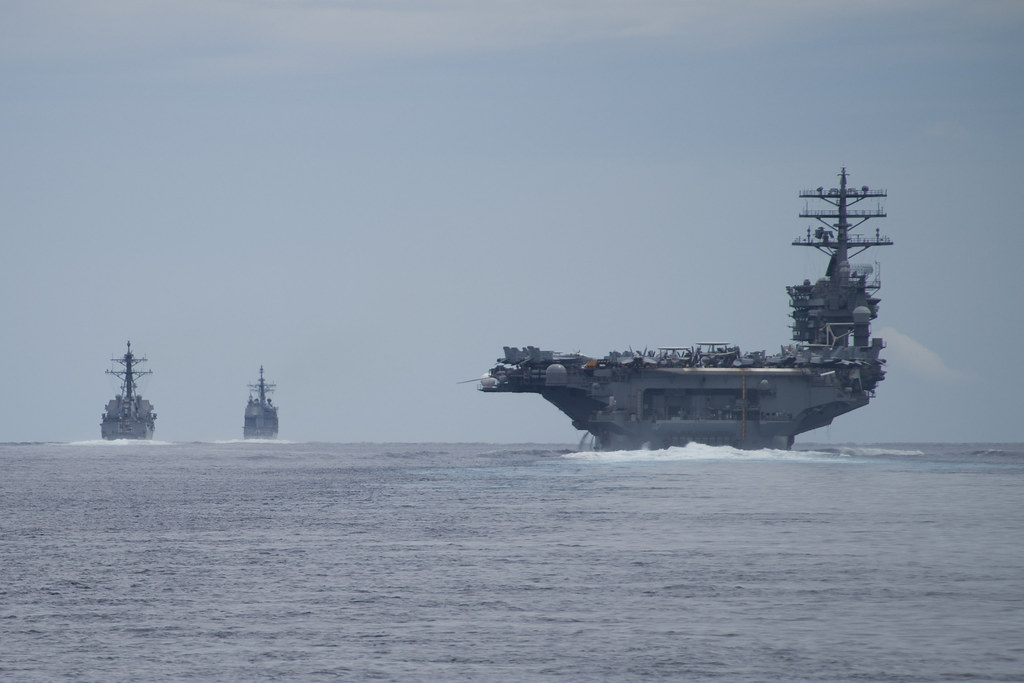
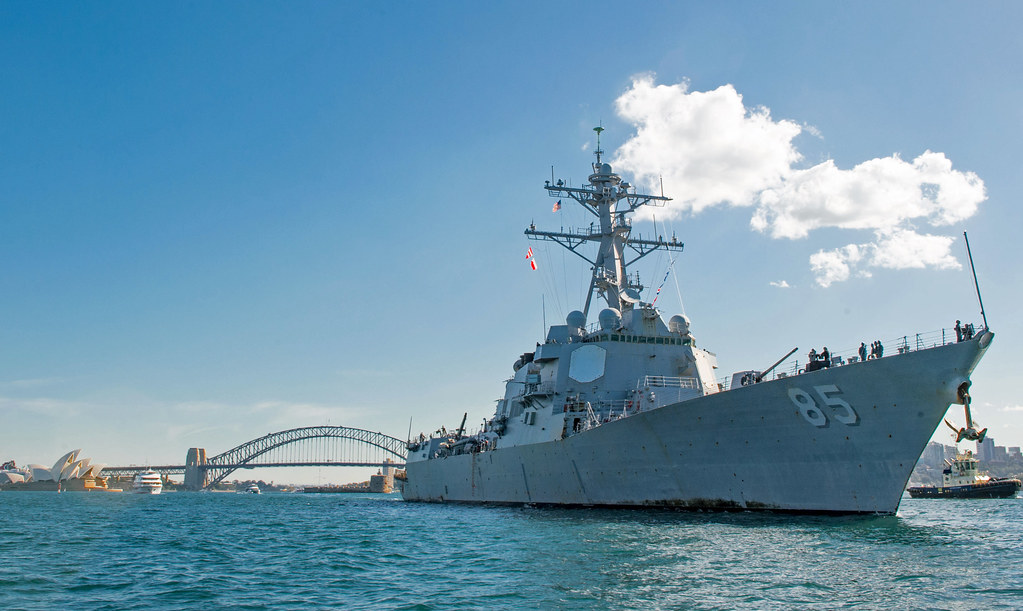
USS McCampbell (DDG 85) departs Sydney, July 27. (U.S. Navy/MC2 Jeremy Graham) >>

SYDNEY, Australia - The forward-deployed Arleigh Burke-class guided-missile destroyer USS McCampbell (DDG 85) departed Sydney, July 27 following a four-day port visit.

The visit marked the end of McCampbell's participation in the biennial, U.S.-Australia, multi-domain exercise Talisman Saber 2017 (TS 17). This was an exercise that focused on joint training among U.S. forces to conduct a range of missions in the air, sea, land, and cyberspace.

US Navy participants included USS Ronald Reagan (CVN 76), Carrier Air Wing 5, USS Shiloh (CG 62), USS Barry (DDG 52), USS McCampbell (DDG 85), USS Bonhomme Richard (LHD 6), USS Green Bay (LPD 20), USS Ashland (LSD 48) and USS Sterett (DDG 104).

More than 33,000 forces from the U.S. and Australia have participated in TS 17. Although TS 17 remained a bilateral exercise, members of the New Zealand Defense Forces participated under the command of Australia, and members of the Japan Self-Defense Force participated under U.S. command.
19 July 2017

USA: Nimitz Carrier Strike Group concludes Malabar exercise

By MC3 Weston A. Mohr, USS Nimitz Public Affairs

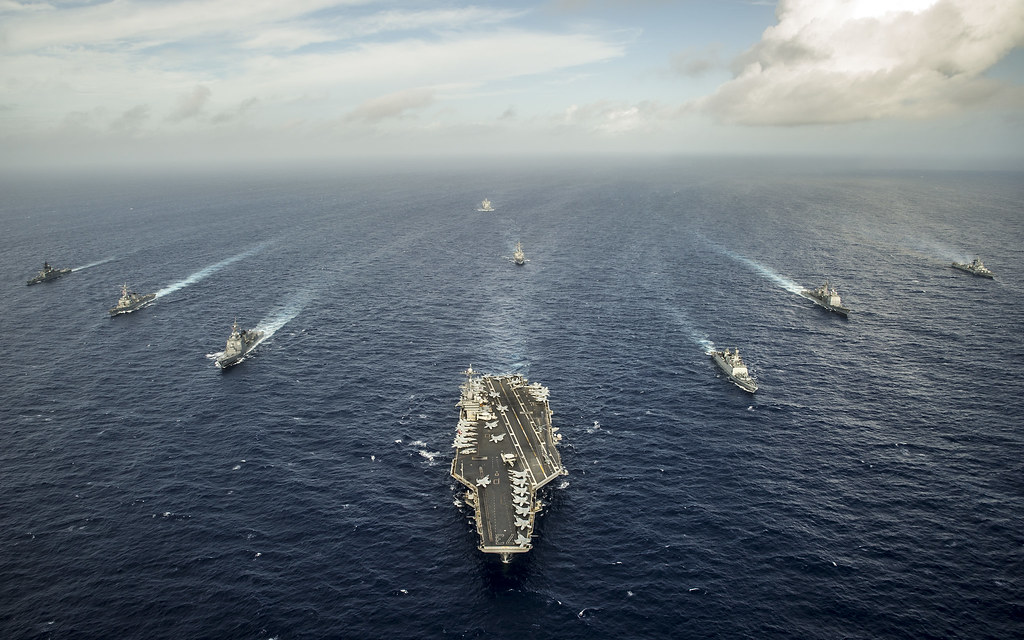
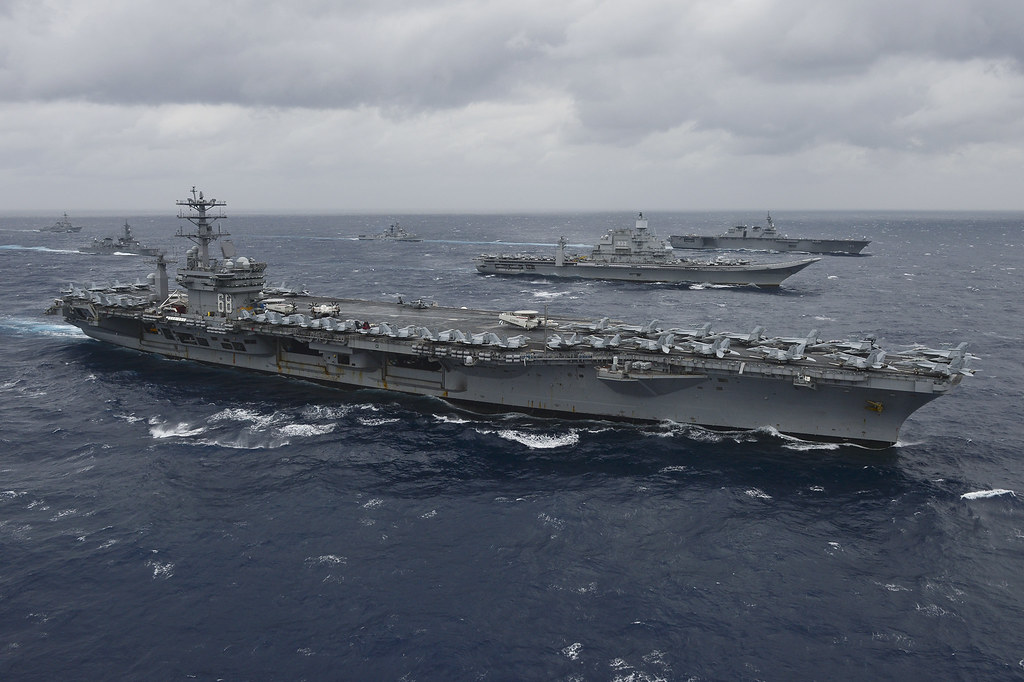
Ships from the Indian Navy, Japan Maritime Self-Defense Force and U.S. Navy sail in formation as part of exercise Malabar. (U.S. Navy/MC3 Cole Schroeder) >>

BAY OF BENGAL - Maritime forces from India, Japan, and the United States completed Exercise Malabar 2017, July 17, in the Bay of Bengal.

The exercise was designed to advance military-to-military coordination and capacity to plan and execute tactical operations in a multinational environment.

Exercise Malabar began in 1992 and this year marks the 21st rendition of the exercise. The objectives of Malabar 2017 were to improve interoperability between the U.S., Indian and Japanese maritime forces, provide an opportunity to conduct engagements with India and Japan, and demonstrate U.S. naval presence in the Indo-Asia-Pacific region.

"Exercise Malabar is a great symbol of friendship between India, the United States and Japan," said Indian Navy Rear Adm. Biswajit Dasgupta, flag officer commanding Eastern Fleet. "Malabar is one of the main elements in our defense partnership, and it conveys a message that the three countries are willing to work together closely in the maritime arena."

15 July 2017

News Report: Malabar Drills - Who's Trying to Pit India Against China, 'Add Fuel to the Fire'?

US Navy Cmdr. Rear Adm. William Byrne has said that the ongoing war games between the navies of the US, Japan and India, known as Malabar 2017, are intended as a "strategic message to China." Commenting on the announcement, Russian military analyst Alexei Leonkov told Sputnik Radio that this interpretation is an attempt to pit India against China.

On July 10, the US, India and Japan started trilateral two-phase war games, known as Malabar 2017, hosted by the Indian Navy.

The exercises are being held in Chennai and the waters of the Bay of Bengal.

According to the Indian media, the US Navy is fielding USS Nimitz, the world’s largest aircraft carrier. The Indian Navy’s solitary aircraft carrier, the INS Vikramaditya, and Japan’s Izumo-class helicopter carrier are also among the 20-odd warships taking part in the exercise.

A US guided-missile cruiser, the USS Princeton, is also participating, as well as the guided-missile destroyers USS Howard, USS Shoup, and USS Kidd. The US arsenal includes a P-8A Poseidon submarine hunter plane and a Los Angeles-class fast-attack submarine; and the Japanese destroyer JS Sazanami will take part.

11 July 2017

India: Exercise Malabar Commences in Bay of Bengal - North Indian Ocean

Naval co-operation between India, US and Japan epitomises the strong and resilient relationship between the three democracies. The MALABAR series of exercises, initiated in 1992 between the Indian and US Navies, have steadily grown in scope, complexity and participation into a multifaceted exercise with the participation of Japanese Maritime Self Defense Force (JMSDF). 

The 21st edition of the exercise, MALABAR-17 will be conducted in the Bay of Bengal from 10 to 17 July 2017. The primary aim of this exercise is to increase interoperability amongst the three navies as well as develop common understanding and procedures for maritime security operations. The scope of MALABAR-17 includes wide-ranging professional interactions during the Harbour Phase at Chennai from 10 to 13 July 2017 and a diverse range of operational activities at sea during the Sea Phase from 14 to 17 July 17. The thrust of exercises at sea this year would be on Aircraft Carrier operations, Air Defence, Anti-Submarine Warfare (ASW), Surface Warfare, Visit Board Search and Seizure (VBSS), Search and Rescue, Joint Manoeuvres and Tactical procedures. In addition, officials from the three countries will be flown onboard the ships at sea on 15 July 2017.

10 July 2017

USA: Nimitz Carrier Strike Group begins Malabar 2017

From Carrier Strike Group 11 Public Affairs

Ships assigned to the Nimitz Carrier Strike Group transit the Surigao Strait earlier this month. (U.S. Navy/MC3 Maria I. Alvarez) >>

BAY OF BENGAL - Sailors and Marines assigned to the Nimitz Carrier Strike Group, the Indian Navy and the Japan Maritime Self-Defense Force (JMSDF) commenced the Malabar in-port portions in Chennai, India, July 9.

The maritime exercise Malabar, which was first held in 1992, occurs annually to improve interoperability between U.S., Indian, and Japanese maritime forces. The exercise enhances maritime relationships and demonstrates credible naval power in the Indo-Asia-Pacific region.

“The exercise continues to grow because we are bringing in more ships and we are bringing together three countries,” said Cmdr. Vernon H. Stanfield, the Nimitz Strike Group operations officer. “We make sure that we strengthen our partnerships, and we learn from the experience so that we continue to become more proficient in the future.”

07 July 2017

USA: U.S., Indian, Japanese maritime forces to participate in Malabar exercise

From Task Force 70 Public Affairs

In this file photo, ships from the USS George Washington (CVN 73) Carrier Strike Group, Indian Navy and Japan Maritime Self-Defense Force steam in formation during Malabar 2014. (U.S. Navy/MC3 Chris Cavagnaro) >>

CHENNAI, India - Naval ships, aircraft and personnel from India, Japan and the United States will participate in exercise Malabar 2017, July 7-17.

Malabar 2017 is the latest in a continuing series of exercises that has grown in scope and complexity over the years to address the variety of shared threats to maritime security in the Indo-Asia Pacific.

The exercise will feature both ashore and at-sea training. While ashore in Chennai, training will include subject matter expert and professional exchanges on carrier strike group operations, maritime patrol and reconnaissance operations, surface and anti-submarine warfare, medical operations, damage control, explosive ordnance disposal (EOD), helicopter operations, and visit, board, search and seizure (VBSS) operations.

News Report: War Games - China Fumes at US, India, Japan Joint Naval Exercises

The 16th annual Malabar Naval Exercises between the United States, India and Japan will begin on Monday, July 9, and go until Tuesday the 17th. This year’s drills will come amid reports of increased Chinese activity in the Indian Ocean.

US ships involved in the exercises include the aircraft carrier USS Nimitz and its attached Carrier Air Wing Eleven, the cruiser USS Princeton and the guided missile destroyers USS Howard, USS Kidd and USS Shoup. Also involved are a Boeing P-8A Poseidon anti-submarine plane and a Los Angeles-class fast attack submarine, according to a US Navy statement. This totals about 6,500 US Navy personnel.

The Indian Navy, meanwhile, is sending their sole aircraft carrier, the INS Vikramaditya, to participate in the exercises. It will also include two Shivalik-class multi-role frigates, a Kora-class missile frigate, two destroyers, anti-submarine corvettes, the tanker INS Jyoti, a P-8I Poseidon aircraft and a nuclear submarine. 

The Japanese Maritime Self-Defense Forces will deploy the JS Izumo, the de facto flagship of their fleet, to the exercises. The Izumo is a helicopter carrier and the fleet's largest vessel. They are also sending the destroyer JS Sazanami.

06 July 2017

USA: Royal New Zealand Navy, U.S. Navy conduct bilateral operations

From Carrier Strike Group 11 Public Affairs

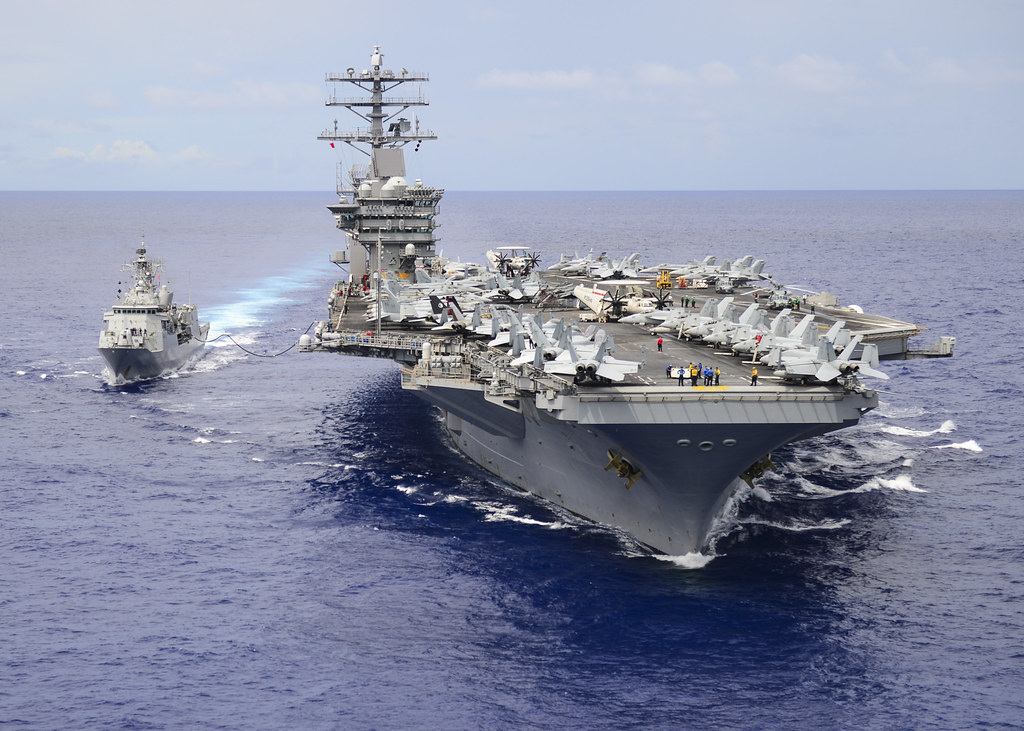
USS Nimitz (CVN 68) conducts a replenishment-at-sea with the Royal New Zealand Navy frigate HMNZS Te Kaha (F77), July 2. (U.S. Navy/MC3 Ian Kinkead) >>

PACIFIC OCEAN - HMNZS Te Kaha (F77), an Anzac-class frigate from the Royal New Zealand Navy, conducted bilateral operations with the Nimitz Carrier Strike Group in the Western Pacific, June 30 - July 5.

The Royal New Zealand Navy provided HMNZS Te Kaha to augment U.S. 7th Fleet forces after the USS Fitzgerald (DDG 62) sustained damages caused by a collision at sea. This event emphasizes the coordination and deep relationship between the two navies.

Bilateral interactions such as this with partner nations improve teamwork, readiness and the capability to respond quickly to various situations in the region, ranging from disaster relief to maritime security activities.

30 June 2017

USA: Exercise Talisman Saber 17 Commences in Australia

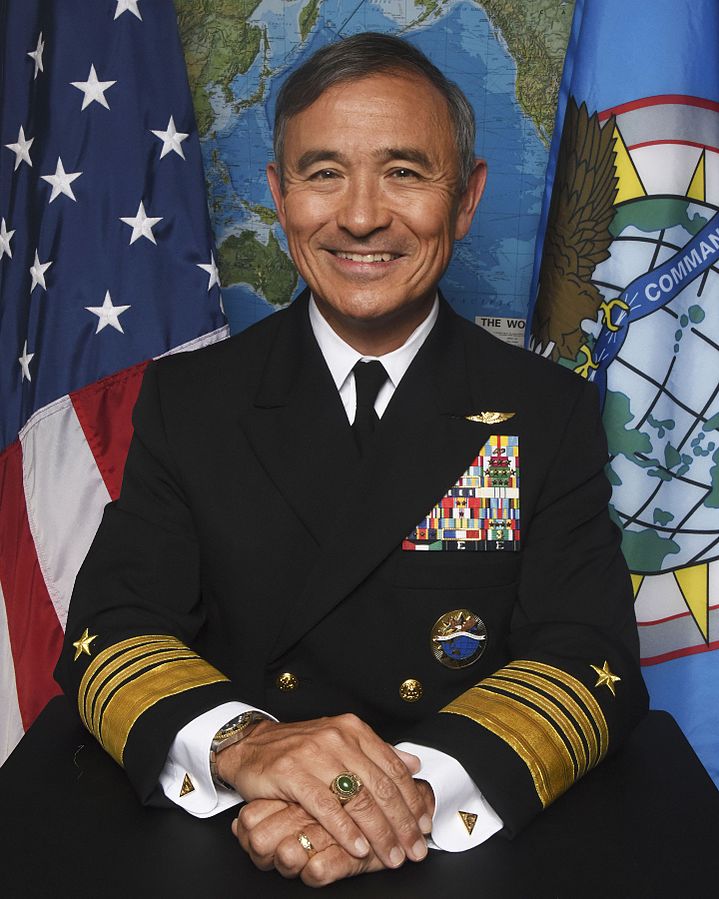
Adm. Harry B. Harris Jr (Image: Wiki Commons)
By Terri Moon Cronk 
DoD News, Defense Media Activity

WASHINGTON, June 29, 2017 — Talisman Saber is a realistic and challenging exercise that provides opportunities for the United States and Australia to innovatively prepare for regional and global security challenges, Navy Adm. Harry B. Harris Jr., commander of U.S. Pacific Command, said today.

Speaking at the opening ceremony aboard the U.S. Navy amphibious assault ship USS Bonhomme Richard at sea off the coast of eastern Australia, the admiral said Pacom is partnering in the biennial exercise with Australian allies for high-end warfighting scenarios for the seventh time. About 33,000 American and Australian service members are taking part.

“Exercises like Talisman Saber are precisely where we really learn how to take advantage of cutting-edge technology to outpace our adversaries,” Harris said. “It’s also a perfect place for our forces to operationalize a very important concept.”

The Pacom commander said he has challenged the Army, Navy, Air Force and Marine Corps to execute multi-domain battle, “to find new ways to enable our joint and multinational combined forces to be faster, more precise, more cost-effective, and most importantly, more lethal.

29 June 2017

News Story: China launches its most advanced homegrown class of guided-missile destroyers

By: Mike Yeo

MELBOURNE, Australia — China has launched the first of a new class of guided missile destroyer, the largest and most advanced of its type to be designed and built in the country. 

In a news release, China’s Ministry of National Defense, or MND, said the ship, which it did not identify, although widely known as the Type 055, was launched at a ceremony held at Shanghai's Jiangnan-Changxing shipyard on Wednesday morning. 

In addition, General Zhang Youxia, a member of China's Central Military Commission and head of its Equipment Development Department, attended the ceremony. He was joined by leaders of the People’s Liberation Army Navy, or PLAN, as well as those from the State Administration of Science, Technology and Industry for National Defense at the ceremony.

The MND release listed the ship’s displacement at 10,000 tons but did not provide further details, although satellite imagery of the ship being built suggests that it will be between 175 and 180 meters long with a beam of approximately 20 meters. 

Photos of the ceremony released by the MND and Chinese state media also suggest the Type 055 will be fitted with a bow-mounted sonar and a 64-cell vertical launch system, or VLS, for surface to air, anti-ship and cruise missiles in the forward section of the ship behind the 130mm dual-purpose gun. This ship will also include a set of VLS aft that will likely bring the total number of VLS cells carried by the ship to between 112 and 128 cells. 

Read the full story at DefenseNews

22 June 2017

USA: Nimitz Carrier Strike Group arrives in 7th Fleet

From USS Nimitz Public Affairs

USS Nimitz (CVN 68) transits the Pacific Ocean, June 17, while en route to U.S. 7th Fleet. (U.S. Navy/MC2 Holly L. Herline) >>

PACIFIC OCEAN - The Nimitz Strike Group, consisting of the aircraft carrier USS Nimitz (CVN 68) with embarked Carrier Air Wing (CVW) 11, Carrier Strike Group (CSG) 11 and Destroyer Squadron (DESRON) 9 arrived in the U.S. 7th Fleet area of operations, June 21..

While operating on patrol in 7th Fleet, Nimitz is slated to enhance maritime partnerships and promote peace and stability in the Indo-Asia-Pacific region.

“Over the past eight months we have been in a pretty intense training environment, which culminated into just a superb performance during COMPTUEX (Composite Training Unit Exercise),” said Rear Adm. Bill Byrne, commander, CSG 11. “We’re looking forward to working closely with our allies and partners in the Indo-Asia-Pacific practicing the skills we gained and enhancing relationships within the region. I am so proud of our team. While expectations are high externally, they are even higher internally.”

The U.S. 7th Fleet area of operations spans 48 million square miles from the International Date Line to the Western Indian Ocean.

20 June 2017

USA: USS Lake Erie completes relief mission in Sri Lanka

From Destroyer Squadron 7 Public Affairs

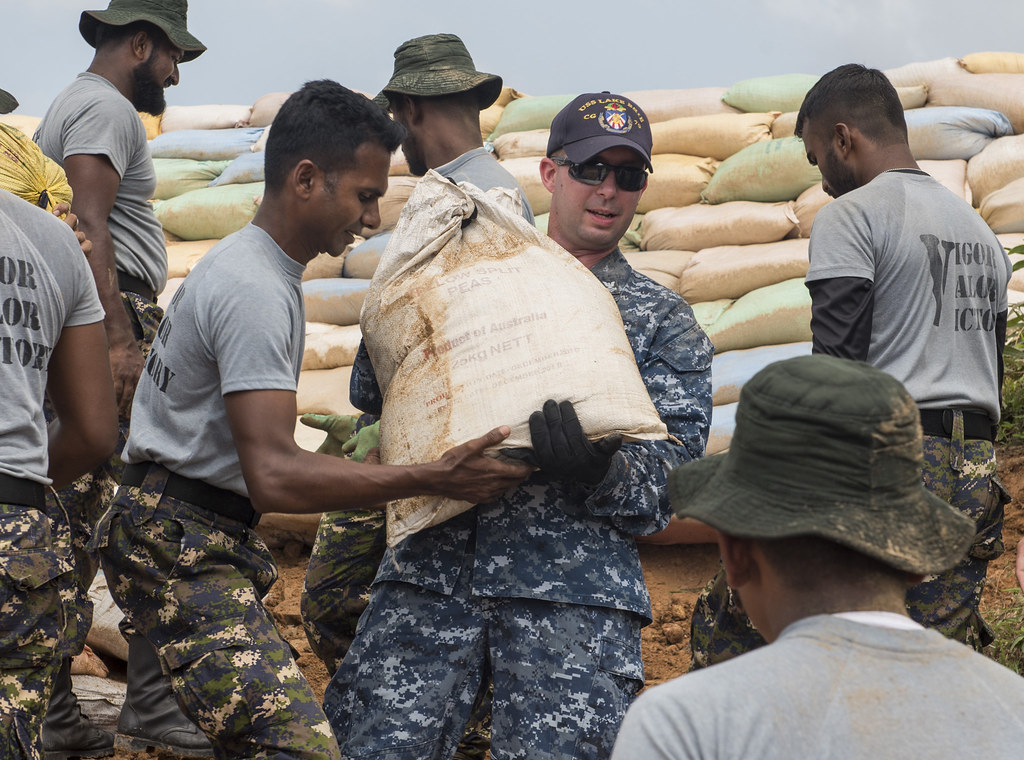
Fire Controlman 2nd Class Jason McEntire works with Sri Lankan Marines to repair levees during humanitarian assistance operations, June 12. (U.S. Navy/MC2 Joshua Fulton) >>

COLOMBO, Sri Lanka -U.S. Sailors from the guided-missile cruiser USS Lake Erie (CG 70) completed their contributions to the humanitarian assistance mission in Sri Lanka, June 17.

More than 400 Sailors participated in the mission in Sri Lanka, where recent heavy rainfalls brought by a southwest monsoon triggered flooding and landslides throughout the country, displacing thousands of people and causing significant damage to homes and buildings.

"Our mission here was straight-forward, to provide support and relief efforts to our friends in Sri Lanka who were impacted by this disaster," said Capt. Alexis T. Walker, commodore, Destroyer Squadron 7. "Working alongside Sailors and Marines from the Sri Lankan Armed Forces, our team conducted irrigation repairs, well rehabilitation and levee repairs throughout the region. I'm proud of our efforts this week and the assistance we were able to provide."

News Report: Philippines Welcomes Russian Navy Ship Visits, But No Discussions of Bases' Use

Russian warships are welcome in the Philippines but there have been no discussions of hosting Russian troops at its bases, Ambassador of the Philippines in Moscow Carlos Sorreta told Sputnik.

MOSCOW (Sputnik) — The envoy stressed that "there was absolutely no discussion" of the Russian use of Philippine military bases.

"What we have discussed are ship visits, for Russian ships to visit the Philippines often," Sorreta said in an interview published Monday.

On January 2-7, 2017, a Russian Pacific Fleet flotilla, including the Admiral Tributs large anti-submarine ship and the Boris Butoma tanker, made a friendly visit to the Manila port. The high point of the visit was Duterte’s tour of the Admiral Tributs.

The Russian missile cruiser Varyag and sea tanker Pechenga visited Manila on April 20-24, 2017. Duterte went aboard the Varyag. The leader was also informed about the main characteristics of the battleship, its weapons and combat capabilities and was introduced to the life of the Pacific sailors onboard.

This story first appeared on Sputnik & is reposted here with permission.

19 June 2017

USA: USS Ronald Reagan, Carrier Strike Group 5 arrives in Singapore

By MC2 Sara B. Sexton, CTF 70 Public Affairs

USS Ronald Reagan arrives in Singapore, June 17. (U.S. Navy/MC3 Kaila Peters) >>

SINGAPORE - The aircraft carrier USS Ronald Reagan (CVN 76), with the embarked Carrier Air Wing (CVW) 5, guided-missile destroyers USS McCampbell (DDG 85) and USS Barry (DDG 52), and guided-missile cruiser USS Shiloh (CG 67), arrived in Singapore for a routine port visit, June 17.

“Ronald Reagan Strike Group is thankful for the opportunity to visit the beautiful country of Singapore,” said Rear Adm. Charles F. Williams, commander, Task Force 70 and Carrier Strike Group 5. “Our Sailors look forward to experiencing the local culture and building relationships with the people of the Republic of Singapore. I’m thrilled to bring Carrier Strike Group 5 and Task Force 70 to Singapore so they can experience the same hospitality and beautiful area as I did during my tour here as Commander, Logistics Group Western Pacific and Task Force 73.”

The U.S. Navy routinely operates in the South China Sea and surrounding areas to maintain interoperability and presence in the area.

While in port, Sailors from the various ships will have the opportunity to participate in multiple community service events where Sailors will help out at local schools, churches, food banks and soup kitchens in the area. These events continue to build the relationship between the U.S. and the people of the Republic of Singapore.

Carrier Strike Group 5 is on patrol in the Indo-Asia-Pacific region supporting security and stability in the Indo-Asia-Pacific region.

10 June 2017

News Story: Navy Considers Reactivating Mothballed Warships

Oliver Hazard Perry class frigates (Image: Wiki Commons)
In a recent interview with defense industry outlet DefAero Report, NAVSEA commander Vice Adm. Thomas Moore raised the possibility that the Navy could reactivate mothballed ships as part of its plan to build up to a 355-vessel fleet. Among the candidates are the remaining Oliver Hazard Perry-class frigates and a number of the combat logistics ships, with an outside chance for the aircraft carrier Kitty Hawk – the Navy's last conventionally-fueled flat-top. 

"We'll go look at the [Oliver Hazard Perry-class] if there's utility there, we'll go look at some of the combat logistics force ships  . . . probably of the carriers that are in inactive status right now, Kitty Hawk is the one that you could think about," Moore said. "The carriers are pretty old, so I think there's limited opportunity in the inactive fleet to bring those back but we're going to go look at that ship by ship and put that into the mix." The first hulls in the Ticonderoga class of guided missile cruisers are off the table. "Most of those ships are obsolete and they've kind of been spare parts lockers for the last couple years," Moore said.

Read the full story at MarEx

07 June 2017

USA: Nimitz Carrier Strike Group departs San Diego for deployment

From Nimitz Strike Group Public Affairs

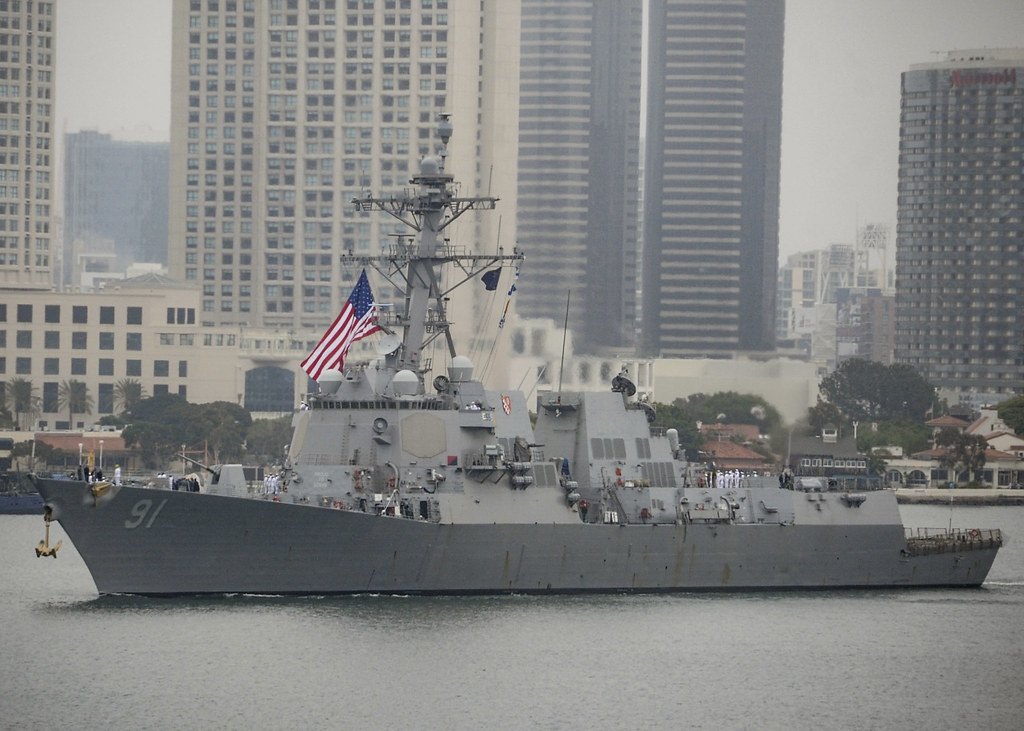
USS Pinckney (DDG 91) transits the harbor as it departs for deployment, June 5. (U.S. Navy/MCSN David Claypool) >>

SAN DIEGO - Ships and units from the Nimitz Carrier Strike Group (CSG) departed San Diego for a regularly scheduled deployment, June 5.

This is a previously planned, routine deployment and not in response to any specific incident or regional event. This deployment is an example of the U.S. Navy's routine presence in waters around the globe displaying our commitment to stability, regional cooperation and economic prosperity for all nations.

The aircraft carrier USS Nimitz (CVN 68), Arleigh Burke-class guided-missile destroyers USS Kidd (DDG 100), and USS Shoup (DDG 86) departed their homeports of Naval Base Kitsap, Washington, and Naval Station Everett, Washington, respectively, June 1, followed by a brief stop at Naval Air Station North Island where they met up with other ships and units of the carrier strike group.

News Report: US Aircraft Carriers Ronald Reagan, Carl Vinson Withdraw From Sea of Japan

The US aircraft carriers Ronald Reagan and Carl Vinson deployed to the Sea of Japan amid tensions around North Korea, withdrew from the area, media reported Thursday.

TOKYO (Sputnik) — According to the Japanese broadcaster NHL, the aircraft carriers left the sea on Monday after completing the military exercises last week.

The Carl Vinson will return to the home port in the US city of San Diego, the same reports added. However, the situation around North Korea's nuclear and ballistic missile program will be further monitored by USS Nimitz carrier which is supposed to join Japan and India for joint military exercises in the Indian Ocean in July and head to the Persian Gulf subsequently, the outlet suggested.

The Carl Vinson carrier and its strike group including two destroyers and a cruiser was initially to the area close to North Korea in April in response to the repeated ballistic missile tests by the country. Since then, the situation around Pyongyang escalated further with several more missile launches by North Korea including the most recent on May 29. The launches were carried out by Pyongyang in violation of the UN resolutions.

This story first appeared on Sputnik & is reposted here with permission.

02 June 2017

USA: Nimitz Carrier Strike Group ships depart Pacific Northwest for deployment

From USS Nimitz Public Affairs

Sailors man the rails as USS Nimitz (CVN 68) begins transiting the Puget Sound, June 1. (U.S. Navy/MC3 Cole C. Pielop) >>

BREMERTON, Wash. - USS Nimitz (CVN 68), USS Kidd (DDG 100), and USS Shoup (DDG 86) departed their homeports of Naval Base Kitsap and Naval Station Everett, respectively, June 1, for a regularly scheduled deployment.

This is a previously planned, routine deployment and is not in response to any specific incident or regional event. This deployment is an example of the U.S. Navy’s routine presence in waters around the globe displaying our commitment to stability, regional cooperation and economic prosperity for all nations.

“This deployment is the culmination of months of intensive training and preparations,” said Rear Adm. Bill Byrne Jr., commander, Carrier Strike Group (CSG) 11. “The Nimitz Strike Group stands ready to respond to a wide variety of contingencies, be that a humanitarian disaster or a regional incident. We’re honored to be in this position to answer the nation’s call to duty.”

Nimitz, the flagship of the strike group, Kidd and Shoup will make a brief stop at Naval Air Station North Island to meet up with the other ships and units of the strike group.

01 June 2017

News Report: USS Vinson, USS Reagan Carrier Strike Groups Conduct Dual Exercises in Sea of Japan

Carla Babb

PENTAGON — Two U.S. aircraft carriers have started military exercises together in the Sea of Japan, U.S. Navy officials tell VOA.

"The USS Carl Vinson Strike Group and USS Ronald Reagan Strike Group are conducting routine operations in the Western Pacific," Navy spokesman Lt. Loren Terry said.

Officials said the carriers, along with the ships and aircraft assigned to each, began dual operations in international waters within the sea on Wednesday.

The dual-carrier exercises come days after North Korea launched another missile into the Sea of Japan.

The multi-day, multi-carrier exercises provide "combatant commanders with significant operational flexibility should these forces be called upon in response to regional situations," Terry told VOA.

27 May 2017

USA: Nimitz Strike Group ships set to depart Pacific Northwest on deployment

From USS Nimitz Public Affairs

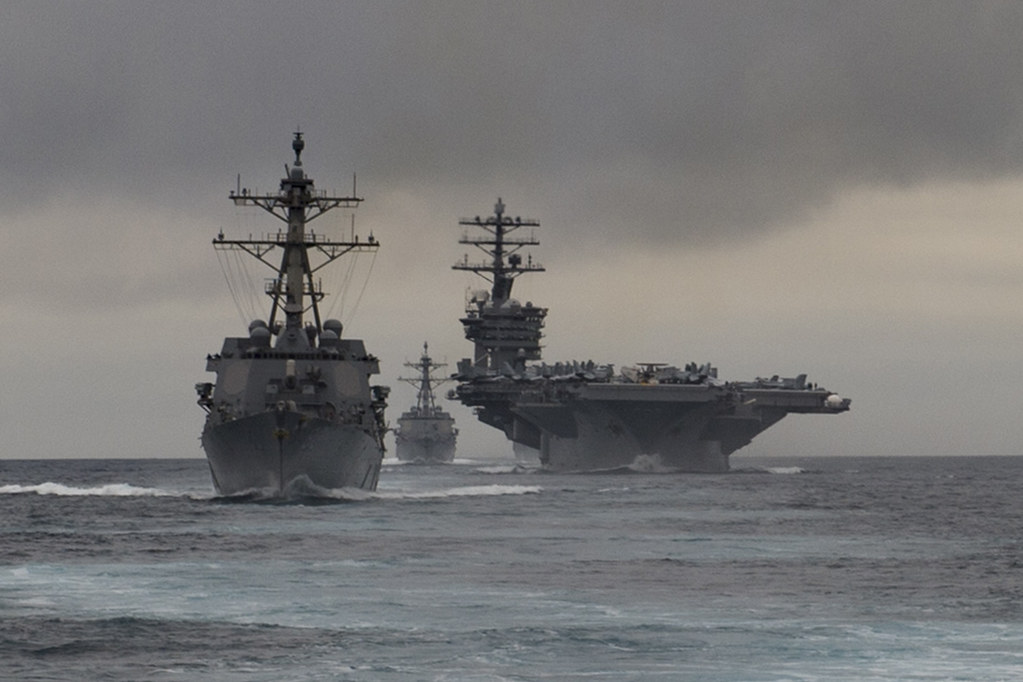
In this file photo, ships of the Nimitz Carrier Strike Group steam together during training in March. (U.S. Navy/MC3 Craig Z. Rodarte) >>

BREMERTON, Wash. USS Nimitz (CVN 68), USS Kidd (DDG 100), and USS Shoup (DDG 86) are scheduled to depart their homeports of Naval Station Kitsap-Bremerton and Naval Station Everett, respectively, June 1, for a regularly scheduled deployment.

Nimitz, the flagship of the Carrier Strike Group (CSG) 11, Kidd and Shoup will make a brief stop at Naval Air Station North Island to meet up with the other ships and units of CSG 11.

Strike Group units have spent most of the past seven months underway preparing for deployment. Nimitz participated in a series of pre-deployment inspections and training evolutions, including Board of Inspection and Survey and a Composite Training Unit Exercise that certified them ready for deployment.