Showing posts with label Triton UAV. Show all posts

12 July 2017

News Story: Allies And The Maritime Domain Strike Enterprise

Australia's 1st P-8 Poseidon takes flight (File Photo)
By ROBBIN LAIRD

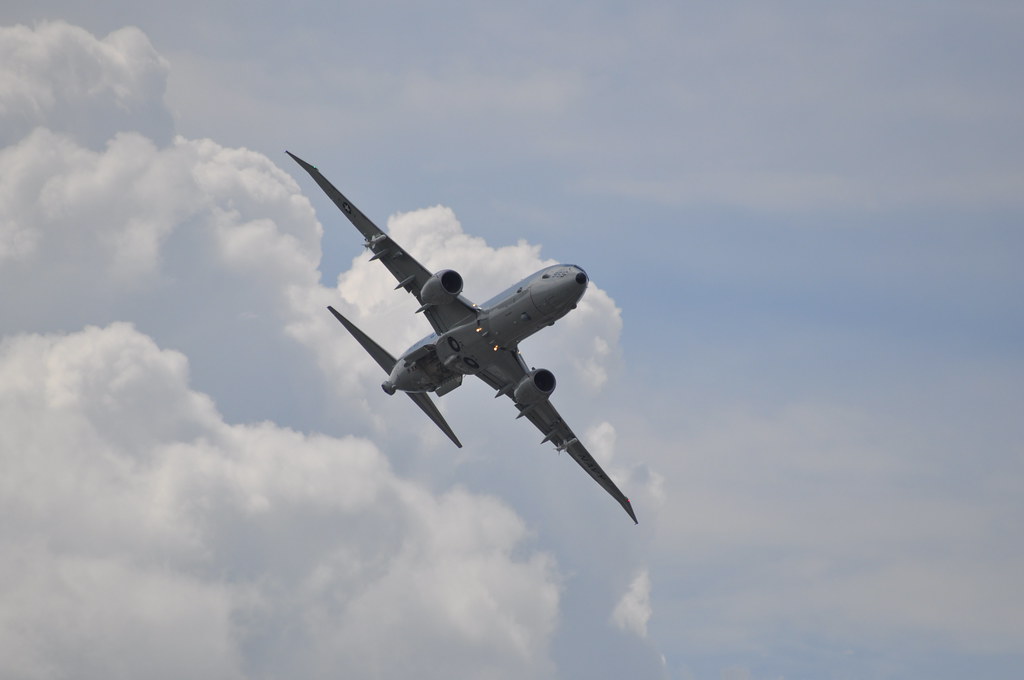
The UK, Norway and the US have signed an agreement to work together on anti-submarine warfare (ASW) in the North Atlantic which will leverage the joint acquisition of the P-8 aircraft, another example of the US and its allies an evolving defense capability in which allies are clearly key partners.

The P-8s is part of a cluster of software upgradeable airplanes which are defining the way ahead for combat airpower: the Australian Wedgetail, the global F-35, and the Advanced Hawkeye, all have the same dynamic modernization potential to which will be involved in all combat challenges of maritime operations.

All military technology is relative to a reactive enemy. As my colleague Ed Timperlake has noted: “It is about the arsenal of democracy shifting from an industrial production line to a clean room and a computer lab as key shapers of competitive advantage.”

Much as allied F-35 pilots and maintainers are being trained initially in the United States and then standing up national capabilities, the same is happening with the P-8/Triton allies. The Brits and Australians are training at Jacksonville Navy, and this will certainly happen with the Norwegians as well. In fact, an RAF pilot has recently topped 1,000 flight hours on the P-8 at Jacksonville. 

These allies cover key geographical territory, so shared domain knowledge and operational experience in the South Pacific and the North Atlantic is of obvious significance for US warfighting and deterrence. Given the relatively small size of the allied forces, they will push the multi-mission capabilities of the aircraft even further than the United States will do and, as they do so, the U.S. can take those lessons as well.

There is already a case in point. The Australians wanted the P-8 modified so they could do search and rescue — something that the US Navy did not build into its P-8s. Now that capability comes with the aircraft, something that was very much a requirement for the Norwegians as well. And the US Navy is finding this “add-on” as something of significance for the US.

Read the full story at Breaking Defense

02 June 2017

News Story: More Than Joint - The Aussies Forge A Way Ahead

A RAAF F-35 Lightning Fighter
By ROBBIN LAIRD

Australian Air Marshal Leo Davies highlighted the “institutional interoperability which the Royal Australian Air Force was shaping with its closest allies, and notably with the US Air Force and the US Navy during his recent visit to the US. The Aussies are not simply camp followers – they are shaping a way ahead an integrated force, rather than staying at the service platform level.

When Davies introduced the new RAAF strategy at the Avalon Air Show earlier this year, he highlighted the service’s way ahead:

“I don’t believe we, as an Air Force, understand how joint we need to be. We have come a long way – we talk a lot about joint, but I am not sure we are culturally able to shift from doing Air Force stuff first. I would like the Air Force in a joint context to begin to put the joint effect before our own Air Force requirements.”

When I interviewed him recently in his Canberra office, Davies underscored that the RAAF and the other services were adding new platforms as part of force modernization. But adding a new platform, even a key one like the F-35 was not enough to generate force transformation.

“It is not about how does this new platform fit into the force as it is, it is about how does this new platform enable the force to fight the way we need to be able to in the future?

“It has to be realistic but in a sense the reality we are looking at is not just the Air Force as it has fought in the past and present, but the Air Force as it vectors towards the future fight. If you don’t do this you will be only discussing and debating platforms in the historical combat space,” he said. “And when we come to new platform decisions, we are positioning ourselves to ask the right question of the services: How does a particular platform fit how we will need to fight in 10 year’s time? Is the Navy or the Army or the Air Force entitled to that particular capability choice if it doesn’t fit that criteria?”

Read the full story at Breaking Defense

12 May 2017

News Story: F-35 Drives Closer Integration With Allies - Aussie Air Chief

By COLIN CLARK

WASHINGTON: The F-35 Joint Strike fighter will drive deeper and more useful military connections between Australia, the United States and regional partners such as Japan and Malaysia, the head of Australia’s air force said today.

“This aircraft has redefined joint” for Australia, Air Marshal Leo Davies said at the Center for Strategic and International Studies this morning, accelerating policy and doctrine conversations between Australia’s services. “JSF also means we are more than friends and allies. We are now technology partners whose capability brings us shared futures.”

On a regional level, the F-35 provides “interoperability not only of Australian and US forces, but other regional and allied JSF operators.” Japan and South Korea are buying F-35As and Singapore is widely expected to buy F-35Bs.

Read the full story at Breaking Defense

27 April 2017

News Story: Allies Can Help US Lower Weapons Costs, Build New Force

RAAF E-7A Wedgetail refueled by A RAAF KC-30A MRTT
By ROBBIN LAIRD

Shifting from a primary focus on counterinsurgency land wars to building a high intensity combat force able to prevail against peer competitors is a significant challenge for the United States and its closest allies after 15 years of COIN.

A key dynamic within this effort is the crucial opportunity the US and its closest allies have to learn from each other thanks to the number of core weapon systems being bought at the same time.

The F-35, P-8, Triton and Growler are all being bought by the United States and by some of our closest allies, notably Australia.

And when we see American F-35As going to RAF Lakenheath this month, what can be missed is that at RAF Marham — located less than 30 miles from RAF Lakenheath — the first British squadron of F-35s will be stood up BEFORE the US does so at RAF Lakenheath. One hopes the US plans to ensure it gets as much synergy as possible between the bases where F-35s will be based in the UK.

Norway is also drawing upon this interactive modernization process to stand up its own 21st century combat force.

At the same time, Australia’s Wedgetail command and control aircraft and its KC-30A airborne tanker have been deployed for some time and are cutting edge systems NOT found in the US inventory.

Additionally, the British RAF is modernizing its Typhoons with long-range strike systems that are complementary to the F-35Bs, and they are doing it before the US has made similar adjustments to its legacy aircraft.

Read the full story at Breaking Defense

25 April 2017

News Report: Australia Buying Triton Surveillance Drones to Monitor Oceans

Australia is planning to buy surveillance drones for maritime patrol of its economic exclusion zone that is considered to be the third largest zone of a kind in the world.

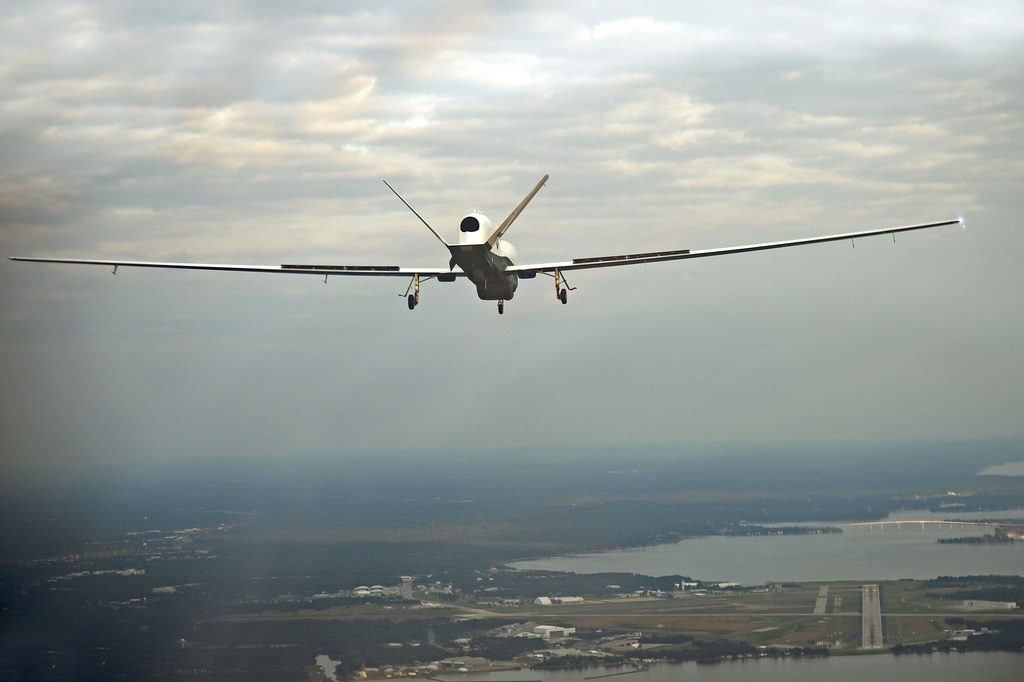
WASHINGTON (Sputnik) — The government of Australia is buying up to seven long range MQ-4C Triton surveillance drones to boost its capability to enforce the maritime exclusion zone across Indian and Pacific Oceans, Northrop Grumman announced in a press release on Monday.

"Per the nation’s 2016 Defense White Paper, the Commonwealth of Australia plans to acquire up to seven Triton unmanned aircraft systems for maritime patrol and other surveillance roles," the release stated.

30 January 2017

Think Tank: Triton to herald sea-change in RAAF surveillance

Matt Rainbow

The arrival in November of the first of Australia’s new P-8A Poseidon Maritime Patrol Aircraft is a reminder that the days of the RAAF’s AP-3C Orions are numbered. For three decades the Orions of 10 and 11 Squadrons performed roles, including anti-surface and anti-submarine warfare, search and rescue and overland intelligence, surveillance and reconnaissance (ISR).

The Poseidon can fly faster and stay on station longer than the Orion, can be refuelled in-flight and its radar, Electro Optic and Electronic Support Measure systems are a generation ahead of the latest AP-3C upgrades. The RAAF intends to have its 15 Poseidons in service by the late 2020s, on the same missions as the Orion.

But Australia will soon be acquiring a very different aircraft which is much less of a like-for-like replacement. The MQ-4C Triton, to be in service by 2019, will also be filled with sensors, but without a single crew member on-board. The remotely piloted aircraft (RPA) will conduct maritime surveillance for the RAAF alongside the Poseidon.

The RAAF operates Israeli Herons in Afghanistan but the Triton is a strategic-level asset which will likely be tasked at the highest levels of Defence. The RAAF plans to buy only seven for $2–3 billion. To operate the Triton effectively, the ADF will need to deal with several issues.

27 January 2017

News Story: Northrop Grumman Predicts Growth in Australia-Pacific Business

By: Nigel Pittaway

MELBOURNE, Australia, and WASHINGTON — A senior Northrop Grumman executive has forecast that the company’s footprint in Australia is set to double over the next three years, as it ramps up a major regional F-35 component repair and overhaul center and seeks further Australian Defence Force contracts. 

Speaking at the company’s information systems headquarters in McLean, Virginia, Chief Executive of Northrop Grumman Australia Ian Irving said the company sees significant near-term opportunities in a number of major Australian defense acquisition projects, which are expected to progress this year.  

“This is going to be a tremendous year for us; it really is the year for Australia. There are five major projects in which we are likely to participate in the first eight months of the year, in addition to assisting the commonwealth with their Triton cooperation program with the US Navy,” Irving said. “We should also be in a position to sign two big, new contracts by the end of the year as well.” 

The programs are the Defence Enterprise Resource Plan (ERP); Defence ISR Integration Backbone (DIIP, Joint Project (JP) 2096); Core Simulation Capability (CSimC, JP9711); Ground-Based Air and Missile Defence (Land 19 Phase 7B); Joint Battle Management System (Air 6500); and the already-announced acquisition of at least seven MQ-4C Triton unmanned maritime surveillance platforms (Air 7000 Phase 1B). 

The 2016 Australian Defence White Paper forecast the acquisition of Triton around the turn of the decade. Australia is also seeking to partner with the US Navy on the development of the Triton Multi-INT version, which is due to enter service in 2021.

Read the full story at DefenseNews

16 November 2016

AUS: Australia’s first P-8 Poseidon touches down

Australia's 1st P-8 Poseidon during testing in the USA (File Photo)
Australia’s newest addition to our airforce, the P-8A Poseidon, is a cutting edge surveillance and anti-submarine aircraft which will dominate the skies around the nation’s coastline.  It will greatly enhance Australia’s ability to keep our borders secure and guard our maritime approaches.

The Prime Minister of Australia, the Hon. Malcolm Turnbull MP, the Minister for Defence Industry the Hon. Christopher Pyne MP and the Minister for Immigration and Border Protection the Hon. Peter Dutton MP, together with the Chief of Air Force, Air Marshal Leo Davies, welcomed the new Poseidons in Canberra today.

These new aircraft will strengthen our existing comprehensive maritime surveillance capability, helping secure Australia’s borders, play a vital role in the fight against people smugglers and providing state of the art anti-submarine defences.

27 September 2016

Think Tank: Sea, air, land and space updates (27-Sep-2016)

Christopher Cowan, Thulasi Wigneswaran, Elisabeth Buchan and Alexander Vipond

Sea State

The US Navy will soon have eyes in the sky for much longer than before, having last week approved the commencement of low-rate initial production for the MQ-4C Triton unmanned aerial vehicle (UAV). The Triton, an intelligence, surveillance, and reconnaissance UAV, has a range of 8,200 nautical miles and can fly for up to 24 hours. This is good news for the RAAF, as it plans to fly seven Tritons alongside its future fleet of P-8 Poseidon maritime patrol aircraft to increase its broad area maritime surveillance capabilities.

The two-year saga of the two French Mistral class amphibious assault ships once destined for Russia has finally come to an end. The Egyptian Navy last week took possession of the second Mistral class vessel—named the Anwar el-Sadat after the (in)famous former Egyptian president—after receiving the first in June. While Russia may not be getting the ships it wanted, it’s trying to make the best of the situation by selling the Ka-52K attack helicopters once intended for the vessels to Egypt. The aircraft are expected to be delivered in 2017.

09 August 2016

Think Tank: UCAS and the RAAF’s future

Malcolm Davis

The U.S. Navy's X-47B Unmanned Combat Air System demonstrator flies over Edwards during a routine test mission. The UCAS-D program conducted the airworthiness test phase for the X-47B at Edwards, which came to a successful conclusion May 15 after more than two years of testing. (Image: Wiki Commons) >>

A common refrain when discussing the future of airpower is that ‘the F-35 is the last manned fighter’ and the future belongs to unmanned systems. The expanding use of unmanned air systems (UAS) such as Reapers and Predators against international terrorist networks implies a future of remote, push-button warfare. That entails minimal risk (on one side) for maximum tactical precision effect. The panorama of future battle is captured in targeting footage presented on evening news, and has become the centrepiece of movies—for instance, the excellent Eye in the Sky.

The 2016 Defence White Paper highlights Australia’s acquisition of an armed reconnaissance UAS for Army in the early 2020s (para 4.55), and seven unarmed MQ-4C Triton Unmanned Aircraft Systems for Air Force (4.38). Army already makes extensive use of tactical surveillance UAS such as the RQ-7B Shadow 200, while RAN has completed experimentation with the ScanEagle UAVS, and may employ Northrop Grumman MQ-8C Firescout on the Future Frigates and the Canberra-class LHDs.

06 July 2016

News Story: U.S. Navy Gains Experience As Fielding of P-8A Poseidon Expands

by Bill Carey

U.S. Navy crewmembers have given Boeing’s P-8A Poseidon positive reviews as the 737-derivative maritime patrol aircraft starts to enter service more widely in the U.S., as well as internationally. The first P-8A delivery (of up to 15) to the Royal Australian Air Force is scheduled for November, when the country will join India on the growing list of international operators. The UK also plans to acquire nine examples of the type.

Ultimately, the U.S. Navy plans to acquire 117 of the jets. So far, six East Coast patrol squadrons have completed the transition from the venerable Lockheed P-3C Orion to the Poseidon after training by Patrol Squadron Thirty (VP-30), the Navy’s fleet replacement training unit at Naval Air Station Jacksonville, Florida. VP-16, known as the “War Eagles,” achieved safe-for-flight status to fly the P-8A in January 2013 and became the first operational squadron that December when it deployed with six Poseidons to Kadena Air Base, Japan, in support of the 7th Fleet.

The focus now shifts from the East Coast base to NAS Whidbey Island, located in Puget Sound off Washington state. VP-30 will oversee transition training there of six West Coast squadrons, beginning in October with VP-4, the “Skinny Dragons,” the first of three Hawaii-based squadrons to relocate temporarily to Whidbey Island for transition to the P-8A.

Read the full story at AINonline

24 March 2016

Think Tank: Seeing the dragon on our doorstep (part 2)

Image: Flickr User - Chris de Visser
Malcolm Davis

In my previous post, I recommended Australia develop a networked Theatre ASW (TASW) capability—including building its own Integrated Undersea Surveillance System (IUSS)—as an essential capability in the face of likely Chinese PLA-N operations in our northern maritime approaches. The expansion of PLA-N submarine operations is but one dimension of the growing risk facing Australia from a rising China that will increasingly project power into Australia’s neighbourhood.

China’s growing anti-surface warfare (ASuW) capability is strengthening the PLA’s ability to wage offshore active defence within the Near and Middle Seas bound by the first and second island chains respectively. As China projects naval power to the Far Seas, this A2/AD envelope is certain to expand. In this eventuality, Australia’s future fleet of the Hobart class Air Warfare Destroyers and the SEA 5000 Future Frigates will face a growing threat from high speed, long range antiship cruise missile (ASCM) systems and land based antiship ballistic missile (ASBM) systems. The trend towards China pushing out its A2/AD perimeter is clear with investment into the DF-26 antiship capable intermediate range ballistic missile system with double the range of the existing DF-21D ASBM, and the YJ-18 (and here) long-range supersonic antiship cruise missile that can be launched from submarines, naval surface ships and aircraft.

18 March 2016

News Story: Second batch of four P-8s for the RAAF approved

P-8A Poseidon of the US Navy
The government has approved the acquisition of a second batch of four P-8A Poseidon maritime surveillance aircraft.

Acquisition of eight Boeing P-8As was approved in 2014 (and the first aircraft are now under assembly), but the recently released Defence White Paper’s accompanying Integrated Investment Program (IIP) revealed that, “Eight Poseidon aircraft will be introduced in the early 2020s, with seven additional aircraft to be acquired in two tranches to bring the total to 15 aircraft by the late 2020s.”

Approval of the first of those additional tranches of P-8s was subsequently announced by Defence Minister Senator Marise Payne at the RAAF’s Air Power Conference in Canberra on Tuesday.

Read the full story at Australian Aviation

16 March 2016

Think Tank: DWP 2016 - unmanned systems and the future ADF

MQ-9 Reaper
James Mugg

The 2016 Defence White Paper mentions ‘unmanned’ systems 15 times. The accompanying Integrated Investment Plan (IIP) [pdf] has 39 references. The government has clear ambitions to purchase UAVs for maritime surveillance and airborne strike, with unmanned systems for other roles evidently under consideration.

Starting with the most assured acquisition, the Triton maritime surveillance UAV has been under consideration for at least three years. The unarmed Triton will provide a high-altitude, high-endurance maritime surveillance capability in concert with the incoming (manned) P-8 Poseidon fleet and other assets. The RAAF is expected to acquire the Tritons from the early 2020s.

As has been flagged previously, the government will also seek to acquire a number of armed reconnaissance UAVs for the Army by the early 2020s. The IIP outlines a plan to acquire ‘armed intelligence, surveillance and reconnaissance unmanned aircraft’ between 2018 and 2038 in Table 8. Until now, Australia has only operated unarmed UAVs like the RQ-7B Shadow, although ADF personnel have been training on US Air Force MQ-9B Reaper armed UAVs for at least a year. A purchase of something like the Reaper is a likely outcome.

04 March 2016

Think Tank: DWP 2016 - the future of C4ISR

Part of the Jindalee Operational Radar Network (JORN)
Annaliese FitzGerald

Broader investment in C4ISR is becoming increasingly critical in the face of evolving threats and changes in technology according to the 2016 Defence White Paper.

The Government plans to invest around $22 billion (out-turned prices) or 9% of the Integrated Investment Program to improve intelligence, surveillance, reconnaissance, electronic warfare, space, and cyber capabilities over the next decade.

The key C4 Investments include:
  • A Military Satellite Capability to enhance Australia’s satellite communications operations and overall communications capability ($507 million)
  • Common Operating Picture Capability Program, a situational awareness capability for effective decision-making and mission execution ($500–600 million)
  • Position, Navigation and Timing Capability to enhance operational effectiveness ($750–$1 billion)
  • Air Operations Centre ($750 million–$1 billion)

To bolster intelligence capabilities modernised all-source intelligence systems will be implemented across the organisation. Specifically investment in intelligence and mission data capabilities will support pre-programming of the Growler, Joint Strike Fighter and Poseidon aircraft, Hobart Class Air Warfare Destroyers and modern armoured vehicles.

02 March 2016

Think Tank: The next Battle of the Beams

Australia's 1st E/A-18G Growler during it's roll out at Boeing
James Mugg

The Battle of the Beams was a period during World War II concerning German attempts to harness radio navigation for night bombing in the UK and the resulting British countermeasures. The British eventually managed to jam or distort all three iterations of German radio signals, making it more difficult for the bombers to hit their targets. That episode dramatically illustrates the ephemeral nature of advantages in electronic warfare, especially when operating against an agile and sophisticated foe.

Since the end of the Cold War and the onset of the War on Terror, the principal targets of Western military power have been relatively low-tech groups in the Middle East. Electronic warfare platforms like the US Navy’s EA-6B Prowler were used to jam enemy communications during operations, and the relatively low tech of the enemy limited their ability to counter. But the constant threat to ground troops from improvised explosive devices (IEDs) led to the development of counter-IED jamming systems, and a new ‘invisible war’ emerged. As quickly as vehicle-mounted jammers could be reprogrammed, insurgents made use of a variety of commercial technologies—cell-phones, key-fobs, door remotes—to adapt.

26 February 2016

Think Tank: DWP 2016 - the future RAAF

RAAF F/A-18F Super Hornet
Ashleigh Sharp

The 2016 Defence White Paper emphasises the importance of a potent strike and air combat capability for the defence of Australia and its national interests. Over the next decade, Defence has committed to invest between $44.2 and $56.1 billion in key air capability developments. 

The RAAF’s current air combat capability is built on a fleet that combines 24 F/A-18F Super Hornets and 71 F/A-18A/B Hornets with six E-7A Wedgetail airborne early warning and control platforms and five KC-30A multi role tanker transports.

Below are the key platforms which the RAAF will acquire and develop over the next decade: 

Think Tank: Force structure in the 2016 Defence White Paper

Malcolm Davis

A key aspect of the new Defence White Paper is significant enhancement to ADF force structure. In previous White Papers, a list of four principal tasks has shaped Australian military strategy. In the new White Paper, those four tasks have become three ‘strategic defence objectives’ (see paragraph 3.3), with once again, the defence of Australia as the first; securing maritime Southeast Asia and the Pacific the second; and contributing to stability across the Indo–Pacific region and protecting a rules-based global order the third.

In this sense, the boost to the ADF’s joint maritime expeditionary capabilities is apt for the emerging strategic outlook where the ADF’s traditional military–technological edge is more openly contested. The commitment to acquire twelve future ‘regionally superior’ submarines is emphasised as the centrepiece of the ADF’s emerging force structure. The new boats will be acquired under a rolling acquisition process beginning with the down-select from the Competitive Evaluation Process this year, with the first submarines entering service by the early 2030s. The acquisition of the new submarines will be complemented with a review of evolving strategic circumstances and developments in submarine technology in the late 2020s which will consider the case for other specifications, though it’s unclear exactly what that means.

Given that the new boats won’t be entering service until the early 2030s, any need to shift gears and change direction so late in the program would only resonate with later builds in the out-years of the project. That capability will need to encompass network-centric capabilities if it’s to fully enable the boats to employ unmanned underwater vehicles (UUVs) and use deployable acoustic arrays as part of a complete Theatre Anti-Submarine Warfare capability.

10 February 2016

News Story: (New Zealand) Drones an option to replace Orions

Nicholas Jone

Replacement alternatives are being considered for ageing aircraft due to be retired in mid-2020s.

The military is considering using unmanned drones to patrol waters surrounding New Zealand.

At present, six Orion aircraft provide airborne surveillance, support for customs and police operations, search and rescue missions and disaster relief.

Illegal fishing and drug smuggling need to be watched for in New Zealand's Exclusive Economic Zone (EEZ), which is the fourth largest in the world and 20 times the country's land mass.

The Defence Force's P-3K2 Orions, which normally have a crew of 12 and also provide surveillance in the Pacific and Southern Ocean, are due to be retired from service in the mid-2020s.

A Defence spokesman told the Herald that a project examining replacement options was under way.

"It is still in the early capability definition phase. Remotely piloted vehicles will be considered as part of the project, along with piloted and space-based systems."

Australia will supplement the replacement of its own Orions with up to seven MQ-4C Triton unmanned aerial vehicles (UAVs), which have been under development by the United States Navy.

The drones, made by American firm Northrop Grumman, have the wingspan of a small airliner, weigh nearly 15,000kg and and are able to fly for more than 24 hours at a time.

State-of-the-art sensors provide a 360-degree view of surrounds, for more than 2000 nautical miles.

Read the full story at New Zealand Herald

14 January 2016

Think Tank: The Gulfstream G550 and the ADF—plugging the ISR gap

Malcolm Davis

The Australian Defence Force will soon acquire an important new platform that will enhance its intelligence, surveillance and reconnaissance (ISR) capabilities, focusing on electronic intelligence (ELINT) and signals intelligence (SIGINT) gathering.

The US Defense Department recently revealed that several Gulfstream G550 executive jets will be modified by L-3 Communications Mission Integration in Texas under a under a US$93.6 million USAF foreign military sales (FMS) contract, with the capability being introduced into operational service by the end of next year.

The G550 performance envelope boasts a long range of 6,750nm (12,501km), a high subsonic cruise of Mach 0.885, and a short take-off and landing distance. That makes it a truly strategic platform, able to range far and wide across the Indo-Pacific region to perform vital intelligence gathering and other specialised tasks. It is by definition a high value asset for the ADF.

Although the Australian government is yet to officially comment on the acquisition, it seems highly likely that Australia will follow the lead set by other countries which operate the platform and emphasise the ISR role for the aircraft. A total of 37 states operate nearly 200 aircraft in support of a variety of government and military service special missions ranging from the more mundane executive transport through to more esoteric roles such as strategic reconnaissance, SIGINT and ELINT, and to assist with the development of radar and electronic systems.