Showing posts with label RAAF. Show all posts

23 September 2017

India: Visit of Chief of the Air Staff to Australia

Air Chief Marshal Birender Singh Dhanoa, Chief of the Air Staff is on an official visit to Australia from 19-22 Sep 17. The visit is intended to further strengthen the existing defence cooperation between the Air Forces of the two countries. 

During his stay, he is scheduled to hold talks with top brass of the Royal Australian Air Force on security challenges being faced by the two forces in the current geopolitical scenario and explore ways to deepen defence cooperation. The main focus of the visit is on improving bilateral relations, promoting defence ties and exploring further area of defence cooperation between the two Air Forces. 

During the visit, the CAS would visit the Headquarters of Royal Australian Air Force and operational air bases. 

25 August 2017

News Story: Use Allied Investments To Help Rebuild US Military

RAAF Wedgetail AEW/C Aircraft (File Photo)
By ROBBIN LAIRD

The shift from slo mo — counterinsurgency operations — to high intensity combat is a major challenge for the US military and its allies. It is a culture shift, a procurement shift and an investment shift. But mobilization is even more important than modernization.

To get ready for this shift, our weapons inventory needs to become more robust. In visiting US bases, a common theme we hear is the challenge of basic inventory shortfalls.

The Trump Administration came to power promising to correct much of this. But there simply is not enough time and money to do readiness and training plus ups, mobilization and rapid modernization.

As a businessman, Donald Trump might take a look at how the Pentagon actually functions as an effective business in equipping the force. Having highlighted the question of allied spending, he might be pleased to learn of significant allied investments in new combat systems which his own forces can use, saving American taxpayers money and enhancing our military effectiveness at the same time.

One way to augment US forces would be to do something which might seem to be at odds with the Make America Great notion. As one of my Danish friends put it well: “I have no problem with the idea of making America great again. For me, the question is how?”

One way would be to leverage existing allied capabilities which, if adopted by the US forces, would save money but, even more importantly, would ramp up the operational capability of the US forces and their ability to work with allies in the shortest time possible. It would also allow the US to target investments where possible in break through programs which allies are NOT investing in.

Read the full story at Breaking Defense

22 August 2017

News Story: Singapore Air Force to train in Australia for another 25 years under new treaty

SINGAPORE, Aug. 21 (Xinhua) -- The Republic of Singapore Air Force (RSAF) will conduct training at an airbase in Western Australia for another 25 years, under a new treaty signed here Monday at a high-level dialogue between the two countries.

During the 10th Singapore-Australia Joint Ministerial Committee (SAJMC) meeting, the Singaporean Defense Minister Ng Eng Hen and Australian Minister for Defence Marise Payne signed the pact that will allow the RSAF to maintain and operate its Flying Training Institute in the Royal Australian Air Force (RAAF) Base Pearce for another 25 years.

The meeting was jointly presided by the Singaporean Foreign Minister Vivian Balakrishnan and his Australian counterpart Julie Bishop, which also attracted the ministers for trade from both countries.

Read the full story at Xinhua

09 August 2017

News Story: Australia provides $20M worth of aid to Marawi

By Patricia Lourdes Viray

MANILA, Philippines — Australian Foreign Minister Julie Bishop on Tuesday announced that their government will provide $20 million worth of assistance over four years to civilians affected by the conflict in Marawi City.

The assistance would also contribute to peace building in the area, according to Australia's top diplomat.

"Yesterday I met with Philippines President Rodrigo Duterte in Manila, our second meeting for 2017. We discussed the conflict in Marawi and the impact it is having on civilians in the region," Bishop said in a media release.

Bishop added that the $20-million assistance would be in addition to the emergency food and other supplies worth $920,000 that she announced last June 20.

Around 360,000 people were forced to flee their homes due to the siege in Marawi City following an attack from ISIS-inspired Maute group.

"Australia’s support will help meet the urgent needs of these displaced people including through child protection and counselling services," Bishop said.

Read the full story at PhilStar

08 August 2017

Industry: Cubic Wins Contract to Provide Simulation Services for the Royal Australian Navy

Cubic Global Defense to support Navy Synthetic Warfighting Centre with development and delivery of simulation-enabled training events

SAN DIEGO – Aug. 7, 2017 – Cubic Global Defense (CGD), a business unit of Cubic Corporation (NYSE: CUB), today announced that Cubic Defence Australia has been selected as the primary contractor for the development and delivery of local and distributed simulation-enabled training events for the Royal Australian Navy (RAN). The four-year contract, valued at approximately USD $7.11 million or AUD $9 million, provides a wide range of simulation planning, technical support and professional interactors to enhance RAN’s multisite synthetic training events at the Navy Synthetic Warfighting Centre (NSWC).

The NSWC was recently established at the HMAS Watson Naval Base on Sydney Harbour. The NSWC will facilitate synthetic training events and focus on delivering local and distributed mission training activities in both land-based simulators and ships in an agile manner.

26 July 2017

USA: Talisman Saber a success, 31st MEU re-embarks Bonhomme Richard ARG

By Staff Sgt. T. T. Parish, 31st Marine Expeditionary Unit

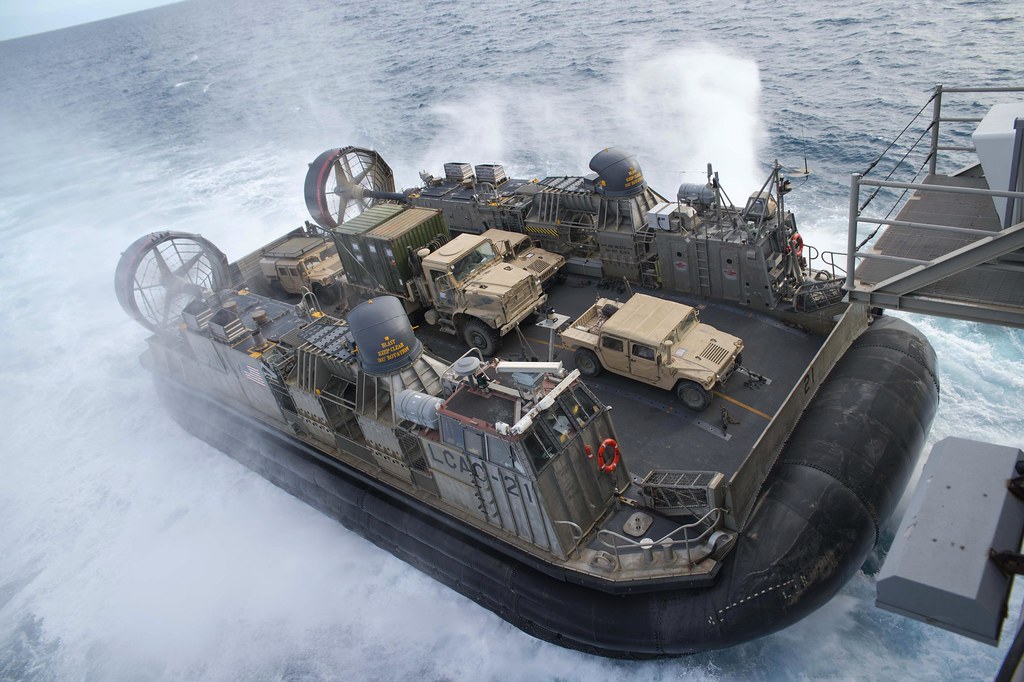
A landing craft air cushion from Naval Beach Unit 7 approaches USS Bonhomme Richard (LHD 6), July 23, as Marines return from training during Talisman Saber. (U.S. Navy/MC3 William Sykes) >>

BRISBANE, Australia - Marines and Sailors with the 31st Marine Expeditionary Unit completed the biennial Exercise Talisman Saber, re-embarking aboard the U.S. Navy ships of the USS Bonhomme Richard Expeditionary Strike Group off the coast of Queensland, Australia, July 23-25.

The Marines and Sailors, along with their counterparts in the Australian Defence Forces, spent several weeks building bilateral capabilities and strengthening the U.S.-Australian defense posture while honing a long-lasting relationship between the two nations.

The exercise was a resounding success for the 31st MEU and the members of the Australian military, according to Col. Tye R. Wallace, commanding officer of the 31st MEU.

"Working with our allies and partners has been extremely rewarding. Talisman Saber offers a unique opportunity to increase our interoperability with the Australians," said U.S. Marine Corps Col. Tye R. Wallace, commanding officer of the 31st MEU.

25 July 2017

USA: Soldiers Prove Mettle, Readiness in Talisman Saber

By Army Sgt. Frank Strumila, 3rd Battalion, 21st Infantry Regiment

QUEENSLAND, Australia, July 24, 2017 — Australia is not for the faint of heart. Scorpions, snakes, and spiders lurk in the Outback; treacherous terrain crisscrosses the northeastern countryside; extreme temperature shifts can leave you sweltering during the day and chilled to the bone at night.

These challenges did not deter the soldiers of the U.S. Army's 25th Infantry Division as they trained alongside their Australian counterparts during Talisman Saber 17.

Talisman Saber is a multinational, multiechelon exercise held in Australia every other year. This year, 33,000 troops from Australia, New Zealand, Canada and Japan trained alongside Americans from all military branches.

As part of Talisman Saber, the Australian Defense Force's 3rd Brigade conducted a certification field training exercise called Operation Hamel. The soldiers associated with the 1st Stryker Brigade Combat Team, 25th Infantry Division, from Alaska, Hawaii, and around the Pacific, supported 3rd Brigade's certification as a subordinate maneuver force.

For the soldiers from Alaska, Talisman Saber 17 was the first of three exercises supported by Pacific Pathways, a U.S. Army Pacific initiative of exercises that take place annually around the Asian Pacific region. After completing Talisman Saber 17, the Task Force will travel next to the Hanuman Guardian exercise in Thailand and then to Orient Shield in Japan to build both readiness and interoperability with multinational partners.

12 July 2017

News Report: US Approves $101Mln Sale of Radio, Missile Systems for F-18 Jets to Australia

The US Department of State has approved a more than $101-million sale of radio communications and missile countermeasures systems to Australia for use on F/A-18E/F Super Hornet combat jets, the Defense Security Cooperation Agency (DSCA) said in a news release.

WASHINGTON (Sputnik) — Australia requested the possible sale of thirty-two Multifunctional Information Distribution System Joint Tactical Radio System (MIDS JTRS) with four channel Concurrent Multi-Network (CMN-4), and thirty-nine AN/ALQ-214A(V)4 Countermeasure Systems," the release explained.

"The State Department has made a determination approving a possible Foreign Military Sale to Australia for upgrades for F/A-18E/F Super Hornet aircraft," the release said on Tuesday. "The estimated cost is $101.4 million."

The purchase will include all system integration and testing, component improvement, technical document updates, personnel training and training equipment upgrades and technical assistance, the release added.

This story first appeared on Sputnik & is reposted here with permission.

11 July 2017

News Report: Australian Air Force Partners With US Navy for New Electronic Warfare Capability

RAAF E/A-18G Growler Electronic Warfare/Attack Aircraft
Australia is moving forward with US defense giant Raytheon for the next-generation jammer program, to ensure the Royal Australian Air Force (RAAF) and its friends in the US Navy can engage all types of electronic warfare attacks in the South Pacific Theater and beyond.

The next-generation jammers will be attached to a fleet of a dozen Boeing EA-18G Growler aircraft the RAAF plans to operate from midway through 2018, according to IHS Jane’s. RAAF is partnering with the US Navy on interoperability, installation and likely training, according to the outlet.

Growlers are one of two types of planes operated by the Pentagon capable of operating in hostile or anti-access environments, a US Navy pilot who has flown EA-18Gs told Foxtrot Alpha in 2015.

Electronic warfare is crucial to how the US Navy operates, the airman said. 

07 July 2017

AUS: Growler full fleet arrive in Australia

Minister for Defence, Senator the Hon Marise Payne, together with Air Vice Marshal Steven Roberton, Air Commander Australia; today welcomed the full fleet of EA-18G Growler electronic attack aircraft to RAAF Base Amberley.

Since the first two Growlers arrived in Australia in February 2017, the fleet has grown to the full twelve aircraft.

Minister Payne said the arrival of the Growler provides a potent and technologically advanced new capability for the Australian Defence Force (ADF). 

“We are the only country outside the United States operating the EA-18G Growler and the full fleet arrival represents a significant leap forward in joint electronic warfare capability,” Minister Payne said. 

“This is an amazing achievement for the ADF. These aircraft are able to support the full spectrum of Defence missions, including operations with coalition partners.

06 July 2017

USA: USS John S. McCain participates in Talisman Saber, Field Training Exercise - North

By MC3 Joshua Mortensen, USS John S. McCain (DDG 56) Public Affairs

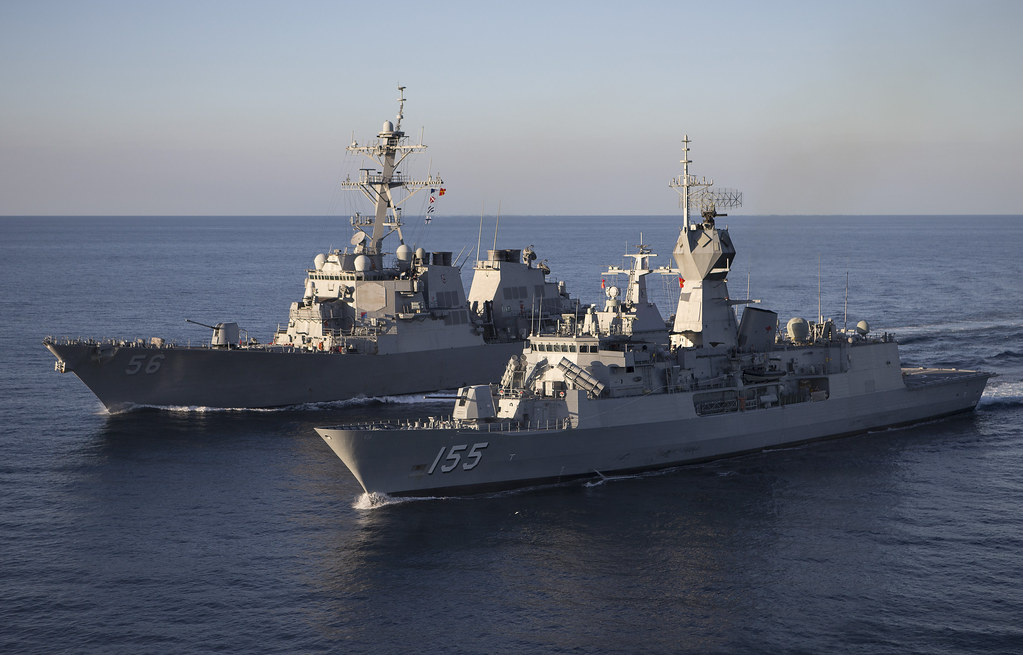
USS John S. McCain (DDG 56) sails alongside the Royal Australian Navy frigate HMAS Ballarat (FFH 155) during exercise Talisman Saber 17 Field Training Exercise - North, Jun 26. (Royal Australian Navy photo) >>

DARWIN, Australia - The Arleigh Burke-class guided-missile destroyer USS John S. McCain (DDG 56) participated with four Royal Australian Navy ships, the Royal Australian Air Force, and United States Marine Corps during Field Training Exercise - North (FTX-N).

FTX-N is a precursor to Talisman Saber 17 (TS 17) while on patrol in the 7th Fleet area of operations.

Talisman Saber is the largest Australia-U.S. bilateral exercise. It provides a realistic and challenging training environment to practice readiness and interoperability between the two nations, while enhancing security and stability in the Indo-Asia-Pacific region.

FTX-N consisted of several exercises with the Royal Australian Navy (RAN) including: Division Tactics (DIVTACS), Air Defense Exercises (ADEX), and a Force Protection Exercise (FPEX) with the Royal Australian Navy frigates HMAS Ballarat (FFH 155) and HMAS Melbourne (FFG 05).

News Story: Aussie gov't announces upgrades to air force fleet

CANBERRA, July 5 (Xinhua) -- The Australian government on Wednesday announced plans for a 582.5- million-Australian dollar (443.5 million U.S. dollar) upgrade for the Royal Australian Air Force (RAAF)'s fleet of six E-7A Wedgetail airborne early warning and control (AEW&C) aircraft.

In a media release, the nation's Defence Industry Minister Christopher Pyne said the Wedgetail was one of the most advanced pieces of technology within the RAAF, and that the upgrades to the early warning and control capability would maintain Australia's dominance in the air.

"The Wedgetail is a modified Boeing 737-700, with the addition of advanced Multi-Role Electronically Scanned Array (MESA) radar and 10 mission crew consoles. It is one of the most advanced pieces of aerospace technology in the Australian Defence Force," Pyne said.

Read the full story at Xinhua

29 June 2017

USA: Exercise Talisman Saber 2017 highlights enduring US, Australia alliance

From U.S. Army Pacific Public Affairs

In this file photo, Royal Australian Navy and U.S. Navy ships steam together during Talisman Saber in 2015. (Royal Australian Navy photo) >>

FORT Shafter, Hawaii - More than 33,000 U.S. and Australian personnel will participate in the biennial military training exercise Talisman Saber 2017 in Australia, June 23 to July 25, 2017.

Talisman Saber, jointly sponsored by the U.S. Pacific Command and Australian Defence Force Headquarters Joint Operations Command, will incorporate U.S. Army, Navy, Marine Corps and Air Force and the Australian Defence Force as well as other government agencies from each country.

Featuring 21 ships, to include the U.S. Navy aircraft carrier USS Ronald Reagan (CVN 76), the Bonhomme Richard Expeditionary Strike Group, and more than 200 joint aircraft, this seventh iteration of the exercise will focus on training a Combined Task Force of U.S. and Australian forces in a mid-intensity, high-end warfighting scenario, incorporating interagency participation, along with a command post exercise involving a transition between a 3 and 4-star Headquarters. U.S. Pacific Command units and Australian forces will conduct live and virtual training exercises in multi domains on sea, land, air, cyber and throughout multiple training areas in and around Australia.

27 June 2017

USA: Possible Foreign Military Sale to Australia for Gulfstream G550 Aircraft with Airborne ISR and EW (AISREW) mission systems

A G550 with an AISREW system installed under the fuselage
WASHINGTON, Jun. 26, 2017 - The State Department has made a determination approving a possible Foreign Military Sale to Australia for Gulfstream G550 Aircraft with Airborne Intelligence, Surveillance, Reconnaissance, and Electronic Warfare (AISREW) mission systems. The estimated cost is $1.3 billion. The Defense Security Cooperation Agency delivered the required certification notifying Congress of this possible sale on June 23, 2017.

The Government of Australia requested the possible sale of up to five (5) Gulfstream G-550 aircraft modified to integrate Airborne Intelligence, Surveillance, Reconnaissance, and Electronic Warfare (AISREW) mission systems, Global Positioning System (GPS) capability, secure communications, aircraft defensive systems; spares, including whole life costs of airborne and ground segments; aircraft modification and integration; ground systems for data processing and crew training; ground support equipment; publications and technical data; U.S. Government and contractor engineering, technical and logistics support services; flight test and certification; and other related elements of logistical and program support. The total estimated program cost is $1.3 billion.

24 June 2017

News Story: Australian spy planes to help the Philippines in fight against IS & Philippines welcomes Australia's offer to send surveillance planes

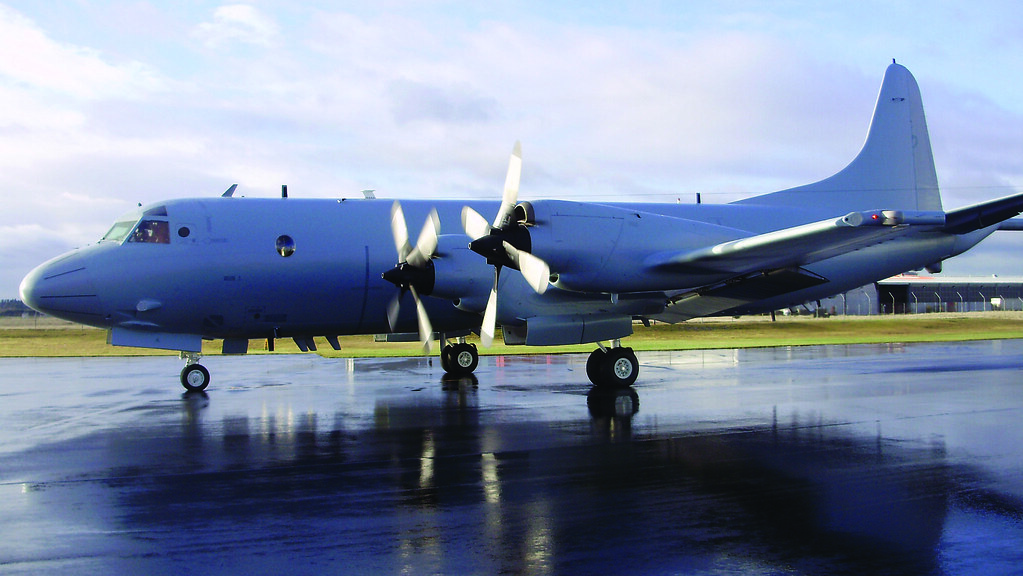
Royal Australian Air Force (RAAF) AP-3C Orion
Australian spy planes to help the Philippines in fight against IS

CANBERRA, June 23 (Xinhua) -- Australia's Defense Minister on Friday confirmed that state-of-the-art Royal Australian Air Force (RAAF) spy planes will fly intelligence missions over the southern parts of the Philippines to assist local forces in the fight against Islamic State in the region.

In a statement on Friday, Defense Minister Marise Payne said that two of the RAAF's AP-3C Orion aircraft would provide aerial intelligence support to the local armed forces, as they continue to try and drive IS from Marawi City, which is located inland in the north-west part of Mindanao island.

"The regional threat from terrorism, in particular from (Islamic State) and foreign fighters, is a direct threat to Australia and our interests. Australia will continue to work with our partners in South East Asia to counter it," Payne said in an official statement.

Read the full story at Xinhua

---

Philippines welcomes Australia's offer to send surveillance planes

MANILA, June 23 (Xinhua) -- The Philippines expressed on Friday its welcome to Australia's offer to send its intelligence-gathering planes to help the country crush the militants allied with the Islamic State (IS) in the southern Philippine city of Marawi.

Ernesto Abella, President Rodrigo Duterte's spokesman, told a news conference in Davao City that the Philippines welcomes Australia's offer, adding that the Philippine government "would gladly welcome any form of foreign assistance allowed under our constitution to help suppress the rebellion in Marawi."

Australian Defense Minister Marise Payne said in a statement that Australia will send two of its advanced intelligence-gathering AP-3C Orion planes to help the Philippine military crush the remaining Islamist militants allied with the IS in the besieged southern Philippine city of Marawi.

Brig. Gen. Gilbert Gapay, the deputy commander of the Eastern Mindanao Command, lauded the deployment of Australian surveillance aircraft, stressing the importance of intelligence surveillance and reconnaissance capability in the military operations.

Read the full story at Xinhua

News Story: Australia sends spy planes to Marawi

Royal Australian Air Force (RAAF) AP-3C Orion
By Patricia Lourdes Viray

MANILA, Philippines — The Australian government has offered to send two surveillance aircraft to assist the Philippines in its fight against ISIS-inspired militants in Marawi City.

Two AP-3C Orion aircraft from the Royal Australian Air Force will provide surveillance support to the Armed Forces of the Philippines.

Presidential spokesperson Ernesto Abella said that the government gladly welcomes any form of foreign assistance to help suppress the rebellion in Marawi.

"Our Defense officials are in close coordination with their Australian counterparts in the latter’s offer of providing surveillance support to the Armed Forces of the Philippines," Abella said in a televised press briefing.

Read the full story at PhilStar

21 June 2017

News Report: Australia Suspends Syria Airstrikes Amid US-Russia Tensions

Ken Bredemeier and Peter Heinlein

WHITE HOUSE — Australia announced Tuesday it has temporarily suspended airstrikes by its forces in Syria.

The move comes days after a U.S. fighter jet shot down a Syrian jet, and Syrian ally Russia responded by threatening to treat planes from a U.S.-led coalition operating in the skies over Syria as targets.

Australia is part of the coalition that began airstrikes against Islamic State targets in Syria in September 2014.

A statement from Australia's Defense Ministry said it would monitor the "air situation in Syria" and make a decision on resuming airstrikes there "in due course." The ministry said strikes in neighboring Iraq, also part of the U.S.-led coalition campaign, will go on.

The U.S. responded forcefully Monday to the Russian threat.

17 June 2017

AUS: Gearing up for Talisman Sabre

HMAS Canberra and HMAS Adelaide (File Photo)
CPL Max Bree (author),
WO2 Andrew Hetherington (author)

Australian and US forces are gearing up for mid- to high-intensity warfare against ‘near-peer’ adversaries on the month-long Exercise TALISAMAN SABRE, which begins at the end of June.

Forces will clash in conventional, irregular and cyber battles in the Northern Territory and around the Shoalwater Bay Training Area.

More than 30,000 Australian and US personnel will undertake operations at sea, in the air and on land, with small contributions of personnel participating from New Zealand, Japan and Canada.

14 June 2017

Industry: CAE supports Royal Australian Air Force Diamond Thunder distributed virtual training exercise

Simulators at bases in Williamtown, Tindal and Richmond networked for training and mission rehearsal

Silverwater, Australia, June 13 2017 - (NYSE: CAE; TSX: CAE) - CAE recently supported the Royal Australian Air Force (RAAF) participation in the Diamond Thunder distributed mission training exercise, which saw the RAAF network various simulation assets across the country as part of its inaugural Air Warfare Instructor Course.

The Diamond Thunder Exercise involved the networking of F/A-18 simulators at both RAAF Base Williamtown and Tindal with the E-7A Wedgetail simulator at Williamtown and C-130J simulator at RAAF Base Richmond.  The Air Warfare Centre's Joint Air Warfare Battle Laboratory at Williamtown served as the exercise command centre to manage and coordinate the overall virtual training environment. 

CAE engineering staff at Richmond supported the integration and testing of the C-130J full-flight mission simulator (FFMS) onto the Australian Defence Training and Experimentation Network (DTEN). CAE also provided an exercise planner to assist with creating and executing the virtual training and mission rehearsal scenarios, and had staff within the Australian Defence Simulation and Training Centre to assist with the provision of the networking infrastructure to support this distributed virtual training exercise.

07 June 2017

AUS: RAAF P-8A Poseidon completes first overseas deployment

Australia's 1st P-8A Poseidon Maritime Patrol Aircraft
A Royal Australian Air Force (RAAF) P-8A Poseidon has completed its first deployment to Royal Malaysian Air Force Base (RMAF) Butterworth as part of Operation GATEWAY.

The Poseidon was deployed to Malaysia in support of the Operational Test and Evaluation of the P-8A as it is introduced to service. This deployment was a key milestone on the path to declaring Initial Operating Capability (IOC) for the aircraft and its system over the next 12 months.

The Poseidon’s predecessor, the AP‑3C Orion, has operated from RMAF Butterworth for a number of decades as part of the bilateral Malaysian and Australian Operation GATEWAY.

Operation GATEWAY is Australia's enduring contribution to the preservation of regional security and stability in South East Asia. The operation provides maritime surveillance patrols in the North Indian Ocean and South China Sea.