Showing posts with label Micronesia. Show all posts

05 September 2017

News Story: Task Group deployment to strengthen regional military cooperation

An Australian Defence Force (ADF) Joint Task Group, Indo-Pacific Endeavour 2017, departed Sydney today to participate in a series of key military exercises throughout the Indo-Pacific region.

Running from 4 September to 26 November, Indo-Pacific Endeavour will focus on enhancing military cooperation with some of Australia’s key regional partners including Brunei, Cambodia, the Federated States of Micronesia, India, Indonesia, Japan, Malaysia, the Philippines, the Republic of Korea, Singapore, Thailand, and Timor-Leste.

More than 1200 ADF personnel will participate in the deployment, which is being led by Canberra-class amphibious assault ship HMAS Adelaide.

HMAS Adelaide will be accompanied at various stages of the deployment by HMAS Melbourne, HMAS Darwin, HMAS Toowoomba, HMAS Parramatta, and HMAS Sirius, making this the biggest coordinated task group deployment since the early 1980s.

Minister Payne said the Indo-Pacific Endeavour deployment, which has been in planning for over 12 months, was part of ongoing efforts to enhance and develop strong positive relations with regional militaries through both dialogue and practical activities.

14 June 2016

USA: Coast Guard, Navy complete joint fisheries patrol in Oceania

By Chief Petty Officer Sara Mooers, U.S. Coast Guard District 14 Hawaii

A U.S. Coastguardsman assigned to Pacific Tactical Law Enforcement Team Detachment 108, a Palauan law enforcement official and a Sailor assigned to USS Spruance (DDG 111) inspect a foreign fishing vessel June 3 as part of the Oceania Maritime Security Initiative. (U.S. Navy/MC2 Will Gaskill) >>

HONOLULU - The Coast Guard and Navy completed a 40-day joint mission in the Central and South Pacific under the Oceania Maritime Security Initiative to combat transnational crimes, enforce fisheries laws and enhance regional security, June 6.

A Coast Guard law enforcement detachment from Pacific Tactical Law Enforcement Team Detachment 108 embarked USS Spruance (DDG 111) and conducted 20 fisheries enforcement boardings with the assistance of the Navy's visit, board, search and seizure team and enforcement shipriders from the Federated States of Micronesia and Palau.

"OMSI demonstrates the ability to partner with not only military agencies, but local agencies," said Cmdr. Manuel Hernandez, commanding officer of Spruance. "The ability to leverage the unique capacity and capabilities of the U.S. Navy, the U.S. Coast Guard and their experience in law enforcement, USDAO, Foreign Fisheries Agency, and our partner nations in the area in support of the security and stability, and therefore the prosperity of the Asia-Pacific region is incredible."

19 February 2016

USA: Assistant Secretary Russel Travel to Samoa, Tonga, and Palau

Assistant Secretary of State for East Asian and Pacific Affairs Daniel Russel will travel to Apia, Samoa; Nuku'alofa, Tonga; and Koror, Palau, February 20-25, for bilateral meetings and regional consultations. Commander of the U.S. Pacific Fleet Admiral Scott Swift will accompany Assistant Secretary Russel.

This high-level trip demonstrates the United States’ enduring commitment to the Pacific Islands region and the whole-of-government approach to enhancing our bilateral political, economic, and security relations in the Pacific. The trip also underscores continued U.S. support to the issues that are of utmost importance to the Pacific Islands, including climate change, the ocean, maritime security, women’s empowerment, sustainable development, and health.

In Apia, Samoa, Assistant Secretary Russel will meet with Samoan government officials and visit U.S. Government-supported projects that bolster security, women’s empowerment, and environmental protection.

In Tonga, Assistant Secretary Russel will meet with Tongan government officials in Nuku'alofa and visit a USAID coastal community adaptation project site in Popua.

In Koror, Palau, Assistant Secretary Russel will meet with the president of Palau and senior officials, make a televised address to a joint session of the Palauan legislature, and have bilateral meetings with the presidents of the Republic of the Marshall Islands and the Federated States of Micronesia who will be in Palau for the Micronesian Chief Executives’ Summit.

14 September 2015

USA: Mercy Arrives in 3rd Fleet as PP15 Nears Conclusion

From Pacific Partnership Public Affairs

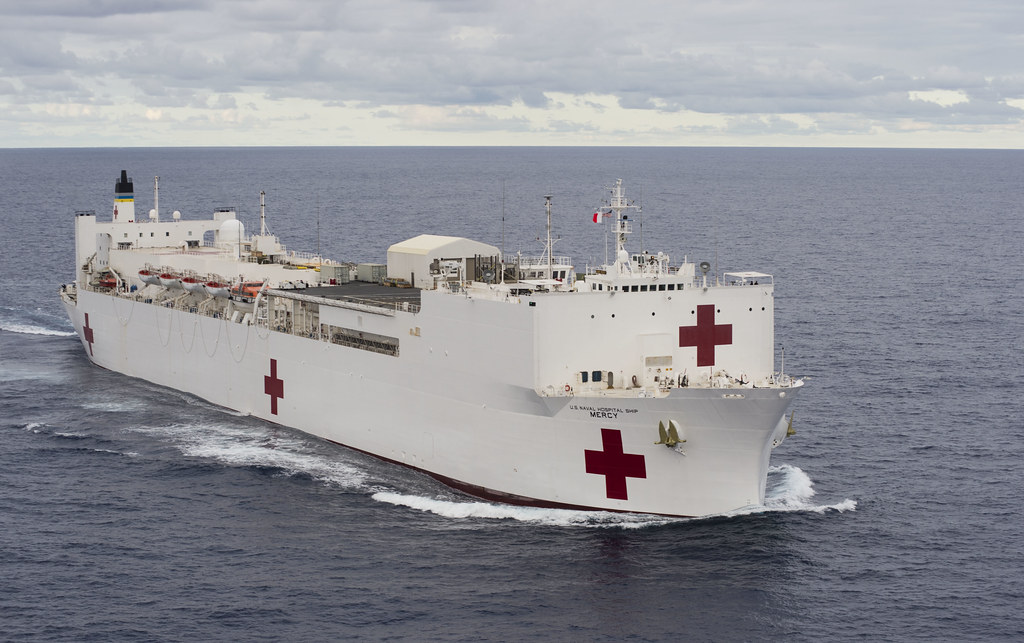
In this file photo, USNS Mercy (T-AH 19) transits the Pacific Ocean in late May. (U.S. Navy/MCC Christopher E. Tucker) >>

PACIFIC OCEAN - The hospital ship USNS Mercy (T-AH 19) arrived in the U.S. 3rd Fleet area of operations Sept. 13 as Pacific Partnership 2015 draws near its close.

Mercy, which departed Naval Base San Diego on May 17 for the beginning of PP15, served as the primary platform for the mission. The secondary platform for the mission was the Joint High Speed Vessel USNS Millinocket (JHSV 3), which wrapped up its mission participation Aug. 24 when it departed Da Nang, Vietnam.

"Pacific Partnership provides a great avenue for increasing maritime stability and security throughout the Indo-Asia-Pacific region," said Rear Adm. Charlie Williams, commander, Task Force 73. "The tremendous efforts and teamwork from all of our participating partner-nations speaks volumes about our shared commitment to this region and the value of multilateral cooperation and engagement."

27 June 2015

USA: Pacific Partnership Celebrates Arrival In Micronesia

By Mass Communication Specialist 1st Class Carla Burdt, Pacific Partnership Public Affairs

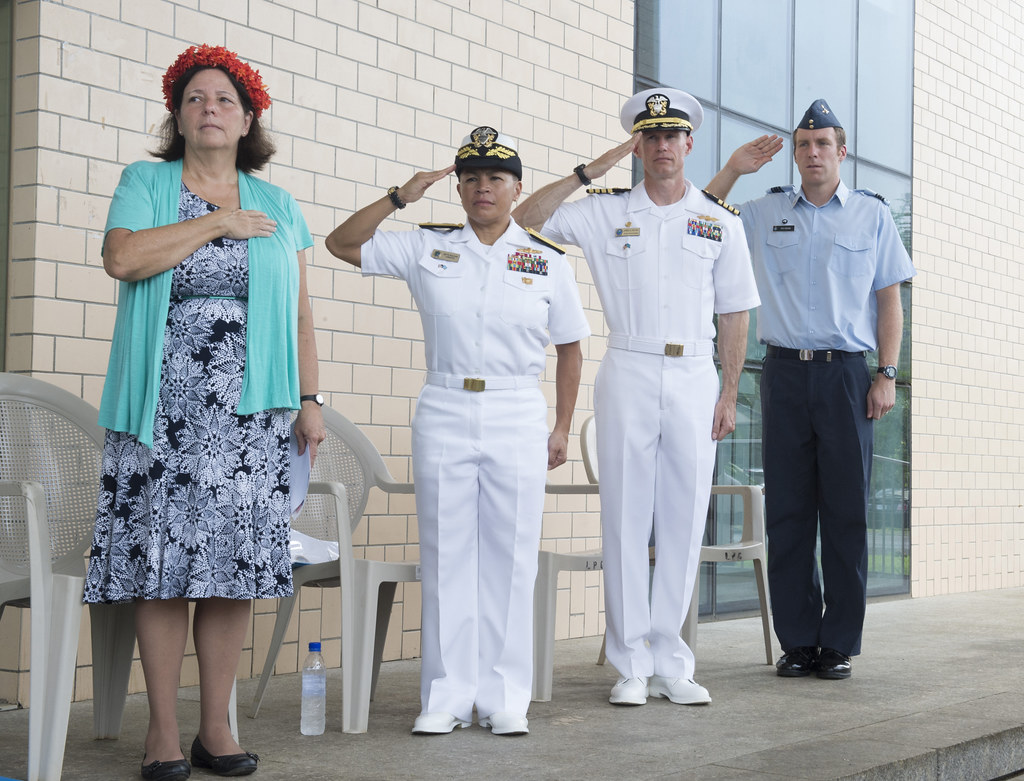
U.S. Ambassador to the Federated States of Micronesia (left), Doria Rosen, U.S. Defense Representative to the Federated States of Micronesia, Rear Adm. Bette Bolivar, Commodore, Task Force Forager, Capt. James Meyer, and New Zealand Air Force Chaplain Ken Diekema, stand for the playing of the U.S. national anthem during an opening ceremony June 22. >>

KOLONIA, Pohnpei - Task Force Forager, embarked aboard the Military Sealift Command joint high speed vessel USNS Millinocket (JHSV 3), kicked off its second visit of Pacific Partnership June 22 with an opening ceremony and reception onboard the ship.

Kolonia, Pohnpei, Federated States of Micronesia (FSM) acting governor Marcelo Peterson expressed his gratitude for the work that Pacific Partnership will be completing in Micronesia.

23 June 2015

USA: Millinocket Arrives in Micronesia for Pacific Partnership

By Mass Communication Specialist 1st Class Carla Burdt, Pacific Partnership Public Affairs

USNS Millinocket (JHSV 3) arrives in Kolonia, Pohnpei, June 21. (U.S. Navy/Lt. Laura Price) >>

KOLONIA, Pohnpei - The Military Sealift Command joint high speed vessel USNS Millinocket (JHSV 3) arrived in Pohnpei, Federated States of Micronesia, June 21 for the ship’s second stop of Pacific Partnership 2015.

Millinocket and embarked Task Force Forager, led by an expeditionary command element from the Navy's 30th Naval Construction Regiment (30 NCR) from Port Hueneme, California, are currently serving as the secondary platform for Pacific Partnership 2015. The primary platform for the mission is the Military Sealift Command hospital ship USNS Mercy (T-AH 19).

20 June 2015

USA: Kiribati Phase of Pacific Partnership Mission Completed

By Mass Communication Specialist 1st Class Carla Burdt, Pacific Partnership Public Affairs

An I-Kiribati girl watches as the joint high-speed vessel USNS Millinocket (JHSV 3) arrives for Pacific Partnership, June 2. Millinocket and the embarked mission team departed Tarawa June 18. (U.S. Navy/MCC Jonathan Kulp) >>

TARAWA, Kiribati - Task Force Forager embarked aboard the Military Sealift Command joint high speed vessel USNS Millinocket (JHSV 3) wrapped up its first visit of Pacific Partnership 2015 with a closing reception June 17.

While only in the Republic of Kiribati for 15 days, the crew made a significant impact on the small island nation.

“A little over two weeks ago we began our mission in Kiribati, and today we stand proud of what we have achieved together,” said Commodore, Task Force Forager, Capt. James Meyer.

02 June 2015

USA: USNS Millinocket Arrives in 7th Fleet for Pacific Partnership

By Mass Communication Specialist 1st Class Carla Burdt

<< USNS Millinocket (JHSV 3) operates in the Pacific May 28 after departing Hawaii for Pacific Partnership. (U.S. Navy/MC3 William McCann)

PACIFIC OCEAN -The Military Sealift Command joint high speed vessel USNS Millinocket (JHSV 3) arrived in the U.S. 7th Fleet area of operations May 31 in support of Pacific Partnership 2015 (PP15).

Millinocket and embarked Task Force Forager, led by an expeditionary command element from the Navy's 30th Naval Construction Regiment (30 NCR) from Port Hueneme, California, are currently serving as the secondary platform for Pacific Partnership 2015. The primary platform for the mission is the hospital ship USNS Mercy (T-AH 19).

"As commander of Task Force Forager, it is a true honor and privilege to lead the 120 service members embarked on the joint high speed vessel Millinocket for this valuable mission," said Commander, Task Force Forager, Capt. James Meyer. "The diverse embarked task force is comprised of Airmen, Marines, Sailors and Soldiers and our partner nations from Australia and New Zealand."

13 May 2015

USA: 10th Pacific Partnership mission prepares to renew regional ties


From U.S. Pacific Fleet Public Affairs

<< In this file photo, USNS Mercy sits off the Philippines coast during a previous Pacific Partnership mission. (U.S. Navy/MC3 Michael Feddersen)

PEARL HARBOR, Hawaii - The U.S. Pacific Fleet will join international forces in the 10th Pacific Partnership mission, scheduled to begin in early June. This annual maritime operation will help improve disaster response preparedness while enhancing relationships among all participants.

Led by the U.S. Navy, the Pacific Partnership 2015 (PP15) team includes personnel and assets from Australia, France, Japan, New Zealand, the Republic of Korea and Timor-Leste. As a combined force, the PP15 team will visit seven host nations and engage in a variety of local outreach efforts.

02 May 2015

AUS: Papua New Guinea joins Pacific Maritime Security Program

Users of the Pacific class Patrol Boat supplied by Australia

Papua New Guinea today advised it would join the Pacific Maritime Security Program.

Papua New Guinea is now the twelfth regional partner to join the Pacific Maritime Security Program.

This Program provides a regional solution to regional security issues. Papua New Guinea’s participation further strengthens the benefits of the cooperative program, expanding the region’s capacity to secure maritime resources and provide humanitarian assistance.

The Pacific Maritime Security Program will replace the current Pacific Patrol Boat Program as the centrepiece of Australia’s security engagement in the South Pacific.

The initiative includes delivery of replacement Australian-built Pacific Patrol Boats, integrated aerial surveillance activities, and enhancement to regional coordination.

Australia will build up to 21 new patrol boats, creating $594 million worth of Australian defence industry opportunities, plus a further $1.38 billion to support 30 years of through-life sustainment and personnel costs.

Other Pacific Maritime Security Program partners include Solomon Islands, Palau, the Federated States of Micronesia, Kiribati, Samoa, Vanuatu, Fiji, Tuvalu, Tonga, Cook Islands and the Republic of the Marshall Islands.

05 March 2015

AUS: Tender announced for Pacific Patrol Boat Replacement Project

Pacific class Patrol Boat HMPNGS Drege

Today, the Government announces the Request for Tender (RFT) for the replacement – Australian-made – Pacific Patrol Boats under the Pacific Maritime Security Program, Project SEA3036 Phase 1.

This project represents a significant investment in Australian defence industry with the Australian-made patrol boats worth $594 million in addition to through life sustainment and personnel costs estimated at $1.38 billion over 30 years.

Building towards the release of the Defence White Paper, in December last year, the Government announced a plan that will allow for a sustainable naval shipbuilding industry that supports shipbuilding jobs. The Government recognises the significant value to our nation of a skilled naval shipbuilding workforce. 

The current Pacific Patrol Boat Program is the centrepiece of the Australian Government’s engagement in the South Pacific.

10 October 2014

Editorial: Peacekeeping - Australia The Persistent

Map of Existing Pacific class Patrol Boat users

October 9, 2014: Australia is spending nearly $2 billion to replace the 22 Pacific Forum class patrol boats they built and gave to twelve Pacific Island nations in the 1980s and 90s. This is part of the Pacific Patrol Boat Program, which was started in the 1980s. The twenty new patrol boats will go to the original twelve (Papua New Guinea, Tonga, Solomon Islands, Fiji, Tuvalu, Kiribati, Samoa, Vanuatu, Federated States of Micronesia, Palau, Republic of Marshall Islands and Cook Islands) members plus East Timor. The patrol boats are used for things like fisheries protection, search & rescue and dealing with smuggling. The original boats were 31.5-meters (101 feet) long and designed to last at least 15 years. As those original boats reached their service limit it was noted that they had held up better than expected. So Australia refurbished them but now these original boats are definitely in need of replacement. About a third of the money will go for building the new patrol boats while the rest will be spent over the next 30 years to help maintain and operate the boats.

PNG Pacific class Patrol Boat HMPNGS Dreger
The Pacific Patrol Boat Program is one of many efforts by the more affluent (like Australia and New Zealand) Pacific nations to assist the many poor Polynesian and Melanesian states that were formed since the 1950s. While the Polynesian nations of the south and central Pacific mainly need economic and technical assistance, the Melanesian nations (Papua, the Solomons, East Timor and a few others) are not only closer but more often in need of peacekeepers (occasionally) and help (more frequently) with internal security. As a result of those needs Australia has found itself, often against its will, deputized as the policeman of Melanesia. It's a thankless task that has sent Australian peacekeepers to several different island trouble spots since the 1990s.

Read the full story at Strategy Page

02 July 2014

Editorial: Australia Launches New Pacific Patrol Boat Program

Pacific class Patrol Boat (File Photo)

By Shahryar Pasandideh

Providing patrol boats to its island neighbors gives Australia influence and stability in its emerging periphery.

In an attempt to bolster its influence and help improve regional security, Australia has announced a new Pacific Patrol Boat Program that will provide new patrol boats to twelve Pacific nations. The $1.88 billion program was announced on  June 17 by Australia’s foreign and defense ministers. The new vessels will replace those previously donated by Australia that are approaching the end of their service life. The announcement signals Australia’s intention to keep its role as a regional leader through security assistance to its less wealthy island neighbors.
The new all-steel patrol boats will replace the twenty-two 162-ton Pacific-class patrol boats that Australia donated to its neighbors between 1987 and 1997 in the first Pacific Patrol Boat Program. The original impetus was the passage of the 1982 United Nations Convention on the Law of the Sea (UNCLOS). UNCLOS divided formerly international waters mainly through the establishment of Exclusive Economic Zones (EEZ) that extend 200 nautical miles (370 kilometers, or 230 miles) from the shores of each country. This had a particular impact on the small Pacific island states as they suddenly acquired the responsibility to police and regulate activities across vast stretches of water. For example, Kiribati alone has 3,441,810 square kilometers of EEZ, the 13th largest in the world, larger than the total land area of India. The new program will deliver patrol boats to Tonga, the Solomon Islands, Palau, Papua New Guinea, Fiji, Tuvalu, Kiribati, Samoa, Vanuatu, the Federated States of Micronesia, the Republic of the Marshall Islands, and the Cook Islands – the original recipients of the program. In addition, Timor-Leste may become a beneficiary of this new program, raising the total number of recipients to thirteen. 

Read the full story at The Diplomat

18 June 2014

AUS: Maritime security strengthened through Pacific Patrol Boat Program

Existing Pacific class Patrol Boat (Wiki Info - Image: Wiki Commons)

A new $2 billion Pacific Patrol Boat (PPB) Program unveiled today by Foreign Minister Julie Bishop and Defence Minister David Johnston aims to significantly strengthen security in our region.

“The Pacific Patrol Boat Program is an important pillar of the Australian Government’s commitment to working with our regional partners to enable cohesive security cooperation on maritime surveillance, including in fisheries protection and transnational crime,” Minister Bishop said. 

“Defence will replace the current fleet of patrol boats for all current PPB members with the addition of  a new member, Timor-Leste (East Timor), which has been invited to join the program, evidence of Australia’s growing defence cooperation program with that country,” said Senator Johnston.

18 October 2013

AUS: HMAS BROOME farewells Pacific Patrol Boats

HMAS Broome (Wiki Info - Image: Wiki Commons)

After almost a month of operating together in company, HMAS Broome, on 15 October 2013, parted company with four Pacific Patrol Boats visiting Australia for the International Fleet Review 2013 and Exercise Triton Centenary.

Federated States of Micronesia patrol boat, FSS Micronesia, Tonga Defence Service, Voea Savea and Papua New Guinea Navy boats HMPNGS Rabaul and Dreger joined HMAS Broome in Cairns on 19 September and formed the Minor War Vessels Surface Action Group.

Commanding Officer of HMAS Broome, Commander Melanie Verho led the group and said the passage to and from the International Fleet Review provided a number of valuable training opportunities.

“While sailing up and down the east Australia coastline, we conducted a number of exercises with the Pacific Patrol Boats, including close-in-company manouveres and passage exercises. In-company time is essential for big and small ships alike, and has improved our ability to work together into the future,” Commander Verho said.

07 October 2013

USA: Chosin Unites with World Navies for an International Exercise

Multi-National Ships in Jervis Bay (File Photo)

By Ensign Peter Walz, USS Chosin (CG 65) Public Affairs

JERVIS BAY, Australia (NNS) -- The exercise, scheduled to run through Oct. 18, dubbed ASEAN Defense Ministers Meeting Plus (ADMM+) brought together Navy personal and ships from a number of Indo-Asian-Pacific countries and global navies. 

"The aim of the exercise is to promote training and information sharing among participating countries and build a common understanding of procedures pertaining to maritime security matters," said Lt. Cmdr. Brandon Booher, operations officer of Chosin.

Key naval staff were ferried from their mother ships anchored in Jervis Bay by a small personnel boat. The vessel was filled with a diverse blend of military dress and camouflage uniforms, each with their unique design and color as the cultures they came from. 

04 October 2013

AUS: International Fleet Review begins


Minister for Defence Senator David Johnston today announced the entry of the Royal Australian Navy Fleet into Sydney Harbour for the International Fleet Review.

Senator Johnston said the International Fleet Review was planned in partnership with the NSW Government and the City of Sydney and will draw around 40 warships, 16 tall ships, more than 60 aircraft, 10 military bands and 8,000 sailors from 17 nations around the world.

The nations participating include Australia, Brunei, China, France, India, Indonesia, Japan, Malaysia, Micronesia, New Zealand, Nigeria, Papua New Guinea, Singapore, Spain, Thailand, Tonga, United Kingdom and the United States of America.

“This is a significant event for the Royal Australian Navy,” Senator Johnston said, noting that seven ships HMA Ships Sydney, Darwin, Perth, Parramatta, Bundaberg, Diamontina and Huon would simulate the historic 4 October 1913 arrival in to the harbour.

“Their arrival will be supported by a Navy helicopter display at Bradley’s Head and a 21 Gun Salute.”

The long weekend brings a full schedule of activity for the International Fleet Review including a fireworks and lightshow display on Saturday night.

Saturday is a day of particular significance, with aviation formation flypasts and the much anticipated Ceremonial Fleet Review by the Governor General of Australia and viewed by the His Royal Highness Prince Henry of Wales and Prime Minister Tony Abbott.

The International Fleet Review includes the RAN Sea Power Conference 2013 and Pacific 2013 International Maritime Congress and Exposition being held at Darling Harbour from 7-9 October 2013.

Imagery available HERE

23 May 2013

Editorial: Australia’s Changing Neighborhood

By Andrew Pickford

The South West Pacific is dotted with small and micro states, with many only recently winning independence and still facing varying degrees of internal instability. These countries range from tiny islands to artificial amalgamations of diverse cultures. The largest, Papua New Guinea, has over 800 different languages, a tough proposition for any national government, quite apart from its other challenges. The region is marked by weak governance and poor, fast-growing populations.
These islands have only recently integrated into the global economic system. Many were under European colonial control until as late as the 1970s or 1980s. While a number of tribal groupings and islands form nation states, virtually none are viable as continuing independent entities. And given the region’s history as a strategically significant staging ground for geopolitical contests, the collapse of one country could lead to greater regional instability and an external presence, including military.
As a result of these features (and geographical proximity), Australia and New Zealand have become the region’s de-facto underwriters. Despite nominal independence in 1975, Papua New Guinea now receives around AUD$500 million per annum from its large neighbor. Australia has also assisted in stabilizing and capacity-building activities in the region, but its ability to militarily intervene in future crises is limited by logistics.
The most vulnerable types of countries (from an Australian strategic perspective) can be categorized according to two main cultural groups: Polynesian nations and the larger Melanesian nations (the Solomon Islands, Papua New Guinea and East Timor). As a side note, Micronesia is somewhat further away and does not factor greatly into Australia’s grand strategy.

Read the full story at The Diplomat

23 November 2012

AUS: Regional cooperation works to stop transnational crime

Vanuatu Police Vessel RVS Tukoro (Pacific Patrol Boat)

Covering an area approximately 30 million square kilometres in size, the recently concluded Operation KURUKURU was a huge maritime surveillance operation working to stop transnational crime, including illegal, unregulated and unreported fishing, smuggling and people trafficking. 

Parliamentary Secretary for Defence, Senator David Feeney, said the operation was a massive exercise in coordination for all nations involved. 

“OP KURUKURU really does show that as a region we can work together to achieve tangible outcomes for the people of our nations. This operation covered the Cook Islands, the Federated States of Micronesia, Kiribati, Marshall Islands, Nauru, Niue, Palau, Samoa, Solomon Islands, Tokelau, Tonga, Tuvalu and Vanuatu,” Senator Feeney said. 

“Fisheries surveillance and enforcement staff from all these nations, as well as from Australia, New Zealand, France and the United States worked together over a busy two week period toward the same outcomes. 

“This year we have all shown great improvements, with double the number of boardings and infringements being detected, or citations issued, which is really just a tremendous effort,” he said. 

In total, 300 vessels were sighted and 206 vessels inspected in this year’s operation.  

Senator Feeney said that achievements coming out of the operation were in no small part due to the Australian Pacific Patrol Boat Program. 

“Australia’s Pacific Patrol Boat Program is a vital part to the success of the operation. A total of 22 vessels were gifted to 12 Pacific Island Nations under the Program from 1987 to 1997. As the program comes to a close, the cooperation it has begun will continue with the Pacific Maritime Security Program (PMSP),” Senator Feeney said. 

“The Pacific Maritime Security Program will see Australia’s commitment to maritime domain awareness and the peace and security of the ‘global commons’ in the South Pacific remain a priority. The PMSP will be a whole-of-government regional response to intensifying threats posed by illegal, unregulated and unreported fishing and transnational crime.  

“It will promote Pacific integration through better coordinated surveillance, legal frameworks and cooperation to protect national, regional and global resources,” he said. 

Senator Feeney said Australia’s contribution to the operation was a coordinated effort across agencies. 

“As demonstrated by Operation KURUKURU, the Pacific Patrol Boat Program provides Pacific Island Nations with an effective means of surveillance and law enforcement in their Exclusive Economic Zones,” Senator Feeney said. 

“Surveillance was conducted by Pacific Island Nations within their respective Exclusive Economic Zones using ten Pacific Class patrol boats from the Pacific Island Nations, two French patrol boats, a frigate and a US Coast Guard cutter. 

“This was supported by aerial surveillance provided by five maritime patrol aircraft from France, the US Navy and the US Coast Guard. The aircraft surveyed the EEZs of many Pacific Island Nations and adjacent waters.  

“Australian Fisheries Management Authority (AFMA) and Australian Customs and Border Protection Service officers provided operational assistance from the Regional Fisheries Surveillance Centre in Honiara. AFMA also deployed officers onboard two patrol vessel involved in the operation,” he said. 

Operation KURUKURU was planned, hosted and coordinated by the Pacific Island Forum Fisheries Agency (FFA) from the Regional Fisheries Surveillance Centre. Via secure login, all countries had access to an FFA web-based regional surveillance picture. This picture contained fishing vessel contacts, satellite data, surveillance flight plans and vessel patrol plans and indicators highlighting vessels of interest in the region.   

Operation KURUKURU 2012 follows the recent adoption of the Agreement on Strengthening Implementation of the Niue Treaty on Cooperation in Fisheries Surveillance and Law Enforcement in the South Pacific Region by the 17 Pacific Island parties to the Niue Treaty on 2 November 2012.  

This will significantly improve the region’s ability to conduct multilateral activities, such as Operation KURUKURU.

31 August 2012

Editorial: The dragon in our backyard - the strategic consequences of China’s increased presence in the South Pacific

Click to Enlarge

By Joanne Wallis
US Secretary of State Hilary Clinton’s decision to attend the Pacific Islands Forum meeting in the Cook Islands this week signals the growing strategic importance of the South Pacific. Clinton’s attendance may also be a response to China’s increasing presence in the region. The consequences of China’s advance in our immediate neighbourhood are most significant for Australia, which is facing a situation where it may, for the first time in more than 70 years, find itself with a power with interests not necessary aligned to its own in its backyard.
China has been active in the South Pacific for four decades, mostly driven by its competition with Taiwan for diplomatic recognition. Although a truce (of sorts) has held for the last few years, China and Taiwan have engaged in ‘chequebook diplomacy’ to win the favour of South Pacific states. While this competition remains important, China now appears to have strategic interests in demonstrating its ability to project global power via its increasing influence in the region. And, regardless of their small size, each independent South Pacific state has a vote in international organisations, which China can seek to persuade them to use in pursuit of its interests.
China’s efforts to penetrate the South Pacific were given a boost after Australia and New Zealand’s attempt to isolate the Fijian regime after the 2006 coup. The Fijian regime responded by adopting an explicit ‘look north’ policy and sought a closer relationship with China, which other regional states have followed. After Australia and New Zealand supported Fiji’s suspension from the Pacific Islands Forum, the Fijian regime focused its attention on the Melanesian Spearhead Group, from which Australia and New Zealand are excluded. China seized this opportunity to gain influence, sponsoring the creation of the Group’s Secretariat, and building its headquarters in Vanuatu.
China’s most significant strategic interest in the South Pacific is military access, the most important aspect of which is signals intelligence monitoring. For example, China built a satellite tracking station in Kiribati in 1997, although it was subsequently dismantled after Kiribati switched diplomatic recognition to Taiwan. The Chinese fishing fleet operating out of Fiji is also said to provide cover for signals intelligence monitoring, particularly of United States’ bases in Micronesia. China is also seeking naval access to the region’s ports and exclusive economic zones, engages in military assistance programs, and is negotiating access to facilities for maintenance and resupply purposes.
The Parliamentary Secretary for Pacific Island Affairs, Richard Marles, has said that: ‘China’s increased presence in the Pacific is fundamentally welcomed by Australia’. However, China’s growing military presence may pose several risks to Australia. As China becomes a more assertive international actor it could respond militarily if members of the Chinese diaspora are threatened, as they were during the riots in Solomon Islands and Tonga in 2006 (PDF). Questions then arise about what would happen if Australia also responded to such an eventuality: would the Chinese and Australians cooperate? Or could the situation lead to a stand-off?
The most serious risk is that Australia’s near neighbours could come to owe allegiance to a power with interests that do not necessarily align with those of Australia. Indeed, the 2009 Defence White Paper noted that Australia has a strategic interest in ensuring that Indonesia and South Pacific states ‘are not a source of threat to Australia, and that no major military power that could challenge our control of the air and sea approaches to Australia, has access to bases in our neighbourhood from which to project force against us’. Given the extensive nature of Chinese involvement, it is not beyond the realms of possibility to imagine such a scenario. The vulnerability of Australia to a major power establishing a foothold in the region was graphically illustrated during World War II, when the Japanese managed to penetrate as far as Papua New Guinea.
Australia (often in cooperation with New Zealand and the United States) has belatedly responded to China’s increased presence in the South Pacific. Australia has increased its diplomacy in the region, on top of its already extensive aid, military, policing and governance assistance. Most positively, Australia announced in July that it is restoring full diplomatic relations with Fiji, and easing sanctions it imposed on the military regime. Given the strategic issues at stake, it is vital that Australia continues to devote its energies to this issue in similarly positive ways.
Joanne Wallis is a lecturer in the Strategic and Defence Studies Centre at the Australian National University, where she also convenes the Bachelor of Asia-Pacific Security program.

This article first appeared on the ASPI "The Strategist" Blog and is reposted here under a Creative Commons license.