Showing posts with label Aerospace Industry. Show all posts

20 September 2017

News Report: Russia Pitches Aggresively For MiG-29K $12 Bn Indian Deal

MiG-29K on the deck of INS Vikramaditya
Indian Navy had issued a detailed request for information in January this year for 57 multi-role fighter aircraft to which Russian, French, Swedish and American companies had replied with their intent.

New Delhi (Sputnik) — With an eye on a big ticket deal involving supply of 57 naval multi-role fighter jet for Indian Navy's aircraft carriers, Russian manufacturer MiG has offered to jointly develop the MiG 29 K fighter jets with an Indian counterpart under the 'Make in India' program with complete transfer of technology. MiG is planning to submit a detailed proposal to the Indian government in this regard soon.

The procurement plan currently is in request for information stage. MiG CEO Ilya Tarasenko has claimed MiG-29K aircraft have serious tactical and technical advantages compared to Boeing’s F/A-18.

“We are considering various options for long-term and perspective cooperation, including those within the framework of the Make in India program. The Indian side has sent an RFI to companies that produce aircraft, which is one of the procedures preceding the official tender. MiG corp. has received such a request, now we are preparing our proposal,” Ilya Tarasenko, MiG CEO told to PTI in a written interview.

19 September 2017

News Story: ‘Far-fetched vision’ - India’s futuristic light combat aircraft overshadowed by predecessor

By: Vivek Raghuvanshi

NEW DELHI ― The ruling National Democratic Alliance government’s Make in India policy could suffer a major blow as the Indian Air Force mulls the purchase of 105 Mark 2 versions of futuristic, homemade light-combat aircraft for $15 billion.

Service officials and analysts say the program faces uncertainty due to a lack of clarity and other immediate priorities.

As of now, the Air Force wants to place an order with state-owned Hindustan Aeronautics Limited, or HAL, for only 83 Mark 1 versions of the LCA for a cost of about $7.81 billion to meet the immediate fighters requirement.

“LCA Mark 2 is a far-fetched vision. The service wants improvement on existing LCA to address all issues of looms, improvement in performance, interchange ability, improved U.S.-made GE 414 [engine], improved avionics and missiles to be fitted on it,” a senior Indian Air Force official said.

Daljit Singh, a defense analyst and retired Air Force air marshal, said that the Mark 2 effort ”was proposed by the IAF to ensure that the LCA complies with majority of the air staff requirements. However, that would involve major design change of fuselage to accommodate more powerful engine.”

Read the full story at DefenseNews

14 September 2017

News Report: India, Japan Set to Ink Record $1.3 Billion Amphibious Aircraft Deal

ShinMayWa US-2 Amphibious Aircraft (Image: Wiki Commons)
During Japanese Prime Minister Shinzo Abe's visit to India, the countries are expected to finally seal the US-2 amphibious aircraft deal, the negotiations on which had been halted since 2010 because of its “excessive price.”

Abe arrived in Ahmedabad on Wednesday on a two-day visit during which he will hold talks with Prime Minister Narendra Modi to review progress in the strategic partners' multifaceted cooperation.

While the main focus is going to be on the high speed railway groundbreaking ceremony, India and Japan are expected to deepen their cooperation on defense and nuclear technologies.

India is likely to finalize purchases of the US-2 amphibious aircraft ShinMayWa in what may become Japan's largest defence export deal. India plans to buy 12 of these aircraft off-the-shelf for the Navy and another 18 will be jointly manufactured in India under the Prime Minister Modi's "Make in India" programme.

09 September 2017

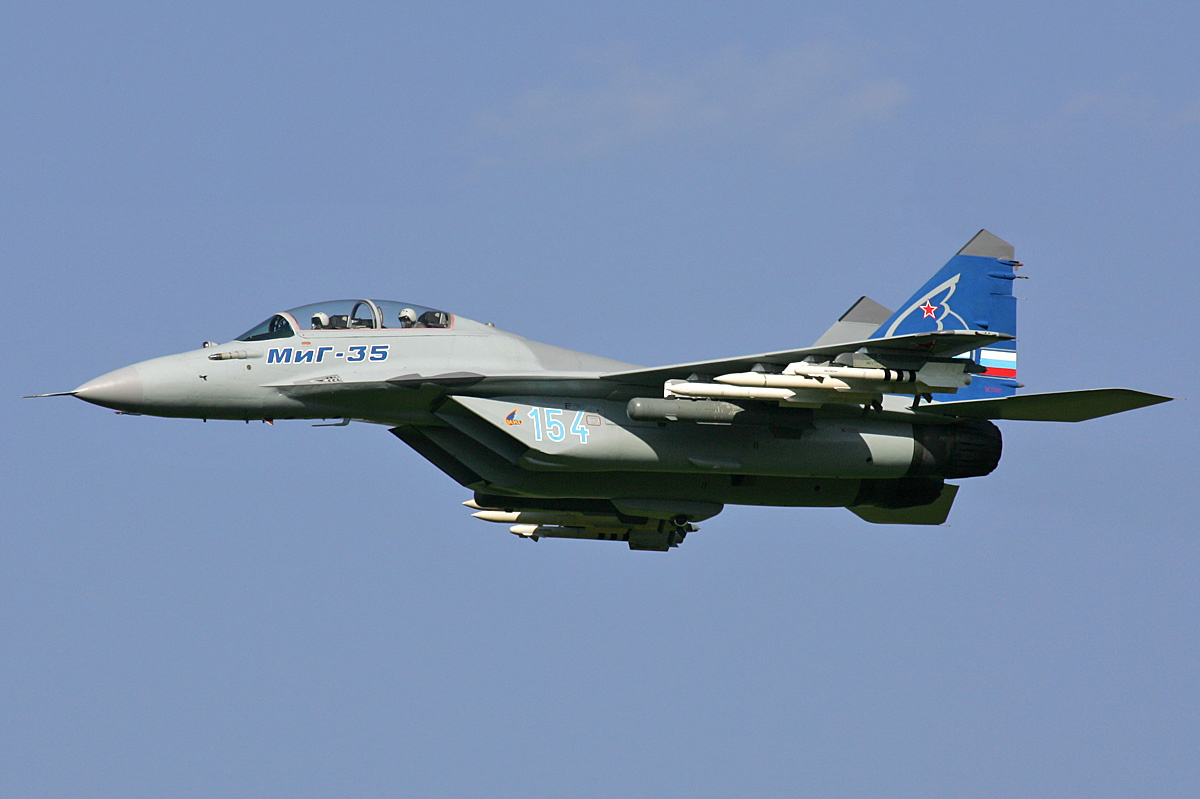
News Story: Russia Pitches MiG-35 to India as FGFA Project Falters

MiG-35 (Image: Wiki Commons)
by Neelam Mathews

As the contest to supply a new fighter aircraft to the Indian Air Force (IAF) heats up, the MiG-35 has emerged as a viable candidate. India is supposedly seeking about 220 single-engine fighters to replace 11 squadrons of MiG-21/27s that entered service in the 1990s.

Rosoboronexport is believed to have offered a licensed production deal for the twin-engine MiG-35 that would compensate for the IAF’s reluctance to proceed with the Indo-Russian Fifth Generation Fighter Aircraft (FGFA) project.

At the MAKS 2017 airshow in July, Ilya Tarasenko, director general of Russian Aircraft Corporation MiG, said: “We are actively working with the IAF in order to win the tender.” Russia has committed to a 40-year maintenance and upgrade contract to preclude the support issues that have arisen in the past with Russian aircraft in service with the IAF. Meanwhile, also at MAKS, Sergei Chemezov, CEO of the Rostec State Corporation, told reporters that a decision on the design and development of the FGFA would be made in the “nearest future.” He did not provide a timeline for the project, a version of Russia’s Sukhoi T-50, which has been under discussion between the two countries for the past decade.

According to an Indian defense official, “The MiG-35 is 25 percent cheaper [than rival candidates for the IAF requirement]; has an AESA radar; has commonality with the fleet; and being in the light to medium category enables it to land in the same airfields that the [indigenous] Light Combat Aircraft does. If the FGFA does not go through, Russia will have to be compensated, and this is the only contract left at the moment.” 

Read the full story at AINonline

06 September 2017

News Report: Forty Indian Helicopters to Join Combat Fleet at Eastern Border With China

HAL ALH Rudra, armed version of the LCH Dhruv
The 40 ALH manufactured by Hindustan Aeronautics Limited will join the fleet that includes the recently contracted 6 Apache AH-64 E heavy attack helicopters.

New Delhi (Sputnik) — India's state-owned defense firm Hindustan Aeronautics Limited (HAL) has bagged an order to supply 40 multi-role advanced light helicopters to the Indian Army and one to the Indian Navy. According to the $952 million contract, HAL would deliver the helicopters in a phased manner over the next five years.

"The latest order reflects the trust on HAL's capabilities and gives an impetus to make-in-India campaign. It reposes faith of Indian Defense forces in indigenous ALH which has been serving them with distinction for a long time", says Mr. T. Suvarna Raju, CMD-HAL.

02 September 2017

News Story: Saab, Adani Group forge partnership for India’s single-engine fighter

JAS-39 Gripen (Image: Wiki Commons)
By: Vivek Raghuvanshi 

NEW DELHI — Saab of Sweden and Indian infrastructure conglomerate Adani Group have forged a partnership to build Gripen E aircraft and work on other aerospace programs in the Asian country.

The Sept. 1 announcement means India’s single-engine fighter aircraft competition worth $12 billion is now shortlisted between the Saab-Adani partnership and Lockheed Martin of the U.S. in a tie-up with India’s Tata Advanced Systems Limited.

”The intended collaboration would encompass design, development and production of Gripen for India and other high-tech products of national importance for India and also the creation of joint ventures in India in line with and in support of the Make In India policy,” according to a Saab news release.

Lockheed Martin is pitching its F-16 Block 70 aircraft, whereas Saab is fielding the upgraded Gripen E in response to the expression of interest sent to select aerospace companies through foreign Indian embassies in November 2016.

“Our plans in India are to create a new defense eco-system that would involve many partners, vendors and suppliers. To achieve this, we need a strong Indian partner who can help create the framework for the infrastructure and eco-system to come into place,” said HÃ¥kan Buskhe, CEO and president of Saab.

The president of Adani group, Gautam Adani, said: “We are proud of our enduring relationship with Saab and look forward to partnering in major projects such as Gripen. Our various collaborations in aerospace and defence sectors will help establish new production lines in India, generate employment and build sustainable skills.”

Read the full story at DefenseNews

31 August 2017

News Story: China Modernizes Bomber Fleet, Looks to Future With H-20

A Chinese H-6 Bomber (File Photo)
Though it has not received media attention equal to its fighter counterparts, the People’s Liberation Army Air Force (PLAAF) bomber fleet is steadily being modernized, and plans call for a next generation stealthy, multi-role bomber.

The Xian Aircraft Corporation (XAC) H-6K bomber proved its capabilities during the Aviadarts 2017 competition held earlier this month in China, edging out the Russian Tu-22M3/M3M Backfire in the bomber category. Chinese analysts credit the win to newer navigation systems and targeting radar, as well as rigorous aircrew training.

The PLAAF has also reportedly introduced a new imaging infrared (IIR) or optical seeker variant of the K/AKD-20/CJ-20 “Long Sword” cruise missile, which is the primary air-launched cruise missile of the H-6K. The CJ-20 is guided by an integrated GPS/inertial navigation system and terrain contour matching (TERCOM). The new seekers will ensure a higher survivability against electronic countermeasures and greater target accuracy at the terminal stage.

Enhancements to the H-6K continue; in late August, an amateur photo of a “green” H-6 with in-flight refueling probe surfaced on Weibo, the Chinese version of Twitter. This could be the alleged H-6N that reportedly flew for the first time in December. Many believe the H-6N could host the air-launched DF-21D anti-ship ballistic missile. The reworked airframe could have been modified and strengthened to accommodate the 11-meter missile and better shielded against radiation.

Read the full story at AINonline

29 August 2017

News Report: India Begins Production of Missile Equipped LCH to be Deployed at Chinese Border

Light Combat Helicopter - LCH (Image: Wiki Commons)
The 5.8 ton helicopter will provide crucial air support to the armed forces deployed along the Chinese border as it has the power to carry out operational roles under extreme weather conditions at altitudes of 20,000 meters in the difficult Himalayan terrain.

New Delhi (Sputnik) — India's state owned Hindustan Aeronautics Ltd (HAL) has begun production of light combat helicopters (LCH) which are equipped with a 20 mm turret gun, 70 mm rocket, air to air missile, electro optical pod and helmet pointing system.

The production formally commenced on Saturday in Bengaluru in the presence of Defense Minister Arun Jaitley. The LCH is entirely locally designed and developed by HAL.

"The LCH has demonstrated the capability to land and take off from Siachen range with considerable load, fuel, and weapons that are beyond the capacity of any other combat helicopter," HAL said in a statement.

News Story: India to announce road map for single-engine fighter program

Artists impression of an Indian F-16 Fighting Falcon
By: Vivek Raghuvanshi

NEW DELHI — To accelerate the Make in India initiative under the strategic partnership model, the ruling National Democratic Alliance will formally issue a request for information next month to Lockheed Martin of the U.S. and Saab of Sweden to manufacture single-engine fighters in collaboration with a private company in the India.

The Ministry of Defence will float a request for information, or RFI, to Lockheed Martin for its F-16 Block 70 and Saab for its Gripen E next month, a senior MoD official said.

Under the new strategic partnership, or SP, model the two companies will be asked to submit offers of the single-engine fighters’ air power capabilities, the offer for India-specific technology transfer, indigenous solutions for the program and the offer for building an ecosystem for the program in the country, said a senior Indian Air force official.

“We have chosen both F-16 Block 70 and Gripen E because both single-engine fighters are fully upgraded, fully tested and are in full use,” the IAF official added.

Both Lockheed Martin and Saab will be given three months to respond to the RFI, which will then be evaluated by an IAF expert committee and the final selection will be made early next year, the IAF official added.

Read the full story at DefenseNews

24 August 2017

Industry: Cobham Wins KF-X Weapons Carriage & Release Award from KAI

A model of one of several possible KFX designs (File Photo)
Cobham has been awarded a contract in excess of £7M from Korean Aerospace Industries Ltd (KAI) to provide weapons carriage and release equipment for the future KF-X next-generation indigenous multi-role fighter aircraft.

Cobham Mission Systems will deliver by the year 2020 an undisclosed number of Missile Eject Launcher (MEL) units to KAI for KF-X, which is targeted for entry into service by 2025 to replace the Republic of Korea Air Force’s current F-4 and F-5 fleet.

“Cobham’s MEL is an established market leader and continues to deliver consistently high performance and reliable service,” Ken Kota, Senior Vice President, General Manager of Cobham Mission Systems Wimborne said. “It is a highly robust, long stroke ejection system that allows the interchangeable carriage and release of either Meteor or AMRAAM air-to-air missiles without role change.”

23 August 2017

News Report: Indian Defense Firms Under Pressure to Develop New Age Technology for UAVs

The Indian Army had submitted a requirement for UAVs that could fly continuously for a minimum of ten hours at the height of up to 20000 feet, covering a range of two hundred kilometers from the control station. The army is in favor of locally developed systems but it would be a big challenge for private defense firms that lack the technology.

New Delhi (Sputnik) — India is planning to purchase remotely controlled aerial surveillance platforms which would provide real time inputs in the form of imagery and electronic data to fighting formations during operations. The defense ministry announced that it would be spending approximately $461 million on the purchase of forty four such aerial vehicles.

The system would be capable of carrying different kinds of surveillance payloads such as electro optic and night payload, synthetic aperture radar and electronic support measures.

"UAVs and drones are increasingly assuming importance in warfare and are used by militaries across the world for carrying out a variety of functions mainly in terms of surveillance and target acquisition, communications and now even delivery of stores in remote areas. This will considerably enhance the surveillance and reconnaissance potential of the army in the tactical battle area and beyond," Rahul Bhonsle, a retired Indian Army brigadier and defense analyst told Sputnik.

News Story: Defence firms eye billion-dollar chance for 'made in India'

By Megha BAHREE

India has drawn up a shopping list for tens of billions of dollars of foreign fighter jets, armoured vehicles, submarines and helicopters but it will only sign the cheques if they are made in India.

The world's largest defence importer has announced a new policy inviting foreign defence manufacturers to set up shop as minority partners in India. It initiated the bidding process for submarines in July.

Such deals would boost job creation and bring key defence technologies into India.

Foreign companies say the opportunity is too good to miss.

Europe's Airbus Group, angling to sell its Panther helicopters, has said that if it wins a contract worth several billion dollars and expected to span at least a decade, it would make India its global hub for the multi-purpose choppers.

The company currently builds them at Marignane in France.

Lockheed Martin says if its F-16 fighter jets are selected -- it will likely compete with Saab for that order of close to $15 billion -- it will "support the advancement of Indian manufacturing expertise."

Germany's ThyssenKrupp Marine Systems and France's Naval Group are eager to compete for a contract of up to $10 billion to build submarines in the South Asian country.

Luring foreign defence companies to build in India would be a major and much-needed boost to the economy.

Prime Minister Narendra Modi, with less than two years to national elections, is under intense pressure to create more jobs for the hundreds of thousands of people joining the workforce every month.

Growth in the first three months of 2017 slowed to 6.1 percent. Experts expect further disruption as businesses adjust to a new nationwide goods and services tax launched in July.

Read the full story at SpaceDaily

19 August 2017

News Story: India approves deals for Apache helicopters, maritime engines

AH-64 Apache Attack Helicopter
By: Vivek Raghuvanshi

NEW DELHI ― The Indian government this week cleared long-pending deals for six Boeing Apache attack helicopters and two Zorya marine engines from Ukraine.

The two projects were cleared by the Defence Acquisition Council, which is headed by Defence Minister Arun Jaitley. Formal contracts will be awarded in the next four to six months, a Ministry of Defence official said.

Under the deal, the Indian Army will acquire six Apache attack helicopters for about $650 million. They will be equipped with Hellfire and Stinger missiles.

The Army, which currently has no attack helicopters as part of its inventory, requires 39 Apache helicopters, but the Defence Acquisition Council only cleared six, the MoD official noted.

In 2012, Boeing was awarded a $1.3 billion order for 22 Apache AH-64D helicopters for the Indian Air Force. The deliveries will begin mid-2017 and will include 812 AGM-114L-3 Hellfire Longbow missiles, 542 AGM-114R-3 Hellfire II missiles, 245 Stinger Block I-92H missiles and 12 AN/APG-78 fire-control radars.

Read the full story at DefenseNews

News Story: Turkey, Indonesia team up in defense, enhance military ties

KAPLAN MT tank
YUNUS PAKSOY

As part of its defense strategy, Ankara is enhancing cooperation with Jakarta to boost bilateral projects in defense industries and the sharing of military experience

High-level diplomatic sources in Ankara told Daily Sabah that Ankara and Jakarta have recently intensified efforts to jointly develop defense industry mechanisms and share military experience.

In this respect, a prototype for the Turkish-Indonesian tank has already been created and is set to partake in an official military parade in Jakarta in October. The sources did not provide the number of tanks that would be produced, but demand will be a determining factor.

Defense industry experts said the tank will weigh around 35 tons, and will have a 700-horsepower engine. There will be two tanks in the first leg of production, one for Turkey and one for Indonesia. The development cost for the medium-weight tank is estimated at $11.5 million. The FNSS, a subsidiary of Nurol Holding, which operates in the industry, eyes the production of 40 tanks, while that number could go up to 200 if Indonesia is satisfied.

The KAPLAN MT tank is expected to make a powerful contribution due to its firepower and large ammunition options as well as its superior agility. A CMI Cockerill 3105 tower, equipped to fire high-pressured 105mm shells, provides the tank's firepower.

One of the striking points in the joint venture is the production of submarines. The senior sources stressed that Indonesia wants to gain know-how and the deal is near completion. Experts said that the Turkish defense industry is producing six submarines in Turkey's Gölcük shipyard under the license of ThyssenKrupp. The first submarine is set to be delivered in 2021.

Read the full story at Daily Sabah

17 August 2017

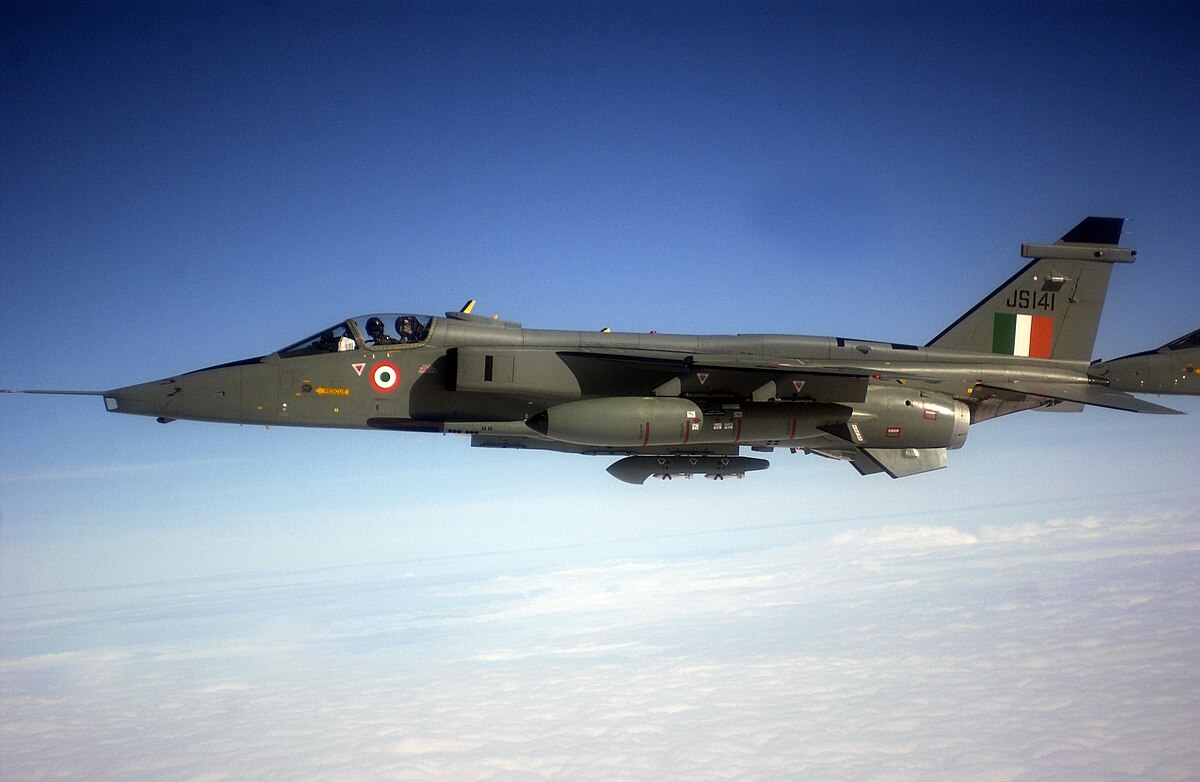
News Story: India Jaguar fighters face upgrade challenges

Indian Air Force SEPECAT Jaguar (Image: Wiki Commons)
By: Vivek Raghuvanshi

NEW DELHI ― The Indian Air Force’s British-made Jaguar aircraft completed its maiden flight last week after integrating an advanced active electronically scanned array radar, but service officials say the Jaguar upgrade program is moving slowly and that there’s uncertainty regarding the mounting of proposed new engines.

The upgrade program of the Jaguar fighter, undertaken by India’s state-owned Hindustan Aeronautics Limited, includes mounting new engines from Honeywell of the U.S., but an executive with HAL said it’s ”still awaiting the go-ahead from the Indian Air Force for the new engines.”

“Not only is the upgrade program slow, but the autopilots on the Jaguar aircraft are malfunctioning,” the IAF official said.

Furthermore, only 18 autopilot systems out of a required 108 could be integrated on Jaguar aircraft, according to a second Air Force official. India contracted the purchase of 35 autopilots from Thales of France on the Jaguar, which were received between December 2006 and January 2008.

Due to contractual restrictions, HAL could integrate only 18 out of the 35 autopilots up until March 2017.

And the autopilots installed on the aircraft are functioning at a suboptimal level because a vital component ― the Auto Pilot Electronic Unit, which maintains the flight path of the aircraft ― required repairs by Thales, which are expected to be completed in 7 to 26 months.

The HAL executive placed blame: ”Upgrade of autopilot has been slow because of delays in supplies by French defense companies.”

The Jaguar with the new AESA radar made its maiden flight Aug. 10, but the Air Force will carry out six more tests before induction.

Read the full story at DefenseNews

15 August 2017

News Story: (Australian) Billion-dollar Tiger aircraft grounded

Following Airbus’ investigation into the fatal crash of a German variant of the armed reconnaissance helicopter, Australia’s Tiger aircraft have been grounded, barring emergency purposes.

Defence has grounded the fleet of 22 Tiger ARHs after manufacturer Airbus Helicopters (AH) announced that, "despite the missing information and considering a sudden failure, Airbus Helicopters declares unsafe condition for all Tiger versions".

"AH can neither identify the part, the failure of which would lead to the accident, nor the origin of the failure. Consequently, AH is not in a position to propose a protective measure," AH said.

Two German peacekeepers were killed last month when a German variant of the aircraft crashed in Africa. It is believed the crash was caused by blades falling off the German helicopter mid-flight.

This is not the first time the aircraft has faced troubles. The Tiger has been under fire since last year when an Australian National Audit Office report revealed the Tigers are not available in sufficient numbers to give pilots the mandated minimum 150 flight hours a year.

Entry to service was scheduled for 2009 but was delayed by seven years, and replacements of the aircraft are already set to begin in the mid 2020s, but Defence maintains there will be no capability void.

Read the full story at Defence Connect

14 August 2017

News Story: Aussie attack helicopters declared unsafe by manufacturer

Australian Army Tiger Armed Reconnaissance Helicopter (ARH)
CANBERRA, Aug. 13 (Xinhua) -- The Australian government said on Sunday that it would "actively monitor" a situation involving its 22 Tiger attack helicopters, after the maker Airbus Helicopters declared all variants to be in unsafe condition.

After a German version of the attack helicopter crashed when its blades fell off the chassis in Mali last month, the manufacturer released a statement saying that safety was its main concern, and that as a result, the helicopters were not suitable for flying.

On Sunday, a defence department spokesperson said while Australia's fleet was still operational, the issue would be discussed in the Parliament in "due course."

News Corp newspapers quoted the spokesperson as saying that the government was "actively monitoring sustainment contract of the Tiger helicopter capability to ensure it achieves value for money."

Read the full story at Xinhua

09 August 2017

News Story: Sukhois for palm oil - Russia and Indonesia announce new barter arrangement

A Russian Air Force Sukhoi Su-35 Flanker Fighter
By: Matt Bodner

MOSCOW — After three painstaking years of negotiation, Russia and Indonesia have finally agreed to sign a major aerospace deal later this year: 11 top-of-the-line Sukhoi Su-35 fighter jets in exchange for Indonesian palm oil, coffee, and other goods.

The two sides signed a memorandum of understanding in Moscow on Friday. A final contract may be signed by the end of the year, Russia’s business daily Vedomosti reported on Aug. 6, citing an unidentified Rostec source.

The barter arrangement will be facilitated by Rostec and Indonesia’s state-owned trading company PT Perusahaan Perdagangan Indonesia. The exact terms of the deal have yet to be made public, but the Su-35s will be financed by Indonesian exports to Russia.

Read the full story at DefenseNews

05 August 2017

News Story: Indonesia's purchase on Su-35 fighter jets conducted with counter trade scheme - minister

A Russian Air Force Su-35 Flanker Fighter
JAKARTA, Aug. 4 (Xinhua) -- The purchase on 11 Sukhoi 35 fighter jets from Russia was conducted on counter trade scheme, obliging the Russian side to buy Indonesian commodities and defense components, an Indonesian minister said.

"The creation of counter trade was under the supervision of respective governments, implemented in the trade of 11 Sukhoi 35 with Indonesian export commodities among others comprised of coffee, tea, palm oil and defense industry products," Indonesia Trade Minister Enggartiasto Lukita said in a statement released on Friday.

The counter trade scheme was mentioned in the Memorandum of Understanding (MoU) document of the plane purchase, signed by related officials from Indonesia's state-run trade firm of PPI and Russian state agency of Rostec, the minister said.

The minister expected similar scheme with Russia can be further applied in wider sector, not only in defense sector.

Delivery of Sukhoi 35 planes to Indonesia would commence next year.

Read the full story at Xinhua

04 August 2017

News Report: Sukhoi PAK-FA Could Power India’s Fifth Gen Fighter

As a high-level committee clears the deck for signing the second stage of the Indo-Russia fifth generation fighter aircraft (FGFA) project, it is expected the Indian Air Force (IAF) will receive the fifth generation fighter just when 11 squadrons of obsolete MiG-21s and MiG-27s are set to retire in 2024.

New Delhi (Sputnik) — Industry people involved with the decade-long project expect the deal to be signed in the coming months as most contentious issues have been resolved including costs. Early conclusion of the R&D contract will pave way for testing Indo-Russia FGFA fighter to the IAF in the next three years with the flying platform made by the Hindustan Aeronautics Limited (HAL). The FGFA will be based on the Sukhoi-designed PAK-FA.

"The IAF FGFA would be powered by the second stage engine of the PAK-FA which is still under development. PAK-FA is being developed using NPO Saturn AL-41F1 engine, which will also power the initial production lot. The second stage engine, unofficially referred to as Product 30, is expected to start flight trials in end-2017," Vijainder K. Thakur, senior editor of Geopolitics and former IAF squadron leader, said.