Showing posts with label Arms Imports. Show all posts

23 February 2016

News Story: US Dominates Arms Trade as Asia, Mid-East Boost Imports

Boeing AH-64 Apache
STOCKHOLM — The global transfer of major arms has risen in recent years, with the United States increasing its dominance of the trade while the flow of weaponry to Africa, Asia and the Middle East has increased, a new study published Monday showed.

According to the Stockholm International Peace Research Institute (SIPRI) report, the volume of international transfers of major weapons — including sales and donations — was 14 percent higher in 2011-2015 than over the five previous years, with the US and Russia doing most of the exporting.

The biggest importers were India, Saudi Arabia, China and the United Arab Emirates (UAE).

The authors of the report singled out the conflict in Yemen, where a Saudi-led coalition is backing the government against Iran-supported Shiite Huthi rebels.

"A coalition of Arab states is putting mainly US- and European-sourced advanced arms into use in Yemen," senior SIPRI researcher Pieter Wezeman said in the report.

Read the full story at DefenseNews

01 June 2015

News Story: Indian Army Struggles With Ammo Shortages

By Vivek Raghuvanshi

NEW DELHI — The Indian Army is facing an acute shortage of ammunition, and even the War Wastage Reserve, which is required to maintain supplies for at least a 40-day war, has fallen to a 20-day supply, according to the latest report of India's Comptroller and Auditor General (CAG).

The 79-page "Report of the Comptroller and Auditor General of India on Ammunition Management in Army," for the year ended March 2013, says there was a shortage for 125 of the 170 types of ammunition used, mainly for armored fighting vehicles, artillery guns and by the infantry. Defense News has a copy of the report, which was released in May.

A Defence Ministry official, while admitting to the shortage, said supplies have increased by more than 15 percent since 2013.

In addition to shortages, an Army official said, the quality of ammunition procured from the state-owned ordnance factories, the only source of ammunition supplies, is inferior. India does not permit the manufacturing of ammunition by the private sector. Ammunition is procured either from the ordnance factories managed by the state-owned Ordnance Factory Board (OFB) or through imports, largely from Russia.

Read the full story at DefenseNews

10 April 2015

Editorial: How Sri Lanka Won the War


By Peter Layton

Lessons in strategy from an overlooked victory

How to win a civil war in a globalized world where insurgents skillfully exploit offshore resources? With most conflicts now being such wars, this is a question many governments are trying to answer. Few succeed, with one major exception being Sri Lanka where, after 25 years of civil war the government decisively defeated the Liberation Tigers of Tamil Eelam (LTTE) and created a peace that appears lasting. This victory stands in stark contrast to the conflicts fought by well-funded Western forces in Iraq and Afghanistan over the last decade. How did Sri Lanka succeed against what many considered the most innovative and dangerous insurgency force in the world? Three main areas stand out.
First, the strategic objective needs to be appropriate to the enemy being fought. For the first 22 years of the civil war the government’s strategy was to bring the LTTE to the negotiating table using military means. Indeed, this was the advice foreign experts gave as the best and only option. In 2006, just before the start of the conflict’s final phase, retired Indian Lieutenant General AS Kalkat in 2006 declared, “There is no armed resolution to the conflict. The Sri Lanka Army cannot win the war against the Lankan Tamil insurgents.”
Indeed, the LTTE entered negotiations five times, but talks always collapsed, leaving a seemingly stronger LTTE even better placed to defeat government forces. In mid-2006, sensing victory was in its grasp, the LTTE deliberately ended the Norwegian-brokered ceasefire and initiated the so-called Eelam War IV. In response, the Sri Lankan government finally decided to change its strategic objective, from negotiating with the LTTE to annihilating it.
To succeed, a strategy needs to take into account the adversary. In this case it needed to be relevant to the nature of the LTTE insurgency. Over the first 22 years of the civil war, the strategies of successive Sri Lankan governments did not fulfill this criterion. Eventually, in late 2005 a new government was elected that choose a different strategic objective that matched the LTTE’s principal weaknesses while negating their strengths.
The LTTE’s principal problem was its finite manpower base. Only 12 percent of Sri Lanka’s population were Lankan Tamils and of these it was believed that only some 300,000 actively supported the LTTE. Moreover, the LTTE’s legitimacy as an organization was declining. By 2006, the LTTE relied on conscription – not volunteers – to fill its ranks and many of these were children. At the operational level some seeming strengths could also be turned against the LTTE, including its rigid command structure, a preference for fighting conventional land battles, and a deep reliance on international support. 

Read the full story at The Diplomat

24 March 2015

Editorial: North Korea’s March to Nuclear Relevance


By Zach Przystup

With North Korea’s growing nuclear threat, the tired policy of “strategic patience” needs to be put to bed.

While all eyes remain fixed on March 24 to see if the United States can prevent Iran from getting the bomb, a new report from the Johns Hopkins U.S.-Korea Institute warns that North Korea is on track to have 100 of them by 2020. Inflated though this number may be, the functional difference between 50 and 100 bombs is like that between $50 million and $100 million – with either, you’ve power and you’re treated seriously. Clearly, North Korea is on the verge of nuclear breakout.
The consequences of a full-blown nuclear North Korea would be every bit as destabilizing to regional and world order as a nuclear Iran. It would call into question the U.S. rebalance to East Asia and commitment to allies in Seoul and Tokyo, potentially unleash a volatile regional nuclear arms race, and enable the Kim regime to continue its crimes against humanity behind a fortified nuclear shield. For all that Beijing worries about the ensuing chaos of a regime collapse in Pyongyang, a fully nuclear North Korea would be a veritable bull in a China shop.
To avoid such an outcome, U.S. policy towards North Korea must change. In a recent speech at the Carnegie Foundation, Under Secretary of State Wendy Sherman stressed that North Korea will never get the security, prosperity, or respect it wants without negotiating an end to its nuclear program. This long-held U.S. position ignores two basic facts. First, the Kim regime wants security, prosperity, and respect for itself alone – its policy choices of nukes over nutrition and gulags over growth demonstrate its contempt for the rest of the population. Second, it has judged that pursuing a nuclear program is the surest route to these goals. 

Read the full story at The Diplomat

17 March 2015

Editorial: China Topples Germany in Arms Exports


By Franz-Stefan Gady

Two thirds of Chinese arms exports went to just three countries.

According (PDF) to new data on international arms transfers published today by the Stockholm International Peace Research Institute (SIPRI), China was the third largest supplier of arms between 2010 to 2014. During that period, Chinese exports of major arms increased by 143 percent, however overall volume was still significantly behind the United States of America and Russia.
“China’s share of global arms exports increased from 3 to 5 per cent. China became the third largest supplier in 2010–14, slightly ahead of Germany and France. China supplied major arms to 35 states in 2010–14,” according (PDF) to the fact sheet of the Stockholm-based think tank. The five biggest exporters in 2010–14 were the USA, Russia, China, Germany and France.
Interestingly, the SIPRI publication notes that more than 68 percent of Chinese exports went to just three countries: Pakistan, Bangladesh and Myanmar. Yet, the People’s Republic of China was also active in other parts of Asia such as Indonesia, with which Beijing signed a deal for the supply of hundreds of medium range C-705 anti-ship missiles. 

Read the full story at The Diplomat

13 February 2015

News Story: Boeing Offers 'Extremely Affordable' Super Hornet Deal To Malaysia

Royal Australian Air Force (RAAF) F/A-18F Super Hornet

By Massita Ahmad and Farhana Poniman

KUALA LUMPUR, Feb 12 (Bernama) -- The Boeing Company has a distinct advantage over its competitors in offering its Super Hornet jet fighter deal to Malaysia as the aircraft represents an "extremely affordable" offering over the long-term.

The global aircraft manufacturer also stands ready to assist Malaysia in dealing with funding challenges in acquiring the high-endurance fighter jets, more so, due to financial constraints brought on by the global economic slowdown.

"No aircraft in this competition will come close to the affordability that the Super Hornet brings," Howard M Berry, Boeing vice-president for F/A18E/F international sales, global strike, defense, space & security told Bernama.

"When you look at the total lifecycle cost, from acquisition to support for the aircraft throughout its lifetime, including training, logistics and eventually taking the aircraft out of service, the support typically takes up 70 per cent," he said.

Read the full story at Bernama

09 February 2015

News Story: China's dominance not enough to deter S. China Sea sub race


Chinese Type 094 Jin class Submarine (File Photo)
China's territorial disputes in the South China Sea will only grow more complex as regional countries continue to bolster their respective submarine fleets, reports the Beijing-based Sina Military Network.

Recent reports indicate that various countries in the South China Sea, including Vietnam, Indonesia and Malaysia, have all been investing in new submarines, notwithstanding that China's submarine fleet will still be bigger than all of those countries put together.

China, which has been developing submarines since the 1950s, currently owns more than 60 subs — third in the world in terms of number — including four classes of nuclear subs and seven classes of conventional subs.

Publicly, the People's Liberation Army Navy's South Sea Fleet claims to deploy 16 conventionally-powered submarines and three nuclear submarines — three Type 094 nuclear subs, eight Type 035 subs, four Type 039 subs and four Russian-made Kilo-class diesel-electric subs. The real number could be even higher, as recent leaked photos of a Chinese naval base revealed another attack sub — possibly a Type 093 sub — next to the three Type 094 subs.

Read the full story at Want China Times

05 February 2015

News Report: Vietnam Receives Third Kilo Attack Boat

A Kilo (636) class Submarine (File Photo)

By: Sam LaGrone

The third Project-636 Kilo-class has arrived in Vietnam, marking the halfway point in the Vietnamese Navy’s planned six boat, $1.8 to 2 billion deal with Russia, according to local press reports.
 
Pictures emerged of the Dutch heavy load carrier Rolldock Star near Vietnam’s submarine base in Cam Ranh Bay, on the Vietnamese news site, Tuoi Tre News on Jan. 29.

Rolldock Star was believed to be carrying the third Vietnamese Kilo — HQ-184 Haiphong –from the Admiralteiskie Verfi shipyard in St. Petersburg, according to a Tuesday report inJane’s Defence Weekly.

The two previous boats of the class — HQ-182 Hanoi and HQ-183 Ho Chi Minh City – commissioned into the Vietnamese Navy last year as part of the 2009 contract.

30 January 2015

Editorial: An Indonesian Defense Revolution Under Jokowi?


By Prashanth Parameswaran

Indonesia’s new president is determined to transform its defense industry.

Listen to Indonesian President Joko “Jokowi” Widodo, and you would think the country is on the brink of nothing less than a defense revolution.
At a meeting late last month at the Presidential Office attended by top ministers and advisers, Jokowi outlined the main priorities for the country’s defense policy. What stood out most was his determination to revolutionize the country’s defense industry, partly in order to create the self-reliance in military equipment that Indonesia has often talked about. That is not surprising, considering that the defense industry is the foundation upon which several of his foreign policy goals – including a global maritime fulcrum – are built.
In his remarks, Jokowi did lay out some specific guidelines might help Indonesia reach defense self-reliance. For instance, Indonesia will require every weapons purchase to include the transfer of technology for Indonesia’s state-owned strategic industries – including shipbuilder PT PAL, weapons and land systems maker PT PINDAD, and aircraft maker PT DI. Jokowi is already moving to prop up some of these state-owned defense entities. In early January, he announced $55 million in government funding to boost PT PINDAD following a visit to its facilities. 

Read the full story at The Diplomat

17 January 2015

Editorial: What Awaits Vietnam in 2015?


By Khang Vu

Will Vietnam be able to leverage its relations with TPP countries to its advantage with China?

Vietnam’s diplomacy in 2014 was a complicated mess, primarily due to tensions with China in the South China Sea. Since the HD 981 incident last year, Vietnam has very clearly understood the importance of pursuing more diverse relationships with countries in the region and around the world, especially Japan, the Philippines, and the United States. With a powerful China claiming sovereignty over most of the South China Sea and a strong-willed United States fostering ambitions to pivot to Asia, 2015 opens with Vietnam facing both diplomatic opportunities and challenges.
Most likely, the United States will strengthen its comprehensive partnership with Vietnam due to common interests and threats from China. Since the United States announced an easing of the lethal weapons embargo against Vietnam last October, Vietnam has successfully diversified its arsenal after depending solely on weapons from its longtime ally, Russia. Vietnam’s task in 2015 is to figure out what kind of weapons are suitable for the dispute and how to effectively integrate them with Russian arms. With American weapons in storage, Vietnam and the United States can easily conduct joint military exercises, helping the United States gain access to strategic naval bases and building trust between the two navies. Additionally, the victory of Prime Minister Shinzo Abe in Japan and the renewal of the Enhanced Defense Cooperation Agreement between the United States and the Philippines has laid a strong foundation for further cooperation among Japan, the Philippines and Vietnam, while also ensuring a smooth American pivot to the region. 

Read the full story at The Diplomat

09 December 2014

Industry: Indian Navy Selects Sikorsky’s S-70B SEAHAWK® Aircraft for Multi-role Helicopter Requirement​


Stratford, Connecticut - India’s Navy has selected Sikorsky Aircraft Corp., a subsidiary of United Technologies Corp. (NYSE:UTX), to fulfill the service’s Multi-Role Helicopter requirement for anti-submarine and anti-surface warfare (ASW/ASuW), among other maritime roles. Negotiations will now begin to procure 16 S-70B SEAHAWK® helicopters, with an option for eight additional aircraft, along with a complete logistics support and training program.

“India’s selection of the S-70B helicopter represents a major strategic win for Sikorsky in an important growth market, and positions us well for future opportunities,” said Mick Maurer, President of Sikorsky Aircraft. “We look forward to a long-term collaboration with the Indian Government and local industry as we work to bring the Indian Navy the highly advanced multi-role S-70B aircraft.”

The proposed Indian Navy S-70B variant will include avionics and flexible open architecture Weapons Management Systems that integrate an advanced sonar, 360 degree search radar, modern air-to-surface missiles, and torpedoes for the ASW role. A blade and tail fold capability will facilitate shipboard storage.

28 November 2014

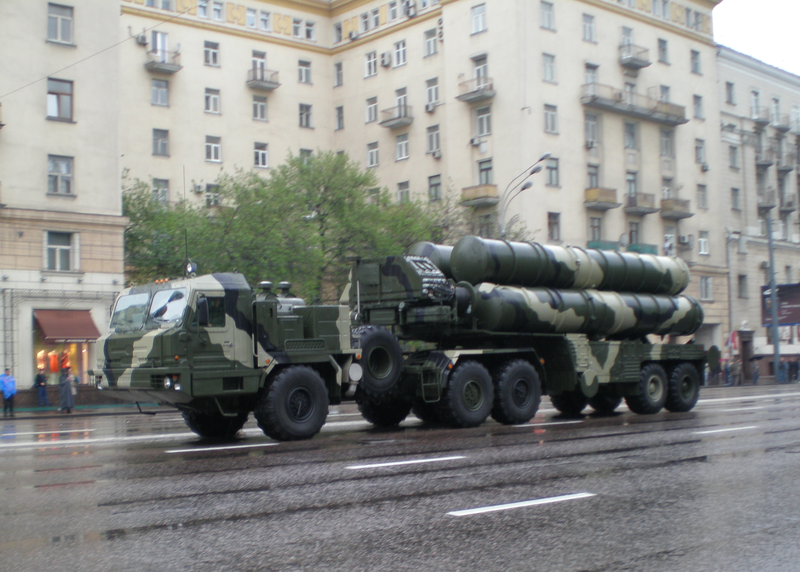
News Story: China and Russia (may have) sign(ed) agreement on S-400 Triumf air defense missile systems delivery

S-400 Triumf (Wiki Info - Image: Wiki Commons)

Russia is in the process of selling cutting-edge S-400 anti-aircraft missile systems to China, which would hand Beijing a defense system capable of deterring even the most advanced air powers from infringing on Chinese airspace, the Vedomosti newspaper reported Wednesday. The two countries are reported to have recently signed an agreement for at least 6 divisions of the S-400 system.

China this fall signed an agreement with Russia's arms export agency, Rosoboronexport, that calls for the delivery of at least six divisions of the S-400 system costing over $3 billion, the paper said citing unidentified Defense Ministry and industry officials.

The report comes a week after Russian Defense Minister Sergei Shoigu on a visit to Beijing agreed to deepen military-industrial ties and hold more joint naval exercises with China.

Read the full story at Army Recognition

Editorial: India’s Urgent Need for Defense Modernization


By Amit R. Saksena

Years of mismanagement have been disastrous for India’s defense.

For the Indian armed forces, military modernization was perhaps the biggest casualty under the previous UPA-led government. From numerous procurement scandals to the inability of the government to foster indigenization of research and development, the nation’s defense preparedness is at a nadir. The Air Force’s primary fleet is a shambles, the Navy has yet to put the INS Arihant into operation, and the Army has no definite timeline for implementing the F-INSAS program. All this when India consistently ranks as the world’s largest importer of arms.
Prime Minister Narendra Modi may have taken a tougher stance against external threats, but if he is to follow up on the rhetoric, he will need to make strengthening the armed forces a top priority for his government. And the first step to take is to modernize the forces.
The BJP’s election manifesto promised to strengthen the country’s defense industrial base. There was considerable excitement in the defense and security sector, which had the impression that to maintain a high level of operational readiness the new government would remedy procurement policies and fast track indigenization by privatizing industry. But to establish a solid military-industrial base and fast-track indigenization, the government needs to have a long-term plan, to guide development. That is precisely what it does not have. In the absence of a defense white paper or grand strategy, the defense focus has been very much short term.
As a recent IHS Jane report notes, India is set to become the fourth biggest military spender in the world by 2020, surpassed only by the U.S., Russia and China. It will be critical for New Delhi to have developed an overarching strategy by that time, to avoid excessive spending and give direction to future development. 

Read the full story at The Diplomat

24 November 2014

News Story: India Invites Bids for $2.4 Billion Artillery Contract


NEW DELHI — India on Saturday invited bids for a $2.4-billion artillery deal while deferring a decision on acquiring 106 Swiss Pilatus aircraft for fighter pilot training.

The bid for 814 mounted guns is the first big artillery tender in nearly three decades since the scandal-hit Swedish Bofors guns deal in 1987.

The Defence Acquisition Council, which clears high-value military procurements, issued the tender after holding its first meeting under new Defence Minister Manohar Parrikar.

The high-value bid comes as India seeks to replace its old 105mm light field guns with a mix of towed, mounted and wheeled artillery.

"The minister took stock and stressed on fast and transparent acquisitions," a source in the defense ministry told AFP.

Read the full story at DefenseNews

News Story: (Thailand) Navy renews push for sub plan


German U206A submarine (Wiki Info)
Writer: Wassana Nanuam

The Royal Thai Navy will dust off a proposal to buy submarines after years of failed attempts to equip itself with the expensive underwater craft. 

Navy chief Kraisorn Chansuwanich revealed the plan on Thursday, which marks Royal Thai Navy Day.

Adm Kraisorn said he had proposed the navy’s latest development plan, which includes the bid to procure submarines, to Deputy Prime Minister and Defence Minister Prawit Wongsuwon during his visit to navy headquarters on Monday.

Adm Kraisorn said Gen Prawit agreed with the planned procurement of submarines and instructed the navy to present detailed studies on the types of submarines it wanted and the cost to see if they are affordable. 

The navy has pressed governments for years to buy submarines to help protect the Gulf of Thailand.

Read the full story at Bangkok Post

08 September 2014

News Story: Analysts - New Modi Government Lacks Clear Defense Policy


By VIVEK RAGHUVANSHI

NEW DELHI — The dual responsibilities of defense minister and finance minister handed to Arun Jaitley has given short shrift to India’s Defence Ministry, and the quick decisions anticipated on weapons procurement have not been forthcoming, said defense analysts assessing the Narendra Modi government’s first 100 days.

The new government so far has simply continued the defense policies of the previous regime, analysts and military officers said.

“The part-time defense minister is one of the most inexplicable oversights,” analyst Nitin Mehta said. “It gives too little time to Jaitley to address the MoD, saddled as he is with the task of economic revival. Without a full-time defense minister, the Modi government will not be able to recover from the ‘lost decade’ of the previous defense ministry under A.K. Antony.”

Analyst Venkataraman Mahalingam is even more direct. “How can anyone possibly handle both the defense and finance ministries? These ministries are too important and are heavily loaded to be handled by part-time incumbents. It is not serving any purpose.”

Read the full story at DefenseNews

21 June 2014

Editorial: Australia and the Asian Arms Race

Australian Bushmaster (File Photo)

By Jarni Blakkarly

Australia is rapidly boosting its weapons imports…and is aiming to increase its exports.

Asia now leads the world in growth in military spending, with arms sales to Asia and Oceania accounting for 47 percent of global arms trade. While military spending in and around the South China Sea often grabs headlines, as does India and Pakistan’s increased imports, Australia has also significantly increased its budget.
New figures from the Stockholm International Peace Research Institute (SIPRI) show Australian imports of major arms increased by 83 percent in the five years to 2013. Australia is now the seventh biggest importer of major weapons in the world.
Despite austere budget cutbacks in every other area of government expenditure, Prime Minister Tony Abbott has allocated a six percent military budget increase of around A$1.5 billion ($1.4 bilion). He also announced that Australia would buy a further 58 U.S. made F-35 Joint Strike Fighters.
Australia’s major arms imports mostly come from the U.S., and Australia is now America’s single biggest major arms customer. In addition to the F-35s, which are due to enter service by 2020, Australia also has eight Poseidon surveillance planes, two amphibious assault ships [PacificSentinel Note: The 2 new LHD's are NOT American, but rather Spanish], and seven Triton surveillance drones on order from the U.S.
Australia now buys 10 percent of all U.S. weapons exports. 

Read the full story at The Diplomat

11 June 2014

Editorial: The Benefits of a Sluggish Pivot to Asia


By Ankit Panda

Sure, the U.S. pivot to Asia is slower than expected, but that’s a good thing.

Optimism about the “pivot” or “rebalance” to Asia seems to be dropping with every passing week. While Asia hands lauded the initiative when it was announced during President Obama’s first term in office, in 2014 they sigh at the United States’ inability to extricate itself from crises the Middle East and, more recently, Eastern Europe. Furthermore, several enthusiastic backers of the pivot — Hillary Clinton, Kurt Campbell, and Tom Donilon, for instance — are long gone from the administration. Meanwhile, critics of the administration’s foreign policy see the pivot as “myth” or a sign of American “retreat.” As analysts have noted, 2013 wasn’t the best year for the U.S. pivot to Asia. The year ended with China having declared an Air Defense Identification Zone over a large swath of the East China Sea, rampant investment in naval assets and procurement in Southeast Asia, and a visit by Shinzo Abe to Yasukuni Shrine, provoking China (and others) in the process.
Strategically speaking however, U.S. sluggishness and lethargy towards the pivot has had some benefits. Particularly, the United States may have found a way to remain influential in Asia without allowing its friends and allies in the region to slump into the moral hazard of relying on the United States for the ultimate guarantee of maintaining the status quo in the Asia-Pacific. Imagine the alternative: the United States flawlessly and swiftly pivots to Asia, reallocating its military assets proportionately around the region. Its allies are assured that this massive U.S. presence in the region will prevent Chinese adventurism in the Asia’s inner seas and give little thought to building up their own domestic capacities. In such a scenario, even Shinzo Abe might have been less zealous on the issue of collective self-defense in Japan, content to continue Japan’s post-war trend of fielding a modest Self-Defense Force and relying on the United States for all else. 

Read the full story at The Diplomat

27 May 2014

News Story: New Indian Regime Expected To Rejuvenate Defense Sector


By VIVEK RAGHUVANSHI

NEW DELHI — Indian military officers and defense analysts are pinning their hopes on the newly elected National Democratic Alliance government to speed stalled weapons and equipment buys.

They also hope Narendra Modi’s administration will reform the defense production sector and reduce New Delhi’s reliance on imports, which constitute nearly 70 percent of military purchases.

A Defence Ministry official said the administration is expected to increase the nation’s caps on foreign direct investment (FDI) from 26 percent to 49 percent.

“They [the new government] are inheriting a dysfunctional MoD and a huge backlog of big ticket items,” said Anil Jai Singh, a retired Navy commodore and defense analyst. “The first thing the new defense minister should do is review the programs that are long overdue and which have a critical bearing on our defense preparedness and, in consultation with the services, prioritize the requirements and ensure that the MoD bureaucracy and the service headquarters work together in adhering to timelines. That in itself would be a positive start and send a strong message that accountability will be fixed in case of delay.”

Read the full story at Defensenews

08 April 2014

News Story: Japan has ordered four Bushmaster 4x4 armoured vehicles from Thales Australia

Australian Army Bushmaster (File Photo)

The Japanese Ministry of Defence has ordered four Bushmaster 4x4 armoured vehicles for deployment with the Japan Ground Self-Defence Force (JGSDF). The vehicles, all troop carrier variants, will be manufactured at the company’s facility in Bendigo, Victoria in Australia, for delivery in late 2014.

Thales Australia CEO Chris Jenkins said: “This new export order demonstrates the ongoing significance and versatility of the Bushmaster vehicle.

With effective operational deployment across Afghanistan and Iraq, the Bushmaster has proven its effectiveness across urban landscapes as well as mountainous regions, making it uniquely suited to Japan’s geographic and urban environments.

This is the first time that Thales is providing platforms to Japan. Our aim is to be customer focused and to offer Thales Group’s seamless and convenient services and technologies to our customers in Japan. We look forward to working closely with the Japanese Ground Self-Defence Force as these vehicles enter service.”

Read the full story at Army Recognition