Showing posts with label F-35. Show all posts

28 September 2017

News Report: China Tests New Terahertz Radiation Radar That Could Detect Stealth Jets

An F-35A Lightning Stealth Fighter
The China North Industries Group Corporation has tested a radar in recent weeks that generates terahertz radiation in order to better track the presence of stealth aircraft, the South China Morning Post reports.

The device has the potential to be a “game changer” for the People’s Liberation Army, scientists told the Hong-Kong based news outlet, since the radar might be able to spot the US’ F-22 Raptors and beleaguered F-35 Joint Strike Fighters.

Terahertz radiation can theoretically see through the “composite materials” that help hide stealthy jets, SCMP reports. The F-22 fleet’s new $40 million paint job might be for naught after all. 

25 September 2017

News Story: US B-1B bombers fly off N. Korea's eastern coast in show of force

B-1B Lancer (Image: Wiki Commons)
SEOUL, Sept 24 (Yonhap) -- U.S. Air Force B-1B Lancer bombers flew in international airspace off North Korea's eastern coast in the latest show of force against the isolated country, officials said, amid an escalating war of words between Pyongyang and Washington.

The strategic bombers deployed from Andersen Air Force Base in Guam flew with F-15C air superiority fighters from Kadena Air Base on Okinawa on a mission meant to send a clear message that the United States has many military options to defeat any threat from North Korea.

"This is the farthest north of the Demilitarized Zone (DMZ) any U.S. fighter or bomber aircraft has flown off North Korea's coast in the 21st century, underscoring the seriousness with which we take (North Korea's) reckless behavior," Pentagon spokeswoman Dana White said in a statement.

"We are prepared to use the full range of military capabilities to defend the U.S. homeland and our allies."

The U.S. has warned that all options, including a military strike, are on the table over North Korea's nuclear and missile threats.

Read the full story at YonhapNews

22 September 2017

AUS: Australia-United States Alliance stronger than ever before

Minister for Defence
Marise Payne
Minister for Defence, Senator the Hon Marise Payne, said the Australia-US Alliance continues to go from strength to strength, following a successful visit to the United States.

Minister Payne travelled to Honolulu and Washington DC from 18-22 September, where she met with senior members of the Trump Administration, including US Secretary of Defense Jim Mattis.

At their 20 September meeting in Washington DC, Minister Payne and Secretary Mattis discussed global security threats and challenges, as well as priorities for the Alliance.

“Australia and the US will continue to work together on the security challenges in the Indo-Pacific, including countering the threat posed by Daesh in the Philippines," Minister Payne said.

19 September 2017

News Report: Mattis - No Need to Shoot Down North Korean Missiles Yet

Defense Secretary Jim Mattis says the U.S. has not yet shot down any North Korean missiles because they have not posed a threat to the United States or its allies.

In remarks to reporters at the Pentagon, Mattis said Monday that if the missiles were perceived as a threat, "that would elicit a different response from us.''

Asked what that response is likely to be, Mattis refused to elaborate.

Earlier this month, North Korea tested what it described as a thermonuclear weapon suitable for mounting on an intercontinental ballistic missile.

At the beginning of this year, North Korean leader Kim Jong Un announced plans to develop a long-range intercontinental ballistic missile that can target the U.S. mainland.

On Monday, almost a dozen U.S., Japanese and South Korean warplanes armed with live weapons flew over the Korean Peninsula in what the U.S. military is describing as a "sequenced bilateral show of force" in response to North Korea's latest missile launch.

09 September 2017

News Report: US Assault Ship Loaded with Joint Strike Fighters Heads to North Korea

Lockheed Martin F-35 Lightning
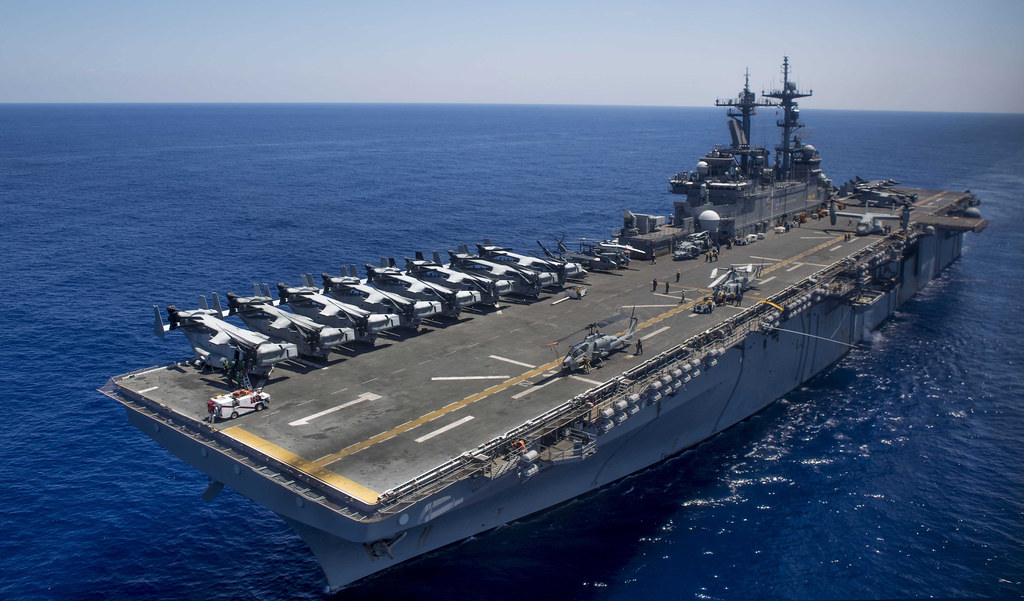
The USS Wasp is sailing from its homeport in Virginia to Sasebo, Japan, to join the US Navy’s 7th Fleet and bring Washington’s most advanced fighter jets to North Korea’s backyard.

The Wasp, an Amphibious Assault Ship and lead ship of her class, doesn’t have quite as much surface area for jets to take off and land as the larger Nimitz-class aircraft carriers, but the ship will still bring a new squadron of carrier-compatible F-35B aircraft to the 7th Fleet’s area of operations. 

The F-35B jets have the AV-8B Harrier’s capability of taking off vertically, as a helicopter does, while also being able to operate in the air like fighter jets. 

06 September 2017

News Story: Trump pledges new weapon sales for Japan, South Korea

By: Aaron Mehta

WASHINGTON — In the wake of North Korea’s sixth nuclear weapons test, U.S. President Donald Trump pledged Tuesday to increase weapon sales to Japan and South Korea.

In a Tuesday morning tweet, Trump said, ”I am allowing Japan & South Korea to buy a substantially increased amount of highly sophisticated military equipment from the United States.”

The tweet followed a Monday call with South Korean President Moon Jae-in, during which Trump “provided his conceptual approval for the purchase of many billions of dollars’ worth of military weapons and equipment from the United States by South Korea,” according to a White House readout. 

That readout also stated that the U.S. would look to remove limits on payloads of weapons sold to South Korea.

Requests for information from the White House and State Department were not immediately returned. Both South Korea and Japan are close military allies with the U.S. and regular customers of defense articles. Among the high-end technology sold from the U.S. to those two nations is the stealthy F-35 joint strike fighter.

While the outreach will likely be welcome in Seoul, don’t expect a massive flow of defense articles to either nation to happen in the coming weeks. 

By its nature, the Foreign Military Sales program means that Trump cannot clear weapon sales and have them immediately flow towards the two Pacific nations. Under the FMS system, foreign countries must first request what they would like to buy. That request is then processed by the State Department, which checks the orders for any legal or regulatory hurdles, and then is passed on to Congress, which must OK the sale.

After that, the country begins working with the Pentagon to negotiate cost, quantity and timing with industry, a process that can drag on for years. And only then will the industrial partner begin production on the equipment. Because of this process, it can often take years between when a country declares its desire to procure American military goods and when it is finally able to use them. 

Read the full story at DefenseNews

News Story: U.S. to send more strategic assets to Korea - Pacific Fleet chief

Adm. Scott Swift (Image: Wiki Commons)
By Lee Chi-dong

SEOUL, Sept. 5 (Yonhap) -- A top U.S. naval commander said Tuesday his country will keep sending formidable defense assets to the Korean Peninsula in combined deterrence and response to North Korea's "self-destructive" actions.

Adm. Scott Swift, who commands the U.S. Pacific Fleet, stressed that although South Koreans stand closest to the North's threats, they "do not face this aggressor alone."

He cited the North's continued provocations, including "ill-advised" ballistic missile launches and inflammatory warnings of nuclear war, highlighted by its sixth nuclear test Sunday.

Speaking at the International Seapower Symposium here, the admiral described the Kim Jong-un regime's choice as "irrationally self-destructive actions and behaviors that defy logic and explanation."

"We will continue to deploy carrier strike groups, expeditionary strike groups, AEGIS ships, the world's most capable submarine force and advanced aircraft like the F-35, P-8 and MH-60R to be prepared to respond decisively when called," he stressed. "Today, our platforms have longer reach, are more interconnected and possess greater lethality than what has ever been fielded before."

Read the full story at YonhapNews

    04 September 2017

    News Story: U.S. considering rotational deployment of U.S. stealth jets to Korea - sources

    US Air Force F-35 Lightning Fighter
    SEOUL, Sept. 3 (Yonhap) -- The United States is considering a rotational deployment of its stealth jets to South Korea in response to North Korea's evolving nuclear and missile threats, government sources said Sunday.

    South Korea and the U.S. are discussing the dispatch of F-22 and F-35B fighter jets on a rotational basis as part of efforts to boost extended deterrence against the North's threats, they said.

    The allies are known to be discussing the deployment of U.S. strategic assets on a quarterly basis at U.S. air base in Osan, south of Seoul or Kunsan Air Base in the southwest of the divided peninsula, they added.

    The U.S. has periodically sent strategic assets to South Korea, including B-1B bombers, as a show of force when North Korea's provocative acts are escalated.

    Read the full story at YonhapNews

    01 September 2017

    News Story: Japan Defense Ministry seeks missile interceptors in budget

    By: Mari Yamaguchi

    TOKYO — Japan’s Defense Ministry is seeking a record-high budget to add missile interceptors and other equipment to defend the country from more North Korean weapons launches.

    The 5.26 trillion yen (U.S. $47.78 billion) request for the fiscal year beginning next April is a 2.5 percent increase from the current year. A big chunk of the request announced Thursday will cover purchases of upgraded missile interceptors with expanded range, altitude and accuracy.

    They include the ship-to-air SM-3 Block IIA jointly developed by the U.S. and Japan and the surface-to-air PAC-3 MSE.

    The request comes amid growing fear about North Korea’s missile threat and rising tensions between the U.S. and North Korea. On Tuesday, Pyongyang fired a missile that flew over Japan and landed in the northern Pacific Ocean. It flight tested two intercontinental ballistic missiles in July and has threatened to send missiles near the U.S. territory of Guam, where the U.S. has military bases.

    Prime Minister Shinzo Abe called Tuesday’s missile firing an “unprecedented, grave and serious threat.” On Wednesday, Defense Minister Itsunori Onodera, an advocate of bolstering Japan’s missile and strike-back capability, said Tokyo must quickly upgrade its missile arsenal.

    China, which is seen by Tokyo as another security concern, questioned Japan’s intentions.

    “We think Japan is obliged to explain its real intention to the international community,” Hua Chunying, China’s Foreign Affairs Ministry spokeswoman, told a regular news conference.

    Japan has criticized Beijing over its military spending and assertive maritime activity in regional waters.

    Read the full story at DefenseNews

    News Story: U.S. military sends bombers, fighter jets to S. Korea for joint bomb-dropping drill

    USAF F-35 Lightning Fighter
    SEOUL, Aug. 31 (Xinhua) -- The U.S. military on Thursday sent strategic bombers and stealth fighter jets over South Korea for the joint bomb-dropping drill with the South Korean jetfighters in the country's northeastern region, local media citing the South Korean air force.

    Two U.S. B-1B strategic bombers and four U.S. F-35B stealth combat planes were dispatched Thursday afternoon over the Korean Peninsula from the U.S. island of Guam and the U.S. military base in Japan respectively.

    The U.S. combat aircraft conducted a joint flight drill with four South Korean F-15K fighter jets over the peninsula, before dropping MK-84, MK-82 and GBU-32 bombs on a target at the Pilseung firing range in Gangwon province, the northeastern region of South Korea.

    The U.S. KC-135 aerial refueling plane was also dispatched to South Korea for the joint air drill, according to local media reports.

    Read the full story at Xinhua

    News Story: Japan's defense ministry seeks record budget for FY 2018

    CGI of an Aegis Ashore System
    TOKYO, Aug. 31 (Xinhua) -- Japan's Ministry of Defense announced on Thursday a record-high budget request for the fiscal year 2018, which, if approved, would mark the sixth annual increase since Prime Minister Shinzo Abe retook office in 2012.

    The defense ministry's budget request, up by 2.5 percent from this year's initial budget, totals 5.26 trillion yen (47.8 billion U.S. dollars) for the fiscal year starting from April, 2018.

    The budget request was compiled by setting the dollar's exchange rate at 110 yen for fiscal 2018, according to the ministry.

    Part of the money would be used to introduce a new missile shield system, possibly the land-based Aegis Ashore, but the amount was unspecified as it still needs to be hammered out with the United States, said the ministry.

    Japan has so far taken steps to counter any potential launches of ballistic missiles by deploying high-tech Aegis advanced radar-equipped destroyers which are tasked with stopping missiles in the outer atmosphere, and ground-based Patriot Advanced Capability-3 interceptors which will counter the attack at lower altitudes.

    The Aegis Ashore system is a land-based version of the Aegis advanced radar system, and with potential to be permanently installed, it is expected to reduce the workload of the Japanese Self-Defense Forces members in missile intercept operations.

    Each Aegis Ashore unit costs around 80 billion yen, and Japan would need two units to cover the whole landmass, experts here have said.

    Read the full story at Xinhua

    31 August 2017

    USA: USS Wasp departs to join 7th Fleet forces in Japan

    From USS Wasp Public Affairs

    USS Wasp (LHD 1) file photo. (U.S. Marine Corps/Cpl. Ryan G. Coleman) >>

    NORFOLK, Va. - Amphibious assault ship USS Wasp (LHD 1) departed for Sasebo, Japan, Aug. 30, where it will assume duties as the forward-deployed flagship of the amphibious force of the U.S. 7th Fleet.

    The shift will introduce an F-35B Joint Strike Fighter-capable amphibious assault ship to the Indo-Asia-Pacific region, pairing it with the F-35Bs of Marine Fighter Attack Squadron (VMFA) 121.

    "This move ensures that our most technologically-advanced air warfare platforms are forward deployed," said Wasp Commanding Officer Capt. Andrew Smith. "Our capabilities, paired with the F-35B Joint Strike Fighter, increases our Navy's precision strike capabilities within the 7th Fleet region. Wasp will help America's commitment to the maritime security and stability in the Indo-Asia-Pacific."

    28 August 2017

    News Story: U.S. Air Force secretary reaffirms commitment to defense of S. Korea

    USAF Secretary Heather Wilson (Image: Wiki Commons)
    By Lee Haye-ah

    WASHINGTON, Aug. 25 (Yonhap) -- U.S. Air Force Secretary Heather Wilson said Friday that Washington remains committed to defending South Korea against North Korea's nuclear and ballistic missile threats.

    The reaffirmation came after top U.S. military officials, including Joint Chiefs of Staff Chairman Gen. Joe Dunford and the chiefs of the U.S. Pacific and Strategic commands, traveled to South Korea amid escalating tensions with Pyongyang.

    "The United States stands firmly with its allies and our commitment to the collective self-defense of the Korean Peninsula," Wilson told reporters at the Pentagon.

    Tensions flared earlier this month when U.S. President Donald Trump threatened to unleash "fire and fury" on Pyongyang, and the regime responded with threats to fire ballistic missiles toward Guam.

    Read the full story at YonhapNews

    25 August 2017

    News Story: Use Allied Investments To Help Rebuild US Military

    RAAF Wedgetail AEW/C Aircraft (File Photo)
    By ROBBIN LAIRD

    The shift from slo mo — counterinsurgency operations — to high intensity combat is a major challenge for the US military and its allies. It is a culture shift, a procurement shift and an investment shift. But mobilization is even more important than modernization.

    To get ready for this shift, our weapons inventory needs to become more robust. In visiting US bases, a common theme we hear is the challenge of basic inventory shortfalls.

    The Trump Administration came to power promising to correct much of this. But there simply is not enough time and money to do readiness and training plus ups, mobilization and rapid modernization.

    As a businessman, Donald Trump might take a look at how the Pentagon actually functions as an effective business in equipping the force. Having highlighted the question of allied spending, he might be pleased to learn of significant allied investments in new combat systems which his own forces can use, saving American taxpayers money and enhancing our military effectiveness at the same time.

    One way to augment US forces would be to do something which might seem to be at odds with the Make America Great notion. As one of my Danish friends put it well: “I have no problem with the idea of making America great again. For me, the question is how?”

    One way would be to leverage existing allied capabilities which, if adopted by the US forces, would save money but, even more importantly, would ramp up the operational capability of the US forces and their ability to work with allies in the shortest time possible. It would also allow the US to target investments where possible in break through programs which allies are NOT investing in.

    Read the full story at Breaking Defense

    24 August 2017

    News Story: Record 5.2 tril. yen defense budget sought amid N. Korea concerns

    TOKYO (Kyodo) -- The Japanese Defense Ministry plans to seek a record-high budget of 5.26 trillion yen ($48.1 billion) for fiscal 2018 as the country seeks to beef up its missile defense capabilities in the face of growing missile threats by North Korea, a government source said Tuesday.

    The ministry plans to set aside 47.2 billion yen to acquire a new type of interceptor missile to be loaded on Japanese destroyers equipped with the Aegis missile defense system, while also asking for funding to introduce a land-based Aegis system known as Aegis Ashore.

    The fiscal 2018 budget request would mark a 2.5 percent rise from the initial budget for the current year through March. Japan's defense budget has been on the rise from fiscal 2013 under Prime Minister Shinzo Abe's government and topped 5 trillion yen in the fiscal 2017 budget for a second-straight year.

    The Defense Ministry will leave open the actual sum it is expecting for designing the Aegis Ashore program because of the need for consultations with the United States that owns the technology. But it plans to finalize the costs by the end of the year when the government will draw up the fiscal 2018 budget plan.

    Read the full story at The Mainichi

    18 August 2017

    News Story: Netherlands, Australia selected to house F-35 parts

    By: Aaron Mehta

    WASHINGTON — The Netherlands and Australia will serve as regional centers of F-35 equipment as part of the fifth-generation fighter’s global footprint, the Pentagon announced Wednesday.

    The move is part of a broader plan, launched in 2014, to create service hubs around the world for the various F-35 users. Countries have bid on the right to host parts of the sustainment program — such as Italy having a final assembly and check-out facility, or Japan having a heavy maintenance facility — because of the impact such facilities could have on local economies.

    This particular aspect of the sustainment network will handle inventory management for Europe and the Pacific. Parts and supplies will be held and organized at these hubs, then shipped to various nations in the region, as opposed to those parts being shipped from manufacturers around the globe in what the program office says will be a cost-saving measure.

    Read the full story at DefenseNews

    29 July 2017

    News Story: USFK commander - Kim Jong-un's goal is to break unity among regional powers

    Gen. Vincent K. Brooks
    (Image: Wiki Commons)
    By Lee Chi-dong

    SEOUL, July 27 (Yonhap) -- North Korean leader Kim Jong-un is attempting to deter unity between South Korea, the U.S., China, Russia and Japan with a string of belligerent acts, the top American military commander here said Thursday.

    Gen. Vincent K. Brooks, who commands U.S. Forces Korea (USFK), pointed out that the communist regime's nearly weekly missile tests have become "the new normal."

    The North test-fired 28 ballistic missiles in 2016 alone, followed by 10 others this year, including what is believed to be an intercontinental ballistic missile (ICBM).

    It's also reportedly preparing for another missile launch in the coming days, although there was no report of a launch on Thursday, the 64th anniversary of the Korean War Armistice Agreement.

    "His actions intend to sow friction and fissures among the five in order to prevent them from coming together as a cohesive block," Brooks said, addressing a forum under way in Nebraska, a U.S. state, according to the USFK's website.

    The two-day symposium on deterrence is being hosted by the U.S. Strategic Command.

    "He's trying to prevent the creation of a closed fist against him," the commander said, showing the five fingers of his hand to refer to the five countries involved in the now-suspended denuclearization talks with Pyongyang.

    He described the North Korea issue as a "wicked problem" and called for a "creative" approach to resolve it by pooling the wisdom of various people.

    He also stressed the importance of deterrence for the part of the U.S. and its allies.

    Read the full story at YonhapNews

    25 July 2017

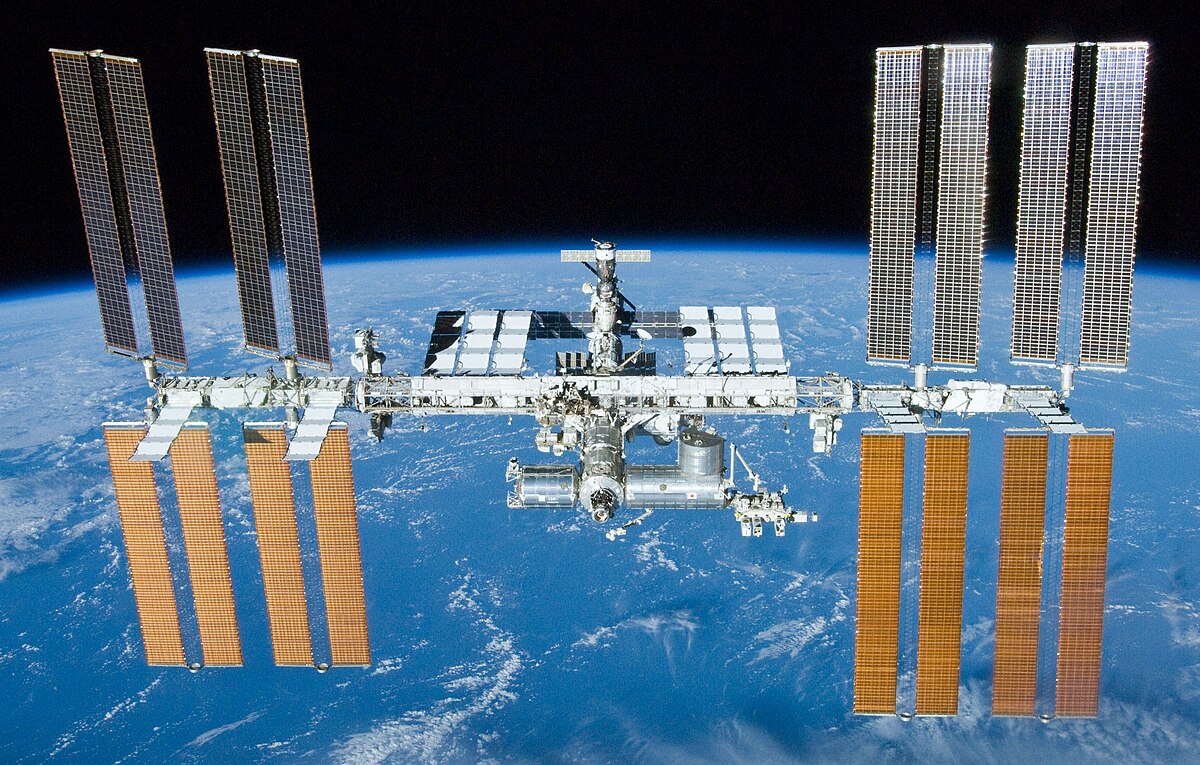
    Think Tank: Sea, air, land and space updates (25-Jul-2017)

    International Space Station (Image: Wiki Commons)
    Jack Viola, Eliza Chapman, Jacqueline Westermann and Harley Comrie
    Sea state
    A Chinese flotilla has arrived off Russia for exercises in the Baltic Sea. The Chinese contingent, which conducted live-fire drills in the Mediterranean last week, includes a Type 052D destroyer, a frigate and a support ship. The exercises, dubbed ‘Joint Sea 2017, will last for a week and be run out of the Russian city of Kaliningrad, an enclave wedged between NATO members Poland and Lithuania. The exercises come amid heightened tensions in the region, and concerns about the defensive capabilities of the Baltic NATO states.
    On 22 July, the US commissioned its newest aircraft carrier, the USS Gerald R. Ford. The launch was accompanied by great fanfare. However, President Trump had previously voiced concerns about the new electromagnetic aircraft launching system installed on the Gerald R. Ford and planned for the USS John F. Kennedy. The president expressed a preference for the older style steam launchers over the newer electromagnetic launchers.
    Closer to home, BAE, a British company bidding for Australia’s SEA 5000 future frigate program, has expressed interest in using an Australian shipyard to take advantage of export opportunities. The steel cutting for HMS Glasgow, the first of BAE’s Type 26 frigates for the Royal Navy, began last weekend.

    News Report: South Korea Launches Corruption Investigation Into F-35, KF-X Deals

    Lockheed Martin F-35A Lightning Fighter Aircraft
    South Korean officials have opened an investigation into defense acquisition contracts for F-35 and KF-X aircraft pushed for by former President Park Geun-hye, who was sentenced to prison in March for abusing the power of her office, bribery, coercion and leaking classified information.

    Defense Acquisition Program Administrator (DAPA) head Chang Myoung-jin has become the subject of a criminal investigation stemming from concerns of negligence and corruption, the Korea Times reported Monday. Chang was tapped by Park for his post shortly before Lockheed Martin and Seoul agreed to the F-35 deal worth at least $7 billion.

    South Korea agreed to acquire 40 F-35A conventional take-off and landing aircraft on September 30, 2014. Washington signed off on the program to help its ally retire a fleet of outdated F-4 and F-5 aircraft.

    News Story: US Navy tests amphibious concept at Talisman Saber exercise

    By: Mike Yeo

    ROCKHAMPTON, Australia — The U.S. Navy has put its up-gunned expeditionary strike group concept into practice within a realistic war-fighting scenario, with allied surface combatants joining an amphibious ready group, or ARG, and its embarked Marines for a major exercise off the coast of Australia.

    The Bonhomme Richard ARG was joined by a surface action group, or SAG, made up of the U.S. destroyer Sterett and four Australian frigates at Exercise Talisman Saber 2017, which saw American and Australian forces carry out two major amphibious landings at Australia’s Shoalwater Bay Training Area.

    According to Royal Australian Navy Capt. Guy Holthouse, sea combat commander for the Talisman Saber 2017 Combined Amphibious Force, the up-gunned ESG was pitted against a very active and capable adversary that presented a mix of surface, air and subsurface threats using real submarines, aircraft and ships throughout the exercise, which added training value to both U.S. and Australian forces.

    Rear Adm. Marc Dalton, commander of the U.S. Navy’s Amphibious Force 7th Fleet, added that Talisman Saber was used “to work on concept development (of the up-gunned ESG), especially for the cruiser/destroyer/frigate integration into the force as we build towards adding the F-35B.”

    Dalton noted that the amphibious assault ship Wasp, which will replace the Bonhomme Richard as the Navy’s forward-deployed big-deck amphibious ship in Japan this fall, will start deploying the F-35B at sea in the region in early 2018 and will represent “the first opportunity to operate with the complete package of the up-gunned ESG.”

    Read the full story at DefenseNews