Showing posts with label Kiribati. Show all posts

28 June 2017

USA: USNS Sacagawea arrives in New Caledonia for Koa Moana 2017

By MC3 Madailein Abbott

USNS Sacagawea (T-AKE 2) sits anchored off shore of Kiribati during the most recent Koa Moana, June 19. (U.S. Navy/MC3 Madailein Abbott) >>

NOUMEA, New Caledonia -Military Sealift Command’s (MSC) USNS Sacagawea (T-AKE 2) arrived in New Caledonia June 25 in support of Koa Moana 17 (Ocean Warrior).

The Koa Moana exercise series seeks to enhance senior military leader engagements between allied and partner nations with a collective interest in military-to-military relations and to discuss key aspects of military operations, capability development, and interoperability.

From June-September 2017 U.S. Marines from 3rd Battalion, 4th Marine regiment, 1st Marine Division, stationed in Twentynine Palms, Calif. and Marines from Combat Logistics Battalion 3, 3rd Marine Logistics Group, from Marine Corps Base Hawaii have embarked aboard the USNS Sacagawea to participate in Koa Moana 17 events in Kiribati, New Caledonia, Solomon Islands, Timor Leste, Tonga, and Vanuatu. Working alongside these partner nations, the Marines also work alongside the crew of the USNS Sacagawea, attending shipboard training, drills, and sharing workload duties during their time onboard.

10 September 2016

News Story: Australia increases Pacific disaster relief

SYDNEY, Sept. 9 (Xinhua) -- Australia has upped its disaster relief for the Pacific in an attempt to appeasing regional leaders while continuing it's fossil-fuel policies.

Australian Prime Minister Malcolm Turnbull on Friday announced an 80-million-Australian dollar (60.91-million-U.S. dollar) increase to the low-lying Pacific islands vulnerable to climate change at the Pacific Island Forum (PIF) in Micronesia.

The four-year 300-million-Australian dollar package (228.41-million-U.S. dollar) will be used on engineering projects to protect against flooding from cyclones, early warning systems and rain water catchment tanks, Turnbull said.

"For Australia, there is no more pressing need for regional action than on climate change and resilient development," Turnbull told the PIF leaders summit.

Australia and New Zealand were both admonished at the 2015 summit - which preceded the Paris climate talks - for not committing to stronger action on climate change.

Read the full story at Xinhua

31 August 2016

News Story: Pacific Islands to firm collective stance on regional issues prior to U.S. election

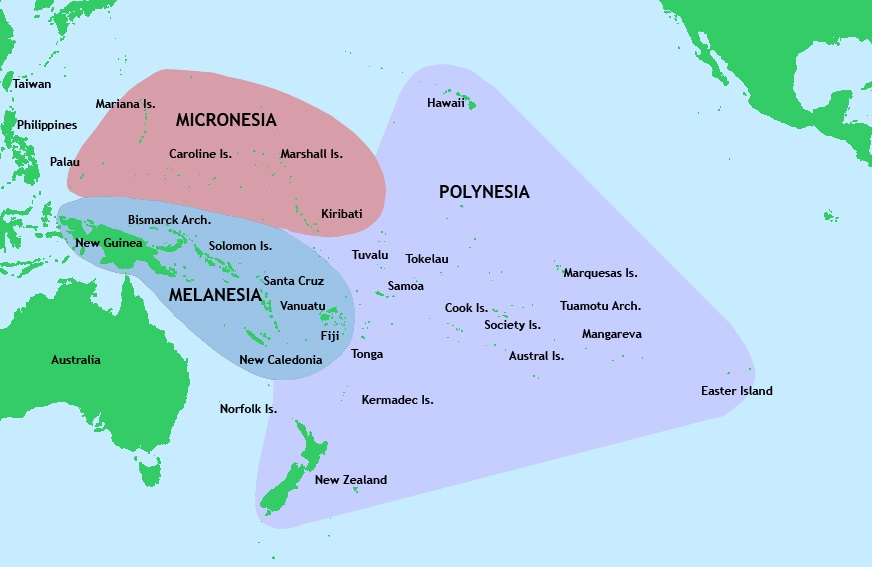
Three of the major groups of islands in the Pacific Ocean
(Image: Wiki Commons)
SYDNEY, Aug. 30 (Xinhua) -- The Pacific Islands are looking to firm their collective stance on key regional integration and cooperation issues at the triennial Pacific Island Conference of Leaders as preparations are made for a political change in the United States.

The 20 heads of government of the Pacific Islands will meet in Hawaii on Wednesday to discuss a range of issues, including maritime disputes, economic stability and the "constant threat of extreme weather caused by climate change."

"Pacific Islands nations cannot take on these issues alone, we must partner with other like-minded nations and stand for our interests in the global community," the conference's chair, Papua New Guinea (PNG) Prime Minister Peter O'Neill said on Tuesday.

O'Neill said the meeting's timing is important, allowing the Pacific's collective views and positions to strengthen before a change in the U.S. government.

Read the full story at Xinhua

06 November 2015

USA: Exercise Koa Moana Gets Underway in Vanuatu

By Grady T. Fontana, Military Sealift Command Far East Public Affairs

U.S. Ambassador to Vanuatu Walter E. North delivers remarks during the exercise Koa Moana 15-3 Vanuatu opening ceremony. (U.S. Navy/Grady Fontana) >>

LUGANVILLE, Republic of Vanuatu - The U.S. Ambassador to Vanuatu Walter E. North attended the exercise Koa Moana 15-3 Vanuatu opening ceremony at the Vanuatu Police Force base here, Nov. 4.

"The waters of the South Pacific are home to some of the riches areas of marine biodiversity and fishery resources, but their vast expanse makes them difficult to patrol and police," said Ambassador North, who is also U.S. ambassador to Papua New Guinea and Solomon Islands. "Protecting these waterways for sustainable use and legal use by all parties is not only in the interest of Vanuatu, it's in the interest of the United States."

Military Sealift Command's dry cargo and ammunition ship USNS Lewis and Clark (T-AKE 1) anchored off the coast of Vanuatu and offloaded Marines and equipment yesterday as part of her continuing support of the exercise.

27 October 2015

USA: USNS Lewis and Clark Arrives in Tarawa for Koa Moana Exercise

By Gady Fontana, Military Sealift Command Far East Public Affairs

USNS Lewis and Clark (T-AKE 1) sits off the coast of Tarawa, Republic of Kiribati, after arriving for exercise Koa Moana. (U.S. Navy/Grady Fontana) >>

PACIFIC OCEAN - Military Sealift Command’s dry cargo and ammunition ship USNS Lewis and Clark (T-AKE 1) arrived at Tarawa, Republic of Kiribati, Oct. 24, as part of its continuing support of exercise Koa Moana 15-3.

Exercise KM 15-3 is a four-month international exercise with participants from the U.S. Marine Corps, U.S. Navy, U.S. Coast Guard and host nation participants from various countries in the Pacific Island nations of Oceania.

The first portion of the exercise was in the Tahiti, followed by a leg in Fiji where Marines conducted theater security cooperation (TSC) activities with those host nation partners.

02 October 2015

USA: Koa Moana Promotes Oceania Maritime Security Cooperation

By Grady Fontana, Military Sealift Command Far East Public Affairs

U.S. Navy file photo of Military Sealift Command dry cargo and ammunition ship USNS Lewis and Clark (T-AKE 1). >>

PACIFIC OCEAN - Military Sealift Command’s dry cargo and ammunition ship USNS Lewis and Clark (T-AKE 1) is currently participating in Exercise Koa Moana 15-3, a four-month international exercise that involves embarked Marines and will make stops at various locations in the Pacific Island Nations of Oceania: French Polynesia, Fiji, Kiribati, Vanuatu and Timor Leste.

The purpose of the exercise, which is slated to end late November, is to enhance senior military leader engagements between allied and partner nations with a collective interest in military-to-military and military-to-law enforcement relations.

While training with other nations, the U.S. Marine Corps will exercise key aspects of military operations, capability development and interoperability.

14 September 2015

USA: Mercy Arrives in 3rd Fleet as PP15 Nears Conclusion

From Pacific Partnership Public Affairs

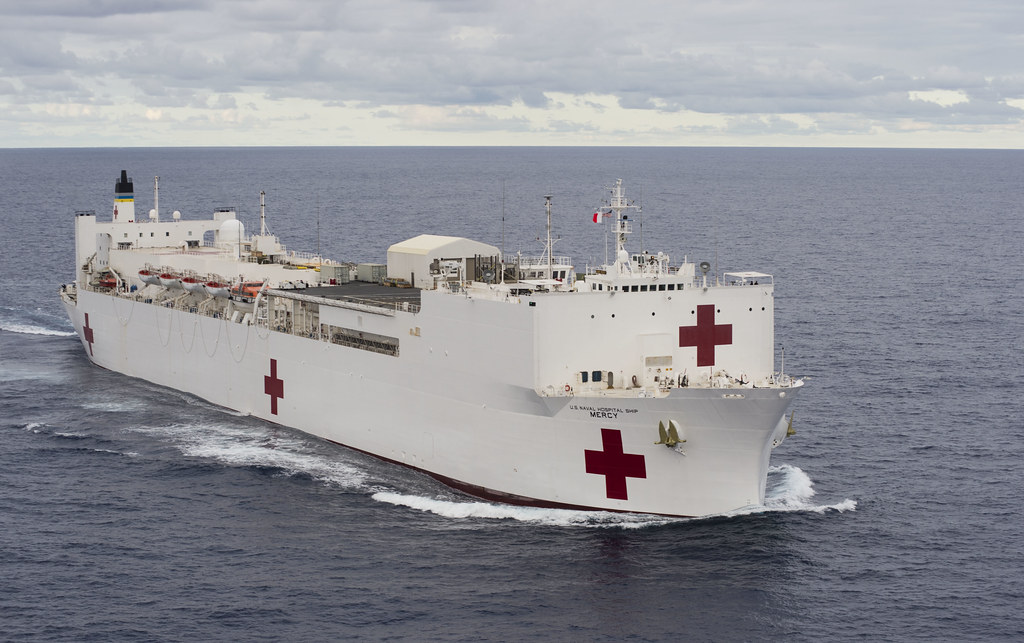
In this file photo, USNS Mercy (T-AH 19) transits the Pacific Ocean in late May. (U.S. Navy/MCC Christopher E. Tucker) >>

PACIFIC OCEAN - The hospital ship USNS Mercy (T-AH 19) arrived in the U.S. 3rd Fleet area of operations Sept. 13 as Pacific Partnership 2015 draws near its close.

Mercy, which departed Naval Base San Diego on May 17 for the beginning of PP15, served as the primary platform for the mission. The secondary platform for the mission was the Joint High Speed Vessel USNS Millinocket (JHSV 3), which wrapped up its mission participation Aug. 24 when it departed Da Nang, Vietnam.

"Pacific Partnership provides a great avenue for increasing maritime stability and security throughout the Indo-Asia-Pacific region," said Rear Adm. Charlie Williams, commander, Task Force 73. "The tremendous efforts and teamwork from all of our participating partner-nations speaks volumes about our shared commitment to this region and the value of multilateral cooperation and engagement."

20 June 2015

USA: Kiribati Phase of Pacific Partnership Mission Completed

By Mass Communication Specialist 1st Class Carla Burdt, Pacific Partnership Public Affairs

An I-Kiribati girl watches as the joint high-speed vessel USNS Millinocket (JHSV 3) arrives for Pacific Partnership, June 2. Millinocket and the embarked mission team departed Tarawa June 18. (U.S. Navy/MCC Jonathan Kulp) >>

TARAWA, Kiribati - Task Force Forager embarked aboard the Military Sealift Command joint high speed vessel USNS Millinocket (JHSV 3) wrapped up its first visit of Pacific Partnership 2015 with a closing reception June 17.

While only in the Republic of Kiribati for 15 days, the crew made a significant impact on the small island nation.

“A little over two weeks ago we began our mission in Kiribati, and today we stand proud of what we have achieved together,” said Commodore, Task Force Forager, Capt. James Meyer.

04 June 2015

USA: USNS Millinocket Arrives in Kiribati for First PP15 Mission Stop

By Mass Communication Specialist 1st Class Carla Burdt

<< The president of the Republic of Kiribati Anote Tong and First Lady Madam Tong arrive at the misison's opening ceremony, in conjunction with the the arrival of USNS Millinocket (JHSV 3). (U.S. Navy/MC1 Carla Burdt)

REPUBLIC OF KIRIBATI - The Joint High Speed Vessel USNS Millinocket (JHSV 3) pulled into the Independent Republic of Kiribati June 2, the first mission visit of Pacific Partnership 2015.

The Kiribati mission kicked off with an opening ceremony on the ship’s flight deck with many honored guests including the President of the Independent Republic of Kiribati, His Excellency Anote Tong.

In his remarks to honored guests from Kiribati, Capt. James Meyer, commodore, Task Force Forager, emphasized that PP15 teams will work in partnership with the host nation for medical training, dental clinics, engineering projects and band engagements.

02 June 2015

USA: USNS Millinocket Arrives in 7th Fleet for Pacific Partnership

By Mass Communication Specialist 1st Class Carla Burdt

<< USNS Millinocket (JHSV 3) operates in the Pacific May 28 after departing Hawaii for Pacific Partnership. (U.S. Navy/MC3 William McCann)

PACIFIC OCEAN -The Military Sealift Command joint high speed vessel USNS Millinocket (JHSV 3) arrived in the U.S. 7th Fleet area of operations May 31 in support of Pacific Partnership 2015 (PP15).

Millinocket and embarked Task Force Forager, led by an expeditionary command element from the Navy's 30th Naval Construction Regiment (30 NCR) from Port Hueneme, California, are currently serving as the secondary platform for Pacific Partnership 2015. The primary platform for the mission is the hospital ship USNS Mercy (T-AH 19).

"As commander of Task Force Forager, it is a true honor and privilege to lead the 120 service members embarked on the joint high speed vessel Millinocket for this valuable mission," said Commander, Task Force Forager, Capt. James Meyer. "The diverse embarked task force is comprised of Airmen, Marines, Sailors and Soldiers and our partner nations from Australia and New Zealand."

13 May 2015

USA: 10th Pacific Partnership mission prepares to renew regional ties


From U.S. Pacific Fleet Public Affairs

<< In this file photo, USNS Mercy sits off the Philippines coast during a previous Pacific Partnership mission. (U.S. Navy/MC3 Michael Feddersen)

PEARL HARBOR, Hawaii - The U.S. Pacific Fleet will join international forces in the 10th Pacific Partnership mission, scheduled to begin in early June. This annual maritime operation will help improve disaster response preparedness while enhancing relationships among all participants.

Led by the U.S. Navy, the Pacific Partnership 2015 (PP15) team includes personnel and assets from Australia, France, Japan, New Zealand, the Republic of Korea and Timor-Leste. As a combined force, the PP15 team will visit seven host nations and engage in a variety of local outreach efforts.

02 May 2015

AUS: Papua New Guinea joins Pacific Maritime Security Program

Users of the Pacific class Patrol Boat supplied by Australia

Papua New Guinea today advised it would join the Pacific Maritime Security Program.

Papua New Guinea is now the twelfth regional partner to join the Pacific Maritime Security Program.

This Program provides a regional solution to regional security issues. Papua New Guinea’s participation further strengthens the benefits of the cooperative program, expanding the region’s capacity to secure maritime resources and provide humanitarian assistance.

The Pacific Maritime Security Program will replace the current Pacific Patrol Boat Program as the centrepiece of Australia’s security engagement in the South Pacific.

The initiative includes delivery of replacement Australian-built Pacific Patrol Boats, integrated aerial surveillance activities, and enhancement to regional coordination.

Australia will build up to 21 new patrol boats, creating $594 million worth of Australian defence industry opportunities, plus a further $1.38 billion to support 30 years of through-life sustainment and personnel costs.

Other Pacific Maritime Security Program partners include Solomon Islands, Palau, the Federated States of Micronesia, Kiribati, Samoa, Vanuatu, Fiji, Tuvalu, Tonga, Cook Islands and the Republic of the Marshall Islands.

07 March 2015

Editorial: New Zealand's Mass Surveillance of Pacific States Exposed


By Ankit Panda

New Zealand’s Government Communications Security Bureau conducts mass surveillance of several Pacific states.

Reports citing classified documents leaked by U.S. National Security Agency whistleblower Edward Snowden state that New Zealand is carrying out mass surveillance over several Pacific island states, including  Fiji, Papua New Guinea, the Solomon Islands, Nauru, Samoa, Vanuatu, Kiribati, New Caledonia, Tonga and French Polynesia. The New Zealand Herald notes that the data gathered was shared with the other members of the “Five Eyes” intelligence-sharing network, a grouping encompassing the United States, Australia, the United Kingdom, and Canada. New Zealand’s Green Party has lodged a complaint with the country’s Inspector General of Intelligence and Security claiming that the Government Communications Security Bureau (New Zealand’s intelligence agency) broke the law by spying on, among other target, New Zealand citizens’ activities in the aforementioned states.
Diplomatically, the revelations will likely cause a problematic backlash for Prime Minister John Key’s government. The nations included in the Snowden documents as targets of New Zealand’s mass surveillance are all friendly with New Zealand. The Intercept, which hosted the leaked documents, notes that the surveillance “is being carried out by GCSB from an intelligence base in New Zealand’s Waihopai Valley.” The report adds:
Intercepted data collected at the Waihopai site is being shared through an NSA surveillance system called XKEYSCORE, which is used to analyze vast amounts of emails, internet browsing sessions and online chats that are intercepted from some 150 different locations worldwide. 
Read the full story at The Diplomat

05 March 2015

AUS: Tender announced for Pacific Patrol Boat Replacement Project

Pacific class Patrol Boat HMPNGS Drege

Today, the Government announces the Request for Tender (RFT) for the replacement – Australian-made – Pacific Patrol Boats under the Pacific Maritime Security Program, Project SEA3036 Phase 1.

This project represents a significant investment in Australian defence industry with the Australian-made patrol boats worth $594 million in addition to through life sustainment and personnel costs estimated at $1.38 billion over 30 years.

Building towards the release of the Defence White Paper, in December last year, the Government announced a plan that will allow for a sustainable naval shipbuilding industry that supports shipbuilding jobs. The Government recognises the significant value to our nation of a skilled naval shipbuilding workforce. 

The current Pacific Patrol Boat Program is the centrepiece of the Australian Government’s engagement in the South Pacific.

03 January 2015

News Story: MOFA seeking local company to build ship for Kiribati


Taiwan's Ministry of Foreign Affairs said Tuesday that it is checking with Taiwanese shipbuilders to see if they can build a ship suitable for Kiribati after funds transferred from Taiwan to the Pacific nation for the vessel went missing.

"We are trying to see if local shipbuilding companies can build a flat-bottom landing craft," said Elliott Charng, director general of the Department of East Asian and Pacific Affairs under the Ministry of Foreign Affairs, when asked about the issue.

He stressed that Taiwan was trying to help find a suitable boat supplier but would not contribute more money to Kiribati for the project.

The ministry began to talk to domestic shipbuilding companies at the behest of lawmakers in November after news emerged that financial assistance given by Taiwan to help Kiribati purchase the landing craft had disappeared, according to Charng.

Read the full story at Want China Times

10 October 2014

Editorial: Peacekeeping - Australia The Persistent

Map of Existing Pacific class Patrol Boat users

October 9, 2014: Australia is spending nearly $2 billion to replace the 22 Pacific Forum class patrol boats they built and gave to twelve Pacific Island nations in the 1980s and 90s. This is part of the Pacific Patrol Boat Program, which was started in the 1980s. The twenty new patrol boats will go to the original twelve (Papua New Guinea, Tonga, Solomon Islands, Fiji, Tuvalu, Kiribati, Samoa, Vanuatu, Federated States of Micronesia, Palau, Republic of Marshall Islands and Cook Islands) members plus East Timor. The patrol boats are used for things like fisheries protection, search & rescue and dealing with smuggling. The original boats were 31.5-meters (101 feet) long and designed to last at least 15 years. As those original boats reached their service limit it was noted that they had held up better than expected. So Australia refurbished them but now these original boats are definitely in need of replacement. About a third of the money will go for building the new patrol boats while the rest will be spent over the next 30 years to help maintain and operate the boats.

PNG Pacific class Patrol Boat HMPNGS Dreger
The Pacific Patrol Boat Program is one of many efforts by the more affluent (like Australia and New Zealand) Pacific nations to assist the many poor Polynesian and Melanesian states that were formed since the 1950s. While the Polynesian nations of the south and central Pacific mainly need economic and technical assistance, the Melanesian nations (Papua, the Solomons, East Timor and a few others) are not only closer but more often in need of peacekeepers (occasionally) and help (more frequently) with internal security. As a result of those needs Australia has found itself, often against its will, deputized as the policeman of Melanesia. It's a thankless task that has sent Australian peacekeepers to several different island trouble spots since the 1990s.

Read the full story at Strategy Page

02 July 2014

Editorial: Australia Launches New Pacific Patrol Boat Program

Pacific class Patrol Boat (File Photo)

By Shahryar Pasandideh

Providing patrol boats to its island neighbors gives Australia influence and stability in its emerging periphery.

In an attempt to bolster its influence and help improve regional security, Australia has announced a new Pacific Patrol Boat Program that will provide new patrol boats to twelve Pacific nations. The $1.88 billion program was announced on  June 17 by Australia’s foreign and defense ministers. The new vessels will replace those previously donated by Australia that are approaching the end of their service life. The announcement signals Australia’s intention to keep its role as a regional leader through security assistance to its less wealthy island neighbors.
The new all-steel patrol boats will replace the twenty-two 162-ton Pacific-class patrol boats that Australia donated to its neighbors between 1987 and 1997 in the first Pacific Patrol Boat Program. The original impetus was the passage of the 1982 United Nations Convention on the Law of the Sea (UNCLOS). UNCLOS divided formerly international waters mainly through the establishment of Exclusive Economic Zones (EEZ) that extend 200 nautical miles (370 kilometers, or 230 miles) from the shores of each country. This had a particular impact on the small Pacific island states as they suddenly acquired the responsibility to police and regulate activities across vast stretches of water. For example, Kiribati alone has 3,441,810 square kilometers of EEZ, the 13th largest in the world, larger than the total land area of India. The new program will deliver patrol boats to Tonga, the Solomon Islands, Palau, Papua New Guinea, Fiji, Tuvalu, Kiribati, Samoa, Vanuatu, the Federated States of Micronesia, the Republic of the Marshall Islands, and the Cook Islands – the original recipients of the program. In addition, Timor-Leste may become a beneficiary of this new program, raising the total number of recipients to thirteen. 

Read the full story at The Diplomat

18 June 2014

AUS: Maritime security strengthened through Pacific Patrol Boat Program

Existing Pacific class Patrol Boat (Wiki Info - Image: Wiki Commons)

A new $2 billion Pacific Patrol Boat (PPB) Program unveiled today by Foreign Minister Julie Bishop and Defence Minister David Johnston aims to significantly strengthen security in our region.

“The Pacific Patrol Boat Program is an important pillar of the Australian Government’s commitment to working with our regional partners to enable cohesive security cooperation on maritime surveillance, including in fisheries protection and transnational crime,” Minister Bishop said. 

“Defence will replace the current fleet of patrol boats for all current PPB members with the addition of  a new member, Timor-Leste (East Timor), which has been invited to join the program, evidence of Australia’s growing defence cooperation program with that country,” said Senator Johnston.

15 August 2013

USA: Pacific Partnership 2013 Comes to a Close


By Mass Communication Specialist 2nd Class Tim D. Godbee

<< U.S. Navy Capt. Wallace Lovely, Pacific Partnership mission commander, and Royal New Zealand Navy Cmdr. David Turner, HMNZS Canterbury’s commanding officer, salute the Pacific Partnership 2013 pennant as it’s lowered from the ship’s mast Aug. 13 in Honiara, Solomon Islands, to conclude this year’s mission. (U.S. Navy photo by MC2 Tim D. Godbee)

HONIARA, Solomon Islands - The sixth phase of Pacific Partnership concluded Aug. 13 in the Solomon Islands, bringing the 2013 edition of the multinational mission to a close.

U.S. Navy forces were joined by several non-governmental organizations (NGOs) and regional partners that included Australia, Canada, Colombia, France, Japan, Malaysia, Singapore, South Korea, and New Zealand with the goal of improving maritime security, conducting humanitarian assistance and strengthening disaster-response preparedness throughout the Indo-Asia-Pacific region.

26 July 2013

USA: Pacific Partnership Hosts Disaster Response Workshop

Aus & NZ Army clean up flood damage in East Timor (File Photo)

By Mass Communication Specialist 3rd Class Samantha J. Webb

TARAWA, Republic of Kiribati (NNS) -- National emergency managers and disaster response organization representatives from the Republic of Kiribati joined Pacific Partnership personnel for a disaster response workshop at the Kiribati Parliament, July 25. 

More than 20 participants attended the day-long event consisting of presentations and panel discussions from nine experts representing the nations of Australia, Canada, Kiribati, New Zealand and the U.S. 

The goal of the workshop was to discuss disaster response roles and increase collaboration between countries and organizations that would possibly respond in the event of a disaster affecting the nation of 32 low-lying atolls in the Pacific Ocean.