Showing posts with label Space Rocket. Show all posts

04 July 2017

Think Tank: Sea, air, land and space updates (4-Jul-2017)

HMS Queen Elizabeth (File Photo)
Zoe Glasson, Sophie Qin, Madeleine Nyst and Patrick Kennedy
Sea state
After a tricky few weeks, HMS Queen Elizabeth’s cyber security resilience has been called into question after photos taken during a tour of the ship appeared to show computer screens running the out-dated Windows XP operating system—the same system targeted by the recent WannaCry ransomware attack. In response, the Ministry of Defence said that Windows XP wouldn’t be used ‘when the ship becomes operational’, but many still criticised the claim that the system wasn’t vulnerable to attack. In defence of the carrier’s cyber capabilities, Commander Mark Deller said the crew included a specialist cyber team and that, with respect to naval procurement, we should ‘think more NASA than NHS’.
After Boaty McBoatface set off on its maiden mission earlier in the year, scientists have reported that it has obtained ‘unprecedented data’ from the Orkney Passage, about 800 km from the Arctic Peninsula. Water flow speed, underwater turbulence and temperature data collected by Boaty (from as deep as 4,000 mwill improve scientists’ understanding of ‘the complex ways that mixing ocean waters affect climate change’.
Also, Australia may soon get its very own Boaty McBoatface—the Australian Antarctic Division is running a competition for school students to name Australia’s new Antarctic icebreakerAny suggestions?

24 June 2017

News Story: Electric Eye - New Satellite Gives India the Edge Along the Border

With the ability to zoom in on areas less than 0.6 meters, India’s Cartosat-2 series satellite will allow the Indian Army to keep an eagle eye on hostile activities on the border, said experts on the feat accomplished by India with the launch of the PSLV rocket bearing the satellite on Friday.

New Delhi (Sputnik) — The 712-kg Cartosat-2 series satellite has the highest ever resolution in panchromatic and multi-spectral cameras used for capturing targets on the ground at less than 0.6 meters.

"This (Cartosat-2 series) remote sensing satellite is similar in configuration to earlier satellites in the series with the objective of providing high-resolution scene specific spot imagery," the Indian Space Research Organisation (ISRO) said.

"It will be capable of monitoring minute details, like the movement of persons, tanks etc if images are taken at quick intervals. It will also allow you to test on new bunkers being made at border. If Pakistan activated atom bomb testing site, this resolution will easily provide explicit details of the site to Indian authorities," Dr. Mayank N Vahiya, a scientist at the Tata Institute of Fundamental Research, said.

20 June 2017

News Story: India kick-starts military satellite programs

An Indian Space Rocket Launch (File Photo)
By: Vivek Raghuvanshi

NEW DELHI — To meet military space requirements, India plans to launch a 550-kilogram homemade military satellite within the next fortnight to join the heaviest homemade rocket, the Geosynchronous Satellite Launch Vehicle Mark III, according a Ministry of Defence source. 

The GSLV Mk III rocket, fired earlier this month into space, has the capacity to carry the 4-ton class of satellites, prompting some analysts here to say this is a prerequisite for an anti-satellite weapon. 

"The capability to launch heavy rockets with heavier payloads is a prerequisite to put up anti-satellite weapons in the space," said a scientist with the Indian Space Research Organisation, which developed the rocket.

India officially maintains that space is for peaceful use and, as such, does not have an anti-satellite, or ASAT, program. However, sources within the state-run Defence Research and Development Organization say such a program does exist. 

On the relevance of the heavy GSLV Mk III rocket to an ASAT program, Ajey Lele, a senior fellow with the Institute for Defence Studies and Analyses, doesn't believe the GSLV Mk III is related to ASAT weaponry. "In fact, heavy satellites (more than 2 tons) are normally communication satellites, and they are in geostationary orbit. The concept of ASAT for satellites in that orbit is not possible with present level of technological expertise with any country in the world." 

But Rajeswari Pillai Rajagopalan, a senior fellow with the Observer Research Foundation, disagrees. "If you are aiming at satellites in low-Earth orbits, PSLV [Polar Satellite Launch Vehicle] would be sufficient to launch 'killer' ASAT satellites, but if you are aiming to destroy satellites in geostationary orbits, such as communication satellites, then of course GSLV Mk III would be useful." 

Pillai, however, said India doesn’t have any ASAT program. 

Read the full story at DefenseNews

06 June 2017

Think Tank: Sea, air, land and space updates (6-Jun-2017)

Zoe Glasson, Sophie Qin, Madeleine Nyst and Patrick Kennedy
Sea State
DARPA is looking for a way to improve US Navy capability by making it possible for unmanned underwater vehicles (UUVs) to communicate underwater. DARPA thinks the answer might be AMEBA (A Mechanically Based Antenna) which could enable wireless communication and data transfer, with antennae  small enough to be installed on UUVs or carried in troops’ packs.
While US Navy UUVs are used for intelligence operations and minesweeping, others have a somewhat different purpose—such as BIKI, the ‘world’s first bionic robot fish’. Though marketed as an underwater camera or monitoring device, BIKI is the real deal, carrying advanced bionics tech of the kind built for artic research.
In an interview with a Chinese State TV channel, a top Chinese naval engineer has revealed that PLAN’s newest nuclear attack submarines (the Type 095 SSN) will be fitted with a ‘revolutionary and silent propulsion system’—a ‘shaftless rim-driven pumpjet’. Analysis of the announcement is just beginning to roll in, but one commentator views the development as ‘an attempt to leap beyond current submarine technology’, which if successful could see the PLAN outpace the US and Britain, whose SSBNs carrying the option for rim-drive pumpjets won’t enter service until 2030.

16 May 2017

News Report: Pyongyang’s Successful Missile Test Shows Progress Toward ICBM Nuke Capability

Days after South Korea elected a new president who might be favorable to better diplomatic ties with Pyongyang, North Korea launched a medium-range ballistic missile that might accommodate a large nuclear warhead into the Sea of Japan.

“North Korea’s latest successful missile test represents a level of performance never seen before from a North Korean missile,” aerospace engineer John Schilling wrote on 38 North, a website dedicated to North Korea security topics. Despite Hwasong-12’s classification as a medium-range missile, it could have allowed North Korea to test subsystems of ICMBs.

US President Donald Trump’s frequent declarations about “solving” the North Korean “problem” may have forced Pyongyang’s hand into accelerating ICBM development. “The possible testing of ICBM subsystems in this low-key manner may be a North Korean hedge” against the prospect of escalation with US forces, Schilling said.

It could represent significant progress toward the nation’s goal of reaching greater ICBM capabilities, according to various experts. The most recent test was “not consistent with an intercontinental ballistic missile,” US Pacific Command said in a statement. But David Wright of the Union of Concerned Scientists estimated the projectile’s range to be 2,800 miles.

06 May 2017

News Story: India launches South Asia satellite

Indian Space Rocket Launch (File Photo)
NEW DELHI, May 5 (Xinhua) -- India Friday launched the South Asia communication satellite from the spaceport of Sriharikota in the southern state of Andhra Pradesh.

State-owned Indian Space Research Organization's (ISRO) Geosynchronous Satellite Launch Vehicle (GSLV), carrying the satellite, called GSAT-9, lifted off from second launch pad at Satish Dhawan Space Center in Sriharikota at 4:57 p.m. local time.

ISRO, which has built the satellite for use by countries of the South Asian Association for Regional Cooperation (SAARC) region, said that GSAT-9 has been launched with an objective to provide different communication applications in Ku-band with coverage over South Asia.

Indian Prime Minister Narendra Modi announced the date of launch of the satellite in his monthly radio programme, Mann ki baat (talk from the heart) Sunday.

Read the full story at Xinhua

05 May 2017

News Story: India to launch South Asia satellite Friday

Indian Space Rocket (File Photo)
NEW DELHI, May 4 (Xinhua) -- India will launch the South Asia communication satellite, built for use by countries of the South Asian Association for Regional Cooperation (SAARC), on Friday.

State-owned Indian Space Research Organisation (ISRO), which has built GSAT-9, the South Asia communication satellite, said that preparations for the launch are going on smoothly and the satellite will take off from the southern spaceport of Sriharikota on Friday afternoon.

"We have the launch tomorrow (Friday) at 4.57 p.m. (local time)... All activities are going on smoothly," ISRO chief A.S. Kiran Kumar told the media.

Indian Prime Minister Narendra Modi announced the date of the satellite launch in his monthly radio program, Mann ki baat (talk from the heart), on Sunday.

Read the full story at Xinhua

11 April 2017

News Report: Pyongyang’s Next Nuke Launch Could Greet New President in Seoul

North Korea may seek to leverage influence with the incoming South Korean government by carrying out its sixth nuclear test in late April, according to one expert.

Sejong Institute fellow Cheong Seong-chang said the advanced test may be Pyongyang’s last before putting the finishing touches on its nuclear program.

South Korea’s Yonhap News Agency quoted Cheong at a forum in Seoul, saying, "The possibility of North Korea pushing ahead with a nuclear test before the (85th) anniversary of the founding of the Korean People's Army on April 25 cannot be ruled out." 

He added, "It is assumed that North Korea would finish sophisticating its nuclear capabilities through the last nuclear test ahead of the launch of a new administration in the South before seeking to mend the fence with the new administration using a nuclear test freeze as a negotiating card.”

The feeling amongst officials in Seoul is that Pyongyang, which has conducted five nuclear tests since 2006, could conduct another at almost any time, depending on the whims of its Supreme Leader, Kim Jong-un.

06 April 2017

News Story: North Korea may have tested new technology in latest missile

By: Hyung-jin Kim

SEOUL, South Korea — A North Korean missile test ended in failure Wednesday when the rocket spun out of control and plunged into the ocean in a fiery crash, a senior U.S. defense official said. 

The launch came shortly before U.S. President Donald Trump's first meeting with Chinese leader Xi Jinping later this week, raising speculation that it might have been timed to get their attention. 

The extended-range Scud missile suffered an in-flight failure and fell into the sea off North Korea's east coast, according to U.S. imagery and assessments, the official said on condition of anonymity because he was not authorized to discuss the launch publicly. 

Initial U.S. and South Korean assessments had indicated it was an advanced KN-15 medium-range missile, whose first known test by North Korea was in February. But unlike the KN-15, which uses solid fuel, the missile fired Wednesday used liquid fuel and was fired from a fixed location, rather than a mobile launcher, the official said. 

The South Korean military said the missile was fired from land near the east coast city of Sinpo and flew only about 60 kilometers (40 miles). 

Read the full story at DefenseNews

04 April 2017

Think Tank: Sea, air, land and space updates (4-Apr-2017)

Zoe Glasson, Sophie Qin, Madeleine Nyst and Patrick Kennedy

Sea State

Indonesia is continuing with its program of literally blowing up illegal fishing boats in its waters. On Saturday, authorities simultaneously destroyed 81 foreign vessels at 12 different locations, in what Maritime and Fisheries Minister Susi Pudjiastuti called ‘a victory for Indonesia’s war against illegal fishing’. Since ramping up its anti-poaching efforts in 2014, Indonesia’s special maritime task force Satgas 115 has captured 317 illegal boats, primarily from Vietnam, the Philippines and Malaysia; all have been confiscated and destroyed. The Indonesian government has linked the crackdown with its plan to revive its fisheries industry and re-establish itself as a maritime power.

Israeli defence electronics firm Elbit Systems has completed operational testing of its Seagull Unmanned Surface Vessel. The Seagull can carry out underwater mine hunting and clearing, as well as anti-diver and anti-submarine missions, enabling navies to use a single platform (with interchangeable modules) for different purposes. Its strategic value isn’t bad either—according to the brochure, Seagull’s ASW capability ‘returns the asymmetric advantage’ to those seeking to counter threats from terrorists, who are increasingly using midget submarines to target bigger and more powerful forces.

Ever heard of Project Combo? If not, you can read all about the US Navy’s Cold War plan to develop a secret communication system by mimicking sea mammal noises here.

21 March 2017

News Report: South Korea - North Korean Rocket Engine Test Shows 'Meaningful Progress'

South Korean officials say North Korea's latest rocket-engine test showed "meaningful" advancement in engine function.

Lee Jin-woo, deputy spokesman for the South Korean Defense Ministry said Monday, "Through this test, it is found that engine function has made meaningful progress, but further analysis is needed for exact thrust and possible uses."

North Korea ground-tested a new high-thrust rocket engine, the country's official news agency KCNA said on Sunday.

North Korean leader Kim Jong Un said the test was successful and "emphasized that the world will soon witness the great significance of the epoch-making victory we achieved today," KCNA reported.

The test consisted of firing the rocket engine while it was held in place on the ground, not powering a missile. The ignition took place at the Tongchang-ri rocket launch station near the North's border with China, according to KCNA, which said Kim went to the site at dawn.

From this same region, Pyongyang launched a satellite into space in February 2016 using banned intercontinental ballistic missile technology.

17 March 2017

News Report: Japan Launches IGS Radar-5 Spy Satellite

Japan has launched the IGS Radar-5 surveillance satellite aboard an H-2A rocket.

TOKYO (Sputnik) – The launch took place on Friday from the Tanegashima Space Center in southern Japan and was broadcast live on the internet by Necovideo Visual Solutions (NVC).

According to the Japan Aerospace Exploration Agency (JAXA), the IGS Radar-5 spy satellite was developed by Mitsubishi Heavy Industries Ltd. It is Japan’s sixth radar reconnaissance satellite.

The previous information gathering satellite, IGS Radar-4 was launched in January 2013.

The Friday launch is the second H-2A rocket launch this year.

This story first appeared on Sputnik & is reposted here with permission.

08 February 2017

News Report: North Korea Plans to Continue Satellite Launches Despite UN Objections

North Korea intends to continue launching satellites, despite UN Security Council sanctions and resolutions.

TOKYO (Sputnik) — According to the newspaper Rodong Sinmun, the country will continue to launch satellites when and where its leadership determines.

On February 7, 2016, North Korea put a satellite into orbit, violating UN Security Council resolutions. The move is considered threatening since the international community believes the North could use its rocket technology to develop ballistic nuclear missiles.

Pyongyang has successfully conducted five nuclear tests, including two in 2016, and has frequently made statements about the advancement of its nuclear program.

In January, the North Korean Foreign Ministry announced that the country was ready to launch an intercontinental ballistic missile (ICBM) "anytime and anywhere."

This story first appeared on Sputnik & is reposted here with permission.

07 February 2017

Think Tank: Sea, air, land and space updates (7-Feb-2017)

Zoe Glasson, Sophie Qin, Madeleine Nyst and Patrick Kennedy

Sea State

A Saudi Arabian frigate was attacked by Houthi rebels in waters west of Yemen on 30 January. Conflicting reports are floating around about the attack method—while the official Saudi Press Agency attributed it to “suicide boats,” the rebels themselves (and Iran) claim to have used anti-ship missiles. At least two other Houthi attacks on navy vessels have occurred in the Bab el Mandeb strait recently, including a successful cruise missile strike against a UAE Navy vessel last October.

The pacific hagfish (or slime eel!) is on the menu of new defence tools being investigated by the US Navy. In a cool example of biomimicry, researchers are using the fish’s slime to develop a new synthetic material which they hope could provide an extra layer of defence on warships. The slime has properties similar to Kevlar and could also be used for anything from ‘ballistics protection, firefighting, anti-fouling, diver protection or anti-shark spray.’ The research team has recreated the slime’s distinctive proteins, and are now working to refine and then mass-produce the synthetic slime.

Finally, we said farewell this week to the world’s first nuclear-powered aircraft carrier, the USS Enterprise, as it was decommissioned on 3 February. Read more about its important legacy here.

25 January 2017

News Story: Japan Defense Ministry's 1st satellite successfully placed in orbit

Japanese H-2A rocket
TANEGASHIMA, Japan (Kyodo) -- The Japanese Defense Ministry's first communications satellite was successfully placed in orbit late Tuesday afternoon, part of the country's efforts to upgrade the Self-Defense Forces' communications network to better deal with security challenges.

An H-2A rocket carrying the Kirameki-2 defense communications satellite was launched at 4:44 p.m. from the Japan Aerospace Exploration Agency's Tanegashima Space Center in Kagoshima Prefecture, southwestern Japan.

The Kirameki-2 satellite is one of three defense communications satellites that will replace three civilian satellites currently used by the SDF.

According to Defense Ministry officials, the new satellites will facilitate direct communications among units of the Ground, Maritime and Air Self-Defense Forces through a high-speed, high-capacity network, serving as a communications infrastructure to counter the North Korean missile threat and defend remote islands.

The ministry plans to operate the Kirameki-2 over the Indian Ocean and expects it to be also used by SDF personnel taking part in U.N. peacekeeping operations in South Sudan and an antipiracy mission off Somalia, they said.

Read the full story at The Mainichi

04 January 2017

News Report: China to Carry Out Some 30 Space Launches in 2017

China plans to carry out some 30 space launches in 2017, local media said Tuesday.

BEIJING (Sputnik) – The launches include the Chang'e 5 unmanned lunar exploration mission atop a Long March 5 lift vehicle due to take place in late 2017, the China News Service agency reported, citing the China Aerospace Science and Technology Corporation (CASC).

The mission is set to be China's first to return with lunar soil samples.

China also plans to launch a Tianzhou automated cargo spacecraft atop a Long March 7 rocket to supply the Tiangong-2 space laboratory, which was launched in late 2016.

The Tiangong 2 space laboratory is designed to probe life support technologies for Beijing’s future space station and is manned by a crew of two. The Long March 7 is due to be launched in April.

This story first appeared on Sputnik & is reposted here with permission.

21 October 2016

News Story: DPRK vows to launch more satellites

A North Korean Space Rocket Launch (File Photo)
PYONGYANG, Oct. 20 (Xinhua) -- The Democratic People's Republic of Korea (DPRK) on Thursday said it will continue to send more satellites into space under its national blueprint for space development.

A spokesman for the DPRK National Aerospace Development stressed in a statement that a satellite launch by the DPRK and its right to use space for peaceful purposes was "legitimate."

The spokesman refuted claims by South Korea that the true intention behind Pyongyang's satellite program is not for peaceful purposes.

In the statement carried by the official news agency KCNA, the spokesman said the DPRK will launch more Juche satellites.

The statement came amid South Korea's strong denunciation of the DPRK over its test-launch of an intermediate-range ballistic missile on Thursday, which Seoul's military presumed to have failed.

Read the full story at Xinhua

08 October 2016

News Story: Rising moves detected in DPRK's missile launch site - S.Korea

North Korean Space Rocket launch carrying a Satellite
SEOUL, Oct. 7 (Xinhua) -- Rising moves of personnel and vehicles have been detected in the Democratic People's Republic of Korea (DPRK)'s main rocket launch site, indicating preparations for a long-range missile launch in the near future, Yonhap news agency reported on Friday.

A senior South Korean government official was quoted as saying the moves in the DPRK's Tongchanr-ri missile base have remarkably increased recently, noting that strategic provocations, including a long-range missile launch, seemed to have been prepared.

South Korea's military has estimated that Pyongyang could conduct another provocation at or around Oct. 10 to mark the 71st anniversary of the foundation day of the ruling Workers' Party of Korea (WPK).

On Sept. 20, the military said the DPRK conducted a ground test of a new rocket engine that could be used for a long-range missile. It believed that Pyongyang may have enhanced the jet capability of its high-powered rocket engine based on the DPRK's state media report.

The DPRK's official KCNA news agency reported that top DPRK leader Kim Jong Un guided the test of "a new-type high-powered engine of a carrier rocket for geo-stationary satellite" at the Sohae Space Center in the country's west coast. The state media said it was a great success.

The Sohae center is dubbed in South Korea as Tongchanr-ri rocket base, where the DPRK launched a long-range rocket in February and had conducted other rocket tests.

Read the full story at Xinhua

27 September 2016

Think Tank: Sea, air, land and space updates (27-Sep-2016)

Christopher Cowan, Thulasi Wigneswaran, Elisabeth Buchan and Alexander Vipond

Sea State

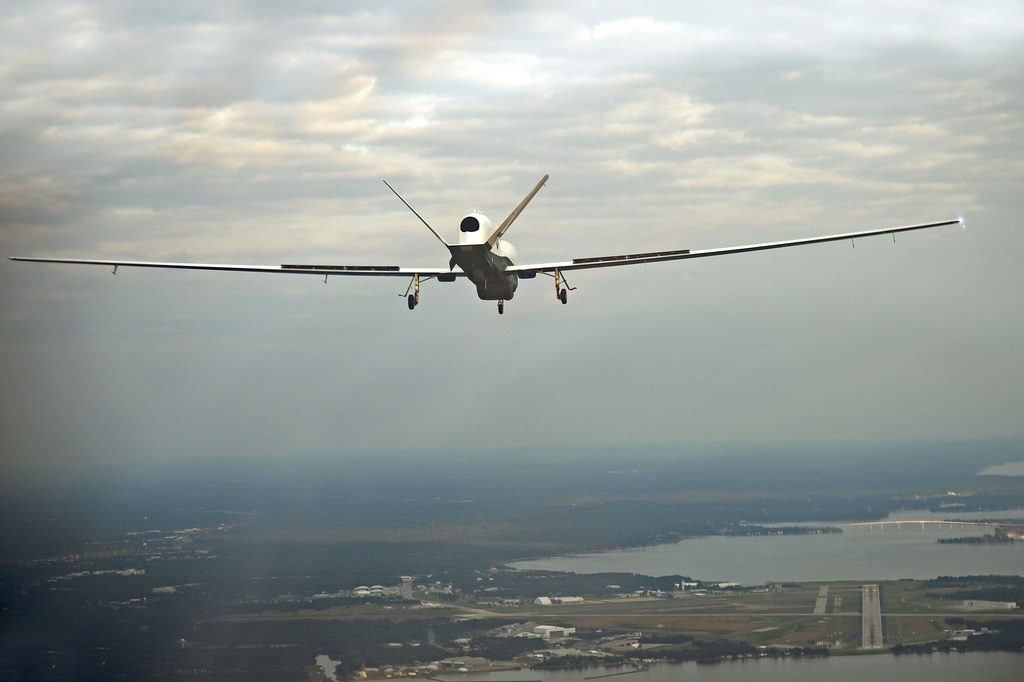
The US Navy will soon have eyes in the sky for much longer than before, having last week approved the commencement of low-rate initial production for the MQ-4C Triton unmanned aerial vehicle (UAV). The Triton, an intelligence, surveillance, and reconnaissance UAV, has a range of 8,200 nautical miles and can fly for up to 24 hours. This is good news for the RAAF, as it plans to fly seven Tritons alongside its future fleet of P-8 Poseidon maritime patrol aircraft to increase its broad area maritime surveillance capabilities.

The two-year saga of the two French Mistral class amphibious assault ships once destined for Russia has finally come to an end. The Egyptian Navy last week took possession of the second Mistral class vessel—named the Anwar el-Sadat after the (in)famous former Egyptian president—after receiving the first in June. While Russia may not be getting the ships it wanted, it’s trying to make the best of the situation by selling the Ka-52K attack helicopters once intended for the vessels to Egypt. The aircraft are expected to be delivered in 2017.

News Story: Rocket launch site to open up New Zealand space industry - Minister

Electron rocket (Image: Rocket Lab)
WELLINGTON, Sept. 27 (Xinhua) -- New Zealand first space launch site was officially opened Tuesday, with Economic Development Minister Steven Joyce saying it would help generate the national space program.

Joyce said he was looking forward to the first launches this year from the privately run Rocket Lab Launch Complex 1, on the Mahia Peninsula on the North Island's east coast, followed by more next year when Rocket Lab launched commercial payloads.

"Rocket Lab will be a catalyst for other space-related activity in New Zealand," Joyce said in a statement.

"Space activity is pervasive in our lives, to such an extent we are no longer aware that our Internet, our decision-making around energy and resource management, our marine surveillance to name only a tiny fraction, all rely on what we are doing in space."

Attracting international players would be easier now the government had established a regulatory regime to be managed by a new New Zealand Space Agency.

Read the full story at Xinhua