Showing posts with label DARPA. Show all posts

29 July 2017

News Story: China military setting up technology research agency

China's J-20 Stealth Fighter
by Richard Tomkins

China has reportedly established a new military department to develop new technology and state-of-the-art weapon systems.

The Scientific Research Steering Committee was set up early this year and revealed for the first time in a documentary that aired recently on state broadcaster CCTV, the South China Morning Post reported .

The committee will fall directly under the Central Military Commission chaired by President Xi Jinping.

Read the full story at SpaceDaily

06 June 2017

Think Tank: Sea, air, land and space updates (6-Jun-2017)

Zoe Glasson, Sophie Qin, Madeleine Nyst and Patrick Kennedy
Sea State
DARPA is looking for a way to improve US Navy capability by making it possible for unmanned underwater vehicles (UUVs) to communicate underwater. DARPA thinks the answer might be AMEBA (A Mechanically Based Antenna) which could enable wireless communication and data transfer, with antennae  small enough to be installed on UUVs or carried in troops’ packs.
While US Navy UUVs are used for intelligence operations and minesweeping, others have a somewhat different purpose—such as BIKI, the ‘world’s first bionic robot fish’. Though marketed as an underwater camera or monitoring device, BIKI is the real deal, carrying advanced bionics tech of the kind built for artic research.
In an interview with a Chinese State TV channel, a top Chinese naval engineer has revealed that PLAN’s newest nuclear attack submarines (the Type 095 SSN) will be fitted with a ‘revolutionary and silent propulsion system’—a ‘shaftless rim-driven pumpjet’. Analysis of the announcement is just beginning to roll in, but one commentator views the development as ‘an attempt to leap beyond current submarine technology’, which if successful could see the PLAN outpace the US and Britain, whose SSBNs carrying the option for rim-drive pumpjets won’t enter service until 2030.

30 May 2017

Think Tank: Sea, air, land and space updates (30-May-2017)

Zoe Glasson, Sophie Qin, Madeleine Nyst and Patrick Kennedy
Sea State
The Pentagon is looking at equipping the US Coast Guard’s planned three new medium icebreakers with heavy weapons. Speaking to a House subcommittee on Homeland Security, Admiral Paul Zukunft said it was necessary to ‘look differently at what an icebreaker does’ and that ‘US presence in the Arctic is… a matter of national security.’ The USCG currently has only two active icebreakers, which are split between the Arctic and the Antarctic. America’s arctic capabilities are far out-stripped by that of Russia, which has a fleet including a (huge!) ‘research’ submarine and around 40 icebreakers. And, in the last few years, Russia has activated 14 new operational airfields and 16 deep water ports as part of an arctic military build-up that one US commander has likened to China’s actions in the South China Sea.
Surprising evidence has emerged that the first ever Australian ship to reach Japan was in fact sailed by convict pirates from Tasmania. The Cyprus was hijacked by convicts in 1829, and, according to fresh translations of samurai accounts, anchored off the town of Mugi on Shikoku island on 16 January 1830—at the height of Japan’s feudal isolation.

15 November 2016

Think Tank: Sea, air, land and space updates (15-Nov-2016)

Christopher Cowan, Thulasi Wigneswaran, Elisabeth Buchan and Alexander Vipond
Sea State
South Korea launched its newest submarine—the Lee Beom-seok—at a ceremony last week. Named after a famous Korean resistance fighter, the Lee Beom-seok is the eighth of a planned nine Son-Won-II-class diesel electric submarines. Based on the German Type-214 submarine, the Son-Won-II-class displaces 1,800 tonnes and is equipped with air independent propulsion systems. The launch of the Lee Beom-seok­ comes as South Korea races to increase the size of its submarine fleet in response to North Korea’s fleet of 70 submarines. North Korea’s submarines have been quite active recently; one launched a ballistic missile earlier this year while another is thought to be responsible for sinking a South Korean corvette in 2010.
Secretary of the US Navy, Ray Mabus, announced the name of his service’s next amphibious assault ship and it’s sure to please World War II aficionados. Named for the famous campaign in which American, Australian and New Zealand troops took back the island of Bougainville from the Japanese; the third ship of the America-class will be named the USS Bougainville. The new ship will have a well deck for amphibious operations. The two other America-class vessels—the USS America and the USS Tripoli—don’t have that feature, and are rather optimised for airborne operations using helicopters and F-35B fighters.

24 October 2016

USA: Advanced Space Surveillance Telescope Has Critical Military Applications

By Cheryl Pellerin
DoD News, Defense Media Activity

WASHINGTON, Oct. 22, 2016 — The most sophisticated space surveillance telescope ever developed is ready to begin tracking thousands of space objects as small as a softball. It’s a boon to space surveillance and science and a new military capability important to the nation and the globe, an Air Force general says.

“It’s not often we get an opportunity to witness the beginning of an entirely new military capability,” Air Force Maj. Gen. Nina Armagno said at the transfer event, “but that's exactly what we're doing here today.”

The telescope, developed by the Defense Advanced Research Projects Agency, was turned over to the Air Force Oct. 18 at the Space Surveillance Telescope site atop North Oscura Peak on the northern part of the Army’s 3,200-square-mile White Sands Missile Range in New Mexico.

Armagno, the director of strategic plans, programs, requirements and analysis for Air Force Space Command headquarters at Peterson Air Force Base in Colorado, was one of several speakers at the event, which was attended by officials, scientists and engineers from DARPA, MIT Lincoln Laboratory, L3 Communications, media and others.

The formal transition of the SST from a DARPA-led design and construction program to ownership by the Air Force begins the telescope’s operational phase. The Air Force will move the SST to Harold E. Holt Naval Communication Station in Western Australia, operating and maintaining the telescope jointly with the Royal Australian Air Force.

The SST also will be a dedicated sensor in the U.S. Space Surveillance Network, operated by the Air Force Space Command.

According to DARPA, SST represents breakthroughs in telescope design, camera technology and image analysis software, and allows much faster discovery and tracking of previously unseen or hard-to-find small space objects.

22 October 2016

News Story: Electronic threats from above

US Navy E/A-18G Growler Electronic Attack Aircraft
By: Mark Pomerleau

Adversarial capabilities writ large have significantly improved vis-à-vis the United States (hence the necessity of the Defense Department’s so-called third offset strategy). One of these areas causing concern is that of the electromagnetic spectrum (EMS). 

Operations in EMS have become significantly more complex as adversaries have begun to develop advanced jamming capabilities utilizing software-defined technologies significantly more advanced and reprogrammable than Cold War-era analog systems. 

For example, both China and Iran have touted electronic warfare payloads that can create headaches for opposing ground forces below. The Chinese Xianglong Soar Dragon UAS includes large payloads enabling it to conduct electronic warfare (EW) missions. The long endurance of the system, and most large UAS platforms, make them ideal to jam radar below. 

“In wartime, the Xianglong's high altitude jammers would seek to disrupt not only the radars of enemy fighters and missiles, but also jam and spoof communications between enemy bombers, airborne early warning and control aircraft, drones and even datalinks between satellites, ships, land based missile launchers and missiles,” Jeffery Lin and P.W. Singer wrote in Popular Science. “In such [a] role, the EW Xianglong would operate alongside a host of other Chinese EW aircraft, including Y-9 heavy transport jammers, J-16 and JH-7 strike aircraft, in both offensive and defensive operations.” 

A September blog post for the American Enterprise Institute, a Washington-based think tank, indicates that Iran might have “augmented its UAV fleet with drones capable of jamming enemy communications and disrupting communications between an adversary’s drones and its controllers,” though the article expressed skepticism over the claim's accuracy — be it realized or aspirational — given that “the Iranian press often exaggerates.” 

Several U.S. military officials from various service branches as well as the Pentagon have conceded that electronic warfare has been a neglected capability in the last 15 years given the intense focus on technologically inferior non-state actors in the Middle East and South Asia. This has led to an atrophy in capabilities on which the Pentagon wants to improve. 

“The pace of change worldwide suggests that the U.S. needs agile, adaptive, and integrated EW capabilities,” a DoD spokesman told C4ISRNET in an email. “We develop capabilities in the electromagnetic spectrum (EMS) to counter an adversary's use of electronic attack (EA) with the electronic protection (EP) of U.S. systems and, when necessary, to degrade, neutralize, or destroy enemy combat capability.” 

The way in which these capabilities have advanced overtime is the advancement of software capabilities enabling rapid reprogramming of signals. One of the defensive measures derived to counter these advancements is commonly termed cognitive EW. While coined as such, it's essentially applying machine learning to make systems smarter, according to Josh Niedzwiecki, director of sensor processing and exploitation at BAE Systems. 

Read the full story at C4ISRnet

20 October 2016

News Story: DARPA Hands Over High-Tech Space Telescope to Air Force

By: Valerie Insinna

WASHINGTON—The Air Force on Tuesday took control of a super-powerful space telescope developed by the Defense Advanced Research Projects Agency, but operational use won’t begin until around 2020, after the system is moved to Australia, a DARPA official said. 

The Space Surveillance Telescope, or SST, will be operated by Air Force Space Command in cooperation with the Royal Australian Air Force to track debris floating around space about 36,000 kilometers from Earth, said Lindsay Millard, DARPA’s program manager. 

“SST has about an order of magnitude better performance than the existing space surveillance network,” the Ground-based Electro-Optical Deep Space Surveillance (GEODSS), she told reporters in an Oct. 18 conference call. 

Three technologies help contribute to that performance. The telescope incorporates the steepest curved primary telescope mirror — produced by L3 — ever made, which can collect light across a wider field of view. The first-ever “curved charge coupled device” for the camera provides clear imagery, and its fast shutter speed allows it to take a greater number of photos. 

Read the full story at DefenseNews

30 August 2016

News Story: Indian MinDef Seeks Greater US Industrial Ties

Lockheed Martin's Proposed F-16IN for India
By: Aaron Mehta

WASHINGTON -- As a sign of tightening bonds between the US and Indian militaries, the Indian defense minister this week will sit down with the top defense technology minds from both inside and outside the Pentagon. 

Manohar Parrikar is in the US for a three day visit, starting with Monday’s meeting with his US counterpart, Secretary of Defense Ash Carter, and in comments Monday made it clear he intends to come away from his visit having increased ties between the US defense industry and that of his home country. 

On Tuesday, Parrikar will have a sit down with top US industrial companies, and in comments to the press Monday, the minister was not shy about his goal to “encourage” future tie-ups between US and Indian defense firms. 

“I wish to invite US industry, including the defense industry, to be part of this new journey of hope and transformation in India,” the minister said. 

Tuesday's meeting is organized by the US-India Business Council, part of the US Chamber of Commerce. Ben Schwartz, the Council's Director for Defense and Aerospace, told Defense News that 20-25 companies will be attending, including Boeing, Lockheed Martin and Textron.  
Parrikar likely won’t need a hard sell, with US firms having eyed a greater share of the Indian market for most of the past 15 years. But after continuous delays on a number of high-profile military industrial projects, including for the right to provide India with a new fleet of high-end fighter aircraft, there is hope that the government of Prime Minister Narendra Modi will be able to finally push through new defense agreements.

Read the full story at DefenseNews

19 July 2016

Think Tank: Sea, air and land updates (19-Jul-2016)

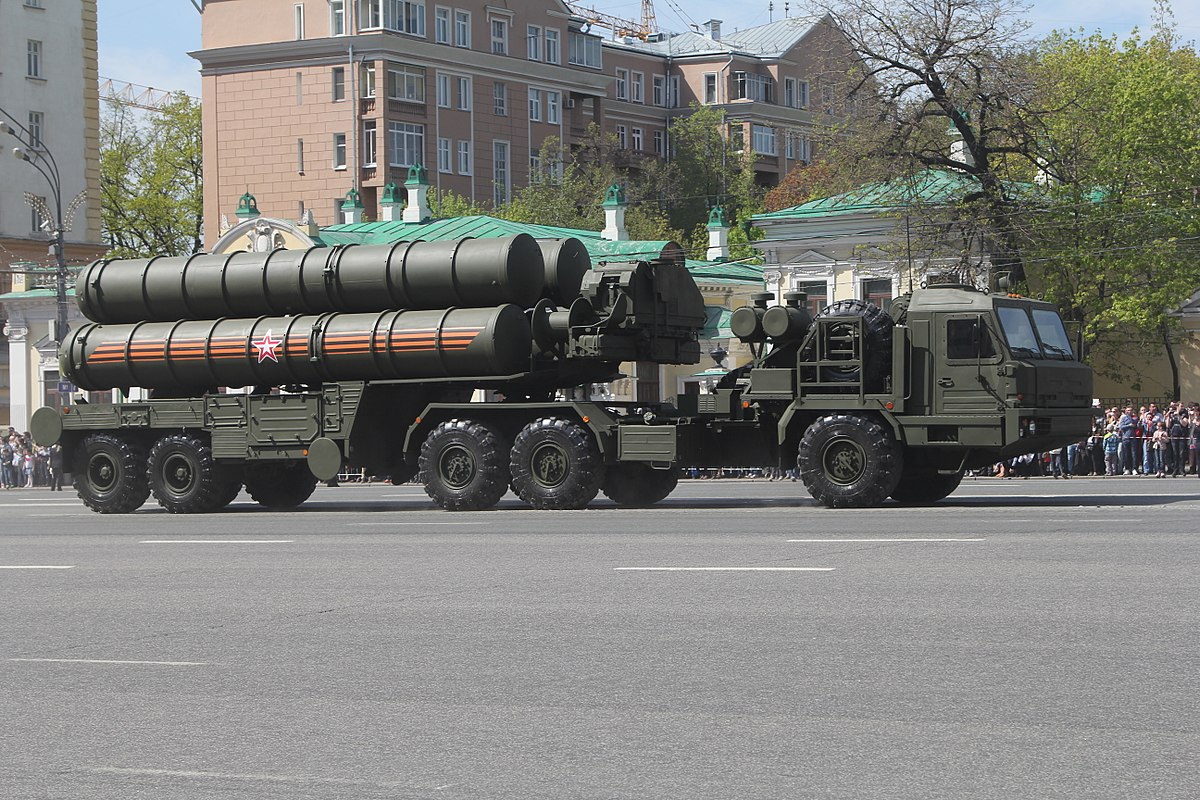
S-400 Triumf launch vehicle (Image: Wiki Commons)
Dione Hodgson, Ashleigh Sharp and Lachlan Wilson

Sea State

The USN has been restricted from using low-frequency active sonar in some ocean areas because it can injure whales and other marine life. A federal appeals court found on 15 July that the USN had been wrongly permitted to use low-frequency sonar during training, testing and routine operations, overturning a previous lower court decision. The lower court decision had upheld approval granted by the National Marine Fisheries Service in 2012 which allowed the USN to use sonar during peacetime operations in the Pacific, Atlantic and Indian oceans and the Mediterranean Sea. The decision means the USN won’t be able to use the sonar to detect submarines in certain marine habitats. Ecowatch has taken a look at the effect sonar—and other industrial noise—has on marine life.

Blast from the past: The National Oceanic and Atmospheric Administration—with help from the USN and Boeing—captured the first clear images of the radioactivity-polluted USS Independence on the ocean floor last Thursday. Using a robotic underwater vehicle, scientists were able to map the wreck of the WWII aircraft carrier, which was deliberately sunk off the coast of Half Moon Bay by the USN in 1951. The ship faced its fair share of damage during its 10 years of service—it was heavily damaged during nuclear weapons testing at Bikini Atoll in 1946, turned into a floating nuclear decontamination site while stationed in a shipyard in San Francisco, and was then scuttled by two torpedo warheads while laden with barrels of radioactive waste.

17 May 2016

Think Tank: Sea, air and land updates (17-May-2016)

Dione Hodgson, Ashleigh Sharp and Lachlan Wilson

Sea State

The US Department of Defense released its annual report to Congress on China’s military and security developments on Friday, drawing particular attention to China’s actions in the South China Sea. The Pentagon review detailed that China had reclaimed more than 3200 acres of land in the Spratly Islands over the past two years, and alleged China was using ‘coercive tactics short of armed conflict’ in order to advance its interests in the region. The report also estimated China’s military spending in 2015 at more than $180 billion—approximately $40 billion more than China’s official defence budget. In response, China’s defence ministry expressed ‘strong dissatisfaction’ with the report, and had severely damaged trust between the two countries. The National Interest has an in-depth analysis of the report, while VICE takes a look at China’s response.

Hidden underwater drones may be the next frontier in naval warfare. The US Defense Advanced Research Project Agency (DARPA) is developing Upward Falling Payloads, giant 15-foot high pods that would allow the US Navy to deploy UAVs to provide surveillance or potentially house weapons systems. The pods would be pre-positioned on the ocean floor, where they would enter hibernation to be released at any time. Once released, it would use a buoyancy collar to move rapidly to the surface. DARPA is currently working on Stage 3 of the project, which will include sea demonstrations. On the topic of UAVs, a newly released report from the US Department of Defense has found that 41 hand-launched drones purchased by US Special Operations Command failed military tests and may not be able to meet mission requirements. 

07 April 2016

News Story: U.S. Navy's new unmanned sub-hunter to hit the seas this month

by Carlo Munoz

The U.S. Navy's newest sub-hunting maritime drone successfully completed preliminary speed and maneuverability testing in preparation for its christening into the fleet this month.

A technology demonstration version of the Anti-Submarine Warfare (ASW) Continuous Trail Unmanned Vessel, or ACTUV, completed the open water drills near Portland, Ore., according to a Defense Department fact sheet.

Program officials from the Defense Advanced Research Projects Agency and defense technology firm Leidos are spearheading development of the ACTUV. During the Portland tests, the ship was able to reach a top speed of 27 knots, or 31 miles per hour.

"The ACTUV doesn't just answer one of the biggest challenges the Navy faces today. It launches an entirely new class of unmanned vessel with vast possibilities for the future," according to a company statement.

Read the full story at SpaceWar

12 February 2016

Editorial: World’s Largest Anti-Submarine Robot Ship Ready for Sea-Trials in April

By Franz-Stefan Gady

The U.S. Navy’s largest unmanned surface vehicle designed to track Chinese and Russian subs will be christened in April.

The Pentagon’s Advanced Research Projects Agency (DARPA), an agency responsible for developing and testing cutting-edge military technologies, will test-launch the prototype of its 140-ton Anti-Submarine Warfare Continuous Trail Unmanned Vessel (ACTUV), named Sea Hunter, in April this year, the deputy director of DARPA, Steve Walker, said, according to National Defense Magazine.

The 132-feet (40 meters) long Sea Hunter, an unmanned autonomous trimaran, will be christened in April 2016 at the Vigor Shipyards in Oregon and immediately afterwards commence sea-trials for 18 months to test its long-range tracking capabilities, among a host of other things. During the testing DARPA will closely cooperate with the Office of Naval Research and the Space and Naval Systems Warfare Command.

The ship’s primary mission will be tracking enemy subs in shallow waters, I noted in June 2015 (See: “US Navy to Deploy Robot Ships to Track Chinese and Russian Subs”). Furthermore, I explained that the ACTUV “is designed to operate autonomously for 60 to 90 days straight, surveil large stretches of ocean territory and — should an enemy sub be spotted — guide other U.S. naval assets to the vessel’s location to destroy it (the ACTUV itself is unarmed).”

“Imagine an unmanned surface vessel following all the laws of the sea on its own and operating with manned surface and unmanned underwater vehicles,” Walker told reporters during a briefing at DARPA headquarters in Arlington, Virginia on February 10. “We think the real cost savings will be in operating this vessel at sea compared to how we operate vessels today.”

Read the full story at The Diplomat

24 November 2015

Editorial: US Navy’s Prototype Robot Ship Gets New Sonar

By Franz-Stefan Gady

An autonomous vessel designed to track Chinese and Russian subs in shallow waters gets new sonar.

The prototype of a U.S. Navy robot ship was recently equipped with a new hull-mounted sonar system, IHS Defense Weekly reports.

The Anti-Submarine Warfare Continuous Trail Unmanned Vessel (ACTUV), received Raytheon’s Modular Scalable Sonar System (MS 3), which “will be integrated as the ACTUV’s primary search-and-detection sonar,” according to the article. The sonar system will produce an “acoustic image” of targets in order to identify and classify vessels in close proximity to the robot ship.

“Designed to autonomously conduct active and passive searches, detect torpedoes, filter passive threats, localize and track submarines, and avoid small objects, the MS 3 is Raytheon’s first fifth-generation medium-frequency hull-mounted sonar system,” IHS Defense Weekly explains.

The ACTUV is an unmanned autonomous trimaran designed by the U.S. Defense Advanced Research Projects Agency (DARPA), an agency responsible for developing emerging technologies for the military’s use. DARPA was tasked with developing an anti-submarine drone — a robot ship capable of tracking enemy subs in shallow waters in 2010.

Read the full story at The Diplomat

14 November 2015

Editorial: Hypersonic Missiles and Global Security

By Nayef Al-Rodhan

Hypersonic missiles offer some impressive – and disturbing – capabilities.

Between 2014 and June 2015, China conducted four major tests of its hypersonic missiles (with a fifth test in August). The fourth test of Wu-14, its ultra high-speed nuclear delivery vehicle, demonstrated a capacity for “extreme maneuvers.” It was assessed as travelling at a speed of Mach 10 (flying at 10 times the speed of sound or approximately 7,680 miles per hour). To understand this in comparative terms, a missile flying at subsonic speed can reach a maximum of 500-600 miles per hour.

To qualify as “hypersonic,” a missile would have to move at least five times the speed of sound (Mach 5), as well as be able to evade counter-fire and strike with great precision. To date, no country has achieved this performance but several nations are working on it.

The fact that China carried out four tests of its hypersonic vehicles in a span of just 18 months demonstrates the commitment of Beijing to the development of the technology. Once operational, these capabilities would be sufficient to neutralize U.S. strategic missile defenses; they will be able to avoid triggering early-warning systems or detection by radar. The critical military value of hypersonic systems lies in this ability to strike with unprecedented speed and precision.

Four other countries in Asia are known to be developing civilian or military programs for supersonic and hypersonic systems: Japan, India, South Korea and Taiwan. Russia is also pursuing hypersonic capabilities and aims to acquire an operational hypersonic missile by 2030. India and Russia also worked together on the hypersonic BrahMos-2.

Read the full story at The Diplomat

30 June 2015

Editorial: US Navy to Deploy Robot Ships to Track Chinese and Russian Subs

By Franz-Stefan Gady

Work on the U.S. Navy’s new anti-submarine drone is progressing and that’s bad news for diesel-electric subs.

Diesel-electric submarines are cheaper and quieter than their nuclear counterparts and they are rapidly being procured by states opposed to the national interests of the United States.

While not capable of traveling long distances or at great speed, diesel-electric submarines have the potential to deny the U.S. Navy access to strategic coastal areas and could also interrupt seaborne commerce. Equipped with air-independent propulsion systems and advanced lithium-ion batteries, the next generation of diesel-electric boats will even be harder to track down and destroy in the event of a naval conflict.

“Picking up the quiet hum of a battery-powered, diesel-electric submarine in busy coastal waters is like trying to identify the sound of a single car engine in the din of a major city,” Rear Admiral Frank Drennan, commander of the Naval Mine and Anti-Submarine Warfare Command, emphasized in March 2015.

Consequently, the United States military has been exploring options for some time now how to best counter this emerging asymmetrical threat.

Read the full story at The Diplomat

12 May 2015

AUS: Assistant Minister for Defence – Visit to the United States of America


Assistant Minister for Defence Stuart Robert has returned from a visit to the United States where he met with key US interlocutors to further defence and security cooperation.

During his visit, Minister Robert called on the US Deputy Secretary of Defence, Mr Bob Work to discuss current bilateral engagement and opportunities to deepen collaboration in areas such as defence innovation and cooperation on science and technology.

Deputy Secretary Work and Minister Robert also discussed avenues for Australian collaboration in the US Department of Defense’s Innovation Initiative, a long-term US effort to leverage new technologies and systems to ensure it can best respond to emerging security challenges.

Minister Robert said discussions were also held on the ongoing reform efforts in their respective defence organisations, with Minister Robert detailing progress on Australia’s upcoming Defence White Paper and recently released First Principles Review.

24 April 2015

Editorial: Drone Swarms - How the US Navy Plans to Fight Wars in 2016

By Franz-Stefan Gady

‘Swarmbots’ could mean a new era in autonomous warfare.

Last week, the Office of Naval Research (ONR) released a video showcasing the U.S. Navy’s latest technology for conducting autonomous warfare: LOCUST, or the Low-Cost Unmanned Aerial Vehicle Swarming Technology program.

The LOCUST system can launch up to 30 small pre-programmed drones out of a rocket-launcher type mechanism under a minute, the video illustrates. Once airborne, the drones start communicating with each other autonomously and begin to fly in formation either to reconnoiter or attack an enemy target. “The breakthrough technology (…) utilizes information-sharing between the UAVs, enabling autonomous collaborative behavior in either defensive or offensive missions,” an ONR press release said.

The strategy behind “swarmbots” is simple: assault the adversary with a cloud of cheap and disposable drones and paralyze defenses by the sheer quantity of unmanned attackers in the air.

In comparison to other air-attacks this can be done on the cheap. “Lowering costs is a major benefit of UAVs (…). Even hundreds of small autonomous UAVs cost less than a single tactical aircraft — and (…) having this capability will force adversaries to focus on UAV swarm response,” ONR emphasizes.

Read the full story at The Diplomat

21 April 2015

Think Tank: Air, sea and land updates (21-Apr-2015)

Palmo Tenzin, Amelia Long and Natalie Sambhi

Flight path

It looks as if Russia isn’t just flexing its muscles in Eastern Europe. Last Wednesday, Japan reported Russian incursions in its northern skies. Along with Chinese combat aircraft in its southern airspace, this led to 944 responses from Japan’s fighters in the year ending March 2014. This is the second highest annual figure since records began in 1958, and indicate increased signalling.

In regional militarisation, Beijing is strengthening its air defence system with the procurement of S-400 surface-to-air missiles systems from Russia. Planned for deployment in 2017, the S-400 has a 400km range and is reported to be able to strike aerial targets over the island of Taiwan and as far away as New Delhi, Calcutta, Hanoi and Seoul if targeting data is available. It’s also capable of intercepting missiles, including air breathing cruise missile targets. The air defence technology can also extend to cover the disputed Senkaku/Diaoyu islands in the East China Sea.

15 April 2015

Editorial: US Navy to Deploy Underwater Drones by the End of 2015

REMUS 600 - Autonomous underwater vehicle
By Franz-Stefan Gady

Will this be a game changer for undersea warfare?

The U.S. Navy will for the first time deploy Unmanned Underwater Vehicles (UUVs) from Virginia-class attack submarines by the end of this year reports military.com.

According to the U.S. Navy’s director for undersea warfare, Rear Admiral Joseph Tofalo, the soon-to-be deployed underwater drones will be commercially available UUVs such as the REMUS 600 Autonomous Underwater Vehicle.

Designed through funding from the Office of Naval Research, the REMUS 600 is modeled after the REMUS 100 UUV, built by the Norwegian-based Kongsberg Maritime defense contractor, and can be deployed for a wide range of missions including mine counter measure, harbor security, and search and salvage operations.

Read the full story at The Diplomat

29 September 2014

News Story: India To Push Joint Weapons Development During US Visit


By VIVEK RAGHUVANSHI

NEW DELHI — India’s leader will seek joint development of high-tech weaponry when he visits the White House on Sept. 30, in a shift from the country’s “buy and supply” relationship with the US, an Indian official said.

New Prime Minister Narendra Modi will also discuss greater participation of US and Indian defense companies when he visits with US President Barack Obama, said the official with the Ministry of External Affairs (MEA).

Defense analysts here say the Modi government will not give big-ticket weaponry orders to the US on a government-to-government basis, as was done by the previous United Progressive Alliance government. Instead, Modi will push for greater participation by US defense companies in forging partnerships with domestic defense companies to boost the domestic defense industry.

In the past decade, India has bought US $10 billion in weapons from the United States, mostly through foreign military sales.

Read the full story at DefenseNews