Showing posts with label Hypersonic Missiles. Show all posts

18 July 2017

Think Tank: Sea, air, land and space updates (18-Jul-2017)

Jack Viola, Eliza Chapman, Jacqueline Westermann and Harley Comrie
Sea state
The US Navy released a request for information (RFI) last week seeking proposals for a new guided missile frigate. Its previous plans for a new frigate were based on modifying the current littoral combat ships. But the RFI for the new replacement program, designated FFG(X), calls for a bigger crew and more guns, which the current hulls may not be able to deliver. That could mean a whole new design and a new ship in the seas.
The Chinese Navy has conducted a live-fire drill in the Mediterranean Sea. The Chinese flotilla was on its way to join in exercises with the Russian Navy in the Baltic. According to the China Daily, the flotilla ‘fired several rounds’ during a drill that ‘was aimed at honing crew members’ skills in attacking small targets’. The second phase of the exercises, planned for September in the Sea of Japan, will include ‘an amphibious assault component’.
If you’ve ever wondered what happens when you try to kill a submarine with a nuclear depth charge, War is Boring and Operation Wigwam have some answers.

News Report: Japan Plans to Equip Multirole Fighters With Hypersonic Anti-Ship Missiles

The Japanese government plans to equip the F-2 multirole fighters of the Japan Air Self-Defense Force (JASDF) with a new, domestically produced hypersonic anti-ship missiles starting from 2018 amid the tensions with China over the disputed Senkaku Islands in the East China Sea, local media reported Monday.

TOKYO (Sputnik) — On June 24, a total of four vessels of the Chinese Coast Guard entered Japan's territorial waters near the Senkaku Islands, and stayed there for two hours regardless of the Japanese maritime security service’s calls to leave the area. The Japanese Foreign Ministry expressed a protest to China over the incident.

Japan’s newly developed hypersonic anti-ship missiles would be able to fly three times faster than the speed of sound and would replace previous transonic missiles, the Yomiuri newspaper reported.

The Senkaku Islands or Diaoyudao Islands are at the center of a heated dispute between Japan and China. The United States handed control over the chain of eight islets to Japan in 1972, but Beijing argues they were marked as Chinese territory on maps dating back to 1783.

This story first appeared on Sputnik & is reposted here with permission.

11 July 2017

AUS: Hypersonic flight test a success

Minister for Defence, Senator the Hon Marise Payne, today congratulated the Defence Science and Technology Group (DST Group) and the US Air Force Research Laboratory (AFRL) on another successful experimental hypersonic flight at Woomera Test Range.

Minister Payne said the success of these flights takes us one step closer to the realisation of hypersonic flight.

“Hypersonic flight is more than five times the speed of sound and has the potential to revolutionise air travel, making it faster and cheaper to travel around the world and into space,” Minister Payne said.

“There are key military applications of this technology and by understanding hypersonic flight, the Australian Defence Force will be in a better position to respond to future threats.”

27 June 2017

News Report: North Korean, Russian, Chinese Missile Tech Advances Raise Threat to US

The development of ballistic and cruise missile technology around the world has raised the potential threat level faced by Washington, even if the projectiles don’t carry nuclear warheads, according to a new US Defense Department report.

Missiles have seen “dramatic improvements” in location targeting, which “allows them to be used effectively with conventional warheads,” according to a National Air and Space Intelligence Center assessment shared with Bloomberg News prior to its public release. The aerial weapons are widely viewed internationally as “cost-effective weapons and symbols of national power,” the report said.

The US and its allies have repeatedly called on North Korea to halt its ballistic missile research and development, but Pyongyang has rejected any suggestions of this sort. A recent op-ed circulated through the North Korean media indicating that, regardless of convening diplomats of North and South Korea, Pyongyang would push forward on its quest to achieve intercontinental ballistic missile capability, Sputnik reported on Sunday.

29 May 2017

News Report: Japan's Missile Shield Purchase Invites Hostility From China

CGI of a Aegis Ashore ballistic missile defense system
In an interview with Sputnik, Russian military expert Vasily Kashin specifically focused on the possible implications of Japan's plans to purchase an Aegis Ashore ballistic missile defense system from the United States.

Tokyo is considering installing an Aegis Ashore defense network, "a land-based version of the Aegis anti-missile system used by the Maritime Self-Defense Force," the Japanese newspaper Nikkei reported. 

The newspaper did not rule out that the possible deployment was caused by "North Korea's continued testing of missiles, fired into nearby waters."

Commenting on the matter, Russian military expert Vasiliy Kashin told Sputnik that "the planned deployment in Japan of three Aegis Ashore systems equipped with more powerful radars will mean that the missile defense problem in Asia finally comes to the fore, leaving the European missile shield-related problem behind."

"Japan is also considering the purchase of the Terminal High Altitude Area Defense (THAAD) system. This will help create a multi-layered missile defense system consisting of Aegis, THAAD and Patriot PAC-3 networks to protect certain particularly valuable locations," according to Kashin.

27 April 2017

News Story: PACOM’s Harris Urges More Subs, PGMs, Ships At HASC

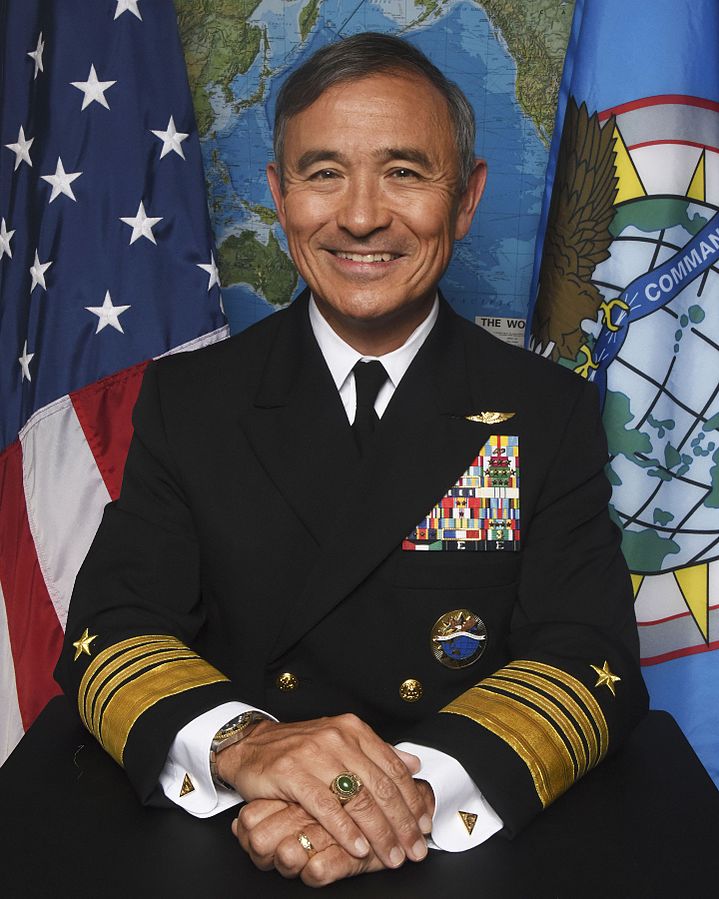
Adm. Harry Harris (Image: Wiki Commons)
By SANDRA ERWIN

While North Korea threatens to shoot and sink American aircraft carriers and launch nuclear weapons, Pacific Command is running short of precision-guided munitions. And Pacific Command does not have enough surface ships, submarines and antimissile radars to keep up with current and emerging threats, its commander Adm. Harry Harris told the House Armed Services Committee today.

The admiral got a receptive ear from HASC Chairman Rep. Mac Thornberry, who told reporters after the hearing that he would like to see Congress step up with more resources for PACOM. But Thornberry admitted that budget brinkmanship in Washington will make that unlikely.

Some of PACOM’s equipment and technology gaps are actually unrelated to the North Korea crisis but are a direct result of the battle against the Islamic State. Harris has loaned Central Command large stockpiles of small diameter bombs and air-to-air Sidewinder missiles. “We need more,” he told the committee. PACOM’s supplies of Mark 48 torpedoes also are dwindling.

Pacific Command may not spend munitions as fast as CENTCOM, but what it does use more than any other U.S. war command is submarines. PACOM today only has 50 percent of what it estimates it needs to keep tabs on North Korea, Chinese and Russian undersea activity.

“The numbers are low and getting smaller,” said Harris. The Navy’s entire attack submarine fleet of 52 is projected to shrink to 42 in a few years unless the Navy gets a big influx of new money. Should Trump’s proposed naval buildup happen, the submarine fleet would expand to 66.

Why does PACOM need more weapons and new ones, especially transformative systems? It’s simple, Harris said: If you think it is hard to deter North Korea today, wait till we have to deter China and Russia as they roll out their shiny new weapon systems in the coming decades.

Read the full story at Breaking Defense

02 February 2017

News Report: China Eyes Breakthrough R&D Defense Plan to Take on US Technological Dominance

Recently, China established a new central commission for joint military and civilian development. The new institution will be chaired by Chinese President Xi Jinping.

"The commission will be the central agency tasked with decision-making, deliberation and coordination of major issues regarding integrated military and civilian development," read an official statement issued by Xinhua news agency.

According to military expert Vasily Kashin, the fact that the commission is overseen by the Chinese leader proves that it is expected to play an important role in China’s far-reaching defense modernization plans.

The conception of integrated military and civilian development was first presented in China back in the 1980s, at the early stage of China’s economic reforms.

15 November 2016

Think Tank: Sea, air, land and space updates (15-Nov-2016)

Christopher Cowan, Thulasi Wigneswaran, Elisabeth Buchan and Alexander Vipond
Sea State
South Korea launched its newest submarine—the Lee Beom-seok—at a ceremony last week. Named after a famous Korean resistance fighter, the Lee Beom-seok is the eighth of a planned nine Son-Won-II-class diesel electric submarines. Based on the German Type-214 submarine, the Son-Won-II-class displaces 1,800 tonnes and is equipped with air independent propulsion systems. The launch of the Lee Beom-seok­ comes as South Korea races to increase the size of its submarine fleet in response to North Korea’s fleet of 70 submarines. North Korea’s submarines have been quite active recently; one launched a ballistic missile earlier this year while another is thought to be responsible for sinking a South Korean corvette in 2010.
Secretary of the US Navy, Ray Mabus, announced the name of his service’s next amphibious assault ship and it’s sure to please World War II aficionados. Named for the famous campaign in which American, Australian and New Zealand troops took back the island of Bougainville from the Japanese; the third ship of the America-class will be named the USS Bougainville. The new ship will have a well deck for amphibious operations. The two other America-class vessels—the USS America and the USS Tripoli—don’t have that feature, and are rather optimised for airborne operations using helicopters and F-35B fighters.

26 September 2016

News Report: India’s Deployment of BrahMos Supersonic Stealth Missile is Making China Nervous

India’s more hawkish foreign policy under Prime Minister Narendra Modi along with a major scoop up of international armaments has Beijing looking to their southern border with concern.

The Indian military deployed a fourth regiment of 100 BrahMos missiles and five autonomous missile launchers in the North-Eastern state of Arunachal Pradesh disconcertingly close to the country’s border with China amid festering tensions between New Delhi and Beijing in large part based on China’s pledge to support its long-time ally Pakistan in the event of an attack.

China’s People’s Liberation Army (PLA) immediately denounced the deployment calling it a threat and saying it raises the stakes over a longstanding territorial dispute between the two countries.

The BrahMos "missile with updated capabilities for stealth and mountain warfare could threaten Yunnan and Tibet Autonomous Region (TAR) provinces, located across the border from Arunachal Pradesh," said the People’s Liberation Army in a statement while a state-run media editorial said the move was "beyond India’s ‘normal need for self-defense.’ Playing tricks, they are bound to suffer the consequences." 

25 August 2016

News Report: New Arms Race - China, US Prepare for Missile Warfare

In signs of a new Cold War, China is building an arsenal of both offensive and defensive missiles to prepare for a hypothetical conflict with the United States.

In recent months, tensions between the two nations have reached new heights. In the South China Sea, Beijing and Washington are at loggerheads over the former’s construction of artificial islands, with the US concerned China is attempting to establish an air defense zone. In the neighboring East China Sea, Tokyo and Beijing are at odds over the Senkaku islands, a conflict partly driven by the United States pressuring its Pacific allies into taking a harder stance against China’s growing influence.

As these tensions simmer, an op-ed for Asia Times by Bill Gertz points out that China has been stockpiling its missile arsenal for years, over concerns of US aggression.

"Beijing’s arsenal of ballistic and cruise missiles has been growing steadily for decades as new systems were fielded in an array of ranges – short, medium and intercontinental," Gertz writes. "Several long-range cruise missiles, capable of carrying nuclear or conventional payloads also are deployed."

In addition, Beijing has secretly developed a hypersonic missile, the DF-ZF glide vehicle, which ascends to the Earth’s upper atmosphere in order to bypass anti-missile defense systems.

23 August 2016

Think Tank: Sea, air, land and space updates (23-Aug-2016)

Royal Australian Navy (RAN) ANZAC class Frigates
Christopher Cowan, Thulasi Wigneswaran, Elisabeth Buchan and Alexander Vipond

Sea State

It has been a big month on the water for Lockheed Martin. Better known for building aircraft, the company delivered its eighth Littoral Combat Ship (LCS), the LCS Detroit, to the US Navy earlier in August. The vessel is a part of the Freedom class, which is the company’s share of the US Navy’s Future Frigate program. While the LCS program has faced its share of issues, both variants of the LCS have progressed well and are currently undergoing shock tests. This comes on the heels of Lockheed Martin’s new US$166 million contract to build mini-submarines for US Special Operations Command. These mini-subs are designed to allow up to six Navy SEALs to infiltrate hostile coastal regions undetected.

One of the Royal Australian Navy’s ANZAC class guided missile frigates, the HMAS Toowoomba, is temporarily out of action as it receives its slated Anti-Ship Missile Defence (ASMD) upgrades. The ASMD program will allow the ANZAC class vessels to better defend themselves against anti-ship missiles by upgrading their combat sensors and weapons systems. The Toowoomba is the second last ANZAC to receive the upgrades and will be back in service in September 2016.

When is an amphibious assault ship actually an aircraft carrier? Check out this in-depth look at the US Navy’s newest amphibious assault ship, the USS America, here.

02 August 2016

AUS: Defence scientist appointed to lead Lockheed Martin’s new research facility

Minister for Defence Senator the Hon Marise Payne today congratulated Defence Science and Technology Group senior executive Dr Tony Lindsay on his appointment as director of Lockheed Martin’s new Science Technology Engineering Leadership and Research Laboratory (STELaR Lab) in Melbourne.

Dr Lindsay is one of Australia’s pre-eminent Defence scientists and is currently Chief of the DST Group’s National Security and Intelligence, Surveillance and Reconnaissance Division.

“Dr Lindsay has had a distinguished 28 year career with DST Group and will bring a wealth of knowledge and insight into his new role,’’ Minister Payne said.

“His appointment is a testament to his leadership in his field and demonstrates the high regard in which DST Group is held within the defence industry.’’

Lockheed Martin will invest $13 million in the lab over the next three years to further study areas including hypersonics, autonomy, robotics and command, control, communications, computing, intelligence, surveillance and reconnaissance.

Dr Lindsay will finish with DST Group in October before beginning his role with Lockheed later in the year.


NOTE: The Lockheed Martin to Establish Leading Edge Research & Development Facility in MelbourneLink in the above was added by PacificSentinel for clarity & context.

Industry: Lockheed Martin to Establish Leading Edge Research & Development Facility in Melbourne

Minister for Industry, Innovation & Science the Hon. Greg Hunt MP and Premier of Victoria Daniel Andrews MP welcome $13 million investment 

MELBOURNE, Australia – Aug. 2, 2016 – Melbourne has been confirmed as the location for a leading edge multi-disciplinary Research & Development (R&D) facility by leading global technology company Lockheed Martin (NYSE: LMT).

Lockheed Martin will invest an initial $13 million over three years to establish a Science Technology Engineering Leadership and Research Laboratory (STELaR Lab) to undertake R&D to solve the technology challenges of the future, and work in the art of the possible.

STELaR Lab, the first leading edge multi-disciplinary facility to be established by Lockheed Martin outside of the United States, will constitute Lockheed Martin’s national R&D operations centre for its current research portfolio in Australia, and undertake additional internal R&D programs.

Scheduled to open in early 2017, STELaR Lab researchers will explore several fields, including hypersonics, autonomy, robotics and command, control, communications, computing, intelligence, surveillance and reconnaissance.

19 July 2016

Think Tank: Sea, air and land updates (19-Jul-2016)

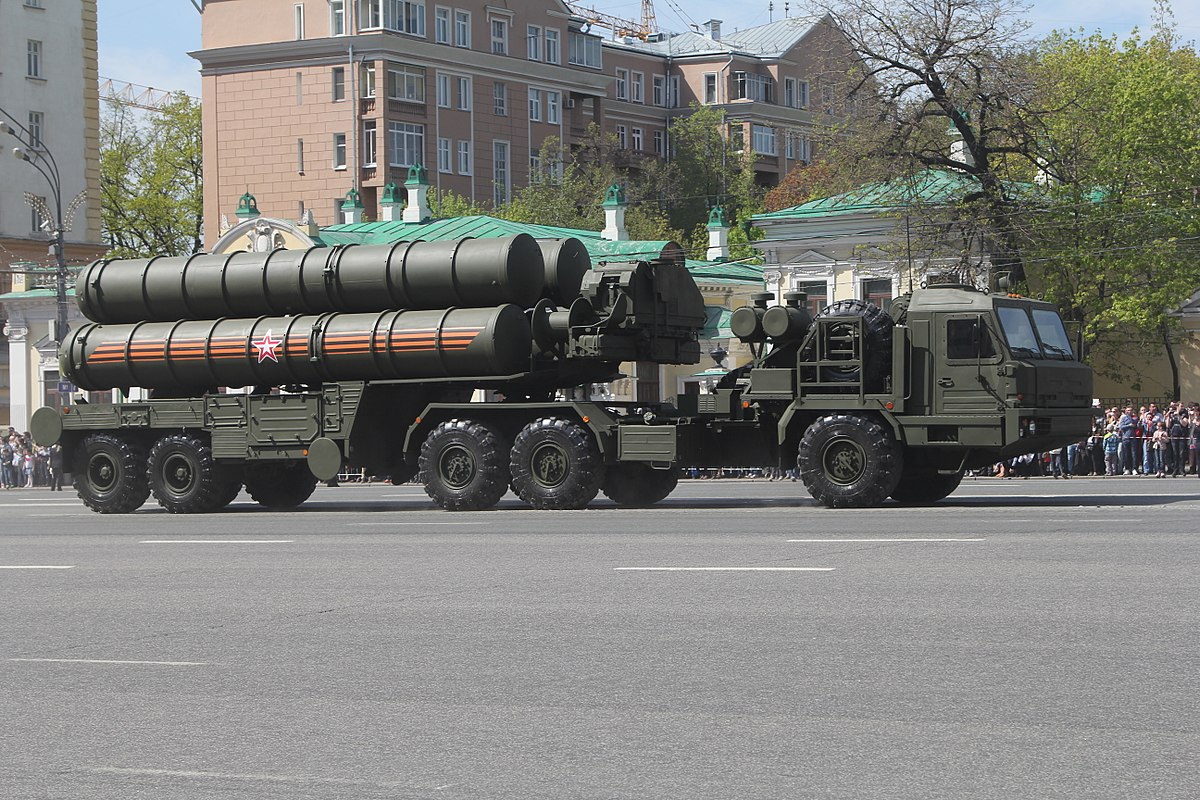
S-400 Triumf launch vehicle (Image: Wiki Commons)
Dione Hodgson, Ashleigh Sharp and Lachlan Wilson

Sea State

The USN has been restricted from using low-frequency active sonar in some ocean areas because it can injure whales and other marine life. A federal appeals court found on 15 July that the USN had been wrongly permitted to use low-frequency sonar during training, testing and routine operations, overturning a previous lower court decision. The lower court decision had upheld approval granted by the National Marine Fisheries Service in 2012 which allowed the USN to use sonar during peacetime operations in the Pacific, Atlantic and Indian oceans and the Mediterranean Sea. The decision means the USN won’t be able to use the sonar to detect submarines in certain marine habitats. Ecowatch has taken a look at the effect sonar—and other industrial noise—has on marine life.

Blast from the past: The National Oceanic and Atmospheric Administration—with help from the USN and Boeing—captured the first clear images of the radioactivity-polluted USS Independence on the ocean floor last Thursday. Using a robotic underwater vehicle, scientists were able to map the wreck of the WWII aircraft carrier, which was deliberately sunk off the coast of Half Moon Bay by the USN in 1951. The ship faced its fair share of damage during its 10 years of service—it was heavily damaged during nuclear weapons testing at Bikini Atoll in 1946, turned into a floating nuclear decontamination site while stationed in a shipyard in San Francisco, and was then scuttled by two torpedo warheads while laden with barrels of radioactive waste.

08 June 2016

AUS: New strategic alliance on defence technologies

The Defence Science and Technology Group (DST) and Raytheon Australia today signed a strategic alliance to strengthen collaboration on defence technologies.

The agreement was signed by the Chief Defence Scientist, Dr Alex Zelinsky and Mr Michael Ward, Managing Director of Raytheon Australia during DST’s Partnership Week activities in Melbourne.

“The agreement with Raytheon marks the 14th such alliance we have now signed with our strategic partners in industry and the research sector. I welcome this partnership,” Dr Zelinsky said.

“Our ability to achieve Strategic Defence Objectives relies on critical support from Australian defence industry to deliver leading-edge innovation and research.”

18 May 2016

AUS: Hypersonic flight success

Image of a previous HIFiRE test launch
The Defence Science and Technology Group and the US Air Force Research Laboratory today successfully completed an experimental hypersonic flight out of the Woomera Test Range in South Australia.

The experimental rocket reached an apogee of 278 km, achieving the targeted speed of Mach 7.5 (seven and a half times the speed of sound).

The HIFiRE 5b flight was undertaken as part of a joint research effort called the Hypersonic International Flight Research Experimentation Program (HIFiRE) being conducted by the Defence Science and Technology Group and the US Air Force Research Laboratory with Boeing and the University of Queensland providing expert technical design and analysis.

Chief Defence Scientist Dr Alex Zelinsky congratulated the international hypersonics  team, saying  the success of this test launch takes us one step closer to the realisation of hypersonic flight.

“It is a game-changing technology identified in the 2016 Defence White Paper and could revolutionise global air travel, providing cost-effective access to space,” Dr Zelinsky said.

The program is aimed at exploring the fundamental technologies critical to the realisation of sustained hypersonic flight.

The HIFiRE team has already achieved some significant milestones such as the design, assembly and pre-flight testing of the hypersonic vehicles and the design of complex avionics and flight systems. More test flights are scheduled in the next two years.

04 May 2016

News Story: India Crafts Naval Technology Plan

Indian Navy Kolkata class Destroyer
Vivek Raghuvanshi

NEW DELHI — The Indian Navy has finalized a plan to acquire 100 cutting-edge technologies in the next 15 years to build its war-fighting capabilities, but how realistic that will be is a million-dollar question.

The 15-year prospective plan unveiled last month calls for acquiring a range of futuristic technologies. These include naval missiles and guns, propulsion and power generation, surveillance and detection systems, torpedoes and directed energy weapons, submarines and anti-submarine warfare systems, naval aviation, network-centric warfare and combat management systems.

"By 2027, we want 200 warships and around 600 aerial assets, hypersonic and loitering missiles, and laser weapons," said Rear Adm. Dinesh Tripathi, the Indian Navy's assistant chief of naval staff for policy and plans.

The navy has 138 warships and submarines and about 230 aerial assets, he said.

"In addition, we need to reduce import content for our sensors and weapons and need a high-range of hypersonic and loitering missiles and laser and directed energy weapons," Tripathi added.

Future naval technologies will be built domestically under the "Make in India" a(nd) "Indigenization" categories.

Read the full story at DefenseNews

03 May 2016

News Story: Hypersonic gliders could breach THAAD defenses

Both Russia and China have recently successfully tested their offset hypersonic gliders, capable of breaching the American THAAD system (Terminal High Altitude Area Defense), which it plans to deploy in South Korea; the test comes as a "warning to the US," according to Chinese military experts.

"The hypersonic tests by China and Russia are aimed at causing a threat to the US, which plans to set up a missile defense system in South Korea," the South China Morning Post, a Hong Kong-based English-language newspaper writes, quoting Professor He Qisong, a defense policy specialist at the Shanghai University of Political Science and Law.

His comment refers to the recent successful tests by the two countries of their offset Hypersonic Gliders.

The view is echoed by Beijing-based military expert Li Jie, who said that China was trying to use the recent DF-ZF test to warn the US that the PLA (Chinese People's Liberation Army) had "another powerful weapon capable of countering the THAAD system."

The US proposes to deploy the Terminal High Altitude Area Defense (THAAD) system in South Korea, claiming it is needed to protect its regional allies from North Korea.

The proposal has already been condemned by both China and Russia as an aggravation of the situation on the Korean Peninsula.

Read the full story at SpaceDaily

26 April 2016

Think Tank: Sea, air and land updates (26-APR-2016)

Short-fin Barracuda: Australia's future Submarine
Dione Hodgson, Ashleigh Sharp and Lachlan Wilson
Breaking: Prime Minister Malcolm Turnbull has announced France’s DCNS as the winner of RAN’s $50 billion future submarine contract during a surprise visit to Adelaide this morning. The construction of the 12 conventionally-powered submarines, based on France’s nuclear-powered Barracuda-class will be based in Osbourne, South Australia, and will generate an additional 2,800 jobs.
Russia’s new hypersonic cruise missile is likely to go into serial production in 2018, four years ahead of schedule, according to a Russian defence industry source. The 3M22 Zircon hyper cruise missile, capable of speeds of Mach 5.0 to Mach 6.0, is currently completing tests which are due to finish in 2017. It’s expected the Kirov-class Admiral Nakhimov will be the first Russian warship to be equipped with the new missile, when returns to service in 2018 at the conclusion of a modernisation process.
Tensions between China and Indonesia are once again at risk of escalating, after the Indonesian navy detained a Chinese trawler allegedly fishing illegally in Indonesian waters. The incident comes only weeks after a Chinese-owned fishing vessel was caught operating close to Natuna islands. The vessel was intercepted on 22 April in Aceh, northwest of Sumatra, after Indonesia received information that the ship was wanted in Argentina. The boat, which had been fishing illegally in Argentine waters in late February, has been taken to a naval base in North Sumatra for investigation.
Russia has found the dolphins it’s been looking for. Following up from our post last month, Russia has announced Moscow’s Utrish Dolphinarium as the winner of the Ministry of Defense’s contract to supply five dolphins to the Russian military. The dolphinarium will supply three males and two females by 1 August. As we’ve previously mentioned, both the US and Soviet Union used dolphins for military purposes during the Cold War.

27 January 2016

Editorial: US Admiral Warns of China’s and Russia’s Growing Space Weapons Arsenal

An artists impression of an ASAT killing a satalite
By Franz-Stefan Gady

In a speech, the head of U.S. Strategic Command also warned of China’s long-range precision strike weapons program.

Speaking last week at an event hosted by the Center for a New American Security, the head of U.S. Strategic Command, Admiral Cecil D. Haney, struck a familiar tone when warning about Russia’s and China’s burgeoning space warfare capabilities.

“Once thought of as a sanctuary, space is more congested, contested, and competitive than ever, and it is becoming increasingly vulnerable. Other nations understand our reliance on space and the advantages we have reaped in defense and commercial sectors,” he noted.

“Adversaries and potential adversaries want to exploit those dependencies by turning them into vulnerabilities.” He cautioned that threats are evolving faster than the U.S. military ever imagined and that they could “potentially threatens national sovereignty and survival.”

Read the full story at The Diplomat