Showing posts with label B-21. Show all posts

07 January 2017

News Story: 2017 Forecast - Air Force Faces Intense Trump Scrutiny

Air Force Secretary Deborah Lee James
(Image: Wiki Commons)
By SYDNEY J. FREEDBERG JR.

ARLINGTON: The Air Force got blasted from Donald Trump’s bully pulpit before the President-Elect was even inaugurated. It looks like 2017 — the youngest service’s 70th year — will be full of presidential turbulence.

Outgoing Air Force Secretary Deborah Lee James put the best face on Trump’s intervention on Lockheed’s F-35 Joint Strike Fighter and Boeing’s Air Force One replacement, which moved swiftly from social media to private meetings with the CEOs of both contractors at Mar-A-Lago. But her concerns were clear.

“What all of that really signals to me is that the President-Elect is going to be focusing on the taxpayer dollar, on efficiencies,” James told the Air Force Association this morning during her last public appearance as Secretary. “I think that’s an important focus. I tried to make it my focus for three years” — ever since her confirmation — and the service tries to inculcate a culture of cost-effectiveness in “even the brand new A1Cs [Airmen First Class] that come into the Air Force.”

That said, James continued, “it’s an unusual approach. It’s an approach that I’m not sure there’s another example of… doing a deep dive at this point into a program like this. But I think the signal is cost controls matter, efficiencies matter, and there will be times when perhaps a headline captures the attention of a senior policymaker.”

Read the full story at BreakingDefense

28 December 2016

News Story: The F-35 - We Need the Numbers and We Need Them Now

By: Gen. Larry O. Spencer (ret.), AFA

I was director of Air Force budget when F-22 aircraft production was cancelled. The rationale was, it is better to “leap” to the F-35 because it was cheaper and could be purchased in higher quantities.  That decision made the F-35 the single most important defense program in the nation.  That decision declared the F-35 would be crucial to meeting U.S. objectives in the National Security Strategy. 

At the time, it was said the Air Force must have the F-35 in sufficient numbers to enable the world’s greatest Air Force to engage around the world, shaping the security environment and maintaining peace and stability. As an expeditionary aircraft, the F-35 would provide the unique capability to deploy around the globe on very short notice.  Additionally, there was an emphasis on having sufficient numbers to allow a rotational base for peacetime training, and if necessary, fight and win a conflict. 

During Thanksgiving dinner, my siblings asked me why the U.S. should purchase this new fifth generation aircraft at the numbers requested.  They reasoned, “why not use the aircraft we already have? Wouldn’t that be cheaper?”   My inquisitive siblings were shocked with my answer.  They did not realize that today, the Air Force has a “geriatric” fighter aircraft fleet.  The aircraft are old, tired and no longer hold an unquestioned advantage over potential adversaries.  They were also surprised when I told them many Air Force aircraft would qualify for an antique license plate in most states.  My siblings perked up when I explained the F-35 helps the U.S. to maintain a clear technology gap over potential adversaries and they really got excited when I explained that the best pilots flying the most technologically advanced aircraft may actually prevent a war by providing a clear and unambiguous deterrent. 

Read the full story at DefenseNews

23 December 2016

News Story: Trump Calls for Expansion of US Nuclear Capability, in 140 Characters or Less

By: Valerie Insinna

WASHINGTON — In 140 characters, President-elect Donald Trump sent shockwaves through the national security community yet again with a tweet that signaled continued support of the nuclear triad — but could also suggest a much more drastic expansion to the nuclear arsenal. 

“The United States must greatly strengthen and expand its nuclear capability until such time as the world comes to its senses regarding nukes,” he tweeted Thursday at 11:50 a.m. Eastern time. 

Throughout his campaign, Trump’s comments on nuclear capabilities were often difficult to penetrate, giving hope to arms control advocates that he could reduce the size of the enterprise. But Trump’s comments on Thursday offered his strongest statements yet in support of the nuclear arsenal, although he offered no specifics on the policy or procurement steps he could take to grow nuclear capabilities. 

All three legs of the nuclear triad, comprised of intercontinental ballistic missiles, bombers and ballistic missile submarines, are aging and in need of replacement starting in the mid 2020s. The Air Force and Navy are in the beginning stages for three modernization programs — the B-21 bomber, Ohio replacement submarine, and Ground Based Strategic Deterrent — to do just that. 

Read the full story at DefenseNews

22 December 2016

News Report: China Prepares Secretive H-20 Strategic Stealth Bomber

China’s secretive H-20 bomber is well on its way to becoming a fully developed next-generation strategic stealth aircraft, but not in the near future.

A Chinese admiral said that China and the rest of the world must be patient while waiting for the H-20 to be launched. 

China has not yet produced an operational, large-tonnage bomber aircraft capable of hitting long-range targets. Nevertheless, a host of technologies that Beijing expects the "legendary" aircraft to carry, including cruise missiles and nuclear arms, "are all in place," Rear Admiral Yin Zhuo of the People’s Liberation Army said, ripening the conditions for the country’s development of a stealth bomber. 

19 November 2016

News Story: Trump Will Take a Tougher Line With Adversaries, Senator Says

US Sen Thomas Cotton (Image: WikI Commons)
by Bill Carey

One prominent candidate who is reported to be under consideration for the role of U.S. defense secretary in the coming Trump administration would shore up the nation’s nuclear triad, replace aging B-52 bombers with the new B-21 Raider and take a hard line against Iran.

U.S. Sen. Thomas Cotton (R-Ark.), who served as an Army infantry officer in Iraq and Afghanistan, fielded questions from New York Times journalist David Sanger during the Defense One Summit on November 17 in Washington, D.C. At the time, he was one of several contenders, including retired generals, that president-elect Donald Trump was said to be considering to lead the Pentagon. Cotton currently serves on the Senate Intelligence and Armed Services committees.

In his Senate role, Cotton has proposed that Congress pass a $26.4 billion emergency supplemental spending bill to bolster the Department of Defense (DOD) in the current fiscal year and stem “eight years of neglect” under the Obama administration. The money would be distributed to pay for overseas contingency operations, readiness and outstanding “unfunded requirements” of the military services. The unfunded wish-list includes F-35 fighters and Apache and Chinook helicopters “they would have liked to buy if OMB [the White House Office of Management and Budget] didn’t take a pencil to their budget,” he told the conference.

Read the full story at AINonline

26 October 2016

News Story: Game Over - GAO Protest Reveals Cost Was Deciding Factor in B-21 Contest

B-21 Raider (Image: Wiki Commons)
By: Valerie Insinna

WASHINGTON — Eight months ago, the Government Accountability Office shot down Boeing’s protest of the government’s decision to award the B-21 bomber contract to competitor Northrop Grumman. With the Tuesday release of its 52-page decision, the public now can read why. 

The gist of GAO’s argument, which redacts all pricing and technical information, was that Northrop’s offering met the technical specifications at a price much lower than Boeing’s proposal. 

“Significant structural advantages in Northrop’s proposal — specifically, its labor rate advantage and decision to absorb significant company investment — also strongly impacted the outcome of this essentially low-price, technically acceptable procurement,” the office said in its conclusion. “Northrop’s significantly lower proposed process for the LRIP phase created a near-insurmountable obstacle to Boeing’s proposal achieving best value or to Boeing’s protest demonstrating prejudice in the cost realism evaluation.” 

The Air Force in October 2015 awarded Northrop the contract to develop and produce its newest bomber, now designated the B-21 Raider. Northrop beat out a Boeing-Lockheed Martin team for the two-pronged contract that covers the engineering, manufacturing and development phase of the program as well as the first five low-rate initial production lots.

According to the GAO decision, Boeing argued that the Air Force did not effectively measure the risk of Northrop’s bomber. The company contended that if the service had followed definitions set in the request for proposals, Northrop would not have met four out of seven unnamed technical capability subfactors. Boeing also stated that Northrop’s proposal was “inherently high risk” with regard to certain requirements in a way that should have rendered its offering unacceptable.   

Read the full story at DefenseNews

20 September 2016

Think Tank:Sea, air, land and space updates (20-Sep-2016)

Christopher Cowan, Thulasi Wigneswaran, Elisabeth Buchan and Alexander Vipond

Sea State

The US Navy’s Littoral Combat Ship (LCS) program is back in the headlines this week with new footage of the LCS Jackson’s June shock trials. The trials involved detonating a 10,000 pound (4,546 kilogram) explosive device near the vessel to simulate an attack and examine its survivability. The LCS Jackson appears to have fared well in the trials, which is good news for a program in troubled waters recently. A recent review has led to numerous changes to the program, including new crewing schemes, limits to the vessels’ vaunted modularity features, and deployment limitations for the first four LCS ships.

In news closer to home, HMAS Hobart, the Royal Australian Navy’s first Hobart-class air warfare destroyer, began builder’s sea trials last week. The trials are taking place in the Great Australian Bight and are designed to test the vessel’s non-combat features, including its propulsion and navigation systems. The Hobart will undergo further trials early next year to test its combat systems before initial operating capability is declared. However, as a recent ASPI report explains (PDF), the AWDs will become operational with an earlier version of the Aegis combat system than new build USN vessels, making them unable to operate the latest versions of some missiles like the SM-6.

25 August 2016

Think Tank: These are the droids you’re looking for

R2-D2 (Image: Flickr User - WCM 1111)
James Mugg

A recurring objection to the use of unmanned combat air systems (UCAS) for any role currently filled by fighter or attack aircraft is that robots can’t replace human fighter pilots. It’s probably a bit optimistic to say that humans will always be more capable pilots than computers, but robots don’t have to replace pilots to be useful. A fun way to stimulate thinking about unmanned systems is to look at how robots (aka droids) are used in the Star Wars movies.

Starting with the Original Trilogy (as one should), droids are mostly seen in non-combat roles. R2-D2 is essentially Luke Skywalker’s co-pilot, and his best real-world analogue is the growing computerisation of military systems. The original Star Wars movie was released in 1977, a year before the USAF introduced the F-16. The F-16’s successor, the F-35, doesn’t exactly have an R2-D2 sitting behind the pilot, but its sophisticated sensor systems and data fusion capabilities aren’t that different to having a robot co-pilot.

In The Empire Strikes Back, probe droids are used for ISR ops on a galactic scale, leading the Empire to the Rebels on Hoth. Most modern unmanned air systems are primarily ISR platforms, like the RQ-7 Shadow the Australian Army operates. ISR drones are cheap to operate and take boring tasks away from humans—the more automated the better.

19 July 2016

Think Tank: Sea, air and land updates (19-Jul-2016)

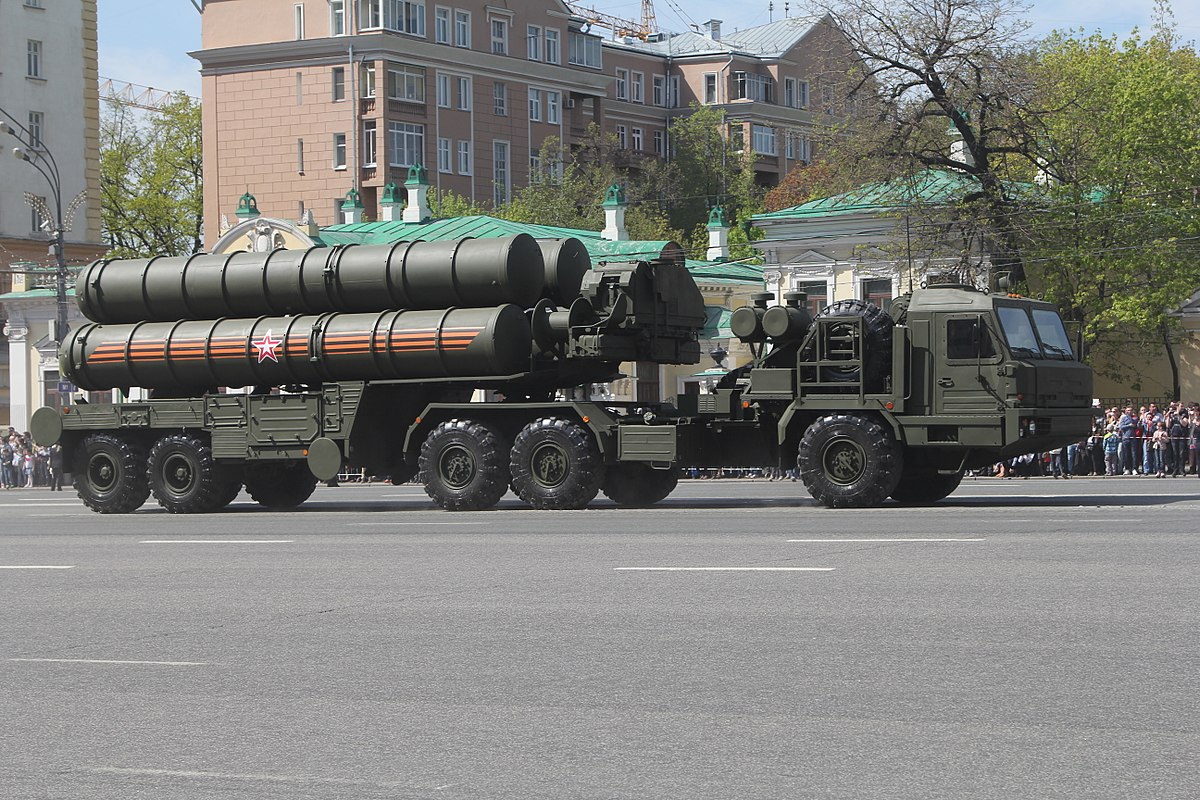
S-400 Triumf launch vehicle (Image: Wiki Commons)
Dione Hodgson, Ashleigh Sharp and Lachlan Wilson

Sea State

The USN has been restricted from using low-frequency active sonar in some ocean areas because it can injure whales and other marine life. A federal appeals court found on 15 July that the USN had been wrongly permitted to use low-frequency sonar during training, testing and routine operations, overturning a previous lower court decision. The lower court decision had upheld approval granted by the National Marine Fisheries Service in 2012 which allowed the USN to use sonar during peacetime operations in the Pacific, Atlantic and Indian oceans and the Mediterranean Sea. The decision means the USN won’t be able to use the sonar to detect submarines in certain marine habitats. Ecowatch has taken a look at the effect sonar—and other industrial noise—has on marine life.

Blast from the past: The National Oceanic and Atmospheric Administration—with help from the USN and Boeing—captured the first clear images of the radioactivity-polluted USS Independence on the ocean floor last Thursday. Using a robotic underwater vehicle, scientists were able to map the wreck of the WWII aircraft carrier, which was deliberately sunk off the coast of Half Moon Bay by the USN in 1951. The ship faced its fair share of damage during its 10 years of service—it was heavily damaged during nuclear weapons testing at Bikini Atoll in 1946, turned into a floating nuclear decontamination site while stationed in a shipyard in San Francisco, and was then scuttled by two torpedo warheads while laden with barrels of radioactive waste.

21 June 2016

Think Tank: Sea, air and land updates (21-Jun-2016)

Two F-22s in close formation (Image: Wiki Commons)
Dione Hodgson, Ashleigh Sharp and Lachlan Wilson

Sea State

Tensions are mounting between China and Indonesia after an Indonesian naval vessel fired on a Chinese fishing boat near the Natuna Islands last Friday. Indonesia’s navy said it fired warning shots at several Chinese vessels fishing illegally in its waters, but told Reuters there were no injuries. Chinese Foreign Ministry spokesman Hua Chunying refuted those claims on the ministry website, stating that the Chinese coast guard had rescued an injured fisherman from a damaged boat, and Indonesia had detained another vessel with seven people on board. It’s unclear whether Indonesia is still holding the vessel and its crew. This is the third such incident in the area this year between the two countries, fuelling tensions caused by China’s inclusion of part of Indonesia’s EEZ near the Natuna Islands within its ‘nine-dash line’.

The US Navy’s ‘Great Green Fleet’ entered the Mediterranean Sea last week, in order to conduct military operations and demonstrate the importance of alternative energy. USN’s bio-fuel project is aimed at cutting its oil consumption, but also comes with security benefits—namely ensuring that the US and its allies aren’t vulnerable to disruptions of fuel supplies. Navy Secretary Ray Mabus highlighted Russia’s threat to cut off Ukraine’s fuel supply as an example of that vulnerability, and emphasised that the approach would make the Navy a better war fighter. USS Dwight Eisenhower is a nuclear-powered aircraft carrier, while its accompanying strike group uses Italian bio-fuels.

News Story: Next-Generation Bombers - What US, Russia, China Are Set to Roll Out

A Northrop Grumman LRS-B (B-21) Concept design
Currently, three countries, the United States, Russia and China, are developing strategic next generation bombers.

A strategic bomber is a medium to long range penetration bomber designed to drop large amounts of air-to-ground weaponry onto a distant target for the purposes of debilitating the enemy's capacity to wage war.

Unlike tactical bombers, penetrators, fighter-bombers, and attack aircraft, which are used in air interdiction operations to attack enemy combatants and military equipment, strategic bombers are designed to fly into enemy territory to destroy strategic targets.

Read the full story at SpaceDaily

07 June 2016

Think Tank: Sea, air and land updates (7-Jun-2016)

CGI of  Northrop Grumman's proposed LRS-B (B-21) 
Dione Hodgson, Ashleigh Sharp and Lachlan Wilson

Sea State

The Commander of the US 6th Fleet has warned that Russia is a growing maritime power capable of putting ‘nearly all NATO maritime forces at risk’. In an article for the US Naval Institute’s Proceedings, Vice Admiral James Foggo III detailed a new era in US–Russian submarine warfare, calling it ‘the Fourth Battle of the Atlantic’. The author drew comparisons between Russia’s submarine posture today to that which existed between the Allies and Germany during WWI and WWII, and between the Soviet Union and the US during the Cold War. He believes that Russia is stepping up its submarine operations in order to form an ‘arc of steel’ from the Artic to the Black Sea. The article comes in the wake of a number of improvements to Russia’s diesel-electric engine and nuclear-powered submarine capabilities.

Eat your heart out, Iron Man. The US Navy unveiled the ‘next generation’ system for its diving community last week—high-tech dive helmets. The Divers Augmented Vision Display is a high-resolution, see-through head-up display that’s built into the helmet in order to expand situational awareness and increased accuracy in navigation. The system overlays what the diver is seeing with real-time information—including sector sonar, diagrams, images, text messages and videos. Divers are scheduled to conduct in-water simulation testing in October, after which time the system will be used for ship husbandry, underwater construction and salvage operations. The Christian Science Monitor takes a look at the helmet, and other applications of augmented reality, here.

26 April 2016

Think Tank: Sea, air and land updates (26-APR-2016)

Short-fin Barracuda: Australia's future Submarine
Dione Hodgson, Ashleigh Sharp and Lachlan Wilson
Breaking: Prime Minister Malcolm Turnbull has announced France’s DCNS as the winner of RAN’s $50 billion future submarine contract during a surprise visit to Adelaide this morning. The construction of the 12 conventionally-powered submarines, based on France’s nuclear-powered Barracuda-class will be based in Osbourne, South Australia, and will generate an additional 2,800 jobs.
Russia’s new hypersonic cruise missile is likely to go into serial production in 2018, four years ahead of schedule, according to a Russian defence industry source. The 3M22 Zircon hyper cruise missile, capable of speeds of Mach 5.0 to Mach 6.0, is currently completing tests which are due to finish in 2017. It’s expected the Kirov-class Admiral Nakhimov will be the first Russian warship to be equipped with the new missile, when returns to service in 2018 at the conclusion of a modernisation process.
Tensions between China and Indonesia are once again at risk of escalating, after the Indonesian navy detained a Chinese trawler allegedly fishing illegally in Indonesian waters. The incident comes only weeks after a Chinese-owned fishing vessel was caught operating close to Natuna islands. The vessel was intercepted on 22 April in Aceh, northwest of Sumatra, after Indonesia received information that the ship was wanted in Argentina. The boat, which had been fishing illegally in Argentine waters in late February, has been taken to a naval base in North Sumatra for investigation.
Russia has found the dolphins it’s been looking for. Following up from our post last month, Russia has announced Moscow’s Utrish Dolphinarium as the winner of the Ministry of Defense’s contract to supply five dolphins to the Russian military. The dolphinarium will supply three males and two females by 1 August. As we’ve previously mentioned, both the US and Soviet Union used dolphins for military purposes during the Cold War.

29 March 2016

Think Tank: Sea, air and land updates (29-MAR-2016)

Australian Collins class Submarine
Dione Hodgson, Ashleigh Sharp and Lachlan Wilson

Sea State

Tensions in the South China Sea continue to escalate, with around 100 Chinese ships detected in Malaysian waters near the Luconia Shoals on 24 March. In response, Malaysia sent its Maritime Enforcement Agency and navy to monitor the area, and Malaysia’s Minister for National Security, Shahidan Kassim, said it may take legal action if the ships enter Malaysia’s EEZ. China’s foreign ministry spokesman, Hong Lei, said in a regular briefing that he ‘did not understand the details’ of the matter, but wanted to point out that it was currently fishing season in the South China Sea. For some interesting background reading, The National Interest takes a look at the evolving role of Chinese coastguards here.

One of the USN’s most enduring naval mysteries has finally been solved, with a USN tugboat missing since 1921 discovered sunk off the coast of San Francisco. According to a statement released by the National Oceanic and Atmospheric Administration and the US Navy on 23 March, the wreck of USS Conestoga was found about 50km west of San Francisco. The boat, the last USN ship to be lost without a trace during peacetime, left San Francisco on 25 March 1921, and was bound for American Samoa—via Hawaii—with 56 officers and sailors on board, when it disappeared in bad weather. The Telegraph has a video of the wreckage here.

23 March 2016

USA: Carter - Budget Includes New Investments, Enhanced Capabilities

US SecDef Ash Carter
By Cheryl Pellerin
DoD News, Defense Media Activity

WASHINGTON, March 22, 2016 — The Defense Department needs new investments, new posture in some regions and new and enhanced capabilities to address five strategic challenges now driving DoD budgeting, Defense Secretary Ash Carter said today.

Carter was joined by Marine Corps Gen. Joe Dunford, chairman of the Joint Chiefs of Staff, in testimony before the House Armed Services Committee on the department’s fiscal year 2017 budget proposal,

“It’s evident that America is still today the world’s foremost leader, partner and underwriter of stability and security in every region of the world, as we have been since the end of World War II,” Carter told the panel.

“That’s thanks in large part to the unequivocal strength of the U.S. military,” he added.

01 March 2016

Think Tank: Sea, air and land updates (1-MAR-2016)

Dione Hodgson, Ashleigh Sharp and Lachlan Wilson

Sea State

China and Cambodia held their first joint naval training exercise last week, with three Chinese warships docking in Sihanoukville port on 22 February for a five day visit. 70 Cambodian sailors and 737 Chinese counterparts participated in simulated rescue activities and emergencies at sea. Following the exercises, Vice Admiral Tea Vinh, commander of the Royal Cambodian Navy, and Rear Admiral Yu Manjiang, Chinese naval commander, discussed the potential for Beijing to supply Cambodia with warships to defend its maritime territory. The two countries have been strengthening their bilateral defence ties over the past few years, with China now the largest donor of military aid to Cambodia. The Diplomat has an analysis of these developments here.

RAN looks set for a major recapitalisation after the 2016 Defence White Paper was released last Thursday. 12 future submarines, nine anti-submarine warfare frigates and 12 offshore patrol vessels form the centrepiece of the plan to regenerate Navy, as the Turnbull Government seeks to create a future force capable of maintaining stability in the Asia–Pacific. In response, China has expressed serious concerns regarding the Paper’s remarks on the South China Sea, with China’s Foreign Ministry spokeswoman Hua Chunying saying the country strongly disagreed with Australia’s criticism of its land reclamation activities.