Showing posts with label Global Strike. Show all posts

14 December 2015

News Story: U.S. needs conventional ballistic missiles, former strike commander says

An Indian Ballistic Missile test launch (File Photo0
By Phillip Swarts

The nuclear ballistic missiles that have deterred threats since the Cold War no longer are adequate for today's fight against terrorist groups, the former leader of U.S. Strategic Command said Tuesday.

The U.S. needs to have long-range conventional weapons that mirror its nuclear ballistic missiles, retired Air Force Gen. Robert Kehler told the House Armed Services subcommittee on strategic forces.

“Violent extremists and nation states are not the same, and we cannot deal with any of them in a one-size-fits-all manner,” he said. “Deterrence strategies that are the preferred approaches to counter nation states will likely not be effective against violent extremists, where direct action is often the only recourse. Nuclear weapons may not be the most credible deterrence tool against some targets, against some scenarios where they were once the preferred option.”

Instead, Kehler advocated for long-range conventional weapons that could carry out the same mission of hitting targets, but without the nuclear fallout.

“Today the only prompt global strike capability to engage potentially time-sensitive, leading targets continues to be a ballistic missile system armed with nuclear weapons,” Kehler said.

Read the full story at DefenseNews

14 November 2015

Editorial: Hypersonic Missiles and Global Security

By Nayef Al-Rodhan

Hypersonic missiles offer some impressive – and disturbing – capabilities.

Between 2014 and June 2015, China conducted four major tests of its hypersonic missiles (with a fifth test in August). The fourth test of Wu-14, its ultra high-speed nuclear delivery vehicle, demonstrated a capacity for “extreme maneuvers.” It was assessed as travelling at a speed of Mach 10 (flying at 10 times the speed of sound or approximately 7,680 miles per hour). To understand this in comparative terms, a missile flying at subsonic speed can reach a maximum of 500-600 miles per hour.

To qualify as “hypersonic,” a missile would have to move at least five times the speed of sound (Mach 5), as well as be able to evade counter-fire and strike with great precision. To date, no country has achieved this performance but several nations are working on it.

The fact that China carried out four tests of its hypersonic vehicles in a span of just 18 months demonstrates the commitment of Beijing to the development of the technology. Once operational, these capabilities would be sufficient to neutralize U.S. strategic missile defenses; they will be able to avoid triggering early-warning systems or detection by radar. The critical military value of hypersonic systems lies in this ability to strike with unprecedented speed and precision.

Four other countries in Asia are known to be developing civilian or military programs for supersonic and hypersonic systems: Japan, India, South Korea and Taiwan. Russia is also pursuing hypersonic capabilities and aims to acquire an operational hypersonic missile by 2030. India and Russia also worked together on the hypersonic BrahMos-2.

Read the full story at The Diplomat

29 April 2015

News Story: Global Strike Command is USAF's new weapon against China - expert

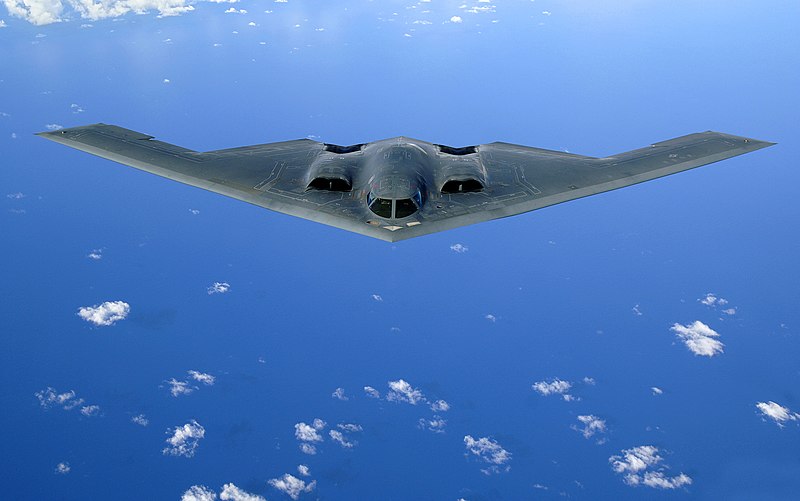
B-2 Spirit (Image: Wiki Commons)

A pure bomber command is likely to be established for the first time in US military history after the Air Force made the announcement last week to reassign all its heavy bombers to the Global Strike Command last week, James Hasik, a senior researcher from the Washington-based Atlantic Council wrote in a piece for National Interest magazine.

The USAF put the nuclear-capable B-52Hs and B-2As bombers of the 8th Air Force and the Minuteman III intercontinental ballistic missiles of the 20th Air Force under the Global Strike Command in 2009. However, the de-nuclearized B-1B bombers stayed with the Air Combat Command's 12th Air Force. Such policy reconfigures the newly established Global Strike Command as a Bomber and Missile Command according to the author.

Hasik said that the consolidation of heavy bombers under the Global Strike Command will provide a single organizational home to all big bomber crews, including those of the forthcoming Long-Range Strike Bombers. "With that art of the possible emerging, the organizational heft of this new 'Bomber Command' may then spur some really new thinking, which the USAF genuinely needs for dealing with the mounting threat from China," Hasik said.

Read the full story at Want China Times

01 December 2014

Editorial: Can China and the US Neutralize the Ring of Gyges?


By Vasilis Trigkas

Plato foresaw how the technological imperative can risk a fragile peace.

We shall have to share out the fruits of technology among the whole of mankind. The notion that the direct and immediate producers of the fruits of technology have a proprietary right to these fruits will have to be forgotten.
Media commentaries about the U.S.-China accord on limiting carbon emissions have been almost dithyrambic, with some justification. The world’s two superpowers have agreed for the first time in modern history to work together to manage a global problem that no nation state can resolve alone. However important this agreement is, strategic distrust between China and the U.S. remains the single most significant risk to peace in our time and neutralizing it will demand much more than an emissions reduction agreement.
At the center of this dangerous forma mentis is an ever-accelerating competition between Beijing and Washington for science & innovation, technological supremacy, and “full spectrum dominance.” A strategic initiative like the AirSea battle dogma, together with hypersonic weapons and China’s anticipation of a century of sustained intellectual warfare, only exacerbates a securitization game that if left unchecked could confirm Thucydides’ ominous prediction about the perils of hegemonic transition.

Read the full story at The Diplomat

05 February 2014

Editorial: US Navy Explores Sub-Launched Hypersonic Missiles


By Zachary Keck

The Navy is exploring the feasibility of sub-launched hypersonic missiles for conventional prompt global strike program.

The U.S. Navy is looking into developing a submarine-launched hypersonic missile as part of its conventional prompt global strike (CPGS) program.
According to an Inside Defense article, the Navy’s Strategic Systems Programs office is soliciting proposals for “two-year industry trade studies to flesh out technology options and architecture for an intermediate-range conventional prompt global strike weapon.”
The report said that the competition was part of the Defense Department’s “fiscal year 2014 plan to investigate a launcher, missile and glide body for a weapon with potential game-changing capabilities.” Top among these CPGS capabilities is to develop precision-guided ballistic missiles that can reach any point on the globe within an hour’s time. 

Read the full story at The Diplomat

19 December 2013

Editorial: US Prompt Global Strike Missiles Prompt Russian Rail-Mounted ICBMs


By Ankit Panda

Russia will move ahead with an updated rail-mounted missile system for Inter-Continental Ballistic Missiles.

A report submitted by the Russian Defense Ministry to the Kremlin confirms that Russia will move ahead with an updated rail-mounted missile system for Inter-Continental Ballistic Missiles. Russia hasn’t had a rail-mounted ICBM system since it dismantled the last of its Soviet-era SS-24s in 2008. RIA Novosti reported that Russia will “deploy rail-mounted nuclear missiles as a potential response to the United States’ Prompt Global Strike program.” The U.S. prompt global strike program is an ongoing effort to develop a capability to deliver a precise conventional weapon strike anywhere on Earth within one hour.
Rail-mounted ICBMs address the weaknesses of conventional silo-based ICBMs – the most obvious improvement being increased maneuverability. Given Russia’s immense strategic depth due to its size, a mobile ICBM delivered via rail would effectively guarantee the survivability of its ICBMs after a hypothetical first strike. This was the logic that drove the Soviet-era development of the SS-24. 

Read the full story at The Diplomat

09 August 2013

Editorial: Can Prompt Global Strike Survive Sequestration?

By Zachary Keck

Global Security Newswire (GSN) reported last week that the Senate Appropriations Defense Subcommittee has taken the first steps towards eliminating the Virginia Payload Module (VPM) for the U.S. fast attack Virginia-class submarines. The move, if it gets through Congress, would be the latest blow to a Prompt Global Strike (PGS) program that seems increasingly out of reach.
According to GSN, the Subcommittee wrote in the summary to their markup that the bill “terminates the Virginia Payload Module due to high cost, risk, and lack of validated requirement.”
The move comes just a year and a half after then Secretary of Defense Leon Panetta announced the new program during a press conference on the Pentagon’s budget.
“The Navy will invest in a design that will allow new Virginia class submarines to be modified to carry more cruise missiles and develop an undersea conventional prompt strike option,” Panetta said at the January 2012 press conference.

Read the full story at The Diplomat

29 September 2012

USA: Dempsey Releases Concept to Build Joint Force 2020


By Jim Garamone
American Forces Press Service

WASHINGTON, Sept. 28, 2012 – At the heart of the Capstone Concept for Joint Operations released today by the chairman of the Joint Chiefs of Staff is an idea called globally integrated operations, which will be used to build and organize Joint Force 2020.

The concept stresses the military’s agility and flexibility as the United States faces unclear and unknown threats in the future.

It is a confusing time, Army Gen. Martin E. Dempsey noted in the forward to the concept. While the overall security situation is trending toward greater stability, “destructive technologies are available to a wider and more disparate range of adversaries,” he wrote. “As a result, the world is potentially more dangerous than before.”

To face these varied threats, a globally postured U.S. joint force must be able to quickly combine capabilities -- both U.S. and allied nations -- across “domains, echelons, geographic boundaries and organizational affiliations,” said Marine Corps Lt. Gen. George J. Flynn, the director of Joint Force Development on the Joint Staff. Flynn spoke about the Capstone concept during a recent interview.

A key aspect of the Capstone concept is these networks of forces can “form, evolve, dissolve and reform in different arrangements in time and space with significantly greater fluidity” than today’s force.

Events will happen faster, Flynn said, and the military has to create the ability to operate at “the speed of the challenges.”

There are eight key elements to globally integrated operations. The first is mission command. “This is all about people, it’s all about empowering leaders to be able to operate on trust and on commander’s intent,” Flynn said. This means, he said, developing leaders who understand the environments they are working in, react well to surprise and uncertainty and who can lead transitions.

Another element is to seize, retain and exploit the initiative in time and across domains. “We want to be in position to control the pace of operations or control the tempo,” Flynn said.

The United States will have a smaller force so this is going to rely on partnering, the general said. This means not just partnering with allies, but other U.S. agencies and international agencies.

“Partnering means being able to work with anyone who has a stake,” in the outcomes, Flynn said.

Integrated operations means flexibility, he said. Joint commands can be local or functional or both. “As we look to the future and how we form out joint task forces, this concept says we need to have flexibility in how we do these relationships,” he said. “The chairman sees this document as the lens to see if we are developing the force he needs to do that,” Flynn added.

Globally integrated operations place a premium on partnering, he said. This allows the U.S. military to absorb qualities and capabilities from other agencies, helping to employ the “whole of government” strategy.

Joint forces also must leverage integration to improve capabilities across domains. “What is new today are the cyber and space domains,” the general said. The U.S. military, he said, needs to use capabilities from one domain to increase the advantages it enjoys in these new domains.

Another concept element, he said, involves small-footprint capabilities such as cyber operations, space, special operations, global strike and intelligence, surveillance and reconnaissance that will play a more important role in the future.

The last element of the concept is joint operations, he said, which will become more and more precise to lessen the risks of unintended consequences.

The Capstone concept will permeate the military from professional military education, to training, to equipping, to mindset, Flynn said.

Last week, Dempsey said that 80 percent of Joint Force 2020 is already in the ranks. The remaining 20 percent that’s being developed must dovetail with the concept, he said, because it will serve as a catalyst for the military.


FREE Download - Capstone Concept (PDF)