Showing posts with label RQ-7B Shadow. Show all posts

25 July 2017

News Story: Chinese intel-gathering ship spotted near US-Australia exercise

By: Mike Yeo

ROCKHAMPTON, Australia — The high-end warfare being practiced by U.S. and Australian forces at a major exercise in Australia has attracted an unwanted visitor in the form of a Chinese intelligence-gathering ship.

The Australian Broadcasting Corporation has reported that a People’s Liberation Army Navy, or PLAN, Type 815 (Dongdiao-class electronic surveillance ship) was sighted in waters off the Australian state of Queensland where Exercise Talisman Saber is being held. Australia’s Department of Defence subsequently confirmed that the ship, which it calls an auxiliary general intelligence vessel, “has remained outside Australia’s territorial waters but inside the Australian Exclusive Economic Zone in the Coral Sea.”

The agency added that “the vessel’s presence has not detracted from the Exercise objectives,” with senior officers at the exercise remaining equally sanguine about the vessel’s presence. The maritime component commander at the exercise, Royal Australian Navy Commodore Mal Wise, observed that “we subscribe as the U.S. does to the freedom of the global commons and rules-based global order, and as long as they’re operating within that construct,” Australia has no objections.

Talisman Saber is a biennial U.S. and Australian exercise designed to improve combat readiness and interoperability between both forces in planning and conducting combined task force operations. This year’s exercise saw 33,000 personnel participate, and included smaller contingents from New Zealand, Japan and Canada, with the bulk of activity taking place on and in the vicinity of the Shoalwater Bay Training Area in central Queensland.

Read the full story at DefenseNews

03 November 2016

USA: Foreign Military Sales (Australia) contract for RQ-7B Shadow sustainment service

AAI Corp., Hunt Valley, Maryland, was awarded a $206,561,704 cost-plus-fixed-fee foreign military sales (Australia) contract for contractor logistics sustainment services for Shadow RQ-7B unmanned aerial systems.

Bids were solicited via the Internet with one received. 

Work will be performed in Hunt Valley, Maryland, with an estimated completion date of Oct. 31, 2017.  

Fiscal 2017 other funds in the amount of $3,705,107 were obligated at the time of the award.  

Army Contracting Command, Natick, Massachusetts, is the contracting activity (W911QY-17-C-0013).

25 August 2016

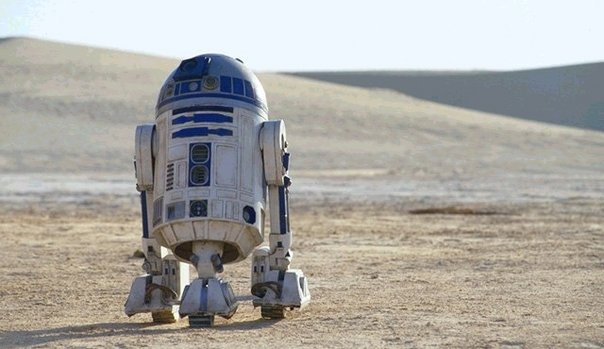
Think Tank: These are the droids you’re looking for

R2-D2 (Image: Flickr User - WCM 1111)
James Mugg

A recurring objection to the use of unmanned combat air systems (UCAS) for any role currently filled by fighter or attack aircraft is that robots can’t replace human fighter pilots. It’s probably a bit optimistic to say that humans will always be more capable pilots than computers, but robots don’t have to replace pilots to be useful. A fun way to stimulate thinking about unmanned systems is to look at how robots (aka droids) are used in the Star Wars movies.

Starting with the Original Trilogy (as one should), droids are mostly seen in non-combat roles. R2-D2 is essentially Luke Skywalker’s co-pilot, and his best real-world analogue is the growing computerisation of military systems. The original Star Wars movie was released in 1977, a year before the USAF introduced the F-16. The F-16’s successor, the F-35, doesn’t exactly have an R2-D2 sitting behind the pilot, but its sophisticated sensor systems and data fusion capabilities aren’t that different to having a robot co-pilot.

In The Empire Strikes Back, probe droids are used for ISR ops on a galactic scale, leading the Empire to the Rebels on Hoth. Most modern unmanned air systems are primarily ISR platforms, like the RQ-7 Shadow the Australian Army operates. ISR drones are cheap to operate and take boring tasks away from humans—the more automated the better.

09 August 2016

Think Tank: UCAS and the RAAF’s future

Malcolm Davis

The U.S. Navy's X-47B Unmanned Combat Air System demonstrator flies over Edwards during a routine test mission. The UCAS-D program conducted the airworthiness test phase for the X-47B at Edwards, which came to a successful conclusion May 15 after more than two years of testing. (Image: Wiki Commons) >>

A common refrain when discussing the future of airpower is that ‘the F-35 is the last manned fighter’ and the future belongs to unmanned systems. The expanding use of unmanned air systems (UAS) such as Reapers and Predators against international terrorist networks implies a future of remote, push-button warfare. That entails minimal risk (on one side) for maximum tactical precision effect. The panorama of future battle is captured in targeting footage presented on evening news, and has become the centrepiece of movies—for instance, the excellent Eye in the Sky.

The 2016 Defence White Paper highlights Australia’s acquisition of an armed reconnaissance UAS for Army in the early 2020s (para 4.55), and seven unarmed MQ-4C Triton Unmanned Aircraft Systems for Air Force (4.38). Army already makes extensive use of tactical surveillance UAS such as the RQ-7B Shadow 200, while RAN has completed experimentation with the ScanEagle UAVS, and may employ Northrop Grumman MQ-8C Firescout on the Future Frigates and the Canberra-class LHDs.

16 March 2016

Think Tank: DWP 2016 - unmanned systems and the future ADF

MQ-9 Reaper
James Mugg

The 2016 Defence White Paper mentions ‘unmanned’ systems 15 times. The accompanying Integrated Investment Plan (IIP) [pdf] has 39 references. The government has clear ambitions to purchase UAVs for maritime surveillance and airborne strike, with unmanned systems for other roles evidently under consideration.

Starting with the most assured acquisition, the Triton maritime surveillance UAV has been under consideration for at least three years. The unarmed Triton will provide a high-altitude, high-endurance maritime surveillance capability in concert with the incoming (manned) P-8 Poseidon fleet and other assets. The RAAF is expected to acquire the Tritons from the early 2020s.

As has been flagged previously, the government will also seek to acquire a number of armed reconnaissance UAVs for the Army by the early 2020s. The IIP outlines a plan to acquire ‘armed intelligence, surveillance and reconnaissance unmanned aircraft’ between 2018 and 2038 in Table 8. Until now, Australia has only operated unarmed UAVs like the RQ-7B Shadow, although ADF personnel have been training on US Air Force MQ-9B Reaper armed UAVs for at least a year. A purchase of something like the Reaper is a likely outcome.