Showing posts with label Bomber. Show all posts

29 September 2017

News Story: Can North Korea shoot down a US military aircraft?

North Korean KN-06 Surface-to-Air Missile System
By: Mike Yeo

MELBOURNE, Australia — At a news conference in New York on Monday, North Korea’s foreign minister accused U.S. President Donald Trump of declaring war via Twitter, and the minister threatened to shoot down U.S. Air Force bombers conducting flights near the Korean Peninsula.

Ri Yong Ho told reporters that his country “reserves the right to shoot down United States strategic bombers even when they’re not yet inside the airspace border of our country.” His comments come in the wake of a war of words between both countries over North Korea’s ballistic missile and nuclear weapons program.

The conference came after a Sept. 23 flight over international waters “east of North Korea” by U.S. Air Force B-1B Lancer bombers, escorted by F-15C jets, that U.S. Pacific Command said was the “farthest north of the Demilitarized Zone (DMZ) any U.S. fighter or bomber aircraft have flown off North Korea’s coast in the 21st century.”

According to South Korean media citing sources from the country’s intelligence services, the route of the B-1Bs took them approximately 90 miles from the North Korean port city of Sinpo and the Punggye-ri nuclear test site at its closest point but beyond the range of known long-range, ground-based air defense systems. The bombers’ flight path was also well beyond the North’s self-declared, 50-mile military boundary zone, which is not recognized by the United States.

At these distances, it would be a significant challenge for the North to effectively target any U.S. overflights. Like much of its conventional forces, North Korea’s air defense network is large in quantity but of questionable quality due to obsolescence, as the country is barred from importing military capabilities due to a United Nations arms embargo.

Read the full story at DefenseNews

28 September 2017

News Story: Trump ignores pleas to calm North Korea tensions

By Andrew BEATTY, with Thomas Watkins in New Delhi and Kelly MacNamara in Seoul

Donald Trump on Tuesday accused North Korea of torturing a captive US student "beyond belief," spurning pleas from allies and foes in east Asia to tone down his warlike rhetoric.

Trump urged nations to "isolate the North Korean menace" as his administration introduced new sanctions and warned that its "nuclear weapons and missile development threaten the entire word with unthinkable loss of life."

The comments, in the White House Rose Garden, came after the US Treasury announced sanctions on eight North Korean banks and 26 executives.

Earlier, for the first time, Trump also publicly accused Pyongyang of abusing the late 22-year-old Otto Warmbier, an allegation likely to heighten tensions between the two nuclear powers.

Last June the Ohio native was sent home in a coma after more than a year in prison in North Korea. He died a few days later.

Read the full story at SpaceDaily

News Story: (S Korea) Ruling party lawmaker calls for efforts to persuade U.S. not to consider military options against N.K.


SEOUL, Sept. 27 (Yonhap) -- South Korea should try to persuade the United States not to take military action against North Korea because it would to lead to full-scale war on the Korean Peninsula, a ruling party lawmaker said Wednesday.

Rep. Woo Sang-ho, a former floor leader of the ruling Democratic Party, also said in a radio interview that military tensions on the peninsula are at the highest-level since the Korean War and the recent U.S. flying of U.S. B-1B Lancer bombers near the North fueled the tensions.

"We have to stop the U.S. from exercising military options because that would open up the possibility of a full-scale war," Woo said. "Should the U.S. launch a preemptive strike against North Korea, it would spark a full-scale war between the South and the North."

Such a war may not affect the continental U.S., but it would devastate the peninsula, he said.

Read the full story at YonhapNews

27 September 2017

News Report: USS Ronald Reagan Supercarrier to Conduct Exercises Off Korean Peninsula

The US Navy has announced that the nuclear-powered supercarrier USS Ronald Reagan will be deployed to the Korean Peninsula to participate in joint exercises with the South Korean Navy as part of a continued American military buildup in the region as it faces off against North Korea.

The entire USS Ronald Reagan strike group, which includes four destroyers and two submarines, will be participating in exercises alongside South Korean ships in late October. The Pentagon claims that the exercises have been in the works for a long time, and are not a response to current tensions with Pyongyang.

On Friday, the 100,000-ton Reagan conducted drills with Japanese warships south of the Korean Peninsula as a response to the twin North Korean ballistic missile tests in August and September.

Then on Saturday, a pair of US B-1B Lancer strategic bombers flew within miles of the North Korean border. North Korea did not issue an official response to the mission, leading South Korean intelligence to claim that Pyongyang only found out about the bombers when the Pentagon told them.

News Report: Trump - US 'Totally Prepared' for Military Option on North Korea

Steve Herman, Carla Babb

President Donald Trump said Tuesday that the United States was totally prepared for a military option in dealing with North Korea, while his administration announced new sanctions in response to the country's nuclear and missile activity.

"We are totally prepared for the second option, not a preferred option, but if we take that option it will be devastating, I will tell you that — devastating for North Korea. That's called the military option. If we have to take it, we will," he said.

During a joint news conference with Spanish Prime Minister Mariano Rajoy at the White House, Trump said North Korea must no longer be allowed to "threaten the entire world with unthinkable loss of life."

He thanked countries like Spain and China for taking steps to isolate the North Korean regime.

"All nations must act now to ensure the regime's complete denuclearization," Trump said in the White House Rose Garden.

Amid the escalating tensions over Pyongyang's nuclear program, the Trump administration on Tuesday imposed sanctions on eight North Korean banks and 26 bank executives.

"I have recently issued tough new sanctions against those who do business with this outlaw regime, and I applaud China's recent actions to restrict its trade with North Korea," Trump said.

The new restrictions came as the top U.S. general said that "in terms of a sense of urgency today," North Korea posed "the greatest threat" to the United States because of its rapidly developing ballistic missile and nuclear program.

26 September 2017

News Report: New Korean Conflict Would Kill At Least 20,000 South Koreans Daily - US General

Hours after it was revealed South Korean President Moon Jae-in sanctioned supersonic US B-1B Lancers to fly north of the demilitarized zone off the North Korean coast, a former US general said the Pentagon estimates 20,000 people would be killed per day in South Korea should war break out on the peninsula, CNBC reports.

US President Donald Trump vowed the US would “totally destroy” North Korea in an armed conflict, but the profile of that conflict created by analysts within his own DoD finds it wouldn’t be like the invasion of Iraq or Afghanistan, or the combat operation to remove Muammar Gaddafi from leadership in Libya, where armed opposition to US forces was meek.

"It wouldn’t remotely resemble" those conflicts, retired US Air Force Brig. Gen. Rob Givens told the Los Angeles Times Monday. According to Givens, internal Pentagon forecasts put the death toll at 20,000 per day in South Korea; the figure that does not include casualties inflicted upon North Korea’s population of 27 to 28 million people.

News Story: White House says U.S. has not declared war on DPRK

NEW YORK, Sept. 25 (Xinhua) -- The United States has not declared war on the Democratic People's Republic of Korea (DPRK), the White House said on Monday, in response to remarks of the DPRK's top diplomat.

"Last weekend, Trump claimed that our leadership wouldn't be around much longer. He declared a war on our country," Ri Yong-ho, the DPRK foreign minister, told reporters earlier in New York.

"The whole world should clearly remember it was the U.S. who first declared war on our country," Ri said, referring to Trump's tweet message on Saturday.

In response, the White House denied that the United States had declared war on Pyongyang.

"We have not declared war on North Korea and frankly the suggestion of that is absurd," White House spokesperson Sarah Sanders told a regular briefing in Washington.

"Our goal is still the same. We continue to seek the peaceful denuclearization of the Korean Peninsula," she said.

Read the full story at Xinhua

    News Story: Conservative parties renew speculation over 'Korea passing'

    B-1B Lancer bomber (Image: Wiki Commons)
    SEOUL, Sept. 25 (Yonhap) -- Conservative parties on Monday raised speculation that South Korea was bypassed by the United States in the latter's decision to fly a fleet of bombers and fighters near North Korea's east coast in the latest show of force against the wayward regime.

    Although the presidential office Cheong Wa Dae said the rare flight on Saturday night followed the allies' prior coordination, the parties demanded President Moon Jae-in explain the situation and craft measures to prevent what they term "Korea passing."

    Escorted by F-15 fighters from Kadena Air Base in Okinawa, U.S. B-1B Lancer bombers from Andersen Air Force Base in Guam carried out the mission, which Washington said underscored "the seriousness with which we take (the North's) reckless behavior."

    The flight came after U.S. President Donald Trump and North Korean leader Kim Jong-un traded barbs. During a U.N. speech last week, Trump called Kim a "Rocket Man on a suicide mission," threatening to "totally destroy" the North. Kim, in turn, cast Trump as "mentally deranged."

    "The U.S. independently carried out an unprecedented military operation to fly its bombers and fighters north of the Northern Limit Line (NLL) for the first time since the Korean War (1950-53)," Chung Woo-taik, the floor leader of the main opposition Liberty Korea Party, said during a party meeting. The NLL is the de facto inter-Korean sea border.

    "Cheong Wa Dae and the government have to explain to the National Assembly and citizens why such a military operation just short of a war came with South Korea being excluded from it, and what kind of cooperation there was on that matter between Seoul and Washington," he added.

    Critics here noted that the flight of U.S. warplanes might signal that Washington could stage unilateral military operations without consulting Seoul first in the case of a major North Korean provocation.

    Read the full story at YonhapNews

    25 September 2017

    News Report: North Korean Nuclear Weapons Means of Self-Protection - Foreign Minister & DPRK Says Nuke Launch at US "Inevitable"

    North Korean Nuclear Weapons Means of Self-Protection - Foreign Minister


    UNITED NATIONS, September 23 (Sputnik) — North Korean nuclear weapons are means of self-protection with Pyongyang striving for the balance of power with Washington, North Korean Foreign Minister Ri Yong Ho said on Saturday.

    "The possession of nuclear deterrence by the DPRK is a righteous self-defensive measure taken as an ultimate option, pursuant to this principle… Our national nuclear force is, to all intents and purposes, a war deterrent for putting an end to nuclear threat of the US and for preventing its military invasion; and our ultimate goal is to establish the balance of power with the US," the minister said in his address to the UN General Assembly.

    This story first appeared on Sputnik & is reposted here with permission.

    --


    DPRK Says Nuke Launch at US "Inevitable"


    Pyongyang claimed on Saturday that launching ballistic missiles toward the US is "inevitable all the more" due to US President Donald Trump's labelling of DPRK leader Kim Jong-un as "rocket man".

    Just hours after USAF B-1B nuclear-weapon-capable bombers flew close to the northern nation, North Korean Foreign Minister Ri Yong Ho in his statement to the United Nations General Assembly on Saturday said that Pyongyang's launch of missiles toward the US was "inevitable all the more," although he did not specify more details.

    News Story: US B-1B bombers fly off N. Korea's eastern coast in show of force

    B-1B Lancer (Image: Wiki Commons)
    SEOUL, Sept 24 (Yonhap) -- U.S. Air Force B-1B Lancer bombers flew in international airspace off North Korea's eastern coast in the latest show of force against the isolated country, officials said, amid an escalating war of words between Pyongyang and Washington.

    The strategic bombers deployed from Andersen Air Force Base in Guam flew with F-15C air superiority fighters from Kadena Air Base on Okinawa on a mission meant to send a clear message that the United States has many military options to defeat any threat from North Korea.

    "This is the farthest north of the Demilitarized Zone (DMZ) any U.S. fighter or bomber aircraft has flown off North Korea's coast in the 21st century, underscoring the seriousness with which we take (North Korea's) reckless behavior," Pentagon spokeswoman Dana White said in a statement.

    "We are prepared to use the full range of military capabilities to defend the U.S. homeland and our allies."

    The U.S. has warned that all options, including a military strike, are on the table over North Korea's nuclear and missile threats.

    Read the full story at YonhapNews

    19 September 2017

    News Report: Mattis - No Need to Shoot Down North Korean Missiles Yet

    Defense Secretary Jim Mattis says the U.S. has not yet shot down any North Korean missiles because they have not posed a threat to the United States or its allies.

    In remarks to reporters at the Pentagon, Mattis said Monday that if the missiles were perceived as a threat, "that would elicit a different response from us.''

    Asked what that response is likely to be, Mattis refused to elaborate.

    Earlier this month, North Korea tested what it described as a thermonuclear weapon suitable for mounting on an intercontinental ballistic missile.

    At the beginning of this year, North Korean leader Kim Jong Un announced plans to develop a long-range intercontinental ballistic missile that can target the U.S. mainland.

    On Monday, almost a dozen U.S., Japanese and South Korean warplanes armed with live weapons flew over the Korean Peninsula in what the U.S. military is describing as a "sequenced bilateral show of force" in response to North Korea's latest missile launch.

    News Story: U.S. to send aircraft carrier to Korea next month - ministry

    SEOUL, Sept. 18 (Yonhap) -- The United States plans to send an aircraft carrier to waters near the Korean Peninsula next month for a joint training with South Korea's Navy, the defense ministry said Monday.

    In a report to the National Assembly, the ministry said the allies will hold the exercise in October involving "the U.S. aircraft carrier strike group."

    It did not reveal the name of the carrier.

    South Korea and the U.S. will also conduct a combined missile alert drill joined by Japan between late September and early October, according to the ministry.

    The U.S. is expected to dispatch B-1B strategic bombers stationed in Guam to Korea later this month in a warning to the North.

    Read the full story at YonhapNews

    07 September 2017

    News Report: Teeth of the Dragon - China Conducts Missile Defense Test Next to Korean Border

    China’s People’s Liberation Army Air Force (PLAAF) carried out large-scale defensive military exercises on Tuesday morning, mere miles from their border with North Korea. The Chinese military reported that the exercise, which seems to have come out of the blue, was itself a series of “rapid response” drills in case of “surprise attacks.”

    The exercises included anti-aircraft defense battalions around the Bohai Sea, a Beijing-controlled gulf bordering the larger Yellow Sea, which separates China from the Korean Peninsula. The troops practiced shooting down low-altitude missiles crossing the Bohai Sea, and Beijing claimed success in the operation.

    "The troops' rapid response capabilities and actual combat levels have effectively been tested," reported 81.cn, a Chinese military website. The test was also meant to see if the soldiers could handle unexpected events, such as a simulated chemical attack.

    "In the past, our strategies and guidelines focused on territorial air defense. Now we are shifting our attention to honing our ability in terms of long-range strategic projection and long-range strike," said Lieutenant General Ding Laihang, commander of the PLAAF, to 81.cn.

    News Story: What War With North Korea Would Look Like - 20K NK Dead A Day

    By ROB GIVENS

    Relatively few Americans know many details about how a war between North Korean, the US, South Korean and United Nations force would look. One of them is Rob Givens, who served as the deputy assistant chief of staff for operations of U.S. Forces Korea and as special assistant to the Chairman of the Joint Chiefs of Staff. He shares the outlines of what would be a grim struggle, with tens of thousands dead or wounded each day on both sides — and that’s well before anyone who might go mad and use a nuclear weapon. Here’s some of what Defense Secretary Jim Mattis and Secretary of State Rex Tillerson are likely to tell lawmakers on Wednesday. Read on. The Editor.

    We often hear war with North Korea is “unimaginable,” but, as North Korea presses ahead with its nuclear and missile tests, the unimaginable is becoming more possible. Gen. Joe Dunford, Chairman of the Joint Chiefs of Staff and President Trump’s top uniformed military advisor, described the potential conflict as, “horrific.” So what would this no-longer-so-unimaginable war look like?

    Without getting into the important questions of how the war would start — which would certainly change key aspects of how combat operations proceeded — the basic aspects of conflict are predictable.

    Thousands of aircraft will wage an epic battle across the entire Korean Peninsula. The two American Air Force fighter wings—100-plus fighter aircrafts permanently stationed there — accompanied by our South Korean partners would fight the opening minutes, striking against the North’s aged, but plentiful air forces while also bombing Kim Jong-un’s missiles and artillery.

    If the North gains the initiative, we will have to accept higher risk going after targets before establishing our air superiority — meaning we will suffer higher losses. In short order, the air forces in South Korea would be joined by U.S. Navy, Marine, and Air Force fighters from Okinawa and Japan. U.S. bombers from around the globe would also be called in. Every square foot of North Korea would be in range.

    Read the full story at Breaking Defense

    News Story: U.S. vows full extended deterrence for S. Korea, Japan

    SEOUL, Sept. 6 (Yonhap) -- The United States assured South Korea and Japan on Wednesday of full extended deterrence, based on both its conventional and nuclear arsenal, against North Korea.

    The U.S. reaffirmed its "ironclad" security commitment for the key regional allies in a working-level video conference on the North's latest nuclear test, according to South Korea's defense ministry.

    "In particular, the U.S. stressed that its extended deterrence commitment will be guaranteed through all categories of military capabilities including conventional and nuclear weapons," it said.

    The three parties agreed to promote the trilateral interoperability of deterrence and response to the North's provocative acts.

    They also agreed to keep cooperating in a campaign to apply "maximum pressure" on Pyongyang in order to force its leadership to abandon the nuclear and missile programs, said the ministry.

    Read the full story at YonhapNews

    06 September 2017

    News Story: China poised to achieve air supremacy over 'first island chain'

    Click Image to Enlarge
    MANILA, Philippines — China has demonstrated its ability to gain air supremacy over areas of the "first island chain" as it continues its military buildup in the region, according to a report from Taiwan's Ministry of National Defense (MND).

    The "first island chain" covers major archipelagos on the East Asian continental coast including the northern Philippines, the Kuril Islands, the Japanese archipelago, the Ryukyu Islands, Taiwan and Borneo.

    Focus Taiwan News Channel reported that Chinese bombers and fighter jets have been crossing the "first island chain" regularly, challenging US military presence in the Asia Pacific region.

    Beijing has been conducting far-sea training and using its operational aircraft carrier to gradually increase its ability to take over the Taiwan Strait, the Taiwanese MND reported.

    To strengthen its preparedness against Taiwan, the Chinese People's Liberation Army had been holding land drills to seize Taiwan's offshore islands, the report said.

    Read the full story at PhilStar

    News Story: Seoul officials leaning towards military measures than dialogue with N.K. - defense chief

    SEOUL, Sept. 4 (Yonhap) -- South Korea's top security officials are beginning to lean towards strengthening military measures rather than dialogue with North Korea in response to the wayward regime's latest nuclear test, Seoul's defense minister said Monday.

    His remarks came amid growing calls for President Moon Jae-in to make a course correction of his rapprochement policy that seeks to address the decadeslong nuclear standoff through a delicate mixture of sanctions and dialogue.

    "During a National Security Council meeting (held shortly after the nuke test Sunday), views converged on a direction that strengthens the military standoff (for now), rather than (pursuing) the Berlin declaration or dialogue," Defense Minister Song Young-moo told a parliamentary session.

    The Berlin initiative refers to Moon's policy that pursues Pyongyang's denuclearization with a security guarantee and economic and diplomatic incentives while seeking a peace treaty and dismissing the prospect of forced unification.

    During the session, Song also said that during his recent talks with U.S. Defense Secretary James Mattis, he demanded the U.S. deploy its strategic assets to Korea on a "regular" basis. He made the demand, citing local politicians' calls for the redeployment of U.S. tactical nukes.

    Read the full story at YonhapNews

    05 September 2017

    News Report: Seoul, Washington Agree to Lift Restrictions on Payload of Missiles in S Korea

    South Korean Hyunmoo-2B Ballistic Missile Launcher
    After the latest nuclear test carried out by North Korea, Seoul and Washington reportedly decided to boost air defenses in South Korea.

    TOKYO (Sputnik) — South Korean President Moon Jae-in and his US counterpart Donald Trump agreed to lift restrictions on the payload of missiles deployed in South Korea, Yonhap news agency reported Monday, citing Seoul's presidential office.

    In line with the current arrangements between South Korea and the United States, Seoul may on its own build missiles with a range of up to 800 kilometers and the payload of up to 500 kilograms.

    The move comes following Pyongyang's successful test of a hydrogen bomb that could be loaded on an intercontinental ballistic missile, which had prompted a global condemnation.

    News Story: S. Korea consults with U.S. to mobilize strategic assets after DPRK's nuke test

    SEOUL, Sept. 4 (Xinhua) -- South Korea's defense ministry said it was consulting with the U.S. side on the mobilization of U.S. strategic military assets after the Democratic People's Republic of Korea (DPRK)'s sixth nuclear test.

    The ministry said in a report to the parliamentary defense committee that it would push for the mobilization of the U.S. strategic assets, such as a nuclear-powered U.S. aircraft carrier and strategic bombers, in cooperation with the United States.

    For the stand-alone action, the South Korean military planned to conduct a live-fire drill with "Taurus" air-to-ground guided missiles which is known to have a range of about 500 km, carried by F-15K fighter jets, according to the report cited by local media outlets.

    Read the full story at Xinhua

    04 September 2017

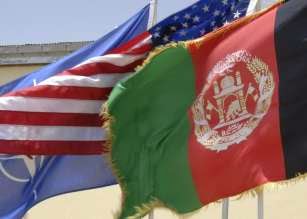
    News Story: Defense Ministry Preparing For US Troop Surge

    By Massoud Ansar

    The Afghan Ministry of Defense (MoD) on Saturday said it has starting preparing for the deployment of extra US troops to the country.

    “Training centers exist in Kabul, Jalalabad, Helmand, Mazar-e-Sharif and Kandahar and Gardez where we have training centers and they (the additional troops) will help us in our training centers,” said MoD spokesman Dawlat Waziri.

    On August 21, US President Donald Trump outlined a revised vision for the US war against terrorism in Afghanistan, pledging to end a strategy of nation building and instead increase attacks on militants.

    Trump also said that within the framework of the new strategy, the United States will deploy thousands of additional forces to Afghanistan to deal with the threats that emanate from the region.

    The Pentagon in turn has announced that the new batch of US forces will be deployed to military and security training centers of the Afghan National and Defense Forces (ANDSF) around the country.

    The US is however also expected to ramp up airstrikes against militant bases in the country and earlier this week, reports indicated that they could use both F-16s and B-52s.

    Footage released on Saturday by the Pentagon shows a US B-52 bomber patrolling Afghanistan air space on August 29 (on Tuesday) and of it being refueled.

    Read the full story at TOLOnews