Showing posts with label B-2 Spirit. Show all posts

22 December 2016

News Report: China Prepares Secretive H-20 Strategic Stealth Bomber

China’s secretive H-20 bomber is well on its way to becoming a fully developed next-generation strategic stealth aircraft, but not in the near future.

A Chinese admiral said that China and the rest of the world must be patient while waiting for the H-20 to be launched. 

China has not yet produced an operational, large-tonnage bomber aircraft capable of hitting long-range targets. Nevertheless, a host of technologies that Beijing expects the "legendary" aircraft to carry, including cruise missiles and nuclear arms, "are all in place," Rear Admiral Yin Zhuo of the People’s Liberation Army said, ripening the conditions for the country’s development of a stealth bomber. 

16 December 2016

News Story: F-22s Coming To Australia Next Year - PACOM’s Adm. Harris

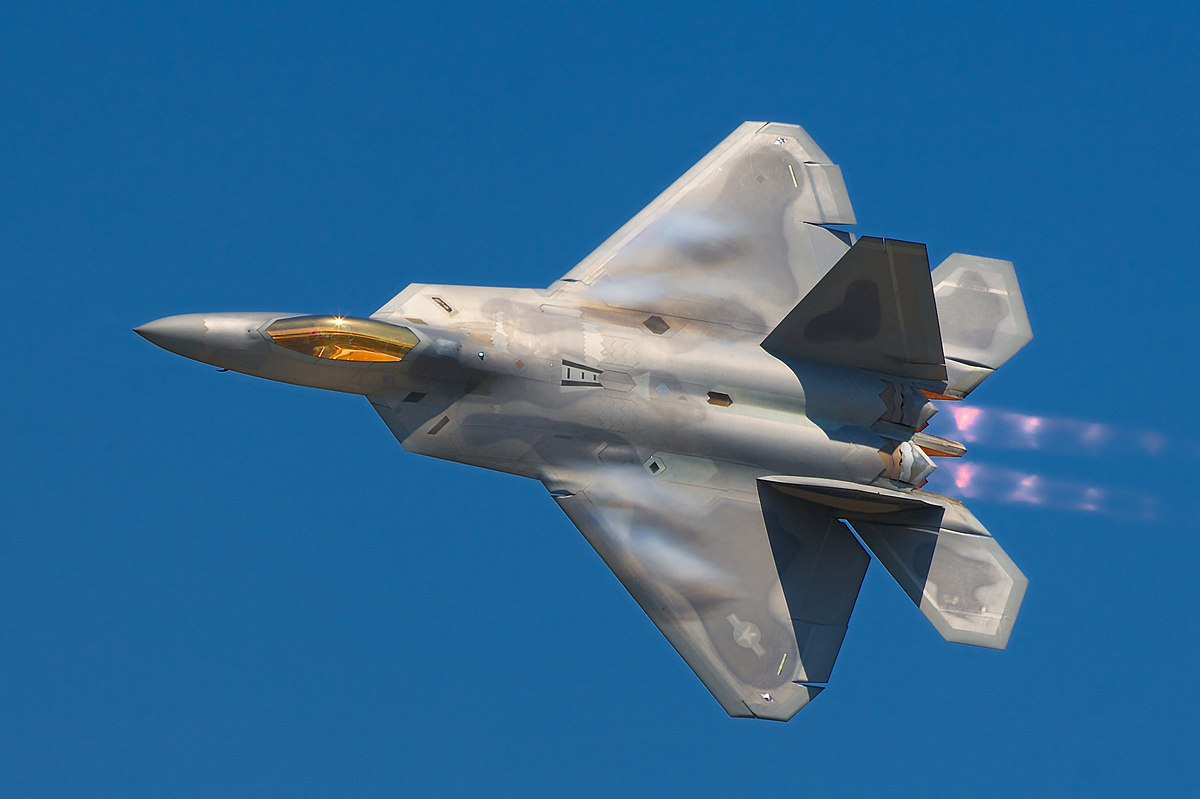
F-22 Raptor (Image: Wiki Commons)
By COLIN CLARK

SYDNEY: While it will be a short deployment, Australia and the United States have agreed to deploy America’s most advanced fighter next year as part of the Enhanced Air Cooperation (EAC) Initiative that has seen B-2 bombers and other advanced American aircraft deployed to the lucky country.

Adm. Harry Harris, head of Pacific Command, disclosed the news during a Q and A session at the Lowy Institute, a foreign policy thinktank here. Harris, fresh from a short visit to the seemingly always turbulent island state of Papua New Guinea, did not disclose how many F-22s would fly to the Royal Australian Air Force‘s base in Tindal.

While the US Marines have gotten most of the press for their now sort of regular six-month deployments to the northern port city of Darwin, 2017 marks a significant ramp-up in the air portion of America’s military commitment to — arguably — our closest ally.

Read the full story at Breaking Defense

14 September 2016

News Story: U.S. flies nuke bombers over S.Korea after DPRK's nuke test

B-1B Lancer (Image: Wiki Commons)
SEOUL, Sept. 13 (Xinhua) -- The U.S. military on Tuesday flew two nuclear-capable supersonic bombers over South Korea in a show of force following the Democratic People's Republic of Korea (DPRK)'s recent nuclear test.

Two B-1B Lancers, which can carry nuclear weapons, flew over the Osan Air Base in Pyeongtaek, some 70 km south of capital Seoul, at about 10 a.m. local time (0100GMT).

The one was flanked by four South Korean F-15K fighter jets, while the other was joined by four U.S. F-16 fighter planes before returning to the base. The high-speed bombers made a sortie from the U.S. air base in Guam.

U.S. Forces Korea (USFK) said in an emailed statement that the flyover highlights the close cooperation between U.S. and South Korean military forces that keep them ready to respond at any time to threats to stability and security.

The flights are a day later than scheduled. The United States reportedly planned to send the bombers to South Korea on Monday, but it was delayed due to unfavorable weather conditions.

The U.S. allegedly forward-deployed several B-1Bs to Andersen base in Guam in early August from Ellsworth air base in South Dakota to replace B-52 strategic bombers.

Three B-2 stealth bombers also arrived in Guam last month from Whiteman base in Missouri. It was the first time that the U.S. strategic bomber trio was mobilized together in the Pacific region.

Read the full story at Xinhua

10 September 2016

News Report: What Kind of Bomber Jet Does China Need?

H-6K Bomber
Chinese People's Liberation Army Air Force (PLA) has officially confirmed the development of a new strategic bomber. Indications of such a project were seen in Chinese military press earlier, although exact details remain unknown. Russian military expert Vasily Kashin spoke to Sputnik, deliberating the possible new bomber.

Currently, the Chinese Air Force employs the Xian H-6 jet bomber which is a license-built version of the Soviet Tupolev Tu-16 twin-engine jet bomber.

It is the first Chinese long-range bomber, specially designed for using cruise missiles and medium-range missiles capable of carrying other types of high-precision weapons. 

According to the military expert, the aircraft has advanced avionics and an increased range. However, the aircraft cannot be regarded as a complete member of the nuclear triad because it does not meet the requirements that are needed to solve the problem of the US nuclear deterrent. 

19 August 2016

News Report: Will the Korean Powder Keg Explode? Seoul Holds Biggest Artillery Drill Ever

February 2010 picture shows RoK K-9 SPG howitzers fire
during military exercise in Yanggu
Artillery drills on the North Korean border constitute a stark escalation in South Korea’s military practice, causing concern that Pyongyang may react amid heightened provocation.

On Thursday, South Korea’s army conducted its largest-ever artillery drills near the tense border with North Korea, risking an escalation of tensions on the Korean Peninsula.

Dozens of military units along the border on Thursday deployed some 300 artillery systems that simultaneously fired shells in multiple directions, according to an army official, who spoke on condition of anonymity to Military.com.

South Korea’s front-line army units have engaged in numerous live-fire drills over the years, but the number of artillery mobilized in Thursday’s drill is the highest on the Korean peninsula to date, and simultaneous firing from all major front-line areas constitutes a stark departure from previous exercises, according to the army official.

News Report: North Korea Threatens to Destroy US Military Bases in Asia-Pacific Region

Pyongyang has threatened to destroy all US military bases in the Asia-Pacific Region should Washington dare to take “an insane step,” according to the North Korean Foreign Ministry’s statement.

MOSCOW (Sputnik) — According to the statement, the fact that the Unites States deployed three types of strategic bombers on Guam ahead of the Ulchi-Freedom Guardian military drills conducted annually during August or September between South Korea and the United States is “a very alarming signal.”

“The situation on the Korean peninsula is entering a very dangerous stage because of the continuous US intrigues to increase the capacity of its nuclear weapons aimed at the DPRK. In case the United States … dares to take an insane step, all the US military bases in the Pacific Operations region, including the island of Guam, will not escape destruction by our army’s comprehensive and real attack,” the statement seen by RIA Novosti reads.

On Monday, several B-1 bombers and more than 300 US Air Force personnel arrived at Andersen Air Force Base in Guam to replace a B-52 squadron, as the United States continues to build up its presence in the region to counter a potential threat from Pyongyang.

On Wednesday, the US Pacific Command (PACOM) said in a statement that three US Air Force strategic power projection bombers — the B-52, B-1 and B-2 — had participated in their first integrated operation in the South China Sea.

This story first appeared on Sputnik & is reposted here with permission.

18 August 2016

News Story: DPRK denounces U.S. for nuclear arms buildup in Asia Pacific

PYONGYANG, Aug. 17 (Xinhua) -- The Democratic People's Republic of Korea (DPRK) on Wednesday slammed the United States for causing a nuclear arms buildup in the Asia Pacific.

A spokesman for the DPRK Foreign Ministry denounced the United States in a statement for dispatching strategic bombers like the B-1B and B-2A in early August to the Anderson Air Force Base in Guam for the first time in ten years, according to the state news agency KCNA.

Sending more strategic nuclear bombers to Guam right after the joint decision by Washington and Seoul to deploy the Terminal High Altitude Area Defense (THAAD) in South Korea proves that the "U.S. plan for a preemptive nuclear strike at the DPRK has entered a reckless phase of implementation," the statement said.

"Such military moves of the United States are part of its sinister strategy to contain Russia and China in the Asia Pacific and maintain its military hegemony in the region, not just aiming at a surprise preemptive nuclear strike at the DPRK," the statement added.

Read the full story at Xinhua

15 August 2016

News Report: North Korea Threatens US With Nuclear Strike at 'Slightest Provocation'

Pyongyang accused Washington of an attempt to invade the North Korea on Saturday and has threatened the United States with a nuclear strike at "the slightest provocation," local media reported on Saturday.

MOSCOW (Sputnik) — The Pyongyang's Korean Central News Agency (KCNA) said that the United States attempts to invade the North Korea are becoming "ever more reckless" and noted that the Revolutionary Armed Forces of Democratic Peoples Republic of Korea switched from their current mode of the military opposition to a preemption mode in order to cope "with the absurd war hysteria of the opponent." All of its forces are fully prepared to make a "ruthless and devastating blow" to the enemy, if he commits even the "slightest provocation," the state media added.

The media noted that the right to make a pre-emptive nuclear strike is not the United States' monopoly.

On Tuesday, the US Strategic Command announced that the United States had sent three B-2 stealth bombers to the Indo-Asia-Pacific region to conduct training sorties.

Pyongyang's agency reported on Wednesday that the United States intend to make a plan of actions for a surprise nuclear attack under the upcoming drills.

Pyongyang has repeatedly claimed that the joint military drills are a rehearsal for a real attack on North Korea. The United States and South Korea, in their turn, insisted that the exercises are aimed at training defensive skills for combating emerging threat from the North.

This story first appeared on Sputnik & is reposted here with permission.

12 August 2016

News Report: US Nuclear-Bomber Triad in Pacific for First Time as China Reaches Boiling Point

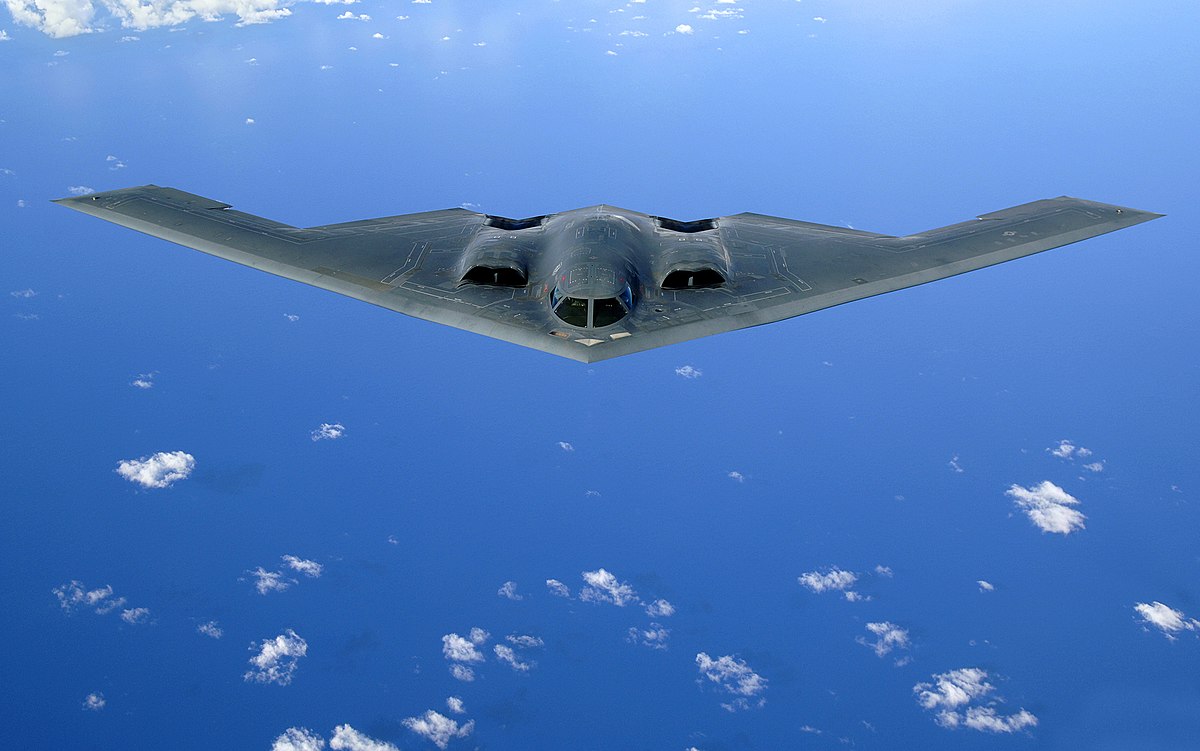
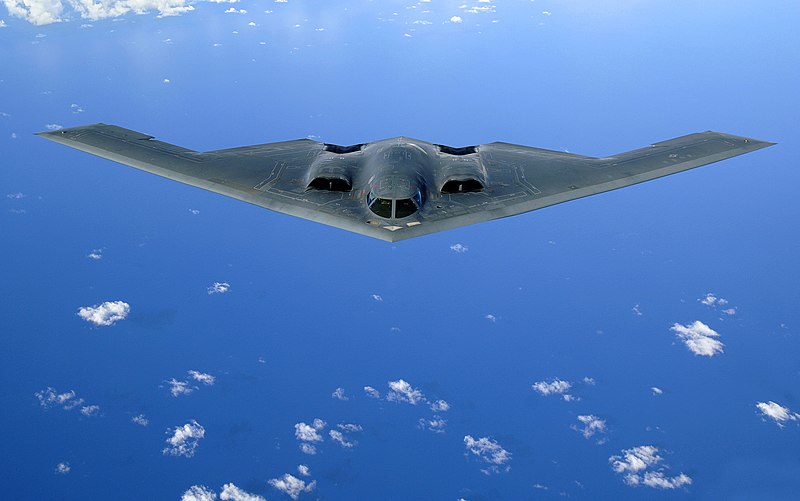
A B-2 Spirit Bomber (Image: Wiki Commons)
With tensions in the South China Sea and throughout the Pacific Rim at increasing levels, the Obama Administration adds fuel to the fire by dispatching enough nuclear weaponry to kill everyone in the region.

The United States has dispatched its three strategic bomber types to the Pacific region for the first time, in a bid to reassure allies amid growing aggression from China in the wake of the Hague-based Court of Arbitration ruling against Beijing’s claim to territories in the South China Sea, and the deployment of the THAAD anti-missile system.

Announced Wednesday, the US Air Force will dispatch a Boeing B-52H Stratofortress, a Rockwell B-1B Lancer, and a Northrup Grumman B-2A Spirit bomber to operate concurrently in the US Pacific Command region in support of the Continuous Bomber Presence (CBP) and Bomber Assurance and Deterrence (BAAD) missions.

The move by the United States supplements a sizeable but undisclosed number of B-52s stationed at Andersen Air Force Base on the Island of Guam since 2006. The move called for the transfer of a fleet of B-1Bs and three B-2s to be deployed to Andersen Air Force Base to assist with the BAAD mission.

11 March 2016

News Story: US deploys bombers for exercises as N. Korea tension mounts

B-2 Spirit (Image: Wiki Commons)
The United States said Wednesday it is deploying for exercises in Asia three long-range stealth bombers capable of carrying nuclear weapons, as tensions mount on the Korean peninsula.

"Recent events demonstrate the continued need to provide consistent and credible air power throughout the Indo-Asia-Pacific region," said General Lori J. Robinson, Pacific Air Forces commander.

The planes -- US military officials refused to say precisely where they would be deployed -- are B-2 Spirit bombers and the US Air Force only has around 20 of them.

Read the full story at SpaceDaily

23 February 2016

News Report: New Possible Chinese Radar Installation on South China Sea Artificial Island Could Put U.S., Allied Stealth Aircraft at Risk

Jan. 24, 2016 image of Cuarteron Reef in the South China Sea
with what is likely a high frequency radar array. CSIS Asian
Maritime Transparency Initiative, DigitalGlobe Image (click to enlarge)
By: Sam LaGrone

A possible new Chinese radar installation in the South China Sea could put American and allied stealth aircraft at risk as part of a wider detection network similar to U.S. efforts to find Russian bombers in the Cold War.

Late January satellite imagery from the Center for Strategic and International Studies and DigitalGlobe show the installation of what’s likely a high frequency radar installation the Chinese disputed holding of Cuarteron Reef near the Philippines.

The imagery from DigitalGlobe shows a field on the island with 65 foot-tall poles in a field on reclaimed land on the reef – China’s southern most holding in the region – that are similar to other maritime HF radars, Greg Poling, head of the center’s Asian Maritime Transparency Initiative told USNI News on Monday.

“Why would you have 20-meter poles spread across this features if it’s not high frequency radar? ” Poling said. “Maybe a giant tarp?”

It’s unclear from the imagery if the site on Cuarteron is operational and inquires left with the Department of Defense by USNI News on Monday were not immediately answered. The Washington Post first reported the installation early Monday afternoon

28 October 2015

USA: Air Force Awards Contract for Long Range Strike Bomber

Air Force News Service

WASHINGTON, October 27, 2015 — The Air Force announced today the contract award of engineering and manufacturing development and early production for the Long Range Strike Bomber, or LRS-B, to Northrop Grumman Corp. 

"Over the past century, no nation has used air power to accomplish its global reach -- to compress time and space -- like the United States," Defense Secretary Ash Carter said during a Pentagon briefing announcing the contract. "Today, it's vital to innovate and reinvest in the people, strategies and technologies that will allow America's military to be dominant in the second aerospace century. I’ve made such innovation a hallmark of my commitment to the future of America’s military.

"Building this bomber is a strategic investment in the next 50 years, and represents our aggressive commitment to a strong and balanced force," Carter continued. "It demonstrates our commitment to our allies and our determination to potential adversaries, making it crystal clear that the United States will continue to retain the ability to project power throughout the globe long into the future."

29 September 2015

News Story: US to relocate 30,000 marines to counter China in S. China Sea

US Marines come ashore during an exercise
In the face of China's growing presence in the South China Sea, the United States Marine Corps is moving ahead with plans to eventually place nearly 15% of the service's personnel in Hawaii and beyond, reports Duowei News, a US-based Chinese political news outlet.

Citing a report from South Korea's JoongAng Ilbo, it is noted that the 190,000-strong US Marines Corp specializes in expeditionary warfare and is typically mobilized for regional conflicts or the rapid delivery of combined-arms task forces with the US Navy.

Experts believe the aim of of relocating nearly 30,000 marines is to reduce America's reaction time in the Asia-Pacific and form a key part of US president Obama's "Asia rebalancing" strategy.

Read the full story at Want China Times

26 August 2015

Editorial: US Will Send B-2 Bombers to Guam in Support of South Korea

B-2 Spirit Bomber (Image: Wiki Commons)
By Franz-Stefan Gady

Is it too soon to tell whether the recent agreement will reduce tensions on the Korean Peninsula?

The United States will dispatch three B-2 bombers to Guam amid heightened tensions on the Korean Peninsula, the U.S. Air Force Chief of Staff, General Mark Welsh, told the Air Force Times on Monday.

“We are in the process right now of deploying three B-2s on a scheduled rotation to Andersen Air Base in Guam. We continue to have airmen stationed on the Korean Peninsula who are there full time who are ready for whatever might happen, and they are ready everyday,” Welsh said.

In 2013, B-2 bombers entered North Korean airspace in a show of force to deter Pyongyang. Such as display appears unlikely this time, as Seoul and Pyongyang have reached an interim agreement to defuse the ongoing crisis on the Korean Peninsula.

“The United State welcomes the agreement reached between the Republic of Korea and the DPRK earlier today. We support President Park’s tireless efforts to improve inter-Korean relations, which support peace and stability on the Korean Peninsula,” U.S. State Department spokesman John Kirby told reporters at a regular briefing yesterday.

Read the full story at The Diplomat

18 July 2015

News Story: US shifting S China Sea strategy

US Marines embark on the USNS Sacagawea to begin
Exercise Koa Moana 15.2 with East Timor
The United States is moving its troops further away from the South China Sea because of its confidence in its long-range precision weapons and its strategy of getting other countries in and out of the region to become actively involved in teaming up against China, according to a Chinese military expert.

In a commentary penned for China's nationalistic Global Times tabloid, naval military expert Li Jie stated that America's decision to send warships and surveillance aircraft to the South China Sea, where China has been accused of aggressive conduct such as land reclamation and military constructions on disputed islands, has not produced the positive results desired by Washington. China has continued to go about its business, while the US has been criticized of inflaming tensions and risking misunderstandings that could lead to conflicts, Li said.

As a result, the US appears to have scaled back its criticism of China, Li said, arguing that the recent remarks about China's conduct in the South China Sea by US assistant secretary of state Daniel Russel are considerably more "gentle" than those of US defense secretary Ash Carter at the Shangri-La Dialogue back in late May.

Instead of increasing its military presence in the region, Li believes Washington is now implementing its "rebalance to Asia" strategy in a different way.

Read the full story at Want China Times

29 April 2015

News Story: Global Strike Command is USAF's new weapon against China - expert

B-2 Spirit (Image: Wiki Commons)

A pure bomber command is likely to be established for the first time in US military history after the Air Force made the announcement last week to reassign all its heavy bombers to the Global Strike Command last week, James Hasik, a senior researcher from the Washington-based Atlantic Council wrote in a piece for National Interest magazine.

The USAF put the nuclear-capable B-52Hs and B-2As bombers of the 8th Air Force and the Minuteman III intercontinental ballistic missiles of the 20th Air Force under the Global Strike Command in 2009. However, the de-nuclearized B-1B bombers stayed with the Air Combat Command's 12th Air Force. Such policy reconfigures the newly established Global Strike Command as a Bomber and Missile Command according to the author.

Hasik said that the consolidation of heavy bombers under the Global Strike Command will provide a single organizational home to all big bomber crews, including those of the forthcoming Long-Range Strike Bombers. "With that art of the possible emerging, the organizational heft of this new 'Bomber Command' may then spur some really new thinking, which the USAF genuinely needs for dealing with the mounting threat from China," Hasik said.

Read the full story at Want China Times

13 February 2015

AUS: Air Force units wrap it up for Exercise RED FLAG 15-1 in Nevada


Three weeks of intensive air combat training wraps up today as Exercise RED FLAG 15-1 concludes at Nellis Air Force Base in Nevada.

A contingent of 150 Royal Australian Air Force personnel have participated with two C-130J Hercules transports and an AP-3C Orion surveillance aircraft, working alongside counterparts from the United States and United Kingdom.

The RAAF also sent an Air Battle Management team from No. 41 Wing, tasked with overseeing missions with more than 60 combat aircraft in the Nevada Test and Training Range (NTTR). The 30,000-square-kilometre tract of exercise area is home to an array of ‘enemy’ radars, ground-borne defences, and Aggressor fighter aircraft.

Flying low-level along ridgelines in the NTTR, a pair C-130J Hercules from the RAAF’s No. 37 Squadron hid from prying radars to deliver personnel and cargo to drop zones.

27 January 2015

Editorial: New Snowden Documents Reveal Chinese Behind F-35 Hack


By Franz-Stefan Gady

Experts have long argued that China has copied the F-35 design for its own fighter jets. Is this the proof?

Last week, Der Spiegel published a new tranche of documents provided to the German weekly magazine by the former U.S. National Security Agency contractor, Edward Snowden. The documents are the first public confirmation that Chinese hackers have been able to extrapolate (PDF) top secret data on the F-35 Lightning II joint strike fighter jet. According to sources, the data breach already took place in 2007 at the prime subcontractor Lockheed Martin. A U.S. government official recently claimed that as of now, ”classified F-35 information is protected and remains secure.”
The fifth generation F-35 Lightning II is the most advanced fighter jet currently in production in the world. Experts have long argued that the design of China’s newest stealth fighter, the J-31, as well as the Chengdu J-20 fighter jet, are in parts influenced by the F-35. Bloomberg reports that the chairman of the Chinese subsidiary producing the J-31 even boasted that the Chinese plane is superior to the American product. “The J-31 will finish it off in the sky,” boasted AVIC Chairman Lin Zuomin referring to the F-35. However, most aviation experts are skeptical of this assertion.
The Snowden files outline the scope of Chinese F-35 espionage efforts, which focused on acquiring the radar design (the number and types of modules), detailed engine schematics (methods for cooling gases, leading and trailing edge treatments, and aft deck heating contour maps) among other things. The document claims that many terabytes of data specific to the F-35 joint strike fighter program were stolen. 

Read the full story at The Diplomat

24 November 2014

News Story: China's Anti-Stealth Radar Comes to Fruition


By WENDELL MINNICK

TAIPEI — The one great testament to China’s anti-access/area denial efforts were weapon and sensor systems on display at the recent China Airshow in Zhuhai.

One of the most noticeable was the road-mobile JY-26 “Skywatch-U” 3-D long-range air surveillance radar. China had plenty of road-mobile radars on display, but this one claimed a unique capability — “stealth target detection.” This towering radar is a clear symbol of China’s continued desire to locate and destroy stealth aircraft like the B-2 bomber and F-22 and F-35 fighters.

According to a brochure by the East China Research Institute of Electronic Engineering (ECRIEE), this radar “boasts double stealth target detection virtues thanks to operation in UHF [ultra high frequency] band and owning of large power-aperture product” for both air breathing targets and tactical missiles. The range of the UHF radar is not cited on the brochure, but other details are, including electronic counter-countermeasures and a complex digital active electronically scanned array (AESA) radar capable of tracking 500 targets.

Read the full story at DefenseNews

06 October 2014

News Story: China Touts Anti-stealth Radar

DWL002 passive detection system

By WENDELL MINNICK

TAIPEI — America’s most advanced stealth fighter poses a great risk to China’s air defense network — and the military is going to great lengths to learn how to shoot one down.

China claims it has a new passive detection “radar” capable of identifying stealth aircraft, including the more advanced F-22 Raptor fighter based at Andersen Air Force Base on Guam.

The claims appeared in the last week of September in Chinese-language media outlets stating that the F-22 and Europe’s Neuron unmanned combat aerial vehicle are “obsolete” against China’s new DWL002 passive detection system.

Marketed by Beijing-based CETC International, the DWL002 passive detection system was displayed during the 9th China International Defense Electronics Exhibition in Beijing in May. It comprises one master reconnaissance station and two slave stations. The systems can be expanded to four stations and outfitted on trucks. The DWL002 has a detection range of 400 kilometers for fighter aircraft and 600 kilometers for airborne early warning and control aircraft, such as the US E-3 Sentry and E-2 Hawkeye.

Read the full story at DefenseNews