
 |
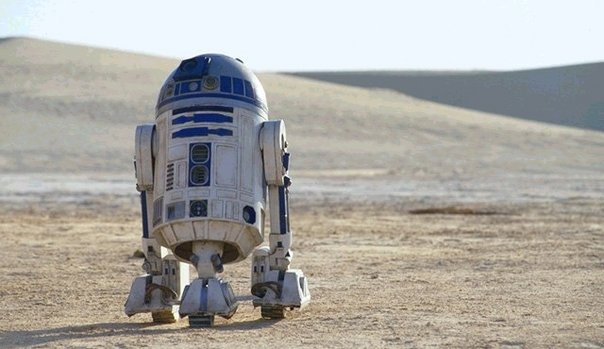
| R2-D2 (Image: Flickr User - WCM 1111) |
James Mugg
A recurring objection to the use of unmanned combat air systems (UCAS) for any role currently filled by fighter or attack aircraft is that robots can’t replace human fighter pilots. It’s probably a bit optimistic to say that humans will always be more capable pilots than computers, but robots don’t have to replace pilots to be useful. A fun way to stimulate thinking about unmanned systems is to look at how robots (aka droids) are used in the Star Wars movies.
Starting with the Original Trilogy (as one should), droids are mostly seen in non-combat roles. R2-D2 is essentially Luke Skywalker’s co-pilot, and his best real-world analogue is the growing computerisation of military systems. The original Star Wars movie was released in 1977, a year before the USAF introduced the F-16. The F-16’s successor, the F-35, doesn’t exactly have an R2-D2 sitting behind the pilot, but its sophisticated sensor systems and data fusion capabilities aren’t that different to having a robot co-pilot.
In The Empire Strikes Back, probe droids are used for ISR ops on a galactic scale, leading the Empire to the Rebels on Hoth. Most modern unmanned air systems are primarily ISR platforms, like the RQ-7 Shadow the Australian Army operates. ISR drones are cheap to operate and take boring tasks away from humans—the more automated the better.
.jpg/1200px-X-47B_UCAS_over_Edwards_AFB_(111029-F-EM261-005).jpg)