Showing posts with label ASuW. Show all posts

29 September 2017

USA: P-8 aircraft arrive in Hawaii for rotational deployment

From Navy Region Hawaii Public Affairs

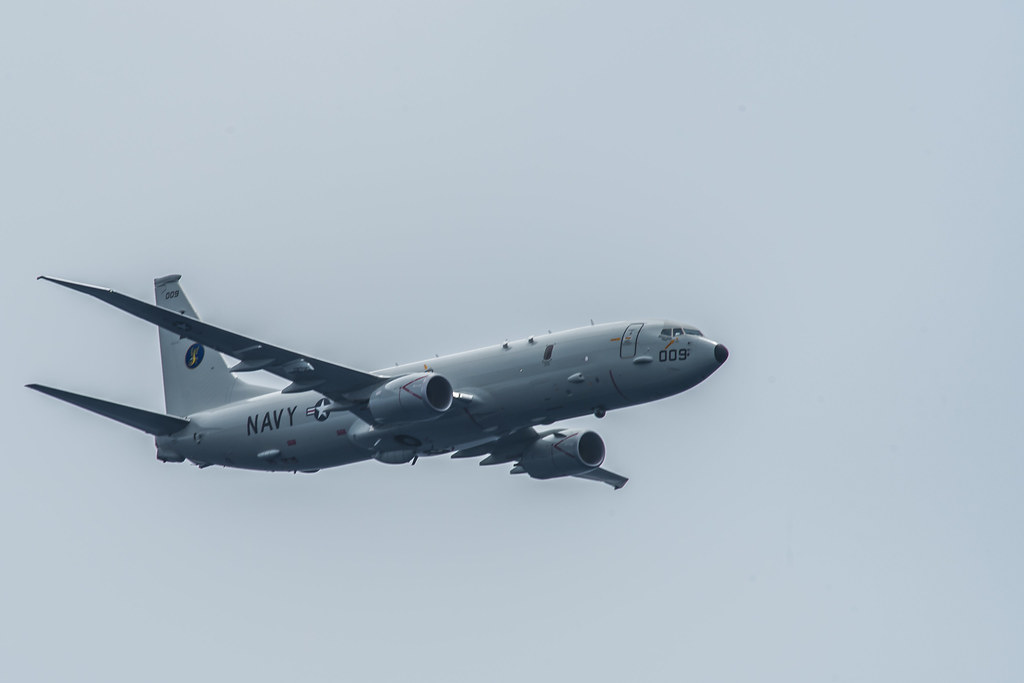
In this file photo, a P-8A Poseidon from Patrol Squadron (VP) 4 flies over USS Theodore Roosevelt (CVN 71) during training in the Pacific, Aug. 29. (U.S. Navy/MC2 Alex Perlman) >>

PEARL HARBOR, Hawaii - Two P-8A Poseidon maritime patrol aircraft assigned to the Skinny Dragons of Patrol Squadron (VP) 4 will operate from Marine Corps Base Hawaii and Joint Base Pearl Harbor-Hickam in support of maritime security initiatives beginning Sept. 28.

This is a part of a rotational deployment of forces, and the first time a P-8 detachment will be deployed to Oahu. Previously, these maritime security missions were flown by P-3C Orion aircraft.

This is VP-4's first deployment flying the P-8A Poseidon. The P-8A, a militarized version of the Boeing 737, is the most advanced long-range maritime patrol aircraft in the world. It is a capable of broad-area, maritime and littoral anti-submarine and anti-surface warfare, and ISR operations. The aircraft brings the latest avionics and onboard systems to the maritime patrol and intelligence, surveillance and reconnaissance (ISR) mission, making it the most advanced anti-submarine and anti-surface warfare aircraft in the world.

VP-4, which is based at Whidbey Island in Washington, has a long history in Hawaii, dating back to 1928 when it was first established in Hawaii. The squadron operated here during the Vietnam War and the Cold War. In recent years, VP-4 deployed to the U.S. 5th Fleet area of operations in Iraq and Afghanistan and U.S. 6th Fleet area of operations including Italy, Greece and Spain, to name a few.

VP-4 departed Oahu for the last time as a Hawaii squadron in March 2016. While on deployment, VP-4 executed a permanent duty station change to Whidbey Island.

Maritime patrol squadrons now temporarily deploy to Hawaii on a rotational basis.

26 September 2017

News Story: Chinese naval fleet returns home after drill with Russia & China, Russia conclude joint naval drills

Chinese Navy Warships (File Photo)
Chinese naval fleet returns home after drill with Russia

SANYA, Sept. 25 (Xinhua) -- A Chinese naval flotilla Monday returned to a military port in the city of Sanya in southern China's Hainan Province after a military exercise with the Russian navy in the Baltic Sea.

The formation, comprising missile destroyer "Hefei," missile frigate "Yuncheng" and supply vessel "Luomahu," was the first Chinese fleet to ever sail in the region for a military exercise.

The joint drill, held in July, was the first phase of "Joint Sea 2017," which had similar exercises in the Sea of Japan and Okhotsk this year.

Read the full story at Xinhua

--

China, Russia conclude joint naval drills

MOSCOW, Sept. 25 (Xinhua) -- The last batch of scheduled exercises in the second phase of the 2017 China-Russia Joint Sea Drills was completed in the Okhotsk Sea near Russia's Far East Federal District on Monday.

Starting in the morning, Chinese and Russian commanders simulated joint rescues of ships hijacked by pirates and ships in distress, and later in the afternoon, fleets of the two sides held a farewell ceremony after the completion of both exercises.

During the entire week-long drills, major Chinese and Russian fleets conducted a string of highly challenging joint operations, including air defense, anti-submarine and anti-fleet actions as well as maritime search and rescue.

Read the full story at Xinhua

11 July 2017

India: Exercise Malabar Commences in Bay of Bengal - North Indian Ocean

Naval co-operation between India, US and Japan epitomises the strong and resilient relationship between the three democracies. The MALABAR series of exercises, initiated in 1992 between the Indian and US Navies, have steadily grown in scope, complexity and participation into a multifaceted exercise with the participation of Japanese Maritime Self Defense Force (JMSDF). 

The 21st edition of the exercise, MALABAR-17 will be conducted in the Bay of Bengal from 10 to 17 July 2017. The primary aim of this exercise is to increase interoperability amongst the three navies as well as develop common understanding and procedures for maritime security operations. The scope of MALABAR-17 includes wide-ranging professional interactions during the Harbour Phase at Chennai from 10 to 13 July 2017 and a diverse range of operational activities at sea during the Sea Phase from 14 to 17 July 17. The thrust of exercises at sea this year would be on Aircraft Carrier operations, Air Defence, Anti-Submarine Warfare (ASW), Surface Warfare, Visit Board Search and Seizure (VBSS), Search and Rescue, Joint Manoeuvres and Tactical procedures. In addition, officials from the three countries will be flown onboard the ships at sea on 15 July 2017.

News Report: 'Strategic Message' for Beijing - US Leads Massive Navy Drills With India, Japan

The US Nimitz Carrier Strike Group arrived in India for war games with the Japanese and Indian navies known as Malabar 2017, the US Navy announced Monday.

"I would like to say this is a strategic message to China," US Navy Cmdr. Rear Adm. William Byrne told reporters.

"Malabar 2017 is a trilateral, two-phase exercise hosted by the Indian navy and held in Chennai and the waters of the Bay of Bengal," a Navy release stated.

The drill "consists of shore and sea phases that emphasize high-end warfighting skills, maritime superiority and power projection."

The US Navy explained Malabar 2017 is part of ongoing joint exercises involving the US that started in 1992 to address shared threats to maritime security in the Indo-Asia Pacific. 

10 July 2017

USA: Nimitz Carrier Strike Group begins Malabar 2017

From Carrier Strike Group 11 Public Affairs

Ships assigned to the Nimitz Carrier Strike Group transit the Surigao Strait earlier this month. (U.S. Navy/MC3 Maria I. Alvarez) >>

BAY OF BENGAL - Sailors and Marines assigned to the Nimitz Carrier Strike Group, the Indian Navy and the Japan Maritime Self-Defense Force (JMSDF) commenced the Malabar in-port portions in Chennai, India, July 9.

The maritime exercise Malabar, which was first held in 1992, occurs annually to improve interoperability between U.S., Indian, and Japanese maritime forces. The exercise enhances maritime relationships and demonstrates credible naval power in the Indo-Asia-Pacific region.

“The exercise continues to grow because we are bringing in more ships and we are bringing together three countries,” said Cmdr. Vernon H. Stanfield, the Nimitz Strike Group operations officer. “We make sure that we strengthen our partnerships, and we learn from the experience so that we continue to become more proficient in the future.”

04 April 2017

Industry: $2.2 Billion Boeing Contract Funds P-8 Aircraft for US, Australia and UK

Australia's 1st P-8 Poseidon (File Photo)
Order continues global expansion of maritime patrol capabilities based on Boeing 737 commercial plane; Agreement for 17 aircraft includes first for U.K. Royal Air Force

SEATTLE, Apr. 3, 2017 – Boeing [NYSE: BA], the U.S. Navy, the Royal Australian Air Force and the United Kingdom Royal Air Force will continue modernizing global maritime patrol capabilities through a $2.2 billion contract awarded March 30 for at least 17 P-8A Poseidon aircraft.

The agreement also includes options for 32 additional aircraft, as well as money for long-lead parts for future orders. After exercising all options, the total contract value will be $6.8 billion. This comprehensive award reflects a commitment by Boeing and the Navy to achieve pricing and production stability, two keys of successful program performance.

21 March 2017

USA: U.S., South Korean Navies to Hold Partnership Exercises

By Navy Lt. Joshua Kelsey, Naval Forces Korea

WATERS SURROUNDING THE KOREAN PENINSULA, March 20, 2017 — U.S. Navy ships assigned to Commander, Task Force 30 and CTF-70 are scheduled to begin a series of exercises with the South Korean navy tomorrow to strengthen maritime interoperability and tactics, techniques and procedures.

The U.S. routinely conducts carrier strike group operations in the waters around South Korea to exercise maritime maneuvers, strengthen the U.S.-South Korean alliance and improve regional security.

"This exercise is yet another example of the strength and resolve of the combined U.S. and the [South Korean] naval force," said Navy Rear Adm. James Kilby, commander of the Carl Vinson Carrier Strike Group. "The U.S. and [South Korea] share one of the strongest alliances in the world and we grow stronger as an alliance because of our routine exercises here in South Korea and the close relationship and ties that we forge from operating at sea together."

20 March 2017

USA: ROK, US navies to reinforce partnership, bolster defensive capabilities in exercise

From U.S. Naval Forces Korea Public Affairs

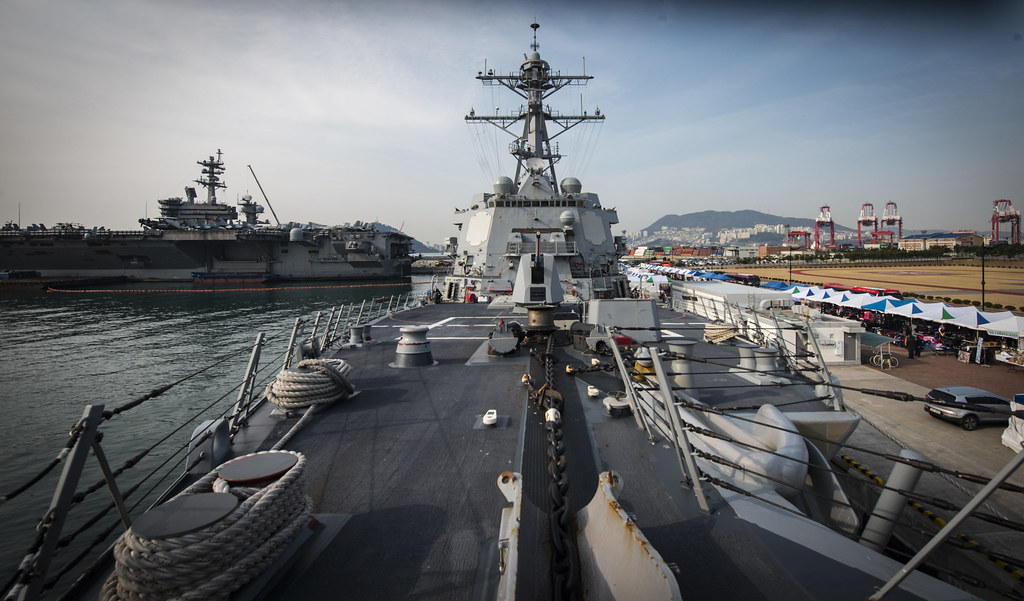
USS Wayne E. Meyer (DDG 108) sits along the pier in Busan near USS Carl Vinson (CVN 70), March 16. (U.S. Navy/MC2 Z.A. Landers) >>

BUSAN, Republic of Korea - U.S. Navy ships assigned to Commander, Task Force (CTF) 30 and CTF 70 are scheduled to begin a series of exercises with the Republic of Korea (ROK) Navy, March 21 to strengthen maritime interoperability and tactics, techniques and procedures.

The U.S. routinely conducts CSG operations in the waters around the Republic of Korea to exercise maritime maneuvers, strengthen the U.S.-ROK alliance, and improve regional security.

"This exercise is yet another example of the strength and resolve of the combined U.S. and the ROK naval force," said Rear Adm. James Kilby, commander, Carl Vinson Carrier Strike Group. "The U.S. and the Republic of Korea share one of the strongest alliances in the world and we grow stronger as an alliance because of our routine exercises here in South Korea and the close relationship and ties that we forge from operating at sea together."

The exercises will consist of a routine bilateral training, subject matter expert exchanges, anti-submarine and anti-surface warfare drills, communication drills, air defense exercises, counter-mine planning and distinguished visitor embarkations.

14 February 2017

News Story: Russian cruiser Varyag conducts training shootings at Far East

Varyag (Image: Wiki Commons)
VLADIVOSTOK, Feb. 13 (Xinhua) -- Guided missile cruiser Varyag has conducted training shootings near Russia's Far East city of Vladivostok, the fleet press service reported on Monday.

According to the fleet's combat training plan, the ship successfully performed a set of shootings on land targets and a towed navy shield, and simulated enemy ship and air attack systems using the automatic weapon system AK-130 and AK-630, the spokesman of the Pacific Fleet Vladimir Matveev said.

Read the full story at Xinhua

11 January 2017

News Report: SM-6 Cleared for International Sale; Australia, Japan, Korea Could Be Early Customers

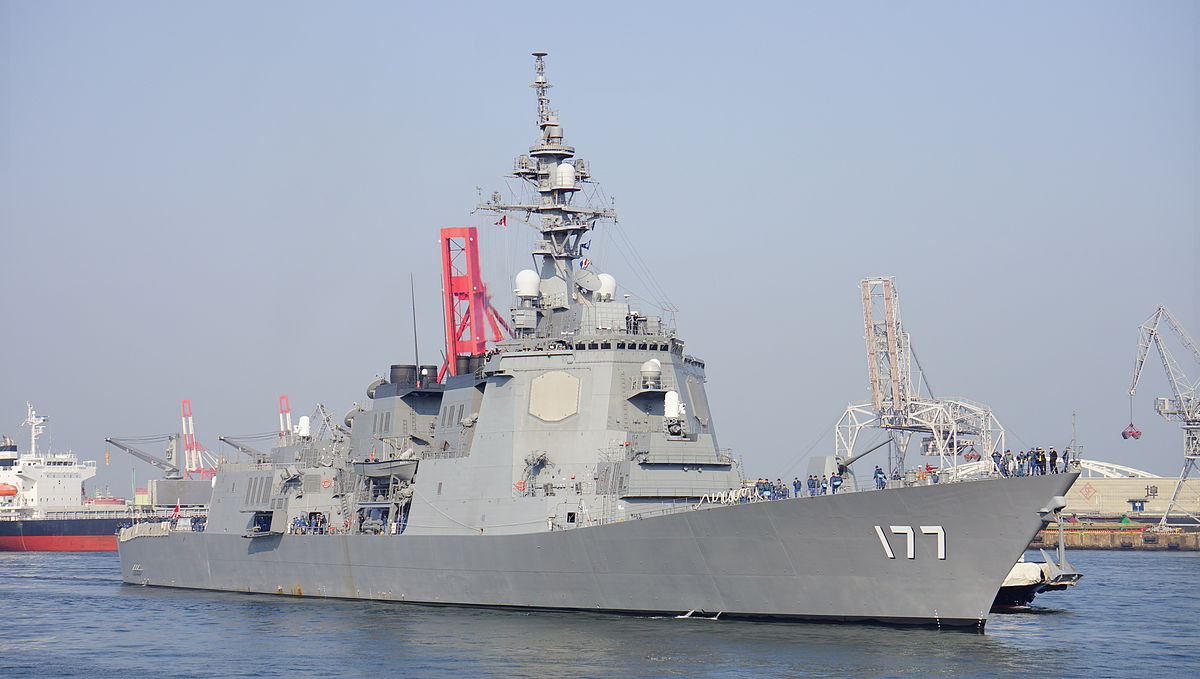
Japan's Atago class, base design for the 27DDG destroyer
(Image: Wiki Commons)
By: Sam LaGrone

Raytheon’s Standard Missile 6 has been cleared by the Pentagon for international sales and a trio of potential Pacific nations are likely the first customers.

SM-6 — currently in limited initial production – is a key weapon in the both the Navy’s emerging distributed lethality concept and the service’s Naval Integrated Fire Control Counter-Air (NIFC-CA) for its ability to strike air, surface and limited ballistic missile targets.

Of the five international Aegis combat system operators, three are in the process to have the upgraded combat system to field the SM-6 – Australia, Japan and South Korea.

All three countries to have guided missile combatants upgraded to Aegis Baseline 9. Baseline 9 replaces the Aegis combat system older military specific computers with commercial-off-the-shelf servers to handle the data the ships absorb through its radar and adds a multi-signal processor. The modifications allow an Aegis ship to take targeting information from a third party to interdict air and sea warfare threats using the SM-6.

28 October 2016

USA: HSC Weapons School Pacific Hosts Inaugural Anti-Surface Warfare Exercise

An Australian MH-60R Seahawk fires a Hellfire Missile (File Photo)
By Lt. Rebekah Saxon, Helicopter Sea Combat Weapons School Pacific Public Affairs

SAN DIEGO (NNS) -- Helicopter Sea Combat Weapons School Pacific (HSCWSP) concluded the inaugural Phoenix Fire exercise, Oct. 21.

The training focused on littoral combat in a contested environment utilizing the Navy's Southern California Offshore Range (SCORE) on San Clemente Island, California.

The exercise grew out of HSC Wing Pacific's desire to increase the fidelity of training for its MH-60S Seahawk helicopter squadrons in anti-surface warfare (ASuW) with a focus on close air support (CAS). Cmdr. Frank Ingargiola, the commanding officer of HSCWSP, made the exact purpose of this exercise clear to his crew.

24 October 2016

Industry: Hyundai Heavy Industries Wins an Order to Build Two 2,600 ton Frigates for the Philippine Navy

Hyundai Heavy Industries (HHI), the world’s largest shipbuilder, announced today that it signed a contract to build two 2,600 ton frigates with the Department of National Defense, Republic of the Philippines.

The signing ceremony held in Manila, Philippines, was attended by Mr. Chung Ki-sun, executive vice president of Corporate Planning Office of HHI, Mr. Delfin Lorenzana, Philippines’ Defense Secretary and Mr. Kim Jai- shin, Korean Ambassador to Philippines and other guests.

The frigates will be designed to be a smaller light combatant and successor to the Incheon class frigate which is now in active service for ROKN tailored to the requirement of the Philippine Navy with applying optimized range of good marine standard under naval rule from Lloyd Register, classification society.

18 October 2016

News Report: Indian Navy to Induct Seven Multirole Next Generation Corvettes From 2023

Project-28: Kamorta class corvette (Image: Wiki Commons)
The Indian Navy begins its preparation to build seven ‘Next Generation Corvettes’ at Indian shipyards that would be capable of offensive surface to surface missile attacks, and anti-submarine warfare operations.

New Delhi (Sputnik) – According to specifications provided by the Indian Navy, the ship will have a range of not less than 4,000 nm, and will be capable of sailing at 27 knots. The India Navy requires all seven corvettes from 2023. The 120 meter long single hull corvettes, or small warships, will have low radar, acoustic, magnetic, visual and infra-red signatures.

“The ship should carry a minimum of 8 surface-to-surface missiles and should be able to engage sea skimming missiles, flying 3-5 m above sea level, up to maximum speed of Mach 3. Active towed array sonar, two light weight torpedo launcher should be fitted to the corvettes,” reads the Navy's document. 

The Indian Navy has specified that should be one multi-function surveillance and threat alert radar in the warships for early warning and target identification. 

There are presently more than 50 ships and submarines under construction in India. India has already built four anti-submarine warfare corvettes under Project-28, the first of which was handed over to the Indian Navy in 2014. This was built by Garden Reach Shipbuilders & Engineers Ltd with 90 percent indigenization.

This story first appeared on Sputnik & is reposted here with permission.

17 October 2016

USA: Bonhomme Richard ESG, PAC SAG conduct drills in South China Sea

By PO2 Sarah Villegas, ESG 7 Public Affairs

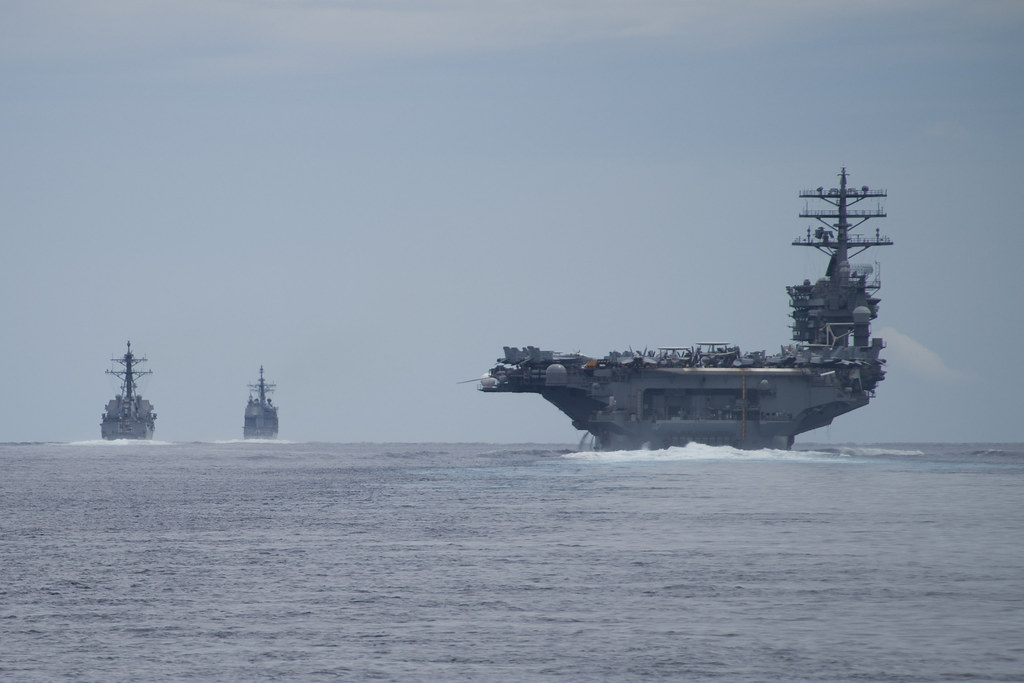
USS Decatur (DDG 73) sails in formation alongside USS Bonhomme Richard (LHD 6) during interoperability drills in the South China Sea, Oct. 13. (U.S. Navy/PO3 Gerald Dudley Reynolds) >>

SOUTH CHINA SEA - The Bonhomme Richard Expeditionary Strike Group conducted a second iteration of drills with two guided-missile destroyers from the Pacific Surface Action Group (PAC SAG) in international waters, Oct. 13-15.

The BHR ESG conducted a series of training events with Destroyer Squadron 31, USS Spruance (DDG 111), and USS Decatur (DDG 73) to increase amphibious maritime warfighting proficiency by leveraging the multi-mission capabilities of cruiser-destroyer (CRUDES) units.

Training events included PAC SAG integration for High Value Unit defense, air defense, surface and anti-submarine warfare operations. Embarked aircraft detachments within the ESG, to include MV-22 Ospreys and UH-1Y Hueys of the 31st Marine Expeditionary Unit, were utilized in conjunction with Spruance’s embarked MH-60Rs for a variety of maritime warfare missions including defense against potential surface threats.

17 September 2016

AUS: KAKADU sea phase gets underway

HMAS Newcastle (Image: Wiki Commons)
LEUT Todd Fitzgerald (author)

Warships from many of the littoral nations of the Pacific and Indian oceans have sailed out of Darwin to begin the sea phase of Exercise KAKADU, Australia’s largest maritime exercise.

The ships separated into three multi-national task groups once outside the harbour and will spend the next eight days undertaking a graduated program of activities leading to high-end warfare exercises off the northern Australian coast.

Commanding Officer of Australian frigate, HMAS Newcastle, Commander Mark Sirois, is in charge of one of the task groups and said the sea phase honed each nation’s ability to work together in an unpredictable warfare environment.

“Putting to sea and exercising together allows each navy to become familiar with each others’ procedures, cultures and capabilities, leading to greater trust and interoperability,” he said.  

13 September 2016

News Story: Routine China-Russia joint naval drill no reason for fear mongering

BEIJING, Sept. 12 (Xinhua) -- As China and Russia started on Monday an eight-day joint naval drill off the coast of south China's Guangdong Province, speculations are going rife that the military exercises are meant as a "sabre-rattling" event in the South China Sea."

Those susceptible to such speculations are either ill-informed about the fact that the joint naval drill has been an annual event since 2012 and that the ongoing drill takes place just off China's southern coast, or misled by their prejudice about China and Russia.

The drill, code-named "Joint Sea - 2016," comprises defense, rescue and anti-submarine operations, as well as island seizing activities, according to the Chinese Defense Ministry, which also said most of the Chinese soldiers participating in the event are from the South Sea Fleet.

A logical guess is that, for those who have bought the sensational claim regarding the drill, they probably only see words like "island seizing" and "South Sea Fleet" and start to imagine a war in the South China Sea.

They have fallen prey to the idea partly because earlier reports by Western news media almost unanimously wove some carefully chosen components into the background of the news of the China-Russia joint drill so as to deliver home a sensational impression.

Read the full story at Xinhua

09 September 2016

USA: Navy adjusts LCS class crewing, readiness, employment

From Commander, Naval Surface Force, U.S. Pacific Fleet

In this file photo, USS Independence (LCS 2), foreground, and USS Freedom (LCS 1) maneuver together during an exercise in 2012. (U.S. Navy/Lt. Jan Shultis) >>

SAN DIEGO - The Navy announced today it will implement several key changes to the projected 28-ship littoral combat ship (LCS) Flight 0/0+ class over the next five years that will simplify crewing, stabilize testing, and increase overseas deployment presence availability.

The projected 12 Frigates will be the next increment of LCS and will use the same manning, training, maintenance and operating concepts as those that have been approved as part of the LCS review. The decision to make these changes resulted from a comprehensive review of LCS crewing, training, maintenance, and operations commissioned in March. While a total of 40 ships have been approved for the program, the Navy Force Structure Assessment still projects the need for 52 small surface combatants that LCS and Frigate address.

02 August 2016

USA: U.S., Indonesian navies set for CARAT maritime exercise

From Task Force 73 Public Affairs

In this file photo, USS Preble (DDG 88) and KRI John Lie conduct a maneuvering exercise during CARAT Indonesia 2015. (U.S. Navy/MC3 Alonzo M. Archer) >>

SINGAPORE - The U.S. and Indonesian navies will come together for the 22nd Cooperation Afloat Readiness and Training (CARAT) Indonesia bilateral exercise and exchange, Aug 3-8.

The exercise will take place on the ground in Surabaya and in the waters and airspace of the Java and Bali Seas.

“The United States and Indonesia share a common vision for maintaining a peaceful and prosperous environment at sea,” said Rear Admiral Brian Hurley, commander, Task Force 73. “Our shared interest in maritime security is what CARAT is all about – and it’s allowed our navies to develop a sustained and growing partnership that benefits both countries.”

More than 500 U.S. Sailors will participate in CARAT Indonesia alongside their counterparts from the Indonesian Navy, known as Tentera Nasional Indonesia - Angkatan Laut (TNI-AL). The exercise will feature complex at-sea training in surface and anti-submarine warfare, visit, board, search and seizure (VBSS) drills, mobile dive and salvage training, a gunnery exercise, maritime patrol operations, and exchanges between explosive ordnance disposal technicians.

29 July 2016

USA: 22nd CARAT Singapore exercise comes to close

From Destroyer Squadron 7 Public Affairs

U.S. and Republic of Singapore Navy ships steam in formation at the conclusion of the at-sea phase of exercise CARAT. (U.S. Navy/MC2 Will Gaskill) >>

SINGAPORE - The 22nd annual Cooperation Afloat Readiness and Training (CARAT) exercise between the U.S. Navy and Republic of Singapore Armed Forces concluded with a ceremony at Changi Naval Base July 28.

CARAT Singapore 2016 focused on addressing shared maritime security concerns, building relationships and enhancing interoperability among participating forces for the two nations. The nearly two-week-long exercise consisted of shore-based and at-sea training engagements in multiple warfare areas and marked the first time a ship anti-submarine warfare readiness effectiveness measuring (SHAREM) event had been incorporated into CARAT. SHAREM measures how well surface ships and aircraft can detect and track submarines, and provides the two navies the opportunity to share tactics and develop procedures for future joint operations.

28 July 2016

USA: US ships exercise tactical complexity, interoperability during CARAT Singapore

From Task Force 73 Public Affairs

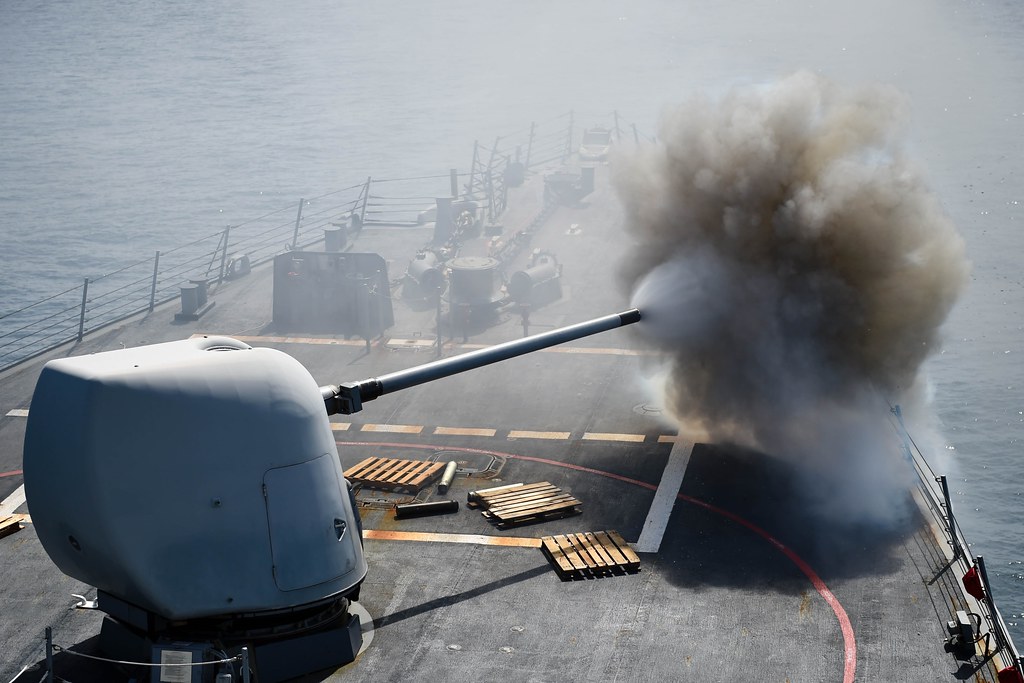
USS Stethem (DDG 63) fires its 5-inch gun at a surface target during the exercise Cooperation Afloat Readiness and Training (CARAT) Singapore. (U.S. Navy/MC1 John Pearl) >>

SINGAPORE - The U.S. Navy and Republic of Singapore Navy are engaged in the underway portion of Cooperation Afloat Readiness and Training (CARAT) Singapore and have already exercised multiple tactical engagements during their annual bilateral maritime exercise.

The two navies conducted tactical maneuvering drills over the week-long underway period, to include ship anti-submarine warfare readiness/effectiveness measuring (SHAREM) and weapons exercises. According to Cmdr. Doug Pegher, commanding officer of the guided-missile destroyer USS Stethem (DDG 63), the U.S. Navy and Republic of Singapore navy are poised for added complexity due to their long-time maritime partnership, now 22 years through CARAT.

“I am extremely impressed these first few days of CARAT Singapore over [the RSN’s] tactical proficiency, and their ability to communicate well over radios,” said Pegher. “It is forcing us to step our game up to rise to their level of proficiency. They are extremely professional.”