Showing posts with label Mitsubishi. Show all posts

31 August 2017

News Story: Indian Navy to buy underwater systems for its submarines

By: Vivek Raghuvanshi

NEW DELHI — The Indian Navy on Wednesday floated a global request for information to buy 12 anti-torpedo defense systems and associated equipment for its submarines.

“The ATDS is an important program, and it will acquired on a fast-track basis,“ a senior Indian Navy official said.

Global defense companies from Germany, Russia and the U.S. are likely to respond to this request for information, or RFI, and the service wants to induct them within the next two years, he added.

The foreign defense companies have also been asked to furnish details of transfer of production and transfer of technology of ATDS.

Currently, no Indian defense company manufactures submarine-launched ATDS.

Read the full story at DefenseNews

21 August 2017

News Story: MHI lands contract to build new Japanese destroyers

By: Mike Yeo

MELBOURNE, Australia – Japan has selected Mitsubishi Heavy Industries, or MHI, to be the lead contractor to build a new class of multipurpose destroyers with construction expected to begin in 2018.

An Aug. 9 release from Japan’s Acquisition, Technology and Logistics Agency, or ATLA, also named Mitsui Engineering and Shipbuilding Company as the subcontractor for the project which seeks to build eight ships to enter service with the Japan Maritime Self Defense Force by the next decade.

MHI’s design and proposal beat out competition from Mitsui and Japan Marine United Corporation for Phase 2 of ATLA’s evaluation, with MHI coming up tops for performance, balance and capability. However, ATLA had previously said in February that the losing bidders will still carry out major portions of the build to avoid shipyard closures and loss of industrial capacity.

According to the specifications released by ATLA, the new destroyers will be 130 meters long and displace 3,900 tons, and will be designed for a variety of missions including anti-submarine warfare and mine countermeasures, with the capability to operate helicopters, unmanned surface and underwater vehicles.

Read the full story at DefenseNews

27 July 2017

News Story: Indian Navy formally launches submarine acquisition program

By: Vivek Raghuvanshi

NEW DELHI — The Indian Navy has issued a request for information for six air-independent propulsion-enabled submarines under Project 75I, a program worth more than $12 billion. However, analysts say the process will take time since the purchase would take place under the new Strategic Parters policy.

The RFI was issued to six foreign shipyards, including Rubin Design Bureau of Russia, Naval Group (formerly DCNS) of France, Navantia of Spain, Saab of Sweden, Mitsubishi Heavy Industries of Japan and ThyssenKrupp of Germany, eliciting a response on AIP-enabled submarine capabilities.

Mitsubishi Heavy Industries is a surprise addition, according to an Indian Ministry of Defence official, because Japanese submarines can be expensive.

Once the overseas shipyards respond to the RFI, a formal request for proposal will be issued. Based on the RFP responses, the MoD will shortlist the shipyards, which could take a minimum of two years, the MoD official said.

A strategic partner will be selected from domestic shipyards, and the companies will join to compete for the project under the Strategic Partners policy

“As per the policy document, the overseas shipyards would be shortlisted based on range, depth and scope of technology transfer offered in identified areas, extent of indigenous content proposed [and] extent of ecosystem of Indian vendors/manufacturers,” said Jayant Damodar Patil, the head of Larsen & Toubro’s defense and aerospace division.

”MoD would short list three to four overseas shipyards from amongst the six based on the above criterion,” Patil added.

Read the full story at DefenseNews

15 June 2017

News Story: Arms exhibition held in Japan triggers domestic criticism

TOKYO, June 14 (Xinhua) -- A three-day arms exhibition that served the role of helping to bolster Japan's military role and its arms export to Southeast Asian nations ended Wednesday in Japans' Chiba Prefecture, drawing criticism from the public.

Japanese civil groups held rallies during the event to protest against the government's attempt of expanding the country's arms export.

According to the organizer, the Maritime Air Systems and Technologies Asia (MAST) exhibition, sponsored by the Japanese defense, foreign, and industry ministries to lure Southeast Asian buyers, gathered over 160 firms from 33 countries including Japanese firms Hitachi, Ltd. and Mitsubishi Heavy Industries.

The Japanese defense ministry also held a meeting with some Southeast Asian nations to discuss matters related to arms export after the exhibition closed, local media reported Wednesday.

Dozens of people from Japan's civil groups held demonstrations everyday near the exhibition site with banners that read "Stop Arms Export" and "Stop Manufacturing War Tools".

Read the full story at Xinhua

07 June 2017

News Story: LDP eyes 4 items to be included in constitutional revision draft this year

An Australian F-35 during flight tests (File Photo)
NAGOYA (Kyodo) -- Japan's first domestically assembled F-35 fighter was unveiled Monday ahead of the delivery by March of two of the aircraft to the Defense Ministry, which plans to deploy them at Misawa Air Base in northeastern Japan.

The fighter jet, unveiled at the Komakiminami factory of Mitsubishi Heavy Industries Ltd. in Aichi Prefecture, features high stealth capabilities and mobility, and is expected to collaborate in surveillance activities with F-35 aircraft operated by U.S. forces.

The factory in central Japan is one of two plants for final assembly and checks of the fighters outside the United States.

Read the full story at The Mainichi

06 June 2017

News Report: Japan Unveils First Domestically Made F-35 Joint Strike Fighter

An Australian F-35 during flight testing
Lockheed Martin’s overseas production facility has dropped the curtain on its first $100-million F-35A Joint Strike Fighter.

The fifth-generation fighter jet was displayed on Monday in Toyoyama, Japan, a city about 6,483 miles from the US F-35 manufacturing facility in Fort Worth, Texas. The Mitsubishi Heavy Industries plant assembled the aircraft, according to Jiji Press.

Mitsubishi wasn’t explicitly involved in the design, but its workers are contracted by Lockheed to build the planes. Italy and Japan comprise Lockheed’s sole manufacturing partners for the jet, according to the company’s website. 

According to Lockheed, the F-35 Lightning II is composed of more than 300,000 individual parts.

17 March 2017

News Report: Japan Launches IGS Radar-5 Spy Satellite

Japan has launched the IGS Radar-5 surveillance satellite aboard an H-2A rocket.

TOKYO (Sputnik) – The launch took place on Friday from the Tanegashima Space Center in southern Japan and was broadcast live on the internet by Necovideo Visual Solutions (NVC).

According to the Japan Aerospace Exploration Agency (JAXA), the IGS Radar-5 spy satellite was developed by Mitsubishi Heavy Industries Ltd. It is Japan’s sixth radar reconnaissance satellite.

The previous information gathering satellite, IGS Radar-4 was launched in January 2013.

The Friday launch is the second H-2A rocket launch this year.

This story first appeared on Sputnik & is reposted here with permission.

10 March 2017

News Story: Japan denies reports it test-fired XASM-3 missile

XASM-3 missile mock-up (Image: Wiki Commons)
By: Mike Yeo

MELBOURNE, Australia — Japan has denied reports speculating that it had test-fired a new supersonic air-launched anti-ship missile last week, although a test-firing is still on the cards for later this year. 

Responding to questions from Defense News, a spokeswoman from the Japanese Ministry of Defense's Acquisition, Technology and Logistics Agency, or ATLA, also confirmed that it is planning to test-fire a XASM-3 missile from a Mitsubishi F-2 fighter jet at a missile range in the Gulf of Wakasa, off western Japan.

The ATLA spokeswoman was unable to provide a more specific date other than that it will be sometime in fiscal 2017 fiscal, which in Japan runs from April 1 of this year to March 31, 2018, saying that it would depend on the progress of the missile’s development program as well as weather and sea conditions. 

However, ATLA tender documents indicate that it is seeking flight test control and telemetry relay equipment specifically for the monitoring and recording of flight test data for the XASM-3 against an “offshore target” to be delivered in late April 2017, which suggests that any live firing will occur only in late May or early June at the earliest. 

Read the full story at DefenseNews

25 January 2017

News Story: Japan Defense Ministry's 1st satellite successfully placed in orbit

Japanese H-2A rocket
TANEGASHIMA, Japan (Kyodo) -- The Japanese Defense Ministry's first communications satellite was successfully placed in orbit late Tuesday afternoon, part of the country's efforts to upgrade the Self-Defense Forces' communications network to better deal with security challenges.

An H-2A rocket carrying the Kirameki-2 defense communications satellite was launched at 4:44 p.m. from the Japan Aerospace Exploration Agency's Tanegashima Space Center in Kagoshima Prefecture, southwestern Japan.

The Kirameki-2 satellite is one of three defense communications satellites that will replace three civilian satellites currently used by the SDF.

According to Defense Ministry officials, the new satellites will facilitate direct communications among units of the Ground, Maritime and Air Self-Defense Forces through a high-speed, high-capacity network, serving as a communications infrastructure to counter the North Korean missile threat and defend remote islands.

The ministry plans to operate the Kirameki-2 over the Indian Ocean and expects it to be also used by SDF personnel taking part in U.N. peacekeeping operations in South Sudan and an antipiracy mission off Somalia, they said.

Read the full story at The Mainichi

10 January 2017

News Story: Asian Fighter Aircraft Market Looking Bullish

The Mitsubishi ATD-X Shinshin prototype
By: Mike Yeo

MELBOURNE, Australia — The need for new fighter aircraft in the Asia-Pacific region is expected to remain buoyant, with simmering tensions centered on territorial disputes for resource-rich islands in the South and East China Sea being most often cited as the main driver for increased regional defense spending.

At the same time, a number of regional air forces are also facing obsolescence issues with all or part of their fleets over the next decade, as the many Cold War-era aircraft still in use need to be replaced. 

Still, economic uncertainties cloud an otherwise rosy outlook for the defense industry in the region, with shrinking defense budgets and competing priorities often conspiring to push big-ticket fighter purchases to the back burner. Here is a rundown of Asian countries with outstanding fighter requirements and the progress of the respective programs. 

Read the full story at DefenseNews

29 December 2016

News Story: Japan seeks to win Thai air defense radar contract - sources

Image: Wiki Commons
By Tim Kelly and Nobuhiro Kubo

Japan is seeking to win a contract to supply Thailand with an air defense radar system built by Mitsubishi Electric Corp, as it looks to counter growing Chinese influence in the Southeast Asian nation, according to four Japanese government officials and one industry source.

The effort is part of a wider push by Prime Minister Shinzo Abe's administration to bolster its position in the region along with its U.S. ally. The Chief of Staff of Japan's Air Self Defense Force, Yoshiyuki Sugiyama, traveled to Bangkok last month to discuss areas of possible cooperation.

Japan expects the Thai military government to begin accepting competitive bids as early as next year as it upgrades and adds to its existing U.S. and European radar systems, the sources said. It is unclear who else may be bidding.

The value of such a contract is unclear as the specifications for the system have not yet been released. Radar systems built by Mitsubishi and other companies for Japan can stretch to hundreds of millions of dollars depending on the complexity and coverage. The sources said Japan would look to offer a lower price system because of Thailand's limited defense budget.

Japan's push for stronger ties with Thailand, will benefit the U.S. given the growing tensions over China’s claims in the South China Sea, according to the sources. Japan, which until 2014 had a ban on arms exports, has not previously sold military equipment to Thailand.

Read the full story at Reuters

18 October 2016

News Report: Huge Upgrades to Japan’s Missile Defense May Bolster Security Against Pyongyang

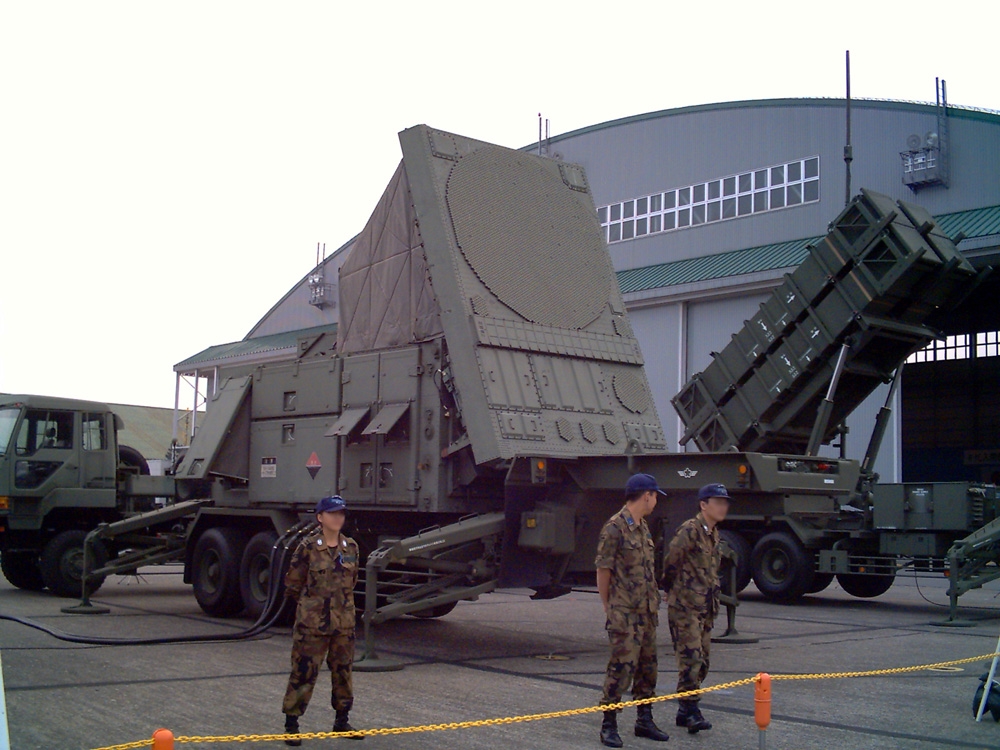
Patriot Missile Launcher & Radar (Image: Wiki Commons)
In the wake of ballistic missile tests carried out by North Korea, Japan is planning to accelerate improvements to its missile defenses.

Tokyo is likely to earmark some $1 billion of planned spending on the upgrade, three government sources said, according to Reuters. The plan follows a North Korean missile launch failure in the northwest town of Kusong on Saturday. 

Pentagon spokesman Gary Ross said, ""We strongly condemn this and North Korea's other recent missile tests, which violate UN Security Council resolutions explicitly prohibiting North Korea's launches using ballistic missile technology." 

24 September 2016

News Report: Japan Air Defense Force Rolls Out First F-35 Fighter Jet

A US Air Force F-35A Lightning II Fighter
The roll out of the first Japan Air Self Defense Force F-35 jet took place during a ceremony at a Lockheed Martin production facility.

WASHINGTON (Sputnik) — The roll out of the first Japan Air Self Defense Force (JASDF) F-35 jet took place during a ceremony at a Lockheed Martin production facility in Fort Worth, Texas, the defense giant said in a press release on Friday. 

"Senior Japanese and US government officials joined Lockheed Martin to celebrate the roll out of the first Japan Air Self Defense Force (JASDF) F-35A Lightning II," the release stated. 

JASDF Chief of Air Staff Gen. Yoshiyuki Sugiyama said the F-35A has remarkably advanced system and the highly sophisticated fifth generation fighter will bring a great development to air operations as a "game changer."

"In integration with current JASDF assets, it surely promises to enormously contribute to not only the benefit of our national defense but also regional stability," Sugiyama noted.

Japan’s F-35 program includes 42 F-35A conventional take-off and landing aircraft, acquired through the US government’s Foreign Military Sales program, the release pointed out. 

The first four aircraft are to be built in Fort Worth and the remaining 38 aircraft at the Mitsubishi Heavy Industries Final Assembly and Check-Out facility in Nagoya, Japan.

This story first appeared on Sputnik & is reposted here with permission.

12 September 2016

News Story: Contractors Hope for Movement in Japanese Defense Market

ATD-X Shinshin Stealth Fighter, development Prototype for the F-3
By: Paul Kallender-Umezu

TOKYO — Several nascent procurement plans offer some hope of increased revenues for Japan’s top military contractors, but the overall picture could remain business as usual without either a radical increase in defense spending post-2018, when Japan will release its new Mid-Term Defense Program (MTDP), or a major breakthrough in overseas weapons sales.

Japan’s defense budget request, unveiled in late August, requests 5.17 trillion yen ($50.6 billion), an increase of 2.3 percent over the current amount, and will include 100 billion yen ($980 million) to upgrade PAC-3 missile batteries to PAC-3 MSE and account for rising F-35 costs, according to local media reports.

But a radical rise in the budget or overseas sales success looks unlikely unless the prospect of an actual armed conflict with China emerges, or Japanese contractors and the Japanese defense establishment works much harder to sell internationally, according to analysts.

Japan’s defense procurement is governed by MTDPs that decide exactly how many and what type of weapon systems and programs will be required over a five-year period. Equipment is then bought by the Self-Defense Forces in small, annual lots. While the self-contained system provides a stable annual income for five years, it leaves little room or incentive for major contractors such as Mitsubishi Heavy Industries (MHI), Mitsubishi Electric Corp., NEC Corp., Kawasaki Heavy Industries (KHI), IHI Ltd. or Mitsui Engineering & Shipbuilding Co. to invest in major new weapon platforms, and it leaves them inexperienced in international contract bidding. 

A case in point is this year’s loss to French shipbuilder DCNS by an MHI and KHI-led consortium to convince the Royal Australian Navy to purchase 12 advanced Soryu-class submarines in a deal worth up to $40 billion, despite the vaunted stealth superiority of the Japanese submarines, and their advanced propulsion systems.

Read the full story at DefenseNews

24 August 2016

News Story: France Plans Inquiry into Scorpene Submarine Design Leak

A DCNS Scorpene class attack submarine (File Photo)
By: Pierre Tran

PARIS – France will conduct an inquiry into a leak to Australian newspapers of “sensitive” technical information on the Scorpene attack submarine being built for India, an unauthorized release which risks upsetting prospective client Canberra, naval shipbuilder DCNS said Aug. 23. 

DCNS was responding to The Australian newspaper, which has reported on a leak of 22,400 pages of company data on the six Scorpene boats under construction for the Indian Navy. 

“DCNS has been made aware of articles published in the Australian press related to the leakage of sensitive data about (the) Indian Scorpene,” the company told Defense News. 

“This serious matter is thoroughly investigated by the ...  French national authorities for defense security,” DCNS said. “This investigation will determine the exact nature of the leaked documents, the potential damages to DCNS customers as well as the responsibilities for this leakage,” the company said. 

An unauthorized disclosure of DCNS documents, stamped “Restricted Scorpene India” and dated 2011, comes at a delicate time for the company, which is in exclusive talks with Australia for a contract to design and build the Shortfin Barracuda A1 diesel-electric submarine. 

Australia picked DCNS after a competitive evaluation which attracted competing bids from Thyssenkrupp Marine Systems and a Japanese team comprising Mitsubishi Heavy Industries and Kawasaki Heavy Industries, backed by Tokyo. 

The leak of those sensitive documents could lead Australia and the US to question French reliability on maintaining security on “top-secret data entrusted to France,” The Australian reported. 

Read the full story at DefenseNews

06 July 2016

News Report: Chinese and Japanese Fighters Clash Over East China Sea

Mitsubishi F-15J Eagle (Image: Wiki Commons)
By: Sam LaGrone

Beijing claims a pair of Japanese fighters locked weapons radar on their planes over the East China Sea, while Tokyo denies the accusation.

During the June 17 incident, Chinese defense officials said two Japanese Air Self Defense Force (JASDF) Mitsubishi F-15J Eagles intercepted two Chinese Sukhoi Su-30 fighters over the East China Sea in the Beijing declared Air Defense Identification Zone near the Japanese-controlled Senkaku Islands.

“The Japanese fighter jets approached and warned the Chinese military aircraft, while the Chinese military aircraft did not leave. During the flight, the Japanese fighter jets came face to face with the Chinese military aircraft for many times. To avoid risks, the Japanese fighter jets released infrared jamming shells and then flew out of that airspace,” according to a Monday report by China Military Online quoting Ministry of National Defense officials.

“They even used fire-control radars to lock on the Chinese fighter jet.

03 May 2016

News Story: Australia’s Submarine Decision - Concerns Down Under, Celebrations in Paris

DCNS: Shortfin Barracuda Block 1A
Nigel Pittaway, Pierre Tran and Christopher P. Cavas

Australia’s choice of French shipbuilding giant DCNS to lead the country’s ambitious 12-ship submarine construction program caught most observers by surprise. The quasi-government-owned DCNS — which often competes in international naval programs but rarely scores a major win — had been seen as an also-ran in competition with Germany’s ThyssenKrupp Marine Systems (TKMS) and the Japanese government for the lucrative, Australian $50 billion (US $38 billion, €33.2 billion) Future Submarine contract.

But Prime Minister Malcolm Turnbull’s April 26 announcement that the decision was “unequivocally” in favor of the French design set champagne corks popping in Paris even as Australian politicians and commentators debated the choice.

“This was the absolutely unambiguous recommendation from the Department of Defence that came through the competitive evaluation process,” Turnbull said, adding that all three bids were of a “very high quality.”

The decision came as a disappointment to the Japanese, who had personally been invited to compete by former Prime Minister Tony Abbott in what Australian media referred to as a “Captain’s pick.” Some political analysts now predict a temporary cooling of relations between the two countries.

Turnbull, asked by reporters April 26 about the impact on Australian-Japanese relations, said his government remained committed to the regional alliance with Japan and the US.

“Both [Japanese] Prime Minister [Shinzo] Abe and I — and our respective governments and, I believe, our respective nations — are thoroughly committed to the special strategic partnership between Australia and Japan which gets stronger all the time,” Turnbull said. “It gets stronger day by day and we're committed to that. And we are committed to our strong trilateral strategic engagement between Australia, Japan and the United States.”

Andrew Davies, a senior analyst with the Australian Strategic Policy Institute, noted that while “our prime minister has said that he has been on the telephone to Prime Minister Abe … I expect this will cause a bit of a cooling in the Australia-Japan relationship for a while.”

All three contenders, Davies said, offered a good product.

“I don’t think there was a bad decision on the table,” he said. “I think that whatever we did, we would have ended up with a capable submarine. We were actually in a pretty happy circumstance, with three experienced submarine designers and builders competing.”

Read the full story at DefenseNews

News Story: France to build Australia subs but US to arm them

By Martin PARRY

Australia may have awarded France a bumper contract to build its next generation of submarines, but its highly secretive combat system will come from close ally the United States.

French shipbuilder DCNS last week beat off Germany and Japan to secure the Aus$50 billion (US$39 billion) deal to design and build the 12 subs, a scaled down conventionally-powered version of its 4,700-tonne Barracuda, to be named Shortfin Barracuda.

But it will have little to do with armaments and the complex combat system, which American defence giant Lockheed Martin -- which is in the running to be involved -- said was "essentially the eyes, ears and sword of the boat".

Australia has made clear it prefers the American AN/BYG-1 system, along with the joint Australian-US heavyweight Mark-48 torpedoes as its main weapon.

A decision has yet to be made on which company will be responsible for integrating the system -- essentially to detect, acquire and track targets -- with US defence contractor Raytheon also said to be a contender.

Given the close relationship and the fact that its technology will be used, Washington was always going to take a keen interest in Canberra's choice to build the boats.

Senior US officials were heavily involved in the competitive evaluation process and it was peer reviewed by retired US Navy Vice-Admiral Paul Sullivan and retired US Navy Rear Admiral Tom Eccles.

Washington reportedly at first favoured Tokyo over France or Germany for the sub build because of its existing close ties to the US Navy, along with regional security issues at a time of a rising China.

Japan expressed "deep regret" at not being selected, but analysts said the decision largely boiled down to capability.

Read the full story at SpaceWar

28 April 2016

News Story: Australian politics, Japan’s lack of experience behind failed bid to build subs

DCNS Shortfin Barracuda Block 1A
BY JESSE JOHNSON AND REIJI YOSHIDA

In a stunning reversal of fortunes, Japan — the onetime front-runner in the multibillion-dollar tender to build Australia’s next-generation submarine — failed in its bid to assemble the vessels, Australian Prime Minister Malcolm Turnbull announced Tuesday.

Turnbull said the submarines will be built in Australia by France’s state-controlled naval contractor DCNS.

“Defence Department experts were unequivocal — the French offer best represented the capabilities needed to meet Australia’s unique needs,” Turnbull said at a news conference.

The announcement, which came after media leaks revealed last week that Japan had effectively been eliminated from the bidding process, throws the future of Tokyo’s fledgling weapons-export program in doubt.

But the biggest question remains: How did Japan go from first to worst?

According to experts, a perfect storm of factors helped sink the deal, which would have been Japan’s first large-scale weapons export agreement in decades after the Cabinet of Prime Minister Shinzo Abe approved new rules in April 2014, ending an almost 50-year self-imposed ban on the practice.

While media reports had played up technological risks in buying Japan’s Soryu-class subs to replace its aging Collins-class vessels, experts said Australia’s domestic politics — with an election slated for July — likely played a more deciding factor.

“I think we cannot deny that domestic politics played a role, given the timing of the sub decision,” said Corey Wallace, a security policy analyst at the Graduate School of East Asian Studies at Freie Universitat, Berlin.

For Turnbull, who touted a mantra of “Australian jobs and Australian steel” during Tuesday’s news conference in the South Australian shipbuilding hub of Adelaide, the rapidly changing political environment was key, “given the difficulties the current administration might have in the state during the election,” Wallace said.

With the French pick, he secured firm promises that work on the subs would be done domestically with domestic materials — all ahead of the key poll.

Read the full story at Japan Times

News Story: Australia says French company wins huge submarine contract

CANBERRA – Australia announced Tuesday that French company DCNS has beat out bidders from Japan and Germany to build the next generation of submarines in Australia’s largest-ever defense contract.

DCNS, Germany’s ThysennKrupp Marine Systems and Japan’s Mitsubishi Heavy Industries were in the running to build 12 conventional submarines that the Australian navy expects will cost at least 56 billion Australian dollars ($43 billion).

Prime Minister Malcolm Turnbull said the French-designed submarines would be built in the Australian manufacturing hub of Adelaide.

“The French offer represented the capabilities best able to meet Australia’s unique needs,” Turnbull told reporters in Adelaide.

“I want to thank TKMS and the government of Japan for their proposals, which were of a very high quality. However, the recommendation of our competitive evaluation process … was unequivocal — that the French offer represented the capabilities best able to meet Australia’s unique needs,” he added.

Addressing the issue of the failed bidders, Turnbull said, “As far as Japan is concerned…both Prime Minister (Shinzo) Abe and I, and our respective governments and, I believe, our respective nations are thoroughly committed to the special strategic partnership between Australia and Japan, which gets stronger all the time.”

In Tokyo, Chief Cabinet Secretary Yoshihide Suga said the Japanese government “feels regret” that Australia decided to choose the French tender, but that Tokyo will continue to deepen security cooperation bilaterally with Canberra and trilaterally with Washington.

“Australia will continue to be a special strategic partner for our country,” the top government spokesman said at a news conference.

Read the full story at Japan Times