Showing posts with label SAARC. Show all posts

03 August 2017

News Report: Strange Bonhomie - India, Bhutan Attend PLA Event in Spite of China Standoff

Despite the Doklam standoff and reports of new incursions by Chinese troops, representatives of India and Bhutan attended an event organized by the Chinese Embassy in New Delhi to mark the 90th anniversary of the founding of the People's Liberation Army.

New Delhi (Sputnik) — With the face-off between Indian and Chinese troops in Doklam now threatening to extend into the third month, the representatives from India, Bhutan and other members of the South Asian Association for Regional Cooperation (SAARC) attended an event in New Delhi on Monday to mark the PLA’s 90th anniversary.

Oddly, the Indian participation at the event came amid reports of a fresh Chinese incursion in Uttarakhand state. India was represented by a high-ranking army official, while Bhutan's ambassador to India Vetsop Namgyel was also present along with the likes of Pakistani High Commissioner Abdul Basit. Envoys and military attaches of around 20 countries including Russia and the US also joined in.

India's home ministry confirmed on Tuesday that some 50 Chinese soldiers entered Uttarakhand's Barahoti on July 25. The PLA soldiers entered some one kilometer inside India and threatened some cattle herders to leave the area with their animals.

12 June 2017

News Story: SCO's membership opportunity for Pakistan to open up regional strategic options

by Muhammad Tahir

ISLAMABAD, June 11 (Xinhua) -- The Shanghai Cooperation Organization (SCO), an influential regional security and economic block, has formally admitted Pakistan as its member, which is seen as an important foreign policy milestone for the country.

All the heads of the family members of SCO congratulated Prime Minister Nawaz Sharif on this historic occasion at the 17th meeting of the Council of Heads of State of the SCO in Astana, Kazakhstan on June 9.

Sharif told the Astana summit that the SCO gives Pakistan a powerful platform for partnership to promote peace, build trust, and spur economic development for shared prosperity.

"The SCO's expansion takes place at an opportune time, as the Belt and Road Initiative transforms global economic landscape. And, in Pakistan, we are diligently implementing the China-Pakistan Economic Corridor (CPEC), which is the flagship of the Belt and Road Initiative. What's more, these mega projects will benefit the entire SCO community," he said.

It is widely believed that Pakistan's accession would allow its closer cooperation with other member states, especially in security and anti-terror cooperation as many of the regional countries currently face security challenges.

Another positive aspect of the development is that India has also secured the membership at the same time that could help the two bitter neighbors improve relations.

Read the full story at Xinhua

11 May 2017

News Report: Bhutan Blocks Key India-Led Road Project Over Climate Concerns

Indian Prime Minister Narendra Modi’s pet sub-regional project to boost road connectivity in India’s eastern flank hit a roadblock in Bhutan, the country’s closest ally, with the Bhutanese opposition parties objecting to the project on environmental grounds.

New Delhi (Sputnik) — Along with the recent launch of the South Asia Satellite, the Bangladesh-Bhutan-India-Nepal (BBIN) connectivity project is part of PM Modi’s foreign policy’s “Neighborhood First” approach. Aided with technical assistance from the Asian Development Bank, the BBIN envisages a seamless connection of roads to promote trade and commerce between member countries. Over five years, 30 road projects were to be implemented at a cost of $8 billion – to fill in and upgrade connectivity gaps.

India has been pushing for such a project within the South Asian Association for Regional Cooperation (SAARC) grouping where Pakistan too is a member and blocked a regional motor vehicles agreement during the 18th SAARC Summit in Kathmandu in November 2014.

At the Kathmandu summit, Modi had said that regional integration in South Asia would go ahead “through SAARC or outside it, among all of us or some of us”. But the BBIN project is already delayed by over eight months and may take more time to come to fruition.

06 May 2017

News Story: India launches South Asia satellite

Indian Space Rocket Launch (File Photo)
NEW DELHI, May 5 (Xinhua) -- India Friday launched the South Asia communication satellite from the spaceport of Sriharikota in the southern state of Andhra Pradesh.

State-owned Indian Space Research Organization's (ISRO) Geosynchronous Satellite Launch Vehicle (GSLV), carrying the satellite, called GSAT-9, lifted off from second launch pad at Satish Dhawan Space Center in Sriharikota at 4:57 p.m. local time.

ISRO, which has built the satellite for use by countries of the South Asian Association for Regional Cooperation (SAARC) region, said that GSAT-9 has been launched with an objective to provide different communication applications in Ku-band with coverage over South Asia.

Indian Prime Minister Narendra Modi announced the date of launch of the satellite in his monthly radio programme, Mann ki baat (talk from the heart) Sunday.

Read the full story at Xinhua

05 May 2017

News Story: India to launch South Asia satellite Friday

Indian Space Rocket (File Photo)
NEW DELHI, May 4 (Xinhua) -- India will launch the South Asia communication satellite, built for use by countries of the South Asian Association for Regional Cooperation (SAARC), on Friday.

State-owned Indian Space Research Organisation (ISRO), which has built GSAT-9, the South Asia communication satellite, said that preparations for the launch are going on smoothly and the satellite will take off from the southern spaceport of Sriharikota on Friday afternoon.

"We have the launch tomorrow (Friday) at 4.57 p.m. (local time)... All activities are going on smoothly," ISRO chief A.S. Kiran Kumar told the media.

Indian Prime Minister Narendra Modi announced the date of the satellite launch in his monthly radio program, Mann ki baat (talk from the heart), on Sunday.

Read the full story at Xinhua

20 April 2017

News Report: India Moves On Without Pakistan With Disaster Relief Satellite Project

An ISRO Rocket launch
Calling it a “gift to India’s neighbors,” Indian Prime Minister Narendra Modi announced the launch of the South Asia Satellite during the SAARC Summit in Kathmandu in 2014. While Pakistan is not part of the project, India's other neighbor, Bangladesh joined it recently. The satellite will aid in disaster preparedness.

New Delhi (Sputnik) – The Indian Space Research Organization (ISRO) will launch GSAT-9, the communication satellite, from its GSLV-09 rocket which will take off on May 5 from India’s Sriharikota spaceport. The satellite has a lift-off mass of 2,195 kg, and has 12 Ku-band transponders and is designed for a mission life of more than 12 years.

"It’s going up in the first week of May. Pakistan is not included in that as they did not want to be part of the project,” PTI quoted ISRO Chairman A.S. Kiran Kumar as saying. “That is why ISRO changed its name to South Asia satellite instead of the initial proposed SAARC satellite,” he added.

The idea was first mooted by PM Modi during his campaign as part of his policy to promote bonhomie among South Asian neighbors. His inauguration ceremony in May 2014 was attended by the leaders of all SAARC member nations, including Pakistan Prime Minister Nawaz Sharif.

03 April 2017

News Report: Is India Reconsidering its No-First-Use Nuclear Weapons Policy?

An unstable Pakistan-India border region and rumblings among former officials has given Islamabad reason to fear that New Delhi is reconsidering its long-held nuclear weapons doctrine of ‘no first use.'

Since obtaining nuclear weapons capability in 1967, India has traditionally subscribed to a purely defensive doctrine when it comes to the use of atom bombs.

However, Massachusetts Institute of Technology professor Vipin Narang asserted at the recent Carnegie International Nuclear Policy Conference in Washington DC that the long-standing defensive posture of New Delhi with regard to the use of nuclear weapons could be at an end and a new "pre-emptive" mentality put in its place, Business Insider reports.

Affirming these claims, General Ehsan ul Haq, a former chairman of Pakistan's Joint Chiefs of Staff Committee, has asserted that India is rethinking its nuclear posture, in what he suggests are only the latest in a series of increasingly provocative actions toward Pakistan.

02 March 2017

News Story: Pakistani diplomat assumes office as new SAARC chief

KATHMANDU, March 1 (Xinhua) -- Amjad Hussain B. Sial, a senior Pakistani diplomat, assumed the office of secretary general of the South Asian Association for Regional Cooperation (SAARC) here on Wednesday.

Sial has replaced Nepal's Arjun Bahadur Thapa whose three-year term as the SAARC chief expired on Tuesday.

He is the 13th secretary general of the regional bloc which was established in 1985.

Read the full story at Xinhua

08 February 2017

News Story: Sri Lanka calls on SAARC to unite to eliminate terrorism

COLOMBO, Feb. 7 (Xinhua) -- Sri Lanka's Defense Secretary Karunasena Hettiarachchi on Tuesday called on members of the South Asian Association for Regional Cooperation (SAARC) to unite in order to eliminate regional terrorism.

President Maithripala Sirisena had emphasized that every country of the SAARC should act with unity at a time when the very existence of SAARC might be threatened, Hettiarachchi said at a SAARC's panel discussion jointly organized by the Institute of National Security Studies of Sri Lanka and the High Commission of Pakistan in Sri Lanka.

South Asia is the poorest region and the number of people living below the poverty line rises each year, so there is a long way before the region reaches its target of poverty alleviation, Hettiarachchi said.

He added in the past few decades South Asia had witnessed instances of violence and extremism and it recently become an epi-center for terrorism.

Read the full story at Xinhua

30 January 2017

News Story: SAARC member states to meet in Kathmandu

KATHMANDU, Jan. 29 (Xinhua) -- Senior officials of the eight member states of the South Asian Association for Regional Cooperation (SAARC) will meet this week in the Nepalese capital Kathmandu to attend the Programming Committee, officials said on Sunday.

This will be the first meeting of the SAARC member countries since the postponement of the 19th SAARC summit in Islamabad last November.

During the meeting, SAARC member states will discuss a number of issues including the budget of the SAARC Secretariat and five regional centers of SAARC, officials of the Nepalese Ministry of Foreign Affairs said.

Nepal, current chair of the SAARC, had decided to postpone the SAARC Summit until further notice after four nations Afghanistan, Bhutan, Bangladesh and India decided to boycott the summit in Islamabad scheduled for November 9 and 10 last year.

Read the full story at Xinhua

28 January 2017

News Story: Pakistan hopes to host postponed regional summit soon

ISLAMABAD, Jan. 27 (Xinhua) -- Pakistan on Friday expressed the hope that a regional summit, which was scheduled to be held in Islamabad November but was postponed over India boycott, will be held soon.

Adviser to the Prime Minister on Foreign Affairs Sartaj Aziz talked to Arjun Bahadur Thapa, the outgoing secretary general of South Asian Association for Regional Cooperation (SAARC), in Islamabad that India "impeded the SAARC process and violated the spirit of the SAARC Charter."

"Pakistan remains committed to hosting the 19th SAARC Summit at Islamabad at the earliest so that the objectives of regional cooperation under the SAARC umbrella can be pursued more vigorously," Aziz said, according to a Foreign Ministry's statement.

Thapa emphasized the need to overcome the difficulties that the organization faced and expressed the hope that the 19th SAARC Summit would be held in Islamabad as soon as possible.

Read the full story at Xinhua

07 December 2016

News Report: Tensions Between India, Pakistan Undermining Regional Alliances

Ayesha Tanzeem

ISLAMABAD, PAKISTAN — Tensions between India and Pakistan are spoiling efforts to try to tackle the region's security problems, as the nuclear-armed neighbors have difficulty finding issues on which they can work together.

A regional conference that India recently hosted on Afghanistan fell hostage to a "[b]lame game, rather than constructive engagement," wrote Imtiaz Alam, a Lahore-based journalist and analyst, in his column for the English language The News.

Another regional conference, scheduled for last month in Pakistan, was canceled because of discord with India.

"I don't think you can have any kind of effective regional cooperation in which these two countries are involved until the India-Pakistan confrontation is resolved," said Ajai Sahni, executive director of the Institute for Conflict Management in New Delhi.

South Asia is not a well-integrated region, and few countries in the region are working together to address common problems. One of the few alliances developed to change that has struggled to perform. Under the best of circumstances, organizations like the South Asian Association for Regional Cooperation, or SAARC, have fought to be effective.

"Every meeting of SAARC used to turn into a confrontation between India and Pakistan," said Sahni.

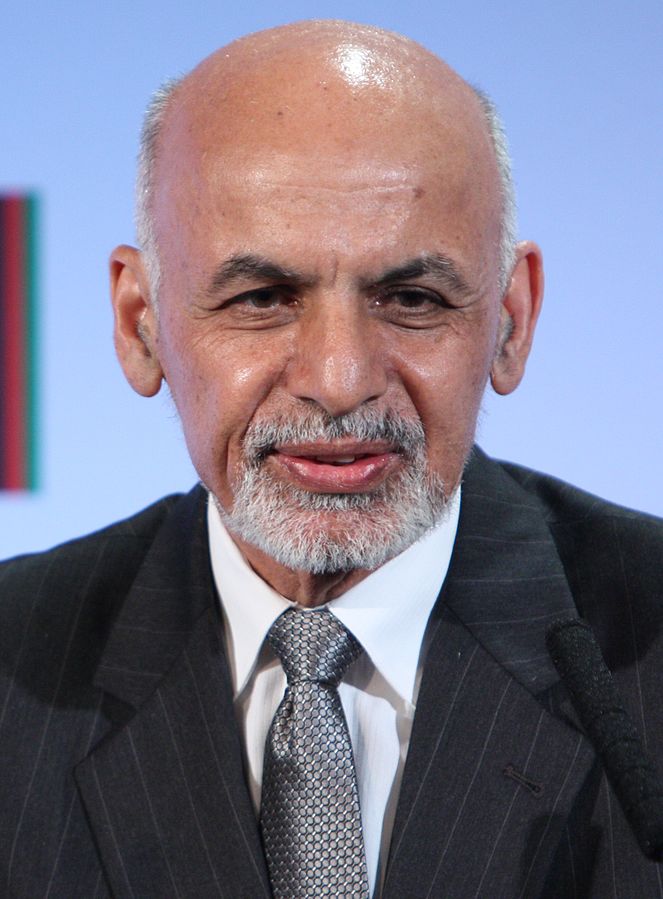
News Story: It's Pakistan's Turn To Open The Door - Ghani

Ashraf Ghani  (Image: Wiki Commons)
Speaking at the Heart of Asia Conference in India this week, Afghan President Ashraf Ghani sharply criticized Pakistan's role in abetting terror in the region, alleging that without Pakistani state support, the Taliban "wouldn't survive beyond a month".

Following this speech he had an exclusive interview with the Hindu newspaper, and spoke of his frustration with Pakistan, friendship with India and hopes for the region.

Asked why he singled out Pakistan at the conference, Ghani said: "I engaged Pakistan, I went there and not only visited with the civilian leadership but with the military leadership.

"I even went to their GHQ (military headquarters), because each country has their own distinct place for institutions.

"My message was that there was a window. It could be broadened to a door or a corridor, or it could shut. We did everything to ensure peace with Pakistan.

"2015 and 2016 have been extremely difficult years and the violence that has been inflicted on our people needs to be registered. To be quiet when people are dying is not acceptable. I am an elected political leader, I need to reflect my people's sentiment. Because the question of terrorism is not just a threat to us but to Pakistan and the Asian region, and hence the need for a public statement," he said.

Asked whether he thought the "window" of opportunity was indeed closed, he said Pakistan needs to open it. "We opened the window, now it's closed, so it's their turn to open it."

Read the full story at TOLOnews

03 December 2016

News Story: Afghan Peace, Stability To Top Agenda at Heart of Asia Summit

Istanbul Process/Heart of Asia Summit
by Sayed Tariq Majidi

Ministry of Foreign Affairs (MoFA) said Friday that the issue of peace and stability in Afghanistan will dominate the agenda of the 6th Heart of Asia Conference scheduled to be held in Amritsar, in India on Saturday.

Delegations from 40 nations, along with regional and international organizations are set to attend the key summit amid the deteriorating security situation in Afghanistan and the ongoing tension between India and Pakistan over Kashmir.

MoFA deputy spokesman Khairuallah Azad stated Friday that the summit would help deal with the ongoing crisis in the region particularly the war against terrorism and militancy.

"The Heart of Asia conference where Afghanistan will be on top of the agenda provides an appropriate platform for regional countries to discuss the regional problems, insecurity and terrorism. At the sidelines of the summit, Afghan officials will also hold bilateral and multilateral talks with officials from other countries," said Azad.

Meanwhile, the Pakistan government has confirmed that Sartaj Aziz advisor to the prime minster on foreign relations will attend.

"India has been instrumental in scuttling the SAARC summit, and Pakistan despite all negativity of India is going to participate in the Heart of Asia Conference," the foreign office spokesman Nafees Zakaria said at a weekly press briefing.

Read the full story at TOLOnews

24 November 2016

News Report: SAARC Bears the Weight of India-Pakistan Rivalry

It is not a good idea for India to promote BIMSTEC at the cost of SAARC even though hurdles by Islamabad to enhance regional cooperation has frustrated India as well as other South Asian countries

New Delhi (Sputnik) — Over 30 years after South Asian Association for Regional Cooperation was formed, a regional integration framework has become a victim to the rivalry between its two biggest members.

This may be forcing member states to search for alternatives. Many SAARC member countries, including India, are particularly exasperated with Islamabad playing spoilsport within the regional grouping. 

India’s top foreign ministry official echoed that sentiment on Monday. Making an indirect reference to Pakistan, Indian Foreign Secretary S. Jaishankar said that “blocking every possible initiative” under SAARC is a hugely damaging approach and will force countries of the region to look for other options like the Bay of Bengal Initiative for Multi-Sectoral Technical and Economic Cooperation (BIMSTEC) to boost regional cooperation. 

News Story: (Pakistan) New Committee Formed To Draw Up India-Kashmir Policy

A high-level committee has been established to formulate a "doable and sustainable India-Kashmir policy," Dawn News reported.

Pakistan's advisor to the Prime Minister, Sartaj Aziz, told the Senate on Tuesday that the committee will consist of senior officials from the ministries of defense, interior and information, the Military Operations Directorate, Inter-Services Intelligence (ISI) and the Intelligence Bureau (IB).

He also said the committee will be headed by foreign secretary Aizaz Chaudhry and that it could co-opt additional members if required.

Aziz also said that a committee, chaired by the information secretary, had been formed to prepare fact sheets, counter India's propaganda campaign and design a media strategy to continuously highlight the Kashmiri freedom struggle.

He said that the Ministry of Information Technology had been asked to prepare a comprehensive strategy to highlight the Jammu and Kashmir dispute via social media.

Read the full story at TOLOnews

19 November 2016

News Report: Did China Derail India’s Regional Connectivity Plan?

Bhutan has put a hurdle in India’s ambitious road connectivity plan involving Bangladesh, Bhutan, India and Nepal after its Parliament failed to ratify the necessary legislation. Analysts detect Chinese hand in persuading the legislators to withhold approval.

New Delhi (Sputnik) – Bhutan, the most acquiescing of India’s neighbors, has derailed Indian Prime Minister Narendra Modi’s plans for seamless connectivity among its neighbors except Pakistan.

Bhutan had gone by India’s wishes by boycotting the SAARC summit in Islamabad and turning up for the BIMSTEC meet on the sidelines of the BRICS summit in Goa. 

But it seems to have developed second thoughts on an Modi’s pet sub-regional connectivity project. The upper house of Bhutan Parliament did not pass the motor vehicle pact which is essential for the Bangladesh, Bhutan, India and Nepal (BBIN) Agreement. 

There have been unverified charges of a Chinese hand. Beijing has repeatedly tried to engage Bhutan and both sides recently held talks to resolve their border dispute. 

25 October 2016

News Report: India Delays Launch of Dedicated South Asia Satellite Amid Tension With Pakistan

Indian Space Rocket Launch (File Photo)
India's launch of a satellite on behalf of the South Asian Association for Regional Cooperation (SAARC) was announced two years ago by Prime Minister Narendra Modi during the SAARC summit in Kathmandu. However, the launch date has been postponed indefinitely due to disagreements between India and its neighbor over ongoing violence in Kashmir.

New Delhi (Sputnik) – The Indian Space Research Organization (ISRO) says it won't be possible for it to carry out the much-anticipated launch of the SAARC satellite as scheduled in December. Instead, it plans to launch its ambitious Geosynchronous Satellite Launch Vehicle (GSLV) Mark – III. An ISRO official told Sputnik that it is certain that the launch of the South Asian satellite will be delayed by more than a month, although the exact date for the launch of GLSV Mark-III remains to be finalized.

22 October 2016

News Report: India Remains Committed to South Asian Association for Regional Cooperation

India has reiterated its stand that government’s priority is to promote closer cooperation and economic integration in the South Asian region.

New Delhi (Sputnik) — India has refused the speculation about South Asian Association for Regional Cooperation (SAARC) without Pakistan due to the heightened tension between India and Pakistan. 

“It’s government’s priority to promote closer cooperation and economic integration in our region. Our interest in SAARC remains intact but our concerns is that the connectivity, trade, including MFN and cooperation that SAARC requires and the terror free atmosphere needed for those initiatives is not there due to the actions of one country in our neighborhood. That is why all SAARC countries wrote to the Chair, Nepal, saying in one voice that in the current atmosphere it is not possible to participate in the proposed SAARC Summit in Islamabad,” Ministry of External Affairs Spokesperson, Vikas Swarup told media. 

He further added that, “We remain committed to SAARC and its principles. Our intention is not to throw out the baby with the bath water. It is in cleaning up the bath water.” 

The SAARC Summit which was to be held in Islamabad was postponed after India, Bangladesh, Sri Lanka, Afghanistan, Nepal, Bhutan backed out from the Summit. 

It was speculated that India would try to create a new South Asian regional grouping without Pakistan as a part of India’s policy to isolate Pakistan after the terror attack in Uri on September 18 in Jammu and Kashmir.

This story first appeared on Sputnik & is reposted here with permission.

20 October 2016

News Story: Karzai Criticizes U.S' Anti-Terror Mission In Afghanistan

Former Afghan President Hamid Karzai
(Image: Wiki Commons)
by Mir Aqa

Former President Hamid Karzai has once again criticized the United States' anti-terror mission in Afghanistan, saying that Washington has failed to ensure peace and stability in Afghanistan.

"U.S also shares a great deal of responsibility for ignoring sanctuaries for years and for supporting those who provide support for extremism. We hope US will change its policy and not use pragmatic interests of its country at the cost of promotion of extremism elsewhere in the world," Karzai said in an interview with India's CNN-NEWS18.

He said U.S should be doing the same against terror havens beyond Afghanistan but, here he made a differentiation between people of Pakistan who want peace and terror groups and those who support them.

Read the full story at TOLOnews