Showing posts with label South Sudan. Show all posts

12 August 2017

News Story: Defense minister refuses demand for new probe over logs of Japanese peacekeepers & New defense minister deflects criticism over alleged cover-up of GSDF logs

Defense minister refuses demand for new probe over logs of Japanese peacekeepers

Minister of Defense Itsunori Onodera has refused an opposition party demand for a renewed probe into whether his predecessor Tomomi Inada received a report on Japanese peacekeeping logs when their existence was being covered up.

The logs concerning Japanese peacekeepers dispatched to South Sudan were the focus of an out-of-session meeting of the House of Representatives Committee on Security on Aug. 10. On the question of whether Inada received a report from the Ground Self-Defense Force (GSDF) on the existence of log data, Hiroshi Marui, an official at the Inspector General's Office of Legal Compliance of the Defense Ministry, echoed previous explanations by stating, "The testimonies of those involved were shaky, and we were unable to identify a statement."

Unconvinced by this response, the main opposition Democratic Party (DP) demanded a renewed investigation, but Onodera rejected the request, saying a thorough investigation had already been carried out.

Read the full story at The Mainichi

--
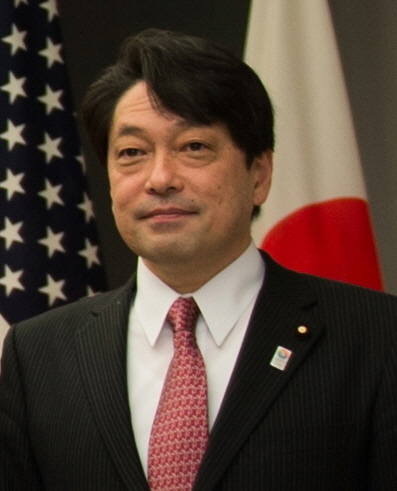
Defense Minister Itsunori Onodera
(Image: Wiki Commons)
New defense minister deflects criticism over alleged cover-up of GSDF logs

Defense Minister Itsunori Onodera calmly fended off opposition attacks during an out-of-session Diet meeting on Aug. 10 over his ministry's cover-up of daily activity logs kept by Ground Self-Defense Force troops that were engaged in United Nations peacekeeping operations in South Sudan.

While the meeting was held in response to allegations that Onodera's predecessor, Tomomi Inada, was involved in the cover-up, neither the former defense minister, who stepped down in July over the scandal, nor Prime Minister Shinzo Abe, who appointed her, was present at the meeting. Onodera and his ministry's bureaucrats just reiterated statements in line with the recently released results of an investigation into the scandal by the Inspector General's Office of Legal Compliance of the Defense Ministry -- thereby covering for Inada while triggering a fierce opposition backlash.

"The results of the investigation were very severe on the Defense Ministry and the Self-Defense Forces (SDF), and I view them as something we should reflect upon," Onodera said at the outset of the meeting in the House of Representatives Committee on Security. It was his first appearance in a Diet question and answer session as defense minister since July 2014, after he was reappointed to the post in the Cabinet reshuffle on Aug. 3.

Read the full story at The Mainichi

31 July 2017

News Story: Special inspection report finds legal violation in GSDF activity logs scandal

The Defense Ministry violated the freedom of information law by not disclosing the daily activity logs of Ground Self-Defense Force (GSDF) troops participating in U.N. peacekeeping operations in South Sudan, a report by the ministry's special inspection office has shown.

In a report it released on July 28, the Inspector General's Office of Legal Compliance of the Defense Ministry, which investigated the scandal, confirmed that there was a violation of the Act on Access to Information Held by Administrative Organs by not disclosing the daily activity logs while they existed in the GSDF.

The report stated that even after the logs were found within the GSDF following the nondisclosure decision, Administrative Vice Minister of Defense Tetsuro Kuroe and others decided not to disclose the data, underscoring the tendency within the Defense Ministry and the Self-Defense Forces for a systematic cover-up.

The first request to disclose the daily activity logs was filed in July last year, when the consistencies between Japan's five principles for participating in U.N. peacekeeping operations, such as an agreement on a cease-fire, and a major armed clash near the South Sudan capital of Juba, where the GSDF unit was operating, were being called into question.

Read the full story at The Mainichi

News Story: Despite resigning, doubts remain over Inada's role in suspected cover-up

Tomomi Inada (Image: Wiki Commons)
Tomomi Inada resigned as defense minister on July 28, but doubts over her involvement in a suspected cover-up concerning the daily activity logs of Ground Self-Defense Force (GSDF) troops serving as U.N. peacekeepers in South Sudan still remain.

In the end, Prime Minister Shinzo Abe essentially had no choice but to accept Inada's resignation -- following criticism and doubts from both his own Liberal Democratic Party (LDP) and opposition parties over his unwavering support for his gaffe-prone Cabinet colleague.

Furthermore, the scandal involving peacekeepers' logs, in which the GSDF opposed Inada who has lost control over the force, has raised questions about how to secure civilian control over the Self-Defense Forces (SDF).

At a press conference on July 28, during which Inada announced her resignation, she said, "I repeatedly conveyed my thoughts sincerely (to Abe). I let him know that I was thinking of stepping down," making it clear that she consulted regularly with Abe about the timing of her resignation.

Inada's announcement on this day fell about one month after she made a gaffe on June 27 during the build up to the Tokyo Metropolitan Assembly election, when she told voters, "I would like to ask for your support on behalf of the Defense Ministry and the SDF."

According to a source close to the LDP, Inada immediately recognized that she had phrased her request badly, and seemed to hint at resignation even then, using the words, "I feel a sense of responsibility (concerning the gaffe)." However, Abe encouraged her to stay on, and she refrained from throwing in the towel. Apparently, she had also been warned, "You don't quit this job unless the prime minister tells you to."

Read the full story at The Mainichi

29 July 2017

News Story: Questions raised over Abe's responsibility after defense chief Inada forced to resign

Prime Minister Shinzo Abe
Prime Minister Shinzo Abe's decision to practically force Defense Minister Tomomi Inada out over allegations of a cover-up involving peacekeepers' logs will inevitably call into question the prime minister's responsibility for appointing her.

Inada handed Abe her resignation letter on July 28 and is set to step down before the prime minister reshuffles his Cabinet, which is expected on Aug. 3.

The decision comes only a few days after the prime minister dismissed opposition parties' demands that Inada be discharged from her post. "I'd like her to fulfill her responsibility by thoroughly investigating the case and implementing measures to prevent a recurrence," Abe told an out-of-session meeting of the House of Councillors Budget Committee on July 25. Inada also told her aides that she would stay on until Aug. 3.

However, some news outlets recently reported the existence of a handwritten note by a Ground Self-Defense Force (GSDF) officer stating that the organization had informed Inada of the existence of the logs on Feb. 13.

Defense Minister Tomomi Inada
(Image: Wiki Commons)
The news reports have damaged the credibility of Inada's claim that she had never been notified of the logs, sparking calls within the ruling coalition urging her to step down.

Inada decided to step down apparently at the strong urging of Abe. After Inada and Defense Ministry Inspector General Michio Kitamura briefed Abe on July 27 of the ministry's special inspection on the alleged cover-up, the prime minister and the defense minister are believed to have discussed whether she should resign.

Read the full story at The Mainichi


Related Links:

28 July 2017

News Story: GSDF chief to resign over alleged coverup of activity logs

Gen. Toshiya Okabe (Image: Wiki Commons)
TOKYO (Kyodo) -- The Ground Self-Defense Force's chief of staff has decided to resign following allegations of a coverup of logs that recorded the daily activities of Japanese ground troops serving as U.N. peacekeepers in South Sudan, a government source said Thursday.

Gen. Toshiya Okabe declined to comment Thursday morning on whether he intends to step down. He was among top officials who decided not to reveal the existence of the logs, which the Defense Ministry had previously said were discarded, according to other government sources.

The development came as the Defense Ministry continues to be rattled by a series of media reports over the alleged coverup, which is said to have also involved Defense Minister Tomomi Inada. Inada has denied the allegations.

The ministry has conducted an internal probe into the scandal. Preparations are under way to announce the outcome Friday.

Read the full story at The Mainichi

24 July 2017

News Story: Inada scandal over SDF logs puts Abe administration in dire straits

Defense Minister Tomomi Inada
Just days after the government denied Defense Minister Tomomi Inada's role in an alleged cover-up of daily logs filed by Ground Self-Defense Force (GSDF) peacekeepers, it made a dramatic about-face by stating that the defense minister, state minister and parliamentary vice minister will be subject to an investigation, which is now underway.

The Defense Ministry's Inspector General's Office of Legal Compliance has been carrying out a probe into the concealment of logs kept by GSDF personnel during a peacekeeping mission in South Sudan last year. Now that Inada and two other top ministry officials are subject to the probe in what is effectively a renewed investigation, the timeframe for releasing the probe results has been pushed back, badly derailing the government's plans to put the controversy in the rearview mirror as swiftly as possible.

Chief Cabinet Secretary Yoshihide Suga told a July 20 press conference, "I believe people should naturally be held accountable for the things that have been reported in the media."

Previously, the government had planned on releasing the results of the Inspector General's Office of Legal Compliance probe on July 21, ahead of off-session budget committee deliberations set to take place in both chambers of the Diet on July 24 and 25. The aim was to release an investigative report that refuted Inada's involvement, and then allow Inada to participate in the deliberations herself and deny culpability, so that the controversy could quickly be put to rest.

Such plans crumbled when reports emerged that Inada had been informed by senior GSDF officials that they would not release the logs, as well as other allegations pointing to her involvement in what is believed to have been a cover-up.

Read the full story at The Mainichi

20 July 2017

News Story: Gov't denies defense chief's reported role in alleged coverup of logs

Japanese Defense Minister Tomomi Inada
(Image: Wiki Commons)
TOKYO (Kyodo) -- The government on Wednesday denied a report alleging Defense Minister Tomomi Inada allowed officials to conceal the existence of controversial activity logs of Japanese peacekeepers in South Sudan, following claims by her ministry that the records had been discarded.

"Ms. Inada has said no such event took place" as reported, Chief Cabinet Secretary Yoshihide Suga told a regular news conference, while declining to comment further on the grounds that an internal investigation is pending on the matter.

Inada said the same day she neither authorized the concealment of the logs nor approved a plan to withhold the fact that they existed.

Kyodo News reported the defense minister's role in the suspected coverup on Tuesday, citing government sources.

The Defense Ministry had said the Ground Self-Defense Force had discarded the logs recorded by its members taking part in a U.N. peacekeeping mission in the fledging African country.

Digital data from the logs were later found, but top officials decided at a meeting on Feb. 15 they would not uncover this fact, with Inada agreeing to the concealment, according to the sources.

On top of that, the defense minister had been briefed on the discovery of the logs by a senior official of the Ground Staff Office of the GSDF on Feb. 13, two days before the meeting, government sources said Wednesday.

Tetsuo Kuroe, the ministry's top bureaucrat who reportedly participated in the Feb. 15 meeting along with the minister, said he had no recollection of the meeting, saying he did not believe Inada had given such approval.

Read the full story at The Mainichi


29 May 2017

News Story: Japan troops complete pullout from U.N. mission in S. Sudan

AOMORI, Japan (Kyodo) -- All of the Japanese Ground Self-Defense Force members engaged in a U.N. peacekeeping mission in South Sudan have returned to Japan, marking the completion of their five-year operation in the conflict-torn country, the Self-Defense Forces said Saturday.

The withdrawal of the most recently deployed 350-member unit took place in stages based on the Japanese government's decision announced in March. With no SDF unit serving in active U.N. missions, Tokyo is now considering other ways to contribute to international peace-building efforts.

The unit was mainly composed of members of the GSDF's 9th Division headquartered in the city of Aomori. The last contingent of 40 troops arrived at Aomori Airport in northern Japan on Saturday.

The GSDF unit has drawn particular attention back home because the members were the first to have been assigned expanded roles under controversial security legislation that Japan put into force in March last year. But the unit ended up without performing the new roles during their stay that began from around December.

Read the full story at The Mainichi

27 May 2017

News Story: Last Japanese peacekeepers pull out of South Sudan

JUBA, South Sudan (AP) -- The last Japanese peacekeepers with a United Nations mission have left South Sudan. The team was Japan's first with an expanded mandate to use force if necessary to protect civilians and U.N. staff.

Japan decided in March to end its peacekeeping mission in the East African nation where civil war is well into its fourth year.

The 350-member Japanese team had arrived in November and focused on road construction.

Read the full story at The Mainichi

20 May 2017

News Story: UK defence ministry supports transfer of field hospital to Vietnam

London (VNA) – UK military officers have pledged to facilitate the transfer of a level-2 field hospital in South Sudan to Vietnamese control while meeting with Vietnamese officers who are visiting the UK from May 16-20.

The Vietnamese delegation, led by Sen. Lt. Gen. Pham Ngoc Minh – Deputy Chief of the General Staff of the Vietnam People’s Army, had working sessions with the UK Ministry of Defence and the General Staff of the British Armed Forces, and visited the Army Medical Services Training Centre in York. The two ministries agreed to strengthen cooperation in peacekeeping.

At the Permanent Joint Headquarters, Chief of Joint Operations Lt. Gen. John Lorimer affirmed that leaders of the General Staff of the British Army and the army’s medical department will support the transfer of the UK’s level-2 field hospital in South Sudan to Vietnam’s army.

Sen. Lt. Gen. Minh told Vietnam News Agency that their visit to the UK Ministry of Defence and the General Staff of the British Armed Forces aimed to reiterate Vietnam’s readiness to take over the field hospital from the UK in the second quarter of 2018.

The Vietnamese side also asked the UK to support Vietnam’s takeover of the hospital in the United Nations, he added.

Read the full story at VietnamPlus

20 April 2017

News Story: First batch of GSDF members return after S. Sudan peacekeeping mission

Ground Self-Defense Force (File Photo)
The first batch of Ground Self-Defense Force (GSDF) members, who participated in U.N. peacekeeping operations in South Sudan, returned to Japan on April 19 after completing their mission.

The 70 members have returned to the GSDF's Aomori camp, where they were greeted warmly by their families and co-workers, after arriving at Haneda Airport in Tokyo on the morning of April 19.

Read the full story at The Mainichi

18 April 2017

News Story: Japan troops to start leaving S. Sudan to end U.N. peacekeeping

JUBA (Kyodo) -- Japan's Ground Self-Defense Force troops will start leaving South Sudan on Monday as part of the process to end their five-year participation in the ongoing U.N. peacekeeping mission there.

The first group of troops to head home consists of about 70 personnel of the 350-member GSDF unit that has stayed in South Sudan from around December last year. All members of the unit are expected to return by the end of May.

The Japanese government announced the pullout of the troops from the U.N. mission in South Sudan in March, saying the construction of roads and other infrastructure by SDF members in the conflict-torn country produced significant results.

The currently deployed troops have drawn particular attention back home as they are the first to have been assigned new security roles under controversial security legislation that Japan put into force in March last year.

The legislation expands the SDF's role overseas so that Japan can more actively contribute to regional and global peace, but it has aroused concerns that the changes erode Japan's postwar pacifist Constitution and may embroil Japanese troops in overseas military actions for the first time since World War II.

Read the full story at The Mainichi

04 April 2017

Think Tank: Sea, air, land and space updates (4-Apr-2017)

Zoe Glasson, Sophie Qin, Madeleine Nyst and Patrick Kennedy

Sea State

Indonesia is continuing with its program of literally blowing up illegal fishing boats in its waters. On Saturday, authorities simultaneously destroyed 81 foreign vessels at 12 different locations, in what Maritime and Fisheries Minister Susi Pudjiastuti called ‘a victory for Indonesia’s war against illegal fishing’. Since ramping up its anti-poaching efforts in 2014, Indonesia’s special maritime task force Satgas 115 has captured 317 illegal boats, primarily from Vietnam, the Philippines and Malaysia; all have been confiscated and destroyed. The Indonesian government has linked the crackdown with its plan to revive its fisheries industry and re-establish itself as a maritime power.

Israeli defence electronics firm Elbit Systems has completed operational testing of its Seagull Unmanned Surface Vessel. The Seagull can carry out underwater mine hunting and clearing, as well as anti-diver and anti-submarine missions, enabling navies to use a single platform (with interchangeable modules) for different purposes. Its strategic value isn’t bad either—according to the brochure, Seagull’s ASW capability ‘returns the asymmetric advantage’ to those seeking to counter threats from terrorists, who are increasingly using midget submarines to target bigger and more powerful forces.

Ever heard of Project Combo? If not, you can read all about the US Navy’s Cold War plan to develop a secret communication system by mimicking sea mammal noises here.

29 March 2017

News Story: New Zealand military aircraft to be deployed to Middle East

An RNZAF C-130 (Image: Wiki Commons)
WELLINGTON, March 28 (Xinhua) -- The military is to deploy a C-130 Hercules transport aircraft to the Middle East to help in operations in Afghanistan, Iraq and other countries, Defence Minister Gerry Brownlee said Tuesday.

The aircraft was deploying in response to a request from the Australian Defence Force to provide additional capacity during a period of high operational tempo, Brownlee said in a statement.

"I am pleased the New Zealand Defence Force can provide this assistance, considering the significant support we receive from the Australian Defence Force in Iraq and New Zealand's other deployments in the region," Brownlee said.

Read the full story at Xinhua

25 March 2017

News Story: Japan's defense minister orders SDF troops' withdrawal from South Sudan

TOKYO, March 24 (Xinhua) -- Japan's Defense Minister Tomomi Inada on Friday ordered Japan's Self-Defense Forces (SDF) to withdraw from a United Nations (UN) peacekeeping mission in South Sudan by the end of May.

Following a meeting of senior defense ministry officials, Inada made the announcement saying that a milestone had been reached and the SDF personnel taking part in the UN peacekeeping activities had been highly regarded by UN and the government of South Sudan.

Inada said the ministry is making preparations for the SDF troops to pull out, adding that their safe return is now of utmost importance.

The government has said it planned to pull its troops out of South Sudan earlier this month, amid controversy regarding the expansion of the forces' operational scope.

Legal groups and scholars believed the forces' expanded mandate contravenes Japan's pacifist Constitution.

Read the full story at Xinhua

22 March 2017

News Story: SDF peacekeepers caught up in about 50 road accidents in S. Sudan - ministry

TOKYO (Kyodo) -- Japanese Ground Self-Defense Force personnel participating in a U.N. peacekeeping mission in South Sudan have been involved in about 50 traffic accidents since the start of their deployment in 2012, the Defense Ministry said Monday.

The ministry released the figures for the first time following an accident the same day in the capital Juba, in which a vehicle carrying members of the GSDF and a civilian on a motorcycle collided.

The local man suffered fractures, while none of the Japanese troops were hurt, according to the ministry.

A Defense Ministry official said the accident tally has been released now because of "heightened public interest in the SDF's activities in South Sudan and the fact that the civilian sustained fractures."

Read the full story at The Mainichi

20 March 2017

News Story: Abe vows beef-up of defense, calls N. Korea missiles 'serious threat'

Prime Minister Shinzo Abe
TOKYO (Kyodo) -- Prime Minister Shinzo Abe on Sunday reiterated his intention to strengthen Japan's defense capability, citing the "severe" security environment surrounding Japan, including North Korea's recent test-firing of missiles.

Speaking at the National Defense Academy, Abe said North Korea's launching of four ballistic missiles on March 6, all of which fell within or near Japan's exclusive economic zone in the Sea of Japan, posed "a very serious situation in terms of our country's security."

"As the security environment becomes severe, we must enhance our own defense capability and aim to expand the role we can play," the premier said at a graduation ceremony at the academy in Yokosuka, southwest of Tokyo.

Read the full story at The Mainichi

News Story: Japanese peacekeepers briefly detained by South Sudan military

TOKYO (Kyodo) -- Japanese Self-Defense Forces personnel taking part in a U.N. peacekeeping mission in South Sudan were briefly detained by South Sudanese government forces on Saturday, the Japanese Defense Ministry said.

Five Ground Self-Defense Force soldiers were detained for around an hour before being released unharmed. Their weapons were confiscated but soon returned, the ministry said.

According to the ministry, South Sudanese troops detained the Japanese peacekeepers as part of a weapons search, unaware that U.N. peacekeepers are exempt from being searched.

The South Sudan government has apologized to the Japanese government for the "misunderstanding."

The Japanese government said on March 10 it will end the SDF's participation in the mission in South Sudan at the end of May, citing a diminishing need for the troops' help in building infrastructure.

Read the full story at The Mainichi

18 March 2017

News Story: Defense Ministry 'suits' ordered S. Sudan peacekeeping report status be hidden - source

Defense Ministry bureaucrats ordered the Self-Defense Forces (SDF)'s Joint Staff Office not to publicly reveal it had copies of daily reports from Japanese peacekeepers in South Sudan, a ministry source has told the Mainichi Shimbun.

The Japanese unit in South Sudan uploads daily status reports to the Ground Self-Defense Force (GSDF)'s Central Readiness Force (CRF) via a bulletin board on the GSDF command and control system. SDF personnel who had access to the reports had downloaded it within the GSDF.

The Defense Ministry initially stated in December last year that past reports had been "discarded and do not exist" after receiving a freedom-of-information request. Defense Minister Tomomi Inada ordered the ministry to look again. The Joint Staff Office, which is responsible for SDF unit operations including peacekeeping, confirmed late that month that it had digital copies of the reports, and the GSDF ascertained in mid-January that it, too, had the reports.

According to the Mainichi's ministry source, Chief of the Ground Staff Lt. Gen. Toshiya Okabe and other upper echelon GSDF officers were informed that the GSDF had digital versions of the reports. However, the source says "the suits" -- as SDF personnel refer to defense ministry bureaucrats -- ordered the Joint Staff Office not to reveal that copies of the reports existed. The order to hide the information appears likely to be an attempt to avoid contradicting the ministry's previous decision not to release the reports because they ostensibly did not exist.

Read the full story at The Mainichi

17 March 2017

News Story: GSDF saved copies of 'discarded' S. Sudan peacekeeping reports

Daily reports from Japan's peacekeeping force in South Sudan that the Defense Ministry claimed had been discarded were in fact saved within the Ground Self-Defense Force (GSDF) all along, it has been learned.

The ministry initially claimed the reports no longer existed within the GSDF, before declaring that digital copies were found in Joint Staff Office computers. It has now been learned that the files were on machines in the GSDF itself, potentially sparking suspicions of deliberate concealment.

The Japanese unit in South Sudan uploads daily status reports to the GSDF's Central Readiness Force (CRF) via a bulletin board on the GSDF command and control system. According to a Defense Ministry source, access to the reports is limited to select ministry staff and GSDF personnel, and they were downloaded as reference material.

Read the full story at The Mainichi