Showing posts with label SEPECAT Jaguar. Show all posts

17 August 2017

News Story: India Jaguar fighters face upgrade challenges

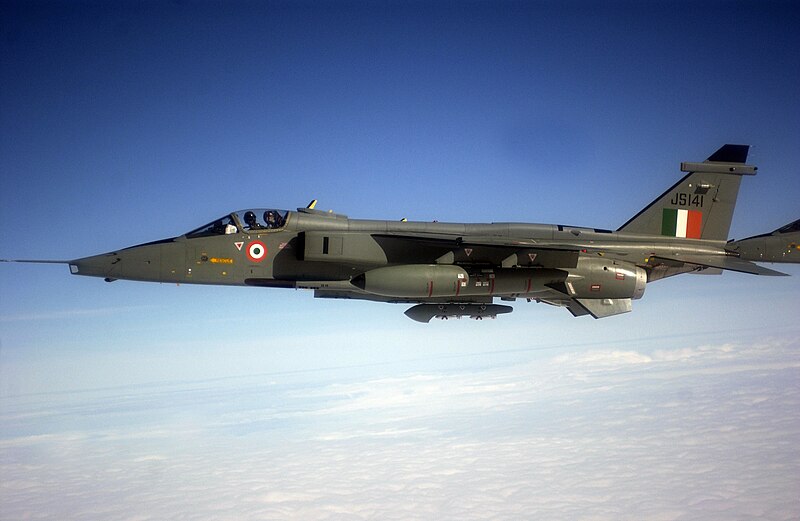
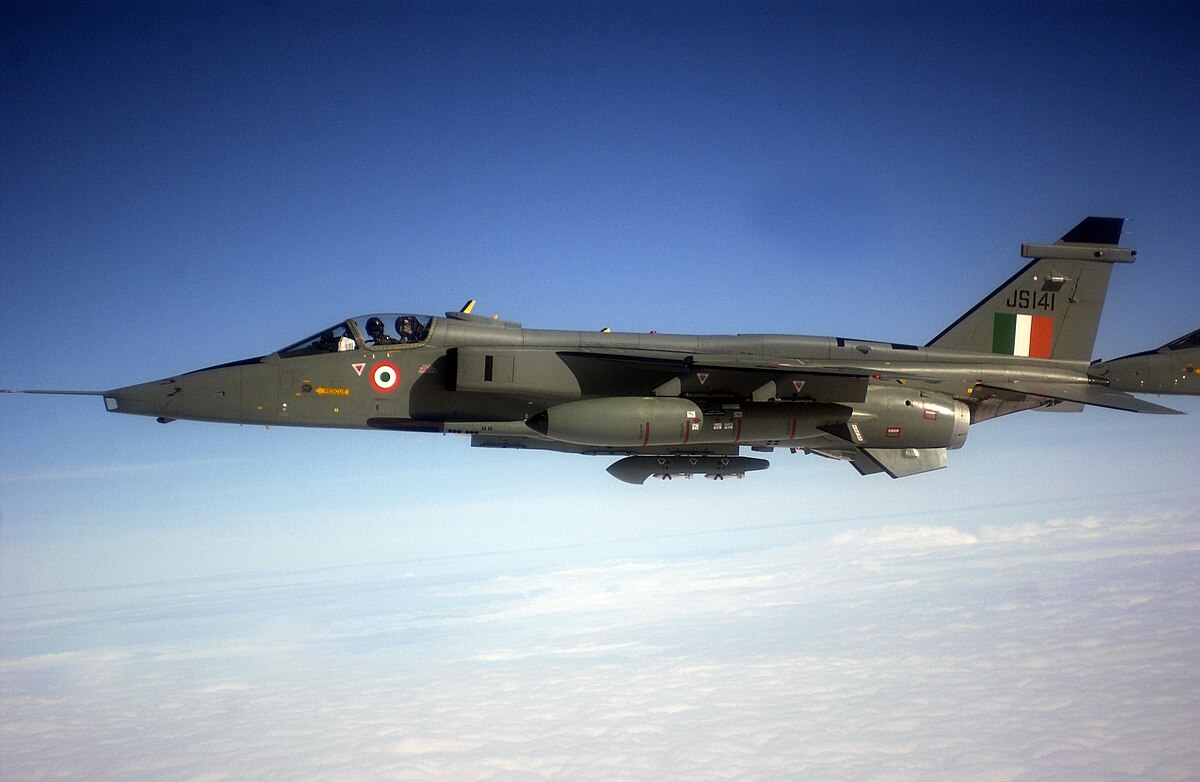
Indian Air Force SEPECAT Jaguar (Image: Wiki Commons)
By: Vivek Raghuvanshi

NEW DELHI ― The Indian Air Force’s British-made Jaguar aircraft completed its maiden flight last week after integrating an advanced active electronically scanned array radar, but service officials say the Jaguar upgrade program is moving slowly and that there’s uncertainty regarding the mounting of proposed new engines.

The upgrade program of the Jaguar fighter, undertaken by India’s state-owned Hindustan Aeronautics Limited, includes mounting new engines from Honeywell of the U.S., but an executive with HAL said it’s ”still awaiting the go-ahead from the Indian Air Force for the new engines.”

“Not only is the upgrade program slow, but the autopilots on the Jaguar aircraft are malfunctioning,” the IAF official said.

Furthermore, only 18 autopilot systems out of a required 108 could be integrated on Jaguar aircraft, according to a second Air Force official. India contracted the purchase of 35 autopilots from Thales of France on the Jaguar, which were received between December 2006 and January 2008.

Due to contractual restrictions, HAL could integrate only 18 out of the 35 autopilots up until March 2017.

And the autopilots installed on the aircraft are functioning at a suboptimal level because a vital component ― the Auto Pilot Electronic Unit, which maintains the flight path of the aircraft ― required repairs by Thales, which are expected to be completed in 7 to 26 months.

The HAL executive placed blame: ”Upgrade of autopilot has been slow because of delays in supplies by French defense companies.”

The Jaguar with the new AESA radar made its maiden flight Aug. 10, but the Air Force will carry out six more tests before induction.

Read the full story at DefenseNews

01 August 2017

News Report: Indian Air Force’s Jaguar Still Performs Poorly After 20 Years, Says Auditor

SEPECAT Jaguar (Image: Wiki Commons)
Amid talk of a fresh purchase of French Jaguar fighters, India’s top-level auditor has sounded the alarm over Jaguar jets now in service with Indian Air Force. The Comptroller and Auditor General (CAG) has revealed deficiencies in the aircraft, which hampers its capabilities and may have led to accidents.

New Delhi (Sputnik) – A total of 11 Jaguar aircraft met with accidents in the last 17 years. The Indian Air Force (IAF) had lost three Jaguar aircraft and one pilot since April 2008 due to pilot disorientation/human error whereas the loss of another four Jaguar aircraft was under investigation.

18 July 2017

News Story: India begins talks for French Jaguar fighters

Indian Air Force SEPECAT Jaguar (Image: Wiki Commons)
By: Vivek Raghuvanshi

NEW DELHI — India has begun discreet negotiations with France for the purchase of 31 grounded strike fighters previously used by the French Air Force.

The French government made the offer of sale for the Jaguar fighters about six months ago, and India is actively pursuing the opportunity, according to a top Indian Ministry of Defence official.

The offer will be actively discussed during an official visit to France July 17-20 of India's Air Force chief, Air Chief Marshal Birender Singh Dhanoa, the MoD official noted.

The government official refused to comment on the price offered by France for the Jaguar fighters, but did say India is actively considering acquiring them after proper refurbishment.

During his visit, Dhanoa will inspect the license production of Rafale aircraft for India at Dassault Aviation manufacturing facilities and will fly a sortie in a Rafale aircraft.

Read the full story at DefenseNews

28 April 2017

News Report: Rolls-Royce Opens Service Center for Defense Forces in India

Rolls-Royce has opened a new defense service delivery center in Bengaluru. The first-of-its-kind center, outside the US and the UK, will provide localized engineering support and solutions for the Indian defense forces and public sector enterprise Hindustan Aeronautics Ltd (HAL).

New Delhi (Sputnik) – The center was officially inaugurated by Dominic McAllister, British Deputy High Commissioner, Bengaluru, with the senior leadership of Rolls-Royce from the region and the wider Asia-Pacific region present.

“We put our customers at the heart of our business, and the opening of our first Service Delivery Centre in India demonstrates our commitment to be closer to our customers to ensure they get the best possible aftermarket support and outstanding customer service which they have come to expect from us,” Lee Doherty, Senior Vice-President- Defence, Asia-Pacific at Rolls-Royce, said in a statement.

Rolls-Royce is looking to improve capability and provide faster front-line support for over 750 engines in a range of aircraft used by the defense as well as commercial aircraft such as the C-130J, Hawk advanced jet, Embraer and Jaguar, among others.

10 February 2017

News Report: India’s Anti-Ship Missile Maiden Hits Target in Arabian Sea

Il-38 (Image: Wiki Commons)
India is currently carrying out its biggest inter-service exercise to test its combat readiness of the combined fleets of the Indian Navy, and the assets of the Indian Air Force, Indian Army and the Indian Coast Guard.

NEW DELHI (Sputnik) — India has successfully test-fired anti-ship missile KH35 from upgraded IL 38 SD, maiden firing from the aircraft, in Arabian Sea.

“IL 38 SD aircraft has undertaken this maiden firing post modification and midlife upgrade, thereby demonstrating its highly potent Anti Ship Missile (AShM) attack capability. The development ratifies Indian Navy’s ability to ensure long range sea denial around Indian Sub continent,” reads a statement released by Indian Navy.

28 January 2017

India: Navy’s Theatre Level Exercise, TROPEX 17, gets underway

The Indian Navy’s Annual Theatre Readiness Operational Exercise (TROPEX) got underway on 24 Jan 17. The month long exercise will have ships and aircraft of both the Western and Eastern Naval Commands, as also assets from the Indian Air Force, Indian Army and the Indian Coast Guard exercising together. The exercise is being conducted off the Western Seaboard. The last edition of the exercise was conducted in January 2015.

TROPEX has grown in scale and complexity over the years and will see participation of major surface combatants and air assets of the Indian Navy including the aircraft carrier Vikramaditya, nuclear submarine Chakra, Landing Platform Dock (LPD) Jalashwa, the recently commissioned destroyer Chennai, the P-8I long range maritime reconnaissance and anti-submarine warfare aircraft operating alongside SU-30 MKI, Jaguars, AWACS, IL-78 Flight Refuelling Aircraft of the Indian Air Force and Infantry units of the Indian Army. The exercise will be conducted in various phases, both in harbour and at sea encompassing the various facets of war-fighting and combat operations.

TROPEX 17 assumes special significance in the backdrop of the current security scenario. The exercise is aimed at testing combat readiness of the combined fleets of the Indian Navy, and the assets of the Indian Air Force, Indian Army and the Indian Coast Guard. It will also strengthen inter-operability and joint operations in a complex environment.

16 December 2016

News Report: Restricted India Tenders for AESA Radars for Home Grown Combat Jet

Currently, Indian Air Force does not have any fighters that have new age AESA radar. However, Jaguar’s DARIN III version are being equipped with AESA radar by Israel’s ELTA.

New Delhi (Sputnik) — India has issued a global tender for the purchase of about 100 Active Electronically Scanned Array (AESA) radars for its 83 home-assembled light combat aircraft Tejas MK 1. The tender was issued on Wednesday to limited global firms from Russia, France, Israel and the USA.

"[A] limited tender was floated by the Aviation Research and Design Centre on Wednesday to five global aviation technology firms and a sixth one is being considered. These firms are from Russia, France, Israel and the US," a highly placed source of Hindustan Aeronautics ltd (HAL) told Sputnik. 

08 October 2016

News Story: Indian Air Force Confirms Jaguar Re-engine Plan

Indian SEPECAT Jaguar (Image: Wiki Commons)
by Neelam Mathews

The Indian Air Force (IAF) has confirmed that it will re-engine its fleet of Anglo-French Jaguar strike aircraft. The plan was discussed by IAF Chief of Air Staff Arup Raha during his annual press conference this week. Raha was enthusiastic about the recently confirmed acquisition of Dassault Rafales, but cautious on progress with the Fifth Generation Fighter Aircraft (FGFA) project with Russia.

“Technology is improving so rapidly that weapon systems and platforms soon become redundant,” said Raha. This phenomenon is being addressed through the IAF’s Long Term Perspective Plan, a 15-year scheme that is divided into three five-year spans. Raha said that while most previous procurement “had been process-driven; it is now changing to outcome-driven.”

Honeywell is to supply 270 F125IN turbofan engines to replace the twin Rolls-Royce Adour Mk 821s on apporoximately 120 Jaguars. The F125 is 600 pounds lighter and should enable 25-percent-shorter hot-and-high takeoffs. Raha said India’s Jaguars have become overweight and underpowered because of avionics and systems upgrades. Honeywell will first be required to conduct a trial modification of the Jaguars with the new engines. The plan was first mooted in 2012.

Read the full story at AINonline

27 June 2016

News Story: India Clears Ultra Light Howitzers Buy from US

BAE Systems M777 Howitzer
Vivek Raghuvanshi

NEW DELHI –  India cleared the purchase of 145 Ultra Light Howitzers at a cost of around $750 million from US, as well as bulk production of home-grown 18 Dhanush artillery guns and several other defense deals.

Defense Minister Manohar Parrikar, who chaired the June 25 Defence Acquisition Council (DAC), reviewed multiple defense proposals, including new defense schemes valued at $4.1 billion, a Ministry of Defense (MoD) official said.

Earlier this month, US issued a letter of acceptance, and today DAC reviewed the terms and conditions and approved the program. MoD will soon send India's response and the process for the payment of the first installment will begin.

BAE Systems of the US will also discharge offsets valued at $200 million, taken up independently.

Read the full story at DefenseNews

20 May 2016

News Story: IAF Upgrades Delayed by Duty on Imported Engines and Parts

Vivek Raghuvanshi

NEW DELHI — The Indian Air Force (IAF) has been hit by customs duties on aircraft engines and related spare parts leading to one MiG 29-K aircraft being stranded at Goa naval air base, said an IAF official in private.

Spare engines and related equipment have also been stranded at various other airports for nonpayment of customs duties, the official said.

IAF was caught unaware by the new requirement, which began April 1, but arrangements are being made to find funds to get the equipment released in the near future, the IAF official said.

Finance Minister Arun Jaitley in his 2016-17 budget allocations lifted blanket customs duty exemptions on several defense goods, including aircraft engines and related parts.

The move requiring payment of customs duties is in line with the "Make in India" policy, said an official of the Ministry of Defense (MoD), but it has caught the user [IAF] by surprise.

Read the full story at DefenseNews

11 March 2016

News Story: Indian AF Says New Indigenous Missile Will Be Too Heavy

Indian Tejas (LCA)
By Vivek Raghuvanshi

NEW DELHI — India's Air Force has raised objections to the indigenous new generation anti-radiation missile (NGARM) currently in development.

The 60-kilometer-range NGARM, developed by state-owned Defence Research and Development Organisation (DRDO), will undertake flight trials in three months but Indian Air Force (IAF) officials say the missile is too bulky.

DRDO is developing NGARM for the service's Mirage-2000H, Jaguar, Su-30 MKI and the upcoming Light Combat Aircraft.

"NGARM being developed by DRDO weighs around 140 kilograms and is too heavy, whereas IAF wants only such missiles that do not weigh over 100 kilograms; this one will not meet our requirement," said a senior Air Force official.

"DRDO has never kept us in the loop about this missile, and we are not sure if we will at all use it," the IAF official said, adding, "infrared radiation seeker technology from Russia will make it too bulky."

Read the full story at DefenseNews

23 February 2016

News Story: HAL, BAE Eye Joint Venture for Hawk, Jaguar Work

An Indian Air Force Hawk Trainer Aircraft
By Vivek Raghuvanshi

NEW DELHI — BAE  Systems and India's state-owned Hindustan Aeronautics Ltd. (HAL) are considering establishing a joint venture  to co-produce variants of the Hawk trainer, upgrade the Jaguar aircraft and establish a partnership focused on logistics and producing spares in India.

T. Suvarna Raju, HAL chairman and managing director, said, "We are in active dialogue with BAE Systems for exploring long-term opportunities to provide upgrades and logistics and spares support solutions for both Hawk trainer and Jaguar combat aircraft [which are already license-produced by HAL] for a worldwide market."

HAL and BAE have also decided to showcase a static display of the Combat Hawk  in the Aero India air show in 2017, Raju  added.

Dave Corfield, head of Hawk India, Military Air & Information, BAE Systems, said, "Our goal is to combine our strengths with HAL’s to co-develop and co-produce a more capable version of Hawk for use in India and also to export from India to the worldwide market. A joint study by BAE Systems and HAL has indicated significant market potential for this class of aircraft. This more capable version of the Hawk is the Advanced Combat Hawk, or 'Dream Hawk,' combining improved maneuver performance with laser designation, precision smart weapons and state-of-the-art synthetic training."

An Indian Air Force  official said they have not considered ordering the Combat Hawk.

Read the full story at DefenseNews

07 October 2015

Editorial: India’s Air Force Will Field 42 Combat Squadrons by 2027

By Franz-Stefan Gady

The Indian Air Force chief is optimistic about expanding the number of IAF combat squadrons.

The head of the Indian Air Force, Air Chief Marshal Arup Raha, recently announced that the Indian Air Force (IAF) will in all likelihood be able to deploy 42 combat squadrons by 2027 the Business Standard reports.

“We are looking forward to building up our combat fleet to 42 squadrons by the end of the 14th plan, by 2027. I think it is possible, it is viable, there are a lot of options available with us, and discussions are already on,” he told reporters last Saturday in New Delhi.

The Indian Air Force currently operates 32 (some sources say 35) combat squadrons. However, the Indian government’s 35-member Standing Committee on Defense said in a report this April that the number of squadrons could drop as low as 25 (See: “The Indian Air Force’s Big Problem: Not Enough Pilots”).

The reason for the decline in active combat squadrons is that aircraft (primarily MIG-21) are more rapidly retired or are lost in crashes than replacements are available. Next to MIG-21 squadrons, the IAF’s 5 MIG-27 and 7 Jaguar squadrons will also have to be slowly phased out over the next years since the aircraft will have reached the end of their service life in the 2020s.

Read the full story at The Diplomat

13 August 2014

Editorial: India - Diversifying Arms Purchases

MQ-9 Reaper (File Photo)

By Siddharth Sivaraman and Rajeswari Pillai Rajagopalan

India should increase its military imports from the U.S., particularly drones.

India needs to diversify its arms imports. Although it is one of the world’s largest arms importers, most of India’s weapons come from Russia. Over the last five years, according to the Stockholm International Peace Research Institute (SIPRI), Russia accounted for about $15 billion of the $20 billion in arms that India imported, or about three-quarters. That level of dependence is unhealthy: One of the reasons why India bought the Jaguar Bomber from a European consortium in the 1970s was the concern that India was becoming dependent on Soviet weapons.
India began diversifying when it awarded a contract for advanced air force fighters to France, though negotiations for the Rafale have dragged on interminably and have yet to be completed. India also buys some significant quantities of Israeli weapons.
But New Delhi has not sufficiently tapped the U.S., without question the country with the most advanced military technology in the world. Although the U.S. is India’s second largest source of weapons, it accounted for less than seven percent of India’s arms imports in value terms over the last five years. It is time that India diversified its arms sources by getting more of its weapons from the U.S., especially when cutting-edge technology is involved, as in advanced drones.
There are multiple advantages for India in making better use of U.S. weapons options. First, New Delhi could negotiate the development of state-of-the-art drone technologies, in which the U.S. has the most experience, with drones – or unmanned aerial vehicles (UAVs) – such as the MQ-8 Fire Scout and/or long-range drones such as the MQ-9 Reaper or even the older Predator B. This would add a new dimension to UAVs with persistent capabilities for India, and it would also help kick start investments in this sector. 

Read the full story at The Diplomat

03 July 2014

Editorial: US to Sell India Submarine-Launched Missiles

Harpoon Anti-Ship Missile (Image: Wiki Commons)

By Zachary Keck

On Tuesday, the Pentagon announced Washington will be selling India submarine-launched Harpoon missiles.

On Tuesday, the U.S. announced its intention to sell India submarine-launched missiles.
The announcement was made in a press release by the Defense Security Cooperation Agency (DSCA). “The State Department has made a determination approving a possible Foreign Military Sale to India for UGM-84L Harpoon missiles and associated equipment, parts, training and logistical support for an estimated cost of $200 million,” the press release said. It noted that it sent a certification of delivery to Congress on July 1, 2014.
DSCA elaborated on the sale: “The Government of India has requested a possible sale of 12 UGM-84L Harpoon Block II Encapsulated Missiles, 10 UTM-84L Harpoon Encapsulated Training missiles, 2 Encapsulated Harpoon certification training vehicles, containers, spare and repair parts, support and test equipment, personnel training and training equipment, publications and technical data, U.S. Government and contractor engineering and logistics support services, and other related elements of logistics support.”
The press release went on to say that India’s Navy would use the new missiles on its Shishumar class submarine (Type-209). It also noted that India’s Navy already employs Harpoon missiles on its P-8I maritime patrol aircraft and its Air Force uses the same missiles on its Jaguar aircraft. DCSA said that selling India the submarine-launched Harpoon missiles would enhance India’s ability to defend critical sea lines of communication without altering the basic balance of power in the region. 

Read the full story at The Diplomat

02 July 2014

USA: Possible Foreign Military Sale to India for Harpoon Missiles


WASHINGTON, Jul 1, 2014 – The State Department has made a determination approving a possible Foreign Military Sale to India for UGM-84L Harpoon missiles and associated equipment, parts, training and logistical support for an estimated cost of $200 million. The Defense Security Cooperation Agency delivered the required certification notifying Congress of this possible sale on July 1, 2014.

The Government of India has requested a possible sale of 12 UGM-84L Harpoon Block II Encapsulated Missiles, 10 UTM-84L Harpoon Encapsulated Training missiles, 2 Encapsulated Harpoon certification training vehicles, containers, spare and repair parts, support and test equipment, personnel training and training equipment, publications and technical data, U.S. Government and contractor engineering and logistics support services, and other related elements of logistics support. The estimated cost is $200 million.

This proposed sale will contribute to the foreign policy and national security of the United States by helping to strengthen the U.S.-India strategic relationship and to improve the security of an important partner which continues to be an important force for political stability, peace, and economic progress in South Asia.

15 February 2014

News Story: Indian Navy begins month-long wargame off East Coast

Indian Navy P-8I Poseidon ASW Aircraft (File Photo)

NEW DELHI (PTI): Nuclear submarine INS Chakra and the newly-inducted P-8I anti-submarine warfare aircraft are taking part in Navy's month-long wargames which started on Feb. 13 along the Eastern seaboard near Visakhapatnam.

During the exercise, both the Eastern and the Western fleet ships and assets are taking part in a networked environment after the launch of a surveillance satellite of the Navy, Naval officials said in New Delhi.

"Navy Chief Admiral D K Joshi along with Eastern naval Commander Vice Admiral Anil Chopra embarked the combined fleets at sea off the East coast on Thursday," a Navy release said.

Amongst the large number of participating units are the Aircraft Carrier INS Viraat and the nuclear submarine INS Chakra.

Read the full story at Brahmand

11 February 2014

India: Modernisation of IAF

Tejas (LCA) Fighter (File Photo)

There have been delays in the indigenous development of Light Combat Aircraft (LCA-Tejas) and the Project to co-develop Fifth Generation Fighter Aircraft (FGFA). The LCA has attained Initial Operational Clearance (IOC) on 20th December, 2013 paving its way to induction into IAF. In the FGFA project the PD phase has been completed in June, 2013. 

The MiG-21 and MiG-27 aircrafts of the IAF have already been upgraded and currently equip 14 combat squadrons. These aircraft, however, are planned for being phased out over the next few years and will be replaced by the LCA. Steps have been initiated for upgradation of other fighter aircrafts like MiG-29, Jaguar, Mirage-2000; transport aircraft like AN-32 and Mi-17/Mi-17 IV helicopters. 

This information was given by Minister of State for Defence Shri Jitendra Singh in a written reply to Shri Dharmendra Yadav and Shri Anandrao Adsul in Lok Sabha today. 

26 July 2013

News Story: (Indian) Def Min nod to Rs 4,000 cr acquisition proposals for services

CGI of India's Indigenous Aircraft Carrier (File Photo)

NEW DELHI (PTI): Defence Ministry on Wednesday cleared acquisition proposals worth around Rs 4,000 crore for armed forces, including procurement of French-origin Milan 2T anti-tank missiles for the Indian Army to do away with shortage of such weapons in the force.

A meeting of the Defence Acquisition Council (DAC) chaired by Defence Minister A K Antony on Wednesday also sanctioned an additional Rs 300 crore for Navy's long-delayed Indigenous Aircraft Carrier (IAC), under construction at the Cochin Shipyard Limited, sources told PTI here.

For the Indian Air Force, the DAC approved procurement of two more Aerostat radars worth over Rs 1,000 crore for keeping an eye on the enemy activities deep inside its territory, they said.

Read the full story at Brahmand

18 March 2013

News Story: Indian Air Force kicks off Operation 'Live Wire' exercise

IAF Jaguar Fighter (Image: Wiki Commons)

JAISALMER (BNS): The Indian Air Force (IAF) has started its biggest aerial exercise code named operation 'Live Wire' by deploying all its frontline aircraft, including the Su-30MKI, Jaguar, Mirage 2000 ,all MiG series platforms, mid-air refuellers, C-130J and Airborne Warning and Control System (AWACS), from Sunday.

Live Wire is IAF's biggest exercise in a decade following the recently conducted 'Iron Fist' held in the deserts of western Rajasthan.

During the wargame, the IAF will practice for fighting both conventional and non-conventional warfare which would including manoeuvres to carry out surgical strikes.

Read the full story at Brahmand