Showing posts with label Avionics. Show all posts

11 August 2017

News Story: India to finalize fifth-gen fighter deal

Russian T-50 PAK FA, base design for India's FGFA
By: Vivek Raghuvanshi

NEW DELHI — India is going ahead with the acquisition of a fifth-generation fighter aircraft with Russia after an internal committee of the Ministry of Defence recommended that the purchase of the aircraft will (NOT) duplicate India’s plan to develop a homegrown advanced medium combat aircraft, according to an MoD official.

“The internal committee, headed by retired Indian Air Force Air Marshal Simhakutty Varthaman, after studying technical parameters, has recommended India to acquire the Indo-Russian FGFA,” the MoD official said, referring to the fifth-generation fighter aircraft.

On the road ahead, the official said, a final agreement between India and Russia will be prepared that will pave the way for the release of over $5 billion toward India’s share to develop the FGFA.

A preliminary development agreement was signed in 2010 between Russia’s United Aircraft Corporation and India’s Hindustan Aeronautics Limited, or HAL, when India paid its 50 percent share of $250 million toward initial development cost.

“A firm order of 108 will be put in the final draft of the agreement being prepared,” said an IAF official.

India and Russia have yet to finalize the work share for the production and technology transfer.

“Defence Research and Development Organization has been involved regarding the work share and transfer of technology, whereas the IAF is involved in finalizing the operational requirements and the number of fighters,” said Daljit Singh, retired Indian Air Force air marshal and defense analyst.

“The involvement [of both Russia and India] is huge in the FGFA program, wherein HAL will be doing many systems like flight controls, avionics with inputs of DRDO and other establishments,” said the MoD official.

The level of transfer of technology by the Russians to India has been a sticky point between the two countries.

Read the full story at DefenseNews

04 August 2017

News Report: Sukhoi PAK-FA Could Power India’s Fifth Gen Fighter

As a high-level committee clears the deck for signing the second stage of the Indo-Russia fifth generation fighter aircraft (FGFA) project, it is expected the Indian Air Force (IAF) will receive the fifth generation fighter just when 11 squadrons of obsolete MiG-21s and MiG-27s are set to retire in 2024.

New Delhi (Sputnik) — Industry people involved with the decade-long project expect the deal to be signed in the coming months as most contentious issues have been resolved including costs. Early conclusion of the R&D contract will pave way for testing Indo-Russia FGFA fighter to the IAF in the next three years with the flying platform made by the Hindustan Aeronautics Limited (HAL). The FGFA will be based on the Sukhoi-designed PAK-FA.

"The IAF FGFA would be powered by the second stage engine of the PAK-FA which is still under development. PAK-FA is being developed using NPO Saturn AL-41F1 engine, which will also power the initial production lot. The second stage engine, unofficially referred to as Product 30, is expected to start flight trials in end-2017," Vijainder K. Thakur, senior editor of Geopolitics and former IAF squadron leader, said.

03 August 2017

News Story: Thailand’s Air Force requests funds to cover F-5 Tiger II upgrades

RTAF Northrop F-5E Tiger II (Image: Wiki Commons)
By: Mike Yeo 

MELBOURNE, Australia — The Royal Thai Air Force has requested Cabinet approval for funds to upgrade four more Northrop Grumman F-5 Tiger II interceptors, adding to an earlier contract to upgrade 10 aircraft, the service said.

The Air Force also provided additional details of the upgrade, which includes new data links, multi-mode radars, new weapons and electronic warfare systems. The upgraded aircraft, known as the F-5T Super Tigris, will also incorporate structural improvements that the Air Force says will add approximately 15 years to its service life.

The upgrade to the four aircraft in this latest phase will cost $96.1 million, which will see the installation of the Link-T tactical data link, connecting the aircraft to the Air Force’s command-and-control network and improving the networking capability of the type.

A new multi-mode radar, which the service says will provide the Super Tigris with beyond-visual-range capability, will be fitted, which will also have a synthetic aperture mode for high-resolution ground mapping. The radar type was not disclosed, although it is believed to be Elta ELM-2032 from Israel. Leonardo had also previously offered its Grifo X-band multi-mode radar to Thailand.

Thailand’s F-5 interceptors were already using the Israeli Rafael Python-4 agile short-range air-to-air missile and Elbit DASH IV helmet-mounted sight, and will now also add the Rafael Litening 3 targeting pod and Skyshield electronic countermeasures pod to its inventory. The communications suite of the Super Tigris will also be replaced with the jam-resistant HAVE QUICK II frequency-hopping sets.

Read the full story at DefenseNews

01 August 2017

News Report: India Clears the Path for Its 5th Generation Fighter

A Russian T-50 PAK FA, design base for India's FGFA
Almost four years after completing the primary work for fifth generation fighter aircraft (FGFA) project, Indian defense ministry may soon clear its research and development phase.

New Delhi (Sputnik) — A high-powered expert committee examining the feasibility and benefit of the project submitted its report on July 7 and ruled out any conflict between the DRDO’s advanced medium combat aircraft (AMCA) project. The five-member expert committee was set up by former Defense Minister Manohar Parrikar in early 2017 after some concerns were raised by the ministry officials about the project.

“That the committee found no conflict between the FGFA and AMCA projects is a positive sign, though I cannot understand why this issue was not resolved years back as this project has been in the now-on-now-off mode for close to a decade. Be that as it may, it does pave the way for further movement but it cannot be a foregone conclusion that the R&D contract will be signed anytime soon,” Amit Cowshish, former financial advisor to Indian defense ministry, said.

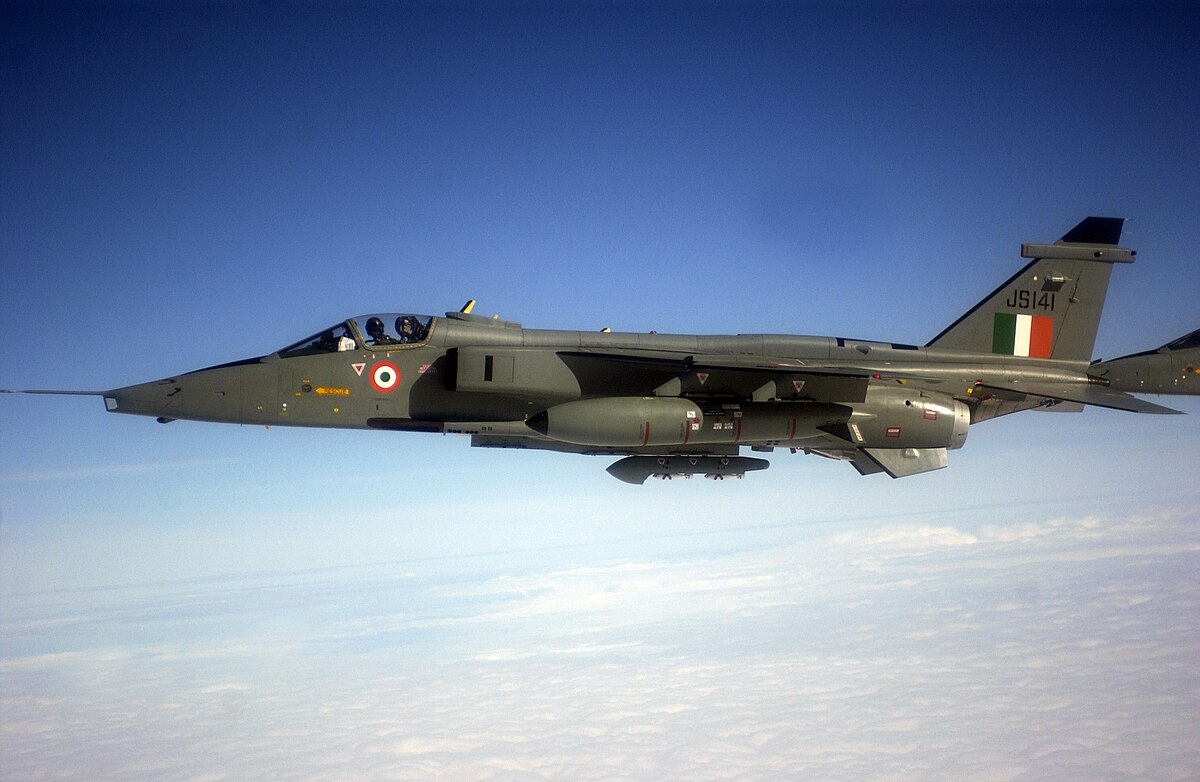
News Report: Indian Air Force’s Jaguar Still Performs Poorly After 20 Years, Says Auditor

SEPECAT Jaguar (Image: Wiki Commons)
Amid talk of a fresh purchase of French Jaguar fighters, India’s top-level auditor has sounded the alarm over Jaguar jets now in service with Indian Air Force. The Comptroller and Auditor General (CAG) has revealed deficiencies in the aircraft, which hampers its capabilities and may have led to accidents.

New Delhi (Sputnik) – A total of 11 Jaguar aircraft met with accidents in the last 17 years. The Indian Air Force (IAF) had lost three Jaguar aircraft and one pilot since April 2008 due to pilot disorientation/human error whereas the loss of another four Jaguar aircraft was under investigation.

14 July 2017

News Report: Indian Air Force Jets Slated to Have Beyond-Visual-Range Strike Capacity by 2018

India’s Tejas light combat aircraft is armed and ready with I-Derby missiles for downing other aircraft, according to The Diplomat.

The missiles have been integrated into the plane’s weapons suite but have yet to finish testing, which is slated to happen by year’s end, Flight Global reported. The Indian Air Force conducted tests in May “to assess the Derby integration with aircraft systems on board Tejas, including the aircraft avionics, fire-controlled radar, launchers and missile weapon delivery system and to verify its performance,” a Ministry of Defense spokesman said.

The IAF said the test was a smashing success but the missiles are not yet categorized as having full operational capability.

Beyond-visual-range (BVR) strike capability is crucial for 21st century air combat, according to military analysts. “Modern air combat is divided into beyond-visual-range combat and within-visual-range combat. BVR combat means the fighters use airborne detection equipment to search the enemy target, then use [a] remote air-to-air missile to attack it, when both of them are beyond visual range,” a 2011 Beijing University study on BVR strategy reads.

The I-Derby missiles are made by Israel-based Rafael and have a 50 kilometer range.

This story first appeared on Sputnik & is reposted here with permission.

19 January 2017

News Story: Taiwan begins F-16 upgrade program

by Richard Tomkins

A $3.4 billion Taiwanese program to upgrade its F-16A/B Fighting Falcons got underway this week with the first four aircraft flown to a plant in Taichung.

The retrofitting of the aircraft to a "V" configuration is being performed by Taiwan's Aerospace Industrial Development Corp. in Taichung with Lockheed Martin, manufacturer of the aircraft.

Read the full story at SpaceDaily

22 November 2016

News Story: Lockheed Retakes Korean F-16 Upgrade Contract

Lockheed Martin F-16 (File Photo)
By: Valerie Insinna

WASHINGTON — Lockheed Martin and the South Korean government have cemented a $1.2 billion contract for F-16 upgrades, marking an official victory for Lockheed over previous contract-holder BAE Systems. 

Under the terms of the foreign military sales agreement announced Friday, Lockheed will modernize 134 jets to a configuration similar to its advanced F-16V model. Among the upgrades planned to be funneled into the Korean jets are an Active Electronically Scanned Array (AESA) radar; a modern commercial off-the-shelf-based avionics subsystem; a large-format, high-resolution center pedestal display; and a high-volume and high-speed data bus, the company said. 

“We truly appreciate the trust and confidence the Republic of Korea has placed in us with this contract,” Susan Ouzts, vice president of Lockheed Martin’s F-16 program, said in a statement. “These upgrades are a critical piece of South Korea’s national defense and highlight Lockheed Martin’s commitment to the full lifecycle of the F-16, from production to through-life sustainment.” 

Read the full story at DefenseNews

08 November 2016

News Story: UK, Australia Score Big F-35 Repair Work Agreements

By: Valerie Insinna

WASHINGTON — The Pentagon has chosen its first F-35 global repair hubs, and the United Kingdom, Netherlands and Australia are the big winners. 

The F-35 joint program office on Monday announced the countries that will be responsible for sustaining 65 out of 774 repairable components on the F-35. The United Kingdom picked up the lion’s share of the initial work, and will provide support for 48 of those components from 2021 to 2025. 

“This establishes Britain as a hub for all European F35s and is hugely positive news for our high-tech and innovative defense industry,” UK Defence Secretary Michael Fallon said in a news release. “It is an endorsement of the skills and capabilities the UK offers, will help create hundreds of high-end jobs, safeguard thousands more and be a substantial boost to UK exports.” 

The UK, Netherlands and Australia will be charged with the global sustainment of these 65 components from 2021 to 2025. 

During this early period, the Netherlands will conduct maintenance, repair, overhaul and upgrade (MRO&U) services for 14 components, while Australia will oversee three components. The countries will be responsible for an array of parts that span 18 categories, with the Netherlands focusing on landing gear and Australia on life support systems, among other components, said F-35 JPO spokesman Joe DellaVedova.

Repair of this equipment will be conducted on a regional basis starting in 2025, with work split between Europe and the Pacific. In Europe, the UK will continue to be responsible for most of these components — 51 parts in total — while the Netherlands retains its assignment for 14 components. 

During that same period, Australia will step up its share of the work to 64 of the first 65 components for the Pacific region. South Korea was tasked with the repair of the one remaining capability. 

Read the full story at DefenseNews

News Story: Airshow China Reveals a Wide Range of Aircraft, Weaponry

CH-5 Rainbow-5 Drone during testing (File Photo)
by Reuben F. Johnson

Airshow China in Zhuhai from November 1-6 featured a number of new defense-related developments. Displayed during the 11th biennial event was a full range of Chinese military aircraft, radars, surface-to-air missiles, cruise missiles and other weaponry.

China’s military industry continues to turn out numerous new air-launched and surface-launched weapons programs. Several companies displayed newer and more types of glide-bomb precision-guided munitions, air-to-surface weapons, anti-ship weapons, and new surface-to-air missiles. In almost every category of weaponry it is safe to say that the People’s Republic of China has more programs in development than the rest of the world combined.

Accompanying the spike in new weaponry is a full range of new UAV designs. This runs the gamut from very small drones of the type that can be purchased off-the-shelf in other nations to the China Aerospace Science and Technology Corporation CH-5 Rainbow-5 resembling the General Atomics MQ-9 Reaper, to a new jet-powered UAV from Chengdu Aerospace called the Cloud Shadow that has been developed specifically for export. Along with these UAVs comes another complete line of new, small UAV-carried weapons, sensor balls and electronic systems.

Read the full story at AINonline

12 February 2016

Editorial: Confirmed - Indonesia Will Buy 10 Russian Su-35 Fighter Jets

By Franz-Stefan Gady

A deal will be signed by Indonesia’s defense minister during his visit to Moscow in March.

Indonesia has agreed to purchase 10 Russian Sukhoi Su-35S multirole fighter jets, according to Indonesian media reports. Indonesia’s Minister of Defense, General Ryamizard Ryacudu, will visit Moscow in March to sign the final agreement.

Already in September 2015, Gen. Ryamizard announced that a decision to purchase Russian jets had been made. “A decision was made to decommission U.S. F-5 Tiger fighter jets and purchase Russian aircraft instead of them,” Indonesia news agency ANTARA quoted the defense minister as saying. “The purchase will be made gradually, depending on the financial possibilities of the country’s government,” he added.

In January 2016, Indonesia’s ambassador to Russia, Djauhari Oratmangun, still only told Russian media that “negotiations are ongoing. The Minister of Defense wants to visit Russia in April to continue the discussions.” Yet, the date appears now to have been pushed forward and negotiations concluded.

Originally, Indonesia was looking to purchase 16 Su-35S. The Ministry of Defense has “agreed to buy a squadron of Su-35s,” Ryamizard said in September 2015. However, he clarified this week: “We will buy only ten.” The defense minister also said that the deal will include pilot training and knowledge transfers through a military exchange program.

Read the full story at The Diplomat

21 November 2015

News Report: U.S., Australia Cooperating On EA-18G Growler Communications-Jamming System Upgrade

US Navy E/A-18G lands at RAAF Base Amberley Australia
By: Megan Eckstein

The Navy is working with the Australian Department of Defence to improve a component of the EA-18G Growler avionics suite to help locate and jam enemy communications.

Under the “AN/ALQ-227/Communications Countermeasures Set Low-Band Geolocation Capability Project Arrangement,” the U.S. and Australia will spend about $8 million each – plus non-monetary contributions such as experts, lab space and test ranges – to develop this particular capability, according to a two-page report sent to Congress in late October.

This research project falls under a 2007 memorandum of understanding between the U.S and Australian defense departments, a 20-year agreement that paves the way for maritime research, development, test, evaluation and prototyping efforts.

27 October 2015

Editorial: US Stops Export of Korean Fighter Jets to Uzbekistan

By Catherine Putz

Washington has reportedly nixed a fighter jet deal worth $400 million, over concerns about technology leakage.

This Sunday, the United States blocked the sale of 12 T-50 Golden Eagles from Korea Aerospace Industries (KAI) to Uzbekistan the Korea Times reports.

The jets, jointly developed by KAI and Lockheed Martin in 2006, are designed as supersonic trainers and multirole fighters. Lockheed Martin promotes them as delivering “the fighter-like performance and capabilities needed to eliminate 5th Generation training gaps and inefficiencies.” Although the T-50 and its variants are Korea’s first indigenous supersonic aircraft, the jets use Lockheed Martin’s avionics system and engines, making their sale a matter of U.S. concern. Although Lockheed Martin’s advertising material proclaim that the T-50 was “envisioned to be exported to other countries” it seems Uzbekistan doesn’t quite measure up.

A source told the Korea Times that “KAI has been in negotiations with the Uzbek government to export the supersonic trainers, but the U.S. government is opposing the deal, citing possible technology leakage and diplomatic policy.”

A presumably Korean military source honed in on Uzbekistan’s relations with Russia as the main cause for concern in comments to the Korea Times, saying, “As Uzbekistan has close ties with Russia, the U.S. is worried that an export of T-50s to Uzbekistan may lead to its technologies being transferred to Russia.”

Read the full story at The Diplomat

20 October 2015

Industry: Northrop Grumman to Feature Global Security Capabilities at Seoul International Aerospace and Defense Exhibition 2015

  • Seoul ADEX 2015 to be held at Seoul Airport, Oct. 20-25
  • Northrop Grumman to exhibit in booth D90

SEOUL, South Korea, Oct. 19, 2015 (GLOBE NEWSWIRE) -- Northrop Grumman Corporation (NYSE:NOC) will showcase its global security capabilities, including unmanned systems for airborne surveillance, advanced airborne radar and defense electronics systems at the Seoul International Aerospace and Defense Exhibition 2015. In addition to product displays, company representatives will be available to engage the media on these topics.

"Northrop Grumman is committed to providing complete solutions across all domains that are ideally suited to the national security needs of South Korea," said Brian Kim, chief executive, Northrop Grumman South Korea. "We continue to build on the 50 years of collaboration as a path toward greater optimization and overall effectiveness of the Republic of Korea defense force."

26 September 2015

News Story: Air Force - 'Korea Will Be Able to Continue KF-X Project without 4 Core Techs from US'

A model of one of several possible KF-X designs
Michael Herh

Air Force Chief of Staff Jung Gyeong-doo said that even though the U.S. may not provide four core technologies required for the development of the KF-X Korean fighter, Korea will be able to push forward with the KF-X project. The F-35A purchase contract does not include providing the four core technologies, either, Air Force Chief of Staff Jung said in a parliamentary inspection of the Air Force Headquarters on Sept. 22.   

Earlier, in Sept. 2014, the Korean military demanded the transfer of 25 technologies such as AESA radar, flight control, avionics, and weapons, while deciding to introduce 40 F-35A fighters for 7.34 trillion won (US$6.23 billion).

But the U.S. government refused to approve exports of the four core technologies due to national security concerns, the Defense Acquisition Program Administration (DAPA) said. The four items are AESA radar, infrared search and tracking equipment (IRST), electro-optical target tracking devices (EO TGP), and RF Jammers. The Korean military was planning to use the technologies in 2025. It was known that the four technologies were not included in the official contract when the Korean government decided to introduce F-35A fighters. 

Read the full story at BusinessKorea

03 September 2015

News Story: PLA's J-11D fighter closer to 1980s Su-35 than modern variant

A J-11B of the Chinese Air Force (File Photo)
China's new J-11D multirole fighter jet is much closer in capability to the old version of the Russian Su-35 fighter designed in the 1980s than the modern variant of the jet, says the Kanwa Defense Review, a Chinese-language military magazine based in Canada.

The J-11D, which conducted its maiden flight in April this year after more than four years in development, is an upgraded variant of the J-11B indigenized multirole fighter. The J-11D adopts the body structure of the J-11B but uses substantially more composite materials, particularly in the vertical tail and wing sections. It also has a weapons station that could reach 12 to 14 pylons.

With a new aerodynamic structure and antenna combined with increased stealth capabilities and improved field of vision, the J-11D is said to shedding the original design features of the Russian Su-27, the jet the J-11 was originally based on.

Read the full story at Want China Times

29 July 2015

Industry: Harris Corporation Awarded $29 Million Avionics Production Contract

Royal Australia Air Force F/A-18F Super Hornet (File Photo)
  • Awarded for U.S. Navy and Australian versions of F/A-18E/F and EA-18G aircraft
  • Distributed Targeting System significantly enhances flight crew situational awareness
  • Programs support 60,000 jobs with an annual economic impact of $3 billion

MELBOURNE, Fla., July 28, 2015 — The U.S. Navy has awarded Harris Corporation (NYSE:HRS) a two-year, $29 million full-rate production contract to provide key avionics components that will enhance flight crews' targeting capabilities on the U.S. Navy's and Australia's F/A-18 E/F Super Hornet fighter aircraft and EA-18G Growler electronic attack platform.

The avionics are a critical part of the Distributed Targeting System which will significantly improve the aircraft's networking capabilities, enhance targeting precision and shorten the time from target sensing to shooting.

"The F/A-18 brings critical Navy fighter and electronic warfare capabilities for the U.S. and key allies such as Australia," said Ed Zoiss, president, Electronic Systems, Harris Corporation. "Upgrading the mission- and image-processing prowess of the platform will help ensure that it continues to be the primary fighter aircraft for the U.S. Navy."

The combat-proven Super Hornet provides unequaled air dominance and precision strike capability. The EA-18G Growler, derived from the Super Hornet, is the U.S.' newest and most advanced airborne electronic attack platform. The Super Hornet and Growler programs support 60,000 jobs in the U.S. across 800 suppliers in 44 states, accounting for $3 billion in annual economic impact.

Editorial: India’s Rafale Fighter Jets May Face Further Delays

By Franz-Stefan Gady

Another week, another delay – the Indian Air Force’s fighter procurement crunch might not be over any time soon.

After last month’s announcement that India’s Tejas Light Combat Aircraft (LCA) program is encountering further delays, with final operational clearance postponed to March 2016 (See: “Surprise: India’s New Fighter Jet Faces More Delays”), the Indian Air Force (IAF) may experience an additional setback in increasing its number of operational combat squadrons.

According to IHS Jane’s Defense Weekly, industry sources state that the purchase of 36 French-made off-the-shelf Rafale fighters could face delays due to hiking costs and IAF demands to “customize” the platforms.

“They said the IAF wanted some avionics and weapon systems in the Rafale ‘modified and reconfigured’ to enable the eventual installation of indigenously developed and commercial-off-the-shelf systems and weapons. This could include India’s 80 km-range Astra beyond-visual-range-air-to-air missile, which is under development,” IHS Jane’s Defense Weekly reports.

Furthermore, Dassault Aviation, the French aircraft manufacturer building the Rafale fighter jets, may be unable to meet an early 2016-2017 delivery schedule of the planes due to pre-existing contracts with Egypt, Quatar and the French Air Force, according to defenseworld.net.

Read the full story at The Diplomat

29 May 2015

Industry: New Boeing Avionics Facility to Enhance ROKAF Readiness, Affordability

>> Operations add to employment, show continuing investment in ROK aerospace industry

Yeongcheon, South Korea, May 28, 2015 – Boeing [NYSE: BA] today formally opened a new avionics maintenance and repair center in the Yeongcheon Industry District of Daegu-Gyeongbuk Free Economic Zone. The 10,000 square-foot facility will test and repair aircraft electrical systems, reducing repair times and yielding significant inventory cost savings for the Republic of Korea Air Force (ROKAF).

The new facility underlines both Boeing’s growing role as a global enterprise and its participation in the growth of the domestic Korean aerospace sector.

“This facility will enhance readiness of the ROKAF’s F-15K fleet by allowing rapid, affordable in-country support of the aircraft’s advanced systems,” said Leanne Caret, president for Boeing’s Global Services & Support. “There is also tremendous potential to expand work performed at this facility, by serving other global customers and supporting a variety of weapon systems.”

19 May 2015

News Story: J-16 multirole aircraft turns defense into offense for PLA


China's domestic J-16 multirole fighter/bomber is the key in the People's Liberation Army Air Force's transformation from a from a defense-oriented unit into an offensive power, says the Beijing-based Sina Military Network.

Typically speaking, fighters are fighters and bombers and bombers, but improving technology, automation of avionics, more precise weapons and lighter weights have led to the development of multi-role aircraft.

Manufactured by the Shenyang Aircraft Corporation, the J-16 is based on the domestic J-11BS with features absorbed from Russia's Su-20MKK. With comprehensive electronic system upgrades, a new phased array radar and infrared sighting system, the J-16 is said to boast superior avionics to even that of Russia's latest Su-35.

Read the full story at Want China Times