Showing posts with label Elta. Show all posts

17 August 2017

News Story: India Jaguar fighters face upgrade challenges

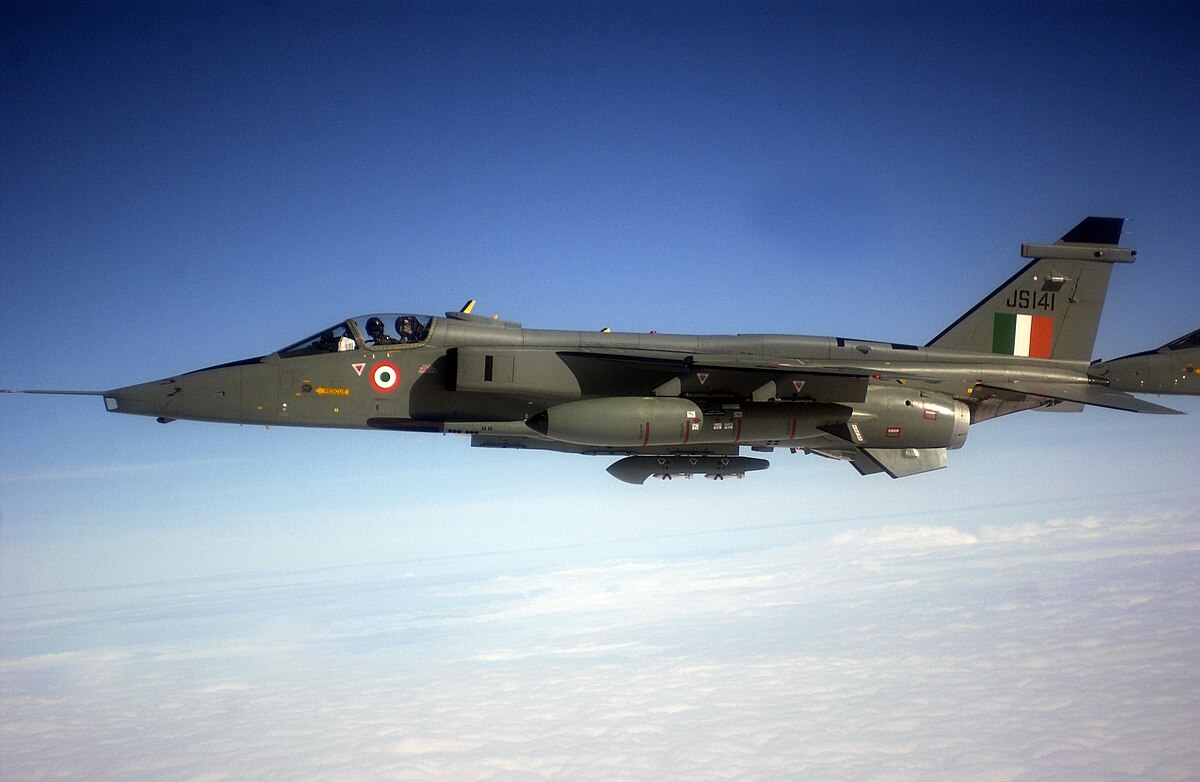
Indian Air Force SEPECAT Jaguar (Image: Wiki Commons)
By: Vivek Raghuvanshi

NEW DELHI ― The Indian Air Force’s British-made Jaguar aircraft completed its maiden flight last week after integrating an advanced active electronically scanned array radar, but service officials say the Jaguar upgrade program is moving slowly and that there’s uncertainty regarding the mounting of proposed new engines.

The upgrade program of the Jaguar fighter, undertaken by India’s state-owned Hindustan Aeronautics Limited, includes mounting new engines from Honeywell of the U.S., but an executive with HAL said it’s ”still awaiting the go-ahead from the Indian Air Force for the new engines.”

“Not only is the upgrade program slow, but the autopilots on the Jaguar aircraft are malfunctioning,” the IAF official said.

Furthermore, only 18 autopilot systems out of a required 108 could be integrated on Jaguar aircraft, according to a second Air Force official. India contracted the purchase of 35 autopilots from Thales of France on the Jaguar, which were received between December 2006 and January 2008.

Due to contractual restrictions, HAL could integrate only 18 out of the 35 autopilots up until March 2017.

And the autopilots installed on the aircraft are functioning at a suboptimal level because a vital component ― the Auto Pilot Electronic Unit, which maintains the flight path of the aircraft ― required repairs by Thales, which are expected to be completed in 7 to 26 months.

The HAL executive placed blame: ”Upgrade of autopilot has been slow because of delays in supplies by French defense companies.”

The Jaguar with the new AESA radar made its maiden flight Aug. 10, but the Air Force will carry out six more tests before induction.

Read the full story at DefenseNews

08 August 2017

News Report: India to Deploy Two Ballistic Missile Defense Systems Near Pakistan Border

Click Image to Enlarge
The ballistic missile defense grid that will protect the western and northern regions of the country will help guard New Delhi and Mumbai.

New Delhi (Sputnik) — India has decided to install its homemade ballistic missile defense systems at two villages in the western state of Rajasthan. The villages in Alwar and Pali are both less than 800 kilometers from the Pakistani capital Islamabad.

The counter attack missiles will be able to provide double layered security with the capacity to shoot down enemy missiles both within the earth's atmosphere (endo-atmospheric) and outside it (exo-atmospheric). State owned Defense Research and Development Organization (DRDO) had conceived the programme in 1999 and since then, the programme has witnessed many trials and upgrades.

03 August 2017

News Story: Thailand’s Air Force requests funds to cover F-5 Tiger II upgrades

RTAF Northrop F-5E Tiger II (Image: Wiki Commons)
By: Mike Yeo 

MELBOURNE, Australia — The Royal Thai Air Force has requested Cabinet approval for funds to upgrade four more Northrop Grumman F-5 Tiger II interceptors, adding to an earlier contract to upgrade 10 aircraft, the service said.

The Air Force also provided additional details of the upgrade, which includes new data links, multi-mode radars, new weapons and electronic warfare systems. The upgraded aircraft, known as the F-5T Super Tigris, will also incorporate structural improvements that the Air Force says will add approximately 15 years to its service life.

The upgrade to the four aircraft in this latest phase will cost $96.1 million, which will see the installation of the Link-T tactical data link, connecting the aircraft to the Air Force’s command-and-control network and improving the networking capability of the type.

A new multi-mode radar, which the service says will provide the Super Tigris with beyond-visual-range capability, will be fitted, which will also have a synthetic aperture mode for high-resolution ground mapping. The radar type was not disclosed, although it is believed to be Elta ELM-2032 from Israel. Leonardo had also previously offered its Grifo X-band multi-mode radar to Thailand.

Thailand’s F-5 interceptors were already using the Israeli Rafael Python-4 agile short-range air-to-air missile and Elbit DASH IV helmet-mounted sight, and will now also add the Rafael Litening 3 targeting pod and Skyshield electronic countermeasures pod to its inventory. The communications suite of the Super Tigris will also be replaced with the jam-resistant HAVE QUICK II frequency-hopping sets.

Read the full story at DefenseNews

14 July 2017

News Story: S. Korea's KF-X fighter taking shape, final design due in 2018

A Model of one of several possible designs for the KF-X
By Lee Chi-dong

SEOUL, July 13 (Yonhap) -- South Korea will complete the design of its own advanced fighter jet by the first half of next year, with another key task well under way to develop an AESA radar system in the KF-X project, the country's arms procurement agency said Thursday.

South Korea floated a plan in the 2000s to replace the Air Force's aging fleet of F-4 and F-5 jets, and formally launched the 8.8 trillion-won (US$7.7 billion) KF-X program in early 2016. Indonesia is a junior partner, sharing 20 percent of the total cost.

The Defense Acquisition Program Administration (DAPA) aims to round off the aircraft development by 2026 for two years of test operations to follow. It plans to introduce some 120 KF-X fighters.

"We are working on the shape design. It will be done by June 2018," a DAPA official said. "It will be final. There is little chance of a change."

South Korea is also focusing on developing an indigenous AESA radar, a core element for the envisioned 4.5-generation stealth combat jet. AESA stands for active electronically scanned array.

Read the full story at YonhapNews

24 May 2017

News Story: S. Korea turns to Israeli contractor for KF-X jet radar

A model of one of several possible designs for the KFX
SEOUL, May 23 (Yonhap) -- South Korea has formally decided to receive some technology support from Israel for the development of an advanced radar system in its KF-X fighter jet program, Seoul's arms procurement agency said Tuesday.

The state-run Agency for Defense Development (ADD) signed a contract with an Israeli defense firm on testing an active electronically scanned array (AESA) radar being developed by a South Korean company, according to the Defense Acquisition Program Administration (DAPA).

"It's about technology support related to the operation test of a prototype radar, not the development itself," the DAPA said.

The agency would not reveal the value of the contract apparently with Elta, while an industry official said it's worth around 40 billion won (US$35.5 million).

It requires sophisticated technology to test an AESA radar system and integrate it with aircraft.

Read the full story at YonhapNews

08 April 2017

News Report: Israel Aerospace Industries Wins $500 Million 3D Radar Tender in India

Israel Aerospace Industries' Elta Systems has won the tender to supply radars to the Indian Army by being the lowest bidder as well as its commitment to technology transfer in India.

New Delhi (Sputnik) — Under the tender, Israel Aerospace Industries (IAI) will supply 66 new-generation 3-D surveillance and tracking radar to the Indian Army under technology transfer. The radar has been developed by Elta especially for the Indian Army. The closest rival was Thales from Netherlands.

The radar will be equipped to track wide variety of platforms including low-level high-speed fighter aircraft, hovering helicopters, low ultra-light aircraft and UAVs.

Indian Army will operationalize these high mobility and low power consuming radars in difficult Himalayan terrain bordering Pakistan and China. Indian Army has asked for radars which can provide accurate range, azimuth and elevation angle measurements for each target, and capable of differentiating between different type of threat.

The Elta radar will track multiple targets in all weather conditions and its most important feature is its ability to be deployed fast. It will replace Flycatcher Radar which was manufactured in collaboration with HSA and supplied to the army in 1987

Indian defense ministry had issued global tender in 2012 to Selex Sistemi Integrati of Italy, Raytheon of the United States, Thales, IAI, and Rosoboronexport of Russia.

This story first appeared on Sputnik & is reposted here with permission.

News Story: Israel IAI will provide MRSAM Medium-Range Surface-to-Air Missile to Indian Army

Barak 8 MRSAM launcher (Image: Wiki Commons)
Israel Aerospace Industries (IAI) announced today that the company has been awarded contracts in India totaling almost $2.0 billion. In a mega-contract worth over $1.6 billion, considered to be the largest defense contract in Israel's Defense Industries' history, IAI will provide an advanced MRSAM air & missile defense systems to the Indian Army.

The company will also supply additional LRSAM air & missile defense systems for the first build in India Indian aircraft carrier.

MRSAM is an advanced ground breaking air and missile defense system that provides the ultimate protection against a variety of aerial threats. In its existing version, MRSAM is operational with the Indian Air Force, Indian Navy and Israel Defense Forces. The system includes an advanced phased-array radar, command and control, mobile launchers and missiles with advanced RF seekers. MRSAM was developed jointly for the Indian Army by IAI and India's Defense Research and Development Organization (DRDO) in collaboration with RAFAEL and IAI/Elta, and worked with various Indian companies including BEL, L&T, BDL and other private vendors.

Read the full story at Army Recognition

28 February 2017

Think Tank: Sea, air, land and space updates (28-Feb-2017)

Zoe Glasson, Sophie Qin, Madeleine Nyst and Patrick Kennedy

Sea State

Cyber attack combat-readiness, intelligence exploitation, drone intelligence, systems streamlining and integrated infrastructure will all be part of the Royal Navy’s forthcoming Information Warrior 17 exercise. Perhaps the coolest aspect of the exercise is that it’ll explore artificial intelligence (AI) technologies, both as a potential threat and as a combat tool. The exercise will test whether AI can be used as a warship’s “mind”, controlling weapons targeting, issuing commands and improving threat response strategies.

The Royal Australian Navy is also war-gaming this week in the inaugural Exercise Ocean Explorer. Taking place off the West Australian coast, the exercise involves more than 17 ships and aircraft including contributions from Spain, New Zealand and Italy. It aims ‘to train ships to work together in a series of complex and dynamic warfare scenarios’, with the international participants also having the opportunity to grapple with the added challenges around language, customs and technology differences.

Finnish defence firm Patria showcased its Nemo Container mortar system at IDEX in Abu Dhabi on 20 February. Essentially, it’s a shipping container integrated with a 120mm Nemo mortar turret that can be fitted to both land and sea platforms. Check out this quick video explaining its versatility.

19 December 2016

News Story: India Seeks Global Ties for Its Light Combat Aircraft Mark-1A Program

By: Vivek Raghuvanshi

NEW DELHI — India has floated global bids to procure state-of-the-art active electronically scanned array radars and electronic warfare self-protection jammer pods for the forthcoming modified version of the indigenously developed Light Combat Aircraft Mark-1A aircraft. 

Under the ministry of defence's directions, India's sole combat aircraft manufacturer, Hindustan Aeronautics Ltd., on Thursday released global requests for quotations for the equipment. Two systems will be selected by April next year, according to a top MoD defense production official. 

"We cannot wait for Indian companies to develop and build these proven systems, and they will be bought off-the-shelf from overseas," the MoD official added. 

Under a fast-track program, around 100 AESA radars will be bought at a cost of $1.85 billion million, and bids have been issued to Elta of Israel, US companies Raytheon and Northrop Grumman, SAAB of Sweden, Thales of France and Rosoboronoexport of Russia. 

In addition, 100 electronic-warfare jammer pods will be procured from overseas at a cost of $200 million, and bids have been sent to Elta, Raytheon, Northrop Grumman, SAAB, Thales, Rosoboronoexport, Indra of Spain and Leonardo-subsidiary Finmeccanica of Italy.

Read the full story at DefenseNews

16 December 2016

News Report: Restricted India Tenders for AESA Radars for Home Grown Combat Jet

Currently, Indian Air Force does not have any fighters that have new age AESA radar. However, Jaguar’s DARIN III version are being equipped with AESA radar by Israel’s ELTA.

New Delhi (Sputnik) — India has issued a global tender for the purchase of about 100 Active Electronically Scanned Array (AESA) radars for its 83 home-assembled light combat aircraft Tejas MK 1. The tender was issued on Wednesday to limited global firms from Russia, France, Israel and the USA.

"[A] limited tender was floated by the Aviation Research and Design Centre on Wednesday to five global aviation technology firms and a sixth one is being considered. These firms are from Russia, France, Israel and the US," a highly placed source of Hindustan Aeronautics ltd (HAL) told Sputnik. 

02 December 2016

News Story: India’s Light Combat Aircraft Advances with New Order

by Neelam Mathews

India’s Ministry of Defense has cleared an order for 83 Light Combat Aircraft (LCA), designated Mk1A, from government-owned defense manufacturer Hindustan Aeronautics Ltd (HAL) for the Indian Air Force (IAF). HAL currently has in hand an order for 40 GE F404-engined LCAs for the IAF. Of the 20 to be produced with an initial operational clearance, three have been delivered and the fourth is scheduled to be handed over by early next year. Twenty more will be supplied once they receive the final operational clearance (FOC) by end of 2017.

HAL says it will increase production from eight to 16 a year “once a formal order is received for the 83 Mk1As.” IAF Air Chief Marshall Arup Raha said last year: “We want the LCA Mk1A with an improved radar [Elta's ELM-2052 AESA or active electronically scanned array], electronic warfare, in-flight refueling and better missiles.” But a privately owned OEM said: “While there is to be joint work between HAL and Elta, we don’t know how much of the Elta AESA will be indigenous.” Other OEMs are interested. For instance, Saab confirmed recently to AIN that it is offering its Gallium Nitride technology, developed in Gothenberg, Sweden, for the LCA, rather than part of its Gripen proposal to India.  

Read the full story at AINonline