Showing posts with label V-22 Osprey. Show all posts

22 September 2017

USA: Mattis, Australian Counterpart Discuss Defense Relationship, Challenges

Australian and US military personal (File Photo)
DoD News, Defense Media Activity

WASHINGTON, Sept. 21, 2017 — Defense Secretary Jim Mattis hosted Australian Defense Minister Marise Payne for a bilateral meeting at the Pentagon yesterday to discuss the defense relationship between their nations and the regional security challenges they continue to face, chief Pentagon spokesperson Dana W. White said.

In a statement summarizing the meeting, White said Mattis expressed his sincere and deep appreciation to Payne for Australia's assistance in the search, rescue and recovery efforts following the early August MV-22 Osprey incident that took the lives of three Marines off the Australian coast.

100 Years of 'Mateship'

"Secretary Mattis also highlighted the upcoming celebration of the first hundred years of 'Mateship' that underpins the ironclad Australia-U.S. alliance," White said, referring to the close bond formed between the United States and Australia when their troops fought side by side during World War I. "The relationship is built from tight bonds of trust, respect and friendship."

The two leaders also discussed concerns about destabilizing actions in the South China Sea and the threat posed by North Korea, White said. "They emphasized the importance of the international community coming together to hold Kim Jong-Un's regime accountable and pressuring North Korea to give up their illegal nuclear weapons program," she added.

Mattis and Payne also reaffirmed their continued commitment and support to address the growing threat from the Islamic State of Iraq and Syria and other extremist groups, particularly in Southeast Asia, she said.

04 September 2017

News Story: Japan defense chief asks new US envoy to pay heed to base concerns

TOKYO (Kyodo) -- Defense Minister Itsunori Onodera asked new U.S. Ambassador to Japan William Hagerty on Friday to pay heed to Japanese people's concerns over the hosting of U.S. bases.

"On the (U.S. military's) Osprey aircraft, I believe great care is taken in ensuring their safety, but various concerns are still voiced in Japan," Onodera told Hagerty, who paid a courtesy call a day after he assumed his post.

"I hope you will lend an ear to the voices of local people, including on issues related to the U.S. forces in Japan," the minister also said during the meeting, the start of which was open to the media.

Hagerty, a businessman close to U.S. President Donald Trump, arrived in Japan at a time when the bilateral alliance is becoming more important in the face of repeated ballistic missile launches by North Korea, including one that flew over Japan into the Pacific Ocean earlier this week.

Read the full story at The Mainichi

01 September 2017

News Story: Japan's defense ministry seeks record budget for FY 2018

CGI of an Aegis Ashore System
TOKYO, Aug. 31 (Xinhua) -- Japan's Ministry of Defense announced on Thursday a record-high budget request for the fiscal year 2018, which, if approved, would mark the sixth annual increase since Prime Minister Shinzo Abe retook office in 2012.

The defense ministry's budget request, up by 2.5 percent from this year's initial budget, totals 5.26 trillion yen (47.8 billion U.S. dollars) for the fiscal year starting from April, 2018.

The budget request was compiled by setting the dollar's exchange rate at 110 yen for fiscal 2018, according to the ministry.

Part of the money would be used to introduce a new missile shield system, possibly the land-based Aegis Ashore, but the amount was unspecified as it still needs to be hammered out with the United States, said the ministry.

Japan has so far taken steps to counter any potential launches of ballistic missiles by deploying high-tech Aegis advanced radar-equipped destroyers which are tasked with stopping missiles in the outer atmosphere, and ground-based Patriot Advanced Capability-3 interceptors which will counter the attack at lower altitudes.

The Aegis Ashore system is a land-based version of the Aegis advanced radar system, and with potential to be permanently installed, it is expected to reduce the workload of the Japanese Self-Defense Forces members in missile intercept operations.

Each Aegis Ashore unit costs around 80 billion yen, and Japan would need two units to cover the whole landmass, experts here have said.

Read the full story at Xinhua

31 August 2017

News Story: Japanese DM, local media differ on cause of Osprey's emergency landing

TOKYO, Aug. 30 (Xinhua) -- A U.S. Marine Corps Osprey aircraft that made an emergency landing at a commercial airport in southwestern Japan may have done so due to an instrument malfunction, Japanese Defense Minister Itsunori Onodera said Wednesday.

Onodera's remarks came despite local media reporting that the plane's crew notified air traffic controllers of its need to make an emergency landing due to engine trouble.

The controversial Osprey, known for its checkered safety history, is reportedly the same aircraft that was forced to make an emergency landing near Okinawa's main island in June under potentially similar circumstances.

Onodera, conceding that the tilt-rotor airplanes are continuing to have accidents, called for tighter safety measures to be implemented.

"Accidents involving Ospreys are continuing to happen, so I want safety to be ensured when operating them," the defense minister told a press briefing on the matter.

Japan's top government spokesperson, Chief Cabinet Secretary Yoshihide Suga, also expressed his concerns over the safety of the turboprop planes that can take off and land like a helicopter and fly like a fix-winged aircraft.

Suga told a press briefing that the government has requested further information on the incident and for thorough safety management regarding the planes.

Read the full story at Xinhua

News Story: Osprey makes emergency landing at southwestern Japan airport

OITA, Japan (Kyodo) -- An Osprey aircraft made an emergency landing at an airport in Oita Prefecture, southwestern Japan, on Tuesday due to possible engine trouble, a prefectural government official said.

The U.S. military aircraft landed around 6:30 p.m. at Oita airport after taking off from the U.S. Marine Corps' Air Station Iwakuni in Yamaguchi Prefecture, western Japan. There were no reports of injury or fire.

Read the full story at The Mainichi

30 August 2017

News Story: Okinawa Pref. Assembly demands withdrawal of all Osprey aircraft, US Marines

NAHA -- The Okinawa Prefectural Assembly approved a resolution on Aug. 28 demanding the pullout of all MV-22 Osprey aircraft from the prefecture following a series of accidents, as well as all U.S. Marine units.

The resolution, as well as a formal statement of opinion also passed by the assembly, furthermore called for the closure of U.S. Marine Corps Air Station Futenma -- where the Ospreys are now based -- within five years. The vote came following the crash earlier this month of an Osprey off the coast of Australia. The aircraft involved in the incident was based at Futenma.

The resolution was submitted to the assembly by the ruling faction of Gov. Takeshi Onaga, which is opposed to the Futenma base's planned relocation to the city of Nago's Henoko district, or to anywhere else within Okinawa Prefecture.

Read the full story at The Mainichi

24 August 2017

News Story: Record 5.2 tril. yen defense budget sought amid N. Korea concerns

TOKYO (Kyodo) -- The Japanese Defense Ministry plans to seek a record-high budget of 5.26 trillion yen ($48.1 billion) for fiscal 2018 as the country seeks to beef up its missile defense capabilities in the face of growing missile threats by North Korea, a government source said Tuesday.

The ministry plans to set aside 47.2 billion yen to acquire a new type of interceptor missile to be loaded on Japanese destroyers equipped with the Aegis missile defense system, while also asking for funding to introduce a land-based Aegis system known as Aegis Ashore.

The fiscal 2018 budget request would mark a 2.5 percent rise from the initial budget for the current year through March. Japan's defense budget has been on the rise from fiscal 2013 under Prime Minister Shinzo Abe's government and topped 5 trillion yen in the fiscal 2017 budget for a second-straight year.

The Defense Ministry will leave open the actual sum it is expecting for designing the Aegis Ashore program because of the need for consultations with the United States that owns the technology. But it plans to finalize the costs by the end of the year when the government will draw up the fiscal 2018 budget plan.

Read the full story at The Mainichi

23 August 2017

News Story: Multinational search for missing US Navy sailors expands in Asia

USS John S. McCain (Image: Wiki Commons)
By: Mike Yeo

MELBOURNE, Australia – The multinational search and rescue for sailors missing from the U.S. Navy destroyer USS John S. McCain following a collision with an oil tanker near Singapore has expanded, even as remains of some of the missing have been located inside the flooded compartments of the ship.

Both Singapore and Malaysia have increased the number of assets taking part in the SAR operations for the 10 sailors initially reported missing following the collision, while Indonesia has also started scouring the waters off its islands closest to where the collision occurred. Australia has also offered an aircraft to assist in the search, according to a media statement from Singapore’s Maritime and Port Authority on Tuesday.

The new, expanded search area covers more than 1,100 square miles, with Singapore and the U.S. covering the center of the identified search area while Malaysian and Indonesian assets are covering the north and south.

The collision occurred in waters where there is an unresolved maritime boundary dispute between Singapore and Malaysia, and both have said the collision occurred in their respective territorial waters and have laid claim to leading the search operation. That said, the disagreement has not interfered with the search operation so far.

U.S. Navy MH-60S helicopters and Marine Corps MV-22 tiltrotors from the amphibious assault ship USS America are also involved in the search, while the Republic of Singapore Air Force has deployed a C-130 transport and a Fokker 50 maritime patrol aircraft to join two patrol vessels each from the Singapore Navy and police coast guard already on scene. A Singaporean Super Puma helicopter had earlier evacuated four of the five sailors injured in the collision to a hospital on Monday morning.

Read the full story at DefenseNews

News Story: US military Ospreys conduct night-flight training in Hokkaido

SAPPORO (Kyodo) -- Two U.S. military Osprey aircraft flew at night Monday as part an ongoing joint exercise conducted between the U.S. Marines and Japanese ground defense forces on the northernmost main island of Hokkaido, the Defense Ministry's local bureau said.

It is the first time for the tilt-rotor aircraft to conduct night-flight training during a Japan-U.S. drill, even as safety concerns linger among the Japanese public following a fatal crash of an Osprey off Australia on Aug. 5 and other accident records.

According to the Hokkaido Defense Bureau, two Ospreys flew above the Hokkaido-Dai Maneuver Area after leaving the U.S. military's Misawa Air Base in nearby Aomori Prefecture around 7 p.m. The aircraft returned to the base shortly after 8:40 p.m.

Ospreys have joined the exercise from Friday, after the Japanese government announced Aug. 11 it will give a green light to the resumption of their flights, accepting U.S. assurances that the aircraft is safe despite the crash off the coast of Australia.

Read the full story at The Mainichi

News Story: Ospreys to be tentatively deployed at SDF camp

TOKYO (Kyodo) -- The government has decided to deploy Osprey aircraft tentatively at a Ground Self-Defense Force camp due to difficulty in stationing them at an airport in the southern Japan prefecture of Saga in fiscal 2019 as planned, a source close to the matter said Monday.

The decision comes as concerns have been growing in Saga over the safety of the tilt-rotor transport aircraft following a fatal crash off the coast of Australia earlier this month.

A fleet of Ospreys is likely to be stationed at a GSDF camp in the Kyushu region, which includes Saga Prefecture, or at its Camp Kisarazu in Chiba Prefecture near Tokyo, the source said.

Opposition, however, is expected in the envisioned areas to the deployment of the Ospreys, which take off and land like helicopters but cruise like planes.

Read the full story at The Mainichi

22 August 2017

USA: America pulls into Changi Naval Base to support USS John S. McCain

From U.S. 7th Fleet Public Affairs

USS America (LHA 6) file photo. (U.S. Navy/MC3 Justin A. Schoenberger) >>

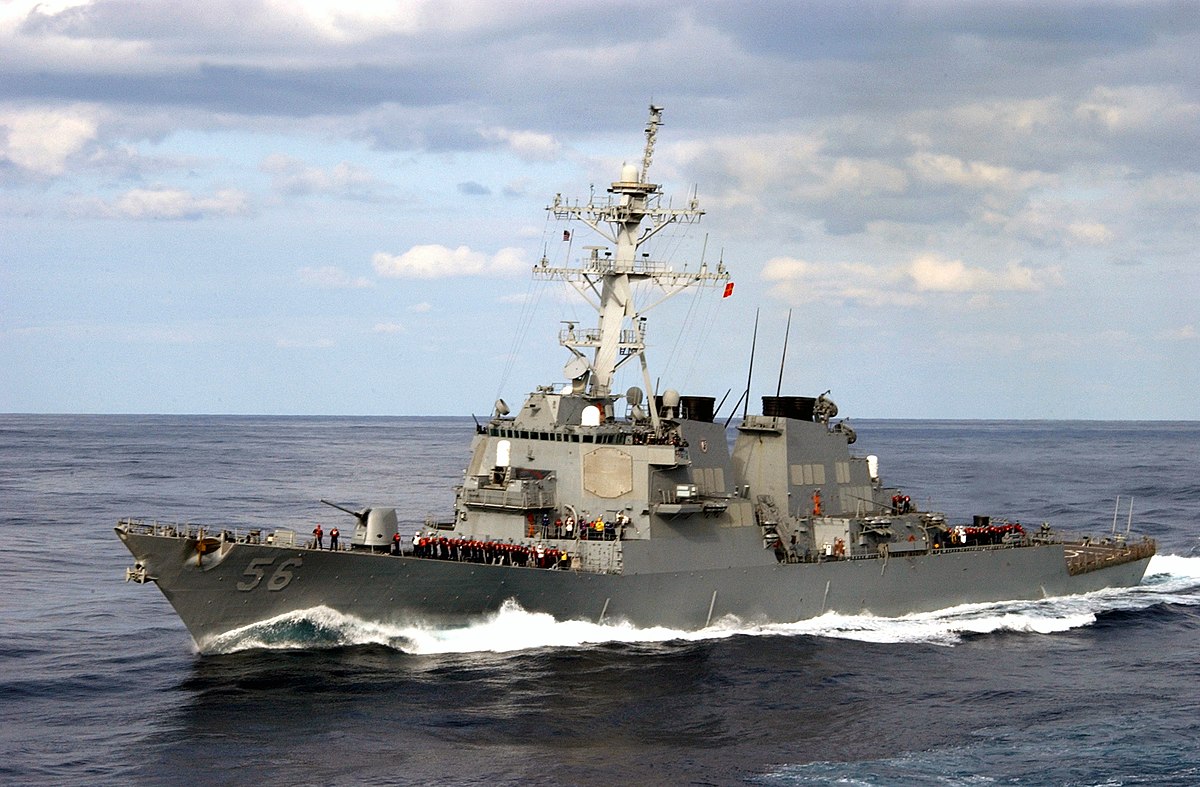
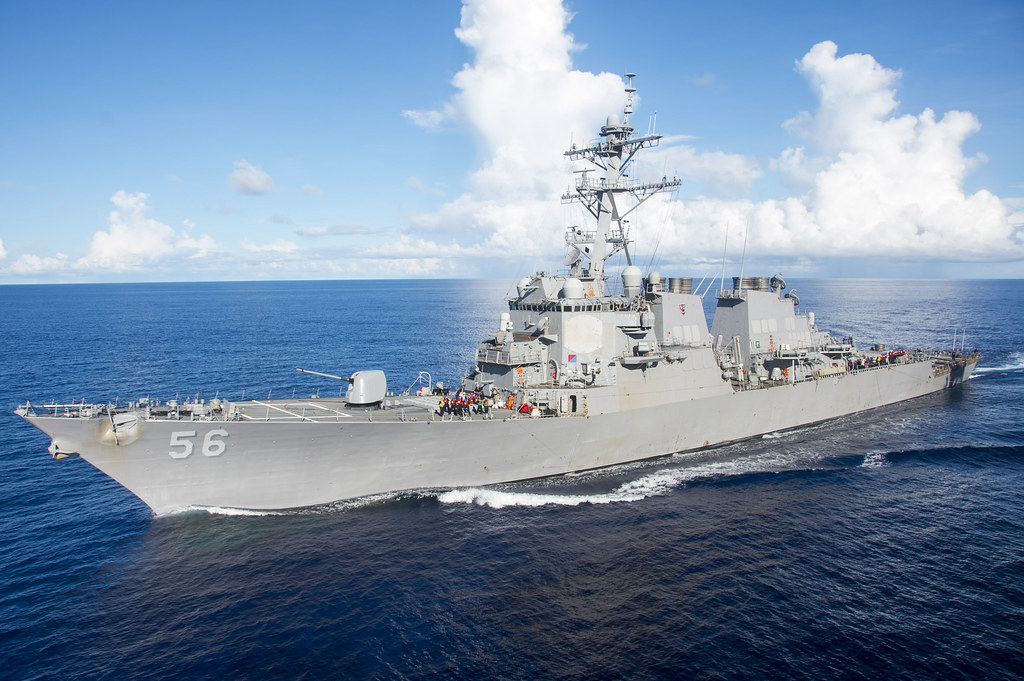
SINGAPORE - Amphibious assault ship USS America (LHA 6) arrived Aug. 21 at Changi Naval Base and is moored across the pier from the guided-missile destroyer USS John S. McCain (DDG 56).

While in Singapore, America will provide messing and berthing services to McCain crew members and to support damage control efforts on board. America will also support ongoing searches for 10 missing Sailors. Ship Repair Facility divers are on scene as well to assess the damage to the hull.

McCain was involved in a collision with the merchant vessel Alnic MC while underway east of the Strait of Malacca and Singapore early in the morning on Aug. 21 (as reported 6:24 a.m. Japan Standard Time) and arrived at Changi Naval Base in the afternoon.

Significant damage to the hull resulted in flooding to nearby compartments, including crew berthing, machinery and communications rooms. Damage control efforts by the crew halted further flooding.

21 August 2017

USA: USS John S. McCain collides with merchant ship near Strait of Malacca

From U.S. 7th Fleet Public Affairs

USS John S. McCain (DDG 56) file photo. (U.S. Navy/MCSN Gavin Shields) >>

SOUTH CHINA SEA - The guided-missile destroyer USS John S. McCain (DDG 56) was involved in a collision with the merchant vessel Alnic MC while underway east of the Straits of Malacca and Singapore on Aug. 21.

The collision was reported at 6:24 a.m. Japan Standard Time, while the ship was transiting to a routine port visit in Singapore.

The ship is currently sailing under its own power and heading to port.

Search and rescue efforts are underway in coordination with local authorities. In addition to tug boats out of Singapore, the Republic of Singapore Navy ship RSS Gallant (97), RSN helicopters and Police Coast Guard vessel Basking Shark (55) are currently in the area to render assistance.

MV-22 Ospreys and SH-60S Sea Hawks from USS America (LHA 6) are also responding.

Initial reports indicate John S. McCain sustained damage to her port side aft. The extent of damage and personnel injuries is being determined. The incident will be investigated.

Updated: Aug. 20, 2:30 p.m. Hawaii Standard Time

See initial release from U.S. 7th Fleet.

News Report: US Navy Destroyer Collides With Merchant Ship Near Singapore

USS John S McCain (Image: Wiki Commons)
The USS John McCain collided with a merchant ship early August 21 near Singapore and the Strait of Malacca.

The US guided-missile destroyer crashed into the merchant vessel Alnic MC while underway east of Singapore and the Strait of Malacca in the South China Sea, the US Navy 7th Fleet reports. 

The incident occurred at 6:24 a.m. local time as the ship was on its way to make a routine port visit in Singapore. Early reports hold that the McCain has been damaged on its port side, and the latest US Navy update says the ship is sailing under her own power and is on her way to port.

A search and rescue operation has been launched, combining the efforts of the Singapore Navy and US ships in the area. The Singapore Navy ship RSS Gallant, RSN helicopters and Police Coast Guard vessel Basking Shark are currently in the area to render assistance, the 7th fleet reports, and MV-22s and SH-60s from USS America are also responding.

The incident will be investigated, the Navy has said.

19 August 2017

News Story: US Osprey takes part in joint drill in Japan despite safety fears

SAPPORO (Kyodo) -- A controversial U.S. military Osprey aircraft took part Friday in a joint exercise between the Japanese Ground Self-Defense Force and the U.S. Marine Corps on Japan's northernmost main island of Hokkaido.

The MV-22 tilt-rotor transport aircraft joined the exercise despite local opposition, after the central government withdrew an earlier request to the United States to stop flying the plane for a period of time following a fatal crash of an Osprey off Australia.

The accident record of Ospreys, which take off and land like helicopters but cruise like airplanes, has raised concern in Japan.

Friday's exercise, open to the press, is the first time an Osprey has participated in Japan-U.S. joint drills since one of the aircraft based in Okinawa was involved in the Aug. 5 deadly crash in waters off Australia.

Defense Minister Itsunori Onodera said Tuesday that up to six Ospreys would join the exercise.

Read the full story at The Mainichi

18 August 2017

News Story: Japan, US conduct live-fire drill amid regional tension

Some 300 Japanese and US military personnel on Wednesday carried out live-fire artillery training in northern Japan, officials said, amid high regional tensions over North Korean missile threats.

The drill, part of a 19-day exercise, came after a tense war of words between the United States and North Korea over Pyongyang's threats to fire missiles towards the Pacific island of Guam.

Troops from Japan's Ground Self-Defence Force (GSDF) and US Marines fired live ammunition from armed vehicles at a manoeuvre area on the northern island of Hokkaido.

The two forces began the Northern Viper 2017 exercise on August 10, involving a total of 1,300 GSDF troops and 2,000 Marines.

"It is the first joint exercise between the GSDF and US Marines in Hokkaido," a defence ministry spokesman said.

The spokesman denied any link between the drill and recent regional tension over North Korea.

"This is not conducted with a particular country or region in mind," he said.

Read the full story at SpaceDaily

15 August 2017

News Story: Okinawa criticizes central gov't for backing flights of accident-prone Ospreys

TOKYO, Aug. 14 (Xinhua) -- Okinawa Governor Takeshi Onaga on Monday expressed his dissatisfaction at the central government for allowing accident-prone Osprey aircraft to fly in Japan just days after a fatal crash off the coast of Australia.

In a meeting with newly-appointed Defense Minister Itsunori Onodera in Okinawa's capital of Naha, Onaga said that Japan backing the United States' decision for the tilt-rotor planes to be flown here was not in the interests of protecting people's lives.

"The response was extremely disappointing from the viewpoint of protecting the lives of the people in the prefecture and in the country," Onaga was quoted by local media as telling Onodera.

Onaga's remarks follow Okinawa Deputy Governor Moritake Tomikawa on Aug. 8 lodging a strong protest with U.S. forces for flying an Osprey in Japan's southernmost prefecture.

Tomikawa's protest came on the heels of the central government requesting a halt to flights, following the crash in Australia on Aug. 5, which killed three U.S. Marines.

Onodera, for his part, told Onaga that the transport plane is "very important for our country's security" and promised Onaga that he would repeatedly implore the U.S. to fly the planes safely.

The U.S. Marine Corps on Wednesday decided the Ospreys were safe to be flown following an investigation.

Read the full story at Xinhua

12 August 2017

News Story: Japan OKs U.S. flights of Ospreys in Japan

TOKYO (Kyodo) -- The Defense Ministry said Friday it will allow the U.S. military to fly Ospreys in Japan, accepting U.S. assurances that the tilt-rotor aircraft is safe despite a fatal crash off the coast of Australia last week.

The decision came a day after the U.S. Marine Corps said in a statement that it had determined that Ospreys are "safe to fly," resuming operations after a 48-hour pause.

An MV-22 Osprey crashed off the eastern coast of Australia on Saturday, leaving three U.S. Marines dead. The crashed plane was one of the Ospreys deployed at the Futenma air base in Japan's southernmost island prefecture of Okinawa, which hosts the bulk of U.S. forces in the country.

Read the full story at The Mainichi

10 August 2017

News Story: New Okinawa minister says US forces status accord should be re-examined

TOKYO (Kyodo) -- The new minister in charge of issues related to Okinawa said Tuesday the Japan-U.S. status of forces agreement should be "re-examined" in light of the fatal crash off Australia involving an Okinawa-based Marine Corps Osprey aircraft, likely overstepping Tokyo's official line on the politically sensitive pact.

Tetsuma Esaki defended his comment later in the day, saying it does not contradict the stance of Prime Minister Shinzo Abe's administration which had negotiated modifications to the accord.

His remark could be taken as calling for a revision to the agreement, which is not among the Abe government's policy goals.

The 1960 pact defines the rights of U.S. forces and their personnel in Japan. While the government of Okinawa has called for a revision of the agreement on the grounds that its provisions are unfair to Japan by being overly protective of the personnel, the Japanese government has been extremely reluctant to propose renegotiating the pact, which has never been amended.

The 73-year-old Esaki has just drawn fire from opposition parties for having said Saturday, just two days after he was appointed, that he would "read aloud" texts prepared by government officials so as not to make mistakes.

It was not immediately clear what impact Tuesday's remark would have inside the government. But as the Cabinet minister with the portfolio, Esaki is tasked with promoting the economy of the island prefecture. It is therefore unusual for someone in his capacity to address a possible revision of SOFA.

Read the full story at The Mainichi

09 August 2017

News Report: Okinawa Authorities Protest US Air Base’s Osprey Flights After Deadly Crash

Authorities of Japan’s Okinawa Prefecture, home to several large US military bases, voiced their objections after the United States didn't put a halt to flights of MV-22 Osprey aircraft after a deadly crash of the heli-plane, local media reported Tuesday.

TOKYO (Sputnik) — On August 5, a US Marine Corps Osprey went down near Australia. The US Department of Defense announced Monday that three US Marines have been declared dead following extensive search and rescue efforts after the crash.

Okinawa's Deputy Governor Moritake Tomikawa met with the head of US forces in Okinawa, Lt. Gen. Lawrence Nicholson, and expressed his discontent over the fact that the United States had not ceased Osprey flights despite repeated requests from local authorities and residents, the NHK broadcaster reported.

The US military official replied saying that Ospreys are used worldwide, and that Washington does not plan on decommissioning the aircraft, according to the broadcaster.

News Story: 3 marines confirmed dead, after crashed U.S. military aircraft located off Australian coast

SYDNEY, Aug. 8 (Xinhua) -- Three U.S. marines have been confirmed dead after the wreckage of their downed military aircraft was located off the coast of Australia on Tuesday.

The three victims were part of the Talisman Saber joint military exercises, conducted biannually between the Australian Defence Force and U.S. military.

During a scheduled exercise on Saturday, the tilt-rotor MV-22 Osprey which they were traveling on with 23 others crashed into Shoalwater Bay, off the coast of Queensland State.

It was reported that the aircraft collided with a transport ship while it was attempting to land.

The Osprey then slid off the deck of the vessel and fell into the ocean.

Read the full story at Xinhua