Showing posts with label J-11. Show all posts

29 September 2017

News Report: China and Pakistan Demonstrate Alliance, Flex Muscles During Joint Exercise

For the first time ever, a Pakistani fighter pilot has flown a Chinese warplane during joint combat exercises between the two Asian nations. The exercises, which lasted through most of September, took place in Xinjiang, the westernmost province of China that borders Pakistan.

The Shaheen-VI exercises, the latest in a series of annual joint drills between the Pakistan Air Force (PAF) and the People's Liberation Army Air Force (PLAAF) that started in 2011, happened this year between September 5 and 25. They included many firsts, according to Chinese military sources, such as live-fire target practice, night warfare, and close support operations.

But the biggest news from the exercise came when Air Vice Marshal Haseeb Paracha, head of PAF's Southern Air Command, climbed into a Chinese J-11B fighter and flew a sortie as part of the exercises. This was the first time in history that a PAF pilot flew a PLAAF plane, a symbolic gesture of the tight bonds between Beijing and Islamabad.

"The air vice marshal was accompanied by Xin Xin, a vice-chief of staff of the PLA Air Force. This marks the first time that a Pakistani top military official has flown in China's new fighter jet," reported the Chinese military in a statement. "The Chinese warplane performed acrobatic maneuvers during the flight, drawing praise from Haseeb."

22 September 2017

News Story: China says air force drills with Pakistan "routine"

URUMQI, Sept. 21 (Xinhua) -- The Chinese air force on Thursday dismissed concerns over its ongoing training exercises with the Pakistani air force, saying they were routine drills.

"There's no need for some countries to overact and make a great fuss about it. They need to learn to get used to such drills," said Shen Jinke, spokesperson for the People's Liberation Army Air Force.

It is international practice to hold military exercises, and simulated combat training with foreign armies are necessary for troops of every country to improve their capabilities to safeguard state security and national interests, he said.

The ongoing joint drills named "Shaheen VI" were launched in China on Sept. 7 and will run until Sept. 27.

Read the full story at Xinhua


---

PacificSentinel: Maybe China should remember that when their bitching at the US and South Korea about their Military Exercises.

09 September 2017

News Story: China, Pakistan air forces launch joint training exercise

Chinese Air Force KJ-200 AWACS aircraft 
BEIJING, Sept. 8 (Xinhua) -- The air forces of China and Pakistan began joint training exercises in China on Thursday.

China has dispatched J-11 fighters, JH-7 fighter-bombers, KJ-200 AWACS aircraft and ground forces including surface-to-air missile and radar troops, said Shen Jinke, spokesperson for the People's Liberation Army Air Force, adding the Chinese navy's aviation troops also participated in the training.

Pakistan has sent JF-17 Thunder fighter jets and early warning aircraft to join the exercise, named "Shaheen VI," which will run until Sept. 27, Shen said.

Read the full story at Xinhua

23 June 2017

News Story: China deploys new anti-submarine aircraft to fringes of South China Sea

An unpainted GX-6/Y-8Q during testing (File Photo)
By: Mike Yeo

MELBOURNE, Australia — China has deployed its newest anti-submarine aircraft and stepped up unmanned aircraft deployments to Hainan island on the fringes of the South China Sea, according to satellite imagery obtained by Defense News.

Satellite photos taken on May 10 and May 20 by commercial satellite imagery company DigitalGlobe showed four Shaanxi Y-8Q turboprop aircraft with its distinctive magnetic anomaly detector boom parked on the ground at Lingshui Air Base in the southeastern part of China’s Hainan island. 

The satellite pass from May 10 also showed three Harbin BZK-005 high-altitude, long-range UAVs at the base. This is the largest number of BZK-005s to have been seen at Lingshui since they were first noted in 2016. The drones have also previously been observed at the Chinese air base at nearby Woody Island, in the disputed Paracel Islands.

A KJ-500 AEW&C Aircraft (File Photo)
In addition, two KJ-500 airborne early warning aircraft were also seen at Lingshui on both occasions. Defense News had previously reported on the deployment of the KJ-500 to Hainan at nearby Jialaishi Air Base that had been seen on satellite photos taken in March, which was the first time the KJ-500 had been seen deployed by the People’s Liberation Army Navy, or PLAN. 

This is the first time the Y-8Q has been seen at Hainan, with China having previously rotationally deployed maritime patrol aircraft detachments to Lingshui, made up of a mixture of older Y-8Js and Y-8Xs drawn from the PLAN's two special-mission aircraft regiments based in northern China.  

Read the full story at DefenseNews

22 June 2017

News Story: New Chinese Fighters Tap Russian, U.S. Technology

Chengdu J-20 (File Photo)
by Reuben F. Johnson

When the People’s Liberation Army Air Force (PLAAF) acquired its first tranche of Russian-made Sukhoi Su-27SK fighters in the early 1990s, long-time observers of China’s industrial base asked two questions. The first was how long would it be before Chinese state-controlled aerospace industry was able to reverse-engineer and build unlicensed copies of the Su-27—as they had done with Russia’s Mikoyan MiG-21 decades before.

This was accomplished in slightly more than 10 years, which produced a number of “indigenous” fighter designs produced at Shenyang that are analogues of the Russian design they were copied from. The Chinese J-11B is a near copy of the Su-27, the J-15 a knockoff of the carrier-capable Su-33 and the J-16 is a duplication of the Su-30MKK models sold to the PLAAF.

The second question was how many years after that would it be before Chinese industry started to produce some next-generation, original designs by building on what they had learned from the Russians. This next phase—the emergence of “clean-sheet” fighter designs—is well underway now, and is seen in the form of the two newest Chinese fighter designs. These are the Shenyang FC/J-31 and the Chengdu J-20

Shenyang FC-31/J-31 (File Photo)
The two aircraft appear externally to be stealthy designs, both are twin-engine aircraft and they are both departures from the type of developments that these two aircraft enterprises have been known for in the past.

Russian aerospace researchers and aerodynamicists have told AIN a clear “hierarchy” exists between manufacturers Shenyang and Chengdu—both subsidiaries of the CATIC group (Hall 2a Stand D252). “More recently, much of the more advanced work that has been done with fighter aircraft development has been carried out at Chengdu,” said a senior Russian aerospace scientist, speaking on condition of anonymity. “The two enterprises collaborate back and forth in different areas, but sometimes there is more of a flow of innovation in one direction than there is in the other.”

The reputation that Chengdu has for being the more innovative of the two was enhanced by the fact that its J-20 fighter emerged as a new program and made its first flight well in advance of the FC-31. Additionally, the J-20 was unofficially categorized as a program of record for the PLAAF, whereas the FC-31 was initially presented as a “for export” program in the mold of the JF-17 that was developed at Chengdu for sale and license-production in Pakistan.

Read the full story at AINonline

12 June 2017

News Story: Pentagon - China Is 'Closing the Gap' in Air Power with U.S.

Chengdu J-20 "Stealth" Fighter
by Bill Carey

The People’s Liberation Army Air Force (PLAAF) is “closing the gap rapidly” with Western air forces across a broad spectrum of capabilities, states the Pentagon’s annual report to Congress on China’s military, released on June 6. “This development is gradually eroding the significant technical advantage held by the United States,” the report adds.

Last year, China announced a 7 percent increase in military spending, to $144.3 billion, sustaining its position as the second largest military spender after the U.S. (The Pentagon requested $582 billion for the current fiscal year.) Between 2007 and 2016, China’s military budget grew an average of 8.5 percent per year on an inflation-adjusted basis, according to the report.

China’s aircraft industry still relies on foreign-sourced components for high-performance aircraft engines, but its expertise in building both commercial and military aircraft has improved with work on the C919 commercial airliner and Xian Y-20 military transport, the Pentagon said.

Shenyang J-31/FC-31 Gryfalcon "Stealth" Fighter
The PLAAF fields Asia’s largest air force, with more than 2,700 total manned aircraft, including 2,100 combat aircraft. Of the latter, China operates approximately 600 fourth-generation fighters, including Russian-built Su-27/Su-30, Chinese/Russian J-11A and indigenous Chengdu J-10 and Shenyang J-11B fighters.

China is developing the fifth-generation Chengdu J-20 and carrier-capable Shenyang FC-31 Gryfalcon fighters, which could enter service as early as next year, the Pentagon states.

Read the full story at AINonline

13 May 2017

News Story: Satellite image shows Chinese deployment of new aircraft to South China Sea

KJ-500 AEW&C Aircraft
By: Mike Yeo

MELBOURNE, Australia — China has deployed its latest airborne early warning and control aircraft to an air base on the fringes of the disputed South China Sea, according to exclusive satellite imagery obtained by Defense News.

The photo taken March 24 by commercial satellite imagery company DigitalGlobe shows a pair of Shaanxi KJ-500 turboprop AEW&C aircraft with its distinctive radar dish on the ground at Jialaishi Air Base in the northern part of China’s Hainan island. Two other Y-8 aircraft — an older KJ-200 AEW&C aircraft, and the other possibly a Y-8J or Y-8X maritime patrol aircraft — can be seen alongside the KJ-500s. 

KJ-200 AEW&C Aircraft
This is the first time the KJ-500 has been deployed to Hainan, with China having previously rotationally deployed special mission aircraft detachments to the island. These detachments are drawn from two special-mission aircraft regiments of the Chinese People’s Liberation Army Navy, or PLAN, based in northern China. The detachments are usually made up of a mixture of KJ-200 AEW&C aircraft with Y-8Js and Y-8Xs, and they tend to operate from Lingshui on the southeastern tip of Hainan. 

Read the full story at DefenseNews

14 January 2017

News Story: Chinese fighter jet intercepts Australian patrol aircraft

RAAF AP-3C Orion Maritime Patrol Aircraft
Japan’s Sankei News on Wednesday, January 11 reported that a Chinese Shenyang J-11 air superiority fighter intercepted an Australian AP-3C Orion patrol aircraft while the latter flew over the South China Sea.

The incident took place on September 26 last year, while it was only at the mid December 2016 the Australian spoke its side during a meeting between Japanese, US and Australian officials.

Read the full story at Tankler

10 January 2017

News Story: China Receives First Advanced Su-35 Flankers From Russia

An Su-35 Flanker-E of the Russian Air Force
By: Mike Yeo

MELBOURNE, Australia — China has taken delivery of the Sukhoi Su-35 “Flanker-E” fighter jet from Russia, according to Chinese state media. 

The Chinese military confirmed that it took delivery of four Su-35s in late December, the English-language China Daily newspaper reported without providing further details.  

However, an Ilyushin Il-76 transport aircraft belonging to Russian charter company Volga-Dnepr was noted on the live flight-tracking website Flightradar24. The aircraft was flying from Komsomolsk-on-Amur, where the Su-35 is built by the Komsomolsk-on-Amur Aircraft Production Association (KnAAPO), to Cangzhou-Cangxian Airbase in China’s Hebei Province before carrying on to Suixi Airbase in Guangdong Province on December 25. 

Cangzhou-Cangxian is the home of the Flight Test and Training Centre (FTTC), the People’s Liberation Army Air Force (PLAAF) unit responsible for developing flying procedures, combat tactics and training programs for new aircraft types. Suixi is the nearest PLAAF base to the disputed islands of the South China Sea. 

It is not known if the Il-76 was accompanying the Su-35s, or operated as a separate flight carrying support equipment and spares for the newly-delivered fighters. China has also not released any official photos of its Su-35s, although grainy images purporting to be the PLAAF Su-35s have been published on Chinese social media.

Read the full story at DefenseNews

09 September 2016

News Report: Russian Experts Say Chinese Air Power Will Soon Match Russian, US Capabilities

WS10A Taihang engine
Last month, Chinese President Xi Jinping announced plans to strengthen the country's aviation industry, particularly the field of advanced engines. Commenting on Xi's remarks, Russian analysts told online newspaper Svobodnaya Pressa that the day when China comes to match the capabilities of Russian and US air power may be just around the corner.

Late last month, China Daily reported that President Xi hailed the establishment of a new company, Aero Engine Corp of China, which is set to research, develop, and manufacture aircraft engines for the Chinese aviation industry. The newspaper said that the decision was "a strategic move that will improve the aviation industry and boost the modernization of the Chinese military." 

The paper emphasized that at present, "aircraft engines remain one of the few fields in which the country still lags largely behind top players, especially the United States." China, the paper added, continues to rely on imported engines for its most advanced aircraft, including the J-10 fighter and the Y-20 transport, as well as the new-generation J-20 stealth fighter, which "used Russian-made engines for its test flight."

08 September 2016

News Report: China Tests J-20 Stealth Fighter in Preparation for Pacific Ocean Patrols

China's J-20 Stealth Fighter (File Photo)
China's J-20 stealth fighter is being tested in the mountains close to the Indian border, but the new technology is intended for deployment in the Western Pacific, military expert Vasiliy Kashin told Sputnik.

Last week China's new fifth-generation Chengdu J-20 stealth fighter jet was spotted in the mountains of the Tibetan Autonomous Prefecture, close to the border with India.

The September 2 sighting came after China's defense ministry warned India against deploying its supersonic BrahMos missile in the same region, and some analysts saw China's move as a response to India's deployment. 

However, military expert Vasiliy Kashin told Sputnik that testing military equipment at high altitude has become a priority for the Chinese armed forces, regardless of where the technology is eventually deployed. 

24 May 2016

Think Tank: Sea, air and land updates (24-May-2016)

Image: Flickr User - Official U.S. Navy Page
Dione Hodgson, Ashleigh Sharp and Lachlan Wilson

Sea State

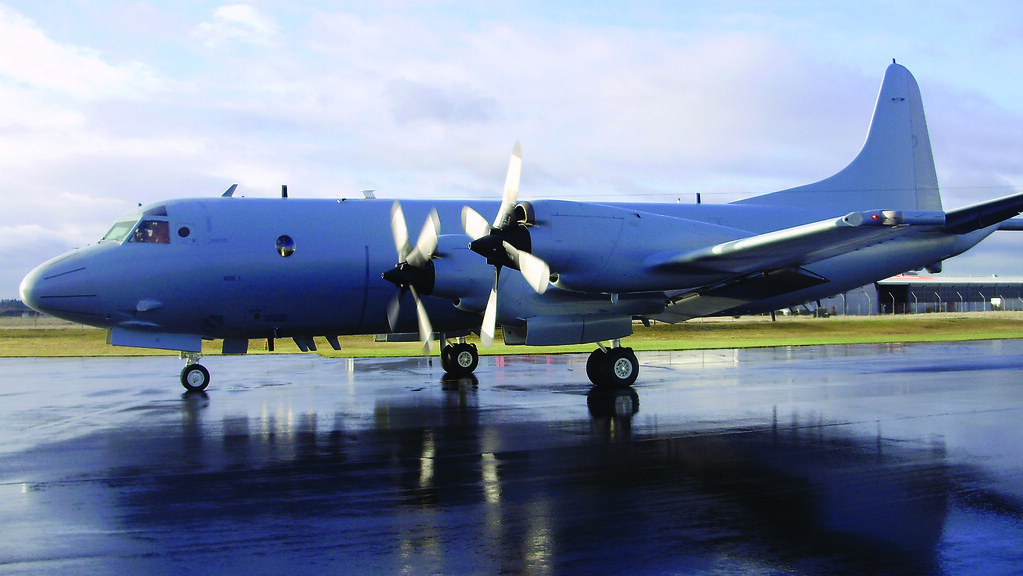
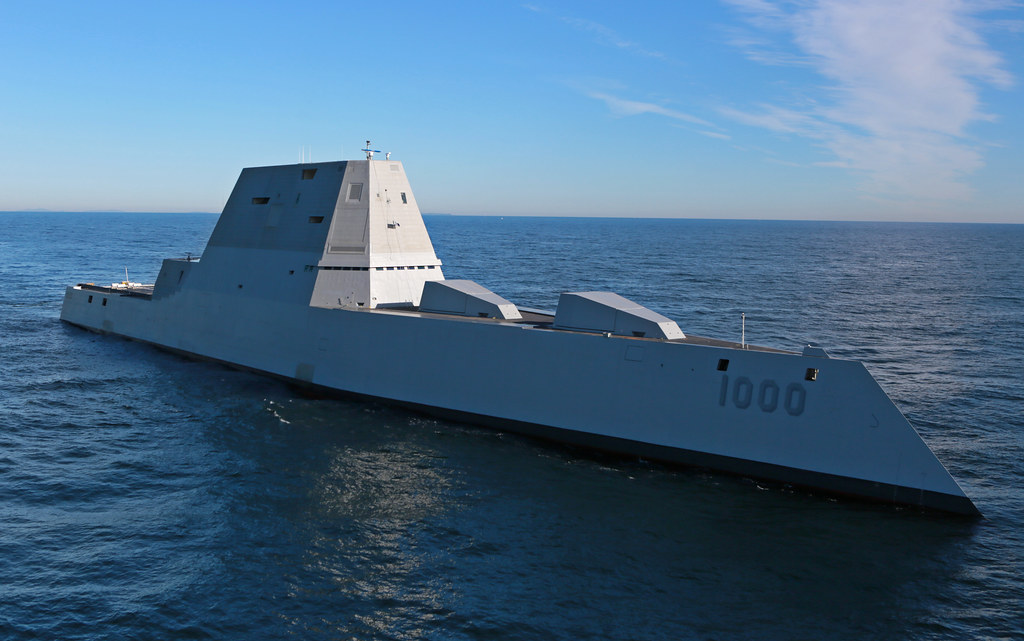
USS Zumwalt, the lead ship of the US Navy’s next-generation guided missile destroyers, was formally delivered by shipbuilder General Dynamics Bath Iron Works last Friday. The eagerly awaited 610-foot ship features a tumblehome hull form and is designed for surface warfare, anti-aircraft warfare and naval gunfire support. Its due to be commissioned in Baltimore on 15 October—after which point it will be up to the US Navy and Raytheon to complete the ship’s combat systems. After the successful conclusion of combat system operational testing, expected by 2018, the ship will be available for deployment. Two additional Zumwalt-class ships are currently under construction in Bath. To mark the occasion, The Guardian features an informative video of the impressive destroyer. However, not everyone is impressed with the ship, with a Russian military analyst calling it a ‘giant washtub’.

A small naval force from the Indian Navy’s Eastern Fleet left Indian shores on 18 May, setting off on a two-and-a-half month operational deployment to the South China Sea and North Western Pacific. The fleet—which includes two Shivalik-class guided-missile stealth frigates, a Deepak-class fleet tanker and a Kora-class guided-missile corvette—will visit Vietnam, the Philippines, Japan, South Korea, Russia and Malaysia, as well as participate in Exercise Malabar off the coast of Okinawa in mid-to-late June. China has voiced its disapproval at India taking part in maritime exercises in the South China Sea, with a senior Chinese official calling it a ‘matter of concern’.

18 May 2016

News Story: Chinese Airpower Poses Serious Threat

J-20 Stealth Fighter
by Chris Pocock

China’s stealth fighter programs recieved high marks in the Pentagon’s latest annual report to the U.S. Congress on the country’s military and security progress, released last week. The J-20 has advanced, with a fifth and sixth prototype now in flight test. Meanwhile, the country’s other stealth warplane is being marketed for export, as the FC-31.

The unclassified report fails to confirm that the J-20 has entered production, although this has been reported by various open sources. However, the report says that both the J-20 and the FC-31 are fifth-generation aircraft with high maneuverability, low-observability and internal weapons bays, capable of operating in a network-centric environment. They could enter service as early as 2018, although the report is undecided on whether the FC-31 is for export only. Both of them have radars with advanced tracking and targeting capabilities, and protection against electronic countermeasures.

Y-20 Cargo Plane
The PLAAF “is rapidly closing the gap with western air forces across a broad spectrum of capabilities,” the report assesses. These include command-and-control, electronic warfare and datalinks. The J-10B, the latest version of the indigenous fighter that was unveiled in 2007, is expected to enter service shortly. Four J-11Bs (the Chinese-produced Su-27) have been deployed to one of the islands in the South China Sea that China has been expanding by land reclamation. An indigenous version of the Russian Kh-31P anti-radiation missile is being fielded on Chinese fighter-bombers

Read the full story at AINonline

13 May 2016

News Report: Beijing Vows to Increase South China Sea Defenses, Calls U.S. ‘Greatest Threat’ in Region

Fiery Cross Reef (Sep 2015)
By: Sam LaGrone

Chinese officials took a rhetorical hard line this week calling U.S. military actions in the South China Sea the “greatest threat” to stability in the region and vowed to increase its own military presence in the region, according to a Wednesday statement from the Chinese military.

“China will intensify sea and air patrol and enhance construction of defense capabilities in the area as needed, firmly safeguard national sovereignty and security and resolutely maintain peace and stability in the South China Sea,” read a Wednesday statement from the Ministry of National Defense.

The statement follows a Tuesday U.S. freedom of navigation operation in which a U.S. destroyer sailed within 12 nautical miles of a Chinese controlled installation in the Spratly Island chain.

USS William P. Lawrence (DDG-110) conducted an innocent passage past Fiery Cross Reef, a Chinese-controlled artificial island — also claimed by Taiwan, the Philippines and Vietnam, according to the Pentagon.

In immediate response to the transit, China launched two Shenyang J-11 fighters and a Shaanxi Y-8 AWACS, according to a Wednesday release from the Chinese Ministry of Defence. Additionally, a guided missile destroyer and two frigates tracked Lawrence during its transit past Fiery Cross reef.

26 April 2016

News Story: China to build up atoll in contested South China Sea, source says

Minnie Chan

Reclamation work for outpost at Scarborough Shoal off Philippines coast ‘to begin this year’

China will start reclamation at the Scarborough Shoal in the South China Sea later this year and may add an airstrip to extend its air force’s reach over the contested waters, a military source and mainland maritime experts say.

A source close to the PLA Navy said Beijing would ramp up work to establish a new outpost 230km off the coast of the Philippines as the US and Manila drew their militaries closer together.

An upcoming ruling on territorial claims by the Permanent Court of Arbitration at The Hague, widely expected to go against China, would also accelerate the plan, the source said.

Manila wants the court to ­declare that Beijing’s claims must comply with the United Nations Convention on the Law of the Sea, and the decision could come next month or in June.

“Beijing will take action to carry out land reclamation at Huangyan Island (Scarborough Shoal) within this year,” said the source, who requested anonymity, referring to the shoal.

“China should regain the initiative to do so because Washington is trying to contain Beijing by establishing a permanent military presence in the ­region.”

Read the full story at SCMP

06 April 2016

News Story: Rand Report Spells Doom For Taiwan

Wendell Minnick

Liquidate Fighter Fleet, Procure SAMs, If Taiwan Wants To Survive

TAIPEI — Radical changes in Taiwan’s air defense order of battle that include the retirement of all the indigenous defense fighters and Mirage 2000-5 fighter aircraft with cost savings moved to the procurement of a substantial number of mobile surface-to-air missile (SAM) systems are among the recommendations in a think tank report.

The report, “Air Defense Options for Taiwan: An Assessment of Relative Costs and Operational Benefits,” suggests that Taiwan downsize its fighter fleet and increase investment in SAM systems. The Rand Corp. study tests this strategy against three vignettes that span the range of conflict, from air sovereignty to disarming strikes and invasion air defense.

Rand crunches the numbers in the 172-page report with reckonings that make this paper hard to ignore against political hype inside Taipei and the sexy fighter aircraft tradition in the Taiwan air force that goes back to the Flying Tigers of World War II.

Taiwan defense spending appears to have hit a plateau with economic and political conditions working against the military’s desire to have both a strong fighter aircraft fleet and a SAM capability.

“We estimate that Taiwan will spend about US$22 billion in the next 20 years on the fighter aircraft currently in its fleet with no changes, and another US$3.3 billion to retrofit the F-16 fleet. That is fairly substantial for a military that has averaged about US$10.5 billion in total annual spending in recent years,” the report says. It was written by Michael J. Lostumbo, David R. Frelinger, James Williams and Barry Wilson.

China’s procurement and development of fighter aircraft, surface-to-surface ballistic missiles, land-attack cruise missiles and bomber aircraft advancements are not slowing, and could pulverize Taiwan’s air bases within hours of a war, the report says. None of Taiwan’s fighter aircraft would survive or be deployable on runways turned into a lunar landscape.

Read the full story at DefenseNews

24 February 2016

News Story: China Deploys Fighter Jets To Contested Island in South China Sea

Chinese J-11 Fighter
WASHINGTON — China has deployed fighter jets to the same contested island in the South China Sea to which it also has sent surface-to-air missiles, US officials said Tuesday.

Citing two unnamed US officials, Fox News said US intelligence services had spotted Chinese Shenyang J-11 and Xian JH-7 warplanes on Woody Island in the disputed Paracel Islands chain over the past few days.

Navy Capt. Darryn James, a spokesman for US Pacific Command, confirmed the report but noted that Chinese fighter jets have previously used the island.

Woody Island, which is also claimed by Taiwan and Vietnam, has had an operational airfield since the 1990s but it was upgraded last year to accommodate the J-11.

Read the full story at DefenseNews

18 February 2016

News Story: PRC Military Continues to Depend on Ukrainian Defense Technology

by Reuben F. Johnson

The recent signing of a contract for the People’s Liberation Army Air Force (PLAAF) to acquire 24 Sukhoi Su-35 Super Flankers highlights the continuing reliance that Beijing’s military has on Russian defense technology, despite more than two decades of steady cooperation in the defense industrial sphere. “The two main objectives for the Chinese in signing this deal with the Russians were to get their hands on the [Saturn] 117S jet engine and the [NIIP] Irbis-E radar,” said a Ukrainian defense industry head with many years of experience in working with both Russian fighter aircraft programs and the PRC’s defense sector.

Less noticed, however, is the extent to which PRC industry also relies on a list of technologies and programs that are developed and built in Ukraine. Russia has competencies in a number of areas, particularly in the production of finished, full-integrated weapon systems, said the Ukrainian director, “but many of the specialized systems that they are seeking for the advancement of their programs come from here in Ukraine and not from Russian defense firms.”

Read the full story at AINonline

03 December 2015

Editorial: Sino-Indian Border Talks Not Enough to Defuse Tensions

India's Arunachal Pradesh (orange box) is claimed by China


By Sarah Watson and John Chen


Unless India and China can take positive actions, they risk drifting into a growing conflict on their disputed border.

India hosted its highest-ranking Chinese military delegation in ten years November 15-17 for talks on the Sino-Indian border dispute. Despite the unusually high status of the participants in this year’s talks, the visit appears to mark only a brief pause in gradually rising tensions on the border between the two countries.

The 26-member Chinese delegation, headed by General Fan Changlong, vice chairman of the Central Military Commission (CMC), met with India’s chief of Army Staff, Lt. Gen. Dalbir Singh, Minister of Defense Manohar Parrikar, and Prime Minister Narendra Modi. Included in the Chinese group was Admiral Sun Jianguo, deputy chief of the General Staff of the People’s Liberation Army (PLA), China’s representative to this year’s Shangri-La Dialogue, and possibly the next chief of the PLA Navy.

In spite of the “star power” of the Chinese delegation, expectations were not particularly high. Following the talks, Indian media reported that both sides agreed the border was “generally stable” and that they had endorsed “concrete actions to implement the consensus reached by the two leaders on border issues.” These sensible suggestions gloss over the fact that China and India have been searching for “concrete” ways to enact that consensus, the Border Defense Cooperation Agreement, since that document was signed by then-Prime Minister Manmohan Singh and Premier Li Keqiang in October 2013. The Agreement alone was not able to prevent multiple flare-ups along the Line of Actual Control (LAC) in the past two years.

Read the full story at The Diplomat

21 November 2015

News Story: Russia-China Su-35 Deal Raises Reverse Engineering Issue

By Wendell Minnick

TAIPEI — As China becomes the first export customer of the Russian-built Su-35 multirole fighter aircraft, some observers have raised the question of whether Beijing intends to reverse engineer the plane as it did with an earlier sale with Russia.

A US $2 billion deal for 24 fighters was reported Thursday in the Russian daily Kommersant newspaper and TASS news agency.

Chinese interest in the fighter dates back to 2006, but was not confirmed by Russian officials until the 2012 Zhuhai Airshow. The Su-35 first appeared at the 2014 Zhuhai Airshow, leading to speculation a contract was imminent.

Beijing has yet to confirm the deal and is normally secretive about military sales, but China’s media outlet, Global Times, quoted Fu Qianshao, a Beijing-based air defense specialist, as calling the signing a “crucial step for military trade” with Moscow.

Read the full story at DefenseNews