Showing posts with label IL-78MP. Show all posts

02 March 2017

News Story: India Mulls Ilyushin Airlifter and Tanker Upgrades

Indian Il-76 (Image: Wiki Commons)
by Vladimir Karnozov

The Ilyushin Design Bureau has reported progress with Indian defense officials on agreeing an upgrade and life extension for that country’s Il-76/78 fleet. It also has offered India the upgraded Il-78MD-90A aerial tanker, and licensed production of the Ilyushin Il-114-300 regional turboprop for both civil and military missions.

At the recent Aero India show, the Indian defense ministry made public its “decision in principle” made earlier this year for a lifetime extension (up to 40 years) and a modernization of the 16 Il-76MD airlifters and eight Il-78MKI aerial tankers already in Indian Air Force (IAF) service. A similar decision is expected soon for the five Il-38SD anti-submarine warfare (ASW) aircraft serving with the Indian Navy.

The Il-114 license offer was made during the show. Production of the type is being restarted at the new location of Lukhovitsy, south of Moscow. According to Russian negotiators, Hindustan Aeronautics Ltd has signaled an intent to produce both civilian and military versions of the Il-114 under the Make in India program. The two sides are discussing ways HAL and other Indian companies can supply parts and components to Russia for completion of newly made Il-114s. The issue is expected to be discussed in detail during the next meeting of the inter-government commission on military-technical cooperation.

Read the full story at AINonline

30 July 2016

News Story: India Cancels Deal for Six Airbus Tankers

A Royal Australian Air Force (RAAF) KC-30A MRTT Tanker Aircraft
refuels a RAAF C-17 Globemaster Cargo Aircraft
Vivek Raghuvanshi

NEW DELHI — India has withdrawn the tender for a much-awaited contract for the purchase of six multi-role tanker transport (MRTT) aircraft with Airbus Defence and Space, worth more than $1 billion, on grounds of the planes’ high operational cost.

This is the second MRTT aircraft global tender to be cancelled by the ministry of defense since 2006.

"We have [recently] cancelled the MRTT deal with Airbus because platforms are too expensive and not economically viable to operate", said an MoD official who declined to be identified.

"We have examined this deal very carefully and the [budgetary] approval has been rejected thrice by the Indian finance ministry," the MoD official said.

"This is indeed a setback to us, as we want the MRTT aircraft desperately, and a fresh [global] procurement will take at least five more years", said a senior air force official said who requested anonymity.

Read the full story at DefenseNews

21 June 2016

News Story: China’s Own Airlifter Enters Service

China's Y-20 Cargo Aircraft (File Photo)
by Mike Yeo

China has taken delivery of the first two Xian Y-20 strategic airlifters, according to photos published on social media. They show the aircraft in full People’s Liberation Army Air Force (PLAAF) markings at an undisclosed airbase.

However, the serial numbers on the aircraft (11051 and 11052) indicate that they are assigned to the PLAAF’s 4th Transport Division, 12th Air Regiment based at Qionglai in Sichuan Province. The division comprises of three regiments based in the PLA’s Western Theatre Command, operating the Shaanxi Y-7, Y-8 and Y-9 transports.

Read the full story at AINonline

26 May 2016

News Story: Fund Shortage and Depreciating Rupee Hit Key IAF Programs

Pilatus PC-7
Vivek Raghuvanshi

NEW DELHI — The Indian Air Force (IAF) faces a severe resource crunch as 11 key defense projects await signing despite their finalization, according to IAF officials speaking on the condition of anonymity.

The rising US dollar against the Indian rupee and lower budget allocations by the ruling Narendra Modi government are the main causes of the squeeze, the IAF officials say.

There is a shortage of $1.13 billion in the Capital Head account, which is reserved for buying new weapons, and $420 million in the Revenue Head account, which is used to pay for military salaries and day-to-day expenses, including ammunition and stores.

The IAF projects that await signing before they can be funded include  procurement of 56 new aircraft to replace the aging Avro transporters, 48 medium-lift helicopters, six midair refueling tankers, 20 Hawk advance jet trainers and 38 Pilatus basic trainers.

Read the full story at DefenseNews

25 May 2016

News Story: Russian Navy is Returning to Cam Ranh Bay

Vietnamese Ambassador to Russia Nguyen Thanh Sean says that his country is not opposed to the Russian Navy returning to the base in Cam Ranh Bay, on the condition that its presence is not directed against any third country. Will Russia take the opportunity to regain a foothold in Southeast Asia? Svobodnaya Pressa journalist Anton Mardasov explores.

Speaking to the Russian news agency RIA Novosti earlier this week, Nguyen Thanh Sean explained that "Vietnam's policy is not to enter military alliances or to ally with any one state against another."

That being said, the ambassador added that "in this context, the use of the Cam Ranh Bay port for multilateral international cooperation for the provision of maritime transport, ship repair and the development of defense technology to ensure peace and stability in the region is an appropriate direction to take."

During the interview, Nguyen Thanh Sean also said that Hanoi plans to continue defense cooperation with Russia, and added that Vietnam has always considered Russia to be "a close country, and a traditional partner," and that a "relationship of trust with Russia is a priority of Vietnamese foreign policy."

Read the full story at SpaceWar

18 May 2016

News Story: Chinese Airpower Poses Serious Threat

J-20 Stealth Fighter
by Chris Pocock

China’s stealth fighter programs recieved high marks in the Pentagon’s latest annual report to the U.S. Congress on the country’s military and security progress, released last week. The J-20 has advanced, with a fifth and sixth prototype now in flight test. Meanwhile, the country’s other stealth warplane is being marketed for export, as the FC-31.

The unclassified report fails to confirm that the J-20 has entered production, although this has been reported by various open sources. However, the report says that both the J-20 and the FC-31 are fifth-generation aircraft with high maneuverability, low-observability and internal weapons bays, capable of operating in a network-centric environment. They could enter service as early as 2018, although the report is undecided on whether the FC-31 is for export only. Both of them have radars with advanced tracking and targeting capabilities, and protection against electronic countermeasures.

Y-20 Cargo Plane
The PLAAF “is rapidly closing the gap with western air forces across a broad spectrum of capabilities,” the report assesses. These include command-and-control, electronic warfare and datalinks. The J-10B, the latest version of the indigenous fighter that was unveiled in 2007, is expected to enter service shortly. Four J-11Bs (the Chinese-produced Su-27) have been deployed to one of the islands in the South China Sea that China has been expanding by land reclamation. An indigenous version of the Russian Kh-31P anti-radiation missile is being fielded on Chinese fighter-bombers

Read the full story at AINonline

08 June 2015

Editorial: Russia and India - A 21st Century Decline

By Jayant Singh

What was once a robust defense trade has fallen away in recent years. Can it rebound?

As strategic relations go, few countries can match the enduring partnership that India and Russia have shared since the 1960s. For close to half a century Russia has been New Delhi’s foremost military supplier. In fact, defense trade became the raison d’être for strategic relations between the two nations – particularly in the post-Cold War era. Yet Russia’s share of military sales to India is now in steady decline. In consonance with India’s enhanced geopolitical status and strategic rapprochement with the U.S., New Delhi has found new partners in the West. And what was once the defining aspect of the bilateral relationship with Russia is threatening to become a heavy burden for both partners.

This shift has been a decade in the making and can be traced back to the 123 Agreement that India signed with the U.S. The pursuit of a “strategic partnership” with India is perhaps the most enduring foreign policy legacy of President George W. Bush. On the back of rising religious extremism in South Asia, the Bush administration was convinced that India could be a driving force for political stability in the region. Taking confidence from what Washington perceived as convergent geo-political interests, the U.S. initiated proceedings to elevate India to the status of a strategic ally. What followed was a reversal of a decades old non-proliferation policy that culminated in the signing of the Indo-U.S. civil nuclear agreement in 2005. America’s strategic rapprochement with New Delhi marked a watershed moment in India’s defense engagement with the world. Sanctions against many Indian defense entities were lifted and high technology export controls were slowly eased.

Read the full story at The Diplomat

01 April 2015

Editorial: Vietnam and Great Power Rivalries

By Nhina Le and Koh Swee Lean Collin

Will Russian use of Vietnam’s Cam Ranh Bay derail improving Hanoi-Washington ties?
 
It all began with apparently innocuous activity reported in both the Russian and Vietnamese press citing the Russian Defense Ministry on January 4. According to the reports, Russian Air Force Il-78 Midas tanker planes were granted access last year to Vietnam’s aerodrome facilities in Cam Ranh Bay, located in the southern Vietnamese province of Khanh Hoa. The Il-78s enabled the refueling of Russian Tu-95 “Bear” strategic bombers, which coincided with intensified Russian military flights in the Asia-Pacific, including “Bear” sorties that circled the major U.S. military redoubt in Guam.
These flights, claimed to be a show of strength and for intelligence-gathering purposes, were deemed “provocative” in the eyes of Washington. A request was made to Hanoi “to ensure that Russia is not able to use its access to Cam Ranh Bay to conduct activities that could raise tensions in the region,” according to the U.S. State Department. Moscow rejected Washington’s concerns and defended its military ties with Vietnam. 

Read the full story at The Diplomat

13 March 2015

News Report: US Concerned About Russian Use of Vietnam Base

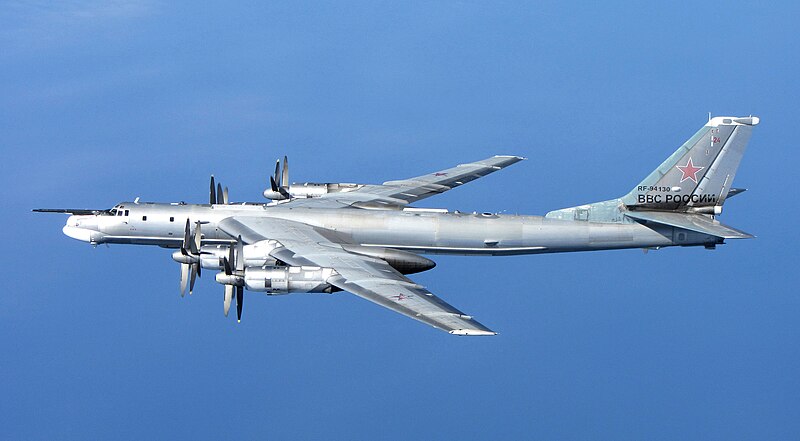
Tupolev Tu-95 (Wiki Info - Image: Wiki Commons)

Steve Herman

BANGKOK—The U.S. Embassy in Hanoi said it is unaware of any response from the Vietnamese government to its request that it stop allowing Russia to use a base to refuel bombers that have conducted provocative flights around U.S. territory in the Pacific.

The State Department late last week communicated its concerns privately to the Vietnamese government, embassy press officer Lisa Wishman told VOA on Thursday.

The embassy official said that although the U.S. government respects Vietnam's right to enter agreements with other countries, it wants Vietnam to ensure Cam Ranh Bay is not utilized by the Russian military "to conduct activities that could raise tensions in the region."

02 February 2015

News Story: Central Asian countries trade with China natural gas for weapons

HQ-9/FD-2000 missile launcher (File Photo)

China plans to sell HQ-9 surface-to-air missiles to its Central Asian neighbors of Uzbekistan and Turkmenistan to reduce the price it has to pay the two countries for natural gas, reports Kanwa Defense Review, a Chinese-language military magazine based in Canada, on Jan. 25.

In the past, Kazakhstan, Kyrgyzstan, Tajikistan, Turkmenistan and Uzbekistan were once the main production area for Soviet weapon systems during the Cold War era. Kazakhstan for example was a producer of torpedoes, missiles and other naval weaponry systems. In total, 11% of the Soviet Union's artillery and 18% of its tanks were produced in Kazakhstan. It was also responsible for manufacturing nuclear weapons for Moscow. Uzbekistan was the only state in the region capable to design and produce military aircraft.

After the collapse of Soviet Union, the five new nations began to sell those weapons systems to overseas markets. China was one of the buyers. In 1997, China was reported to have purchased 40 VA-111 Shkval torpedos from Kazakhstan.

Read the full story at Want China Times

04 August 2014

Editorial: Russia’s Strategic Pakistan Play


By Saurav Jha

It decision to end its embargo on weapons sales to Pakistan could have multiple benefits for Moscow.

Russia’s decision to go ahead with the sale of Mi-35 attack helicopters to Pakistan, even in the face of official Indian concerns, is being seen by some quarters as evidence of a “major” regional re-alignment in the wake of the American drawdown in Afghanistan.
In fact, the Russia-Pakistan dialogue for regional integration has been underway for some time now and beyond security cooperation, it is more fundamentally driven by Moscow’s push towards ‘southern” markets and Pakistan’s need for a capable yet politically “manageable” strategic sector trade and investment partner. The Mi-35 sale (if it does materialize) reflects the fact that the geo-economic stakes for both sides are now high enough for them to make a concerted push towards a long term compartmentalized working relationship in a manner not dissimilar to the way in which their more traditional partners – India for Russia and America for Pakistan – deal with each other. Indeed, in a world characterized by both competition and cooperation the heady rhetoric of “strategic partnership” means little and it is the transactional content that weighs on any relationship. Far more than cooperation in counter-terrorism, Russia and Pakistan will have to move forward quickly on Putin’s commitment to invest in the latter’s energy and metallurgy sectors for their relationship to be meaningful.
It could be argued that it was actually America’s entry into the region a decade ago that ultimately accentuated the circumstances that impel Russia and Pakistan closer to each other. Pakistan’s counter-terrorism cooperation with America salved with military aid has been toxic for domestic stability, as the situation in FATA and Waziristan reveal. As the tempo of internal stability operations has increased, Pakistan is keen to diversify away from America for certain classes of weaponry to a source that can supply cheaper and more rugged alternatives with a much smaller political price on the domestic front. The Mi-35 fits that bill and is likely to prove useful for Pakistani operations against the Tehrik-i-Taliban Pakistan (TTP) in mountainous areas, given its pedigree from the Afghan theater. At the moment Pakistan is using AH-1 Cobra Gunships that were originally obtained from America for use against Indian armoured formations in the plains and are proving expensive to use in operations against the TTP. Pakistan may not wish to be saddled with too much expensive American equipment that it can”t afford without generous aid. 

Read the full story at The Diplomat