Showing posts with label Sea Mine. Show all posts

07 September 2017

News Story: What War With North Korea Would Look Like - 20K NK Dead A Day

By ROB GIVENS

Relatively few Americans know many details about how a war between North Korean, the US, South Korean and United Nations force would look. One of them is Rob Givens, who served as the deputy assistant chief of staff for operations of U.S. Forces Korea and as special assistant to the Chairman of the Joint Chiefs of Staff. He shares the outlines of what would be a grim struggle, with tens of thousands dead or wounded each day on both sides — and that’s well before anyone who might go mad and use a nuclear weapon. Here’s some of what Defense Secretary Jim Mattis and Secretary of State Rex Tillerson are likely to tell lawmakers on Wednesday. Read on. The Editor.

We often hear war with North Korea is “unimaginable,” but, as North Korea presses ahead with its nuclear and missile tests, the unimaginable is becoming more possible. Gen. Joe Dunford, Chairman of the Joint Chiefs of Staff and President Trump’s top uniformed military advisor, described the potential conflict as, “horrific.” So what would this no-longer-so-unimaginable war look like?

Without getting into the important questions of how the war would start — which would certainly change key aspects of how combat operations proceeded — the basic aspects of conflict are predictable.

Thousands of aircraft will wage an epic battle across the entire Korean Peninsula. The two American Air Force fighter wings—100-plus fighter aircrafts permanently stationed there — accompanied by our South Korean partners would fight the opening minutes, striking against the North’s aged, but plentiful air forces while also bombing Kim Jong-un’s missiles and artillery.

If the North gains the initiative, we will have to accept higher risk going after targets before establishing our air superiority — meaning we will suffer higher losses. In short order, the air forces in South Korea would be joined by U.S. Navy, Marine, and Air Force fighters from Okinawa and Japan. U.S. bombers from around the globe would also be called in. Every square foot of North Korea would be in range.

Read the full story at Breaking Defense

14 August 2017

AUS: Deployable Mine Countermeasure Capabilities For Navy

The Royal Australian Navy is forging ahead with new technologies to counter the threat of sea mines to military and commercial vessels.

The Head of Navy Capability, Rear Admiral Jonathan Mead, said the prevalence and increasing sophistication of sea mines means the Royal Australian Navy must continue to improve the way it finds and disposes of these mines.

“New autonomous and remote-controlled technologies deployed from within the maritime task force provides the opportunity to find and dispose of sea mines more safely and efficiently,” Rear Admiral Mead said.

“In the 2030s, Defence will seek to replace its specialised mine hunting and environmental survey vessels with a single fleet of multi-role vessels embarking advanced autonomous and uninhabited systems.”

Rear Admiral Mead said these newly introduced systems are the first step in realising a future capability which would allow the Royal Australian Navy to clear sea mines with minimal risk to its people and assets.

“Thales Australia Ltd will deliver and support the new equipment over the next 15 years,” Rear Admiral Mead said.

The new capability will primarily be based and sustained at HMAS Waterhen in Sydney, New South Wales.

04 August 2017

USA: USS Pioneer returns from 2JA exercise

From Amphibious Force 7th Fleet Public Affairs

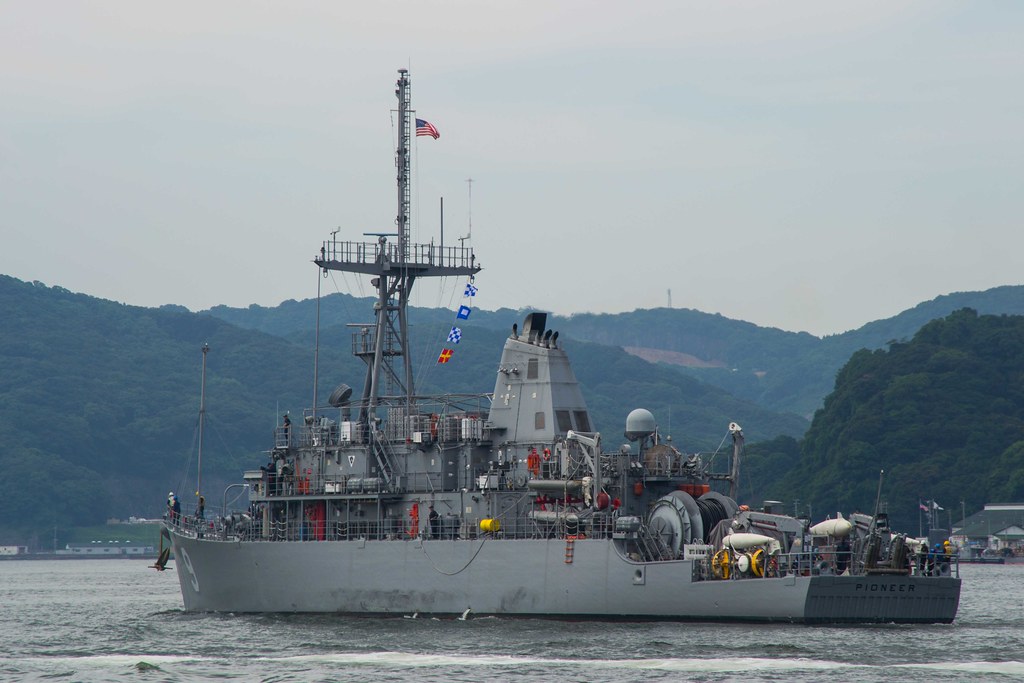
USS Pioneer (MCM 9) departs Sasebo, Japan to participate in the Mine Countermeasure exercise 2JA, July 14. (U.S. Navy/MC2 Jordan Crouch) >>

SASEBO, Japan - The forward-deployed mine sweeper USS Pioneer (MCM 9) returned to Sasebo Aug. 1 after completing the U.S.-Japan mine countermeasures exercise (MCMEX) 2JA near Ominato, Japan.

The 10-day exercise tested Pioneer’s ability to search for mine shapes and coordinate with Japanese Maritime Self Defense Force mine sweepers to potentially clear a safe route of navigation.

“It’s a great opportunity, working with the JMSDF,” said Lt. Cmdr. Brett Jasionowski, commanding officer, USS Pioneer. “When it comes to mine warfare they’re second to none.”

01 August 2017

USA: US, Japan conclude mine countermeasures exercise

By MC2 William McCann, USS Pioneer Public Affairs

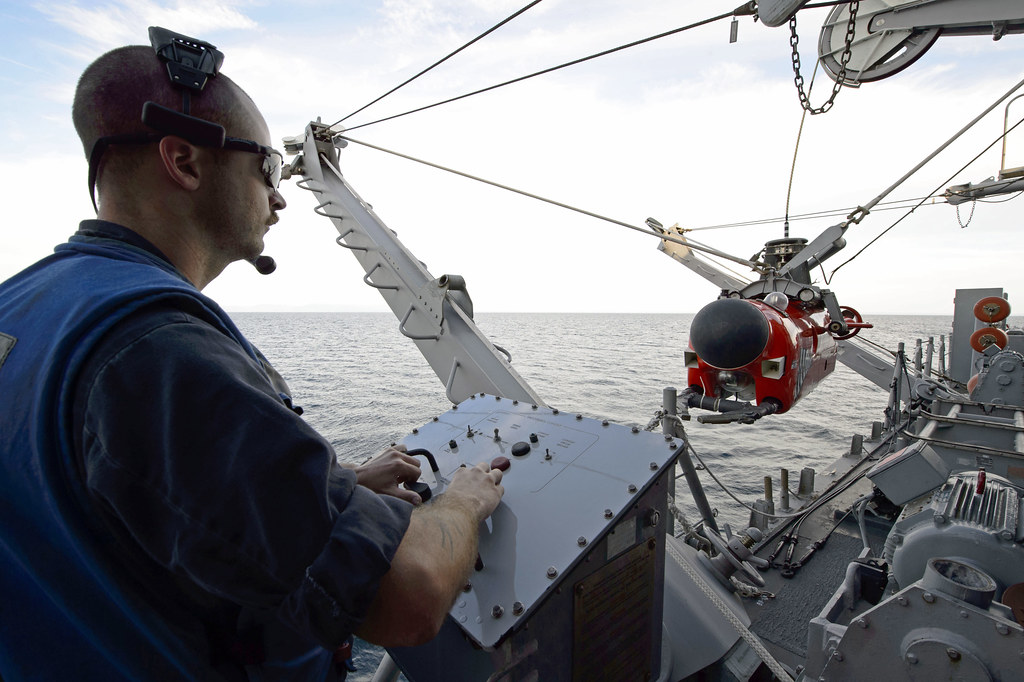
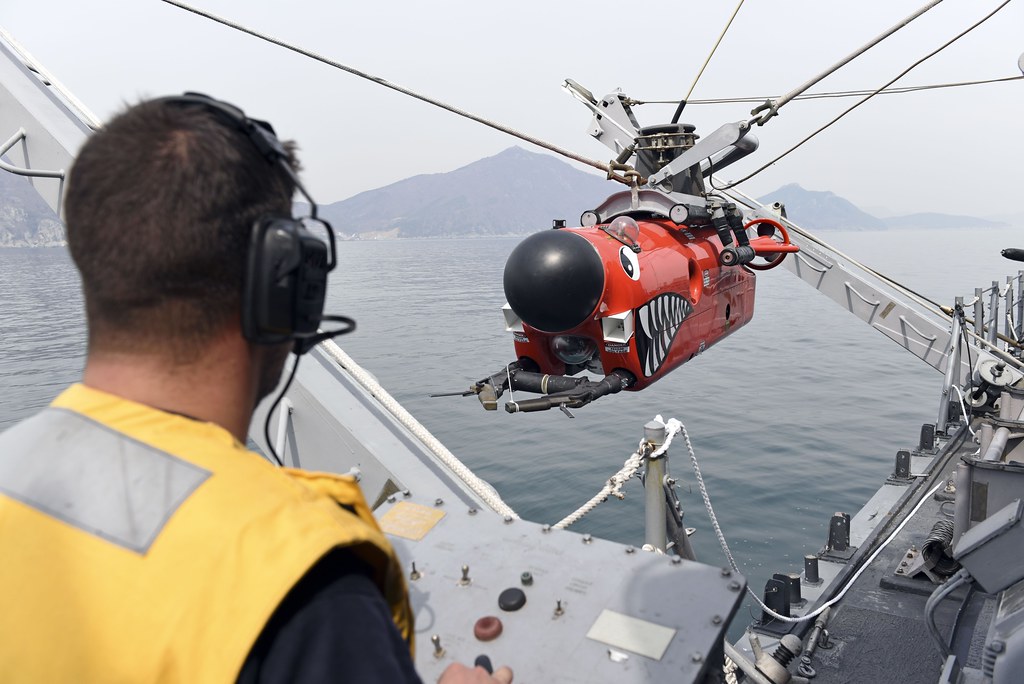
Mineman 1st Class Zachary Abel deploys a mine neutralization vehicle aboard USS Pioneer (MCM 9), July 26. (U.S. Navy/MC2 William McCann) >>

MUTSU BAY, Japan - U.S. naval forces and the Japan Maritime Self Defense Force concluded 2JA mine countermeasures exercise (MCMEX) after 10 days of unit-level and combined MCM-related drills on July 28.

2JA MCMEX is an annual bilateral exercise held between the U.S. and Japan to strengthen interoperability and increase proficiencies in mine countermeasures operations. This year marks the 100th time that the U.S. and the Japanese have conducted bilateral mine countermeasures together, often conducting them twice a year, since bilateral exercises of this type began in 1962.

The exercise brought together surface and air mine countermeasure units from both nations, teamed up with explosive ordnance disposal (EOD) personnel.

From personnel exchanges, to U.S. EOD embarking on mine countermeasures support ship JS Bungo (MST-464), to Japanese EOD launching out of a U.S. MH-53, the exercise emphasized working side-by-side.

25 July 2017

USA: US, Japan begin annual mine countermeasures exercise

From Amphibious Force 7th Fleet Public Affairs

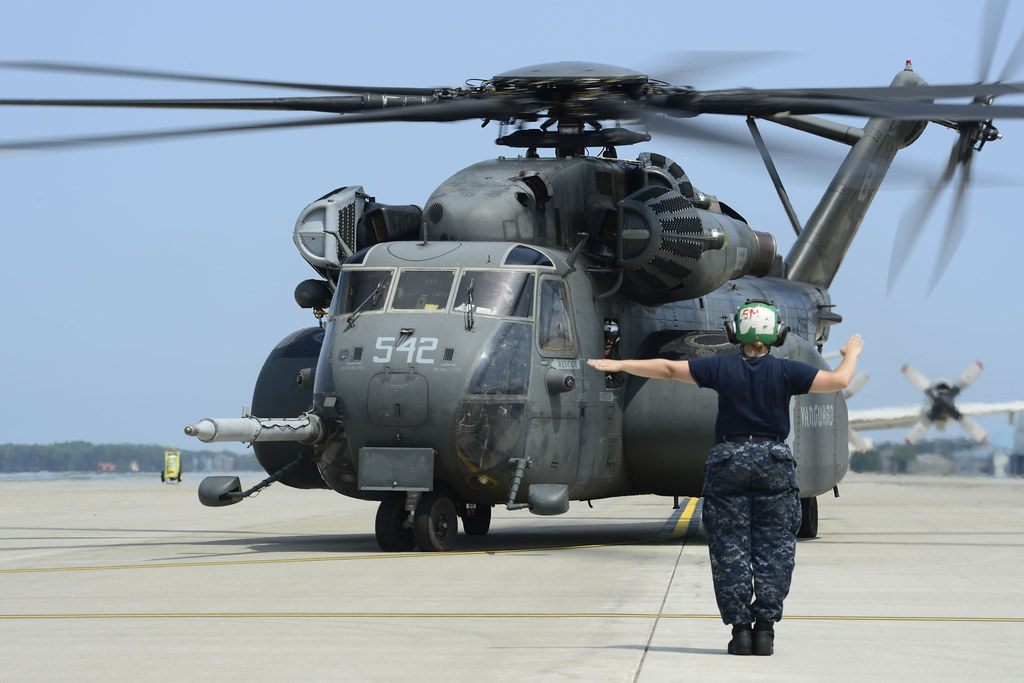
Aviation Structural Mechanic Airman Destiny Peaker signals an MH-53 Sea Dragon attached to Helicopter Mine Countermeasures Squadron 14, during operations at Misawa Air Base, Japan, July 20. (U.S. Navy/MC3 Samuel Bacon) >>

MUTSU BAY, Japan - A series of initial operations are taking place as U.S. and Japan forces prepare for more complex and integrated mine countermeasures operations as part of 2JA Mine Countermeasure Exercise (2JA MCMEX).

The annual exercise, which officially began July 19, brings together Japan Maritime Self-Defense Force (JMSDF) and U.S. Navy surface and air mine countermeasures assets, teamed with explosive ordnance disposal personnel.

The exercise is being held to strengthen interoperability and increase proficiencies in mine countermeasures operations.

“2JA is an incredible opportunity for our forces and our staff to conduct complex mine countermeasures operations with our much valued ally and friends, the Japanese Maritime Self Defense Force,” said Capt. Jim Miller, Commodore, Mine Countermeasures Squadron 7. “This is the second year I have personally been involved in 2JA, and I can say that it is great to be working with counterparts whom we established such close bonds with.”

01 June 2017

USA: U.S.-Japan forces set milestones for enhancing amphibious, mine warfare

By Lt. Adam Cole, Amphibious Force 7th Fleet Public Affairs

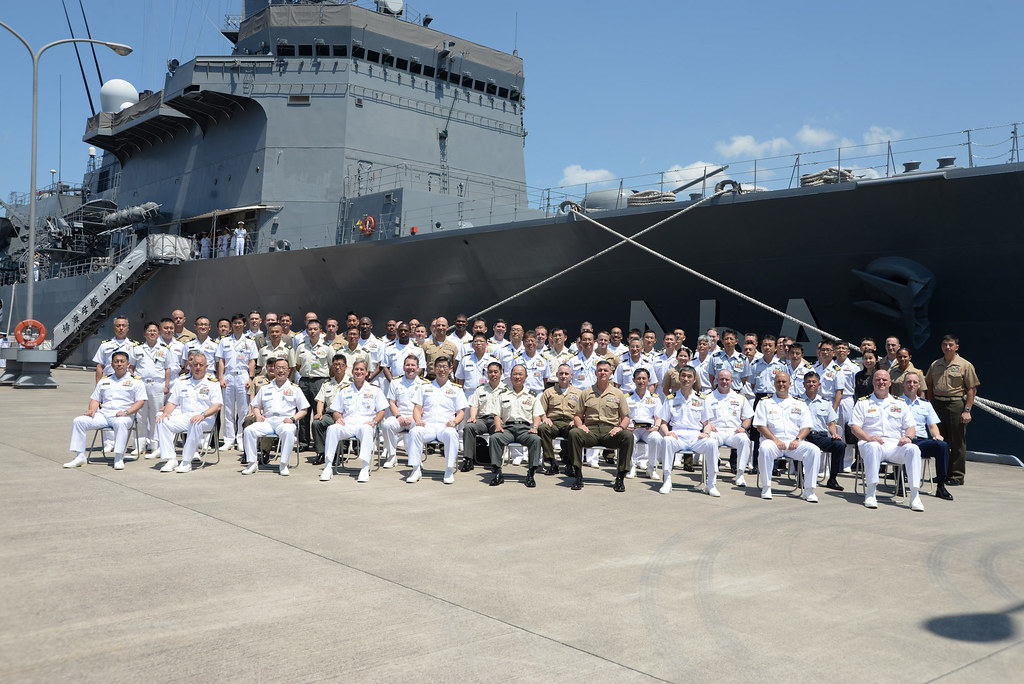
Participants of the U.S.-Japan bilateral amphibious and mine warfare staff talks pose for a group photo in front of JS Bungo (MST 464). (U.S. Navy/LT Adam Cole) >>

KURE, Japan - U.S. military and Japan Self Defense Force personnel comprising 34 different commands across ground, maritime, and air services met for bilateral amphibious and mine warfare discussions, May 22-24.

The staff talks were hosted by Japan Maritime Self Defense Force’s Mine Warfare Command, Japan’s counterpart to the U.S. Navy’s Amphibious Force 7th Fleet.

This year marked the 14th time these two staffs have met to maintain and enhance the bilateral partnership as well as dialogue on increasing integration for training and operations. Beginning last year, the talks were opened up to include landing force counterparts from U.S. Marine Corps and Japan Ground Self Defense force units. This year, the participation was extended even further to include Air Force and Japan Air Self Defense Force personnel.

20 May 2017

News Report: Indian Navy Looks to Buy Subsurface Vessels to Detect Undersea Threat

In the absence of the required number of minesweepers, the Indian Navy has started the process to procure remote-controlled portable underwater vessels to conduct explosive ordnance disposal operations in harbors and sea water up to 75 meters depth.

New Delhi (Sputnik) – Indian Navy wants three variants of the underwater vessel namely for detection/inspection, combat and training role. In fact, the Navy will purchase five underwater vehicles which may go up later. The purchase order is expected to be approximately $95 million: half of the total deal amount has to be invested in India under an offset clause of India’s Defense Procurement Policy 2016.

The GPS and inertial navigation system-enabled, 360-degrees maneuverable portable automatic underwater vehicles (PAUV) would be self-propelled using horizontal and vertical thrusters and onboard chargeable battery pack. The Navy wants PAUV to be deployable in rigid-hulled inflatable boats, inflatable crafts, and helicopters. An Indian Navy document demands two hours endurance capacity of the PAUV which can be controllable at a speed of five knots.

12 May 2017

News Report: India Left With Four Minesweepers Against Chinese Subs, Experts Fear for Safety

With just four minesweepers out of the 24 required to secure its region from minefields, the Indian Navy is in dire straits with the existing four also due to be decommissioned next year without any news of any induction of new minesweepers.

New Delhi (Sputnik) — The Navy recently decommissioned two minesweepers ships, INS Karwar and INS Kakinada. It has left for only four minesweepers against the requirement of at least 24 minesweepers to secure its region from minefields.

The Navy expressed its concern to the Ministry of Defense on this issue during the four-day long Naval Commanders' Conference which ended concluded on May 5, wherein the "top-level leadership of the Navy reviewed readiness to deploy over the entire range of missions in the maritime domain".

By the end of next year, the Indian Navy would have decommissioned all its existing minesweepers, without new inductions.

29 March 2017

USA: USS Warrior helps strengthen ROK, US mine countermeasures capability

By MC2 Jermaine M. Ralliford, Naval Forces Korea Public Affairs

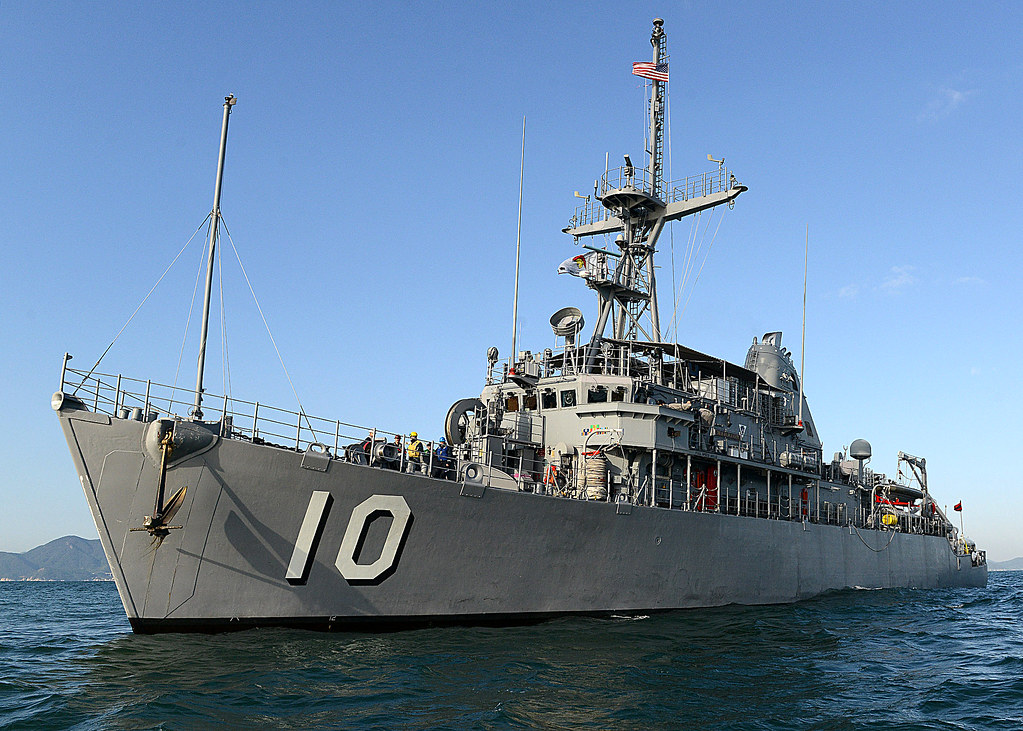
Mineman 1st Class Sean McDermott prepares to launch a mine-neutralization vehicle aboard USS Warrior (MCM 10) during exercise Foal Eagle. (U.S. Navy/MC2 Jermaine M. Ralliford) >>

WATERS SOUTH OF THE KOREAN PENINSULA - USS Warrior (MCM 10) successfully concluded a mine countermeasures exercise with the Republic of Korea Navy, March 29.

The exercise, designed to enhance the MCM warfare capabilities of both navies, was held March 19-29 off the coast of the southern city of Chinhae.

“It’s important to have a strong surface capability in order to hunt and neutralize those threats if called upon,” said Lt. Cmdr. Bill Carroll, Warrior's commanding officer, “and that is what we are doing with our ROK partners.”

Carroll stated that the Warrior, and other MCM class ships, give navies the ability to detect mines with sonar, disable them with neutralization vehicles, and sweep [search] for mines mechanically, acoustically and magnetically.

20 March 2017

USA: US, ROK navies enhance mine countermeasures capabilities during Foal Eagle

From U.S. Naval Forces Korea Public Affairs

USS Warrior (MCM 10) file photo. (U.S. Navy/MC1 Frank L. Andrews) >>

CHINHAE, Republic of Korea - The U.S. and Republic of Korea (ROK) navies began mine countermeasures training March 19 during exercise Foal Eagle 2017.

The combined training, scheduled to run through March 29, is designed to increase readiness and interoperability in mine countermeasures operations and enhance the theater security cooperation between the two navies.

“Mine warfare is a very real and incredibly serious threat that requires extensive training to be ready to counter if called upon,” said Lt. Cmdr. Bill Carroll, commanding officer of the mine countermeasure ship USS Warrior (MCM 10). “My crew and I are looking forward to this exercise, so we can train as one integrated MCM force and further hone our tactical and technical skills so that we are ready when called upon to execute real world operations.

During the exercise, U.S. and ROK Sailors, including explosive ordnance disposal divers, will work together to practice clearing shipping routes and to conduct training surveys.

Foal Eagle is a series of joint and combined field training exercises, conducted by the Combined Forces Command and U.S. Forces Korea component commands, which enhances the combat readiness, flexibility, and capabilities of the ROK and U.S. alliance.

MCMRON 7, commanded by Capt. James Miller, is a combined readiness and tactical staff responsible for mine countermeasures in the U.S. 7th Fleet area of responsibility. The squadron consists of four Avenger-class minesweepers forward-deployed to Sasebo, Japan, and a helicopter mine countermeasures detachment in Pohang, ROK.

11 March 2017

News Report: Indian Navy Can Be a Sitting Duck For Mines From Next Year

Indian Navy needs at least 24 mine counter-measure vehicles to plug the shortfall. China has more than 100 such minesweepers and mine counter-measure vehicles.

New Delhi (Sputnik) – The inordinate delay in procurement will leave the Indian Navy, the world’s fifth largest, without minesweepers which are essential for ships to detect, track and destroy mines laid by enemy forces to choke harbors and spread mayhem. This startling revelation came to light when the Indian government accepted before a parliamentary committee that all six mine counter-measure vehicles (MCMVs) currently operational in the Navy will be retired by 2018.

India had bought six MCMVs from the erstwhile Soviet Union in the 1970s. Last year, the Indian government agreed to build 12 new MCMVs with the South Korean collaboration at Goa Shipyard.

24 February 2017

News Story: Smart Mines, A Smaller Army, & The Trump Buildup That Won’t Happen - Winnefeld

Quickstrike-ER Sea Mine waiting to be loaded onto a B-52
By SYDNEY J. FREEDBERG JR.

SAN DIEGO: Trump’s promised defense budget boost probably won’t materialize, the former Vice-Chairman of the Joint Chiefs said today, so we can’t afford to grow a larger military. Instead of more ships and troops, retired Adm. James Winnefeld said in a rare public appearance, the military should prioritize investment in new ideas. His own service, for example, should overcome its post-1945 reluctance to lay mines off enemy shores and deploy networks of smart mines. The Army should cut soldiers to buy more modern equipment and stockpile a lot of it in Europe.

The defense world is suffering from “irrational exuberance,” Winnefeld warned the AFCEA-USNI West 2017 conference here this morning. It’s like Charlie Brown thinking Lucy is really going to let him kick the football this time, he said: There’s a “yawning gap between the expectations that are being raised regarding increases to our defense budget and the likely real outcomes.”

“All the talk about a major plus-up has got a lot of people in the services and in industry pretty excited about what we might do with all of this manna from heaven,” Winnefeld said, “(but) does anybody here believe our Congress will really deliver on this?” Trump’s deficit-busting agenda — a stronger defense, a border wall, new infrastructure, tax cuts, and by the way no reductions in entitlements — is too much for a legislature that can’t even pass routine annual spending bills on time, the admiral argued.

Read the full story at BreakingDefense

31 October 2016

News Story: PH, US forces conclude mine search, underwater search-and-retrieval training

Philippine Navy (PN) special operations operatives and their US counterparts recently concluded another exercise called the “Humanitarian Mine Action Assistance Training” which was held last Oct. 17 to 26 in Palawan. This was confirmed by Armed Forces of the Philippines (AFP) public affairs office chief Col. Edgard Arevalo Thursday.

The nine-day training activity took place at the Western Command’s Tide Pool Pier at Naval Station Apolinario Jalandoon, in Puerto Princesa, Palawan.

“It was a small unit subject matter expert engagement that has long been prior scheduled and participated in by only eight PN Special Operations personnel and four US counterparts,” Arevalo said.

Read the full story at Update.PH

19 October 2016

USA: U.S. MCM units join ROK Navy, regional partners for Clear Horizon

By PO2 Sarah Villegas, Expeditionary Strike Group 7 Public Affairs

Petty Officer 3rd Class Steve Lissberger, center, carries an MK 18 MOD 1 unmanned underwater vehicle to the water during exercise Clear Horizon in Jinhae. (U.S. Navy/PO2 Daniel Rolston) >>

BUSAN, Republic of Korea - U.S. mine countermeasures units commenced training with Republic of Korea (ROK) Navy and regional partner counterparts for the first multilateral iteration of the mine countermeasures (MCM) exercise Clear Horizon 2016, Oct. 16.

Clear Horizon is an annual multinational exercise designed to increase the capabilities and coordination between ships, aircraft, and undersea MCM forces between participating nations, which include the U.S., Republic of Korea, Australia, Canada, New Zealand, and the United Kingdom.

This is also the first year since the Korean War the Philippines and Thailand have participated in an exercise in the waters surrounding the Korean Peninsula.

13 October 2016

USA: US, ROK Navies Hone Mine Countermeasure Capabilities at First Combined Mine Warfare Event

From Commander, Naval Forces Korea, Public Affairs

CHINHAE, Republic of Korea (NNS) -- Commander, U.S. Naval Forces Korea (CNFK) and the Republic of Korea navy (ROKN), will join 10 United Nations Sending States in the first Combined Mine Warfare Event, Oct. 11-22.

The event combines the 3rd annual United Nations Command (UNC) Naval Component Commander (NCC) Mine Countermeasures (MCM) Symposium, a weeklong exchange of expertise designed to enhance mine countermeasure coordination and training, and the exercise Clear Horizon -- a live-action exercise which enhances cooperation and improves capabilities in mine countermeasures operations.

"Mines can disrupt sea lines of communication, which are vital to the economic vitality of this great nation and the entire Pacific region," Rear Adm. Brad Cooper, commander of U.S. Naval Forces Korea, said. "Mines impede our freedom of navigation in international waters -- a principle that underpins international commerce on the open seas and the prosperity of all of our countries represented here today -- and that is why we are here, to improve our collective ability to defeat the real threat of mines."

04 August 2016

USA: Navy's most complex mine warfare exercise wraps up

By MC2 Curtis D. Spencer

A U.S. Navy explosive ordnance disposal technician jumps from an MH-53E Sea Dragon helicopter during mine countermeasures training as part of RIMPAC 2016. (U.S. Navy/MC2 Bryan Jackson) >>

SAN DIEGO - The United States Navy conducted multifaceted mine countermeasures training with six nations for over four weeks, as part of the Southern California portion of exercise Rim of the Pacific 2016, June 30 through Aug. 4.

This year’s participants in Southern California included the Royal Australian Navy, Royal Canadian Navy, German Armed Forces, Japan Maritime Self-Defense Force, Mexican Navy and Chilean Navy.

“One of the purposes of RIMPAC is to increase interoperability with partner nations,” said Capt. Robert Baughman, vice commander of Task Force 177 for the Naval Surface and Mine Warfighting Development Center. “Through working together, we strengthened friendships and partnerships, so if we have to conduct a mine warfare clearance operation, we are capable, adaptive partners.”

02 August 2016

USA: USS Patriot returns to Sasebo after 2JA MCM exercise

From Amphibious Force 7th Fleet Public Affairs

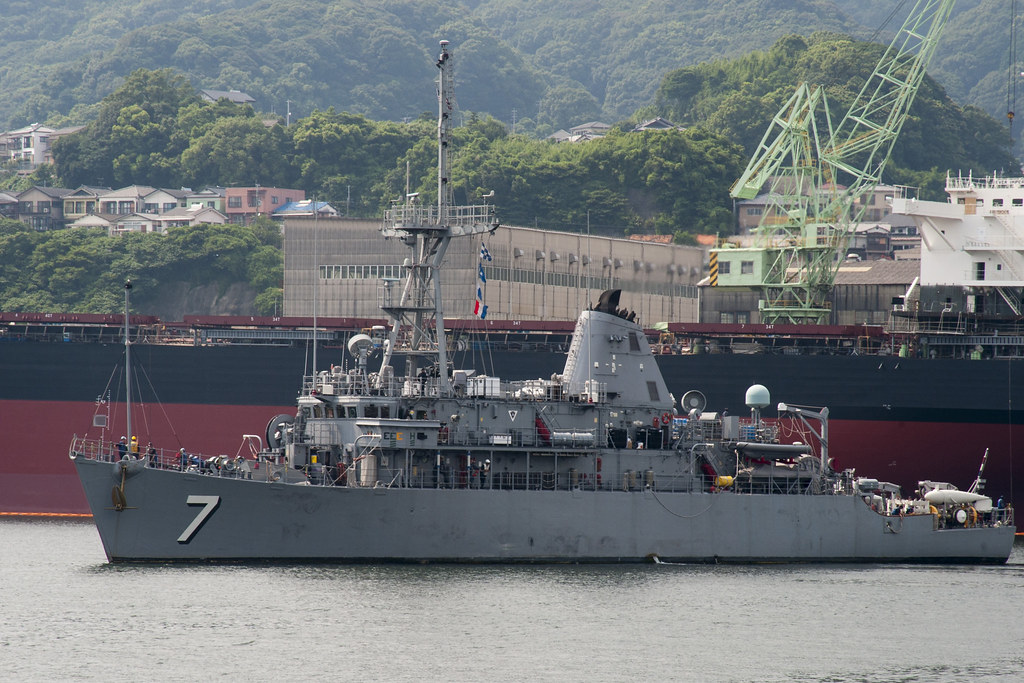
USS Patriot (MCM 7) returns to Fleet Activities Sasebo, Aug. 1. (U.S. Navy/MC3 Kristopher S. Haley) >>

SASEBO, Japan - The Avenger-class mine countermeasures ship USS Patriot (MCM 7) returned to Sasebo, Japan, after a routine patrol in U.S. 7th Fleet area of operations, Aug. 1.

During the ship's patrol, Patriot conducted a series of port visits throughout Japan and participated with the Japan Maritime Self-Defense Force (JMSDF) in the annual bilateral mine countermeasures training exercise 2JA.

"This crew performed superbly in both building relations ashore and executing our primary mission area of mine warfare," said Lt. Cmdr. Emily Royse, commanding officer of Patriot, who will relinquish command to former executive officer Lt. Cmdr. Joseph Hamilton in a change of command ceremony on Aug. 5. "The ability to sweep for mines and establish a Q-route in conjunction with our Japanese ally is a critical capability – and is why we do this type of training."

30 July 2016

USA: U.S., Japan complete mine countermeasures exercise

From Amphibious Force 7th Fleet Public Affairs

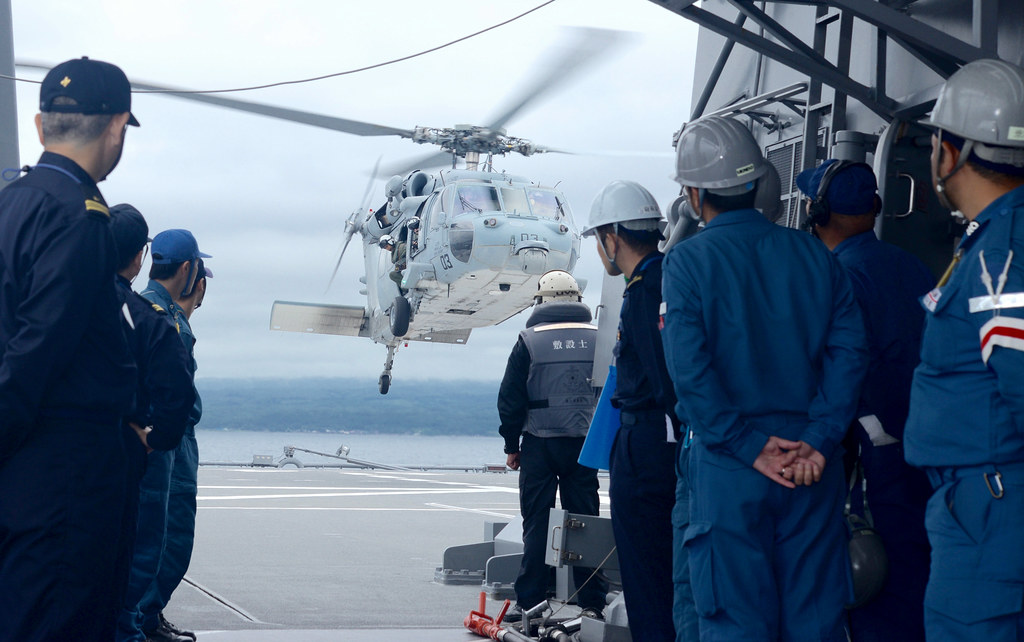
An MH-60S helicopter assigned to Helicopter Sea Combat Squadron (HSC) 25 lands aboard JS Bungo (MST 464) during MCMEX 2JA. (U.S. Navy/MC3 Alfred A. Coffield) >>

OMINATO, Japan - U.S. Navy and Japan Maritime Self Defense Force (JMSDF) mine countermeasures units completed Mine Countermeasures Exercise (MCMEX) 2JA 2016, July 28.

MCMEX is an annual bilateral exercise held between the U.S. and Japan to strengthen interoperability and increase proficiencies in mine countermeasures operations.

"We achieved a lot in terms of interoperability this 2JA," said Capt. Jim Miller, commodore, Mine Countermeasures Squadron (MCMRON) 7. "From putting Japanese explosive ordnance personnel on our helicopters as part of helicopter casting to passing Q-route data, we were truly able to work hand in hand to detect and neutralize potential mines."

16 July 2016

USA: U.S., Japan set for mine countermeasures exercise

From Amphibious Force 7th Fleet Public Affairs

In this file photo, USS Patriot (MCM 7) departs White Beach Naval Facility in Okinawa, Japan, earlier this year. (U.S. Navy/LT David Levy) >>

OMINATO, Japan - U.S. mine countermeasures (MCM) units and Japan Maritime Self-Defense Force MCM units are scheduled to commence the 2016 Mine Countermeasures Exercise (MCMEX) 2JA, July 17.

MCMEX 2JA is an annual bilateral exercise held between the U.S. and Japan to strengthen interoperability and increase proficiencies in mine countermeasure operations.

"We are looking forward to working again and learning from our Japanese counterparts," said Capt. Jim Miller, commodore, Mine Countermeasures Squadron (MCMRON) 7. "Mine countermeasures remains a critical capability in this dynamic theater. And this exercise will pay dividends in increasing our ability to execute these types of missions."

12 April 2016

Think Tank: Sea, air and land updates (12-APR-2016)

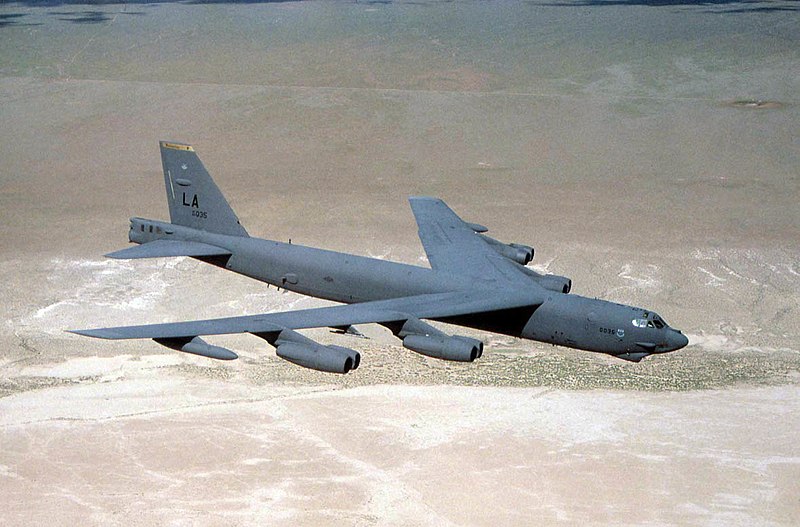
B-52 Stratofortress (Image: Wiki Commons)
Dione Hodgson, Ashleigh Sharp and Lachlan Wilson

Sea State

The Navy Times has published an article claiming that the White House prevented US commanders from criticising China ahead of a meeting between President Obama and President Xi at last month’s Nuclear Security Summit in Washington DC. According to two unnamed defence officials, National Security Adviser Susan Rice imposed a gag order on 18 March to ensure ‘maximum political manoeuvring’ on issues ranging from nuclear non-proliferation to trade. US PACOM Commander Admiral Harry Harris and others have been pushing for the US to confront China and its strategic gains in the South China Sea. The Pentagon has denied the claims.

Thirty nations are taking part in maritime exercises in the Persian Gulf and other Middle Eastern waters. Aimed at protecting international trade routes from militant threats, the International Mine Countermeasures Exercise, led by the US Navy, runs for the next two weeks. It’ll feature operations focusing on mine countermeasures, infrastructure protection and maritime security operations, and will also present an opportunity to demonstrate new technologies, including unmanned underwater vehicles and the expeditionary fast transport ship USNS Choctaw County.

Is that a destroyer or a fishing boat? That’s the question being asked by observers and analysts after the future USS Zumwalt participated in sea trials last month. The destroyer has a radar signature 50 times smaller than the current fleet, due to its angular shape and reflective material. USS Zumwalt is due to be fully operational in 2018.