Showing posts with label Military Sealift Command (MSC). Show all posts

26 July 2017

USA: USNS Montford Point concludes skin-to-skin operations in Saipan

By MC1 Micah Blechner, CTF 73 Public Affairs

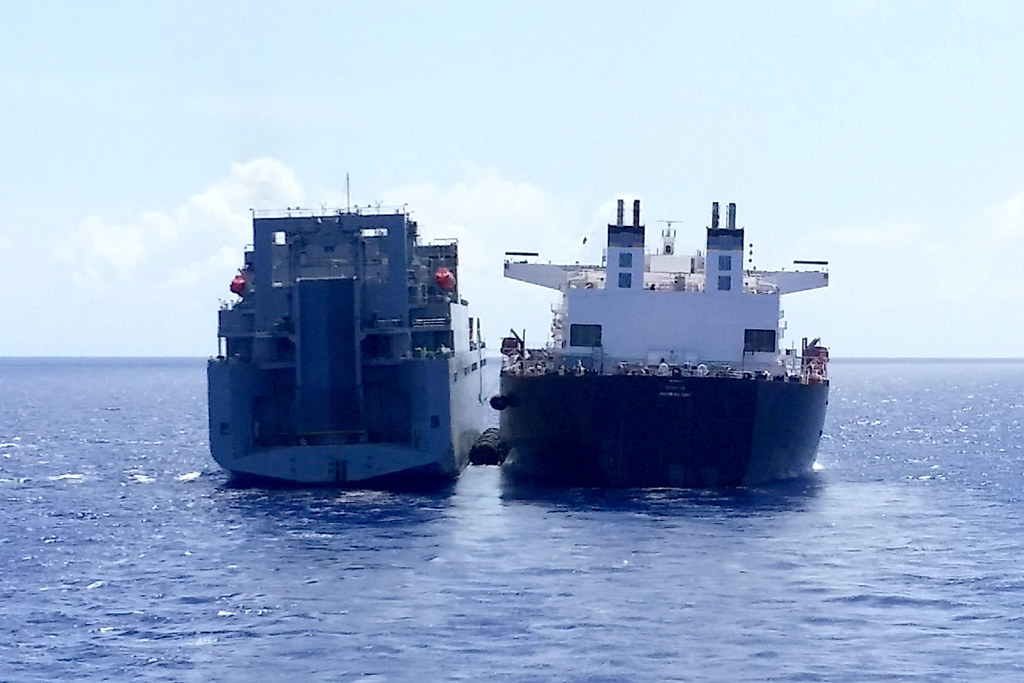
USNS Red Cloud (T-AKR 313), left, and USNS Montford Point (ESD 1) conduct “skin-to-skin” operations, July 11. (U.S. Navy photo) >>

SAIPAN - The expeditionary transfer dock USNS Montford Point (T-ESD 1) wrapped up a series of “skin-to-skin” operations in the vicinity of Saipan, July 22.

The operations took place over the course of 17 days and included complex maneuvering and positioning drills with ships from Maritime Prepositioning Squadron (MPSRON) 3.

“Skin-to-skin operations are game-changers when it comes to supporting the Marine Corps and other expeditionary forces with greater flexibility at sea,” said Mr. Paul Grgas, deputy director of operations for the Military Sealift Command Far East. “Expeditionary transfer docks like Montford Point can operate off shore and augment ship to shore movements during amphibious operations.”
17 July 2017

USA: Hawaii gathering focuses on Pacific F-35B deployment

From MC1 Phillip Pavlovich, U.S. Pacific Fleet Public Affairs

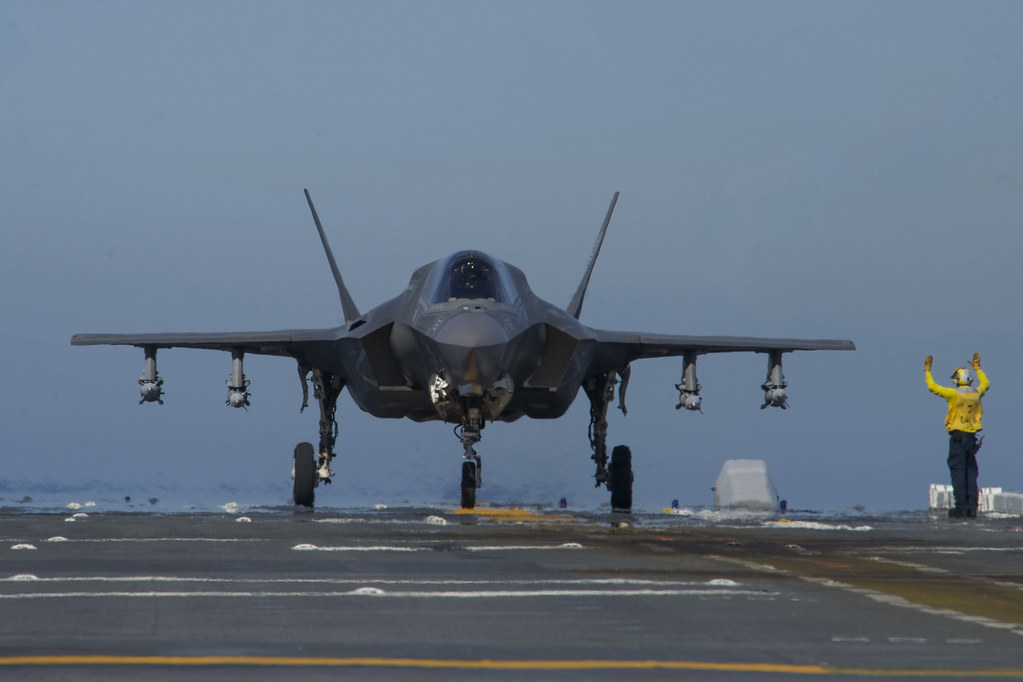
In this file photo, a Sailor directs an F-35B Lightning II aboard USS America (LHA 6) during operational testing in November 2016. (U.S. Navy/MC3 Kyle Goldberg) >>

PEARL HARBOR - Commander, U.S. Pacific Fleet (COMPACFLT) co-hosted a Joint Strike Fighter Sustainment Summit alongside Marine Corps Forces, Pacific at COMPACFLT headquarters, June 27-28.

Attendees focused on planning and preparing the logistical support for the F-35B Lightning II first deployment scheduled to happen within the next year.

"The summit was primarily built to maximize communication, elevate problems, and arrive at solutions. This aircraft has a unique maintenance and support structure, and it is unlike any aviation weapon system presently in the Navy and Marine Corps inventories," said Rear Adm. John Palmer, U.S. Pacific Fleet's director of logistics, fleet supply and ordnance.

A variety of organizations participated, including representatives Lockheed Martin, who built the aircraft, Pratt and Whitney, who built the engine, Marine Corps Headquarters, Defense Logistics Agency, Office of the Chief of Naval Operations, Commander Naval Air Forces Pacific, Commander Naval Air Forces Atlantic, Commander Naval Surface Forces Pacific, and Military Sealift Command.

28 June 2017

USA: USNS Sacagawea arrives in New Caledonia for Koa Moana 2017

By MC3 Madailein Abbott

USNS Sacagawea (T-AKE 2) sits anchored off shore of Kiribati during the most recent Koa Moana, June 19. (U.S. Navy/MC3 Madailein Abbott) >>

NOUMEA, New Caledonia -Military Sealift Command’s (MSC) USNS Sacagawea (T-AKE 2) arrived in New Caledonia June 25 in support of Koa Moana 17 (Ocean Warrior).

The Koa Moana exercise series seeks to enhance senior military leader engagements between allied and partner nations with a collective interest in military-to-military relations and to discuss key aspects of military operations, capability development, and interoperability.

From June-September 2017 U.S. Marines from 3rd Battalion, 4th Marine regiment, 1st Marine Division, stationed in Twentynine Palms, Calif. and Marines from Combat Logistics Battalion 3, 3rd Marine Logistics Group, from Marine Corps Base Hawaii have embarked aboard the USNS Sacagawea to participate in Koa Moana 17 events in Kiribati, New Caledonia, Solomon Islands, Timor Leste, Tonga, and Vanuatu. Working alongside these partner nations, the Marines also work alongside the crew of the USNS Sacagawea, attending shipboard training, drills, and sharing workload duties during their time onboard.

15 June 2017

USA: Military Sealift Command exercises ‘floating-pier’ concept

By Grady Fontana

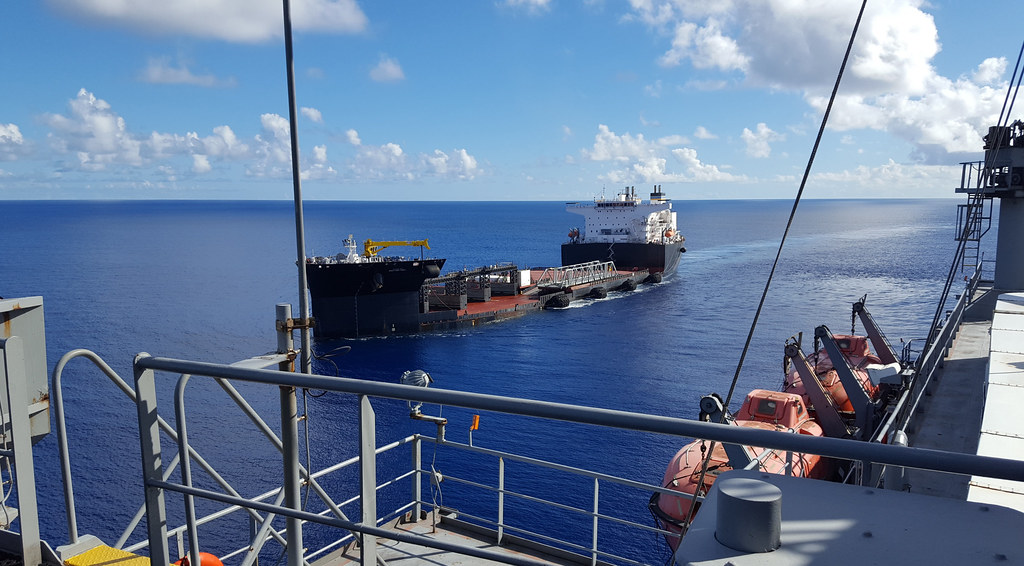
USNS Montford Point (T-ESD 1) approaches USNS Soderman (T-AKR 317) during a seabasing exercise near Saipan, July 13. (U.S. Navy photo) >>

PACIFIC OCEAN - Military Sealift Command’s (MSC) expeditionary transfer dock USNS Montford Point (T-ESD 1) and large, medium-speed, roll-on/roll-off (LMSR) ship USNS Soderman (T-AKR 317) performed a “skin-to-skin” (S2S) maneuver in the vicinity of Saipan to demonstrate MSC’s unique seabasing capability, July 12-13.

The S2S maneuver is achieved by the two ships connecting while the Montford Point acts as a floating pier for a simulated offload. The event displayed the two ships’ ability to transfer large cargo at sea.

During the first day of the exercise, the two vessels conducted touch-and-go maneuvers, when the the ships navigated alongside each other and were moored together. On the second day, the vessels successfully conducted the S2S.

09 March 2017

USA: Pacific Partnership 2017 makes inaugural Sri Lanka mission stop

By Lt. j.g. Emily Wilkin, Pacific Partnership Public Affairs

USNS Fall River (T-EPF-4) arrives in Hambantota, Sri Lanka, to participate in a Pacific Partnership 2017 mission stop. (U.S. Navy/MC2 Joshua Fulton) >>

HAMBANTOTA, Sri Lanka - Pacific Partnership 2017 made its initial mission stop in Hambantota, Sri Lanka, March 7, with the arrival of Military Sealift Command expeditionary fast transport USNS Fall River (T-EPF 4).

This marked the first mission to Sri Lanka in the 12-year history of the annual civil-military operation, and the Pacific Partnership mission in Sri Lanka continues through March 18 and will make follow-on mission stops in Malaysia and Vietnam.

Pacific Partnership is the largest annual multilateral humanitarian assistance and disaster relief (HA/DR) preparedness mission conducted in the Indo-Asia-Pacific, and aims to enhance regional coordination in areas such as medical readiness and preparedness for man-made and natural disasters.

Participating in this year's Sri Lanka mission are partner military and non-government personnel from the United States, Australia, and Japan.

06 September 2016

USA: U.S. Navy staffs in Singapore test afloat watch stations

By MC2 Joshua Fulton, CTF 73 Public Affairs

Expeditionary fast transport ship USNS Millinocket (T-EPF 3) file photo. (U.S. Navy/MCC Christopher E. Tucker) >>

SINGAPORE - Navy Reservists and staff from Commander, Logistics Group Western Pacific and Military Sealift Command Far East operated watch stations aboard the expeditionary fast transport ship USNS Millinocket (T-EPF 3) Aug. 22 - Sept. 2 as part of exercise Ulchi Freedom Guardian.

The utilization of platforms like Millinocket for logistical support operations enhances the ability of the U.S. 7th Fleet to conduct agile expeditionary logistics during operational contingencies and peacetime operations.

“Millinocket is a multi-mission platform and we’re testing the ship’s ability to conduct command and control of logistics assets in a variety of expeditionary environments,” said Cmdr. Alex Davila, N5 plans and exercises director for COMLOG WESTPAC/Task Force 73. “Ulchi Freedom Guardian provided an ideal venue for our staff to direct logistical operations and coordinate closely with operators across the fleet and throughout the Korean peninsula.”

28 June 2016

USA: Great Green Fleet instills culture of energy efficiency, flexibility

From John C. Stennis Strike Group Public Affairs

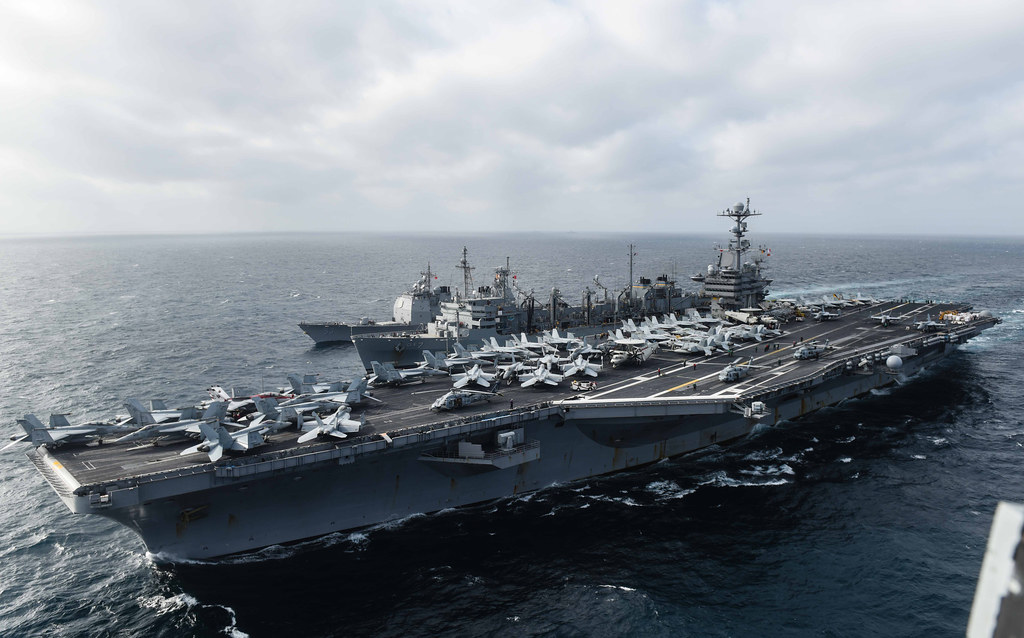
In this file photo, USS John C. Stennis (CVN 74) participates in a replenishment at sea in March with USNS Rainier (T-AOE 7) and USS Mobile Bay (CG 53), which is receiving an advanced biofuel mixture. (U.S. Navy/MC2 Andrew P. Holmes) >>

PACIFIC OCEAN - Named to honor President Theodore Roosevelt's Great White Fleet, the Navy's Great Green Fleet is ushering in a new era of energy innovation.

A centerpiece of this yearlong initiative is John C. Stennis Strike Group (JCSSG), which departed on a regularly scheduled Western Pacific deployment in January and is scheduled to join the Rim of the Pacific (RIMPAC) exercise later this month.

Using alternative fuel sources, energy conservation measures (ECMs) and operational procedures, the strike group is transforming its energy use to become a more flexible fighting force.

"As a whole, these energy saving measures allow us to be on station longer and to do our job better," said Cmdr. Walter C. Mainor, commanding officer of USS William P. Lawrence (DDG 110). "The Navy has been at the forefront of energy innovation [for generations]. From coal to steam to oil, this is just another measure that the Navy is taking on and leaning forward for energy innovation."

31 May 2016

USA: Teamwork, training key to USNS Mercy MEDEVAC of South Korean sailor

By MC1 Elizabeth Merriam, Pacific Partnership Public Affairs

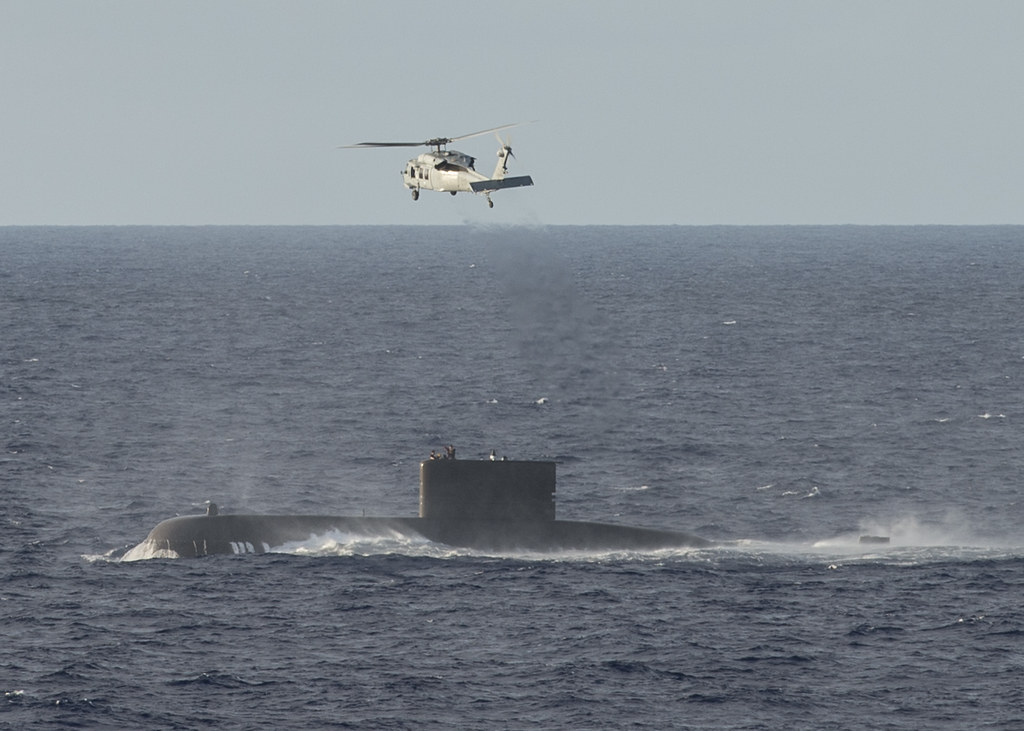
An MH-60S Seahawk assigned to Helicopter Sea Combat Squadron (HSC) 21 performs a medical evacuation of a sailor from Republic of Korea Submarine SSK Lee Eok Gi (SS 071) to hospital ship USNS Mercy (T-AH 19). (U.S. Navy/MC1 Elizabeth Merriman) >>

PACIFIC OCEAN - The hospital ship USNS Mercy (T-AH 19) conducted a medical evacuation May 27 to assist a Republic of Korea sailor in need of medical attention. Pacific Partnership 2016 Mission Commander, Capt. Tom Williams, praised the work of the entire mission team to complete the MEDEVAC successfully.

“I appreciate the flexibility and teamwork of the [Military Sealift Command] crew who worked hard this morning to get us in position, as well as our HSC 21 teammates who went out and conducted the personnel transfer with professionalism and safety,” said Williams.

Embarked Helicopter Sea Combat Squadron (HSC) 21 launched an MH-60S helicopter from Mercy to recover the sailor and returned him to the hospital ship. Crew members facing the challenge of airlifting the sailor from the surfaced submarine relied on training and past experience to find the right procedure to transport him safely.

11 April 2016

USA: USS Emory S. Land Returns to Guam, New Homeport

By Mass Communication Specialist 3rd Class Jason Amadi

USS Emory S. Land (AS 39) file photo. (U.S. Navy/MC1 David R. Krigbaum) >>

NAVAL BASE GUAM - The submarine tender USS Emory S. Land (AS 39) returned to its homeport in Guam following a five-month deployment, April 11.

Emory S. Land’s return is its first since officially shifting homeport from Diego Garcia to Guam, Dec. 23.

“We’re excited to be back in Guam,” said Capt. Mark A. Prokopius, commanding officer of USS Emory S. Land. “Our Sailors were able to accomplish many great things during this deployment and I look forward to what we’ll be able to accomplish now that we’re back in our homeport.”

06 April 2016

USA: MSC Ships Deliver Marines, Cargo to Philippines for Balikatan

By Grady Fontana, Military Sealift Command Far East

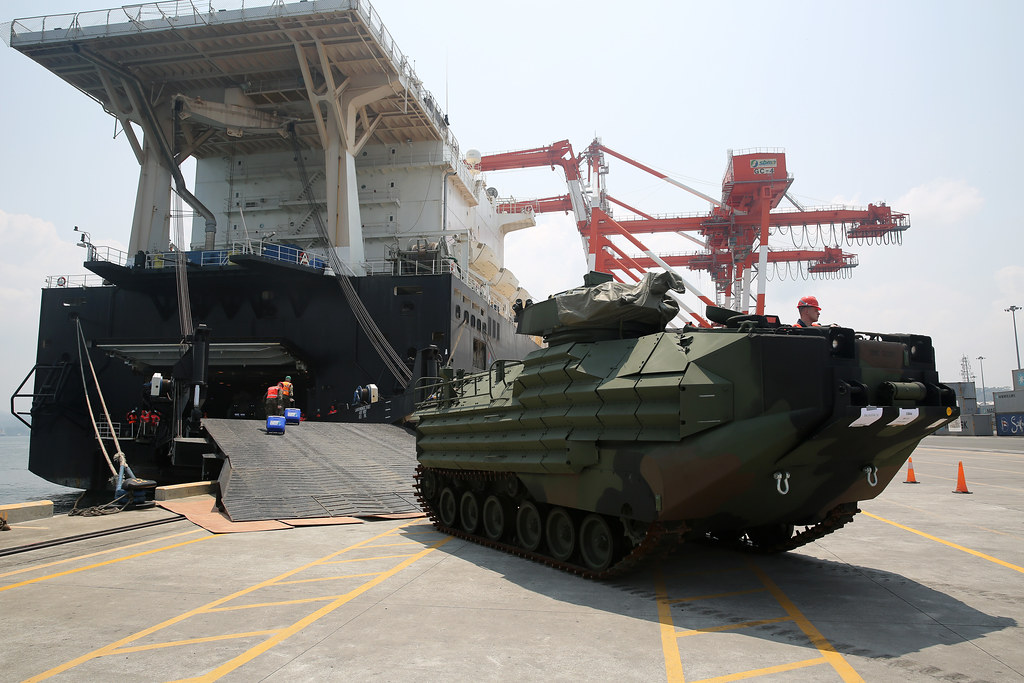
An AAV-7 Amphibious Assault Vehicle rolls off the ramp of maritime prepositioning force ship USNS 1ST LT Jack Lummus (T-AK 3011) in preparation for exercise Balikatan 16. (U.S. Navy/Grady T. Fontana) >>

OLONGAPO, Philippines - Military Sealift Command’s (MSC) maritime prepositioning force (MPF) ship USNS 1ST LT Jack Lummus (T-AK 3011) arrived at Subic Bay here, March 26-29, and offloaded her cargo to 3rd Marine Expeditionary Force Marines in preparation for exercise Balikatan 16 (BK16).

BK16, in its 32nd iteration, is scheduled to take place on the Philippine islands of Luzon, Palawan, and Panay and is an annual bilateral exercise that involves U.S. military and Armed Forces of the Philippines personnel and subject matter experts from Philippine Civil Defense agencies.

At the end of the two-day offload, the Lummus discharged more than 100 personnel, 157 vehicles and 12 shipping containers of equipment.

17 March 2016

USA: MSC Ships Perform 'Skin-to-Skin' Maneuver

By Mass Communication Specialist 3rd Class Madailein Abbott

USNS GYSGT Fred W. Stockham (T-AK 3017) and USNS Montford Point (T-ESD 1) connect during exercise Ssang Yong off the coast of the Republic of Korea. (U.S. Navy/MC3 Madailein Abbott) >>

POHANG, South Korea - Military Sealift Command's maritime prepositioning force ship USNS GYSGT Fred W. Stockham (T-AK 3017) and expeditionary transfer dock USNS Montford Point (T-ESD 1) performed a "skin-to-skin" (S2S) maneuver as part of exercise Ssang Yong 16, March 13.

The operation enabled the two ships to test capabilities as well as practice transferring large cargo, such as vehicles, at sea.

The S2S maneuver is conducted by the two ships connecting side-by-side while the Montford Point acts as a floating pier for a simulated offload. The Stockham can discharge equipment onto the Montford Point through a connecting ramp. The equipment can then be loaded into landing craft air cushion (LCAC) for transfer to shore, further enhancing Marine Corps and naval integration.