Showing posts with label Istanbul Process. Show all posts

07 December 2016

News Report: Tensions Between India, Pakistan Undermining Regional Alliances

Ayesha Tanzeem

ISLAMABAD, PAKISTAN — Tensions between India and Pakistan are spoiling efforts to try to tackle the region's security problems, as the nuclear-armed neighbors have difficulty finding issues on which they can work together.

A regional conference that India recently hosted on Afghanistan fell hostage to a "[b]lame game, rather than constructive engagement," wrote Imtiaz Alam, a Lahore-based journalist and analyst, in his column for the English language The News.

Another regional conference, scheduled for last month in Pakistan, was canceled because of discord with India.

"I don't think you can have any kind of effective regional cooperation in which these two countries are involved until the India-Pakistan confrontation is resolved," said Ajai Sahni, executive director of the Institute for Conflict Management in New Delhi.

South Asia is not a well-integrated region, and few countries in the region are working together to address common problems. One of the few alliances developed to change that has struggled to perform. Under the best of circumstances, organizations like the South Asian Association for Regional Cooperation, or SAARC, have fought to be effective.

"Every meeting of SAARC used to turn into a confrontation between India and Pakistan," said Sahni.
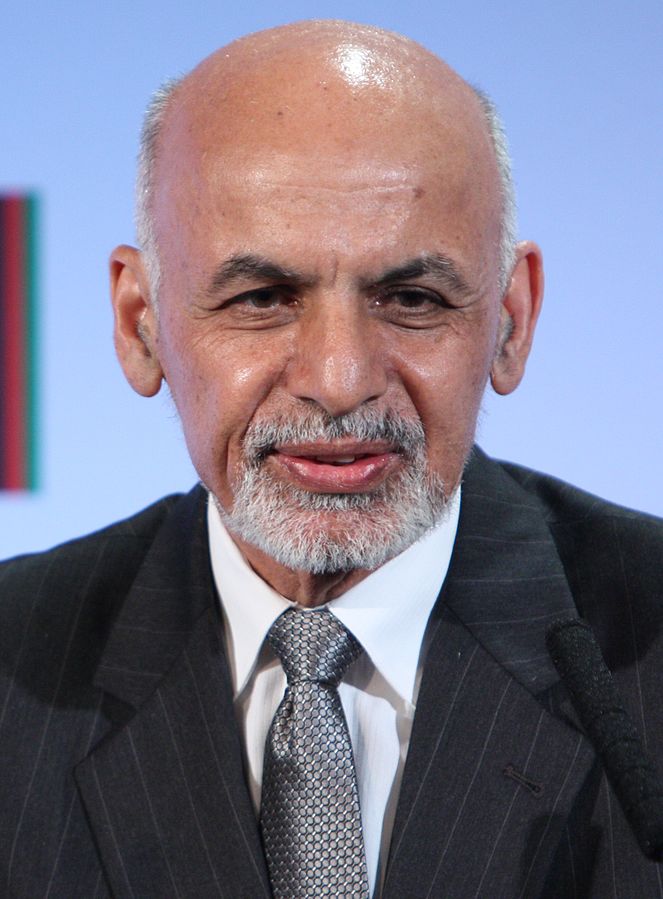
News Story: It's Pakistan's Turn To Open The Door - Ghani

Ashraf Ghani  (Image: Wiki Commons)
Speaking at the Heart of Asia Conference in India this week, Afghan President Ashraf Ghani sharply criticized Pakistan's role in abetting terror in the region, alleging that without Pakistani state support, the Taliban "wouldn't survive beyond a month".

Following this speech he had an exclusive interview with the Hindu newspaper, and spoke of his frustration with Pakistan, friendship with India and hopes for the region.

Asked why he singled out Pakistan at the conference, Ghani said: "I engaged Pakistan, I went there and not only visited with the civilian leadership but with the military leadership.

"I even went to their GHQ (military headquarters), because each country has their own distinct place for institutions.

"My message was that there was a window. It could be broadened to a door or a corridor, or it could shut. We did everything to ensure peace with Pakistan.

"2015 and 2016 have been extremely difficult years and the violence that has been inflicted on our people needs to be registered. To be quiet when people are dying is not acceptable. I am an elected political leader, I need to reflect my people's sentiment. Because the question of terrorism is not just a threat to us but to Pakistan and the Asian region, and hence the need for a public statement," he said.

Asked whether he thought the "window" of opportunity was indeed closed, he said Pakistan needs to open it. "We opened the window, now it's closed, so it's their turn to open it."

Read the full story at TOLOnews

News Story: Ghani Said What India Wanted To Hear: Aziz

Heart of Asia -  Istanbul Process
by Sharif Amiri

In response to President Ashraf Ghani's remarks about Pakistan at the Heart of Asia Conference in India, Sartaj Aziz, Foreign Affairs Adviser to Pakistan's Prime Minister, said the Afghan leader was siding with India in saying what he did in a country "which is hostile to Pakistan".

"One can understand their anxiety, and we also understand that (Afghan President) Ashraf Ghani making a statement on a soil which is hostile to Pakistan. Obviously he was trying to follow their preferences, what they would like to hear," Aziz said.

However, a number of Afghan analysts supported the remarks by Ghani and said further efforts to strengthen ties with Pakistan would not be effective.

"The president should take a harsh stance inevitably, because all his efforts to improve ties with Pakistan saw no results," said Haroon Mir, a political affairs analyst.

Read the full story at TOLOnews

06 December 2016

News Story: 14 Nations Adopt Heart Of Asia Declaration

Heart of Asia - Istanbul Process
Following the one-day Heart of Asia ministerial conference in Amritsar, India, 14 countries in the region adopted a declaration and called for an immediate end to all forms of terrorism and to the financing of the problem.

The declaration stated that what was of concern was the "gravity of the security situation in Afghanistan in particular and the region and the high level of violence caused by the Taliban, terrorist groups including Daesh and its affiliates, the Haqqani Network, al-Qaeda, Islamic Movement of Uzbekistan, East Turkistan Islamic Movement, Lashkar-e-Taiba, Jaish-e-Mohammad, TTP, Jamaat-ul-Ahrar, Jundullah and other foreign terrorist fighters.

"We demand an immediate end to all forms of terrorism, as well as all support to it, including financing of terrorism. We recognize that terrorism is the biggest threat to peace, stability and cooperation in our region. We encourage the international community to continue to assist the Government of Afghanistan.

"We strongly call for concerted regional and international cooperation to ensure elimination of terrorism, in all its forms and manifestations, including dismantling of terrorist sanctuaries and safe havens in the Heart of Asia region, as well as disrupting all financial, tactical and logistical support for terrorism.

"In this regard, we call upon all states to take action against these terrorist entities in accordance with their respective national counter terrorism policies, their international obligations and the UN Global Counter Terrorism Strategy 2006. Furthermore, we encourage early finalization of the Comprehensive Convention on International Terrorism with consensus."

The declaration also called on the international community to further strengthen international and regional cooperation towards sustained efforts for a secure, stable and prosperous Afghanistan.

Read the full story at TOLOnews

05 December 2016

News Report: Heart of Asia Conference Members Support Regional Counterterrorism Strategy

Heart of Asia - Istanbul Process
The participating countries of the Heart of Asia conference supported Afghanistan's initiative in taking the lead in exploring a regional counter-terror strategy, in accordance with the established principles of the UN charter, according to adopted declaration.

AMRITSAR (India) (Sputnik) — The participating countries of the Heart of Asia conference have voiced their support for the regional strategy framework to combat terrorism, developed by Afghanistan, according to the declaration adopted at the 6th Conference on Sunday.

"We welcome and support Afghanistan's initiative in taking the lead in exploring a regional counter-terror strategy, in accordance with the established principles of the UN charter, which we agreed was necessary when we last met in Islamabad in December 2015," the declaration stated. 

The countries are calling for expert discussions on the draft framework strategy to be held as soon as possible with a view to its final approval at a meeting of senior officials, to be held within three months. 

News Report: Afghan President - Taliban Won't Last Without Pakistan Support

Heart of Asia - Istanbul Process
Anjana Pasricha

NEW DELHI, INDIA — Afghan President Ashraf Ghani told an international conference held in the northern Indian city of Amritsar that the Taliban insurgency in his country would not survive without support from Pakistan and called for the setting up of a fund to combat extremism.

Referring to an upsurge of violence in his country by militant groups, the Afghan leader said, "Some still provide sanctuary in support or tolerate these networks. As Mr. (Mullah Rahmatullah) Kakazada, one of the key figures in the Taliban movement recently said if they did not have sanctuary in Pakistan, they would not last a month."

Afghanistan's ties with Pakistan have come under strain as it grapples with increased militant attacks. Pointing out that his country had suffered the highest number of civilian casualties and military related deaths last year, Ghani said this "was unacceptable."

In his remarks at the conference, Pakistan's top foreign ministry official, Sartaj Aziz, said the security situation in Afghanistan is complex and it is "simplistic" to blame one country for the recent upsurge in violence. Aziz called for "an objective and holistic view."

News Story: 6th Heart of Asia Conference Gets Underway In Amritsar & Ghani, Modi Officially Open Heart Of Asia Conference

The Heart of Asia - Istanbul Process
6th Heart of Asia Conference Gets Underway In Amritsar

The 6th Heart of Asia ministerial conference starts Sunday in Amritsar city in the northwestern Indian state of Punjab.

At least 40 countries will be represented along with the European Union and international organizations.

The conference will be officially opened by President Ashraf Ghani and Prime Minister Narendra Modi.

Ghani arrived in Amritsar Saturday night where he was welcomed by Modi.

"Thank you Mr. Prime Minister Narendra Modi for the warm welcome! It is a great honor to be back in India with you," Ghani said after his arrival.

Read the full story at TOLOnews

--

Ghani, Modi Officially Open Heart Of Asia Conference

Afghan President Ashraf Ghani and India's Prime Minister Narendra Modi jointly opened the 6th Heart of Asia ministerial conference on Sunday in Amritsar city in the northwestern Indian state of Punjab.

In his address to delegates, Ghani said the summit takes place during an extremely important time and that it will hopefully help to prepare for 2017 and beyond.

Ghani said that last year, Afghanistan suffered its highest number of casualties to date and that "this is unacceptable".

He said the undeclared war against Afghanistan had significantly increased in 2016 – especially after the Brussels Summit, in October.

He said that close to 30 terrorist groups, as named by the United Nations, were trying to establish a base in Afghanistan.

He also warned that the response of states to the threat of terrorism has been fragmented and some still provide sanctuary or support to these groups.

Ghani suggested a regional counter-terrorism fund be established to fight the threat but also said that there is a need to identify cross-border activities.

Read the full story at TOLOnews

03 December 2016

News Story: Afghan Peace, Stability To Top Agenda at Heart of Asia Summit

Istanbul Process/Heart of Asia Summit
by Sayed Tariq Majidi

Ministry of Foreign Affairs (MoFA) said Friday that the issue of peace and stability in Afghanistan will dominate the agenda of the 6th Heart of Asia Conference scheduled to be held in Amritsar, in India on Saturday.

Delegations from 40 nations, along with regional and international organizations are set to attend the key summit amid the deteriorating security situation in Afghanistan and the ongoing tension between India and Pakistan over Kashmir.

MoFA deputy spokesman Khairuallah Azad stated Friday that the summit would help deal with the ongoing crisis in the region particularly the war against terrorism and militancy.

"The Heart of Asia conference where Afghanistan will be on top of the agenda provides an appropriate platform for regional countries to discuss the regional problems, insecurity and terrorism. At the sidelines of the summit, Afghan officials will also hold bilateral and multilateral talks with officials from other countries," said Azad.

Meanwhile, the Pakistan government has confirmed that Sartaj Aziz advisor to the prime minster on foreign relations will attend.

"India has been instrumental in scuttling the SAARC summit, and Pakistan despite all negativity of India is going to participate in the Heart of Asia Conference," the foreign office spokesman Nafees Zakaria said at a weekly press briefing.

Read the full story at TOLOnews

30 November 2016

News Report: India Considers More Active Military Role in Afghanistan

An Afghan Air Force AN-32 (Image: Wiki Commons)
India has assessed requirement of spare parts to restore dozens of Russian made military helicopters and transport aircraft. India remains non-committal to supply military spare parts to Afghanistan despite having unique agreement with Russia since year 2014.

New Delhi (Sputnik) — India may be willing to play a more active military role in Afpak theatre as New Delhi might seek support from Moscow to restore Afghan Government's Soviet-era idle helicopters and military equipment.

Indian Prime Minister Narendra Modi could discuss the issue with leaders of Afghanistan and Russia during the sixth ‘Heart of Asia' conference to be held this week-end in the border town of Amritsar. 

Afghanistan had presented a wish list of spare parts for refurbishing over four dozen helicopters and some An-32 medium lift aircraft. Afghanistan has also requested brand new T-72 tanks, 105 mm howitzers and AN-32 transport planes. 

News Story: India Moves To Scale Up Military Aid To Afghanistan

An-32 of the Afghan Air Force (Image: Wiki Commons)
After supplying four attack helicopters to Afghanistan, India is quietly moving to qualitatively scale up military assistance in terms of long-term spares and support, The Hindu reported on Monday.

According to officials, this involves a trilateral framework with Russia, who said it is likely to be discussed by Afghanistan President Ashraf Ghani and Prime Minister Narendra Modi when they meet on the sidelines of the sixth Heart of Asia (HoA) ministerial conference in Amritsar later this week.

The Hindu quoted defense and diplomatic sources as saying that two Indian Air Force technical teams visited Afghanistan last month to assess the requirements for spares and maintenance to restore the Soviet-era helicopters and transport aircraft lying there.

"There are at least 40-50 helicopters of various types and some An-32 medium transport aircraft which have been grounded from a long time for need of spares. We have asked Indian help in refurbishing them," diplomatic sources stated.

The teams were tasked to assess the requirements and submit a report on what can be provided by India from its existing inventory and what needs to be procured from Russia which is the original manufacturer of the hardware, a Defencs Ministry source said.

Read the full story at TOLOnews

24 November 2016

News Report: Will the India-Pakistan Meet Silence the Guns?

Pakistani Prime Minister’s Foreign Affairs Advisor Sartaj Aziz has indicated he will visit India for an international meet on Afghanistan. Will the first high level visit from Pakistan put an end to the daily violence on the border with India?

New Delhi (Sputnik) — Pakistan Prime Minister Nawaz Sharif’s Foreign Affairs Advisor Sartaj Aziz is coming to the Indian border town of Amritsar to attend Heart of Asia conference.

“Pakistan Foreign Office has send an official communication that Aziz will attend the Heart of Asia conference on December 3 and 4 in Amritsar,” said Ministry of External Affairs Spokesperson Vikas Swarup. 

The sixth Heart of Asia Ministerial conference will be held in the holy town of Amritsar. Delegates from over 40 countries will take part in the conference being held a short distance away from the major Pakistani city of Lahore. 

Aziz will be the first high ranking Pakistani official to visit India after bilateral ties descended into daily exchange of gunfire on the border. Analysts are wondering if it will help in melting the ice between the two countries. 

“Sartaj Aziz is visiting because Pakistan is under pressure to mend ties with India. Russia is also concerned about the deteriorating India-Pakistan relations as it is undermining the security and safety of the region. The visit will hardly make any difference because India has stated very clearly that talks will be held after Pakistan stops supporting terrorism and ceasefire violations,” Dr Sudhir Singh, Professor in the University of Delhi and expert on International Affairs told Sputnik.

This story first appeared on Sputnik & is reposted here with permission.

News Story: (Pakistan) New Committee Formed To Draw Up India-Kashmir Policy

A high-level committee has been established to formulate a "doable and sustainable India-Kashmir policy," Dawn News reported.

Pakistan's advisor to the Prime Minister, Sartaj Aziz, told the Senate on Tuesday that the committee will consist of senior officials from the ministries of defense, interior and information, the Military Operations Directorate, Inter-Services Intelligence (ISI) and the Intelligence Bureau (IB).

He also said the committee will be headed by foreign secretary Aizaz Chaudhry and that it could co-opt additional members if required.

Aziz also said that a committee, chaired by the information secretary, had been formed to prepare fact sheets, counter India's propaganda campaign and design a media strategy to continuously highlight the Kashmiri freedom struggle.

He said that the Ministry of Information Technology had been asked to prepare a comprehensive strategy to highlight the Jammu and Kashmir dispute via social media.

Read the full story at TOLOnews

04 November 2016

News Story: Abdullah Urges Full Membership For Afghanistan At SCO Summit

by Kathy Whitehead

Delivering a speech at the 15th prime minister's summit of the Shanghai Cooperation Organization, Afghan CEO Abdullah Abdullah on Thursday requested Afghanistan be made a full member of the SCO and that its members support the move.

He said Afghanistan attaches great importance to the Shanghai Cooperation Organization as a regional platform for addressing international terrorism, violent extremism, separatism and narcotics through confidence-building and enhanced economic and security cooperation.

He said Afghanistan's request for becoming a full-fledged member of the SCO is "testimony of my government's firm resolve to participate and contribute to the discussions and policy lines adopted by this forum. I am, therefore, requesting that all SCO members extend their full support for Afghanistan's membership."

The 15th prime minister's summit was held Thursday in Bishkek in Kyrgyzstan and member states were expected to discuss issues of trade, economy and scientific-technical cooperation.

Attending the summit are full member countries, observer countries, dialogue partners and non-governmental organizations including the UN Secretariat. Kyrgyzstan Prime Minister Sooronbay Jeenbekov is chairing this year's summit.

Abdullah said Afghanistan stands at a new and critical juncture. "In the last two years, the Afghan National Unity Government has been focused on preserving the hard-gained achievements of the past 15 years, and has taken major steps to fight terrorism, improve good governance, expand rule of law, limit corruption, implement electoral reform, enhance regional cooperation and provide opportunities for the promotion of private sector activity, investment and economic development."

He said security and stability continue to be major concerns for the people and for the Afghan government.

Read the full story at TOLOnews

26 October 2016

News Report: Pakistani President to Participate in 'Heart of Asia' Conference in India

Pakistani Prime Minister's foreign affairs adviser said that Pakistan will take part in the Heart of Asia regional conference, which will be held in early December in the Indian city of Amritsar.

NEW DELHI (Sputnik) – Pakistan will take part in the Heart of Asia regional conference, which will be held in early December in the Indian city of Amritsar, local media reported Tuesday, citing Pakistani Prime Minister's foreign affairs adviser Sartaj Aziz.

"We call on India to renounce violence and to engage in a dialogue to resolve the problems," Aziz said, as quoted by the Nation newspaper, and responded in the affirmative to the question on Pakistan’s participation in the conference. 

India's relations with Pakistan have long been stained over a land struggle. The Jammu and Kashmir region has been disputed by India and Pakistan since the end of British rule in 1947. Following several armed conflicts, the two countries agreed to a ceasefire in 2003. Since then, both sides have repeatedly accused each other of violating the truce. The recent escalation is connected with the killing of Burhan Wani, the leader of a Kashmiri separatist group, outlawed in India, by Indian security forces in July. 

The Heart of Asia annual conference is held within the framework of the so-called Istanbul Process, which was launched in 2011 as a result of international conference on the Afghanistan’s issue. 

The Heart of Asia conference is aimed at bringing together the regional states to discuss the regional issues, particularly encouraging security, political, and economic cooperation among Afghanistan and its neighbors.

This story first appeared on Sputnik & is reposted here with permission.

15 September 2016

News Report: India Promises $1 Billion in Aid During Afghan President’s Visit

Ayesha Tanzeem

ISLAMABAD — India promised $1billion in development aid to Afghanistan Wednesday during Afghan President Ashraf Ghani's two-day trip to New Delhi.

Officials from the two countries also signed three agreements, including a treaty that would allow them to extradite criminals, economic offenders and people linked to terrorist activity. 

The atmosphere for this visit was in marked contrast to the last time Ghani was in New Delhi. During a visit in April of last year, he received a cold reception. At the time, Ghani was courting India’s rival, Pakistan, in a bid to improve the security situation in Afghanistan. He was hoping Pakistan would use its influence to bring the Afghan Taliban to the table to negotiate peace in Afghanistan.

Pakistan says it has limited influence with the Taliban and cannot force them beyond a certain point without facing resistance.

Since then, the Afghan president appears to have given up on Pakistan and has tilted toward India, in a move that has irked Islamabad. Relations between Kabul and Islamabad have been on the decline just as Afghanistan’s relations with India have improved.

30 April 2016

News Story: Chinese president's address on Asian security cooperation answers real needs - experts

Chinese President: Xi Jinping
BEIJING, April 29 (Xinhua) -- China's approach to and vision of regional security cooperation, outlined by Chinese President Xi Jinping at a key regional security conference on Thursday, are a pragmatic and timely answer to real needs of the region, international experts said.

The address shows once again that China attaches great importance to Asia's security, and will help maintain regional peace and stability, they said.

In an address at the opening ceremony of the fifth Foreign Ministers' Meeting of the Conference on Interaction and Confidence Building Measures in Asia (CICA) held in Beijing, Xi said it is important to adhere to and implement the vision of common, comprehensive, cooperative and sustainable security in Asia.

Andrei Ivanov, a senior fellow at the Moscow State Institute of International Relations, said that China's foreign policy is one of the key factors for maintaining Asian and world peace and stability.

Observers noted that Xi reaffirmed China's position of adhering to dialogue and consultation on hot-button international issues, including the Korean Peninsula situation, Afghanistan's reconstruction, Syria's situation, Palestinian-Israeli conflicts, and the South China Sea issue.

Ivanov agreed with China's position on the Korean Peninsula situation, saying that the Chinese leader's timely statement calling for all sides to keep restraint will help bring the nuclear issue on the Korean Peninsula back to the track of negotiations.

Tokon Mamytov, former vice prime minister of Kyrgyzstan, told Xinhua that China's vision of Asia's security is "an effective prescription" to solve the Korean Peninsula nuclear issue as well as other challenging security issues.

Read the full story at Xinhua

29 April 2016

News Story: Xi addresses CICA foreign ministers' meeting

BEIJING, April 28 (Xinhua) -- Chinese President Xi Jinping addressed the opening ceremony of the fifth foreign ministers' meeting of the Conference on Interaction and Confidence Building Measures in Asia (CICA) in Beijing on Thursday.

Xi's speech covered the Korean Peninsula nuclear issue and the South China Sea.

On the nuclear issue, Xi reiterated China's full adherence to the UN Security Council resolution, and its commitment to denuclearization of the Korean Peninsula, securing peace and stability on the peninsula and resolving issues through dialogue and negotiation.

He urged all the parties involved to exercise restraint, avoid provocation, and pull the nuclear issue back to a track of dialogue and negotiations at an early date.

The president said China is always committed to peace and stability in the South China Sea. While China will firmly safeguard its sovereignty, rights and interests, it is willing to peacefully solve the disputes through friendly consultation and dialogue with the countries directly involved, he said.

Read the full story at Xinhua

12 January 2016

Editorial: Pakistan Hosts 4-Nation Talks on Afghan Peace

Image: Wiki Commons
By Ankit Panda

A four-country meeting will pave the path to resumed peace talks between the Afghan government and the Taliban.

On Monday, Pakistan will host top officials from Afghanistan, the United States, and China to discuss an upcoming resumption of peace talks between the Afghan national unity government in Kabul and the leadership of the Taliban. The talks will resume after they collapsed last summer, leading to a fall and winter of increased fighting between the government and the insurgents. The United States and China—both allies of Pakistan—supported and witnessed the last round of talks also. Islamabad hosted the last round of talks as well.

Pakistan’s role as host is significant since its military is seen to exercise considerable influence with the leadership of the Taliban. Monday’s meeting comes shortly after reports suggested that Pakistan would present the Afghan government with a list of Taliban willing to reenter negotiations. According to a spokesperson for Afghan Chief Executive Abdullah Abdullah’s office who spoke to Khaama News, Pakistan has also agreed to cease financial support to Taliban fighters based in Quetta and Peshawar—two Pakistani cities known to be favored by the Taliban leadership.

As I discussed at the end of 2015, the current groundwork for resuming peace talks comes after an attempt by both Kabul and Islamabad to pick up the pieces of a failed attempt at bilateral rapprochement between their governments last summer. Beginning with the multilateral Heart of Asia/Istanbul Process meeting in early December 2015, the two countries have resumed high-level channels to communicate on the issue of peace talks, which have acquired a new urgency for Kabul after the Taliban’s many battlefield successes in late-2015 (most notably, their successful September siege of Kunduz).

Read the full story at The Diplomat

Editorial: Afghanistan's Promise for Regional Connectivity and Peace

By Aziz Amin Ahmadzai

Ashraf Ghani dreams of “breakfast in Delhi, lunch in Peshawar, and dinner in Kabul.”

Afghan President Ashraf Ghani came to truly understand the socio-economic and socio-political situation of South Asia during his tenure at the World Bank. And after his elevation to the presidential palace, one of his major objectives was to transform the region economically. He envisioned a region where stakeholders worked together to build consensus on transnational issues such as extremism, terrorism, and poverty, and promoted economic integration.

On his first official visit to India, Ghani stated that “breakfast in Delhi, lunch in Peshawar, and dinner in Kabul–that’s the world we seek!” Then, risking his political capital back home, he approached Pakistan, believing that a transformation in relations was necessary in order to build a new era based on mutual trust and respect. Mutual trust and respect are necessary for not only transforming relations and building a new regional order, but also for promoting peace and stability in Afghanistan. Afghanistan is the heart of Asia and regional states, particularly the Central Asian states and Pakistan, must be involved there. The Afghan state, after all, is largely fighting a war on their behalf.

At the fifth annual Heart of Asia-Istanbul Process ministerial-level conference, Afghanistan gathered all regional states and players on a single platform and crafted a collective strategy to overcome common problems and work for promoting economic cooperation.

Ghani voiced the idea that a stable Afghanistan can not only bridge South, Central and West Asia, but that it can do so exceedingly well given its strategic location and cultural similarities with its neighbors. Afghanistan can become a center of cultural and economic exchange. Ghani is of the opinion that Afghanistan can once again play its critical role in transforming this region.

Read the full story at The Diplomat

Editorial: China Joins Afghanistan, Pakistan, and US for Talks on Afghan Peace Process

Image: Flickr User - ResoluteSupportMedia
By Shannon Tiezzi

A four-nation meeting on Monday discussed the possibility of a return to talks with the Afghan Taliban.

The Afghan peace process took a step forward on Monday, with Pakistan hosting four-nation talks trying to create a roadmap for restarting peace negotiations between the Afghan Taliban and the Afghan national government (our own Ankit Panda gave a preview of the talks this weekend). China, along with Afghanistan, Pakistan, and the United States, makes up the Quadrilateral Coordination Group.

China’s top representative at Monday’s talks was Special Envoy on Afghan Affairs Deng Xijun. Other high-ranking attendees included Afghan Deputy Foreign Minister Hekmat Karzai, Pakistani Foreign Secretary Aizaz Chaudhry, and Richard Olson, the U.S. special representative for Afghanistan and Pakistan.

China’s inclusions in the talks on Monday signals its growing involvement in the Afghan peace process. The four countries represented at the discussion are seen as crucial to ensuring the success of any negotiations with the Taliban, in part because of China’s clout with its “iron brother,” Pakistan. Islamabad’s involvement (not to mention a commitment to depriving the Afghan Taliban of support) is crucial to actually bringing the militant group to the table.

Read the full story at The Diplomat