Showing posts with label Finland. Show all posts

15 September 2017

News Story: Finnish woman kidnapped in Afghanistan released

HELSINKI, Sept. 14 (Xinhua) -- A Finnish woman worker who was kidnapped in Afghanistan in May 2017 has been freed, the Finnish Ministry of Foreign Affairs announced on Thursday.

The ministry said on Twitter that the woman is safe and her relatives have asked for respecting of their privacy.

Read the full story at Xinhua

28 February 2017

Think Tank: Sea, air, land and space updates (28-Feb-2017)

Zoe Glasson, Sophie Qin, Madeleine Nyst and Patrick Kennedy

Sea State

Cyber attack combat-readiness, intelligence exploitation, drone intelligence, systems streamlining and integrated infrastructure will all be part of the Royal Navy’s forthcoming Information Warrior 17 exercise. Perhaps the coolest aspect of the exercise is that it’ll explore artificial intelligence (AI) technologies, both as a potential threat and as a combat tool. The exercise will test whether AI can be used as a warship’s “mind”, controlling weapons targeting, issuing commands and improving threat response strategies.

The Royal Australian Navy is also war-gaming this week in the inaugural Exercise Ocean Explorer. Taking place off the West Australian coast, the exercise involves more than 17 ships and aircraft including contributions from Spain, New Zealand and Italy. It aims ‘to train ships to work together in a series of complex and dynamic warfare scenarios’, with the international participants also having the opportunity to grapple with the added challenges around language, customs and technology differences.

Finnish defence firm Patria showcased its Nemo Container mortar system at IDEX in Abu Dhabi on 20 February. Essentially, it’s a shipping container integrated with a 120mm Nemo mortar turret that can be fitted to both land and sea platforms. Check out this quick video explaining its versatility.

03 May 2016

Think Tank: Sea, air and land updates (3-May-2016)

F-22 Raptor's (Image: Wiki Commons)
Dione Hodgson, Ashleigh Sharp and Lachlan Wilson

Sea State

A US Navy flotilla was refused entry by the Chinese government to the port of Hong Kong last week. Pentagon spokesman, Commander Bill Urban, said the US Navy had asked the Chinese to let aircraft carrier John C. Stennis and several other vessels to visit the port this week but had been denied access. This wasn’t without precedent—the PRC similarly denied a US aircraft carrier entry to Hong Kong in August 2014. In response, Randy Forbes, chairman of the House Armed Services Seapower and Projection Forces subcommittee has suggested the US should allow its aircraft carriers to visit Taiwan.

As we’ve discussed in previous weeks, Chinese fishermen are becoming increasingly bold in their attempts to expand the country’s maritime presence in the disputed waters of the South China Sea. Their actions have come under increased scrutiny in the past few months, due to run-ins with maritime authorities in Malaysian, Vietnamese and Indonesian waters. Last week, Reuters took a look at the strategic implications of China’s ‘fishing militia’, and The Washington Post has an in-depth analysis at the role Chinese fishermen are playing on the frontline of the dispute.

Flashback: Former US Navy research vessel Melville, which appeared in the 1976 monster thriller King Kong, has been donated to the Philippine Navy. The 46-year-old ship was turned over last Wednesday during a christening and commissioning ceremony in San Diego, and will arrive in the Philippines in June, where it will be used for hydrographic surveys and marine scientific research.

23 March 2016

AUS: Finnish defence delegation visits Australia

Assistant Minister for Defence Michael McCormack yesterday held constructive talks with the Finnish Minister of Defence and senior Finnish defence industry representatives in Canberra.

The Finland‐Australia Defence and Security Seminar brings together the Captains of Defence Industry in both countries to discuss areas of mutual interest.

Mr McCormack said the Finnish delegation discussed some of their future programs and development plans as well as their procurement policies.

“The Finnish Minister for Defence Dr Jussi Niinisto indicated Finland has started procurement to replace some of its existing platforms including fighter jets,” Mr McCormack said.

“The Finnish delegation has a strong interest in our military procurement processes and is keen to learn from our vast experience in this space.

01 December 2015

Editorial: What Are Boeing’s Prospects for the F/A-18E/F Super Hornet in Asia?

Australian F/A-18F Super Hornet (File Photo)
By Benjamin David Baker

With competition from both foreign and other U.S. companies, can the tried and tested Super Hornet stay in the game?

As the Diplomat has noted recently, the Asia-Pacific has become an important market for modern military aircraft. Companies from countries such as France, Sweden, Russia, and China have been attempting to sell their platforms to a range of states in the region (seehere and here for Beijing’s Asian aircraft bids). Several states, including Indonesia, Malaysia and India, are either planning to or are in the process of acquiring modern fighter jets.

U.S. companies have a long and established position in this market. This has partially been for political purposes. During the Cold War, many states bought American kit out of necessity as much as quality, as there were few other acceptable sellers available (the French company Dassault being an important exception).

U.S. companies are still among the top suppliers of Asian air forces. Today, however, economic considerations are becoming increasingly important and U.S hardware is often prohibitively expensive. As such, it is possible to identify two broad categories of military combat aircraft: cutting edge, “fifth generation” aircraft, and conventional “fourth generation” platforms.

In the first category, the U.S. still holds an important advantage. Lockheed-Martin’s controversial F-35 Joint Strike Fighter has attracted both confirmed and potential buyers in the Pacific, such as Australia, Singapore, Japan, and South Korea. (Although the latter two are developing their own, indigenously-designed fifth generation birds, the Mitsubishi ATD-X Shinshin and the Korea Aerospace Industries’ KF-X.)

In the second category, U.S. models are facing a more level playing field. Modern Russian jets such as the Sukhoi Su-35, so-called “Eurocanards” represented by the Eurofighter Typhoon, Saab Gripen, and Dassault Rafale, and even the joint Sino-Pakistani JF-17 Thunder, represent tough competition for U.S. fighters.

One of the United States’ main contenders for this market is Boeing’s F/A-18E Super Hornet. Originally deployed back in 1999, the Super Hornet is today the mainstay of both the U.S. Navy and the Australian Air Force, with over 500 aircraft fielded in total.

Read the full story at The Diplomat

02 October 2015

Editorial: China's Navy Makes First-Ever Tour of Europe's Arctic States

Image: Flickr User - Simon YANG
By Shannon Tiezzi

With historic visits to Denmark, Finland, and Sweden, the PLAN is breaking new ground.

A Chinese naval fleet is making the rounds of Nordic countries this week. A trio of People’s Liberation Army Navy (PLAN) vessels – a missile destroyer, a missile frigate, and a replenishment ship – has visited Denmark, Finland, and Sweden in the past two weeks on goodwill visits. For each of those countries, it was the first time PLAN vessels had paid a port call.

According to China’s Ministry of Defense, PLAN Fleet 152 is on a “round-the-globe voyage” after wrapping up a four-month anti-piracy mission in the Gulf of Aden. Denmark, Finland, and Sweden were the third, fourth, and fifth stops (respectively) for the fleet, led by the guided-missile destroyer Jinan. The first two stops were Sudan and Egypt.

IHS Jane’s Navy International provided further details on the three vessels, identifying them as “the Type 052C Luyang II-class guided-missile destroyer Jinan (152), the Type 054A Jiangkai II-class guided-missile frigate Yiyang (548), and the Type 903 Fuchi-class replenishment ship Qiandao Hu (886).” Finland’s YLE News pointed out that the Jinanand Yiyang are among the PLAN’s most modern ships, having been completed in late 2014. The Qiandao, meanwhile, was commissioned a decade earlier, in 2004.

Read the full story at The Diplomat

11 July 2015

Editorial: Did a North Korean Chemical Weapons Expert Actually Defect to Europe?

By John Power

Amid media furore, there is little evidence for the defection of a North Korean chemical weapons expert.

International media have seized on claims that a North Korean chemical weapons expert recently defected to Europe, taking with him data on human experimentation. But evidence for the claims remains scant, with The Diplomat unable to corroborate key details of the initial news report.

On July 2, South Korea’s Yonhap News Agency reported that a scientist, identified only by his surname Lee, had fled to Finland on June 6 via the Philippines.

According to the report, Lee brought with him 15 gigabytes of information on human experiments involving chemical agents such as sarin gas. Apparently disturbed by the tests, Lee was reportedly scheduled to present the evidence to the European Parliament later this month.

Despite this, The Diplomat has learned that no such individual is currently scheduled to testify before the legislative body.

“…There is no EP delegation nor committee meeting scheduled on this,” said director-general for communication Václav Lebeda on Monday.

Read the full story at The Diplomat

13 February 2015

USA: Alaska Training Event Unites Nations, Hones Best Practices


By Amaani Lyle
DoD News, Defense Media Activity

<< Chief Warrant Officer Steve Merrym, left, and Lt. Col. Francois Dufault, both from the Canadian army, gear up during the Cold Regions Military Mountaineering Collaborative Event at the Northern Warfare Training Center in Black Rapids, Alaska, Feb. 11, 2015. U.S. Army photo by Sgt. Sean Callahan 

WASHINGTON, Feb. 12, 2015 – Some eight months of planning culminated in the international Cold Regions Military Mountaineering Collaborative Event held at the Northern Warfare Training Center in Black Rapids, Alaska, where 12 nations strengthened cooperation and improved capabilities in frigid and mountainous regions, participants reported yesterday.

In a conference call, participants from the United States, Sweden, Denmark, Finland, Canada, Australia and Japan shared their perspectives on the Feb. 9-12 U.S. Army Alaska-hosted collaborative event, where participants also included representatives from the United Kingdom, Norway, Mongolia, Nepal and Germany.

“Being in the military, we focus on facing some very harsh conditions, sometimes cold, sometimes vertical,” said Army Lt. Col. Mark Adams, Northern Warfare Training Center commander. “The intent is to bring our senior leaders together to share our knowledge, explain what each of our organizations offer and figure out how we can better collaborate in the future through training and instructor exchanges.”

17 December 2014

Editorial: Land-Based Coastal Defence Is Indeed No Joke


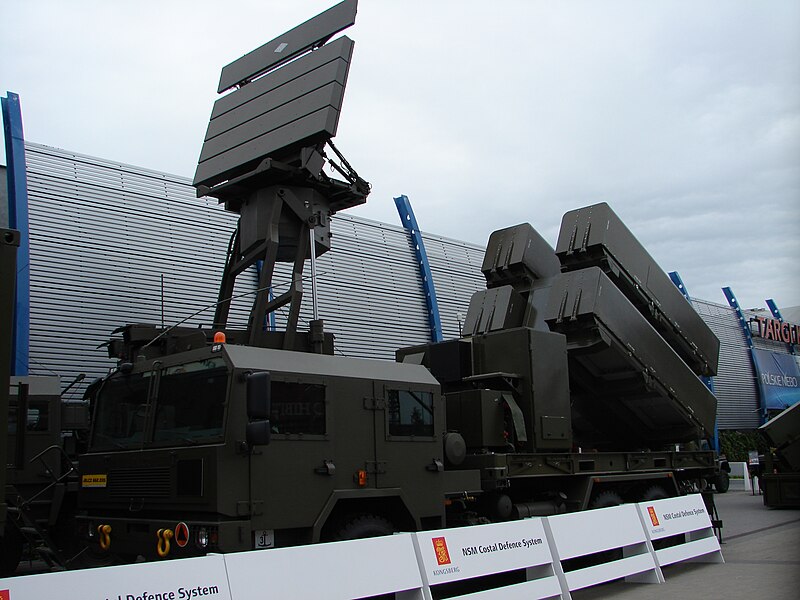
<< Polish Navy's NSM Coastal Defense System launcher and three-dimensional radar TRS-15M Odra in the background. (Image: Wiki Commons)

By Benjamin David Baker

Need more examples? Look to Northern European during WWII.

Professor James Holmes recently wrote (yet another) excellent article on the nature of naval warfare, supporting Secretary of Defence Chuck Hagel’s remarks on land-based coastal defences. Hagel has been widely derided for referencing the War of 1812 as an example of why land-based defences are still valid military assets. In fact, if one leaves the Western Hemisphere and looks to Northern Europe, there are several examples of how coastal fortifications, even with inadequate weapons and supplies, were able to significantly affect military operations during WWII. Finnish coastal artillery was able to severely hamper Soviet naval activity during the 1939-1940 Winter War, aiding in the prevention of a dreaded amphibious landing behind the overstretched Mannerheim Line. Moreover, coastal forts on the Karelian Isthmus were able to turn their guns on advancing Soviet ground forces with great effect, in effect becoming the most powerful and accurate land-based artillery of the war. 

Read the full story at The Diplomat

07 April 2014

Editorial: Beijing’s Arctic Play - Just the Tip of the Iceberg


By Elizabeth C. Economy

China has clearly signaled that it has a strong interest in the Arctic region.

If you pay attention, Chinese foreign policy rarely surprises. Of course there is the odd moment when Beijing catches the world unaware: for example, its declaration of an Air Defense Identification Zone in the East China Sea in late 2013. Generally speaking, however, the Chinese telegraph their long-term strategic intentions through their smaller tactical maneuvers. It is just that the rest of the world sometimes misses the signals or doesn’t know what to do with the information. Such is the case with China’s emerging play in the Arctic.
Over the past several years, China has begun to stake out its claim to the Arctic. No part of China actually touches the Arctic, but as a recent International Institute for Strategic Studies commentary points out, Chinese scholars routinely describe their country as a “near-Arctic” state, and Rear Admiral Yin Zhuo has argued that the “Arctic belongs to all the people around the world, as no nation has sovereignty over it… China must play an indispensable role in Arctic exploration as we have one-fifth of the world’s population.” This is a signal of Chinese intent. 

Read the full story at The Diplomat

14 September 2013

USA: Bold Quest Promotes Coalition Interoperability


By Donna Miles
American Forces Press Service

<< Army Lt. Col. Scott Brooks monitors activity over the 4G LTE Jolted Tactics system being tested during Bold Quest 13.2, U.S. Army photo by Sgt. 1st Class Brad Staggs 

WASHINGTON, Sept. 13, 2013 – Representatives from every U.S. military service and 11 other nations are taking part in a coalition capability demonstration designed to increase combat effectiveness and interoperability while minimizing the risk of fratricide.

Bold Quest 13.2, officially kicked off Sept. 2 at Camp Atterbury, Ind., with testing commencing earlier this week.

The Joint Staff-sponsored exercise includes about 800 participants from the Army, Navy, Air Force, Marine Corps and U.S. Special Operations Command, as well as Australia, Belgium, Canada, Germany, Denmark, Finland, France, the United Kingdom, Netherlands, Norway and Sweden, John Miller, joint operational manager for the exercise, told reporters yesterday.

In addition, members of NATO’s Airborne Early Warning and Control program are taking part in the demonstration.

14 May 2013

Lockheed Martin’s JASSM® Extended Range Successfully Completes IOT&E Flight Testing

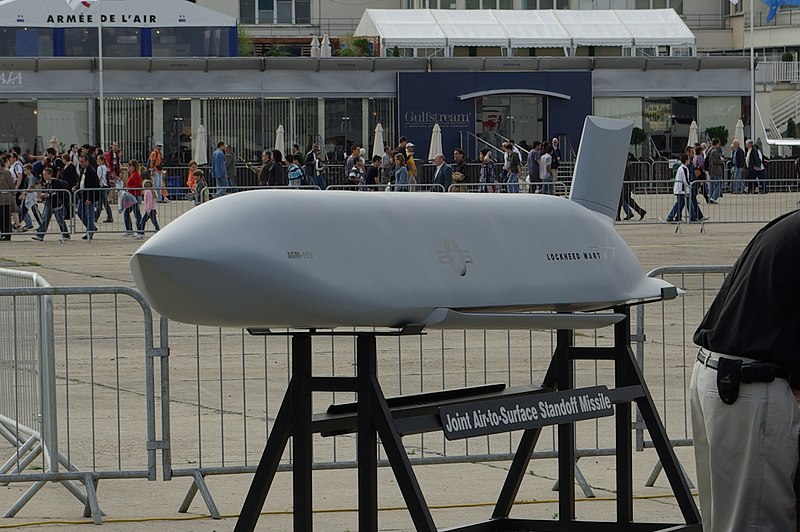
JASSM-ER (Wiki Info - Image: Wiki Commons)

ORLANDO, Fla., May 13, 2013 – Lockheed Martin’s [NYSE: LMT] Joint Air-to-Surface Standoff Missile (JASSM®) Extended Range successfully completed U.S. Air Force Initial Operational Test and Evaluation (IOT&E) flight testing, scoring 20 successes in 21 flights, a success rate of 95 percent.

The JASSM-ER missiles demonstrated their effectiveness against a wide variety of operationally representative targets. The missiles were employed in all of the operational flight modes at the full range of release conditions. These missions were designed to validate the full operational capability for the B-1B/JASSM-ER weapon system.

“These flight tests demonstrate the operational effectiveness, suitability and overall mission capability of the JASSM-ER system,” said Dave Melvin, long range strike systems program manager at Lockheed Martin Missiles and Fire Control. “The successful completion of the testing program was the final milestone before a planned full-rate production decision, expected later in 2013.”

11 February 2012

USA: Raytheon contract for sensor system support to enhance the F/A-18 for all users

Australian Super Hornet

Raytheon Co., Goleta, Calif., is being awarded an $11,611,000 cost-plus-fixed-fee, indefinite-delivery/indefinite-quantity contract to procure up to 56,488 hours of sensor system software and hardware support in order to update, improve, and enhance tactical capabilities of the F/A-18 A-F/EA-18G aircraft.  

Work will be performed in Goleta, Calif. (59 percent), and El Segundo, Calif. (41 percent), and is expected to be completed in February 2015.

This contract combines purchases for the U.S. Navy ($7,431,040; 64 percent); and, under the Foreign Military Sales Program, the governments of Malaysia ($1,337,587; 12 percent), Finland ($961,391; 8 percent), Switzerland ($877,792; 8 percent), Australia ($501,595; 4 percent), and Kuwait ($501,595; 4 percent).  

Contract funds will not expire at the end of the current fiscal year.  

This contract was not competitively procured pursuant to FAR 6.302-1.  

The Naval Air Warfare Center, Weapons Division, China Lake, Calif., is the contracting activity (N68936-12-D-0001).

31 December 2011

USA: Boeing contract for F/A-18 support

RAAF Super Hornet

The Boeing Co., St. Louis, Mo., is being awarded a $26,843,822 modification to a previously awarded firm-fixed-price delivery order contract (N00383-06-D-001J) for integrated logistics support, in-service engineering, information systems, technical data updates, support equipment engineering, training/software integration support, and sustaining engineering services in support of the F/A-18 A-D, F/A-18 E/F, and EA-18 G aircraft. 

Work will be performed in St. Louis, Mo. (70 percent); El Segundo, Calif. (15 percent); Oklahoma City, Okla. (6 percent); Bethpage, N.Y. (5 percent); and San Diego, Calif. (4 percent). 

Work is expected to be completed in December 2012.  Contract funds in the amount of $682,452 will expire at the end of the current fiscal year. 

This modification combines purchases for the Navy ($14,307,530; 53 percent); and under the Foreign Military Sales Program, the governments of Australia ($9,362,316; 35 percent), Canada ($528,996; 2 percent), Finland ($528,996; 2 percent), Kuwait ($528,996; 2 percent), Malaysia ($528,996; 2 percent), Spain ($528,996; 2 percent), and Switzerland ($528,996; 2 percent). 

The Naval Air Systems Command, Patuxent River, Md., is the contracting activity