28 August 2014

Editorial: Xi Jinping Meets Vietnamese Leader


By Shannon Tiezzi

Vietnam and China have smoothed over tensions, but a long-term solution remains elusive.

As The Diplomat reported earlier, Vietnam sent a special envoy to China for bilateral talks this week. Politburo member Le Hong Anh, acting as a special envoy from Communist Party of Vietnam (CPV) General-Secretary Nguyen Phu Trong, met with high-ranking Chinese leaders. Anh’s visit was embraced by both sides as a chance to mend bilateral ties that soured earlier this summer during a standoff over the placement of a Chinese oil rig in disputed waters.
Anh met with Chinese President (and CCP General-Secretary) Xi Jinping on Wednesday afternoon. During their meeting, Xi emphasized the common bond between the two countries, as neighbors and communist regimes. As Xi put it, “A neighbor cannot be moved away and it is in the common interests of both sides to be friendly to each other.” This, in essence, is the root of China’s “neighborhood diplomacy” policy — acknowledging that friendly ties with the countries in China’s immediate area will be the most important factor in providing a peaceful environment for China’s continued rise.
In terms of concrete solutions, Anh’s meeting with Liu Yunshan, a member of the Politburo Standing Committee, had more to offer. Liu said that both Hanoi and Beijing were “unwilling to see” the relationship continue to be “tense and difficult.” To move forward, Chinese and Vietnamese officials agreed to avoid actions that might exacerbate maritime disputes. 

Read the full story at The Diplomat

Editorial: The Logic Behind China's Air Intercepts


By Jin Kai

In intercepting US military aircraft, China is sending a clear signal about what behavior it will (and won’t) accept.

In one sense, the recent encounter between a Chinese and a U.S. military plane near Hainan Island is nothing special. The U.S. has been sending spy planes to China’s sea coast for electronic interception and surveillance missions for decades, and Washington even publicly claims that such patrols are lawful, appropriate, and necessary. This specific incident has nothing to do with newer initiatives like the “rebalance to Asia” and the construction of a “new type of great power relations.”
However, in another sense, the recent plane encounter is different. Although similar events have occurred fairly frequently, particularly since 2001, the recent airborne confrontation comes against a much more complicated regional background: the U.S. has returned to Asia, the Sino-Japan confrontation is going strong, and China has decisively announced a new air defense identification zone. Given this background, will China strategically adjust its behaviors with regard to the never-ending surveillance patrols by U.S. spy planes? Should China do so?
For China, the recent incident carries a simple but powerful lesson: rules cannot be separated from power. Though China is the world’s second biggest economy, and is still growing rapidly, it does not have the capability (and thus far, the intention) to conduct similar spy plane patrols near the west coast of the United States. Hence, the behaviors and attitudes of the U.S. seem to be teaching the Chinese about the connection between power and the rules: he who has the power makes the rules, for his own benefit. Some Chinese wonder how the U.S. would react if Chinese military planes patrolled near Hawaii or west coast of the United States. How would the “rules” apply then? 

Read the full story at The Diplomat

Editorial: Responding to China’s Air Intercept


By Ryan Santicola

The US response to the recent intercept is important in the context of the safety and freedom of international airspace.

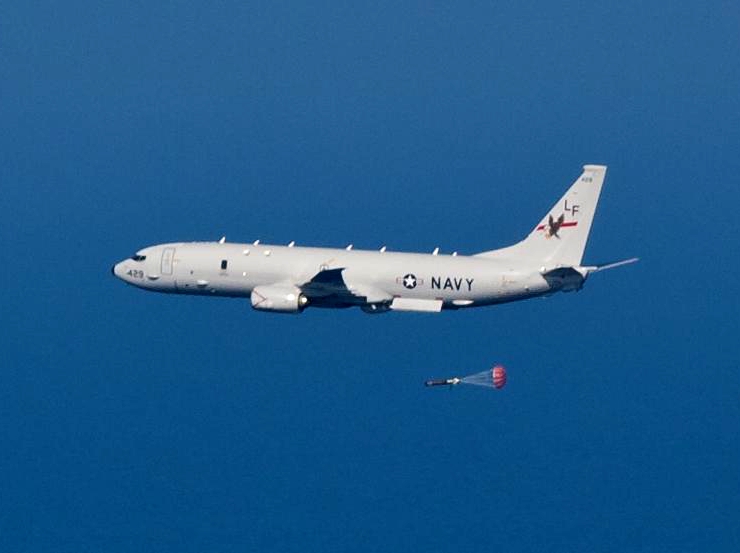
Last week, a Peoples Liberation Army Air Force (PLAAF) J-11 fighter aircraft intercepted a United States Navy P-8A aircraft over the South China Sea, at one point coming within 30 feet of the P-8A while making sharp maneuvers and crossing the P-8A’s flight path. According to statements by officials at the U.S. Department of Defense and the White House, both aircraft were operating more than 100 nautical miles from the Chinese coast at the time of the intercept. The U.S. formally protested the intercept as dangerous and unprofessional. China responded to the demarche on Saturday, disputing that its aircraft was as close as the U.S. claimed.
This type of harassment and intimidation by the PLAAF has become common in the skies over the South China and East China Seas. In 2001, a PLAAF J-8 collided with a U.S. Navy EP-3, causing the EP-3 to make an emergency landing and the J-8 to crash into the sea. In May and June, Japan protested dangerous intercepts of military aircraft by PLAAF fighters over the East China Sea. Additionally, U.S. officials indicated that this was the second protest lodged with China since May, the previous one issued in regards to similarly aggressive intercepts that have occurred within the last six months.
The message being delivered by the U.S. following this incident is an important one. The U.S. did not object to the intercept itself, but rather to the manner in which it was conducted. This sets an important example of consistency for China and others and reinforces the U.S. commitment to two important issues in the maritime domain, safety of flight and freedom of navigation. 

Read the full story at The Diplomat

Editorial: Exposing China’s Provocations


By James R. Holmes

U.S. and allied forces should film Chinese assertiveness and let the whole world see it firsthand.

Sunlight is the best disinfectant when dealing with people who take certain, er, liberties with the truth. If a picture is worth a thousand words; a video clip speaks volumes. Pick your favorite expression for deploying factual evidence to debunk mythmaking. In a war of conflicting narratives such as the one raging across the China seas, the spokesman who produces hard evidence commands an edge over one who can only resort to bluster. Video placed in context beats a shouting match any day.
Which is why the Naval Diplomat advises any sea or air force that operates at close quarters with Chinese ships, aircraft, or personnel to take video — and display it when need be. Record all encounters with People’s Liberation Army units, sure. But also record run-ins with the China Coast Guard, Chinese shipping or energy firms, even the fishing fleet. Together these military and non-military, official and unofficial organizations constitute the long arm of Chinese sea power.
They’re also political implements whereby Beijing prosecutes “three warfares“ — legal, media, psychological — against its Asian rivals and extraregional powers such as the United States. For example, Beijing stakes its claim to “indisputable sovereignty” in the South China Sea, deploys non-military (and sometimes military) assets to police sea areas it claims, and acts put-upon if, say, Manila has the temerity to dispatch coast-guard assets of its own or file a case with the Law of the Sea Tribunal. If successful, three-warfares tactics dishearten or overawe opponents into submission. 

Read the full story at The Diplomat

27 August 2014

AUS: Australian P-8A Advanced Aircraft Contract executed by the United States Navy

A US P-8A Poseidon (Wiki Info - Image: Wiki Commons)

Minister for Defence Senator David Johnston today announced the United States Navy has executed an Advanced Acquisition Contract for Australia’s P-8A Poseidon aircraft.

Senator Johnston said this key Defence procurement would allow the withdrawal of the ageing AP-3C Orion fleet, and enable Boeing US to place lead time orders in support of Australia’s first four P-8A aircraft.

“Together with high altitude unmanned aerial vehicles, these aircraft will replace the Royal Australian Air Force AP-3C Orions that have served Australia so well for over four decades,” Senator Johnston said.

“These state-of-the-art aircraft will dramatically boost Australia’s ability to monitor its maritime approaches.”

AUS: Upgrade to Australian Defence Force navigation warfare capability


Minister for Defence David Johnston today announced Government approval of a critical project to upgrade and enhance the protected Global Positioning System (GPS) capability of the Australian Defence Force.

“The Government recognises that to ensure the ADF remains viable and robust we need to invest in force protection, countermeasures, protective security, system redundancy, lower signatures and stealth for our capabilities and systems,” Senator Johnston said.

GPS plays a vital role in providing accurate positioning, navigation, coordination, and targeting for the ADF and the ability to use modern GPS equipment is fundamental to operational effectiveness.

Senator Johnston said GPS jamming equipment has become easier to produce and deploy, and the ADF needed to continue to meet this evolving threat. JP 5408 Phase 3 (Platforms) Tranche 2 will enhance GPS on a range of ADF platforms by providing either protection or redundancy capabilities in response to GPS denial activities.

The total value of this project is in the order of $30 million.

AUS: ADF supports humanitarian and disaster relief exercise in the South Pacific

HMAS Labuan (Image: Wiki Commons)

Almost 200 members of the Australian Navy, Army and Air Force are joining forces with personnel from across the region in a major humanitarian relief exercise in the South Pacific.

Exercise Croix du Sud, which is French for “Southern Cross’, is being hosted by France in New Caledonia. The scenario is based on the devastating aftermath of a category four cyclone.

The challenge for the allied forces will be to assist the local community with humanitarian relief and security as well as coordinating the evacuation of Australian citizens and foreign nationals.

The Commander of the Australian Contingent, Wing Commander Jim Xinos, said that the exercise demonstrates Australia’s enduring contribution to humanitarian and disaster relief with multi-national partners.

AUS: Busy naval base plays host to Exercise KAKADU

Armidale Class Patrol Boat (Image: Wiki Commons)

by LEUT Des Paroz (author)

Known as the homeport for most of the Armidale Class Patrol Boat fleet of the Royal Australia Navy (RAN), Darwin’s HMAS Coonawarra is currently playing host to the Navy’s largest multinational warfare exercise, Exercise KAKADU 2014.

Coonawarra’s Executive Officer, Lieutenant Commander Mick Doncaster, described the opportunities of welcoming the Australian and international participants to such a major Exercise whilst ensuring that the demands of a busy operational base continue to be met.

“Exercise KAKADU is an important activity in Navy’s efforts to raise, train and sustain a premier warfighting capability, but we have to superimpose all these efforts over a very busy operational base.

“Coonawarra is actually Australia’s busiest naval base, when you consider the volume of vessel movements moving through Darwin.

Brunei: TECHNICAL WORKSHOP ON ESTABLISHING A DIRECT COMMUNICATIONS LINK IN THE ADMM PROCESS


BANDAR SERI BEGAWAN, Tuesday, 26 August 2014 – The Technical Workshop on Establishing A Direct Communications Link in the ASEAN Defence Ministers’ Meeting Process convenes today at The Centrepoint Hotel, Gadong, Brunei Darussalam. This three-day Workshop was officiated by Colonel (Rtd) Pengiran Dato Paduka Haji Azmansham Pengiran Haji Mohamad, Permanent Secretary (Defence Policy and Development), Ministry of Defence, Brunei Darussalam.

Participants are from the ASEAN Member States and the ASEAN Secretariat, as well as various departments and units from both the Ministry of Defence of Brunei Darussalam and the Royal Brunei Armed Forces, and the Ministry of Foreign Affairs and Trade of Brunei Darussalam.

The convening of this Technical Workshop is the first step in the developing arrangement phase of the initiative on establishing a direct communications link in the ASEAN Defence Ministers’ meeting.

The Concept Paper of the initiative was adopted by the ASEAN Defence Ministers during their Eight Meeting in Nay Pyi Taw, Myanmar on 20 may 2014. The defence ministers have also expressed their full support for the full implementation of establishing a direct communications link by the 9th ASEAN Defence Ministers’ Meeting in 2015 in Malaysia.

News Story: The Indian Navy Runs Out Of Helicopters

HAL Dhruv (Wiki Info - Image: Wiki Commons)

The Indian Navy has had problems with procuring new helicopters for decades and the situation is getting worse. The procurement bureaucracy excels at corruption, timidity and an exceptional talent for not getting things done. As a result Indian warships equipped to handle helicopters have only 20 percent of the helicopters they are supposed to have. The main deficiency is in importing a suitable medium (10 ton class) helicopters (like the U.S. SH-60, Russian Ka-31 and the European EH101 or NH90). There is no solution in sight and the complaints of the navy officers (of all ranks) are becoming louder, more detailed and more public.

Aside from the inept procurement process there are also problems with Indian efforts to develop an Indian helicopter industry. This has also been plagued by political and bureaucratic bungling. Despite that, after a half century of effort India does produce helicopters, but not yet the heavier types the navy needs. The closest Indian manufacturers have come to filling navy needs is the locally designed and built Dhruv.

The story behind the Dhruv is not pretty.  In late 2013 the Indian Navy finally put its first squadron of Dhruv light helicopters into service. These are used for patrolling, search and rescue, and anything else the navy needs, except for those jobs requiring a 10 ton class helicopter. It’s been a difficult journey for the Dhruv. In 2009 the Indian Navy bought six of the Dhruvs for evaluation and did not like what they saw. The main complaints were lack of engine power and poor reliability. These were considered fatal flaws for helicopters meant for SAR (search and rescue) and ASW (anti-submarine warfare).

Read the full story at StrategyPage