Showing posts with label South Africa. Show all posts

28 July 2017

News Story: Pakistan to sell 10 Super Mushshak aircraft to Azerbaijan - officials

Super Mushshak (Image: Wiki Commons)
ISLAMABAD July 27 (Xinhua) -- Pakistan on Thursday signed an agreement with Azerbaijan for sale of 10 Super Mushshak training aircraft to Azerbaijan Air Force, Pakistan Air Force (PAF) said.

The contract was signed at Azerbaijan, where Air Marshal Arshad Malik, Chairman Pakistan Aeronautical Complex at the town of Kamra represented Pakistan, whereas Azerbaijan was represented by Air Force Commander Azerbaijan Lieutenant General Ramiz Tahirov at the occasion.

This contract would also include operational training and technical support and assistance to Azerbaijan Air Force, said a PAF statement issued in Islamabad.

"This landmark agreement will further strengthen the bilateral ties between the two brotherly countries," it said.

Read the full story at Xinhua

18 July 2017

USA: U.S. Forces Work With Partners in Numerous Military Exercises

By Terri Moon Cronk 
DoD News, Defense Media Activity

WASHINGTON, July 17, 2017 — Military exercises are underway between U.S. military forces and those of many other nations, Pentagon spokesman Navy Capt. Jeff Davis, told reporters today.

In the Pacific region, Exercise Talisman Saber 2017 involves more than 33,000 U.S. and Australian personnel who are participating in the biennial military training exercise in Australia, June 23 to July 25.

U.S. Army, Navy, Marine Corps and Air Force personnel, as well as Australian forces and members of other government agencies in both countries are participating in Talisman Saber, which is jointly sponsored by the U.S. Pacific Command and the Australian military's Joint Operations Command.

It features 21 ships, including the U.S. Navy aircraft carrier USS Ronald Reagan, the Bonhomme Richard Expeditionary Strike Group, and more than 200 joint aircraft. This year's seventh iteration of the exercise is focusing on training a combined task force of U.S. and Australian forces in a mid-intensity, high-end warfighting scenario, incorporating interagency participation, along with a command post exercise involving a transition between a three- and four-star headquarters.

"Talisman Saber provides an invaluable opportunity to conduct operations in a combined, joint and interagency environment that will increase both countries' ability to plan and execute contingency responses, from combat missions to humanitarian assistance efforts," Davis said.

02 March 2017

News Story: Transfer of technology deal between Saab and HAL

by Richard Tomkins

Saab's South African subsidiary has signed an agreement to transfer technology to Hindustan Aeronautics Limited's Avionics Division.

The technology transfer between Saab Grintek Defense and HAL will enable in-country maintenance by the Indian company of Saab's Integrated Defensive Aids Suite system, which has been chosen by India as the electronic warfare self-protection system for Indian air force and Army Aviation Corps variants of the HAL Dhruv Advanced Light Helicopter.

The deal, signed Friday at the Aero India 2017 exhibition, is worth $8.5 million, Saab said.

Read the full story at SpaceDaily

28 October 2016

News Report: India for Selective Blacklisting of Foreign Defense Companies

The previous government’s comprehensive blacklisting norms are a major hindrance to India’s defense acquisition calendar.

New Delhi (Sputnik) — India has decided to scrap its extant policy of blanket blacklisting of the entire defense conglomerate even if a group company or its representative was being investigated for unethical behavior.

The previous Government's blacklisting policy was stated to be a hindrance to timely imports of defense hardware and ongoing acquisition projects. The policy has also led to diplomatic disagreements with South Africa and Israel after the previous government banned their companies Denel and IAI. Under the new policy, likely to be approved soon, only the company directly accused of bribery or kickbacks will face punishment. Other companies will be free to participate in bids for defense equipment. 

08 September 2016

News Story: India-based Solar Industries Eyes International Ammunition Market

By: Vivek Raghuvanshi

NEW DELHI — India's major private sector ammunition manufacturer wants to increase its footprint in the African ammunition market and is considering setting up bulk explosives factories in Australia and Indonesia, according to Nilesh Panpaliya, the chief financial officer of Nagpur-based Solar Industries. 

Solar Industries currently operates explosives plants in Nigeria, Zambia and Turkey. 

"The company is planning to enhance its international footprint through a plant in South Africa," Panpaliya said. "South Africa is the largest mining country in Africa which gives us a very good opportunity, especially when companies are looking to reduce their costs by having a competitive supplier." 

Solar Industries is also "evaluating Australia and Indonesia" and would finalize plans there this year, the CFO said. 

Read the full story at DefenseNews

02 July 2016

News Report: China Sea Dispute Drives Interest in India's Anti-ship Missile

Anjana Pasricha

NEW DELHI—India’s plans to sell advanced missile systems to countries like Vietnam got a boost this week after New Delhi joined an exclusive global club of countries controlling the export of missile technology.

Security analysts say membership in the Missile Technology Control Regime (MTCR) will also give India more leverage to overcome Chinese resistance in New Delhi's bid to join another another elite group controlling nuclear commerce; the Nuclear Suppliers Group.

One of the main weapons system India is set to export is the supersonic cruise BrahMos missile being produced by an Indo-Russian joint venture. The missile has a range of about 290 km and can be fired from land, sea and submarine.

Calling the BrahMos a formidable weapon, strategic affairs analyst Bharat Karnad at New Delhi’s Center for Policy Research says “those plans are going to be implemented soon. That is the first order of business.”

13 June 2016

News Story: China says further discussion needed on NPT non-signatories' application to NSG

BEIJING, June 12 (Xinhua) -- China said Sunday further discussion is needed to decide on the application of non-signatories to the Treaty on the Non-Proliferation of Nuclear Weapons (NPT) for membership to the Nuclear Suppliers Group (NSG).

China has always supported a full discussion within the NSG on the membership issue and a decision based on the consensus of all sides through consultation, Chinese Foreign Ministry spokesperson Hong Lei said.

Hong made the remarks in response to a report saying China, New Zealand, Ireland, Turkey, South Africa and Austria opposed India's inclusion in the NSG, which controls the export and re-transfer of nuclear weapons materials.

The NSG has taken NPT signatory status as a precondition for membership but India is not a signatory to the treaty.

"China's stance is applicable to all non-signatories to the NPT, not just certain countries. Many other NSG member states also hold the same stance," Hong added in a press release.

Read the full story at Xinhua

21 May 2016

News Story: Chinese naval escort taskforce ends visit to South Africa & U.S. invisible hand behind South China Sea tension - South African commentator

Chinese naval escort taskforce ends visit to South Africa

SIMON'S TOWN, South Africa, May 20 (Xinhua) -- The 22nd Chinese naval escort taskforce ended a four-day friendly visit to South Africa on Friday.

The visiting fleet, comprised of supply ship Taihu, guided missile destroyer Qingdao and frigate Daqing, left the South African naval base at Simon's Town near Cape Town on Friday morning after a farewell ceremony, which was attended by Chinese Ambassador to South Africa Tian Xuejun as well as representatives from the South African navy and Chinese community in South Africa.

The visit came after the Chinese naval ships successfully completed the escorting task in the Gulf of Aden from early December last year to the end of April this year.

"Their actions have lived up fully to the trust of the country and the Chinese people. The task not only gave the fleet a comprehensive exercise for operations at far seas, but also created an opportunity for the Chinese navy to demonstrate its capabilities, and most importantly, an opportunity to show the world that China is a responsible and peace-loving country," Tian said.

During the visit, the Chinese and South African navies also held a joint exercise, which further facilitated exchanges and all-directional cooperation between the two navies.

Read the full story at Xinhua

--

U.S. invisible hand behind South China Sea tension - South African commentator

JOHANNESBURG, May 20 (Xinhua) -- The United States, in a very real sense, has been the invisible hand behind the rising tension in the South China Sea, a well-known South African commentator said in a commentary published in The Star newspaper on Friday.

It becomes tiresome to continue unravelling stories of the United States meddling in regions far away from its shores, trying to weaken other countries in order to maintain its global dominance, said Shannon Ebrahim.

"Why does the U.S. feel it has the right to endanger Chinese national security interests in the South China Sea?" she asked in the article titled "Islands that could lead to war."

The more one delves into the reality of the South China Sea issue, it becomes clearer that the United States actually thinks it has a right to manipulate regional dynamics in China's backyard so as to encircle it as a rising superpower, Ebrahim said.

"What is more incredible is that the U.S. believes it has the right to send 60 percent of its naval fleet and 60 percent of its overseas air force into the South China Sea by 2030. If this is not the ultimate display of arrogance then I don't know what is," she said.

Referring to the U.S. concern of freedom of navigation, Ebrahim said, "But China is equally committed to this principle, and has never attempted to hinder trade navigation in any way."

Read the full story at Xinhua

--

PacificSentinel Note:
"Despite attempts by neighboring countries to encroach onto the islands and take them over, China has proof of its sovereignty over them, going back centuries," Ebrahim wrote.
Italy has "proof of its sovereignty" over England, Greece, Turky, Germany, & various other countries, from the Roman period, does that mean that Italy owns them today?

Just because China had a claim to these islands centuries ago, doesn't mean they still do today, that is what a Court of Law needs to decide.

01 September 2015

News Story: V-J Day event gives telling snapshot of China's diplomacy - Duowei

The list of foreign officials heading to the military parade in Beijing to commemorate the 70th anniversary of the end of World War II offers a telling snapshot of China's current state of diplomatic relations, says Duowei News, a US-based Chinese political news outlet.

Last week, the State Council released the full list of attendees that will be in Beijing for events to mark Victory over Japan Day, though not all will be attending the centerpiece military parade on Sept. 3.

According to state media, Beijing issued invites to the heads of state of a total of 51 foreign countries, of which 49 were accepted. Invites were also sent to 11 international organizations, of which 10 were accepted.

Unsurprisingly, the two countries to turn down invites were Japan and the Philippines, both of which are embroiled in territorial disputes with Beijing in the East China and South China seas, respectively. However, it has been reported that Japan's former prime minister Tomiichi Murayama and former Philippine president Joseph Estrada will attend the commemorative events in Beijing in an unofficial capacity.

Read the full story at Want China Times

26 August 2015

Editorial: 30 Heads of State Will Watch China’s Military Parade Next Week

By Shannon Tiezzi

Countries in Africa, Central Asia, and Eastern Europe will be well-represented. Not so much Western Europe and the U.S.

After months of anticipation, China has released the guest list for its September 3 military parade, the highlight of a series of events commemorating the 70th anniversary of Japan’s surrender and the end of World War II. Vice Minister Zhang Ming of China’s Foreign Ministry revealed the list at a press conference on August 25.

There will be 30 heads of state at the parade, Zhang said, including Russian President Vladimir Putin, South Korea President Park Geun-hye, Pakistan’s President Mamnoon Hussain, Myanmar’s President Thein Sein, and Vietnamese President Truong Tan Sang. China’s guests will also include the heads of state of each member of the Shanghai Cooperation Organization (Russia, Kazakhstan, Kyrgyzstan, Tajikistan, and Uzbekistan, in addition to China itself).

However, only half of the ASEAN member countries are sending top-level political representatives. Vietnam and Myanmar’s presidents will be joined by Cambodia’s King Norodom Sihamoni, Laotian President Choummaly Sayasone, and Thai Deputy Prime Minister Prawit Wongsuwan. Absent from the list: any mention of top-level representation from Brunei, Indonesia, Malaysia, the Philippines, or Singapore.

North Korean leader Kim Jong-un will also be absent from the parade. Instead, North Korea will be represented by Choe Ryong-hae, secretary of the Korean Workers’ Party.

Read the full story at The Diplomat

09 July 2015

Editorial: What to Expect as Leaders of BRICS, SCO and EEU Gather in Russia

By Catherine Putz

BRICS to chart a course, SCO to expand, and the EEU to link up with the Chinese Silk Road.

Leaders from the BRICS countries and members of the Shanghai Cooperation Organization (SCO) are arriving in Ufa, Russia for their twin summits. Russian media is also reporting a meeting of the Eurasian Economic Union (EEU) countries. RT is live-blogging, Modi tweeted a picture shortly after arriving and the Chinese released a handy explainer cartoon complete with a bicycle built for nine (ridden by the leaders of the BRICS and SCO). The festive atmosphere—RT reports that 10,000 visitors are expected to come through Ufa—belies serious questions of what direction the various organizations are moving in, how much, if at all, they matter, and how the Russo-Chinese relationship will shape the region’s future.

Russia seems to be the center of Eurasian diplomacy at the moment–coincidentally both summits are held on a rotating basis–hosting lends Moscow a glamour of international support. As Greg Shtraks pointed out in his preview of the BRICS/SCO summits last month, two sides have emerged globally–with Russia, China, and a “coterie of Eurasian autocracies” standing apart from the G-7, led by Europe and United States, which has reinforced its relations with East Asia. But while Russia is hosting, it is China’s economy (not counting the current stock-market meltdown), that drives the BRICS and China’s demand for energy and Silk Road plans that enrich Central Asia.

Read the full story at The Diplomat

16 April 2015

Editorial: The Global Arms Trade and the ‘Hyundaization’ Threat

By Richard A. Bitzinger

Rumors of the demise of U.S. arms trade dominance are exaggerated.

A recent article in the Wall Street Journal(“The ‘Hyundaization’ of the Global Arms Industry”) makes a provocative argument, namely that “new defense exporters are joining the global game with advanced and well-priced offerings, creating potential threat to the U.S. and its allies, and weakening Western influence.” In other words, the proliferation of “good enough” weapons by neophyte arms exporters such as Brazil, South Korea, and Turkey, offered at rock-bottom prices, will cut into the United States’ sizable predominance in the global arms trade. The emergence of such new supplier-states will have grave economic repercussions for U.S. arms producers, and negative ramifications for Washington’s global sway.

An interesting argument, if not a particularly novel one. For decades many in the West have been fearful of – and many arms producers in the newly industrialized world have been yearning for – the possibility that the global arms trade could be inundated by new, ambitious supplier-states who would aggressively flog their weaponry to all comers. This would not just cut into the profits of those U.S. and European defense mega-firms – the Lockheed Martins, Northrop Grummans, BAE Systems, and Airbus SAS’s – that have traditionally dominated the global arms business; it would also complicate efforts to control the proliferation of advanced conventional weapons and the enabling technologies behind them.

The implications of such proliferation are self-evident. Flooding the global arms market with relatively cheap but highly capable weapons systems would not only increase the probability of conflict – a country is more likely to attack a noxious neighbor if it feels that it possesses superior military capabilities – but that conflict would likely be more “high-tech” and therefore more devastating in its effect.

Read the full story at The Diplomat

06 April 2015

News Story: Indian Ocean key to China's maritime interests


The Indian Ocean is extremely important for China to secure navigation in the Strait of Malacca, one of the nation's major maritime supply routes, Zhang Manzhu and Li Yao, two Chinese experts in geopolitics, wrote in a piece for the Sina Military Network based in Beijing on Mar. 31.

With about 50 million people of Chinese ethnicity living in the nations surrounding the Indian Ocean, China's connection with the region will be closer than ever, according to the article. American strategist Robert Kaplan wrote in his book Monsoon: The Indian Ocean and the Future of American Power that the Indian Ocean is set to become the new maritime center of the world in the 21st century.

Kaplan said about 50% of container traffic and 70% of petroleum shipments pass through the Indian Ocean. Zhang and Li noted that over 90% of China's oil products are imported from countries in the Middle East and Africa through the Indian Ocean and Strait of Malacca. China also exports its products via the same maritime routes.

Read the full story at Want China Times

17 March 2015

Think Tank: Rapid Fire (17-Mar-2015)


By Sarah Hately

In this installment of Rapid Fire, we take a look at the ground campaign in Iraq, concerns over Shia militias, use of chemical weapons by Islamic State, foreign fighters in Nigeria, Putin’s reasoning for annexing Ukraine, and the Forever War.

Last week, operations to take back the IS-controlled city of Tikrit intensified. One week later, some progress appears to have been made. According to an unnamed Iraqi official, troops found unused weapons caches; evidence that militants have been fleeing ‘possibly to Mosul to the north and Anbar province to the southwest’. But despite proclamations that the campaign’s going well, the outcome is still uncertain. Robin Wright, fellow at the US Institute of Peace, argues that numbers ‘don’t always tell the story’ and that ‘by numbers alone, the first major Iraqi offensive against [IS] should have been a romp’. It hasn’t been. ‘Sunni militants loyal to [IS] have repeatedly demonstrated more discipline and greater devotion, in Iraq and in Syria, than their rivals’. So despite initial optimism, it’s too early to claim victory. Indeed, the Washington Post reported yesterday that the offensive may be stalling in light of increasing numbers of casualties, which does not bode well for a future victory.

21 October 2014

India: INS Teg Visits Simon's Town, South Africa for IBSAMAR

Indian Navy Frigate: INS Teg (File Photo)

Indian Naval Ship Teg, a Stealth Frigate of the Indian Navy, is scheduled to make port calls at Simon’s Town and Cape Town between 20th October and 10th November 2014. The ship will participate in the fourth edition of the biennial India-Brazil-South Africa Maritime (IBSAMAR) Exercise. The port call at Simon’s Town will coincide with the visit of Vice Admiral Anil Chopra, PVSM, AVSM, ADC, Flag Officer Commanding-in-Chief, Western Naval Command. 

INS Teg is the 9th Indian Naval ship to participate in IBSAMAR to strengthen the existing bonds of friendship between the three nations. The visit also seeks to underscore India’s solidarity with countries of the Indian Ocean Region. 

The ship sailed from her base port Mumbai on 1st October 2014 as part of a four-ship Task Group headed by Rear Admiral R Hari Kumar, VSM, Flag Officer Commanding Western Fleet. During the ship’s stay in harbour at Simon’s Town, various activities are planned including professional interaction between naval personnel. On departure from South Africa, the ship is scheduled to make a port call at Mozambique before returning to Mumbai in end Nov 2014. 

INS Teg, built at Kaliningrad, Russia was commissioned into the Indian Navy on 27th April 2012. The ship is a guided missile Stealth Frigate with formidable arsenal. The ship is commanded by Captain Anand Yeshwant Sardesai and is manned by a crew of 25 officers and 220 sailors.

03 October 2014

India: Overseas Deployment of Western Fleet Ships


Indian Navy Frigate: INS Teg (File Photo)
Indian Naval Ships Mumbai, Talwar, Teg and Deepak under the Command of Rear Admiral R Hari Kumar, VSM, the Flag Officer Commanding Western Fleet, departed on two-month long Overseas Deployment to East Africa and the Southern Indian Ocean Region on 01 Oct 14. 

During the course of deployment, the ships are scheduled to visit Antisiranana (Madagascar), Mombasa (Kenya), Dar es Salaam (Tanzania), St Denis (Reunion Island, France), Port Louis (Mauritius), Port Victoria (Seychelles), Nacala (Mozambique) and Simon’s Town (South Africa). 

While in South Africa, INS Teg will participate in Exercise IBSAMAR along with the Navies of South Africa and Brazil. 

05 September 2014

News Story: The Thousand Ship Navy


September 4, 2014: The United States is trying to organize an international “Thousand Ship Navy” via greater cooperation between the United States Navy and the many nations the U.S. is allies, or simply on good terms, with. Formally called the GMP (Global Maritime Partnerships) the effort is simply a continuation of international naval cooperation American admirals and diplomats have built over the last century. One of the more notable of those efforts, CTF (Combined Task Force)-151, which began operating in 2009 to deal with the pirates off Somalia, was a big success. Over a dozen nations contributed ships and many others (like China and Iran) cooperated with CTF-151 without being a part of it. While organized largely as an American led effort, the task force command regular rotated among member nations and most of the time an American officer was not in charge.

The U.S. now wants to build a global naval alliance to deal with more than pirates, but to do using the techniques that worked so well off Somalia. In other words, GMP is an effort to be better prepared for the next emergency that naval forces can be the solution for. This not only involves threats to world trade (90 percent of which moves by sea) but also natural disasters (most of which have all, or most victims near the coast) and threats to world peace in general, like Chinese claims on the South China Sea and Iranian threats to close the Strait of Hormuz and block most world oil trade.

Read the full story at StrategyPage

27 August 2014

Brunei: TECHNICAL WORKSHOP ON ESTABLISHING A DIRECT COMMUNICATIONS LINK IN THE ADMM PROCESS


BANDAR SERI BEGAWAN, Tuesday, 26 August 2014 – The Technical Workshop on Establishing A Direct Communications Link in the ASEAN Defence Ministers’ Meeting Process convenes today at The Centrepoint Hotel, Gadong, Brunei Darussalam. This three-day Workshop was officiated by Colonel (Rtd) Pengiran Dato Paduka Haji Azmansham Pengiran Haji Mohamad, Permanent Secretary (Defence Policy and Development), Ministry of Defence, Brunei Darussalam.

Participants are from the ASEAN Member States and the ASEAN Secretariat, as well as various departments and units from both the Ministry of Defence of Brunei Darussalam and the Royal Brunei Armed Forces, and the Ministry of Foreign Affairs and Trade of Brunei Darussalam.

The convening of this Technical Workshop is the first step in the developing arrangement phase of the initiative on establishing a direct communications link in the ASEAN Defence Ministers’ meeting.

The Concept Paper of the initiative was adopted by the ASEAN Defence Ministers during their Eight Meeting in Nay Pyi Taw, Myanmar on 20 may 2014. The defence ministers have also expressed their full support for the full implementation of establishing a direct communications link by the 9th ASEAN Defence Ministers’ Meeting in 2015 in Malaysia.

01 July 2014

Editorial: In Fact, the West Is Rising

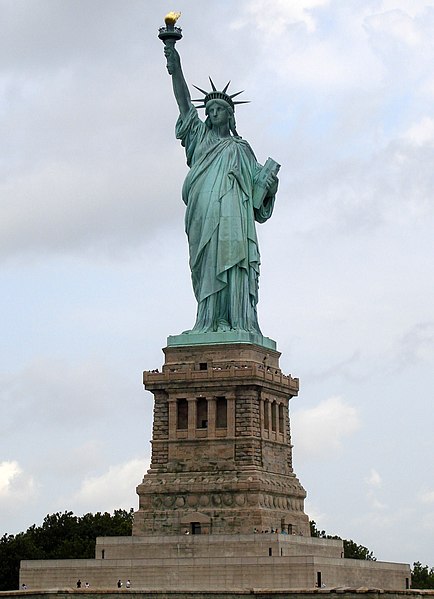
Statue of Liberty (Image: Wiki Commons)

By Robert Dujarric

What some view as decline is actually the ability to win over large swaths of the globe to its ideals.

Every day we hear that Western hegemony, begun with the Portuguese rounding the Cape of Good Hope in 1488, is ending. Some rejoice, others mourn, but all are writing the West’s obituary. The West, however, is in a period of expansion, not retrenchment.
The West has no clear demarcation line, nor is its ideology set in stone. Policies such as institutionalized racism, which were perfectly acceptable in the West until well into the mid-20th century, now condemn its practitioners to pariah status in the Western community, as happened to apartheid South Africa starting in the 1970s.
Today, the West comprises two groups. One is made of European nations and their overseas offshoots, which share the same socio-political order and roots. Another comprises countries, primarily in East Asia, which have adopted the Western liberal model, with Japan and South Korea being the biggest examples.
Has the West declined? The question depends on the baseline. In the late Victorian Era, except for the still tiny (economically and militarily) Japan, the world consisted mainly of Western nations, their colonies, and declining non-European empires. Since then, the West has lost some of its relative power.
However, looking at the more recent past, since the demise of the Soviet Union, the evidence points in the other direction. 

Read the full story at The Diplomat

16 May 2014

News Story: New Zealand navy hosting international frigate workshop

Australian ANZAC class Frigate (File Photo)

WELLINGTON, May 14 (Xinhua) -- Navy personnel from nine countries are gathered in New Zealand to discuss modernization of a widely used class of frigates, the Royal New Zealand Navy (RNZN) announced Wednesday.

The RNZN is hosting the talks with a focus on its two ANZAC class frigates, Te Kaha and Te Mana, which were adapted from Meko class frigates.

The annual Meko Users Workshop in Auckland from May 13 to 16 involves personnel from Australia, Germany, Greece, Malaysia, Portugal, South Africa and Turkey, with representatives from Algeria, which is expected to take delivery of two Meko A200 class frigates in 2016.

Read the full story at Xinhuanet