Showing posts with label Andaman and Nicobar Islands. Show all posts

26 August 2017

News Report: India Plans to Populate Villages Along 2167-Mile Disputed Chinese Border

India wants to develop its frontier region as a tourist destination so that it can populate remote areas close to the Line of Actual Control (effective border yet to be clearly demarcated). Starting civilian flights to and from frontier areas may have a deeper significance in terms of counterbalancing Chinese aggression in the region.

New Delhi (Sputnik) — In a major strategic push to assert its presence along the 2167-mile-long disputed border with China, India has announced a major plan to attract more settlers in the difficult Himalayan landscape.

Most of the border villages in the sector have been witnessing large-scale migration owing to lack of connectivity with the mainland. The government plans to improve connectivity within the region through helicopter services.

"We have increased the viability gap funding for helicopters. The way their flight time is calculated has also been made more realistic. We expect this to lead to improved connectivity in priority areas of Jammu and Kashmir, northeast India, Himachal Pradesh, Uttarakhand, Andaman and Nicobar and Lakshadweep," RN Choubey, aviation secretary said on Thursday.

22 August 2017

India: Commissioning of Second Ship of Landing Craft Utility MK-IV ‘IN LCU L52’(GRSE Yard 2093) at Port Blair

Launch of LCU L53 after construction (Image: Wiki Commons)
Dr. Jagdish Mukhi, Lieutenant Governor, Andaman and Nicobar Islands, commissioned IN LCU L52 into the Indian Navy today at Port Blair. IN LCU L52 is the second Landing Craft Utility (LCU) Mk-IV class to be inducted into the Indian Navy. The ship has been indigenously designed and built by Garden Reach Shipbuilders and Engineers, Kolkata. The commissioning of L-52 is yet another manifestation of the potential of the country’s indigenous design and ship building capability.

LCU MK-IV ship is an amphibious ship with the primary role to transport and deploy Main Battle Tanks, Armoured Vehicles, troops and equipment from ship to shore. These ships would be based in the Andaman and Nicobar Command and can be deployed for multirole activities like beaching operations, search and rescue, disaster relief operations, supply and replenishment and evacuation from distant islands.

The ship, commanded by Commander Kaushik Chatterjee, has a complement of 05 officers, 46 sailors and is capable of carrying 160 troops in addition. The ship, displacing 830 Tons, is capable of transporting various kinds of combat equipment such as Main Battle Tanks Arjun, T72 and other vehicles. The ship is fitted with state-of-the-art equipment and advanced systems like Integrated Bridge System (IBS) and Integrated Platform Management System (IPMS).

The remaining six ships of the same class are in advanced stages of construction at M/S GRSE, Kolkata and are scheduled to be inducted in the next two years. The induction of these ships will contribute to the nation’s maritime security needs and is in consonance with the Hon’ble Prime Minister’s drive for ‘Make in India’.

05 July 2017

News Report: China Deploys Submarine, Spy Ship in Indian Ocean Ahead of Major Naval Exercise

A week before the trilateral naval exercise between India, the US and Japan begins in the Indian Ocean, China sent its Yuan class conventional diesel-electric submarine in the Indian Ocean with submarine support vessel Chongmingdao and intelligence-gathering ship Haiwingxing.

New Delhi (Sputnik) — Naval officials in Delhi downplay this deployment but 13 Chinese naval ships, tracked over the last two months by Indian naval satellite GSAT-7 and long-range maritime patrol aircraft like P-8I, must raise alarm bells for Indian authorities when both the nations have been engaged in a war of words and tensions on the eastern border. The India-US-Japan Malabar exercise in the Bay of Bengal is scheduled to begin next week.

"Usually, Chinese submarines have a three-month long deployment in the Indian Ocean. This is routine. The submarine's presence has nothing to do with the present situation and it has been present in the Indian Ocean for a while now," an Indian Navy official told IANS.

23 June 2017

News Report: Indian Navy Sets Up First Home-Grown Floating Dock at Andaman Island

In a bid to strengthen naval power on the eastern coastline, the Indian Navy has decided to deploy an additional floating dock at Port Blair, which is very close to the Strait of Malacca, which connects the Indian Ocean to the South China Sea.

New Delhi (Sputnik) –The Navy’s decision holds significance in the backdrop of the massive naval presence in Bangladesh and Myanmar. Larsen & Toubro launched the first indigenously built floating dock (FDN-2) for the Indian Navy at Kattupalli in Chennai. After series of harbor trials, the floating dock will be stationed at the strategically important location of Port Blair. Once operationalized, it would enhance the technical repair infrastructure of the Navy for ships based at the Andaman & Nicobar Islands as well as for visiting naval ships.

The dock, 185-meter-long and 40-meter-wide indigenously designed and built platform with state-of-the-art machinery and control systems, is designed for docking Indian naval ships and submarines of up to 8000 ton displacement with droughts of up to 7 meters, during both day and night. Simultaneous docking of multiple ships and off-center docking options are also feasible. It has high capacity ballast pumps, along with advanced automated ballast control system. The vessel has been built at a cost of $70.3 million.

13 June 2017

News Report: India Deploys Warship to Monitor Marine Traffic in Malacca Strait

The Indian Navy has deployed a warship near the Strait of Malacca on a permanent basis to monitor the world’s busiest shipping route from its western edge. The ship was deployed last week and will remain in international waters for a longer period to patrol the area.

New Delhi (Sputnik) – The decision to monitor movement on this strategically important shipping route is a result of the increased presence of Chinese submarines in the Indian Ocean Region (IOR). India's aircraft, which was deployed to check piracy activities, intercepted a Yuan class conventional submarine in the Andaman and Nicobar Islands near the Strait of Malacca in April this year.

“It’s not for patrol or deployment, but only for awareness of the busiest sea lane of communication that passes through these straits,” The Tribune quoted a top naval source.

07 June 2017

News Report: India to Get Long Range Missile Test Facilities in Indian Ocean

Indian Submarine launch Ballistic Missile test in 2013
India’s Defense Research and Development Organization (DRDO) has got governmental approval to set up the country’s land based long-range missile facility at South Andaman’s Rutland Island, which is some 200 km from the Strait of Malacca that connects the Indian Ocean to the South China Sea.

New Delhi (Sputnik) — India’s National Board of Wildlife cleared the proposal sent by DRDO in 2012 for creating infrastructure facilities for strategic surveillance system at Rutland Island. Facility will have a missile test range for testing of long range missile.

“After discussions, considering the strategic importance of the project for the country’s defense, the Standing Committee decided to recommend the proposal along with the conditions and mitigation measures prescribed by the State Chief Wildlife Warden,” a document released by India’s Ministry of Environment and Forests said.

News Story: The Growing Significance of the Andaman and Nicobar Islands

Andaman and Nicobar Islands shown in RED BOX
(Click Image to Enlarge)
By Karan Tripathi and Gaurav Rana

The rise of two global powers hailing from the same region has made the Indian Ocean, more specifically the Andaman and Nicobar Islands (ANI), a hotly pursued region. 

With China already making great advances on its path to military superiority and control over the trade route via waters in the South China Sea and via land through the One Belt One Road initiative, it is imperative that Indian government understands the strategic role the ANI, a chain of 572 islands under its sovereignty, in helping her maintain a dominant role in the Indian Ocean.

Maritime Trade

The northernmost part of the archipelago is only 22 nautical miles away from Myanmar, the southernmost point of the Nicobar Islands, is only 90 nautical miles away from Indonesia. The Ten Degree Channel which falls under the Exclusive Economic Zone of India is a conduit for more than 60,000 commercial vessels each year, thereby making the ANI an indispensable region for India’s national security.

More than 80 percent of the world's maritime oil trade passes through the Indian Ocean, and it is an important conduit for trade for comprehensive world economies such as Japan, Australia, China and India. More than 70 percent of India's trade value and 80 percent of India’s crude oil requirements pass through the region. 

Read the full story at MarEx

26 May 2017

News Report: India Risks Annoying China With Its New Tsunami-Warning System in S China Sea

India’s plans for setting up a tsunami early warning center in the disputed South China Sea could annoy China, which sees the region as its sole preserve.

New Delhi (Sputnik) — The tsunami early warning system will benefit Vietnam and Thailand as they will be provided timely alerts about incoming tsunamis.

“India chairs the Regional Integrated Multi-hazard Early Warning System for Asia and Africa (RIMES). We are also a major contributor in terms of resources. So we are exploring the possibility of having a tsunami early warning system in the South China Sea,” M Rajeevan, Secretary, Indian Ministry of Earth Sciences, said.

This Indian initiative could possibly annoy China which has been very touchy on issues related to the South China Sea. Beijing has breathed fire and brimstone at countries that had sought to also enjoy the benefits of the South China Sea, like the Philippines.

10 May 2017

India: 29th India-Indonesia Co-Ordinated Patrol (Corpat) Commences

KRI Sutedi Senoputra (Image: Wikipedia)
The 29th series of India–Indonesia CORPAT is scheduled from 09 – 25 May 17 with the opening ceremony being conducted from 09 -12 May 17 at Port Blair under the aegis of Andaman and Nicobar Command. The Indonesian Naval Ship KRI Sutedi Senoputra has arrived at Haddo Wharf, Port Blair to mark the commencement of the 29th series of IND–INDO CORPAT today. An Indonesian Maritime Patrol Aircraft also flew in with the Indonesian Naval delegation led by First Admiral Bambang Irwanto to INS Utkrosh, Port Blair. First Admiral Bambang Irwanto called on Maj Gen PS Sai, Chief of Staff, Andaman and Nicobar Command and the delegation also interacted with Commodore Ashutosh Ridhorkar, the Naval Component Commander.

Apart from securing the trade sea route, the Coordinated Patrol also serves to enhance mutual understanding and inter–operability between the two navies. The CORPAT thus reflects the shared concerns between the two countries for a peaceful Indian Ocean for the benefit of international community. 

News Report: Chinese Newspaper Says India’s Fears of Beijing’s Military Build-Up Exaggerated

India's home-grown Carrier INS Vikrant built by Cochin Shipyard
India shouldn’t “overly interpret” Beijing’s military development or big-ticket projects as encircling the country, an article published in China’s state-run Global Times on May 7 said. Experts said China’s military build-up is aimed more at the US than India and New Delhi should focus on its own goals.

New Delhi (Sputnik) — The Global Times’ article came after Indian Army chief General Bipin Rawat said that the country should work to encircle its adversaries. He suggested that India should build closer ties with Iran, Iraq and Afghanistan to achieve this objective.

To this, the Global Times responded: “China advocates peaceful development and it has and will never seek hegemony in the region… Beijing’s military development is part of its national construction, and New Delhi should not overly interpret it.” It also said that India can’t match China’s military spending and capability even if scales up its defense budget. It cited the slow development of the Indian aircraft carrier project, despite an early start as one such example.

04 May 2017

News Story: Indian army test-fires advanced version of Brahmos cruise missile

Original Brahmos land-attack cruise missile
NEW DELHI, May 3 (Xinhua) -- Indian army successfully test-fired an advanced version of Brahmos cruise missile on Tuesday, state-run broadcaster All India Radio (AIR) said Wednesday.

The Brahmos land-attack cruise missile was test-fired in Andaman and Nicobar Islands, the broadcaster said, adding, "The land-to-land configuration of the missile was launched from a mobile autonomous launcher."

A senior army officer was quoted as saying that the test-firing of the missile demonstrated the weapon's unmatched lethality of hitting the center of a designated target with bull's eye precision.

Read the full story at Xinhua

12 April 2017

News Report: India Set to Patrol Malacca Straits That Lead to South China Sea

In a significant development for India, the countries patrolling the Straits of Malacca are expected to give their consent for India to join the patrolling of the straits connecting the Indian Ocean with the Pacific Ocean very soon. The Malacca Straits also links the Indian Ocean to the South China Sea.

New Delhi (Sputnik) – Government sources told Sputnik that India has managed to receive a positive response from member countries of the Malacca Straits Patrol Framework and will join the group.

Indonesia, Malaysia, Singapore and Thailand launched the Malacca Straits Patrol (MSP) in 2006 to ensure the security of the Straits of Malacca and Singapore. MSP comprises the Malacca Straits Sea Patrol (MSSP), the "Eyes-in-the-Sky" (EiS) Combined Maritime Air Patrols, as well as the Intelligence Exchange Group (IEG). MSP was initiated in the wake of an upsurge in pirate attacks on ships in the region in the early 2000s. This is the route through which 80% of China’s crude and oil imports from the Middle East and Africa must pass. Japan and South Korea are also dependent on this route for trade.

30 March 2017

News Report: India Commissions Amphibious Landing Craft Near Malacca Straits

Indian Navy LCU (Image: Wiki Commons)
The Indian Navy commissioned the first of its eight landing craft utility (LCU) at the Andaman and Nicobar Islands, close to the Malacca Strait. LCUs are meant to transport military equipment like tanks, armored vehicles and troops.

New Delhi (Sputnik) — The LCU is part of a bid to augment amphibious warfare capabilities of the Indian Navy. About 3,000 soldiers trained in amphibious warfare are deployed at the Andaman and Nicobar Command at Port Blair. The Navy will soon open commercial bids for procuring new Landing Platform Docks (LPD) amphibious warships.

The delivery of the LCU was delayed by more than a year. Work on it began in September 2012 and was to be delivered by July 2015. The LCU will play a key role in transporting 145 ton of military equipment like main battle tanks, armored vehicles and 165 fully-equipped troops. The ships facilitate the landing of troops and military equipment on islands where they are under adverse occupation.

17 December 2016

News Story: India Racing to Develop Amphibious Warfare Hub in Indian Ocean

Indian LCU MK-IV (Image: Wiki Commons)
Having recently commissioned eight amphibious warfare ships, the Indian Navy is now looking to procure larger vessels of the same class.

New Delhi (Sputnik) — To augment its amphibious capability, the Indian Navy has launched the eighth ship of MK-IV project. LCU-L58 is the last vessel in the series of eight landing craft utility ships designed and built by the state-owned GRSE for the Indian Navy.

The ships facilitate the landing of troops and military equipment on islands in a situation where it has come under adverse occupation. All the previously commissioned ships are anchored with the Andaman and Nicobar Tri-Services Command at Port Blair, very near the Malacca Straits. 

The 62-meter ship displacing 830 tons has an overall beam of 11 meters and a hull draught of 2.2 meters. The Indian Navy expects them to play a significant role in the transportation of main battle tanks, armored vehicles and troops of the Indian Army during amphibious operations. The LCU has a lift capacity for up to 170 fully equipped soldiers. 

14 December 2016

News Report: India, Indonesia to Add Ballast to Ties With Frequent Top Level Meetings

Two countries with the world’s highest Muslim populations are trying to intensify bilateral ties with frequent high level meetings including an annual summit, defense dialogue, more cooperation on terrorism and drug abuse, coordinating positions on South China Sea and cooperation to promote peaceful Islam.

New Delhi (Sputnik) – India and Indonesia on Monday considered concrete steps to improve bilateral ties through several vectors. A meeting between Prime Minister Narendra Modi and visiting Indonesian President Joe Wikodo resolved to rely on high level meetings to add more depth to their ties.

These will include an annual summit besides initiating interaction at the level of Defense, Trade and Energy Ministers before the first half of next year. By then, they also hope to convene separate high level dialogues on energy and security cooperation. 

Significantly the two sides with a combined Muslim population of 380 million also discussed cooperation between them to promote Islam as a religion of peace. “A cooperation to promote Islam that is peaceful and rahmatan lil ‘alamin [blessing for the whole world and its content],’’ said Indonesian Foreign Minister Retno Marsudi. The Indonesian President held the talks on Islam with the Indian Vice President Hamid Ansari who is also a Muslim. Indonesia is a country with the largest Muslim population while India ranks second with its Muslim population of 170 million. 

22 September 2016

News Story: Listening to the Ocean: India Starts Undersea Project to Monitor Rival Subs

Andaman and Nicobar Islands (Click Image to Enlarge)
India intends to construct a seabed-based surveillance sensor array. This would monitor all submarine or naval ships patrolling the South China Sea and Indian Ocean Region.

New Delhi (Sputnik) – Indian PM Narendra Modi's government has given its approval to a project under which it will start laying an undersea optical fiber cable to strategically important locations in the Indian Ocean region.

“Union Cabinet has given its approval for the provision of a direct communication link through a dedicated submarine Optical Fibre Cable (OFC) between India's mainland (Chennai) and Port Blair and five other islands viz. Little Andaman, Car Nicobar, Havelock, Kamorta and Great Nicobar,” reads a statement released by Indian government. 

04 February 2016

Editorial: India’s International Fleet Review - Building Bridges on Shifting Sands

By Abhijit Singh

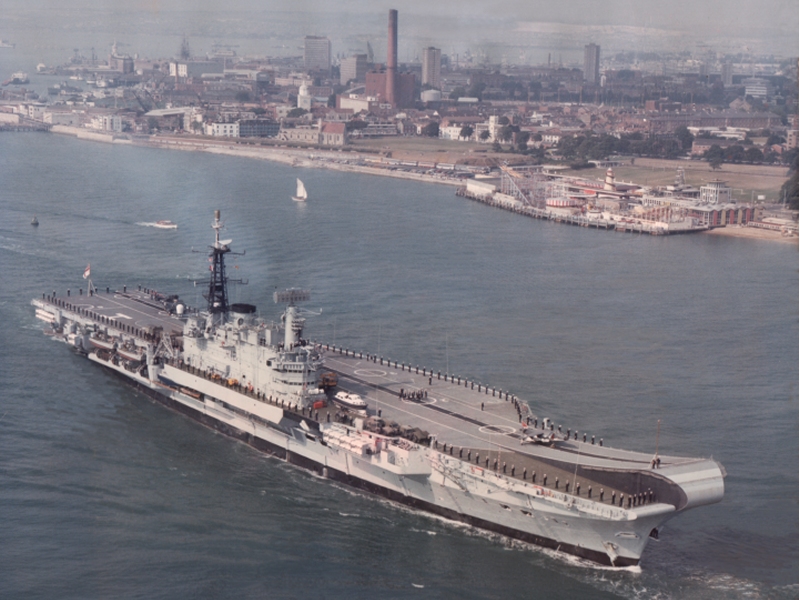
HMS Hermes leaving Portsmouth for Florida 1981, she was sold to India in 1986 and is now INS Viraat. (Image: Flickr User - rgm737) >>

The event plans to unite regional navies, but the security environment remains fraught.

The Indian Navy is preparing to conduct its showcase event – the prestigious International Fleet Review (IFR) – at Visakhapatnam from February 4 to 8. With the first foreign ships due to make an appearance tomorrow, the excitement in India’s maritime circles is palpable. This is only the second time since 2001 that such an event has been organized in India. More significantly, it is the first international fleet review on India’s Eastern seaboard, a theater of growing interest for New Delhi.

Indian naval officers and maritime watchers, however, aren’t the only ones looking forward to the event. With an expected participation of 90 ships and 60 aircraft, and more than 30 service chiefs in attendance, international interest in the IFR is high. With days to go to the event, the organizing team had received 52 firm confirmations – a significant increase from the first international fleet review in February 2001 at Mumbai when 29 nations participated.

The IFR, however, isn’t just planned as a congregation of armed warships and aircraft. Organizers have designed the event as a multi-dimensional experience – a display of camaraderie and converging interests in a complex maritime environment. Besides the naval ships review by President Pranab Mukherjee, a nautical exhibition, a city parade, a maritime conference, an operational demonstration, and a book release function celebrating the maritime heritage of India are also planned.

Read the full story at The Diplomat

20 January 2016

Editorial: Indian Ocean - India Deploys New Sub-Killer Planes to Counter Chinese Subs

By Franz-Stefan Gady

Two Poseidon 8I aircraft have recently been dispatched to the strategically-located Andaman and Nicobar archipelago.

India has deployed two of its most advanced maritime patrol/anti-submarine warfare aircraft, the Poseidon 8I, at a military base in the Andaman and Nicobar Islands, located in the Indian Ocean, The Times of India reports.

The deployment comes as a response to repeated forays of Chinese conventional and nuclear submarines into the Indian Ocean, according to Indian defense officials who spoke to The Times of India on the condition of anonymity.

The two aircraft are just about to complete their two week deployment at India’s farthest military outpost, 1,200 kilometers (745 miles) away from the Indian mainland.

In addition, the India has also deployed drones at the island. “Navy and IAF [Indian Air Force] are also deploying their (Israeli) Searcher-II unmanned aerial vehicles to the islands on a temporary basis,” the defense official said.

Read the full story at The Diplomat

04 January 2016

Editorial: The Strategic Importance of Andaman and Nicobar Islands

Image: Wiki Commons
By Sunil Raman

The Indian government needs to recognize the value of India’s southeast border.

In the Bay of Bengal, far removed from the mainland, lie the 572 islands of Andaman and Nicobar, which form India’s southeast border. While the northernmost part of the archipelago is only 22 nautical miles away from Myanmar, the southernmost point, called the Indira Point, is a mere 90 nautical miles from Indonesia. These islands dominate the Bay of Bengal and the Six Degree and Ten Degree channels which more than 60,000 commercial vessels traverse each year.

Among the nine major bottlenecks that control entry to this region are the Malacca Strait and the Six Degree Channel. The Andaman and Nicobar Islands lie in this strategically important zone, meaning that India with its growing naval capabilities could play a significant role in controlling access.

India’s Navy chief, Admiral R K Dhowan recently acknowledged that the Andaman and Nicobar Islands are a “very very important aspect” of India’s security, acting as extended arms of the country. Dhowan said that India needed to deploy naval assets to the islands for surveillance in important sea lines of communication.

Yet over the past 15 years successive governments have been slow to act, even after having declared their intention of beefing up the security infrastructure on the islands. A unified land, sea and air command was created more than a decade ago, but the command still faces turf wars, funding issues, and glacial decision making.

Read the full story at The Diplomat

08 December 2015

Think Tank: Sea, air and land updates (8-Dec-2015)

Alice Slevison, Mercedes Page and James Mugg

Sea State

Last week in Sydney, the Royal Australian Navy proudly commissioned HMAS Adelaide, second of the landing helicopter docks (LHDs) built by Spanish company Navantia based on the Spanish Armada’s ‘Juan Carlos I’. Permanently crewed by some 400 navy and army personnel, the amphibious ship can carry an extra 1,000 people for roles ranging from combat missions to humanitarian operations. With a flight deck able to accommodate six medium-sized helicopters or four Chinooks, when it has a full complement of personnel, one naval officer described it like ‘playing a 3D game of chess’.

In New Delhi, the Indian Navy is considering the purchase of additional Scorpène submarines to top up an earlier six-vessel order. Reports indicate that India is steadily cranking up military force-levels and infrastructure in the strategically located Andaman and Nicobar Command in a bid to counter China’s strategic moves in the Indian Ocean. Described by India’s Chief of Navy, Admiral Robin K. Dhowan as a ‘very, very important aspect’ of Indian’s defence, the Andabar and Nicobar islands are necessary for India to deploy ships, submarines and aircraft in the area to maintain surveillance of important sea lines of communications.

Meanwhile, Australia’s Competitive Evaluation Process to build its Future Submarine program is heating up with all three competitors issuing their final proposals last week. An expert advisory panel will begin its evaluations and issue findings next year to guide the government’s AU$50 billion selection.