30 August 2012

Sri Lanka: 123 Australia bound Persons arrested

Hosted by Flickr


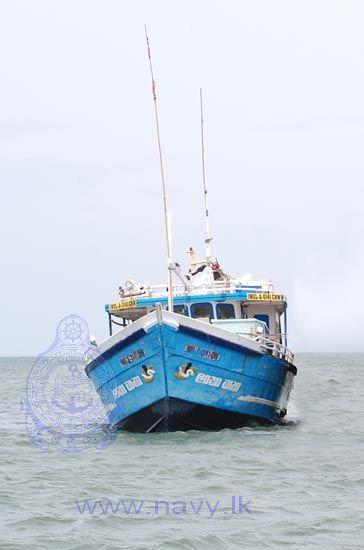
Sri Lanka Navy arrested 123 persons illegally bound for Australia in 02 multi-day trawlers on 29th August 2012. One of the trawlers arrested is named “Lankamatha” and it was intercepted 08 nautical miles off Chundikulam by a Fast Naval Patrol Craft attached to the Northern Naval Command. It had 61 persons onboard including 60 Tamils and 01 Sinhalese.

Hosted by Flickr
The other boat named “Judia” was intercepted 21 nautical miles off Batticaloa by a Fast Naval Craft attached to the Eastern Naval Command. The boat had 62 persons onboard that included 57 Tamils, 04 Sinhalese and a Muslim.

Among the arrested persons were 118 men and 05 women. They were escorted to Point Pedro and Trincomalee Harbour respectively to be handed over to the CID for further investigations. They are residents of Jaffna, PPD, Mullaithivu, Vavuniya, Batticaloa, Kilinochchi, Chilaw, Kalpitiya, Withthalaikeni, Wishwamadu, and Kurunegala.

India: Commissioning of Indian Coast Guard Ship Rajkiran

Unrelated Indian Coast Guard Ship

Indian Coast Guard Ship 'Rajkiran', the third of the series of eight Inshore Patrol Vessels (IPVs), designed and built by M/s Garden Reach Shipbuilders and Engineers, Kolkata was commissioned here today at Vishakhapatnam by Vice Admiral Anil Chopra, Flag Officer Commanding Eastern Naval Command. 

The 50 meter indigenous IPV displaces 300 tonnes and can achieve a maximum speed of 34 knots, with an endurance of 1500 nautical miles at economical speed of 16 knots. Equipped with state-of-the-art weaponry and advanced communication and navigational equipment, it makes an ideal platform for undertaking multifarious close-coast missions such as surveillance, interdiction, Search and Rescue, and medical evacuation. The special features of the ship include an Integrated Bridge Management System (IBMS), Integrated Machinery Control System (IMCS) and an integrated gun mount with indigenous Fire Control system (FCS). 

ICGS "Rajkiran", literally meaning "Royal Light", will be based at Haldia and will be under Administrative and Operational control of the Commander, Coast Guard Region(North-East). 

In his address during the commissioning ceremony, Vice Admiral Anil Chopra assured that the Indian Navy and the Indian Coast Guard are working in tandem to achieve the overall objective of Maritime and Coastal Security of our country. He also stated that that there are numerous stakeholders involved in Coastal Security and building synergy amongst all of them is extremely important to achieve the common goal of national security. 

The ship is commanded by Lieutenant Cdr Sumanta Roy, who is a specialist in Anti Submarine Warfare, in the presence of Inspector General SP Sharma, Commander, Coast Guard Region (East) and other senior dignitaries of the Central and State Govt. The ship has a crew of 05 Officers and 30 Enrolled Personnel. 

Editorial: China’s Real Blue Water Navy


By Andrew Erickson and Gabe Collins

China is building a two-layered navy with a high-end Near Seas component and a limited, low-end capability beyond. It is not poised to speed across the Pacific to threaten America.

China’s navy is not poised to speed across the Pacific to threaten America the way the Soviet Union once did, if not worse. This despite Peter Navarro and Greg Autry’s over-the-top polemic, Death by China: Confronting the Dragon—A Global Call to Action, in which they claim that “[T]he People’s Republic is moving forward at Manhattan Project speed to develop a blue water navy capable of challenging the U.S. Navy.”
Such statements lack basis in fact and present an ideal strategic teaching moment to remind analysts and policymakers that Beijing’s evolving naval structure and operations yet again show that China is not working off a traditional European, Soviet, or American naval development playbook. Even its most nationalistic and ambitious strategists and decision-makers do not seek what they would term a “global Far Oceans blue-water type” (远洋进攻性) navy any time soon. Yet it is also misleading to argue, as one scholar recently did in The National Interest, that “All but the most hawkish hawks agree that the Chinese military will not pose a threat to the United States for decades.” This is off the mark from the other direction—albeit in a considerably more subtle and thoughtful way. As a rare People’s Liberation Army (PLA) delegation visited Washington recently for a series of official meetings, it is important to understand where China’s military is headed and why—particularly at sea, where U.S. and Chinese military platforms encounter each other most frequently.
Read the full 4 page story at The Diplomat

News Story: Russia Launches Submarine for Vietnam

RIA NovostiAdmiralteiskie Verfi shipyard. ArchiveRussia Launches Submarine for Vietnam
15:53 28/08/2012 Russia's Admiralteiskie Verfi shipyard has launched a new Kilo-class Project 636 diesel-electric submarine for Vietnam, a military-industrial complex sources said on Tuesday.> Read the full story HERE <

News Story: Russian Pacific Fleet Warships to Visit Japan’s Maizuru Port

RIA NovostiAdmiral Panteleyev destroyerRussian Pacific Fleet Warships to Visit Japan’s Maizuru Port
02:46 28/08/2012 A Russian Pacific Fleet task unit will pay on Tuesday a short official visit to Japan’s naval base Maizuru, a Russian fleet spokesman said.> Read the full story HERE <

29 August 2012

Editorial: Civilian and Private Security Contractors – Yes, They’re Here to Stay

Click to Enlarge (Wiki Info)

In an era of smaller defense budgets, more civilian and private contractors are doing the work once done by regular armed forces. Regardless if this is good or bad, Maxim Worcester argues, the fact that governments are increasingly regulating PSC activities tells us they are here to stay.

By Maxim Worcester for the ISN

While the provision of security is commonly associated with the state, its monopoly on the legitimate use of violence has, throughout history, been augmented by contractors. The United States' armed forces, for example, have been supported by contractors since the US Civil War and even Victorian Britain was largely dependent upon contracted forces. Accordingly, just as the production of arms has passed from government owned companies to the private sector, so too has the provision of security increasingly migrated from standing armies to private security companies (PSCs).

The economic arguments for and the political resistance against the use of PSCs have escalated ever since the emergence of the international private military and security industry in the early 1990s. The market for services provided by PSCs is growing at a rate of 7 % p.a. and is estimated to have reached a turnover of around $200 billion. Moreover, the ethics and actions of some PSCs have raised many questions in the recent past. None of these, however, have diminished the attractiveness of the business model of such companies. Instead, even countries opposed to the trend of outsourcing the conduct of war or the securing of peace are about to put legislation in place that will ensure the continued success and presence in the market of PSCs.

Money Well Spent

The gradual privatization of military and support functions has ensured that civilian contractors and PSCs have gained influence and made small fortunes within the business of war and peacekeeping. Indeed, it could be argued that the contributions of contractors and PSCs have grown to such an extent that they have become indispensable to military operations. A 2010 survey conducted by the Washington Post, for example, suggested that the US Department of Defense employed around 1.2 million private contractors. As a result, PSCs have become an integral part of the military establishment and it is increasingly unimaginable that a major war can be conducted without their involvement.

Indeed, countries like the United States or United Kingdom seem to have little problem with the privatization of military functions which others consider to be a fundamental task of government. This, in turn, reflects that many Western governments have recognized that the leaner armies of the 21st century cannot provide all the expertise or 'boots on the ground' which armed forces that were structured to meet the threats of a Soviet invasion of Europe were able to generate organically. Instead, civilian contractors and PSCs are able to provide flexibility and surge at short notice and - particularly in the case of PSCs - can draw on highly trained former members of the armed forces. As a result, private security contractors are not subject to bureaucratic lead times and can deploy forces to plug capability and manpower gaps at short notice. Once the need for such personnel is over, PSCs can quickly be demobilized.

Through the recruitment of former military personnel, PSCs can also augment operations with the deployment of specialists with a wide range of skills that were largely acquired during their time in the regular armed forces. Many private contractors also tend to be recruited from elite units or have other highly marketable skills such as languages and country expertise. In this respect, the argument that PSCs would gain financially by employing specialists trained at the expense of the public purse seems overstated. By deploying such personnel, the government indirectly extends the service life of the former soldier without having to bear the cost of continuous employment. PSCs gain as they are able to recruit personnel without having to invest heavily in training.

Concerns remain, nevertheless, that PSCs may at first glance be more expensive than regular military forces. This might be the case when there are high levels of danger or when there is an acute demand for a surge deployment. In such instances, surge capacity comes at a price - especially when regular forces are unable to generate the required numbers. However, such costs are often more than cancelled out by the flexibility in the operating procedures of PSCs. If PSCs are allowed to solve problems by their own methods they tend to be more cost effective than their military counterparts. If PSCs are forced to act and operate in the same manner as regular forces they are more expensive.

Value Beyond Conflict

Yet war is not only about combat. The combat period during the last Gulf War, for example, was short whereas its aftermath was long and drawn out. Because of this, PSCs play an increasingly vital and important role in post-conflict situations. Following a combat period many of troops are withdrawn only to be replaced by less seasoned troops. Consequently, armed forces have often relied upon private companies to provide them with a robust supply chain and protection. In addition, PSCs also assist in the protection of the civilian population and contractors brought in to repair damaged or destroyed infrastructure. And last but not least, PSCs are increasingly used by overstretched regular forces to process and guard prisoners of war.

However, the employment of private and civilian contractors also extends beyond the regular armed forces. An extensive range of non-governmental organizations (NGOs) also play an important role in post-conflict situations. Indeed, it could be argued that NGOs have grown in importance for much the same reasons as PSCs in that both have increasingly assumed responsibilities for tasks that were once provided by states. Yet, the apparent common ideological roots and close ties between both organizations tend to be played down by NGOs that regard it as an anathema to be linked with PSCs.

The reality, however, is that NGOs can no longer operate without employing armed guards to protect their staff from danger. A survey found, for example, that every major international humanitarian organization has paid for armed security in at least one operational context, and approximately 22 % of all major NGOs reported using armed security services in 2007. The fact that USAID also required the NGOs it contracted in post-occupation Iraq to hire PSCs adds additional substance to arguments that private contractors form an increasingly important part of humanitarian operations.

In an era of increasing 'donor' and 'peacekeeper' fatigue, PSCs can also help support UN peacekeeping missions, especially on the African continent. As a result of fluctuating economic conditions and a lack of political will, fewer states are willing to commit their own forces to dangerous missions in Africa. Moreover, the lack of capacity and experience of many African armed forces makes the deployment of PSCs all the more compelling. Private contractors could, for example, assist in the development of security sector reform in African countries.

Here for the Duration

Former UN Secretary General Kofi Annan once remarked that the world may not yet be ready to privatize peace. In the meantime, however, many states readily acknowledge that they are not the only actors that can provide security and peacekeeping functions. In July 2012, for example, Germany's cabinet agreed a draft resolution which would allow armed PSCs to protect German flagged ships from pirate attacks. The draft law will be presented to parliament and in spite of deep misgivings across all parties in it is expected that the bill will be passed. This move has little to do with a change in mindset and more with the fact that it is the only available option: deploying Federal Police on board German vessels is unrealistic in terms of cost and resources.

Unlike the UK, where the government has so far placed considerable trust in the self-regulation of PSCs, the German government will also regulate private contractors through the Federal Office of Economics and Export Control. Indeed, it can also be expected that the UK's approach to regulation will eventually converge with that of Germany due to the growing recognition of problems associated with the deployment of PSCs. Accordingly, once legislative frameworks that regulate the activities of PSCs are in place, it can be assumed that private and civilian contractors are here to stay. There is clearly an economic argument for using PSCs, in order to both wage war and secure peace. It is ironic that the German government - a staunch defender of the state's monopoly on the legitimate means of violence - is on the verge of legitimizing the use of PSCs for the purpose of protecting assets it is unable to defend itself.

Maxim Worcester is Managing Director of German Business Protection GmbH (GBP), a Berlin-based security consultancy. He has previously worked for the Economist Intelligence Unit, Frankfurter Allgemeine Zeitung, Control Risks and KPMG.

This Article first appeared on ISN and is reposted here under a Creative Commons license.

USA: Southeast Asia Cooperation and Training Exercise Begins

Click to Enlarge (Hosted by Flickr)

<< Officers from the six nations taking part in exercise Southeast Asia Cooperation and Training (SEACAT) work together at the Changi Command and Control (C2) Center in Singapore, Aug. 27. (Photo courtesy of the Singapore Ministry of Defense)

From Logistics Group Western Pacific Public Affairs

SINGAPORE - The 11th annual Southeast Asia Cooperation and Training (SEACAT) exercise commenced Aug. 27, with liaison officers from the United States, Brunei, Indonesia, the Philippines, Singapore, and Thailand tracking contacts of interest in a maritime interdiction scenario.

SEACAT highlights the value of information sharing and multilateral coordination within scenarios that give participating navies hands-on practice in maritime interdiction operations (MIO). The weeklong exercise includes both a three-day command post exercise at the Multinational Operations and Exercise Center and a four-day field training exercise at sea.

During the at sea phase, the U.S. Navy rescue and salvage ship USNS Safeguard (T-ARS 50) is serving as a simulated vessel of interest, and will be tracked by liaison officers on land, at sea, and in the air. These liaison officers will work with their U.S. counterparts to share and discuss MIO tactics, and develop interception plan options. Safeguard will be boarded at sea by several participating navies.

U.S. P-3 aircraft deployed to 7th Fleet will locate training contacts of interest for various boarding scenarios, and conduct real-world maritime domain awareness missions. A team of trainers from Maritime Civil Affairs and Security Training will evaluate boarding exercises, sharing best practices with their host nation counterparts.

"This exercise is about strengthening coordination and interoperability among all six participating navies," said Rear Adm. Tom Carney, commander, Logistics Group Western Pacific (COMLOG WESTPAC) and U.S. lead for the exercise. "SEACAT provides unique opportunities to observe multiple partner navies and share best practices in ways that matter during real-world operations."

SEACAT, which began in 2002 under the name "Southeast Asia Cooperation Against Terrorism," was renamed after the 2011 exercise to reflect the growing desire for increased coordinated training between the U.S. Navy and its partners, and among regional partner navies.

COMLOG WESTPAC is 7th Fleet's theater security cooperation agent for Southeast Asia, promoting military-to-military relations and coordinating exercises such as SEACAT and nine annual phases of Cooperation Afloat Readiness and Training.

USA: Secretary of State Hillary Rodham Clinton's Travel to the Cook Islands, Indonesia, China, Timor-Leste, Brunei, and Russia


Secretary of State Hillary Rodham Clinton departs for the Cook Islands, Indonesia, China, Timor-Leste, Brunei, and Russia on August 30.

In the Cook Islands, Secretary Clinton will attend the Pacific Islands Forum (PIF) Post Forum Dialogue on August 31 as part of our intensive engagement and ongoing collaboration with the Pacific Islands. Her visit will emphasize the depth and breadth of American engagement across economic, people to people, strategic, environmental, and security interests. The visit also represents a concerted effort to strengthen regional multilateral institutions, develop bilateral partnerships, and build on alliances – three core elements of U.S. strategy toward the Asia-Pacific. She will lead the highest-level U.S. interagency delegation in the 41-year history of the Forum with senior officials from the Departments of State, Defense, and Interior.

In Jakarta on September 3, Secretary Clinton will discuss with senior Indonesian officials the U.S.-Indonesia Comprehensive Partnership and our respective engagements on regional global issues.

In Beijing September 4-5, Secretary Clinton will meet with senior Chinese leaders. Discussions are expected to cover a wide range of issues of importance in the U.S.-China relationship as part of our efforts to build a cooperative partnership, including preparations for Asia-Pacific Economic Cooperation (APEC) and other upcoming multilateral meetings and numerous bilateral, regional, and global issues.

On September 6, Secretary Clinton will be the first Secretary of State to travel to Dili, where she will emphasize U.S. support for the young democracy of Timor-Leste in her meetings with senior officials.

In Brunei, Secretary Clinton will meet with senior officials to emphasize the importance of the increasingly vibrant U.S.-Brunei relationship. She will also highlight the U.S.-Brunei ASEAN English Language initiative and discuss Brunei’s 2013 chairmanship of ASEAN.

The final stop on Secretary Clinton’s trip will be Vladivostok, where she will lead the U.S. delegation to the APEC Economic Leaders’ Meeting September 8-9. The Secretary will discuss trade liberalization, food security, and green growth including initiatives to fight wildlife trafficking, with heads of state and other regional leaders, including business representatives. She will engage on many areas of bilateral cooperation with Russia including with Foreign Minister Lavrov.

Sri Lanka: 147 Australia bound Persons arrested

Click to Enlarge (Hosted by Flickr)

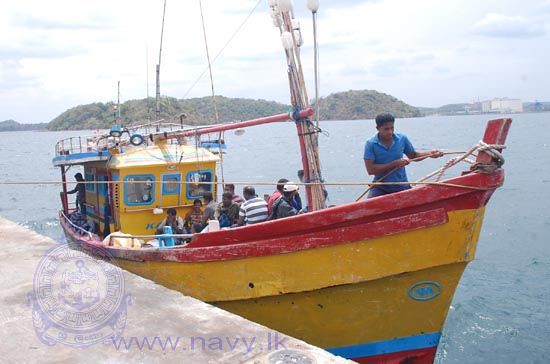
Sri Lanka Navy arrested 147 persons illegally bound for Australia in 02 multi-day trawlers on 28th August 2012. One of the trawlers named “Jethsameny” with 66 persons including 64 Tamils and 02 Sinhalese on board was intercepted 22 nautical miles off Beruwala and the other named “Panchali Duwa 4” with 81 persons including 59 Tamils and 22 Sinhalese on board was intercepted 20 nautical miles off Chilaw.

Among the arrested persons are 147 men and a woman. They are residents of Jaffna, Mullaithivu, Trincomalee, Vavuniya, Batticaloa, Kilinochchi, Chilaw, Puttlam, Colombo, Negombo, Kurunegala and Mannar. All were brought to Modara Fisheries Harbour to be handed over to the CID for further investigations.

Brunei: INITIAL PLANNING CONFERENCE FOR THE ADMM-PLUS HADR AND MILITARY MEDICINE EXERCISE


BANDAR SERI BEGAWAN, Tuesday 28 August 2012 – The Initial Planning Conference (IPC) for the ASEAN Defence Ministers’ Meeting-Plus Humanitarian Assistance and Disaster Relief and Military Medicine Exercise (ADMM-Plus HADR and MM Ex) begins today at the Rizqun International Hotel, Gadong, Brunei Darussalam.

The IPC commences with the Five-Nations Meeting which consists of Brunei Darussalam and the Co-Chairs of the ADMM-Plus Experts’ Working Groups (ADMM-Plus EWG) on Humanitarian Assistance and Disaster Relief (HADR) and Military Medicine (MM), namely, Vietnam and China, and Singapore and Japan, respectively. The aim of this Meeting is to reach understanding on the general overview and preliminary planning details of the Exercise.   

This is to be followed by a Meeting involving ASEAN countries on the 2nd ASEAN Humanitarian Assistance and Disaster Relief Exercise (2nd AHX), in which, Brunei Darussalam will also be hosting next year. 

The highlight of the IPC however is the Meeting of the ADMM-Plus countries to be chaired by First Admiral Dato Seri Pahlawan Abdul Aziz Haji Mohd Tamit, Joint Force Commander, Royal Brunei Armed Forces. Both the Co-Chairs of the ADMM-Plus EWGs on HADR and MM are also to lead the discussion in this Meeting. Discussions are expected to include contribution by the ADMM-Plus countries on military personnel as well as assets and capabilities, and any other exercise logistics and administration matters.

The ADMM-Plus HADR and MM Ex will be the first exercise under the ADMM-Plus mechanism that will represents a concrete demonstration of practical cooperation. It was supported at the ASEAN Defence Senior Officials’ Meeting (ADSOM) and the ASEAN Defence Senior Officials’ Meeting-Plus (ADSOM-Plus) in Siem Reap, Cambodia, in April 2012, and endorsed by the ASEAN Defence Ministers at their Meeting in Phnom Penh, Cambodia, in May 2012. The Exercise is scheduled to be held on 16 – 20 June 2013, back-to-back with the 2nd AHX. Both Exercises are the major deliverables during Brunei Darussalam’s ADMM and ADMM-Plus Chairmanship next year.

The ADMM-Plus countries consist of the ten ASEAN countries and Australia, China, India, Japan, New Zealand, Republic of Korea, Russia and USA.