Showing posts with label Indo/Pacific. Show all posts

28 June 2017

News Report: India, US to Jointly Ensure Stability in South China Sea, Indo-Pacific Region

India and the US have vowed to promote stability and ensure the freedom of navigation across the Indo-Pacific region

New Delhi (Sputnik) — Experts said the development is significant as it reinforces American commitment in ensuring the balance of power in the region where China has emerged as a dominant power.

A joint statement issued after the meeting between Indian Prime Minister Narendra Modi and US President Donald Trump’s maiden meeting on Monday in the White House said the two sides will forge close ties to ensure peace and stability in the Indo-Pacific region.

“As responsible stewards in the Indo-Pacific region, President Trump and Prime Minister Modi agreed that a close partnership between the United States and India is central to peace and stability in the region,” the joint statement read.

In their discussion, Modi and Trump reiterated their commitment to the “tenets outlined in the UN Charter, they committed to a set of common principles for the region (Indo-Pacific), according to which sovereignty and international law are respected and every country can prosper.”

20 January 2017

USA: USS Hopper visits Sri Lanka after return to 7th Fleet

From Task Force 70 Public Affairs

The Sri Lanka Navy Band marches away after performing to welcome USS Hopper (DDG 70) to Colombo, Jan. 19. (U.S. Embassy Colombo photo) >>

YOKOSUKA, Japan - Guided-missile destroyer USS Hopper (DDG 70) arrived in Colombo, Sri Lanka, for a brief visit Jan. 19.

During the visit, the crew will have the opportunity to engage with members of the Sri Lanka Navy and public. The crew is eager to experience the hospitality and culture of Sri Lanka.

The visit also provides the opportunity for the crew of Hopper to thank the Sri Lanka Navy for their support in providing medical treatment to a Hopper crew member in September.

Hopper is a multi-mission ship with anti-air warfare, anti-submarine warfare, and anti-surface warfare surface combatants capabilities; designed to operate independently or with a surface action group or strike group.

Homeported in Pearl Harbor, Hawaii, Hopper is on deployment in the Indo-Asia-Pacific after recently completing operations in U.S. 5th Fleet.

The U.S. Navy maintains a presence in the U.S. 7th Fleet area of operations to help preserve peace and security and to further their partnerships with friends and allies. This forward presence contributes to freedom of navigation and lawful use of the sea, as well as furthers operational training and enables an exchange of culture, skills, and tactical knowledge.

30 November 2016

Think Tank: Donald Trump and coming scrutiny of ANZUS

Ron Huisken

A constant in Donald Trump’s electoral pitch was that wealthy allies had for too long relied on America’s willingness to backstop their national security and harvested the long-term economic rewards of keeping their own military effort comparatively modest.

We’ve no real idea at this point where a Trump administration will see the balance of American interests on this issue. We have to be optimistic that the President-elect will recognise that the way he was inclined to frame this question when he was a candidate was simplistic and not especially helpful. Americans won’t want the US to be portrayed as a ‘gun for hire’, a mercenary power that charges what it thinks it will cost to sustain a military posture that will deter and, if necessary, defeat the opponents of an ally; if the ally doesn’t pay their full share, the deal is off.

In fact, the pact between allies is profound and quite remarkable—a willingness to accept that a nation’s most treasured asset, its sovereignty, should depend to some degree on another state and a willingness to risk a state’s most treasured resource, the lives of its citizens, to protect the sovereignty of another state. The considerations that each party brings into play to assess the merits of an alliance relationship are broad and intangible—not the sort of thing that anyone can readily put a dollar value on.

USA: Pacom Chief Praises Stronger Indo-Asia-Pacific Maritime Partnerships

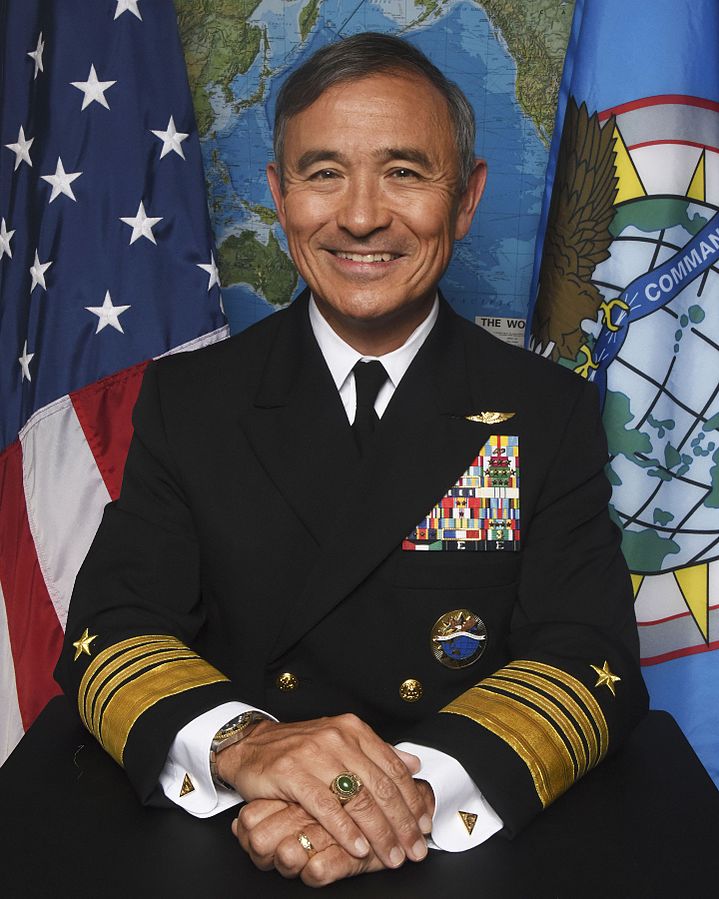
Navy Adm. Harry B. Harris Jr (Image: Wiki Commons)
By Amaani Lyle DoD News,
Defense Media Activity

WASHINGTON, Nov. 29, 2016 — As U.S. forces strengthen ties in the Indo-Asia-Pacific region, the island nation of Sri Lanka has emerged as a significant contributor to regional stability and security, U.S. Pacific Command’s commander said yesterday at the Galle Dialogue 2016 conference in Sri Lanka’s capital city of Colombo.

The first American four-star officer to visit Sri Lanka in almost a decade, Navy Adm. Harry B. Harris Jr. said at the two-day international maritime conference that he was pleased to see a deepened military-to-military relationship between Sri Lanka and the United States.

“To continue along a prosperous path, we must expand partnerships among like-minded nations to uphold the rules-based global operating system,” Harris said. “This helps build what [Defense Secretary Ash] Carter calls a ‘principled security network.’”

16 November 2016

News Report: India Confident of Strategic Partnership Under Trump

Anjana Pasricha

NEW DELHI — A strategic partnership built between India and the United States in the last two years is expected to deepen under a Trump administration.

However, India’s famed information technology sector could suffer, along with Prime Minister Narendra Modi’s plan to turn the country into a manufacturing hub, if President-elect Donald Trump acts on campaign pledges to restrict immigration and bring jobs back to the United States, some Indian analysts and observers say.

"When the dust settles down, I don’t think India will have cause for complaint under a Trump presidency," said Lalit Mansingh, a former Indian ambassador to the United States

He added that Modi, who has vowed to diplomatically isolate Pakistan for its alleged support of cross-border terrorism, will hope to get more support from Trump, who advocated a tougher stance on terrorism during the campaign. India accuses Islamabad of backing Islamic militant groups fomenting terrorism in India, a charge Pakistan strongly denies.

Mansingh predicted Trump would be a stronger ally on terrorism: "I expect that he will go a step further than what his predecessors did in applying pressure on Pakistan, because all the previous administrations have said the right things but have hesitated from putting pressure on Pakistan because it might affect their operations in Afghanistan. I think Trump may be more forthcoming."

But there is much more uncertainty about how a Trump administration will affect wider Asian geopolitics. Concerns about China’s growing assertiveness in Asia and its expanding influence in India’s neighborhood helped prompt Modi to deepen India’s military cooperation with the United States, shedding its traditional hesitations about moving too close to Washington.

07 November 2016

Think Tank: Jokowi and the Indo–Pacific - two years on

Tim Willis

At the two year mark of Indonesian President Joko ‘Jokowi’ Widodo’s time in office, commentators have been quick to criticise the inward turn Indonesia’s foreign policy has taken under his administration. This for a President elected on a platform of ‘expanding Indonesia’s regional engagement in the Indo–Pacific’ (PDF). As President, Jokowi has shown himself to be overwhelmingly focused on a domestic archipelagic development agenda, part of his stated vision of developing Indonesia into a global maritime fulcrum (GMF). However, the gulf between rhetoric and action isn’t just a quirk of Jokowi’s leadership but rather a symptom of Jakarta’s long-standing ‘minimalist’ conception of the Indo-Pacific.

The first Indonesian policymaker to consider the strategic benefits of an Indo-Pacific outlook was Marty Natalegwa, Foreign Minister under the ‘internationalist’ President SBY. Natalegwa penned a response to the new regional construct in 2013, then being promoted by some Indo–Pacific Rim democracies (the United States, Japan, India and Australia). His proposal was for an ‘Indo–Pacific-wide treaty of friendship and cooperation,’ based on the East Asia Summit’s Bali Principles. Rather than undertaking a considerable revamp of Indonesian foreign policy, the Foreign Minister simply sought to apply his existing doctrine, that of a regional ‘dynamic equilibrium’—‘where not one country is preponderant’—to the expanded region. Marty called for an Indo–Pacific (PDF):

02 November 2016

Think Tank: Re-hyphenating the Indo-Pacific

Ian Hall

In the wonderfully-titled ‘From Hollywood to Bollywood’, Andrew Phillips questions the utility of the ‘Indo-Pacific’ concept. He thinks it’s less than the sum of its parts. Australian strategists, he argues, need to acknowledge the existence of two very different regional security orders, one Asia-Pacific and one South Asian. The first has ‘architecture’, provided by the US-centred ‘hub-and-spokes’ alliance system; the second doesn’t, as its main player, India, favours ‘non-alignment’ over alliances and multilateral institutions. Australians need to recognise those differences, Phillips asserts, if they’re to craft the right approach to what he calls the ‘Indo/Pacific’.

Phillips recognises that there’s now far more economic, diplomatic and security-focused interaction between East and South Asia than there was 25 years ago. These extend far beyond the oft-mentioned Sea Lines of Communication that run from the Arabian Gulf to Pacific. Trade and investment flows between the two regions are growing fast. China’s westward push promises even deeper economic integration, as its ‘One Belt, One Road’ initiative builds road and rail networks into Central Asia, and its maritime ‘Silk Road’ runs the South China Sea and Indian Ocean. East and South Asian states are also forging wide-ranging strategic partnerships that involve more than just promises to boost trade and investment, but also commitments to more frequent political discussions, upgraded defence ties, intelligence-sharing, technology transfer and co-development, regular strategic dialogues, and so on.

02 September 2016

USA: Partnerships Connect as Pacific Endeavor Concludes in Australia

Military Communications (File Photo)
By Air Force Master Sgt. Todd Kabalan
Defense Media Activity - Hawaii

BRISBANE, Australia, Sept. 1, 2016 — After two weeks of information-sharing modules, equipment checks and field testing, the nearly 250 participants in Exercise Pacific Endeavor 2016 came together for a closing ceremony at Gallipoli Barracks here.

The exercise put military experts from 22 Indo-Asia Pacific nations, nongovernment organizations and academic advisors to work improving standard operating procedures for humanitarian assistance and disaster response.

In addition to validating and documenting existing cyber, radio and spectrum technologies, participants said they found that the real value in the exercise was in the face-to-face interaction with their counterparts.

“It’s an opportunity for small nations like Papua New Guinea to build a network of friends from other nations in the Indo-Asia Pacific Region. Should we need the assistance in the future, at least we know we have friends and we can rely on,” said Papua New Guinea Army Maj. Joe Mwawesi.

04 August 2016

News Story: U.S. admiral warns Asia-Pacific may be next front in ISIS fight

David Larter

As the U.S. launches Operation Odyssey Lightning against the Islamic State group in Libya, a fourth front in the war against the brutal militant group, U.S. commanders are casting a wary eye on a possible fifth front: the Asia-Pacific.

The U.S. is launching strikes in Syria, Iraq, Afghanistan and now Libya, but military leaders and strategists are alarmed by waves of violence and signs that countries with large Muslim populations like the Philippines and Bangladesh could be ISIS’s next global stronghold.

In a July 27 speech to the Rebuild Japan Initiative Foundation, U.S. Pacific Command head Adm. Harry Harris said the region would need to work together to stop ISIS from metastasizing into what the U.S. military calls the Indo-Asia-Pacific region.

“I often talk about the U.S. strategic rebalance to this region,” Harris said. “Regrettably, I believe that ISIL is also trying to rebalance to the Indo-Asia-Pacific. To halt the Islamic State’s cancerous spread in Asia, we can’t work alone. We must work together.

“Thankfully, Japan and many other like-minded nations have joined the counter-ISIL coalition. Together, we can — and will — eradicate this disease.”

Read the full story at DefenseNews

23 July 2016

News Story: U.S. to work with Sri Lanka navy on maritime security

COLOMBO, July 22 (Xinhua) -- The United States on Friday said it will look to work with the Sri Lanka navy for maritime security and stability.

The U.S. Embassy in Colombo said that the U.S. ship, USS New Orleans (LPD 18) with the embarked 13th Marine Expeditionary Unit (MEU) will arrive in Sri Lanka for a port visit on Sunday.

The ship and embarked MEU will be in Sri Lanka to increase bilateral ties with the Sri Lankan Navy and provide U.S. support and training for humanitarian assistance and disaster relief.

"The 21st century is in many ways the Indo-Pacific century, and Sri Lanka is well-positioned to take advantage of its strategic location," the U.S. Ambassador to Sri Lanka Atul Keshap said.

"The United States looks forward to working with the Sri Lanka navy as a key force for maritime security and stability."

Read the full story at Xinhua

18 June 2016

USA: Assistant Secretary Biswal Travel to Japan and Australia

Assistant Secretary of State for South and Central Asian Affairs Nisha Biswal will travel to Tokyo June 19-21 for the U.S.-Japan-India Trilateral Dialogue and the Ninth U.S. – India Consultations on East Asia, where she will co-lead the U.S. delegation with Assistant Secretary of State for East Asian and Pacific Affairs Daniel Russel. She will meet with both Japanese and Indian government officials to discuss trilateral cooperation and developments in global affairs.

Assistant Secretary Biswal will travel to Canberra and Sydney June 22-23 to meet with officials from the government of Australia and regional experts to share perspectives on the future of the Indo-Pacific region.

31 March 2016

USA: US 7th Fleet, Sri Lanka Enhance Bilateral Cooperation

By Mass Communication Specialist 2nd Class Indra Bosko, Commander, U.S. 7th Fleet Public Affairs

COLOMBO, Sri Lanka (NNS) -- Senior military leaders from U.S. 7th Fleet and the Sri Lanka navy and air force met to discuss operational topics aboard the Fleet's flagship USS Blue Ridge, March 29.

Sixteen officials from Sri Lanka attended the bilateral meeting hosted by 7th Fleet, designed to share knowledge and discuss lessons learned within the Indo-Asia-Pacific.

"I hope that we can have something constructive so that we can follow up for months and years to come," said Director General Operation for Sri Lanka Navy Rear Adm. Dharmendra Wettewa, who attended the bilateral meeting.

There were also discussions about potential bilateral training between the U.S. and Sri Lanka during Pacific Partnership, a joint effort between the United States, foreign militaries, and other organizations to conduct civil-military operations including humanitarian and civic assistance, as well as veterinary, medical, dental and civil engineering support. 

23 March 2016

USA: US 7th Fleet, Indo-Asia-Pacific Navies Increase Multilateral Cooperation

USS Blue Ridge (Image: Wiki Commons)
By Mass Communication Specialist 2nd Class Indra Bosko, U.S. 7th Fleet Public Affairs

CHANGI, Singapore (NNS) -- Maritime leaders from U.S. 7th Fleet, Republic of Singapore Navy, Royal Malaysian Navy, Philippine Navy and Indonesian Navy met for a professional exchange of ideas to discuss operational topics aboard U.S. 7th Fleet flagship USS Blue Ridge (LCC 19), March 19-20. 

The multilateral meetings were designed for the participating Indo-Asia-Pacific navies to share knowledge and discuss lessons learned within the region. 

During a 7th Fleet-hosted Southeast Asian Fleet Commander's Roundtable, senior navy leaders from the five nations had professional dialogues on various maritime issues such as multilateral exercises, freedom of navigation operations and maritime law, rules and norms. They also discussed ways to increase theater security cooperation through multilateral military interactions.

05 March 2016

USA: ‘Let’s be Ambitious Together’ Pacom Commander Urges in India

Adm. Harry B. Harris Jr (Image: Wikipedia)
By Karen Parrish
DoD News, Defense Media Activity

WASHINGTON, March 4, 2016 — Strengthening conversations, advancing relationships, and ambitiously realizing a joint strategic vision were a few of the goals the leader of U.S. Pacific Command shared with an international audience at the Raisina Dialogue in New Delhi this week.

Navy Adm. Harry Harris Jr. was a keynote speaker at the inaugural conference, held March 1 to 3, was billed as India’s flagship geopolitics and geo-economics conference.

The event drew high-level government, industry, media and academic delegates from throughout the region and around the world -- including many from the Pacom  area of responsibility, which covers territory stretching from the western United States to India’s western border and from Antarctica to the North Pole.

04 March 2016

Think Tank: DWP 2016 - China, Australia and the US rebalance?

Feng Zhang

Australia enters China’s strategic landscape because of its role as a close military ally of the US. It’s seen by many inside China as the ‘southern anchor’ of America’s alliance system in the Asia–Pacific region. Yet, when compared with Japan, the ‘northern anchor’ of this system, Australia has never generated the same amount of frustration or anxiety among Chinese policymakers. Geography and history combine to produce different security dynamics in China–Australia relations, compared with China–Japan relations, despite Australia and Japan’s identical roles as a close US ally. Since the end of the Cold War, Australia has occasionally been a minor nuisance to China’s strategic planning—rarely a headache, let alone a preoccupation.

But, as the Australian government’s 2016 Defence White Paper points out, the strategic environment of the Indo–Pacific region is changing fast, and Australia must cope with a new set of security uncertainties and risks (1.6). Can the current, relatively uneventful security relationship between Australia and China last under changing circumstances?

The US rebalance to Asia and China’s recent policies in the South China Sea are intensifying strategic competition between the two countries; it’s also increasingly straining the Australia–China security relationship. China was likely embarrassed by the two US freedom of navigation operations carried out in October 2015 and January 2016. It’s not happy with Australia’s air patrols in the South China Sea either, even though the public reaction hasn’t been strong.

25 February 2016

Think Tank: The 2016 Defence White Paper: good posture

Peter Jennings

A wide brown land needs a big, big defence policy and Australia has received that very thing with this morning’s delivery of the 2016 Defence White Paper.

Conceived in 2013, gestating like a humongous pearl in 2014 and 2015, the 2016 White Paper largely lives up to its self-made claim to be ‘deliberate, rigorous and methodical’. Although a close read occasionally points to the White Paper’s mixed parentage—the words ‘agile’ and ‘innovative’ are salted through the text—this is a document that sets out a clear strategy, a logically-articulated force structure and—can you believe it—a plausible funding plan.

The strategy all hinges on the money. To the extent that any government can commit their heirs and successors, this White Paper locks in a promise to reach a defence budget ‘just ahead’ of 2% of gross domestic product in 2020–21. That’s three years in advance of Tony Abbott’s pledge to reach 2% of GDP in 2023–24. Some decry the value of the 2% target, but it kept both Government and Opposition focused on security at a time when others would have happily ditched the spending promise.

On strategic outlook, the White Paper makes a compelling case for being concerned about a generally deteriorating situation. It does so after a throat-clearing reference to the ‘greater opportunities for prosperity and development’ afforded by generally exciting times. But opportunities for positive excitement can only be realised if prosperity stays underpinned by peace and stability.

28 January 2016

News Story: US Pacific Chief Talks China, Regional Partnerships

Image: Wikipedia
By Christopher P. Cavas

China's provocative actions don't befit a great power, US commander says

WASHINGTON — “The rise of China is not a bad thing, but it’s how that power is used that is a concern to me,” the top US military officer in the Pacific said Wednesday.

Adm. Harry Harris, commander of the US Pacific Command, told a Washington audience that China’s intentions “remain clouded.” He highlighted the South China Sea land-reclamation projects that threaten to alter the balance of power in the region.

“There are five countries involved in land-reclamation projects in the last 40 years” in the South China Sea, Harris told an audience at the Center for Strategic and International Studies, “and we have called on all of them to stop.”

China’s efforts, he pointed out, “far outstrip all the others.” Harris put up a chart showing that together, Vietnam, Malaysia, the Philippines and Taiwan have reclaimed 215 acres of land over the past 40 years, while China has reclaimed more than 3,000 acres in the past 18 months.

“If they are to build out all their reef projects, they will control all of the South China Sea militarily with the exception of the US,” Harris warned.

Read the full story at DefenseNews

26 December 2015

Editorial: India - Maritime Strategy and ‘Brand-Building’

INS Vikramaditya (File Photo)
By Abhijit Singh

The Indian Navy has released a new maritime security strategy document.

Last week, the Indian Navy held a landmark combined commanders’ conference on its premier naval platform, the INS Vikramaditya. The senior officers’ conclave – the first of its kind to be organized aboard an aircraft carrier – was made memorable by a rousing address delivered by Prime Minister Narendra Modi, in which he outlined New Delhi’s many challenges in Asia, paying particular attention to India’s strategic stakes in the Indian Ocean Region (IOR).

The discourse may have pleased naval commanders in attendance – not least because the prime minister had a word of praise for the Indian Navy’s strategy for the IOR, a presumed reference to the recently released Indian maritime security strategy document. The new publication has been the subject of much discussion in maritime circles recently. In the absence of an online version for public viewing, however, speculation abounds about its many assertions and pronouncements. This review is an attempt at capturing the publication’s salient highlights – its guiding principles, the assessment of threats and challenges, recommended operational methodologies, and proposals for strategic outreach and force-projection.

Titled “Ensuring Secure Seas,” the Indian Maritime Security Strategy (IMSS-2015) is an updated version of a previous publication, “Freedom to Use the Seas” – the Indian Navy’s playbook for security operations during the past decade. Released just weeks before the commencement of an international fleet review at Visakhapatnam, the new document is an enunciation of contemporary nautical precepts, and a reflection of the Indian Navy’s current maritime operations philosophy.

This is the third maritime guidance document since 1998 and the most comprehensive account of India’s nautical imperatives, challenges, strengths and opportunities. As in the case of its predecessor documents, the new volume attempts to outline India’s naval operational determinants, which it describes as a combination of imperatives and drivers – the former concerning national economic needs; the latter, a combination of traditional and irregular threats at sea.

Read the full story at The Diplomat

16 December 2015

USA: Adm. Swift Talks Regional Trends During Cooperative Strategy Forum

By Staff Sgt. Christopher Hubenthal

Adm. Scott Swift talks to students about regional issues in the Indo-Asia Pacific Region during the Naval War College cooperative strategy forum. (U.S. Air Force/Staff Sgt. Christopher Hubenthal) >>

HONOLULU — Adm. Scott Swift, commander of U.S. Pacific Fleet, spoke to more than 100 personnel at the Daniel K. Inouye Asia-Pacific Center for Security Studies (APCSS) during a cooperative strategy forum co-hosted by the Chief of Naval Operations Dec. 14.

During the forum Swift delivered a keynote speech to attendees that shared his expectations of those operating in the waters of the Indo-Asia-Pacific.

"I'm focused on the behavior of all naval and maritime forces in the region, not on any specific country," Swift said. "I expect all naval and maritime forces, including my own, to operate responsibly, safely and in full compliance with international law."

The event involved representatives from ten partner nations with a focus on participants gaining a better understanding of each other's viewpoints and fostering improved future collaboration.

15 December 2015

Editorial: Abe's Visit Takes Japan-India Security Relations to the Next Level

Image: Flickr User - Narendra Modi
By Yuki Tatsumi

India-Japan security relations have flourished since Abe’s first term in office.

Japanese Prime Minister Shinzo Abe met with Indian Prime Minister Narendra Modi on December 12. As Abe concluded his short two-day visit to India the end of their meeting, the two leaders issued Japan-India Vision 2025 Special Strategic and Global Partnership. In this document, Abe and Modi agreed on expanding bilateral cooperation in a wide range of issues from investment, disaster risk management, and people-to-people exchange. They also acknowledged that stability of the Indo-Pacific region to be “indispensable” to their respective national security and prosperity, calling for a more robust cooperation in security issues. 

The Japan-India relationship is among the core relationships that Abe has focused on since he served prime minister for the first time, from 2006-2007. In fact, shortly after Abe returned to power in December 2012, he contributed an important commentary to Project Syndicate on December 27, 2012. In this commentary, he introduced the “Diamond Concept (daiyamondo kousou), in which he envisioned that the United States, Japan, Australia, and India would form a virtual security “diamond” and work together to maintain the peace and stability of the Indo-Pacific region.

This commentary by Abe attracted hardly any attention in Japan when it was published. However, when reflecting on the major foreign policy decisions that Abe has made since then, it is clear that Abe’s moves to pursue more robust relationships with Australia and India, while continuing to anchor these relationships with its alliance with the United States, are remarkably consistent with this “Diamond Concept.” It is also a critical component of his government “proactive contribution to peace” principle articulated in the National Security Strategy.

Read the full story at The Diplomat