29 November 2012

AUS: Last AP-3C Orion Aircraft welcomed home from Middle East

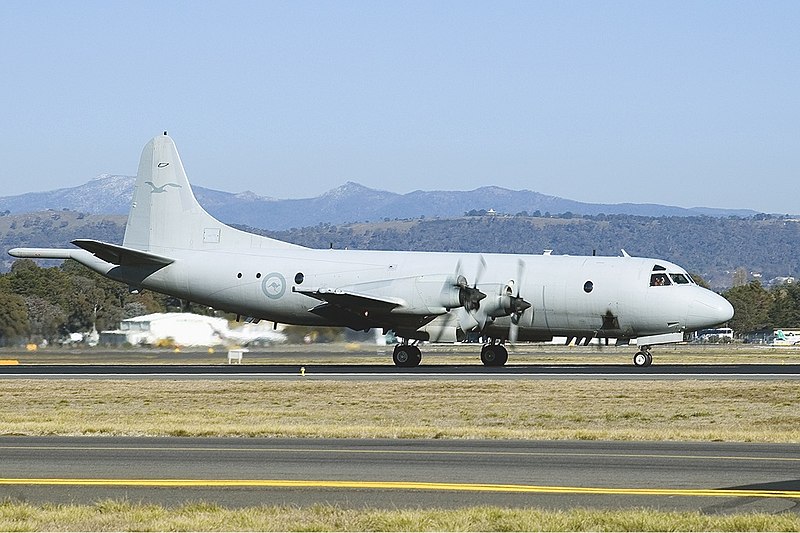
AP-3C Orion (Wiki Info - Image: Wiki Commons)

Minister for Defence, Stephen Smith welcomed the homecoming today of the final AP-3C Orion aircraft to have served in the Middle East Area of Operations.

AP-3C Orion aircraft from Number 92 Wing, Royal Australian Air Force (RAAF) Base Edinburgh, South Australia, have provided nearly ten years of operational service in the Middle East.

AP-3C Orions first deployed to the Middle East in 2003 to provide an intelligence, surveillance and reconnaissance capability to forces in the Middle East and proved themselves to be extremely versatile.

The Middle East deployment witnessed the aircraft’s purpose expand from being almost exclusively maritime-focused to becoming an invaluable intelligence, surveillance and reconnaissance asset in the land environment, providing ground force commanders with essential situational awareness.

The AP-3C Orions conducted overland intelligence, surveillance and reconnaissance tasks in Afghanistan and Iraq and maritime patrols of the Arabian Gulf and North Arabian Sea.  

More recently, Orions also conducted counter-piracy missions in the vicinity of Somalia, working closely with the US-led Combined Maritime Force and other International maritime anti-piracy task forces.

Throughout the almost decade-long deployment, approximately 3500 personnel deployed with AP-3C Orions on three to six month tours of duty.

During the deployment, Number 92 Wing has also maintained operational and training commitments in Australia, demonstrating the professionalism and dedication of all the Wing’s personnel in support of Australia’s national interests at home and abroad.

The Minister commended Number 92 Wing for their contribution to operations in the Middle East and thanked families and friends of members of 92 Wing for their support for their loved ones who deployed overseas during this period.

Hundreds of personnel who have deployed to the Middle East turned out to witness the final AP‑3C Orion from the Middle East land at RAAF Base Edinburgh today, following a successful commitment as part of Operation SLIPPER.

USA: Statement from Secretary of the Navy Ray Mabus in Beijing, China

SecNav Ray Mabus (Wiki Info - Image: Wiki)

The relationship between the United States and China has never been more important to our collective future.  As part of our enduring strategy of rebalancing toward the Asia-Pacific region, the United States is deepening our engagement in this part of the world, which incorporates diplomacy, trade, economy, and defense. And a key to that rebalancing is a positive, cooperative and comprehensive relationship with China.  The United States has long been a Pacific power.  We have always tried to promote greater security and prosperity in the Asia-Pacific region and recognize that our interests are inextricably linked to Asia’s.  Cooperating with China to realize shared goals is important to the maintenance of peace and security in the Asia-Pacific region and central to our approach.

The United States greatly appreciates China’s contributions to the global counter piracy effort.  I am pleased our two Navies conducted a successful counter-piracy exercise in September, and we welcome China’s participation in the Rim of the Pacific exercise in 2014.  These kinds of opportunities are invaluable when it comes to building trust between our two Navies.

During my time here I look forward to continuing our conversations and furthering our efforts toward achieving the goal of a military-to-military relationship that is healthy, stable, reliable, continuous and transparent.  As two major Pacific Powers, the United States and China have the opportunity and responsibility to work together to ensure a peaceful, prosperous, and secure future.  A strong United States-China partnership is essential for global security and prosperity for the 21st century.

Eurocopter Dauphin helicopters enter service with the Bangladesh Army for VIP & Humanitarian missions


The Bangladesh Army has marked its formal service introduction of two new Eurocopter AS365 N3+ Dauphin helicopters, which will be deployed on United Nations humanitarian missions and operated in multi-role transport duties for the republic.

Supplied through the Eurocopter South East Asia subsidiary, these are the first Eurocopter-built rotorcraft to join the Bangladesh Army’s aviation fleet, and they were presented today during a ceremony at the military service’s Dhaka Cantonment headquarters.

In preparation for the twin-engine Dauphin’s service introduction, an initial group of Bangladesh Army pilots attended ground school classes at Eurocopter South East Asia’s Singapore facility, and were trained in the subsidiary’s AS365 N3+ full-flight simulator. Additional crew members are to follow, including pilots who will be qualified as instructors.

“These two Dauphins will significantly enhance our capabilities, as we continue to participate actively in world peacekeeping missions,” explained Brigadier General Abdullah Al Azhar, commander of the ad hoc army aviation group. “The provision of simulator training by Eurocopter South East Asia has greatly facilitated the service entry of the aircraft, allowing our pilots to operate them from the onset with confidence and ease.”

To cater to the growing Dauphin fleet in Asia, Eurocopter South East Asia was designated earlier this year as the regional hub to provide training, major inspection and heavy structural repairs for the Dauphin family of helicopters.

“We welcome the Bangladesh Army to Eurocopter’s global family of operators,” said Bernard Brenner, President & CEO of Eurocopter South East Asia. “Their confidence in our products stems not just from the Dauphin’s proven capabilities, but also from our ability to provide them with the full suite of support and services, which comes as a direct benefit from Eurocopter’s policy of being in close proximity to the customers.”

Eurocopter’s AS365 N3+ is the company’s latest member in the Dauphin helicopter family, featuring more powerful Arriel 2C turboshaft engines, an increased gross weight, a 4-axis autopilot and glass cockpit.

News Story: Russia, India to hold joint naval exercise off Mumbai coast


Three Russian warships will enter Mumbai today to hold joint naval exercises, code-named 'INDRA', with the Indian Navy from December 2.

The two-day naval exercises will be held off the coast of Mumbai from December 2 where the Indian side would be represented by Delhi Class destroyer INS Mysore and Tabar Class guided missile frigate along with different types of aircraft in the force, Navy officials said here.

The Russian side has come with destroyer Marshal Shaponishkov, fleet tug ship Alatau and fleet tanker Irkut for the exercises, they said.

Read the full story at Business Standard

News Story: K-15 (SLBM) test off Andhra coast next month


By Hemant Kumar Rout

After the successful trial of AD interceptor missile, DRDO is readying for the developmental trial of submarine- launched ballistic missile K-15 from an underwater platform off the Andhra Pradesh coast in the second week of December.

The much awaited test, scheduled for the last week of November, was postponed owing to inclement weather triggered by a deep depression in Bay of Bengal early this month. DRDO scientists are reportedly contemplating two trials of K-15, one from a pontoon (replica of a submarine) and another from a submarine.

Defence sources said the nuclear capable missile will be tested for the first time from a submarine positioned undersea off  Visakhapatnam coast. If everything goes as planned, the missile will be fired any time between December 6 and 8.

Read the full story at The Indian Express

News Story: India Issues RFP For 56 Cargo Aircraft

Alenia C-27J Spartan

By Jay Menon

NEW DELHI — India has issued a request for proposals for 56 cargo aircraft to replace its air force’s aging fleet of Hindustan Aeronautics Ltd.-built Hawker Siddeley 748M Avro aircraft, according to a defense ministry official.

Under the deal, the first 16 aircraft will be directly procured from the chosen foreign vendor, which will then have to partner with an Indian firm that will manufacture the remaining 40. Out of those 40, 16 must have 30% indigenous components, while 24 must have 60% locally procured parts, the official says.

The Indian air force (IAF) is looking at several options including IL-114 variants from the Russian Ilyushin Aviation Complex, Ukrainian An-148 Antonov, the twin-turboprop European EADS Casa C-295 and Italian Alenia C-27J Spartan medium-sized military transport aircraft.

Read the full story at Aviation Week

News Story: Pakistan test-fires nuclear-capable ballistic missile Hatf-V


ISLAMABAD (PTI): Pakistan Wednesday tested the Hatf-V nuclear-capable ballistic missile with a range of 1,300 km, with the military saying that the launch was aimed at strengthening the country's deterrence capability.

A statement from the military described the test as a "training launch" conducted by a strategic missile group of the Army Strategic Force Command.

The test of the medium range ballistic missile, also known as the Ghauri, marked the culmination of a field training exercise aimed at testing the operational readiness of the Army Strategic Force Command.

Read the full story at Brahmand

News Story: Russia Denies Losing Indian Arms Tenders

RIA NovostiMi-26T2 helicopter Russia Denies Losing Indian Arms Tenders
19:01 28/11/2012 Russia’s state arms exporter Rosoboronexport denied on Wednesday media reports that it had lost tenders on the delivery of heavy-lift helicopters and aerial tankers to the Indian air force.> Read the full story HERE <

Editorial: (China) One Landing Does Not Make a Carrier

By James R. Holmes

Last Sunday China’s leadership  announced that a J-15 tactical jet had landed on the Liaoning, the refitted Soviet aircraft carrier Varyag, for the first time. The news came as little surprise. The flattop has been in commission for over a year now and has undergone a series of sea trials preparing it to conduct flight operations. True to its tradition of fleet experimentation—a praiseworthy tradition to my mind—the PLA Navy has trodden a leisurely, methodical path to carrier aviation.So let’s not hyperventilate. Trapping a J-15 at sea represented no “show of force” of any consequence. It was a milestone to an eventual show of force, and a modest-sized milestone at that.

The PLA habitually keeps the testing and evaluation of new hardware out of public view, making it hard for outsiders to gauge China’s military progress. Still, suppose the carrier’s hull and machinery have reached some acceptable standard of readiness. Now our focus should shift to the human side. Many navies of the past have put working aircraft carriers to sea. Few have found grooming a corps of naval aviators quick or easy. Success has eluded some of them—as it may elude China’s navy.
Read the full story at The Diplomat

Editorial: A (USA) Bipartisan National Security Agenda

By Robert C. O'Brien

The White House announced on Wednesday that President Obama will host Governor Romney for a post-election lunch in Washington on Thursday.  The lunch is symbolic of the best of America, a bi-partisan tradition of coming together after a tough election campaign.  Given the challenges facing the United States, it is important that President Obama and Governor Romney seize the opportunity to move beyond symbolism and set a bipartisan agenda on four key national security issues.

In his concession speech, Governor Romney stated, “the nation, as you know, is at a critical point. At a time like this, we can't risk partisan bickering and political posturing. Our leaders have to reach across the aisle to do the people's work. And we citizens also have to rise to the occasion.” 
President Obama responded in his victory speech on election night in Chicago, stating“tonight you voted for action, not politics as usual. You elected us to focus on your jobs, not ours. And in the coming weeks and months, I am looking forward to reaching out and working with leaders of both parties to meet the challenges we can only solve together.” 
While principled differences will continue to divide Americans on many issues, Democrats and Republicans can and should find common ground on the following matters without delay:
Read the full story at The Diplomat