
 |
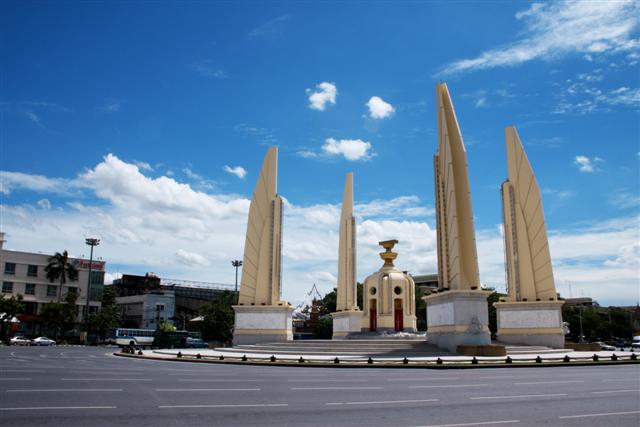
| Thailand Democracy Monument (Image: Wiki Commons) |
By James Buchanan
Young student activists are unlikely to bring down the junta — but they can make its life more difficult.
Activists in Thailand have a busy calendar. Throughout the year they solemnly mark anniversaries of key dates in the struggle to establish a meaningful democracy in the kingdom. The surfeit of such events highlights just how turbulent the country’s modern history has been, with no less than twelve military coups since the abolition of absolute monarchy in 1932. On May 22 this year, a group of students calling themselves New Democracy Movement (NDM) held a spirited protest to mark the anniversary of the most recent coup, which overthrew the democratically elected government of Yingluck Shinawatra in 2014. Fourteen of the students were arrested – literally dragged away – and held for twelve days by a junta intent on stamping out any signs of dissent. They were released with charges still hanging over them, including one of sedition, punishable by up to seven years in prison.
The students were unbowed and last month used the anniversary of another of Thailand’s coups to denounce military rule once again. On September 19, they gathered to remember the 2006 putsch that ousted Yingluck’s elder brother Thaksin and sent the country careening into chaos. Proceedings started at the traditionally liberal Thammasat University, an important site in Thai history due to the massacre of student protesters that occurred there in 1976. The NDM then led a crowd of up to two hundred on a march to the nearby Democracy Monument, where Red Shirt protestors rallying to call for elections were shot dead by the military in April 2010. Tragically, Thai history is as littered with killings as it is coups.
Against the impressive backdrop of the monument, the students delivered speeches and handed out slick-looking pamphlets criticizing the military and calling on people to rise up to defend their freedom. The unflagging Sirawit Serithiwat, who has been arrested countless times since the coup, and Rangsiman Rome, who shot to fame after his robust scuffle with police in May, presided over events. They are the new face of the struggle for democracy in Thailand.
However, amongst the new faces were some familiar older faces too. Red Shirt activists have been laying advisedly low since the military seized power, but a look around suggested they may have been buttressing the crowd that day. For every youngster in tight jeans and converse sneakers there was also an older protestor who, outwardly at least, seemed to fit the demographic of the now dormant movement. They are newly emergent middle-class from the provinces, dressed tidily but simply and without the trappings of conspicuous consumption so beloved by well-heeled Bangkokians. Middle-aged women in particular – so called “aunties” – formed the backbone of the Red Shirts and were also prominent at the gathering that day.
Nearby was another fixture of the Red Shirt movement; the city’s ubiquitous motorbike taxi drivers. Sitting on their bikes, they watched the protest with interest and eagerly read the NDM pamphlets. On those pages they would find many claims which echoed the Red Shirts’ own, especially denunciations of privy councilor Prem Tinsulanonda, who is alleged to have played a pivotal role in the assault on Thai democracy. Given the similarities in aims and beliefs, it seems natural that there be some crossover between the two movements.
Read the full story at The Diplomat