Showing posts with label Geopolitics. Show all posts

21 September 2017

News Report: Rohingya Crisis May Reduce China's Geopolitical Weight and Unleash Islamism

Beijing is interested in restoring stability in Myanmar, which is currently being engulfed by the Rohingya crisis, experts told Sputnik. China's concerns about the potential upsurge in Islamic extremism in the country have geopolitical grounds as Myanmar serves as an alternative energy route for Beijing.

China is seriously concerned about the possibility of Daesh's penetration into Myanmar and the Chinese province of Yunnan amid the ongoing Rohingya crisis in Rakhine State, a Chinese expert in international affairs told Sputnik China speaking on condition of anonymity.

According to the expert, radical Rohingya and Uighur Muslims may jump at the opportunity to establish contacts with Islamist forces in Southeast Asia. Over recent years, China has been constantly dealing serious blows to extremist Islamist groups inside the country, the source added.

"The crisis in Rakhine continues to escalate," the expert said. "It can lead to the merging of local extremists with terrorist forces in the Middle East. All these pose a huge challenge to Southeast Asia and China, therefore we must take preventive measures."

13 September 2017

News Report: India Cannot Be Faulted for Taking Pragmatic Stance on Rohingyas - Expert

As the Rohingya crisis widens with potential ramifications for the whole of South Asia and Southeast Asia, a top United Nations official has criticized India's decision to deport Rohingya immigrants. However, some experts feel that India’s posture is pragmatic in its own right.

New Delhi (Sputnik) — Zeid Ra'ad al-Hussein, the United Nations high commissioner for human rights, on Monday accused Myanmar of carrying out "a textbook example of ethnic cleansing" against Rohingya Muslims. Not only that, Hussein slammed India for taking measures to "deport Rohingyas at a time of such violence against them in their country".

India has not only decided to deport some 40,000 Rohingya Muslims illegally residing in the country, but also dissociated itself on Thursday from a declaration adopted at the World Parliamentary Forum on Sustainable Development in Bali, Indonesia, referring to violence in the Rakhine state of Myanmar.

"This was in view of the fact that the declaration, which was to be adopted at the conclusion of the Forum, was not in line with the agreed global principles of sustainable development," said a press release issued by Lok Sabha- India's lower house of Parliament.

09 September 2017

News Story: S. Korean president's approval rating falls on geopolitical risks, THAAD

South Korean President Moon Jae-in
SEOUL, Sept. 8 (Xinhua) -- South Korean President Moon Jae-in's approval rating fell this week on rising geopolitical risks on the Korean Peninsula and controversy over the deployment of the U.S. Terminal High Altitude Area Defense (THAAD) missile defense system, a survey showed Friday.

According to the Gallup Korea poll, Moon gained 72 percent of support this week, down 4 percentage points from the previous week.

It was based on a poll of 1,004 voters conducted from Tuesday to Thursday. It had 3.1 percentage points in margin of error with a 95 percent confidence level.

The negative assessment on Moon's management of state affairs was 20 percent this week, up 4 percentage points from a week ago.

The biggest reason for the negative evaluation was the geopolitical risks on the peninsula, caused by the Democratic People's Republic of Korea (DPRK)'s test on Sunday of what it claimed was a hydrogen bomb warhead that can be fitted atop an intercontinental ballistic missile (ICBM).

Controversy over the THAAD deployment was (also) cited as one of the reasons for the negative assessment on Moon.

Read the full story at Xinhua

04 September 2017

News Report: US Threatens Pyongyang With Massive Military Response


Steve Herman

THE WHITE HOUSE — U.S. Defense Secretary James Mattis, echoing the warnings of President Donald Trump, said North Korea can expect a "massive military response" if it threatens the United States, the U.S. territory of Guam or America's allies.

Mattis, Trump and the president's top advisers met at the White House Sunday about North Korea's announced hydrogen bomb test. The Pentagon chief came out to talk with reporters briefly afterwards to say the U.S. is not looking for the "total annihilation" (of) North Korea, but "we have many options to do so."

North Korea’s repeated provocative ballistic missile tests and now a sixth nuclear test – this one perhaps the first time it has successfully detonated a thermonuclear device – have presented Trump with this most critical geopolitical crisis of his young administration.

28 August 2017

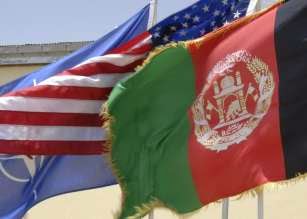
News Story: US Might ‘Stay In Afghanistan For Another Five Decades’

By Karim Amini

Colonel Lawrence B. Larry Wilkerson, a retired military officer and head of the Colin L. Powell office, the former US State Secretary has warned over the possible fight between the world and region super-power countries in Afghanistan.

In an interview with The Real News on Thursday, Wilkerson said the United States might stay for over 50 years in Afghanistan, because according to its strategic location, Afghanistan is the only place from where the US can take action against Russia and China.

He said the new US strategy on Afghanistan has designed the presence of US in Afghanistan in a way that the United States army will remain in Afghanistan for an unknown period of time.

The same plane was designed before this for Germany, South Korea and Japan, he said.

“What we have seen right now is a begging of the new great game that it involves China, it involves Russia, it involve the United States and it involves all those people who get in the way in Central Asia. The United States will probably be in Afghanistan, I have said repeatedly, for the next fifty plus years. Because it is the only place geographically speaking in that region from which the United State with high military power can affect China’s …One Belt One Road…,” said Wilkerson.

Read the full story at TOLOnews

04 August 2017

News Report: Best Birthday Gift - Why China Marks Army Anniversary With Djibouti Base Opening

On Tuesday, China formally opened its first overseas naval logistics center with a flag raising ceremony in Djibouti, the same day as the People's Liberation Army (PLA) marked its 90th anniversary. In an interview with Sputnik some experts said this is a clear sign of China’s determination to uphold its national interests outside the country.

The base in Djibouti is China's first overseas naval base, though Beijing officially describes it as a logistics facility.

According to media reports more than 300 people attended the ceremony, including Chinese deputy naval commander Tian Zhong and Djibouti's defense minister.

The ceremony was held with the participation of Chinese PLA soldiers and the guard of honor of the army of Djibouti. The culmination of the ceremony was the mooring of the ships of the PLA Navy, which headed for Djibouti on July 11.

21 June 2017

News Report: Outcome of South China Sea Spat Already Clear, But One Side Doesn't Know It Yet

Last week, Foreign Affairs magazine contributor Ely Ratner penned an analysis containing a series of proposals on how Washington might thwart Beijing's efforts to irreversibly strengthen its presence in the South China Sea. However, according to China expert Vasily Kashin, the reality is that no matter what the US does, it's probably too late.

Ratner's piece, dubbed 'Course Correction: How to Stop China's Maritime Advance, contains a series of proposals on what Steps the US needs to take to stop China's steady expansion in the South China Sea.

Commenting on the former Obama administration China advisor's piece in a special analysis for Sputnik, military and geopolitical observer Vasily Kashin noted that unfortunately, Ratner's piece is filled with unrealistic estimates about the progress China has made, the depth of Beijing's influence in Southeast Asia, China's determination and, most importantly, the dysfunctionality of current US policy.

For starters, Kashin explained that when assessing any US plans or opportunities to act vis-à-vis China, "one must take into account that the Chinese seem to know much more about US plans and intentions than the US knows about Chinese plans or intentions."

28 April 2017

News Report: Afghan Envoy Advocates Trilateral Security Dialogue With India, US

During a conference hosted by Brookings India, Dr. Shaida Mohammad Abdali, the Afghanistan Ambassador to India, has said that a trilateral strategic dialogue between India, Afghanistan and the United States will soon be revived to take on regional challenges, especially terrorism.

New Delhi (Sputnik) — Experts in India, however, said New Delhi shouldn't ignore the new realities and the great game going on in Afghanistan where other significant players have emerged, including Russia.

The Ambassador said the idea of trilateral strategic dialogue has been long discussed but never operationalized.

"Reactivation of that strategic dialogue, especially in the context of the war on terrorism, is highly desired. The three of us are affected a lot by the phenomenon of terrorism and can decide on a strategy while taking others in the region along with a more effective strategy," Dr. Abdali said at the event in New Delhi.

News Story: Pace of Japan, Russia economic cooperation on disputed isles largely down to broader geopolitics

TOKYO, April 27 (Xinhua) -- Japanese Prime Minister Shinzo Abe said Thursday he plans to forge ahead in bringing to fruition joint economic activities between Japan and Russia on islands central to a long-standing territorial dispute.

The Japanese leader will meet Russian President Vladimir Putin to discuss this against a backdrop of other pertinent global matters that will also have to be traversed before any significant headway is made or new cooperation, economic or otherwise, agreed upon beyond rhetoric, informed sources have said.

The territorial dispute, however, remains the main sticking point between Tokyo and Moscow, and regards four islands situated off Hokkaido.

They are believed by Japan to be a part of the Nemuro Sub-prefecture of Hokkaido and are referred to by Japan as the Northern Territories.

Russia, who administers the islands, maintains that the islands, that they refer to as the Southern Kurils, are their territory with Russian leaders repeatedly referring to the islands as a strategic region of Russia.

Abe and Putin have both stated and agreed in principle, however, that it is unusual that both countries have not signed a postwar peace treaty due to the spat, and have agreed to discuss the matter candidly going forward.

But progress in this respect has been sluggish owing to geopolitical stumbling blocks as well as the firm belief on both sides that, while the absence of a peace treaty is an anachronism, many complexities on the issue remain.

Read the full story at Xinhua

News Story: Seminar talks East (South China) Sea in the Philippines

Manila (VNA) – A seminar, themed “East (South China) Sea: the Philippines, ASEAN and international partners”, took place in Manila, the capital city of the Philippines on April 25. 

Organised by the Stratbase ADR Institute for Strategic and International Studies (ADRI) in the lead-up to the 30th ASEAN Summit, the event touched upon recent developments in the East Sea, including international cooperation in the settlement of the East Sea issue and opportunities and challenges in enforcing the Permanent Court of Arbitration (PCA)’s ruling. 

Participants also discussed issues in the Philippines’ external policy, including geopolitics, military, maritime science, international law, and external relations with Southeast Asia, China and other countries. 

Read the full story at VietnamPlus

26 April 2017

News Report: Lavrov - 'Geopolitical Games Around Afghanistan' Disregard Its People

Geopolitical games around Afghanistan do not take into account the interests of the local population, the Russian foreign minister said adding that Russophobic tendencies are being observed.

MOSCOW (Sputnik) — There are geopolitical games around Afghanistan, but there is no concern in them for the Afghan people, Russian Foreign Minister Sergei Lavrov said Tuesday at a meeting with ex-Afghan President Hamid Karzai.

"Unfortunately, geopolitical games are unfolding around Afghanistan, which have nothing to do with concern for the destiny of the Afghan people," Lavrov said.

He added that there are attempts to use Russophobic tendencies in those games.

Afghanistan is in a state of political and social turmoil, with government forces fighting the continuing Taliban insurgency. The instability has persisted in the country since the 2001 US-led invasion to defeat the Taliban and al-Qaeda in the wake of the 9/11 attacks in the United States.

The lack of control and instability turned the country into home to the largest opium poppy production and distribution network in the world.

This story first appeared on Sputnik & is reposted here with permission.

12 April 2017

News Report: Trump Shows Signs He Will Rekindle US-Vietnam Relations

Ralph Jennings

TAIPEI — Vietnam is eyeing a chance to restart prized trade and security ties with the United States, while checking the persuasive influence of old rival China following a new overture from the Trump administration.

A letter from U.S. President Donald Trump to Vietnamese counterpart Tran Dai Quang suggesting more two-way cooperation should ease concerns in Hanoi that Washington has paused support for the Southeast Asian country, analysts say, though it is unlikely to herald any immediate breakthroughs.

There has been no official U.S. comment on the matter.

Vietnam, U.S. trade

Observers believe Hanoi hopes the letter, disclosed in the Vietnamese media last week, means the United States will agree to an increase in trade despite Trump's scrapping of the Trans-Pacific Partnership, a 12-country trade deal that included Vietnam.

It may also signal a revival of the fledgling defense ties Vietnam formed under former President Barack Obama as China militarized a tract of ocean claimed by Hanoi.

"I think Vietnam's attempt to maintain that multi-polar balance would come unstuck if Trump only deals with China and ignores Southeast Asia," said Carl Thayer, emeritus professor of politics at the University of New South Wales in Australia.

News Story: Duterte - No weapons in island occupation

Philippine President Duterte
By Christina Mendez

MANILA, Philippines - No new weapons are being eyed for islets and land features in the West Philippine Sea over which President Duterte wants the military to exercise greater control.

The President made the clarification yesterday at the Davao International Airport shortly before departing for Saudi Arabia. His pronouncements came on the heels of Beijing’s voicing concern over his earlier statement that he had ordered the military to occupy at least nine islets and reefs under Philippine control.

“For the information of China, we will not place there any offensive weapons, not even one gun,” he said.

“We are just there to claim the island for us because that is really ours and I have ordered the AFP to build structures there to signify, atin ito (it’s ours),” he maintained, referring to the Armed Forces of the Philippines.

Reacting to Duterte’s order, Beijing had urged the President to “properly manage” the dispute over areas in the South China Sea and West Philippine Sea.

Duterte explained he issued the order amid a “heightening of geopolitical issues” and stressed he did not want “to get involved in any war with nations.”

Read the full story at PhilStar

07 April 2017

News Report: US-China Summit - North Korea Divisions Cast Shadow

North Korean Dictator Kim Jong Un
The ineffectiveness of diplomatic and sanction pressure on North Korea has been laid bare just before a crucial US-China summit on April 6. Presidents Trump and Xi have fundamental disagreements over how to tackle the rogue statement, with Trump's recent threat of unilateral military action likely to cast a shadow over proceedings.

On Thursday, April 6, at President Trump's lavish Mar-a-Lago estate in Florida — dubbed the "Winter White House" by its owner — will play host to a state visit by the inscrutable Chinese President Xi Jinping.

It will be the most critical meeting with a foreign leader since President Trump took office. At stake is how Trump's administration will respond to one of it's key foreign policy quandaries — North Korean illegal missile activity.

Less than 48 hours before both world leaders will meet in person for the first time, North Korea launched a medium range missile on Tuesday (April 4) evening — the latest in a series of controversial weapons tests in the last couple of months, which have destabilized the Asia-Pacific region.

31 March 2017

News Report: Indian Army Chief Visits Nepal in the Footsteps of Chinese Defense Minister

Close on the heels of Chinese Defense Minister Chang Wanquan’s visit to Nepal, India’s Chief of Army Staff General Bipin Rawat embarked on a four-day visit to Nepal to strengthen bilateral defense cooperation.

New Delhi (Sputnik) — On the first day of his visit, Gen Rawat was conferred the Honorary General rank of the Nepal Army by Nepalese President Bidya Devi Bhandari, who handed over an insignia, a sword and a certificate to the visiting Army chief.

India and Nepal have the tradition since 1950 of decorating each other's army chiefs with the honorary general rank.

The Indian Army chief met Nepalese Prime Minister Pushpa Kamal Dahal and Defense Minister Bal Krishna Khan and Nepali Army chief General Rajendra Chhetri. Gen Rawat handed over seven horses to his Nepalese counterpart.

General Rawat's visit will strengthen defense cooperation between the two countries and foster more frequent high-level military exchanges between the two neighbors.

25 March 2017

News Report: 'In Russia-China-US Strategic Triangle, US Isn't Looking Very Confident'

A Congressional report released this week warned that Russian-Chinese military-to-military cooperation is moving toward a disturbingly high level. Commenting on the report, Radio Sputnik commentator Ilya Kharlamov suggested that its authors have a pretty superficial understanding of the causes behind the expanded cooperation.

Put out earlier this week, the report, created by the US-China Economic & Security Review Commission, indicates that Russian-Chinese military cooperation, including arms deals, joint war-games and increased contacts, has reached a level which "could pose challenges" to the US and its allies, particularly in the Asia Pacific Region.

The report stresses that as far US interests in the Asia go, the normalization of relations between Moscow and Beijing that started nearly thirty years ago, and which has gone on to include increasingly complex and expansive military exercises, as well as the sale of Russian Su-35 4++ multirole fighters and S-400 SAM systems, is troubling, for several reasons.

24 March 2017

News Report: Premier Li Denies China’s World Dominance Ambition, Warns About New Cold War

China is not seeking global dominance, Chinese Premier Li Keqiang assured on Thursday.

MOSCOW (Sputnik) — Chinese Premier Li Keqiang assured Australia’s parliament on Thursday his nation was not seeking global dominance and warned against splitting the world along geopolitical boundaries, local media reported.

"Even when China grows in the future, we will never seek dominance. We stand ready to work with Australia peace in our region," he was quoted as saying by The Australian newspaper.

Li arrived in Australia on Wednesday for talks on security and free trade with Prime Minister Malcolm Turnbull, in what is the first visit of a sitting Chinese premier to the country in over a decade.

He said Beijing was committed to engaging with Canberra on trade and security in line with UN rules and existing economic regulations. The two nations have been engaged in a dispute over China’s artificial islands in the South China Sea.

"We don’t want to see taking sides, as happened during the Cold War," Le reassured Australian lawmakers, adding Beijing wanted a "stable world environment."

On trade, Lee said his country stood against protectionism and in favor of economic globalization. He said Beijing wanted to build on the existing Chinese-Australian free trade deal to increase investment and trade in services.

This story first appeared on Sputnik & is reposted here with permission.

21 March 2017

News Report: Trump 'Whips Up Tensions' With China to 'Set the Stage for Bargaining'

United States President Donald Trump has made strong statements on China with regard to trade, the South China Sea and the North Korean missile program in a bid to set the stage for negotiations aimed at reducing Washington's trade deficit with Beijing, Vzglyad columnist Petr Akopov asserted.

"In general, the Trump administration has increased tensions in the bilateral relationship," he said. "In reality, this was a preparation for bargaining. Trump genuinely wants to alter the highly unfavorable trade balance with China and is whipping up tensions ahead of talks on customs, yuan exchange rate, etc. Surely, the US and China have major geopolitical differences, … but Trump clearly did not intend to abandon the One China principle or make any other radical steps that could lead to a crisis in the bilateral relationship. Beijing has been long aware of this."

The analyst pointed out that ties between Washington and China are in fact rapidly developing. For instance, in early February, Trump reaffirmed that the White House was committed to the One China policy, a message Beijing was eager to receive following Trump's unorthodox telephone conversation with Taiwanese President Tsai Ing-wen.

10 March 2017

News Report: North Korea Missile Fallout Continues as Japanese Lawmakers See Red

North Korea's decision to fire ballistic missiles towards Japan on Monday continues to alarm the Asia-Pacific region. Jonathan Bogais, a specialist in foreign affairs, told Sputnik, that North Korea's actions are pushing some Japanese lawmakers to consider pre-emptive action against the pariah state, currently forbidden by Japan's constitution.

An attempt by China to broker a deal between the North Korean regime and the US and her allies failed on Thursday, March 9.

China's Foreign Minister Wang Yi had proposed that Beijing could intervene, pushing North Korea to suspend its nuclear and missile activities in return for a halt in the annual war drills that are currently taking place between South Korean and US troops in South Korea.

However, both Seoul and Washington rejected the plan.

06 March 2017

News Report: Why China Intends to Boost Military Budget Following Trump's Announcement

China will increase military expenditures by around seven percent in 2017. Thus, Beijing will continue its intense military modernization program. Fu Ying, a spokesperson of the country’s National People’s Congress (NPC), made the announcement on Saturday.

Fu Ying, a spokesperson of the country’s National People’s Congress (NPC), made the announcement on Saturday.

"This year, the defense budget will increase by about seven percent and will amount to 1.3 percent of the GDP," Fu Ying said at a press conference. 

Commenting on the factors behind the planned increase, she stressed that it is due to a need to ensure state security and is not a reflection of opposition to other nations.