Showing posts with label Diplomacy. Show all posts

29 September 2017

News Story: Vietnam, Australia hold foreign affairs, defence strategic dialogue

Sydney (VNA) – The fifth foreign affairs and defence strategic dialogue at the deputy ministerial level between Vietnam and Australia was organised in Canberra on September 27.

The event was chaired by Vietnamese Deputy Foreign Minister Dang Dinh Quy and Australia’s Deputy Secretary Defence People Rebecca Skinner and Deputy Secretary in the Department of Foreign Affairs and Trade Gary Quinlan.

During the dialogue, the two sides agreed to continue boosting the Vietnam-Australia relations in the fields of politics, economics, trade, defence, security, agriculture, education and training, tourism and people-to-people diplomacy.

They exchanged views on regional and international issues of mutual concern, while pledging to maintain close coordination at multilateral forums, including the United Nations, the Association of Southeast Asian Nations (ASEAN), and forums led by ASEAN such as the East Asia Summit and the ASEAN Regional Forum, in order to promote dialogue and cooperation, and maintain peace, stability and order in the region.

Read the full story at VietnamPlus
28 September 2017

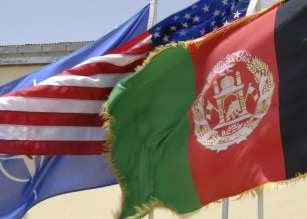
News Story: Ghani, Mattis And Stoltenberg Hold Closed Door Talks

President Ashraf Ghani held a joint press conference in Kabul on Wednesday with NATO Secretary General Jens Stoltenberg and US Defense Secretary James Mattis after holding talks behind closed doors with the two leaders.

Both Mattis and Stoltenberg made an unannounced visit to Kabul and arrived early Wednesday morning.

Speaking at the press conference, it appeared that the three leaders had discussed a wide range of issues.

Taking to the podium, Ghani called on India, Russia and other countries in the region to come together to help mobilize against the fight against terrorism.

Ghani also said Afghanistan wants an Afghan-owned peace process and called on insurgents to join the peace process.

In addition he stated government had drawn up a four-year military plan that has been approved by NATO.

In turn Jens Stoltenberg, NATO’s secretary general, said: “We count on Afghan government to make good on its commitments on key reforms and that NATO supports peace.”

He said that “with NATO’s help, Afghan forces have come a very long way and we will continue to train, advise and assist” the Afghan security forces.

Read the full story at TOLOnews

Related Story:

News Story: Pakistan’s Army Chief to Visit Kabul for Talks

General Qamar Javed Bajwa
By Sayed Sharif Amiri

The Ministry of Defense (MoD) on Tuesday announced that Pakistan’s chief of army staff general Qamar Javed Bajwa is expected to visit Afghanistan in the next five days where he will hold talks with Afghan officials.

According to the MoD, among the issues discussed will be that of peace talks with the Taliban. 

The Afghan government will reiterate its call to Pakistan to take action against terrorist hideouts and safe havens inside Pakistan territory, said MoD spokesman Dawlat Waziri. 

Meanwhile, prominent Pakistani politician and chairman of Pakistan Tehrek-e-Insaf party, Imran Khan, has said more violence, more bloodshed and more bombings in Afghanistan is not the answer.

He said dialogue was the solution. 

"I think Donald Trump's policy is deeply flawed. He neither understands the history of Pakistan nor the character of the Afghan people," Khan said in an interview with The Associated Press.

“To blame Pakistan for this failed policy and then giving credit to India for some reason which does not border Afghanistan …. If Pakistan army, government had any leverage with the Taliban then surely they (the US) should ask Pakistan to play a role in building peace and getting them to the dialogue table but not what they are proposing – more violence, more bloodshed, more bombing … I think Pakistan has done enough.”

"More fighting and bloodshed is not the answer. I said it 17 years ago and I am still saying this now," he said.

Read the full story at TOLOnews

27 September 2017

News Report: Mattis Hails ‘Historic’ Opportunity to Expand US-India Ties

William Gallo

NEW DELHI — U.S. Defense Secretary Jim Mattis took steps to reinforce a quickly growing defense partnership with India on Tuesday, declaring the relationship has “never been stronger.”

During meetings with senior Indian officials in New Delhi, Mattis stressed that the United States and India are “natural strategic partners who share common values and interests.”

“This is, again, a historic opportunity for our two democracies, a time of strategic convergence,” Mattis said alongside his Indian counterpart, Defense Minister Nirmala Sitharaman.

The U.S. sees India as a counterweight to the rising influence of China, and hopes to persuade New Delhi to become more involved in bringing stability to Afghanistan.

“We applaud India’s invaluable contributions to Afghanistan, and welcome further efforts to promote Afghanistan’s democracy, stability, and security,” Mattis said.

Pakistan, India’s longtime rival, opposes New Delhi’s expanded involvement in Afghanistan, fearing a future war with its strategic rival, (India), on two fronts.

Sitharaman on Tuesday downplayed those concerns, pointing out that most of India’s support for Afghanistan has been non-military.

“We have made it very clear that there shall not be boots from India on the ground,” Sitharaman said.

India has invested billions of dollars in Afghanistan, mostly in sectors such as health, education and infrastructure. India also recently agreed to expand its support for Afghan defense forces, which includes training of Afghan army personnel.

News Story: S. Korea urges DPRK to return to dialogue table amid rising tensions

SEOUL, Sept. 26 (Xinhua) -- South Korea's foreign ministry on Tuesday urged the Democratic People's Republic of Korea (DPRK) to return to a dialogue table as tensions mounted on the Korean Peninsula amid the exchange of harsh rhetoric between the DPRK and the United States.

Foreign Ministry spokesman Noh Kyu-duk told a press briefing that the DPRK should recognize a fact that the root cause of the escalated tensions on the peninsula was the DPRK itself conducting nuclear and missile provocations and issuing threatening rhetoric.

The spokesman said Pyongyang should rapidly return to a dialogue table for the denuclearized peninsula.

Tensions ran high on the peninsula after U.S. President Donald Trump said in his UN debut speech last week that his nation would "totally destroy" the DPRK if Pyongyang continues to threaten the United States and its allies.

Read the full story at Xinhua

26 September 2017

News Story: DPRK diplomat leaves for Moscow for talks with Russia

PYONGYANG, Sept. 25 (Xinhua) -- A senior diplomat of the Democratic People's Republic of Korea (DPRK) left Monday for Moscow to hold talks with Russian officials on unspecified issues, the official Korean Central News Agency reported.

Choe Son Hui, director general of the North American Department of the DPRK Foreign Ministry and her delegation were invited by Oleg Burmistrov, roving ambassador of the Russian Foreign Ministry, said the report.

"Talks with the roving ambassador are due in Moscow," it said.

Burmistrov, Russia's deputy nuclear negotiator, visited the DPRK in late July to discuss issues involving the Korean Peninsula, reports said.

Read the full story at Xinhua

News Story: Chinese envoy calls for political dialogue in Afghanistan

UNITED NATIONS, Sept. 25 (Xinhua) -- A Chinese envoy on Monday called for political dialogue in Afghanistan as well as international efforts to boost the country's defense capacity, governance and its integration into regional development frameworks.

"Political dialogue is the only viable solution to the question of Afghanistan," Wu Haitao, China's deputy permanent representative to the United Nations, told an open meeting of the UN Security Council on Afghanistan.

"All actors in Afghanistan should put the country's long-term interests and people's welfare first and actively participate in the reconciliation process. The international community should continue to promote the realization of a broad, inclusive political settlement with Afghan leadership and Afghan ownership," said Wu.

The international community should engage with all parties concerned in Afghanistan for the early launch of peace talks, he said.

All political actors in Afghanistan must achieve unity and resolve their difference through dialogue and consultations, he said, adding that the international community must respect the Afghan people's will to choose their political system and development path.

Read the full story at Xinhua

25 September 2017

News Story: China, Vietnam pledge to maintain border stability

JINPING, Yunnan Province, Sept. 24 (Xinhua) -- Military delegations from China and Vietnam attended the fourth high-level border meeting, with the two sides agreeing to maintain border stability and push bilateral ties.

The two-day meeting was held in northwest Vietnam's Lai Chau Province and southwest China's Yunnan Province, starting Saturday.

Read the full story at Xinhua

News Story: Seoul, Washington voice concern about distorted Japanese reports

SEOUL, Sept. 23 (Yonhap) -- High-ranking officials from South Korea's presidential office Cheong Wa Dae and the White House held telephone talks Saturday and expressed concern about some distorted reports in the Japanese media about the recent trilateral summit involving President Moon Jae-in, U.S. President Donald Trump and Japanese Prime Minister Shinzo Abe in New York, a source said.

The White House, in particular, voiced serious concern that distorted reports by some Japanese media outlets could harm the three countries' policy coordination against the increasingly provocative regime in Pyeongyang, said the source.

The high-ranking officials from Cheong Wa Dae and the White House talked on the phone for 30 minutes, beginning at 7:30 a.m. (Seoul time), the source noted. They discussed follow-up measures to North Korean leader Kim Jong-un's strongly worded warning against the U.S. as well as Trump's visit to Seoul, which is expected to happen in November this year.

Following the three-way summit of Moon, Trump and Abe in New York on Thursday, some Japanese media reported that the U.S. leader had been angered by Seoul's decision to provide US$8 million in aid to the North.

The Cheong Wa Dae official was quoted by the source as saying in the phone conversation, "Some Japanese media, citing government sources, have carried several reports that distort what was discussed at the South Korea-U.S.-Japan summit. It is very serious and regrettable and may pose difficulties in maintaining trilateral coordination."

Read the full story at YonhapNews

23 September 2017

News Report: US to Shoot Down North Korea's Missile if It Flies Over Guam - State Dept

The US State Department stated that Washington will shoot down a North Korea's missile if it flies over the territory of Guam.

"If a missile targeted Guam or flew over it, we would have shot it down," US Assistant Secretary of State Susan Thornton said at a briefing for foreign journalists.

Reporters asked Thornton why the US does not respond (to) North Korea's missile launches, which violate the airspace and allies — Japan and South Korea.

Thornton recalled that this issue was previously cleared by US Secretary of Defense James Mattis.

She noted that now it is possible to determine exactly where the rocket will fly and where it will land. According to her, in Japan there are special alert systems for the civilian population.

News Story: S. Korea says to seek fundamental solution if DPRK stops provocation

SEOUL, Sept. 22 (Xinhua) -- South Korean President Moon Jae-in said Friday that his country would be able to seek a fundamental solution for the denuclearized Korean Peninsula if the Democratic People's Republic of Korea (DPRK) stops provocation.

Moon made the remarks on his flight to South Korea from New York after ending his four-day trip to attend the UN General Assembly, according to the presidential Blue House.

"There is currently no choice but for the international community to pressure North Korea (DPRK) with one voice," Moon told reporters aboard the Air Force One.

When the tensions were escalated so high like now, Moon said, it would be hard to seek an alternative solution to the peninsula issue.

Read the full story at Xinhua

News Story: Top diplomats of S. Korea, U.S. discuss Kim Jong-un's threat of highest-level action

SEOUL, Sept. 22 (Yonhap) -- The top diplomats of South Korea and the United States have briefly met in New York and discussed North Korean leader Kim Jong-un's threat to take the highest-level action in response to the U.S. president's recent speech, the foreign ministry here said Friday.

Foreign Minister Kang Kyung-wha and Secretary of State Rex Tillerson "exchanged primary analysis and opinions of Kim's statement ... and agreed to carry out further close study of it," the Ministry of Foreign Affairs said in a press release.

North Korean leader Kim Jong-un vowed to consider "with seriousness exercising of a corresponding, highest level of hard-line countermeasure in history," in a statement released in English by his country's state-run news media.

The words were in response to U.S. President Donald Trump's threat to "totally destroy" the North Korean regime during his address at the United Nations General Assembly earlier in the week.

North Korean Foreign Minister Ri Yong-ho, who is currently visiting New York, later said the action might be the testing of a hydrogen bomb in the Pacific Ocean.

Read the full story at YonhapNews

News Story: Cut ties with N. Korea, Japan foreign minister Kono urges world

Japanese Foreign Minister Taro Kono
NEW YORK (Kyodo) -- Japanese Foreign Minister Taro Kono called Thursday for all countries that maintain diplomatic and economic ties with North Korea to sever them in a unified response to Pyongyang's nuclear and ballistic missile programs.

"Now is the time for the international community as a whole to maximize the pressure on North Korea to take concrete actions toward the denuclearization of the Korean Peninsula," Kono said in a speech to students at Columbia University in New York after several days of meetings during the U.N. General Assembly's general debate week.

"Can you believe that over 160 countries have diplomatic ties with North Korea, the biggest threat to the world right now?" he asked during the speech, a few hours after discussing the North Korea issue in a meeting with Chinese Foreign Minister Wang Yi.

He said too many countries also maintain economic ties with the North, including by accepting its migrant workers, a target of the latest U.N. Security Council sanctions resolution adopted in response to the Sept. 3 nuclear test.

"We must work together with countries in Southeast Asia, the Middle East, and Africa to get rid of the 'loopholes' in the sanctions," Kono said.

Read the full story at The Mainichi

22 September 2017

News Report: Not All See China’s Great Power Diplomacy as Huge Success

Chinese President Xi Jinping
William Ide

BEIJING — Analysts say China’s foreign policy achievements are likely to be a key focus next month when the Communist Party hosts a crucial once-in-five-year leadership meeting. But don’t expect China’s leaders to say much about the challenges and setbacks they’ve faced since Xi Jinping came to power, even though a growing number of some scholars here are doing just that.

Since Xi began assuming leadership in China in 2012, the world’s second largest economy has been rapidly expanding its global footprint and influence. Beijing is engaging and seeking to play a more prominent role in international affairs, while laying out its own initiatives, such as the Asia Infrastructure Investment Bank and the near trillion-dollar trade program, the Belt and Road.

Xi has visited nearly 30 countries, five continents and championed what some here call “Great Power Diplomacy." He has also been advocating what he calls the “China Solution,” Beijing’s proposals and answers to the world’s toughest problems.

The foreign policy focus is so important that some analysts say China’s need to play a more central role in global affairs is likely to be added to the communist party’s constitution during the meeting, along with other changes.

State media recently released a six-party series ahead of the 19th Party Congress on “Great Power Diplomacy.” Advocates of that idea, argue that as a rising great power, China should do what it feels is right anytime and whenever it wishes.

News Story: Chinese, Philippine FMs discuss bilateral ties

UNITED NATIONS, Sept. 21 (Xinhua) -- Chinese Foreign Minister Wang Yi on Wednesday met with his Philippine counterpart, Alan Peter Cayetano, and discussed their countries' relations.

Under the guidance of the two heads of state, China-Philippine relations have maintained momentum for development, which is in the interests of the two peoples and has won the applause of the international community, including member countries of the Association of Southeast Asian Nations (ASEAN), said Wang.

The two sides should implement the consensus between their heads of state, maintain close communication, overcome interferences and push for more practical results from bilateral cooperation, so that people of the two countries can feel the tangible benefits and friendly cooperation will always be the mainstream of the relationship, said Wang.

He said China is willing to work with the Philippines to continue to explore effective ways for joint development of maritime resources.

Read the full story at Xinhua

News Story: China jabs back at Trump's barb over South China Sea

Beijing hit back Wednesday at US President Donald Trump's veiled criticism of its territorial claims in the disputed South China Sea, countering that the United States was a greater threat to sovereignty.

In his speech to the UN General Assembly on Tuesday, Trump decried "threats to sovereignty" in Ukraine and the resource-rich South China Sea, without explicitly mentioning Russia or China.

"We must uphold respect for law, respect for borders, and respect for culture, and the peaceful engagement these allow," Trump said.

China asserts sovereignty over almost all of the strategically vital waters in the face of rival claims from its Southeast Asian neighbours, and has rapidly turned reefs into artificial islands capable of hosting military planes.

The United States has conducted three "freedom of navigation" operations near islands held by China to challenge Beijing's maritime claims since Trump took office in January.

Read the full story at SpaceDaily

21 September 2017

News Story: (Afghan) Deputy Foreign Minister Meets Pakistan’s Janjua At UN

Pakistan’s Foreign Secretary Tehmina Janjua on Monday met Afghan Deputy Foreign Minister Hekmat Karzai on the sidelines of the United Nations General Assembly in New York. 

The two officials discussed measures for achieving peace and stability in Afghanistan and strengthening bilateral cooperation. 

According to a statement issued by Pakistan’s foreign ministry, Janjua “reaffirmed Pakistan's desire for lasting peace in Afghanistan which was important for regional stability.”

Read the full story at TOLOnews

20 September 2017

News Story: Trump attacks North Korea, prods allies for more military support in UN speech

By: Leo Shane III

WASHINGTON — In a wide-ranging speech before the United Nations, President Donald Trump attacked Iranian leaders as “murderous,” taunted the North Korean leader as “rocket man” and promised to drive out Islamic terrorist groups in the Middle East.

He also criticized UN countries for making the United States shoulder a “disproportionate share” of military responsibilities throughout the world, adding that America cannot ensure global peace on its own.

The appearance this week before the international coalition was Trump’s first as commander in chief, and security issues dominated his remarks. They echoed his campaign trail promises of making foreign governments shoulder more security responsibilities, remarks which have raised concerns among American allies.

“The United States will forever be a great friend to the world, and especially to its allies,” Trump said. “But we can no longer be taken advantage of or enter into a one-sided deal where the United States gets nothing in return.

“As long as I hold this office, I will defend America’s interest above all else. But in fulfilling our obligations to our own nations, we also realize that it’s in everyone’s interest to seek a future where all nations can be sovereign, prosperous and secure.”

Read the full story at DefenseNews

News Story: Six-party talks "efficient platform" to address Korean Peninsula nuclear issue - Chinese FM

BEIJING, Sept. 19 (Xinhua) -- China said Tuesday that the six-party talks are still an efficient platform to address the Korean Peninsula nuclear issue.

Chinese Foreign Ministry spokesperson Lu Kang made the remarks at a routine press briefing, saying China is open to all efforts that are conducive to solving the issue peacefully via political and diplomatic means.

Lu said the joint statement, signed on Sept. 19, 2005, is the most important progress in addressing the Korean Peninsula nuclear issue through negotiations, and is of milestone significance.

The document was struck by China, the Democratic People's Republic of Korea (DPRK), the United States, the Republic of Korea (ROK), Russia and Japan during the fourth round of the six-party talks.

In the statement, the DPRK reaffirmed its commitment to abandoning nuclear weapons and existing nuclear programs. In return, the United States promised not to use nuclear weapons or conventional weapons to attack or invade the DPRK.

Read the full story at Xinhua


---

PacificSentinel: The single most important line in this story is the very last one.

Story Quote: "The DPRK walked out of the talks in April 2009 in protest against UN sanctions."

PacificSentinel: It was the North Koreans that threw away the agreement and sent the world down the path it has, until the North Koreans are prepared to negotiate in good faith and follow through on their pledges, nothing will come of China's continual harping on about this.

News Story: Japan, Russia agree to work on N. Korea at U.N. Security Council

NEW YORK (Kyodo) -- Japanese Foreign Minister Taro Kono said he and Russian counterpart Sergey Lavrov affirmed Monday in New York that Japan and Russia will work together, including at the U.N. Security Council, in addressing the threat from North Korea.

"The goal for both of us is the denuclearization of the Korean Peninsula," Kono told reporters after his roughly 30-minute meeting with Lavrov on the sidelines of the U.N. General Assembly.

"Japan and Russia are of the same understanding that (this includes) the enforcement of (U.N. Security Council) resolutions," Kono said.

The latest sanctions resolution, adopted in response to the North's Sept. 3 nuclear test, is the first to place a cap on North Korea's supply of oil and petroleum products. It also bans purchases of the country's textiles and calls on U.N. members to stop admitting North Korean laborers.

Kono said he appealed to Lavrov for Russia to use its influence on North Korea. The North has continued to develop nuclear weapons and ballistic missiles, firing a ballistic missile across Japan into the Pacific Ocean last week.

Read the full story at The Mainichi