Showing posts with label Bharat Electronics. Show all posts

29 July 2017

News Report: One Third of India’s Indigenous Akash Missiles Duds, Says Auditor

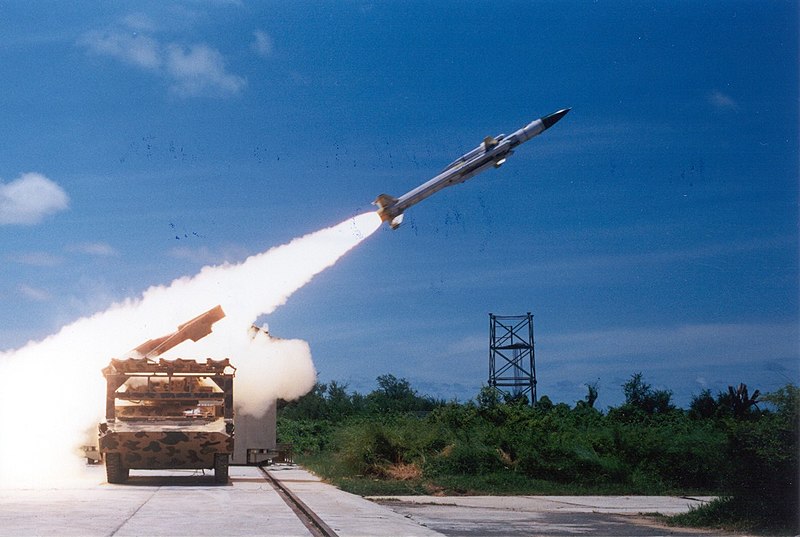
In a startling revelation, India’s top auditor has said more than a third of the home-made Akash missile systems meant for aerial defense along the Pakistan border have failed basic tests.

New Delhi (Sputnik) — The Akash and its newer variant, the Akash Mk-2, are a medium-range surface-to-air missile system having range of 18-25 km. These missiles are meant to intercept enemy aircraft and missiles. These missiles were deployed by the Indian Air Force (IAF) in the region where there are “large scale military infrastructure build-ups by the adversary”.

Though six squadrons of Akash missile were to deploy at six air stations in the backdrop of serious threat from adversaries, which was recognized as early as 2009, the system was not yet inducted at any of the six locations as of March 2017. BEL (Bharat Electronics Limited), which is responsible for creating infrastructure for the missile system, was not able to create suitable infrastructure for the missile and caused deterioration of 71 of total 80 missiles stored at alternate facilities.

14 June 2017

Think Tank: Sea, air, land and space updates (14-Jun-2017)

Zoe Glasson, Sophie Qin, Madeleine Nyst and Patrick Kennedy

Sea State

The full ship’s company is now aboard the Royal Navy’s newest aircraft carrier, the HMS Queen Elizabeth. But ongoing delays to the ship’s sea trials have kept it docked in Scotland, exacerbating the dull and boring conditions that have been blamed for a ‘morale crisis’ and the recent resignation of more than 20 sailors. As a result, reports say that sailors aren’t being released to resettlement courses, are having job transfers denied and are working longer hours. The official line, however, denies that morale is low and insists resignation rates are ‘absolutely in line with the fleet average’.

Indian Navy Chief Admiral Sunil Lanba is currently in Tel Aviv meeting with Chief of the General Staff of Israeli Defence Force, Lieutenant General Gadi Eisenkot. The talks come ahead of Prime Minister Modi’s forthcoming visit to Israel—the first by an Indian prime minister—and are intended to deepen security and defence ties. The leaders are expected to announce a ‘raft of mega deals’, including a contract to supply four Navy ships with long range surface-to-air missiles. For the first time, the contract will be executed with Indian government-owned BEL as part of Modi’s ‘Make in India’ policy.

02 June 2017

News Story: Bharat Electronics forecasts $1.5B in sales as India boosts domestic production

By: Vivek Raghuvanshi

NEW DELHI — India's state-owned defense electronics enterprise Bharat Electronics Ltd., BEL, has increased sales by 17 percent in fiscal year 2017, according to Venkateswara Gowtama Mannava, chairman and managing director. 

“The company has projected the sales to grow from the current level of $1.35 billion to $1.54 billion next year,” Gowtama said. 

He added, “BEL will create new business partnerships with both domestic and overseas defense companies and enforce quick decision making within the company in order to remain competitive in the Indian defense market.”  

The market will become much stronger, he said, because the government has made much quicker decisions and the (procurement) cycle time is shorter. Many of the pending cases have been resolved. 

The list of weapons projects executed for the Indian defense forces include the short-range surface-to-air missile system Akash, a handheld thermal imager with laser range finder systems, a 3-D tactical control radar, a weapon locating radar, upgraded L/70 air defense guns, fire control systems, hull mounted sonars, radio relays systems, major sub-systems of integrated air command and control systems and ship-borne electronic warfare systems. 

Gowtama announced that the company has an order of $6.15 billion. "There is no vertical where we do not have an order at this point of time," he said. 

Read the full story at DefenseNews

31 May 2017

News Report: India Puts Itself at Risk With Untested Faith in Private Defense Firms

To curb dependency on defense imports, the Indian government has taken steps over the last few weeks to ease defense manufacturing rules for private companies. Experts wonder if the government knows the risks it runs into by rushing into privatizing defense contracts without testing the companies.

New Delhi (Sputnik) – Among the measures taken by the government, the strategic partnership policy (SPP) has been the chosen route by nominating private defense companies as “strategic partners” for building major weapons platforms including fighter jets, helicopters, submarines and armored vehicles.

The SPP envisages, “establishment of long-term strategic partnerships with qualified Indian industry majors through a transparent and competitive process wherein the Indian industry partners would tie up with global original equipment manufacturers (OEMs) to seek technology transfers and manufacturing know-how to set up domestic manufacturing infrastructure and supply chain.”

It is estimated the SPP alone could generate $30 billion procurement plan for the Indian private sector which does not have technological experience and minuscule research and development program. Under the policy, India’s Defense Ministry will commit purchase of submarines worth approximately $10 billion, naval utility helicopters of $4 billion, fighter jets worth $15 billion and some other projects. But lack of technological experience combined with the policy structure may reduce them to being hosts of an assembly line for a foreign firm, instead of developing technology.

23 May 2017

News Story: Israel signs $630-mln defence deal with India

Israel announced Sunday it had reached a deal worth $630 million to provide India's navy with missile defence systems, following a record weapons sale between the two countries last month.

The new contract will see state-owned Israel Aerospace Industries supply LRSAM air and missile defence systems for four Indian naval ships, a statement from the company said.

IAI said the contract will be carried out with India's Bharat Electronics Limited, which will be the project's main contractor.

Read the full story at SpaceDaily

08 April 2017

News Story: Israel IAI will provide MRSAM Medium-Range Surface-to-Air Missile to Indian Army

Barak 8 MRSAM launcher (Image: Wiki Commons)
Israel Aerospace Industries (IAI) announced today that the company has been awarded contracts in India totaling almost $2.0 billion. In a mega-contract worth over $1.6 billion, considered to be the largest defense contract in Israel's Defense Industries' history, IAI will provide an advanced MRSAM air & missile defense systems to the Indian Army.

The company will also supply additional LRSAM air & missile defense systems for the first build in India Indian aircraft carrier.

MRSAM is an advanced ground breaking air and missile defense system that provides the ultimate protection against a variety of aerial threats. In its existing version, MRSAM is operational with the Indian Air Force, Indian Navy and Israel Defense Forces. The system includes an advanced phased-array radar, command and control, mobile launchers and missiles with advanced RF seekers. MRSAM was developed jointly for the Indian Army by IAI and India's Defense Research and Development Organization (DRDO) in collaboration with RAFAEL and IAI/Elta, and worked with various Indian companies including BEL, L&T, BDL and other private vendors.

Read the full story at Army Recognition

30 March 2017

News Report: India Commissions Amphibious Landing Craft Near Malacca Straits

Indian Navy LCU (Image: Wiki Commons)
The Indian Navy commissioned the first of its eight landing craft utility (LCU) at the Andaman and Nicobar Islands, close to the Malacca Strait. LCUs are meant to transport military equipment like tanks, armored vehicles and troops.

New Delhi (Sputnik) — The LCU is part of a bid to augment amphibious warfare capabilities of the Indian Navy. About 3,000 soldiers trained in amphibious warfare are deployed at the Andaman and Nicobar Command at Port Blair. The Navy will soon open commercial bids for procuring new Landing Platform Docks (LPD) amphibious warships.

The delivery of the LCU was delayed by more than a year. Work on it began in September 2012 and was to be delivered by July 2015. The LCU will play a key role in transporting 145 ton of military equipment like main battle tanks, armored vehicles and 165 fully-equipped troops. The ships facilitate the landing of troops and military equipment on islands where they are under adverse occupation.

28 February 2017

News Story: India seeks homemade electronic warfare suites for Russian helos

By: Vivek Raghuvanshi

NEW DELHI — The Indian Air Force is turning to domestic companies to build electronic warfare suites for its fleet of Russian Mi-17V-5 helicopters.

"We will submit a new proposal in the next three months to Ministry of Defence to seek project approval to source around 200 EW suites [that] cost around $100 million from domestic companies" a senior Air Force official said.

"Supply of complete set of EW suites appears to be beyond the capability of any single [Indian] company," said retired Air Force air marshal and defense analyst Daljit Singh.

However, the domestic companies will need to tie up with overseas original equipment manufacturers to build EW suites, said a senior MoD official, adding that the "MoD is hopeful that the domestic companies will be able to supply the suites for the [Russian] helicopters." 

Read the full story at DefenseNews

22 February 2017

News Report: India to Add 42 Radar Stations for Surveillance in Western Coast

In the backdrop of frequent movement of rival naval ships and increased risk of terrorist attacks from sea, India has expedited the second phase of coastal surveillance scheme.

New Delhi (Sputnik) – Indian government has sanctioned $120.2 million for 42 coastal radar chains, including 4 mobile ones to supplement the existing 46, installed after the 2008 Mumbai terror attacks.

Defense sources says that Defense Acquisition Council chaired by India's Minister of Defense has approved the much awaited proposal of Indian Navy on Tuesday whereas it will integrate ships to 38 additional radar and four mobile radar stations along western coasts close to Pakistan.

Works have been assigned to government owned Bharat Electronics Limited (BEL) which will take cooperation from private industries as well.

27 December 2016

News Report: India to Equip Infantry Vehicles with Automatic NBC Systems

India is enhancing its protective capabilities following apprehensions of Pakistani deployment of nuclear capable Nasr missiles on their common border.

New Delhi (Sputnik) — India has decided to replace 1,500 manual nuclear biological chemical (NBC) protection systems on its infantry combat vehicles with automatic versions. The procurement will be under 100 per cent localized design and development project. Sources say that domestic manufacturer Bharat Electronics Limited will supply the required systems to the Indian Army at a cost of $ 190 million. 

"Since India's neighborhood is nuclearized, it has to make defensive preparations for its forces to survive and fight in a nuclear environment; howsoever unlikely it may be. Pakistan has been flaunting its short range battlefield nuclear weapons. Obviously, the Indian mechanized forces will spearhead an offensive into Pakistan should it create conditions that forces a war on India. Equipping the mechanized vehicles with the protection gear improves their survivability and raises the costs for an opponent in case it plans to use battlefield nuclear weapons,"says Brigadier Rumel Dahiya (retired), Delhi-based defense expert.

Pakistan Defense Minister Khawaja Asif had in September publicly warned India that the short-range Nasr missiles may be targeted at Indian conventional land forces 'in case of eventuality'.

Since the September 29 claimed surgical strikes in Pakistan territory, India has lost 51 soldiers in militant attacks and cross-border firing by the Pakistani Army. India has lost more than 80 soldiers this year which is the highest casualty figure since 2013.

This story first appeared on Sputnik & is reposted here with permission.

17 November 2016

News Story: India Conducts Successful Flight Test of Rustom-II Drone

By: Vivek Raghuvanshi

NEW DELHI — India has conducted its first successful flight test of the indigenously developed Rustom-II medium-altitude, long-endurance unmanned aerial vehicle (MALE UAV) at the Chitradurga flight test range in the southern state of Karnataka, India. 

The flight accomplished the main objectives of proving the platform's capabilities, such as takeoff, banking, level flight and landing, according to a Ministry of Defence (MoD) news release. 

The first prototype of the homemade MALE UAV, known as TAPAS 201, was designed and developed by Aeronautical Development Establishment, an aeronautics laboratory of state-owned Defence Research and Development Organisation, with state enterprises Hindustan Aeronautics Limited and Bharat Electronics Limited as production partners. 

"TAPAS 201, a multi-mission UAV is being developed to carry out the Intelligence, Surveillance and Reconnaissance (ISR) roles for the three Armed Forces with an endurance of 24 hours. It is capable to carry different combinations of payloads like Medium Range Electro Optic (MREO), Long Range Electro Optic (LREO), Synthetic Aperture Radar (SAR), Electronic Intelligence (ELINT), Communication Intelligence (COMINT) and Situational Awareness Payloads (SAP) to perform missions during day and night," the MoD said. 

Read the full story at DefenseNews

14 July 2016

News Story: India Prepares To Kick-Start Delayed Tactical Comms Project

Military Communications (File Photo)
Vivek Raghuvanshi

NEW DELHI — India's ruling National Democratic Alliance government will award the first-ever "Make in India" category defense project for a tactical communication system (TCS) for the Army early next year, according to a senior Ministry of Defence (MoD) official, who spoke on condition of anonymity.

Under the program, two domestic development agency (DA) consortiums will be awarded contracts to build one TCS prototype each at a cost of $150 million in 18 months. The government will provide 80 percent of the funding for the prototype developments.

India has shortlisted state-owned Bharat Electronics Limited (BEL), and private-sector firm Larsen & Toubro is set to team with Tata Power SED and HCL Technologies to build a TCS prototype.

Once the two prototypes are handed over to the Indian Army, they will undergo technical evaluation, be tested on the ground and then shortlisted for production, said a senior Army official who spoke on condition of anonymity.

The service plans to induct seven TCS systems for plains and desert areas at a cost of $4 billion in the next 10 years.

Read the full story at DefenseNews

14 June 2016

News Story: Indian Excludes Foreign Vendors From Its Air-Defense Upgrade

A S-125 Pechora air defense system in a parade in
Azerbaijan 2013 (Image: Wiki Commons)
Vivek Raghuvanshi

NEW DELHI — India's Ministry of Defence (MoD) has asked the Indian Air Force (IAF) to modernize its aging Russian Pechora air defense systems by using only domestic defense companies in accordance with the "Make in India" policy.

Last month, IAF issued a $272 million tender to digitize 16 Pechora systems, and the request for proposals was sent to domestic companies Tata Power SED, Larsen & Toubro, Reliance Defence and Engineering Limited, Offset India Solutions, Mahindra Defence Systems, state-owned Bharat Electronics Limited, and Bharat Dynamics Limited.

Currently Indian defense companies do not have the capability to digitize Pechora systems on their own and so they forge technical partnerships with overseas defense companies, according to a senior IAF official who spoke on condition of anonymity.

"The original equipment manufacturer of Pechora systems is Russia's Almaz-Antey, and all Russian defense companies only prefer to work with only state-owned defense companies," he said.

The Pechora upgrade program includes the refurbishment of its missile-guidance radar and the integration of its radar with an Integrated Area Command and Control System (IACCS). The upgrade will provide a fresh lease of life for ten years, the IAF official added.

Read the full story at DefenseNews

25 May 2016

News Story: Indian Enterprises Battle Over Missile System Ownership

Vivek Raghuvanshi

NEW DELHI — A fierce battle has erupted between two state enterprises over ownership of medium- and long-range surface-to-air missile systems that India is developing jointly with Israel.

State enterprises Bharat Dynamics Ltd. (BDL) and Bharat Electronics Ltd. (BEL) each want to be the sole lead integrator, but the Indian Ministry of Defence (MoD) is finding it difficult to pacify the competition, according to a senior defense production official with the ministry, who spoke on condition of anonymity.

State-owed Defence Research and Development Organization (DRDO) is undertaking the joint development of two missiles — the long-range surface-to-air missile (LRSAM) and the medium-range surface-to-air missile (MRSAM) projects with Israel Aerospace Industries (IAI) and Rafael.

For the two missiles programs, IAI and Rafael are the sole design authority and DRDO is only a buyer, according to a senior executive of one of the primary suppliers for the two projects.

"Israel has not given any technology transfer of these two missiles, and the intellectual property rights of the missiles are with IAI and Rafael," he said.

Read the full story at DefenseNews

21 April 2016

News Story: Raytheon-BEL Partnership Casts Shadow on India's NCO Program

Vivek Raghuvanshi

NEW DELHI — Despite the Indian Navy's serious reservations, the Ministry of Defence (MoD) has quietly permitted state-owned Bharat Electronics Limited to team up with Raytheon of the United States to complete the much-delayed network-centric operation project.

Bharat Electronics (BEL) was nominated by the MoD last year for the second time to build the network-centric operation (NCO) system at a cost of $100 million, and it is scheduled to be ready by early next year.

The system will link crucial assets including shore-based radar networks, aircraft and Indian Navy warships.

The Indian Navy has repeatedly told MoD that it is not in the national interest to acquire hardware and encryption software for the NCO project from a partnership with a foreign company.

"It is not feasible for any sovereign nation to weaken its operational doctrines and operational orders that would flow on" NCO networks developed with a foreign company, said a senior Indian Navy official, who spoke on condition of anonymity.

"However, the government has taken a complete U-turn and ignored our demand that NCO hardware should be fully developed by an Indian company and encryption software by the Indian Navy itself," the official added.

Read the full story at DefenseNews

21 March 2016

News Story: Indian Battlefield Management System Advances

NEW DELHI — The two consortia competing to provide India's new battlefield management system (BMS) have submitted their detailed project reports and the Defence Ministry will order prototypes within six months.

The proposed $6 billion system will be built in the "Make in India" category and reserved only for domestic companies. The two development agencies, Tata Power SED with Larsen & Toubro, and state-owned Bharat Electronics with Rolta India, submitted their detailed project reports last month, said a Defence Ministry source.

The reports will be vetted by the Army's Integrated Project Management Team and the MoD will then issue orders for development of the BMS prototypes within six months, said the MoD source, as effort is made to hasten creation of the system.

The development agencies will choose overseas partners for technical assistance but the tender will only be awarded to the domestic companies under the Make in India category.

Read the full story at DefenseNews

11 March 2016

News Story: Indian AF Says New Indigenous Missile Will Be Too Heavy

Indian Tejas (LCA)
By Vivek Raghuvanshi

NEW DELHI — India's Air Force has raised objections to the indigenous new generation anti-radiation missile (NGARM) currently in development.

The 60-kilometer-range NGARM, developed by state-owned Defence Research and Development Organisation (DRDO), will undertake flight trials in three months but Indian Air Force (IAF) officials say the missile is too bulky.

DRDO is developing NGARM for the service's Mirage-2000H, Jaguar, Su-30 MKI and the upcoming Light Combat Aircraft.

"NGARM being developed by DRDO weighs around 140 kilograms and is too heavy, whereas IAF wants only such missiles that do not weigh over 100 kilograms; this one will not meet our requirement," said a senior Air Force official.

"DRDO has never kept us in the loop about this missile, and we are not sure if we will at all use it," the IAF official said, adding, "infrared radiation seeker technology from Russia will make it too bulky."

Read the full story at DefenseNews

19 February 2016

News Story: Sweden Pitches Sale of Saab's Gripen-NG Fighter Jet to India

By Gerard O'Dwyer

HELSINKI — Sweden is pursuing an ambitious "government-to-government" multibillion dollar (US) project to sell Saab’s Gripen-NG fighter to India.

The Gripen-NG was tentatively offered to India during meetings between senior Swedish and Indian government officials in Mumbai on Feb. 14-15. Saab was a participant in at least one of the meetings.

Saab was part of a Swedish government-sponsored, high-powered trade group that comprised many of Sweden’s leading industrial corporations, including Ericsson, Volvo, ABB, Scania and BAE Systems Hägglunds AB.

The intergovernmental talks culminated with a joint commitment signed by Sweden’s Prime Minister Stefan Löfven and India’s Prime Minister Narendra Modi to "enhance dialogue" on defense in key areas such as aviation, air-defense, maritime security, combat training and simulation in the army domain.

"There is a general consensus that India wants to strengthen its defense capability. While the country will need to purchase, there is a strong confidence here in the capability of Sweden’s defense industry. We did not conduct any concrete discussions on business deals, but we do see a great opportunity here for Sweden’s defense industry in its entirety and Gripen is a very strong project. We naturally intend to continue talks," said Löfven.

Read the full story at DefenseNews

07 May 2015

Editorial: Revealed - India's Newest Air Defense System

Akash SAM system (Wiki Info - Image: Wiki Commons)
By Franz-Stefan Gady

Indian sources claim that the Akash SAM system is more accurate than US MIM-104 Patriot missiles.

Yesterday, the Indian Army inducted theAkash mid-range surface-to-air missile (SAM) system after a wait of 32 years,IBNLive reported.

The Akash (“Sky”) is an indigenously designed medium-range mobile surface-to-air missile defense system, whose surface-to-air supersonic missiles (armed with 60 kg high-explosive, pre-fragmented warheads) can engage aerial targets up to a distance of 25 km and at altitudes up to 18 km.

According to the developers (the Indian Defense Research and Development Organization, the Ordnance Factories Board, and Bharat Electronics), the new weapon is a multi-target, multi-directional, all weather air-defense system and can provide air defense missile coverage for an area of 2,000 square km.

Read the full story at The Diplomat

28 April 2015

Editorial: India Still Lacks Modern Battlefield Communication

Military Communications (Image Unrelated to India)
By Franz-Stefan Gady

The modernization of communications systems has lagged behind that of other weapons platforms in the Indian Army.

The Indian Army’s Tactical Communication System (TCS) is facing additional delays, Defense News reports. In February 2014, India selected two domestic development agencies (DAs) to compete for the TCS project, which is worth over $2 billion. However, “since the selection of the DAs in early 2014, no headway has been made in the development of a TCS prototype,” a defense ministry source told Defense News.

The TCS — an interfacing mobile tactical communication system — is intended to replace the obsolete radio communication network (the Plan AREN system) of the Indian Army for offensive operations. The Indian Army is also planning to introduce the new Battlefield Management System (BMS) integrating all surveillance resources, including unmanned aerial vehicles (UAVs) and ground sensors providing soldiers on the ground real-time information on enemy troop movement and the disposition of friendly forces, along with information on terrain features.

The Defense Acquisition Council categorized TCS as a ‘make India’ system which restricted the selection process to domestic companies — the state-owned Bharat Electronics Limited (BEL) and a special purpose company consisting of Larsen and Toubro, Tata Power SED, and HCL Infosys Limited.

However, the special purpose company announced that it would not proceed with the development of a prototype “until it receives the same tax incentives as are given to BEL, and insists that the intellectual property rights of the system be vested with the developer and not the Ministry of Defense,” according to Defense News.

Read the full story at The Diplomat