Showing posts with label Pacific Islands Forum. Show all posts

01 September 2017

USA: Acting Assistant Secretary of State Susan Thornton to Lead U.S. Delegation to the Pacific Islands Forum

Acting Assistant Secretary of State for East Asian and Pacific Affairs Susan Thornton will lead a high-level U.S. government delegation to the 29th Pacific Islands Forum Leaders Session with Forum Dialogue Partners (PIF FDP) on September 7, 2017 in Apia, Samoa. Her visit will demonstrate U.S. commitment to our continuing close partnership with the Pacific Islands in promoting sustainable growth and prosperity, ensuring regional stability, and addressing environmental concerns.

The U.S. delegation will include senior officials from the U.S. Department of State, Department of Defense, U.S. Coast Guard, and the U.S. Agency for International Development. The PIF FDP will provide a forum for U.S. and Pacific Islands leaders to discuss issues of regional and global importance including security, climate change, marine conservation, sustainable development, and health. Acting Assistant Secretary Thornton will conduct bilateral consultations with heads of state of Pacific Islands Forum members and other senior foreign officials.

Acting Assistant Secretary Thornton will host a roundtable with Pacific Islands leaders. While in Samoa, she will also tour a U.S. Department of Defense’s Overseas Humanitarian, Disaster, and Civic Aid (OHDACA) funded school renovation project at Safata College and speak at a reception honoring recipients of U.S. Embassy Apia’s public diplomacy grant funding.

07 February 2017

Think Tank: Making the most of the French connection

Theo Ell

One of 2016’s more notable surprises was the selection, in April, of French shipbuilder DCNS as the principal partner to design and build Australia’s future submarines. Few Australians would have anticipated that outcome, but it’s among the more reassuring developments of the past year, because we’re able to manage its consequences. But this isn’t to say that handling deeper cooperation with France won’t require renovation in policy or in conventional thinking.

Australian–French strategic cooperation has grown steadily, from the signing of the FRANZ agreement on Pacific disaster relief in the early 1990s, to the establishment of the biennial ‘Croix du Sud’ multinational military exercises in New Caledonia, and the forthcoming Mutual Logistics Support Agreement, which will grant Australian forces regular access to French Pacific military bases.

But the 2016 submarine decision has taken Australian–French cooperation beyond logistics into unfamiliar territory. It challenges a notion that, despite formal acknowledgement of broad like-mindedness, and despite a rapprochement after decades of wariness over French policies in the South Pacific, Australia and France are too far outside each other’s spheres of understanding to collaborate in more sophisticated ways.

10 September 2016

News Story: Australia increases Pacific disaster relief

SYDNEY, Sept. 9 (Xinhua) -- Australia has upped its disaster relief for the Pacific in an attempt to appeasing regional leaders while continuing it's fossil-fuel policies.

Australian Prime Minister Malcolm Turnbull on Friday announced an 80-million-Australian dollar (60.91-million-U.S. dollar) increase to the low-lying Pacific islands vulnerable to climate change at the Pacific Island Forum (PIF) in Micronesia.

The four-year 300-million-Australian dollar package (228.41-million-U.S. dollar) will be used on engineering projects to protect against flooding from cyclones, early warning systems and rain water catchment tanks, Turnbull said.

"For Australia, there is no more pressing need for regional action than on climate change and resilient development," Turnbull told the PIF leaders summit.

Australia and New Zealand were both admonished at the 2015 summit - which preceded the Paris climate talks - for not committing to stronger action on climate change.

Read the full story at Xinhua

08 September 2016

USA: Assistant Secretary Russel to Lead U.S. Delegation to the Pacific Islands Forum

Assistant Secretary of State for East Asian and Pacific Affairs Daniel R. Russel will lead a high-level U.S. government delegation to the 28th Pacific Islands Forum Post-Forum Dialogue (PIF PFD) on September 11 in Pohnpei, Federated States of Micronesia. His visit will advance the Obama Administration’s rebalance to the Asia-Pacific and demonstrate the U.S. commitment to cooperate with the Pacific Islands across the breadth of common economic, environmental, and security interests.

The U.S. delegation will include senior officials from the U.S. Coast Guard, U.S. Department of State, and U.S. Agency for International Development. The PIF PFD will provide a forum for U.S. and Pacific Island leaders to discuss issues of regional and global importance including climate change, marine conservation, sustainable development, and health security. Assistant Secretary Russel will conduct bilateral consultations with heads of state of Pacific Islands Forum members and other senior foreign officials.

Assistant Secretary Russel will participate in a wreath-laying ceremony to honor citizens of the Federated States of Micronesia who died serving in the U.S. Armed Forces. He will attend a reception celebrating the 50th Anniversary of the Peace Corps program in Micronesia, the oldest in the Pacific region.

31 August 2016

News Story: Pacific Islands to firm collective stance on regional issues prior to U.S. election

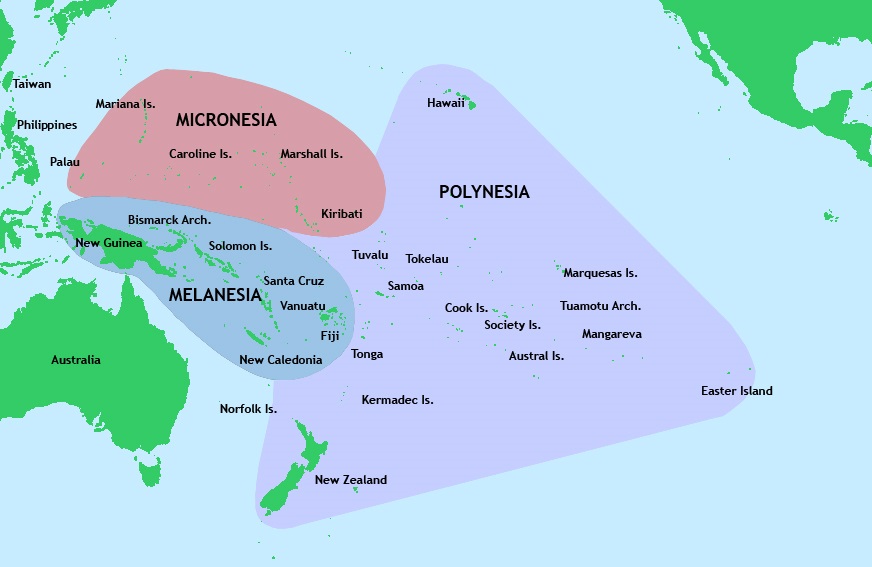
Three of the major groups of islands in the Pacific Ocean
(Image: Wiki Commons)
SYDNEY, Aug. 30 (Xinhua) -- The Pacific Islands are looking to firm their collective stance on key regional integration and cooperation issues at the triennial Pacific Island Conference of Leaders as preparations are made for a political change in the United States.

The 20 heads of government of the Pacific Islands will meet in Hawaii on Wednesday to discuss a range of issues, including maritime disputes, economic stability and the "constant threat of extreme weather caused by climate change."

"Pacific Islands nations cannot take on these issues alone, we must partner with other like-minded nations and stand for our interests in the global community," the conference's chair, Papua New Guinea (PNG) Prime Minister Peter O'Neill said on Tuesday.

O'Neill said the meeting's timing is important, allowing the Pacific's collective views and positions to strengthen before a change in the U.S. government.

Read the full story at Xinhua

30 August 2016

News Story: New Zealand PM to raise security, trade in Asia, Pacific forums

WELLINGTON, Aug. 29 (Xinhua) -- New Zealand Prime Minister John Key will be discussing security and trade at two important Asia-Pacific regional forums next week.

Key said Monday he would travel first to Laos for the East Asia Summit in Vientiane.

"The East Asia Summit brings together leaders from across the Asia-Pacific to discuss ways to address important regional and international issues including maritime security and counter terrorism," Key said in a statement.

"It also provides an excellent opportunity to meet with the leaders of some of our most important economic and security partners to further those ties."

Key would also meet with Prime Minister Thongloun of Laos.

"Our two countries already share a strong relationship, working together on important issues like the removal of unexploded ordnance and tourism development in Laos. I look forward to building on that further."

Key would then travel to Pohnpei, in the Federated States of Micronesia, to attend the 47th annual Pacific Islands Forum Leaders meeting.

Read the full story at Xinhua

29 June 2016

News Story: Pacific island nations, U.S. agree to new multilateral tuna access, aid deal

SYDNEY, June 28 (Xinhua) -- The impasse on fishing access for the U.S. tuna fleet into one of the world's most lucrative fisheries islands has ended after the Pacific islands and the United States agreed to a new multilateral access and aid treaty.

Administered by the Pacific Islands Forum (PIF) Fisheries Agency (FFA), the 28-year-old South Pacific Tuna Treaty was on the verge of collapse in the first half of 2016 following a significant impasse on fishing access fees following the collapse in tuna prices last year.

The treaty is the Pacific's most important aid, trade and geopolitical agreement governing the U.S. fleet's access to the Skipjack Tuna fishery in the South Pacific, providing much needed aid via the purchase of fishing days, or fishing effort, as well as fisheries surveillance by the U.S. military.

The treaty's negotiation, which had been on shaky ground over the past five months, ended at the weekend with an agreement to give the U.S. tuna fleet more flexibility in their access while the pacific nations get more control over their maritime Exclusive Economic Zones.

Read the full story at Xinhua

26 May 2016

News Story: New Zealand PM to visit Fiji

SUVA, May 25 (Xinhua) -- New Zealand Prime Minister John Key is expected to make an official visit to Fiji next month, leading local newspaper Fiji Sun reported Wednesday.

Key is scheduled to be in Fiji on June 9 to 10 for a two-day official visit, on which a planning committee is understood to be working, the Fiji Sun said, quoting "an informed government source".

Key's visit will be a follow-up to Foreign Minister Murray McCully's visit in February in the wake of Tropical Cyclone Winston, which claimed 44 lives and left a path of massive destruction in Fiji.

In New Zealand, Key has signaled that more aid may be in the pipeline for Fiji.

Read the full story at Xinhua

14 April 2016

News Story: Fiji supports China's proposition on South China Sea issue - ministers

Flag of Fiji (Image: Wiki Commons)
BEIJING, April 13 (Xinhua) -- Fiji supported China's proposition on the issue of the South China Sea, said a joint press release by Chinese Foreign Minister Wang Yi and his Fijian counterpart Inoke Kubuabola on Wednesday.

The two sides stressed that prior consent of parties to the dispute must be sought before proceeding with any third party settlement.

Following is the full text of the press release:

On April 13th, Foreign Minister Wang Yi met with visiting Foreign Minister Inoke Kubuabola of the Republic of Fiji in Beijing.

Minister Wang Yi extended sympathies to Minister Kubuabola over the recent tropical cyclone that hit Fiji. He wished the government and people of Fiji speedy reconstruction and expressed China's willingness to continue providing assistance to the Fijian side as its ability permits. Minister Kubuabola expressed his appreciation for China's timely and generous assistance and its long-term support to Fiji's development.

Read the full story at Xinhua

16 February 2016

Editorial: Epilogue to the South Pacific Tuna Treaty

Image: Flickr User - U.S. Department of State
By Eileen Natuzzi

An outdated tuna treaty may have breathed its last. Time for a new U.S. policy for the Pacific.

Once again the South Pacific Tuna Treaty is in the news. But this year with heels dug in on both sides the outdated tuna treaty may have taken its last breath. For the past five years the tuna treaty’s annual funding negotiation has been an ordeal as the parties involved locked horns on how much the United States should pay to gain access to the Economic Exclusive Zone (EEZ) waters around Pacific Island countries. In the past, an agreement was eventually struck between the Forum Fisheries Agency (FFA) and the American Tunaboat Association (ATA) so private US tuna companies like Tri Marine can fish in southwestern Pacific waters.

This year, though, the South Pacific Tuna Treaty has imploded. The U.S. State Department has pulled out of the treaty, the ATA has refused to pay the $67 million agreed to in August, and the FFA is scrambling to sell the vessel days the ATA have reneged on to other distant waters fishing nations like China, Japan and Korea. To make matters worse, two California Congressmen, Duncan Hunter and Juan Vargus, have proposed legislation to cut the $21 million per year appropriated as foreign aid to the 17 Pacific Island Countries that make up the Forum Fisheries Agency (FFA) in order to bully them into allowing the ATA to fish in their waters.

Tuna is a big business, pulling in over $3 billion annually, but until recently Pacific Island countries have only seen approximately 14 percent of that value despite being the source of more than 60 percent of the world’s tuna. This year, led by the Parties to the Nauru Agreement (PNA), some of the poorest nations in the world such as Papua New Guinea and the Solomon Islands have demanded a cut of the tuna wealth. Without their portion of the tuna treaty funds, which are divided among 17 member states, funding for capacity-building across many sectors including fisheries and health will suffer. To recoup losses the sale of vessel days to countries with irresponsible fishing practices in their own waters may hasten the depletion of Pacific tuna stocks.

Read the full story at The Diplomat

21 December 2015

Editorial: Chile and the Southeast Pacific

The Chilean Navy ship CS Almirante Blanco Encalada
(Image: Wiki Commons)
By Balaji Chandramohan

The South American country has a growing presence in the Asia-Pacific.

Situated in the Southern Hemisphere at the periphery of global geopolitics, Chile’s rapid economic growth and stable politics has shifted its politico-military strategic orientation from the Southern Cone of South America to the economic growth markets of the Asia-Pacific, with its Polynesian island possessions in the Southeast Pacific serving as springboards.

The Andean country has begun to benefit from both the growing Atlantic-facing economies of Argentina and Brazil while improving its reach courtesy of its assets in the Pacific Ocean. The extent of Chile’s reach in the Pacific Ocean, and in particular Oceania, will be much more visible once the Trans-Pacific Partnership (TPP) agreement is ratified.

As one of the initial proposers of the TPP, Chile will benefit both in terms of increased stature among its peers in Latin America after the multilateral trade agreement comes into effect and a subsequent boost to its economy. That boost will come in part as the TPP will increase trade among Chile’s island possessions in the Pacific Ocean, in the eastern part of the Polynesian Triangle in the Pacific Ocean.

As the geopolitical significance of the South Pacific increases, most of the attention has been directed to the area encompassing the Southwest Pacific, including Micronesia and Melanesia. Here, external players such as the Asian giants India and China increasing their maritime footprints.

In contrast, Chile is developing its presence from the Polynesian islands, which are in the Eastern Part of the Polynesian Triangle. That presence owes much to President Michelle Bachelet and her deft diplomatic touch, which has involved attending the Pacific Islands Forum on a regular basis and building Chile’s soft power among the island countries.

Read the full story at The Diplomat

26 May 2015

Editorial: Australia-Japan Talk Closer Military Ties at Pacific Meeting

By Helen Clark

The two countries plan to facilitate joint military exercises.

Done with her MIKTA meeting in Seoul, Australia’s Foreign Minister Julie Bishop met with Japanese Prime Minister Shinzo Abe on Saturday in Iwaki in Fukushima prefecture during Japan’s biennial conference for Pacific leaders. The two countries are hoping to conclude a deal on exchanging military personnel before the end of 2015.

Australia-Japan ties have strengthened in recent years, with a free trade agreement officially beginning this year. The Japan-Australia Economic Partnership (JAEPA) will apparently see 97 percent of Australian exports tariff-free when the agreement is fully operational.

Perhaps more compelling is talk of even closer military ties. Though the trilateral alliance (Trilateral Strategic Dialogues began in 2006) with the U.S. also is not entirely new and talks over Australia purchasing Japanese submarines are ongoing there are hopes now that Australia may sign a deal by year’s end to allow joint military exercises between the two nations. Right now it remains hard for Australian military personnel to enter Japan, and vice-versa.

Read the full story at The Diplomat

22 April 2015

Editorial: Natural Disasters - Preparing for the Big One

By Martin Lasater

The vulnerable Asia-Pacific needs broader engagement in disaster planning

According to a 2013 World Bank report, the Asia-Pacific has accounted for 61 percent of global losses from disasters in the past 20 years, with more than 1.6 billion people affected in the region since 2000. Total losses from Asia-Pacific disasters for the years 1980-2011 were an estimated $453 billion.

Speaking about the report, World Bank East Asia and Pacific Vice President Axel van Trotsenburg observed: “East Asia Pacific is the region that is most affected by cyclones, tsunamis, earthquakes and floods. To confront these disaster challenges, governments need to be prepared for the unexpected and undertake major investments in disaster risk management and resilience.”

The UN has estimated that a person living in the Asia-Pacific is 3.2 times more likely to be affected by natural disaster than a person in Africa, 5.5 times more likely than a person in Latin America and the Caribbean, almost 9 times more likely than a person living in North America, and 67 times more likely than a person living in Europe.

From Krakatoa in 1883 to the Tohoku earthquake in 2011 and Super Typhoon Haiyan in 2013, the Asia-Pacific has experienced some of the most devastating natural phenomena on record. It remains highly susceptible to future disasters because of unique geological factors (such as the Ring of Fire) and its large, concentrated populations. By 2025, Asia will be home to 21 of the world’s 37 global megacities, making multi-billion dollar disasters even more common.

Read the full story at The Diplomat

21 October 2014

Think Tank: Is Australia’s influence over Papua New Guinea declining?


By Joanne Wallis

Australian Defence white papers have long identified the strategic import of ‘a secure South Pacific and Timor-Leste’. As renowned strategic thinker T.B. Millar once reflected, Papua New Guinea is an ‘an exposed and vulnerable front door’, as if it was in ‘hostile hands’ it would ‘make attacks on our east coast much easier—Port Moresby, after all, is closer to Sydney than Darwin is’.

Australia is Papua New Guinea’s largest aid and military donor (primarily via the Defence Cooperation Program and the Pacific Patrol Boat program), and trade and investment partner. Australia also effectively gave PNG a security guarantee under the 1987 Joint Declaration of Principles, as reaffirmed in the 2000 Defence White Paper (PDF). Consequently, Australia has been able to exercise considerable influence over Papua New Guinea for much of the period since its independence.

This situation is changing. Papua New Guinea now has new opportunities which are eroding Australia’s influence.

29 July 2014

USA: Counselor Podesta Leads U.S. Delegation to the Pacific Islands Forum

Counselor to the President John Podesta
(Wiki Info - Image: Wiki Commons)

Counselor to the President John Podesta will lead a high-level U.S. Government delegation to the Pacific Islands Forum Post Forum Dialogue (PIF PFD) on August 1 in Koror, Palau, to highlight and build upon our historic relations with the peoples and nations of the Pacific. The U.S. delegation will include senior officials from the National Security Council, United States Pacific Command, U.S. Coast Guard, Department of State, Department of the Interior, U.S. Peace Corps, U.S. Agency for International Development, and the State of Hawaii.

Following former Secretary of State Hillary Clinton’s attendance at the PIF PFD in 2012 and Secretary of the Interior Sally Jewell’s attendance as Head of Delegation in 2013, this high-level delegation demonstrates continued U.S. commitment to the rebalance to the Asia-Pacific region and to issues that are of utmost importance to the Pacific Islands, including oceans, climate change, renewable energy, economic growth, sustainable development, and environmental conservation.

29 April 2014

Editorial: India Looks Far East

Beach in Fiji (Image: Wiki Commons)

By Kailash K. Prasad

A growing presence in the Pacific Islands could have significant benefits for India.

“Five trillion dollars of commerce rides on the sea lanes of the Asia-Pacific each year, and you people sit right in the middle of it.” That was the Commander of the United States Pacific Command, Samuel Locklear speaking of the 8 million people who call 14 islands in the South Pacific home.
As the Pacific Islands, spectators to so many events that have come to define geopolitics since World War II – move out of the periphery of international relations, many powers have been seeking a more comprehensive presence in the region. And as China, through its maritime silk road strategy, and the U.S., through its pivot to Asia, attempt to garner goodwill and influence in the Pacific Islands, India, with its steadily broadening economic and geostrategic interests, seems curiously eager not to be left behind.
Fortunately for New Delhi, a growing development assistance program (PDF) has allowed it to put more meat into what Minister of State for External Affairs E. Ahmed termed an “extended ‘Look East Policy’” – which has largely guided New Delhi’s engagement with its eastern neighbors since the early 1990s.
Between joining the Pacific Islands Forum as an observer in 2002 and last year, India committed over $11 million as grants to the Pacific Islands. In 2009, Delhi announced it would increase the annual grants (PDF) it extends to each of the 14 pacific island nations from $100,000 to $125,000. India also gave a $50.4 million credit line to Fiji to help the island nation revamp some of its sugar mills. 

Read the full story at The Diplomat

27 July 2013

AUS: Defence congratulates RAMSI on 10 years of operations


The Chief of the Defence Force, General David Hurley, has congratulated the Solomon Islands Government and the Regional Assistance Mission to Solomon Islands (RAMSI) for their decade-long efforts in helping to build the capacity of the Royal Solomon Islands Police Force (RSIPF) and enabling development of the Solomon Islands Government. 

General Hurley said the people of Solomon Islands had embraced RAMSI and the military personnel, police and civilians from Australia, New Zealand, Tonga, and Papua New Guinea. 

“RAMSI has established a new model to work through complex security situations with our regional partners and across government. The 10th anniversary of RAMSI operations shows the Pacific Island region that Australia and its neighbours are committed to long-term stability in the region.” 

23 May 2013

USA: Joint Statement - U.S.-New Zealand Strategic Dialogue


U.S. Deputy Secretary of State William J. Burns opened the 2013 U.S.-New Zealand Strategic Dialogue with New Zealand’s Secretary of Foreign Affairs and Trade John Allen; Chief of Defence Force Rhys Jones; Secretary to the Treasury Gabriel Makhlouf; and Deputy Secretary of Defence Bede Corry today at the U.S. Department of State as part of our countries’ ongoing bilateral discussions.

Deputy Assistant Secretary of State for East Asian and Pacific Affairs James P. Zumwalt led the discussion and welcomed the productive efforts of the United States and New Zealand to jointly tackle key challenges. The two sides discussed issues of global concern and challenges in the Asia-Pacific region. They reiterated their commitment to continuing to strengthen the strategic partnership between the United States and New Zealand.

The issues discussed by the United States and New Zealand included:

  • The U.S. rebalance to the Asia-Pacific region and areas of concern, including the situation on the Korean Peninsula;
  • The strategic and economic architecture of the Asia-Pacific, including ASEAN, the East Asia Summit, APEC, the ASEAN Regional Forum, the Pacific Islands Forum, and the Trans-Pacific Partnership;
  • The U.S.-New Zealand strategic partnership, including cooperation in Afghanistan, peacekeeping operations, and cyber policy;
  • Regional cooperation in the Asia-Pacific in areas such as maritime security, development, economic sustainability, and democracy and rule of law;
  • Shared interests in protecting the environment, including joint efforts to secure approval in July of the U.S.-New Zealand proposal to create the world’s largest marine protected area in Antarctica’s Ross Sea;
  • and a mutual commitment to continue regular contact between our countries at all levels, including regular dialogues on issues such as scientific cooperation, the environment, coordination on Pacific Island challenges, development efforts, human rights, and the Asia-Pacific region.

The U.S. delegation included representatives from the Departments of State and Defense, the National Security Staff, and the office of the U.S. Trade Representative. The New Zealand delegation included representatives from the Ministry of Foreign Affairs and Trade, Ministry of Defence, the New Zealand Defence Force, and Treasury. The two sides looked forward to holding the next Strategic Dialogue in the second half of 2013.

Editorial: China in the Pacific Islands - Competition Not Dominance

By Jenny Hayward-Jones

China is a better friend to Pacific Island countries than the United States, says Samoan Prime Minister Tuilaepa. Certainly, the emerging giant’s growing presence in the region has captured the public imagination. But politicians and officials in Australia and the United States are not quite as enthusiastic about that as the Samoan prime minister appears to be.
Indeed, in 2011, then Secretary of State Hillary Clinton described the United States as being in competition with China in the Pacific Islands, and led a resurgence of US commitments to the region. Clinton adopted more conciliatory language when she attended the Pacific Islands Forum Leaders’ meeting in the Cook Islands in 2012, but she also reminded Island states of the history, values and goals the United States shared with them. The Australian government has long called for more transparency around Chinese aid to the Pacific Islands and sought unsuccessfully to persuade China to join the Cairns Compact for Strengthening Development Cooperation in the region. The Australian Defence White Paper 2013 described the growing reach and influence of “Asian nations” (read China) in the Pacific Islands as a challenge and cautioned that Australia’s contributions may be balanced by support and assistance given by “others” (again, read China) in the future.
Although its presence in the Pacific Islands is not new, it is China’s interests in the region in the last five years that have provoked most unease in the capitals of the region’s established international partners. It is tempting for these partners to adopt the popular threat narrative so frequently invoked in debate about China’s role in the wider Asia-Pacific to interpret its rise in the Pacific Islands but this would be wrong.
To understand China’s ambitions in the Pacific Islands we should look not at what American, Australian, Japanese and Pacific Island officials and analysts think are China’s hidden intentions, but at what China is actually doing.

Read the full story at The Diplomat

23 November 2012

AUS: Regional cooperation works to stop transnational crime

Vanuatu Police Vessel RVS Tukoro (Pacific Patrol Boat)

Covering an area approximately 30 million square kilometres in size, the recently concluded Operation KURUKURU was a huge maritime surveillance operation working to stop transnational crime, including illegal, unregulated and unreported fishing, smuggling and people trafficking. 

Parliamentary Secretary for Defence, Senator David Feeney, said the operation was a massive exercise in coordination for all nations involved. 

“OP KURUKURU really does show that as a region we can work together to achieve tangible outcomes for the people of our nations. This operation covered the Cook Islands, the Federated States of Micronesia, Kiribati, Marshall Islands, Nauru, Niue, Palau, Samoa, Solomon Islands, Tokelau, Tonga, Tuvalu and Vanuatu,” Senator Feeney said. 

“Fisheries surveillance and enforcement staff from all these nations, as well as from Australia, New Zealand, France and the United States worked together over a busy two week period toward the same outcomes. 

“This year we have all shown great improvements, with double the number of boardings and infringements being detected, or citations issued, which is really just a tremendous effort,” he said. 

In total, 300 vessels were sighted and 206 vessels inspected in this year’s operation.  

Senator Feeney said that achievements coming out of the operation were in no small part due to the Australian Pacific Patrol Boat Program. 

“Australia’s Pacific Patrol Boat Program is a vital part to the success of the operation. A total of 22 vessels were gifted to 12 Pacific Island Nations under the Program from 1987 to 1997. As the program comes to a close, the cooperation it has begun will continue with the Pacific Maritime Security Program (PMSP),” Senator Feeney said. 

“The Pacific Maritime Security Program will see Australia’s commitment to maritime domain awareness and the peace and security of the ‘global commons’ in the South Pacific remain a priority. The PMSP will be a whole-of-government regional response to intensifying threats posed by illegal, unregulated and unreported fishing and transnational crime.  

“It will promote Pacific integration through better coordinated surveillance, legal frameworks and cooperation to protect national, regional and global resources,” he said. 

Senator Feeney said Australia’s contribution to the operation was a coordinated effort across agencies. 

“As demonstrated by Operation KURUKURU, the Pacific Patrol Boat Program provides Pacific Island Nations with an effective means of surveillance and law enforcement in their Exclusive Economic Zones,” Senator Feeney said. 

“Surveillance was conducted by Pacific Island Nations within their respective Exclusive Economic Zones using ten Pacific Class patrol boats from the Pacific Island Nations, two French patrol boats, a frigate and a US Coast Guard cutter. 

“This was supported by aerial surveillance provided by five maritime patrol aircraft from France, the US Navy and the US Coast Guard. The aircraft surveyed the EEZs of many Pacific Island Nations and adjacent waters.  

“Australian Fisheries Management Authority (AFMA) and Australian Customs and Border Protection Service officers provided operational assistance from the Regional Fisheries Surveillance Centre in Honiara. AFMA also deployed officers onboard two patrol vessel involved in the operation,” he said. 

Operation KURUKURU was planned, hosted and coordinated by the Pacific Island Forum Fisheries Agency (FFA) from the Regional Fisheries Surveillance Centre. Via secure login, all countries had access to an FFA web-based regional surveillance picture. This picture contained fishing vessel contacts, satellite data, surveillance flight plans and vessel patrol plans and indicators highlighting vessels of interest in the region.   

Operation KURUKURU 2012 follows the recent adoption of the Agreement on Strengthening Implementation of the Niue Treaty on Cooperation in Fisheries Surveillance and Law Enforcement in the South Pacific Region by the 17 Pacific Island parties to the Niue Treaty on 2 November 2012.  

This will significantly improve the region’s ability to conduct multilateral activities, such as Operation KURUKURU.