
 |
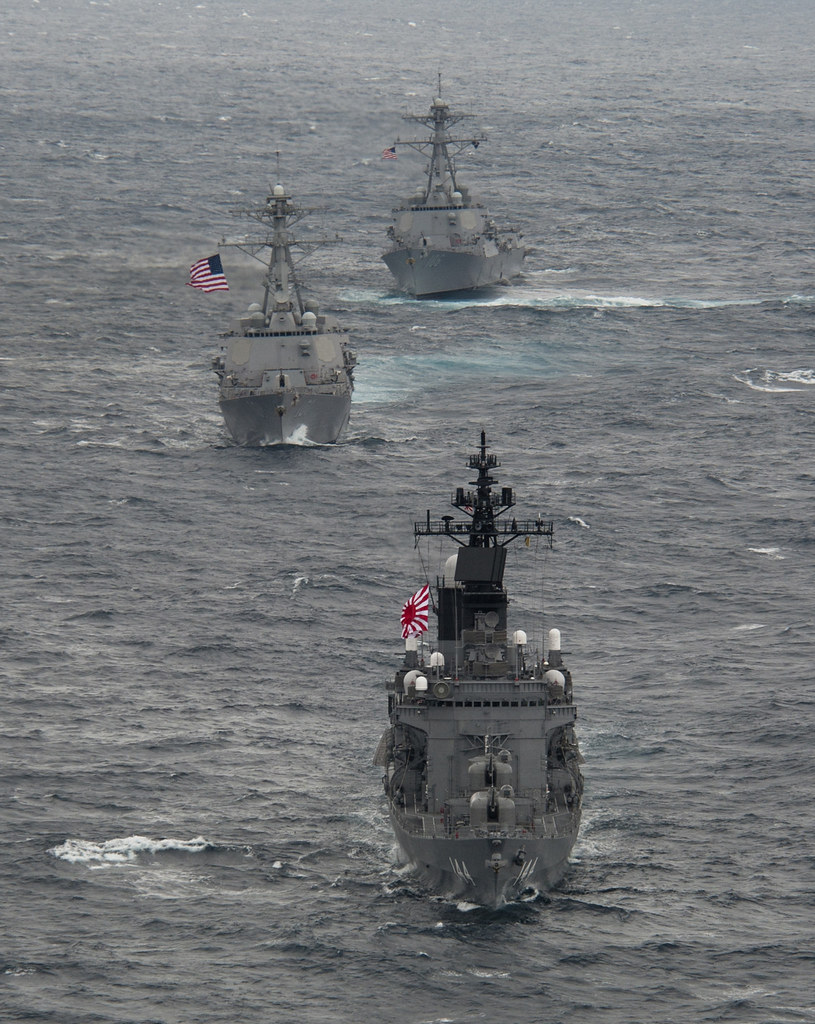
| Image: Flickr User - Official U.S. Navy Page |
By Shannon Tiezzi
Domestic constraints will keep Japan from beefing up its security presence in the South China Sea.
When the United States sent the USS Lassen within 12 nautical miles of the artificial island China has built at Subi Reef, Washington promised that this would be the first of many routine freedom of navigation operations (FONOPs) in the South China Sea. That has raised questions about how U.S. allies will respond.
According to the Wall Street Journal, Australia is mulling the option of conducting its own operations. Meanwhile, media reports from earlier this year suggested that Japan was also considering conducting patrols in the South China Sea. Admiral Katsutoshi Kawano, chief of the Joint Staff of the Japan Self-Defense Forces, said in June that “we don’t have any plans to conduct surveillance in the South China Sea currently but depending on the situation, I think there is a chance we could consider doing so.”
However, Japan’s response to the USS Lassen’s maneuvers on Tuesday was less enthusiastic than may have been expected. As Jake Douglas outlined for The Diplomat,Japanese officials – including Chief Cabinet Secretary Yoshihide Suga and Defense Minister Gen Nakatani – declined to either support or criticize the FONOP, though Prime Minister Shinzo Abe eventually offered his support. The problem for Japan is that it is caught between two conflicting impulses: a strong desire to maintain a close partnership with the United States, and a tacit recognition that the South China Sea is simply not a life-or-death issue for Tokyo.
Read the full story at The Diplomat