
 |
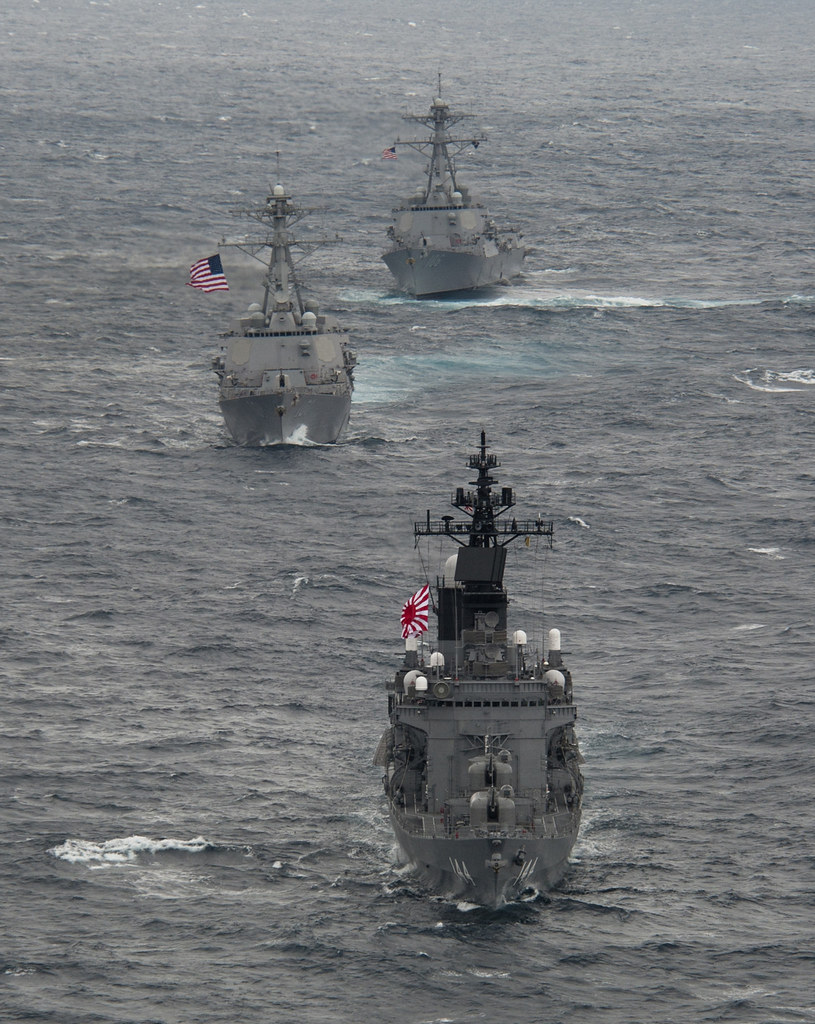
| Image: Flickr User - Official U.S. Navy Page |
By Paul Kallender-Umezu
TOKYO — Military legislation passed by the Japanese Diet to expand operational assistance to allies basically overturns Japan’s traditional self-defense policy and allows it to act in “collective self-defense” with partners.
Such assistance would include logistical support for allies fighting in foreign wars, providing air defense for US and allies facing enemy missiles, securing sea lanes and preserving freedom of navigation, participation in United Nations humanitarian/disaster relief operations, and allowing Japan to engage in armed hostage rescue missions.
The key provision is that such contingencies will need to present a so-called "existential" threat to Japan's security, said Corey Wallace, security policy analyst at the Graduate School of East Asian Studies at Freie Universität, Berlin. “In reality, this probably means such increased freedom of action will be restricted to regional contingencies surrounding Taiwan and the Korean Peninsula and the US military activities pertaining to those situations."
Read the full story at DefenseNews